


 17 August 2026 - 26 Aug 2026
 10 Days/9 Nights
 Longyearbyen - Longyearbyen
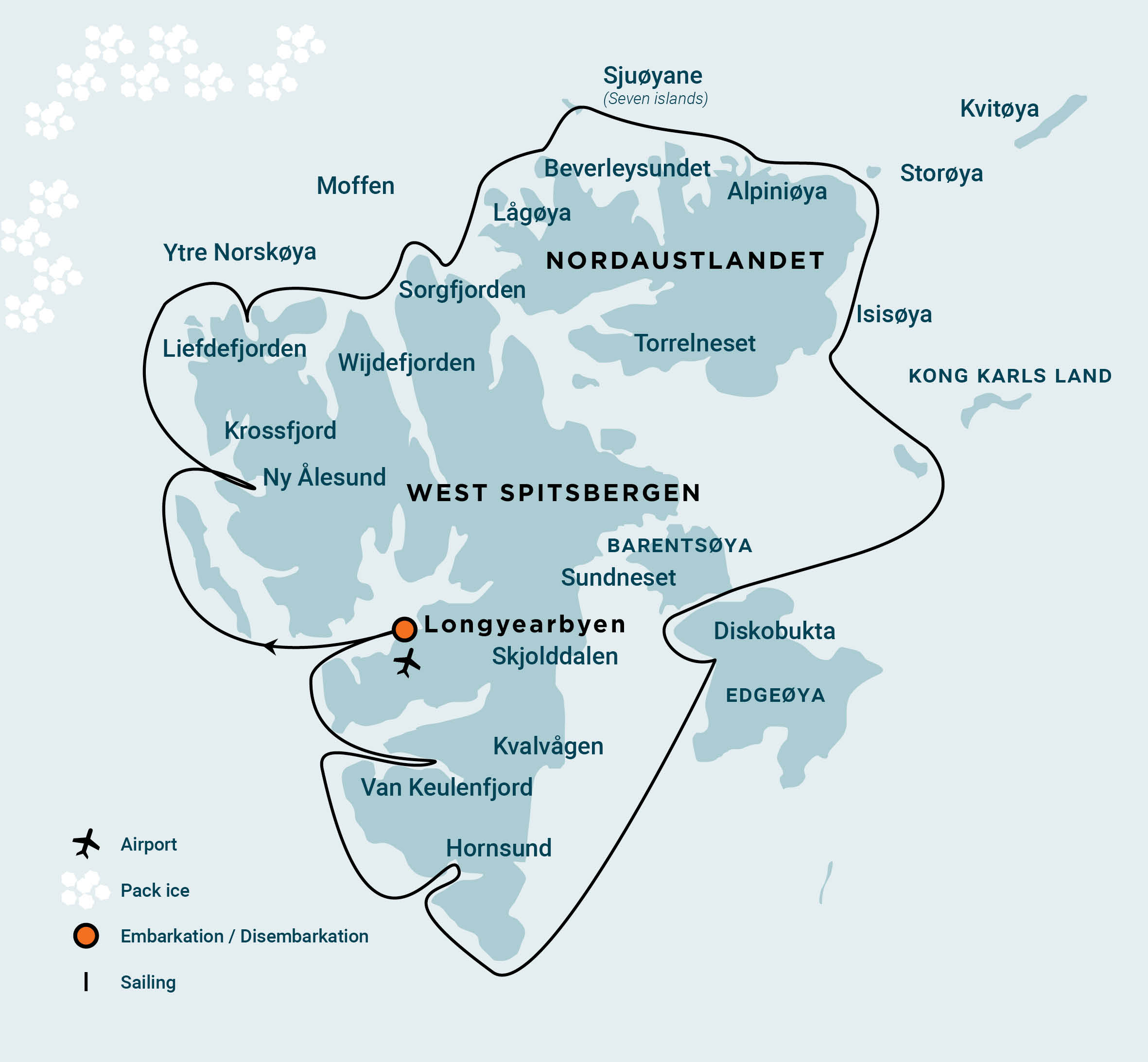
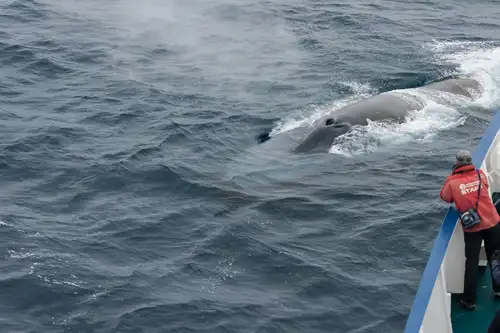
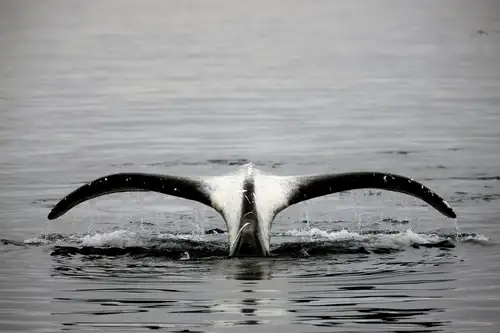
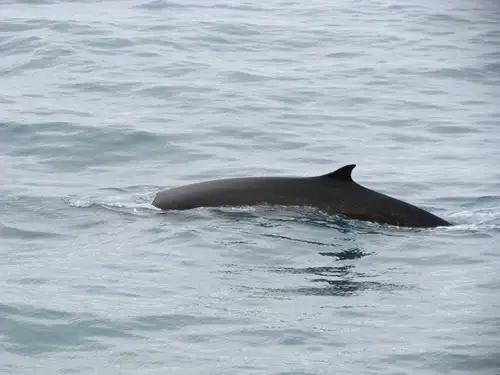
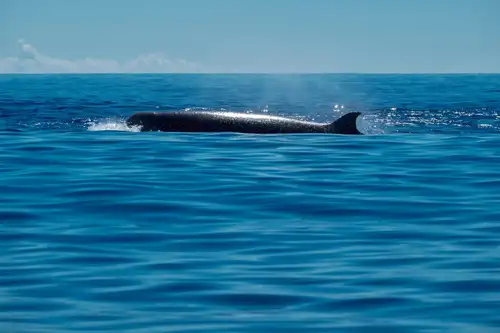
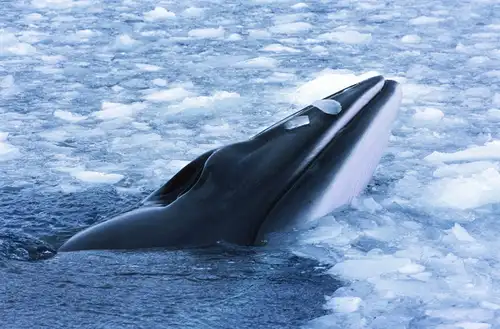
Arrive in Longyearbyen, the main town of Spitsbergen. Explore this former mining town with its church and museum. In the evening, the ship leaves Isfjorden, where you might see a minke whale.
Exploring West Spitsbergen
Krossfjorden and Ny Alesund
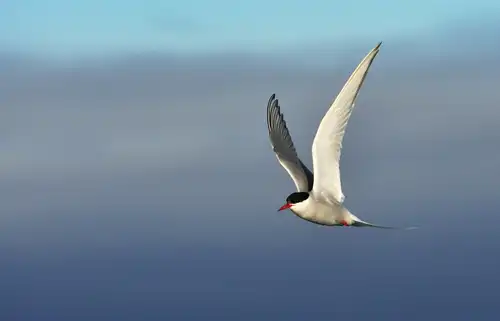
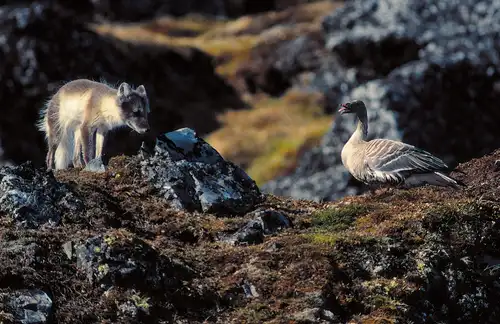
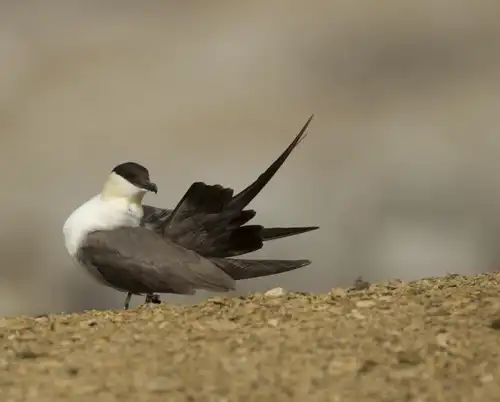
Travel north along the west coast to Krossfjorden, with views of glaciers. Visit Ny Alesund, the northernmost settlement, now a research center. Nearby, see geese and Arctic terns. Learn about Arctic exploration history.
Monaco Glacier
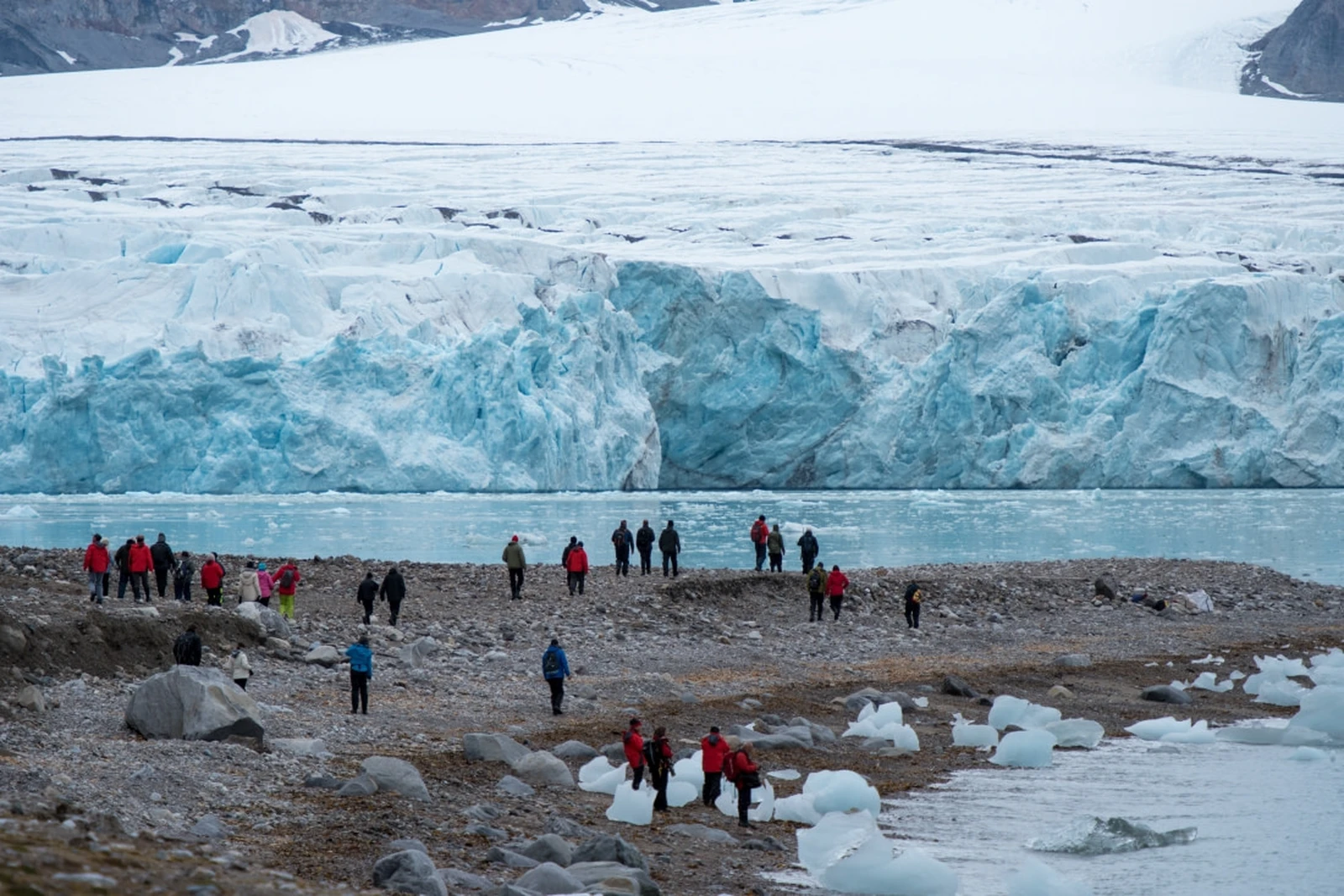
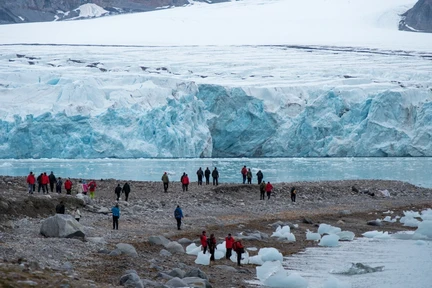
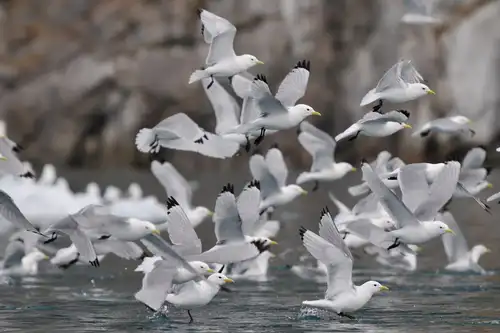
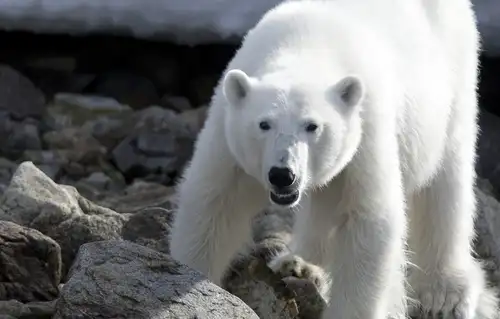
Weather permitting, sail into Liefdefjorden to see the Monaco Glacier. The area is a feeding spot for kittiwakes and a hunting ground for polar bears. If ice blocks the way, an alternate route along the west coast is possible.
Sorgfjord
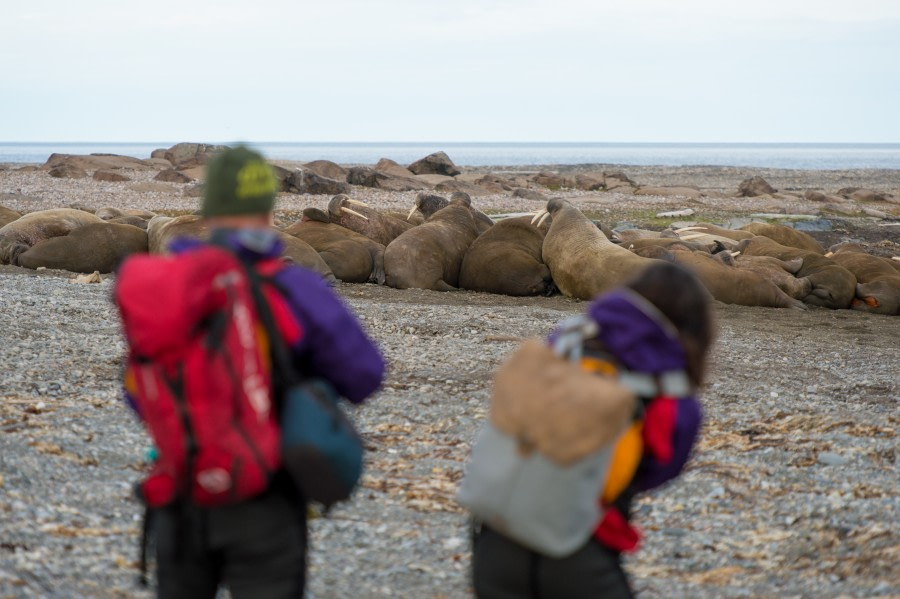
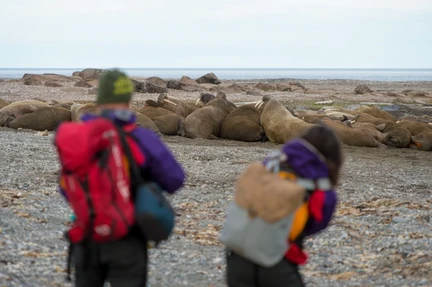
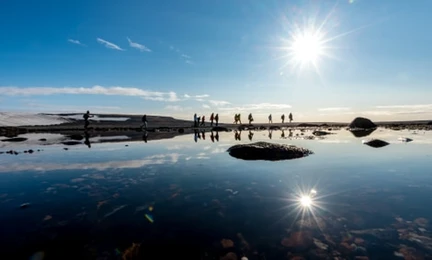
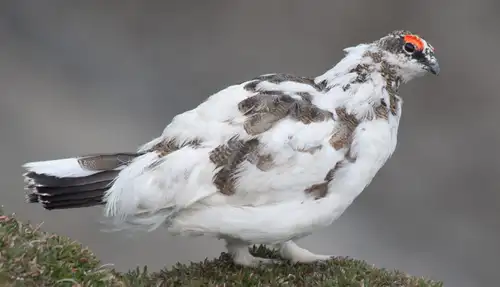
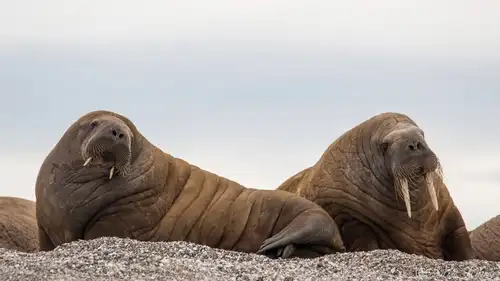
Visit Sorgfjord, where sunken ships lie. Spot walruses and explore the area, home to ptarmigans. Heclahamna offers a semi-desert landscape for excursions.
Seven Islands
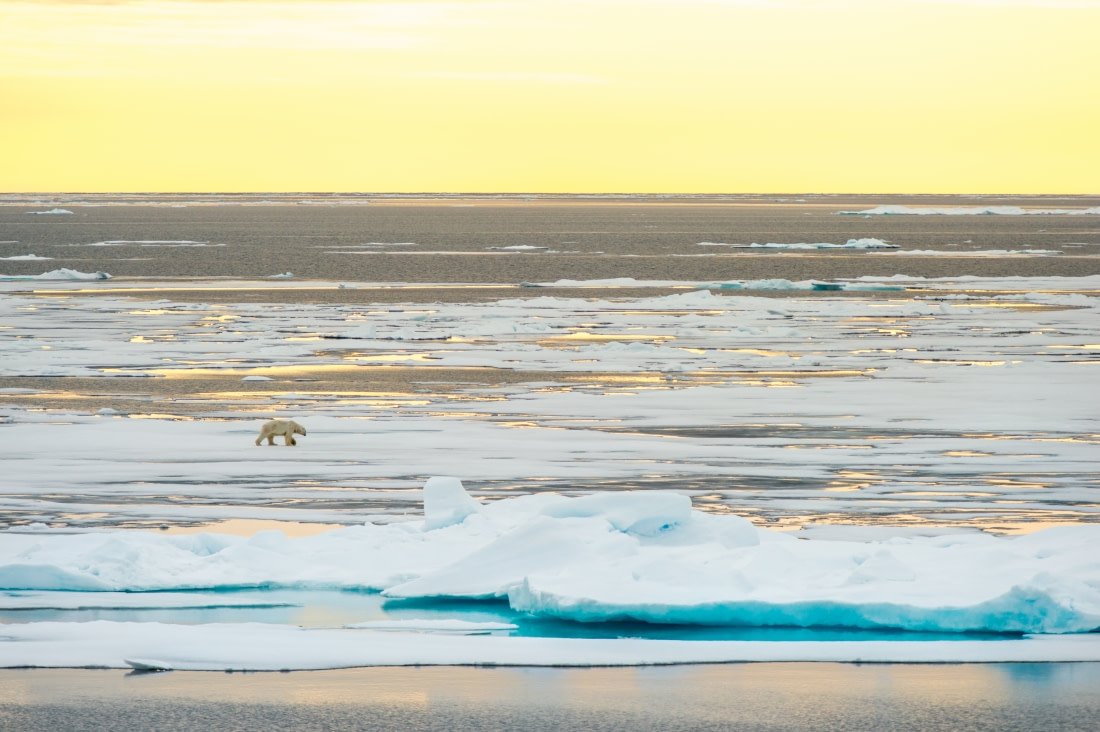
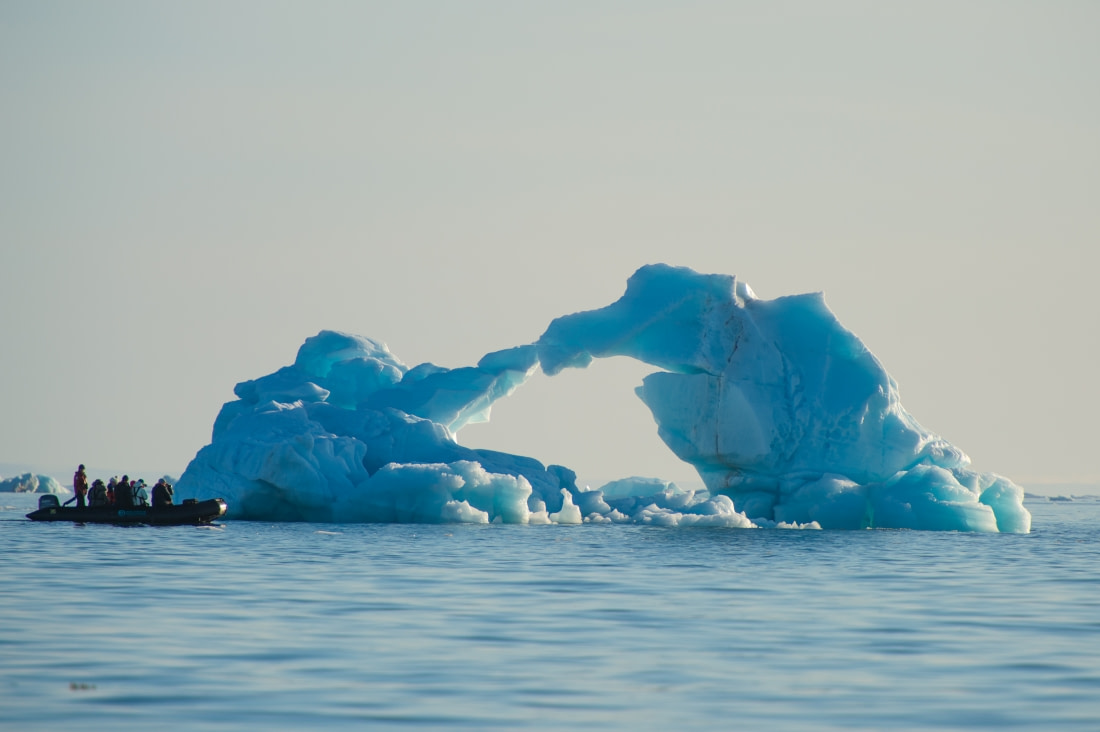
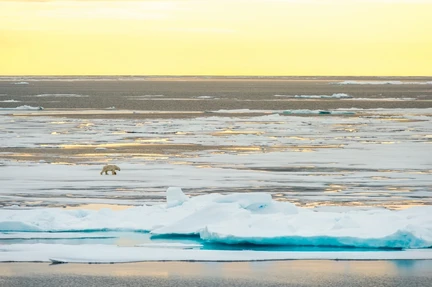
Reach the northernmost point at the Seven Islands, near the North Pole. Polar bears and walruses live here. Sail through pack ice, following the path of the 1928 Nobile Expedition rescue attempt.
Europe's Largest Ice Cap
Sail by Austfonna on Nordaustlandet, stopping at Isis Island. Pass Kapp Mohn, part of Europe's largest ice cap, known for its waterfalls. Sail near Kong Karls Land, a polar bear denning area.
Storfjorden
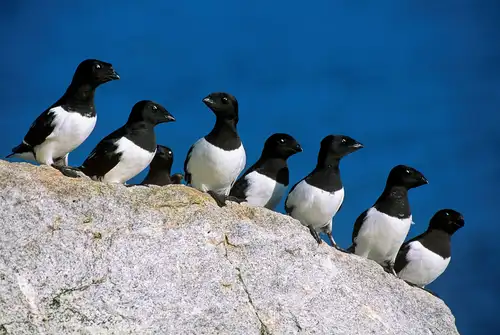
Sail through Heleysundet, seeing glaciers like Negribreen. Possible landings include Skjolddalen and Diskobukta, home to bird colonies and glacier fronts.
Pointed Mountains
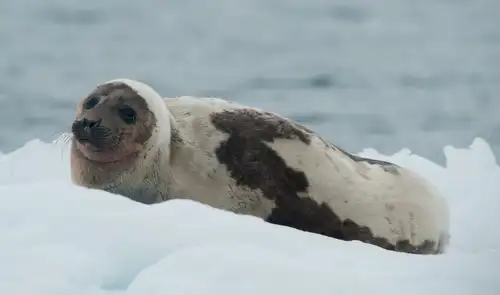
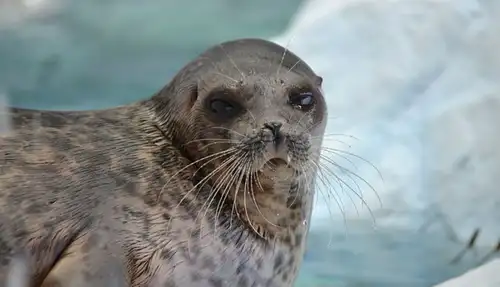
Cruise Hornsund's fjords, with peaks like Hornsundtind. Spot seals, beluga whales, and polar bears. Land in Samarinvaagen and Birgerbukta for walks.
Bell Sund
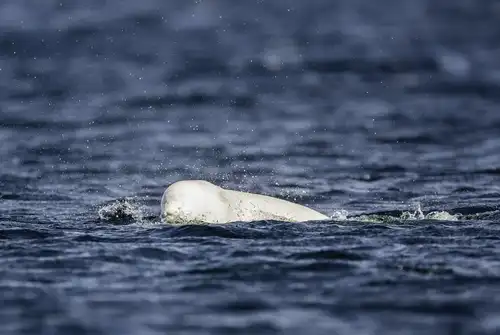
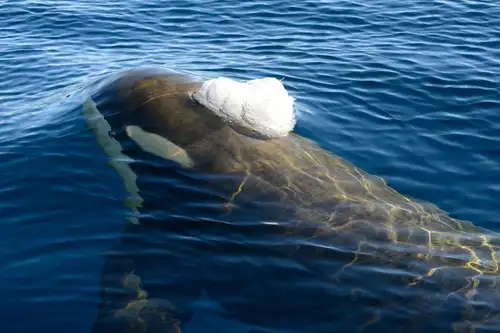
Explore Bell Sund, warmer than other areas. Visit Ahlstrandhalvøya to see beluga skeletons, a reminder of past hunting. Spot belugas and explore tundra and bird breeding areas.
Return to Longyearbyen
Your adventure ends as you return to Longyearbyen, taking home unforgettable memories.


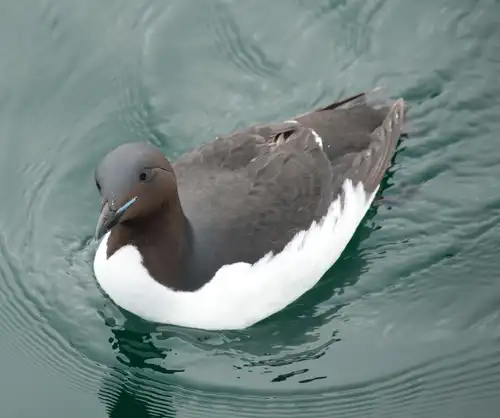
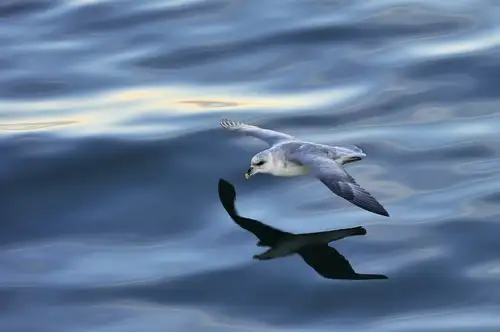
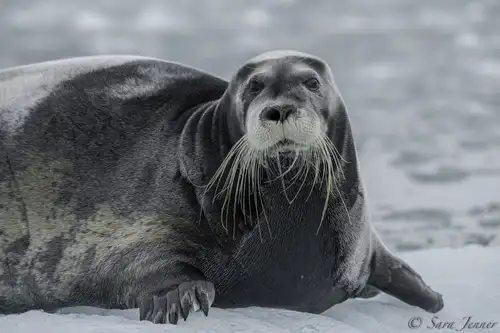
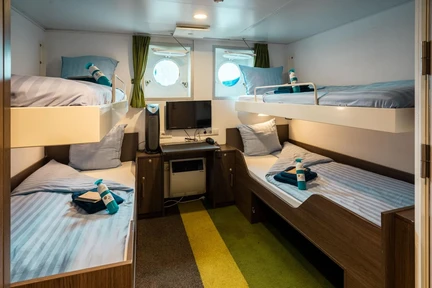


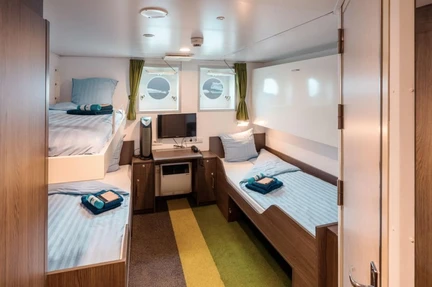

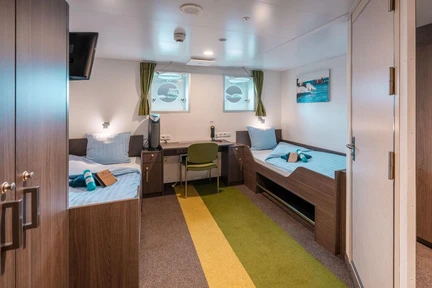
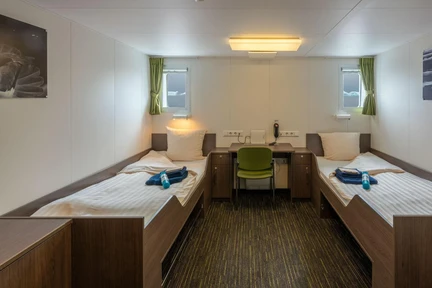


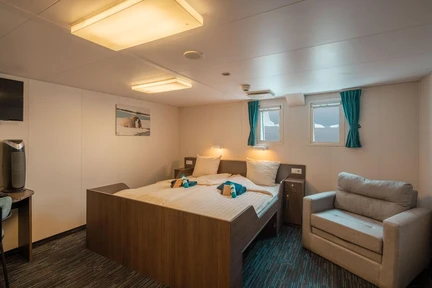
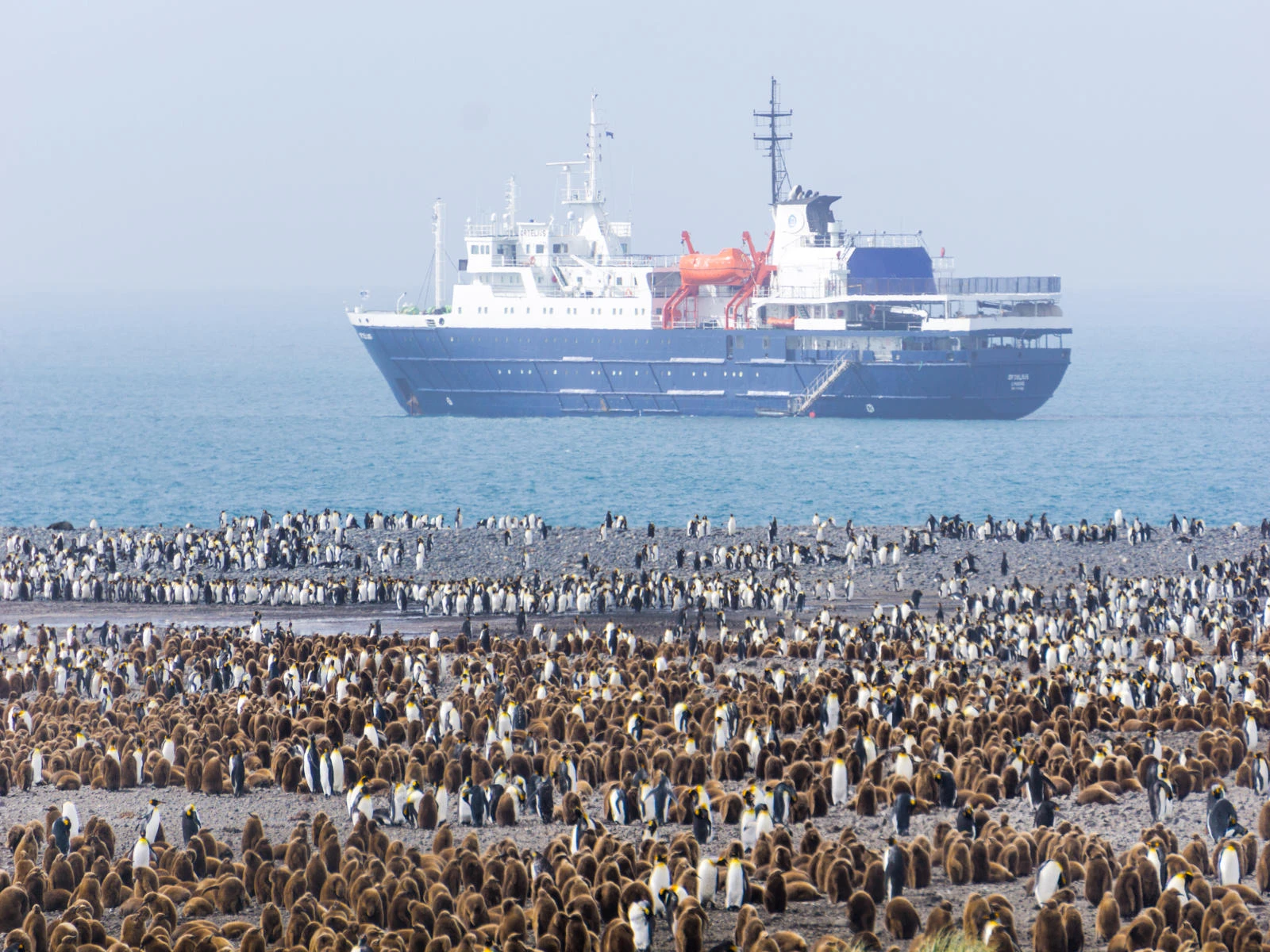
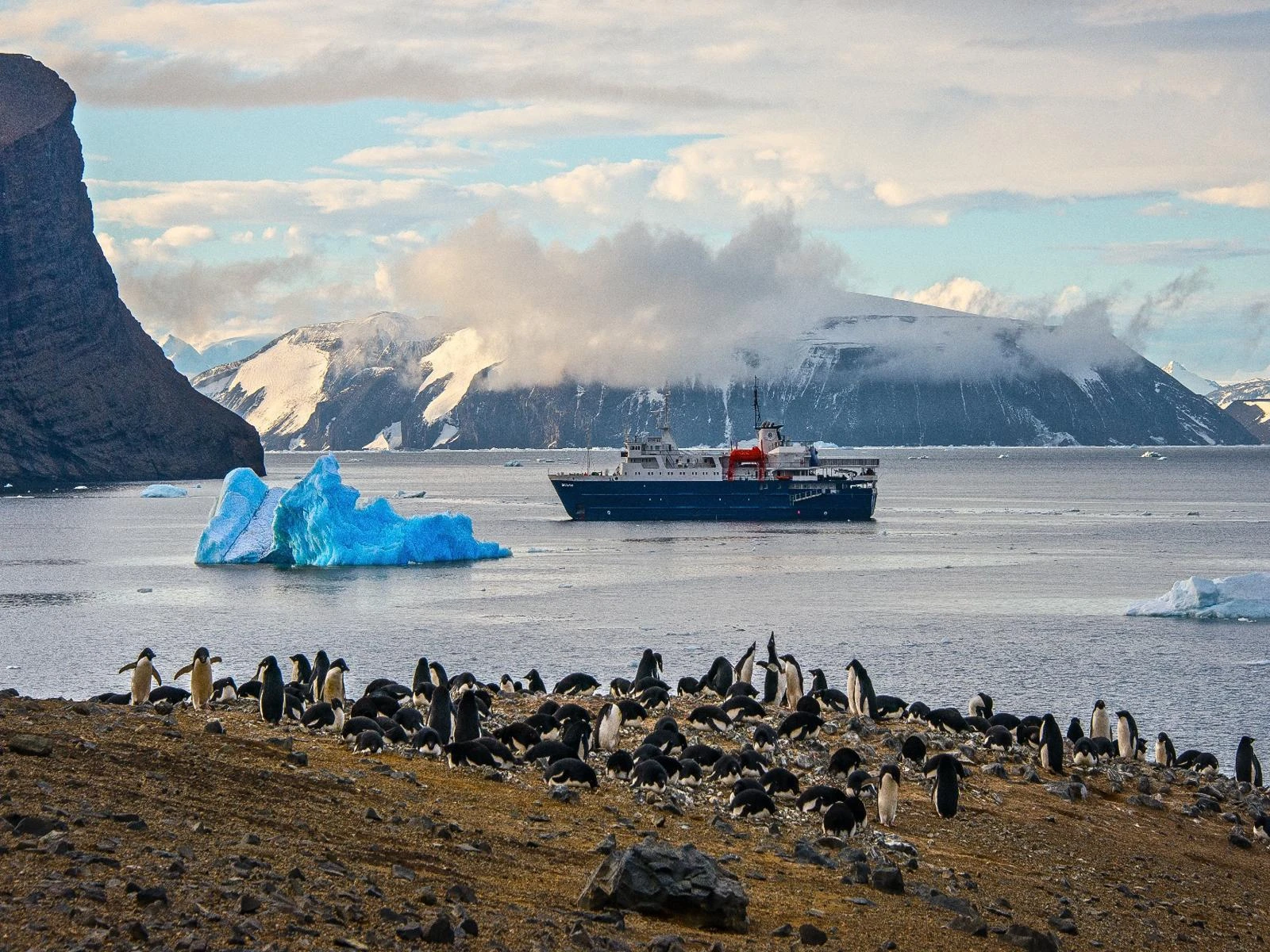
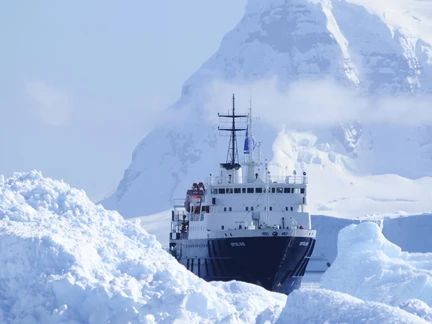
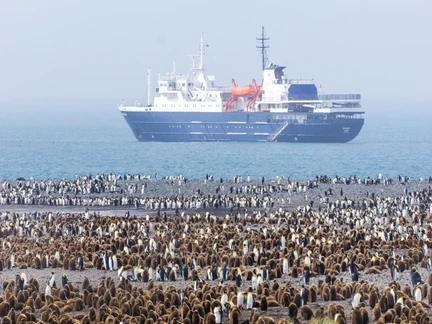
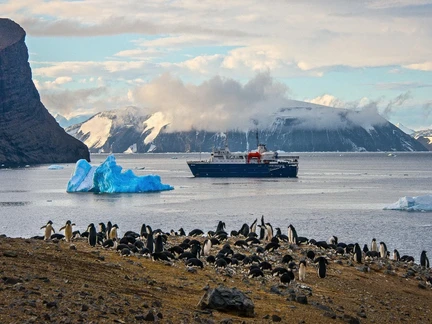
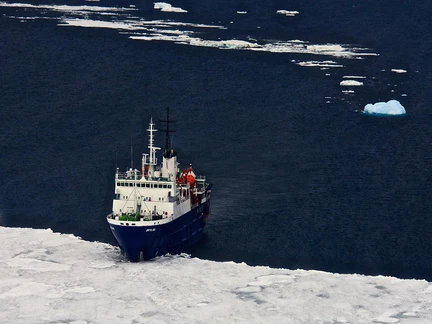
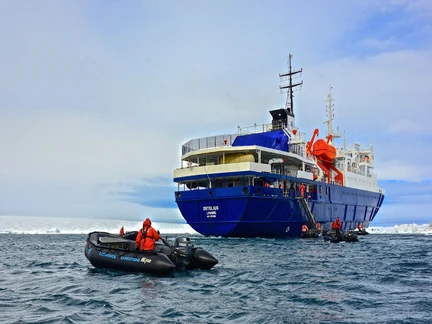
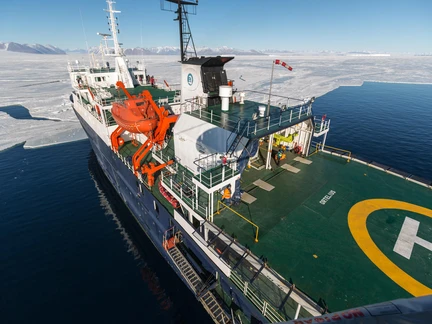
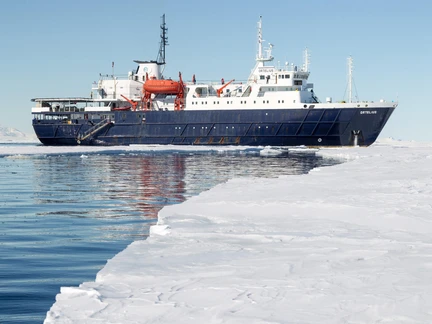
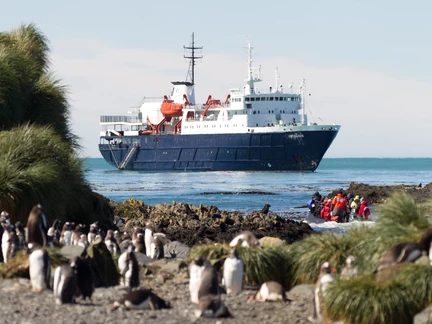
m/v Ortelius
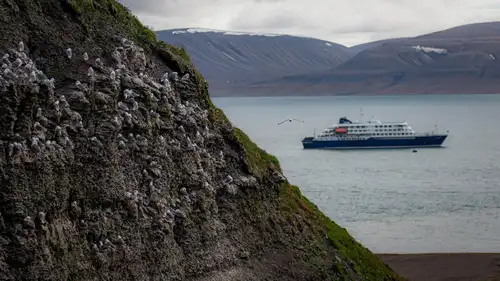
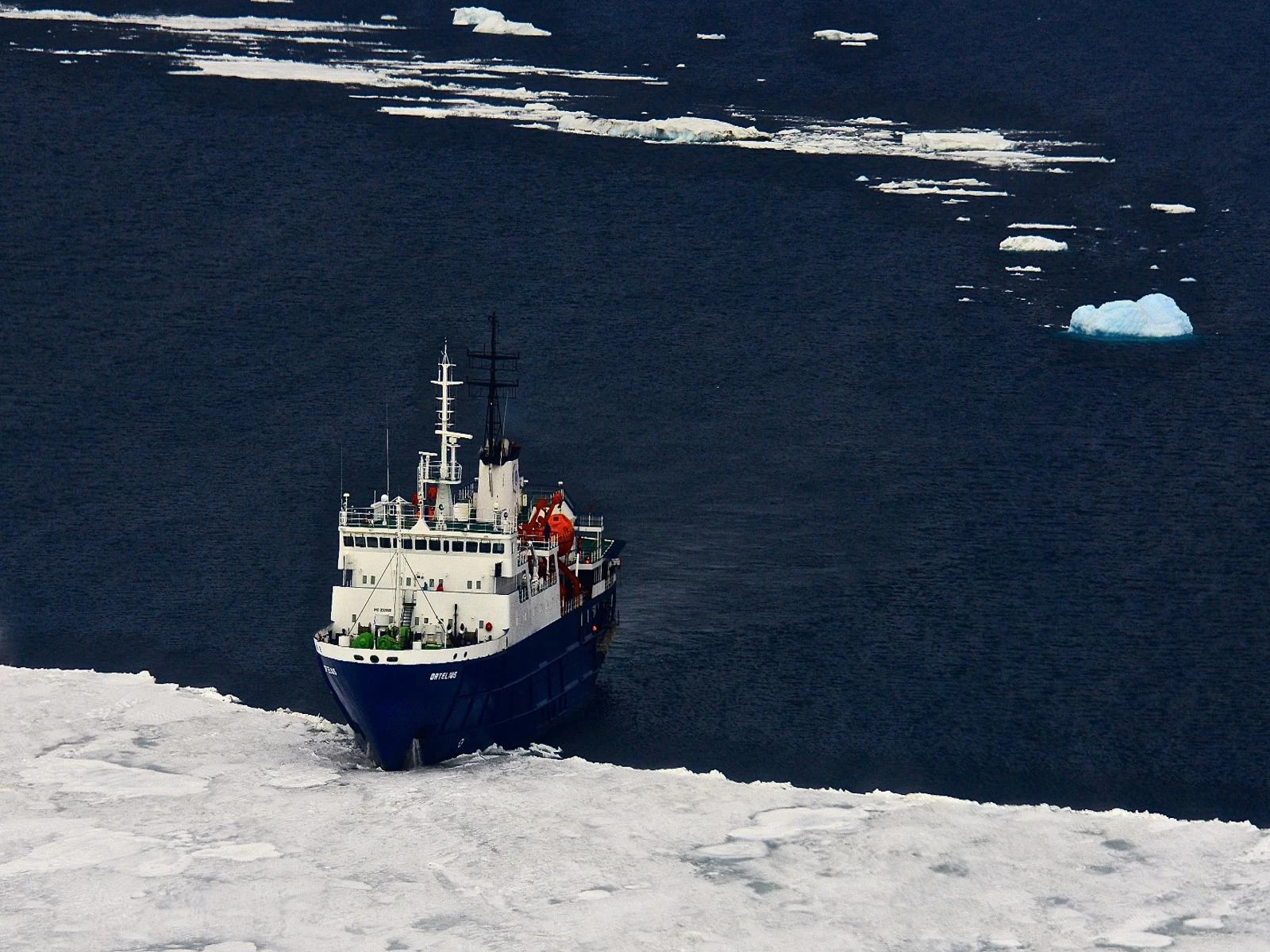
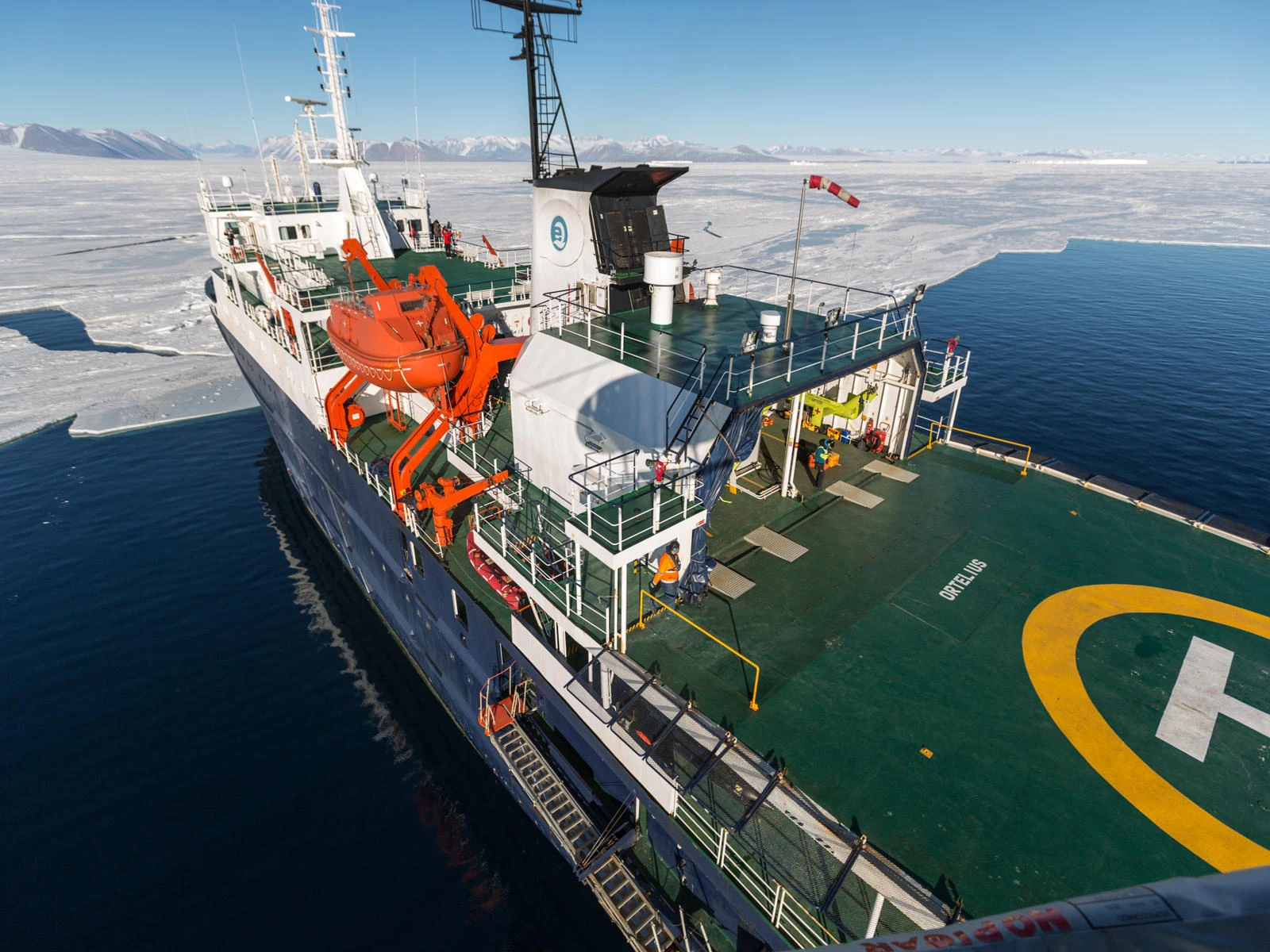
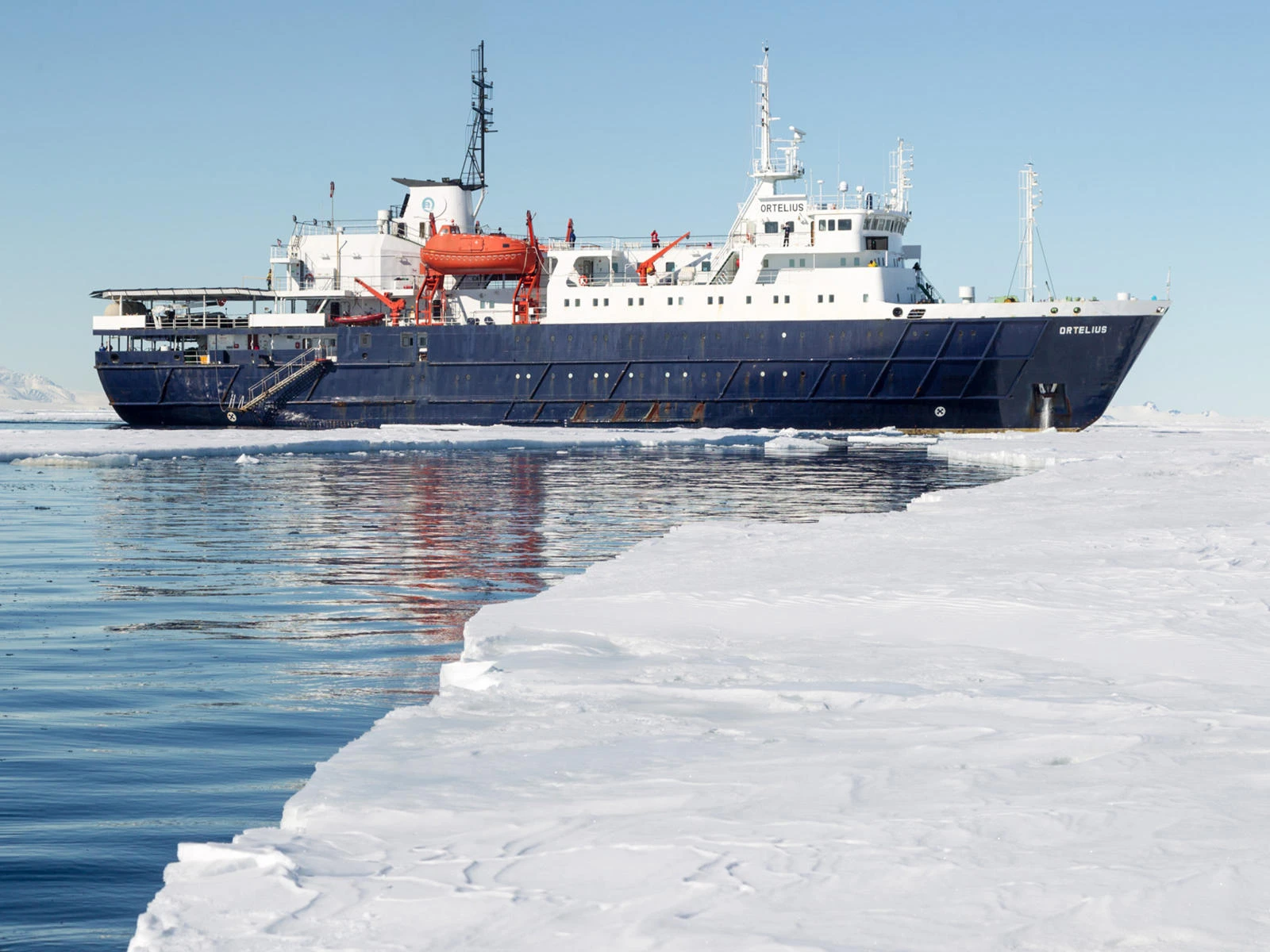
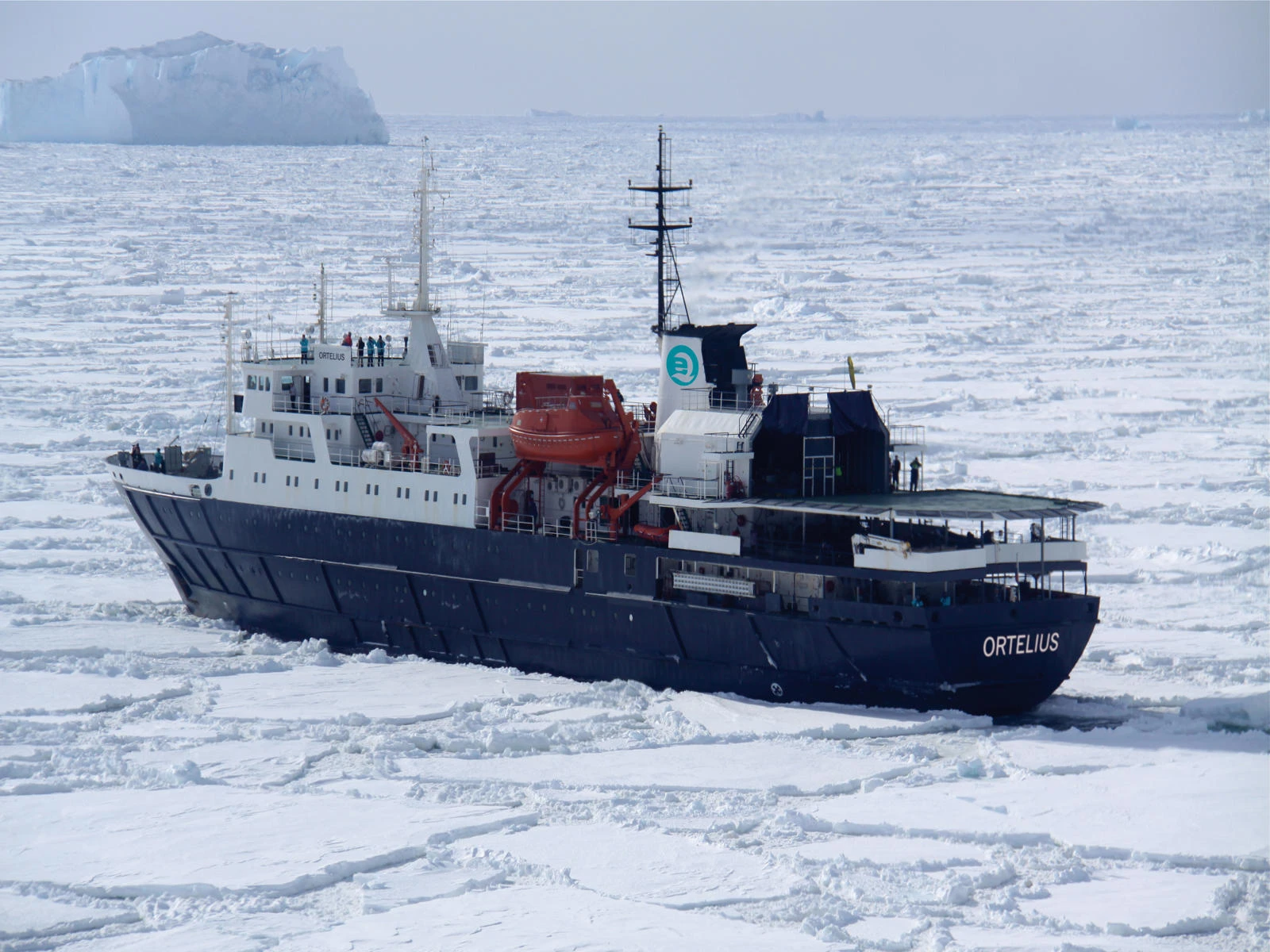
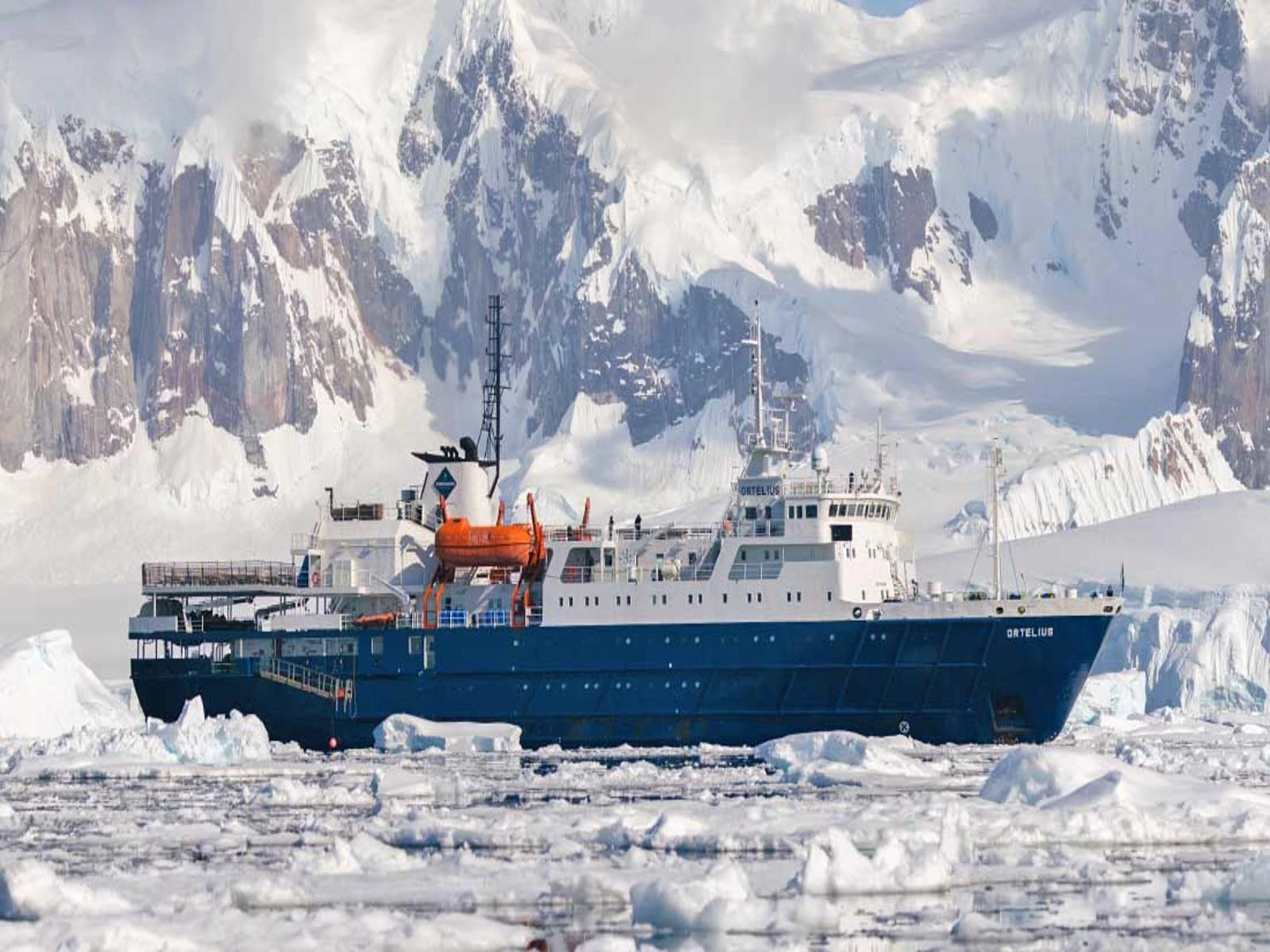
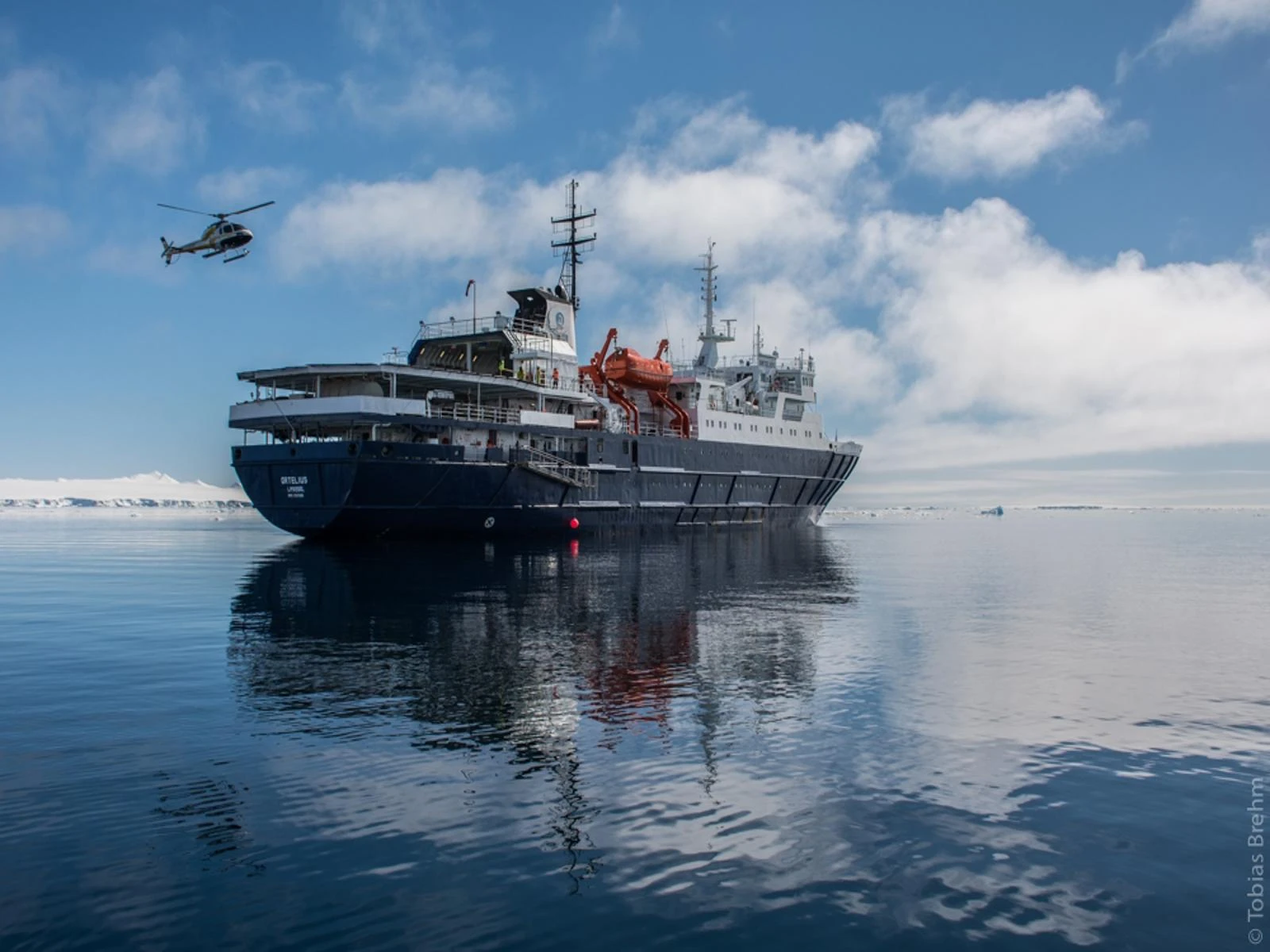
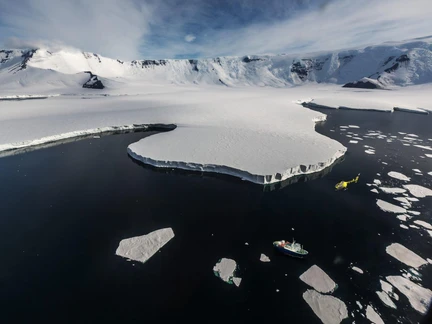
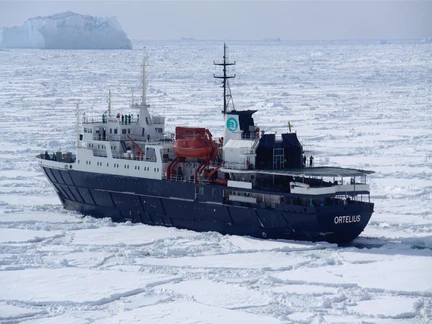
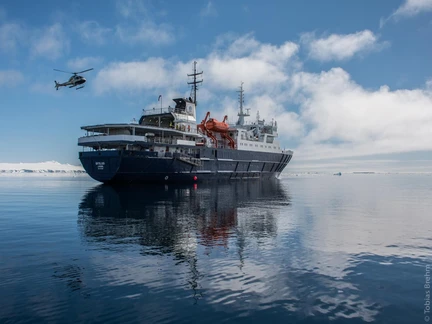
The ice-strengthened Ortelius is fully equipped for polar exploration and can accommodate helicopter flights when necessary.
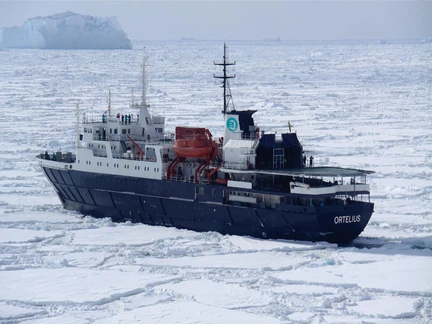
Specifications
| Passengers: | 108 passengers in 50 cabins |
| Staff & crew: | Crew 44 | Guides 8 | Doctor 1 |
| Length: | 90.95 meters |
| Breadth: | 17.20 meters |
| Draft: | 5.4 meters |
| Ice class: | UL1 (Equivalent to 1A) |
| Displacement: | 4090 tonnes |
| Propulsion: | 6 ZL 40/48 SULZER |
| Speed: | 10.5 knots average cruising speed |
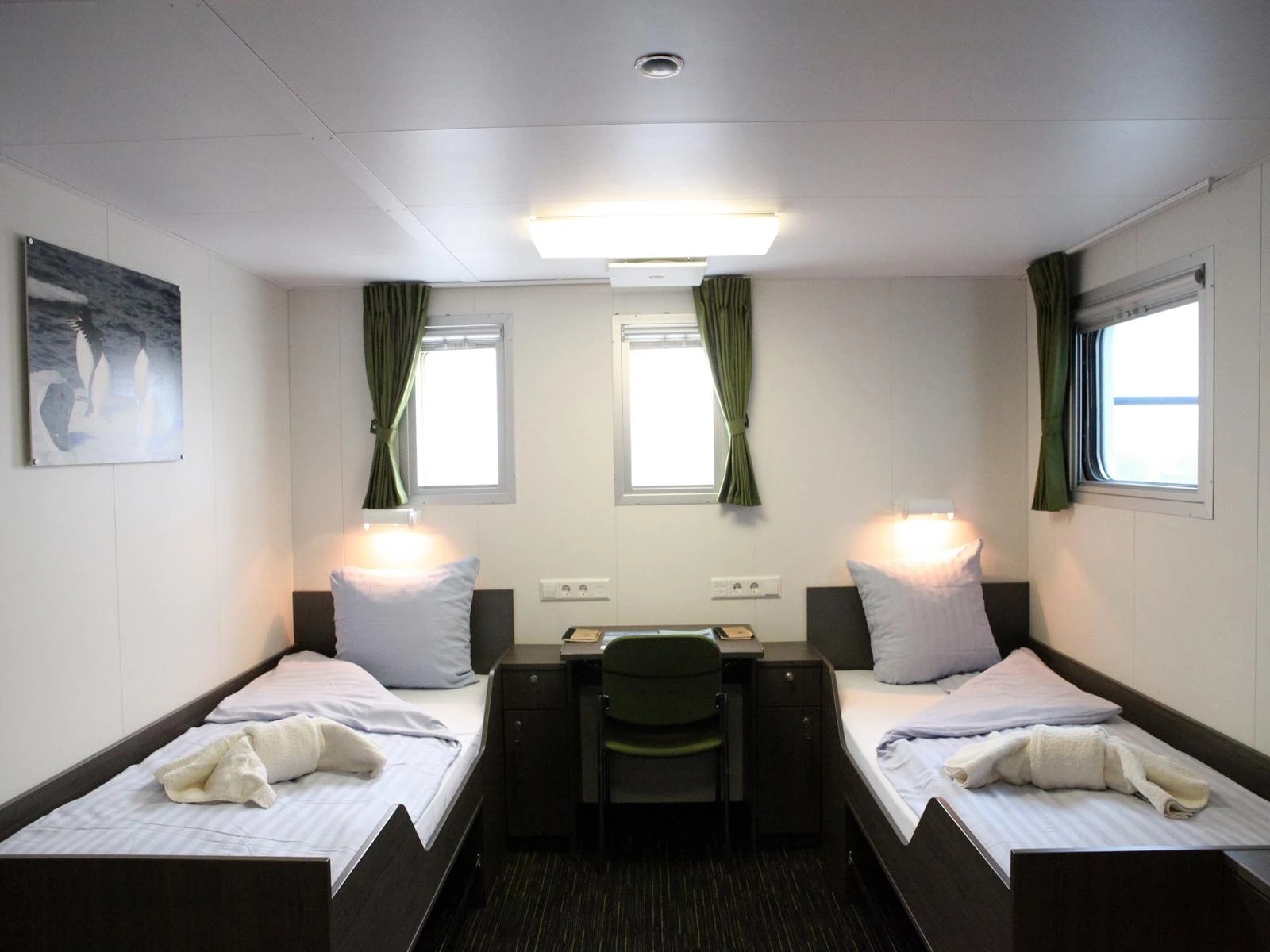
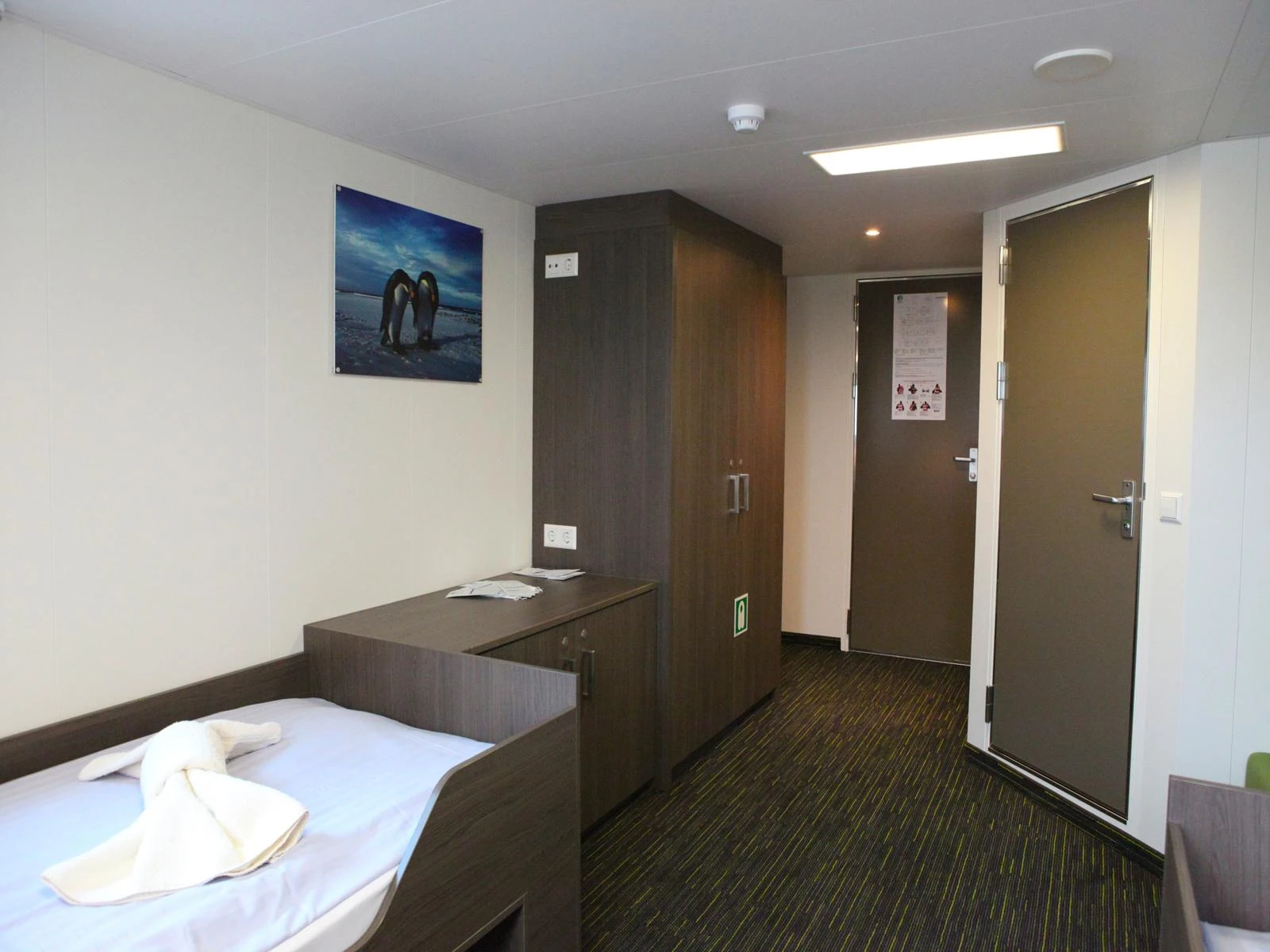
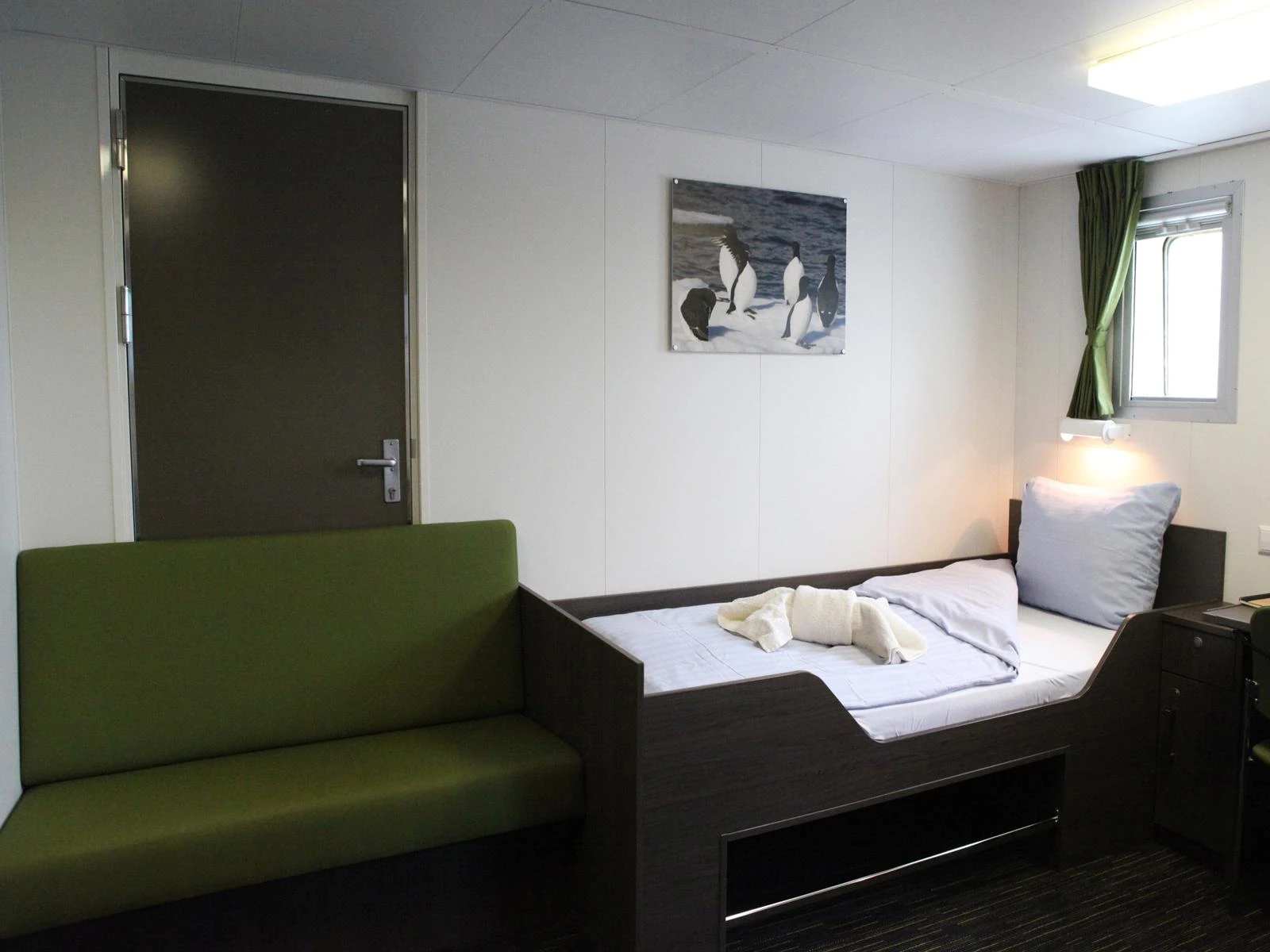
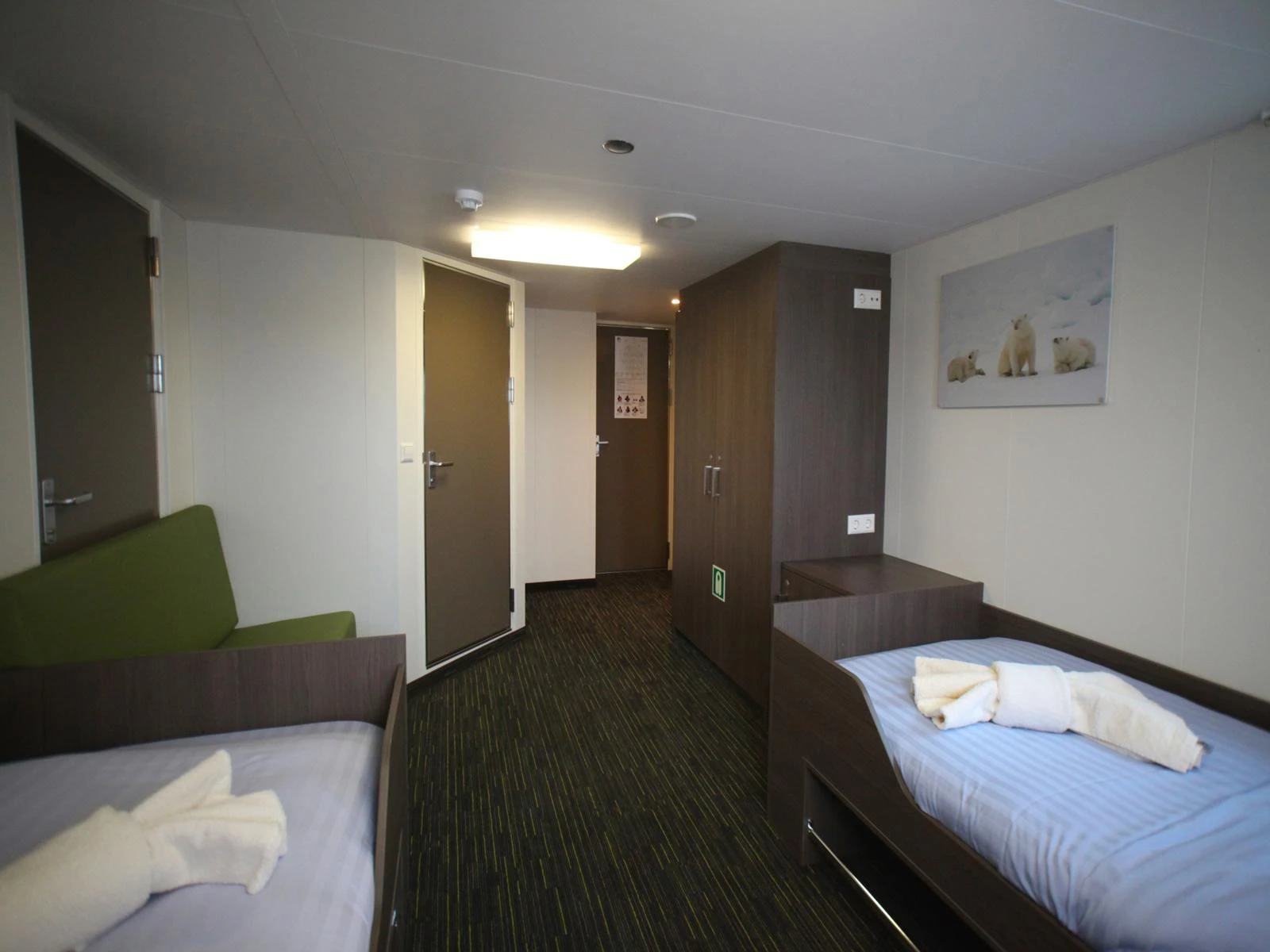
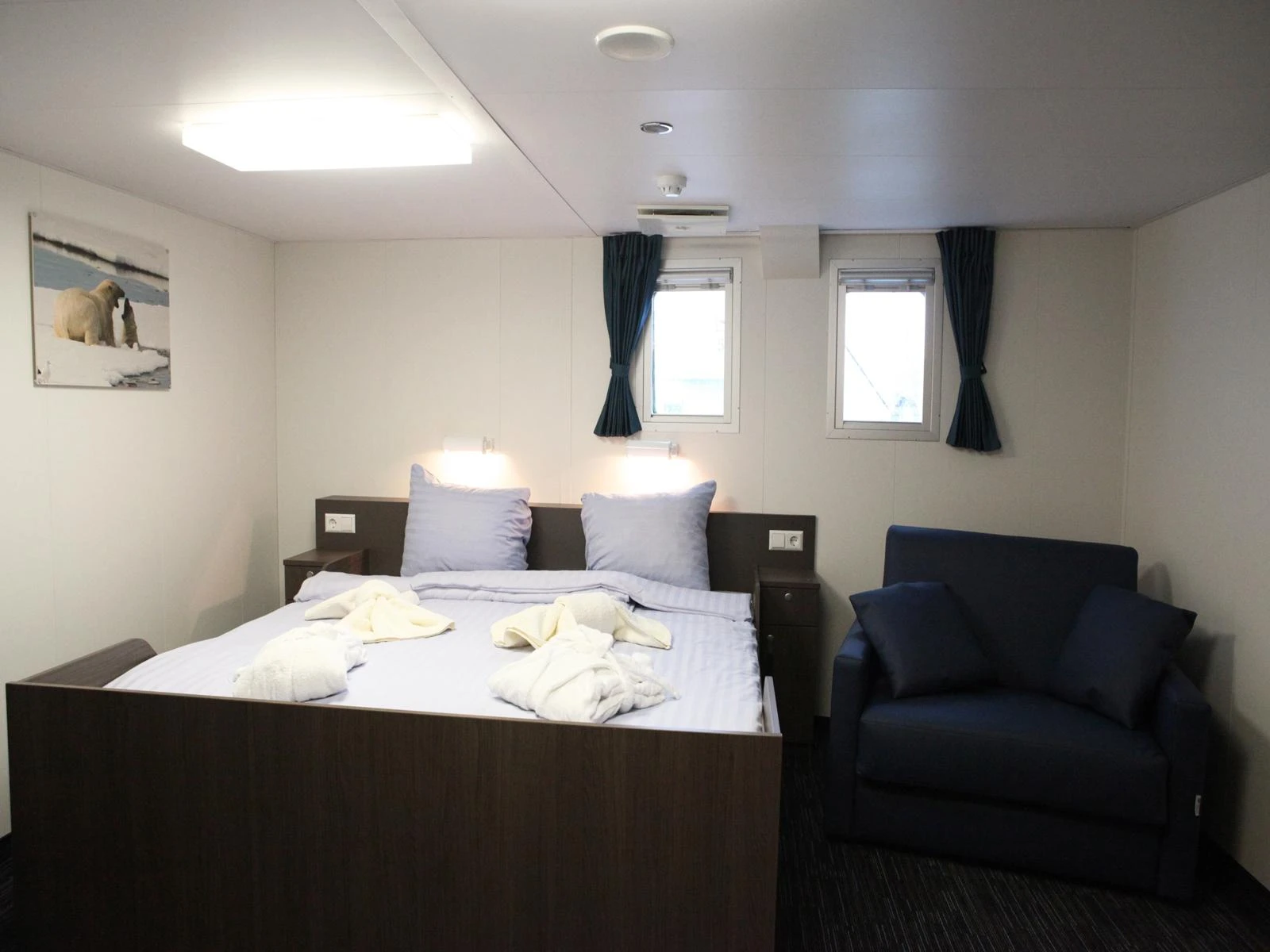
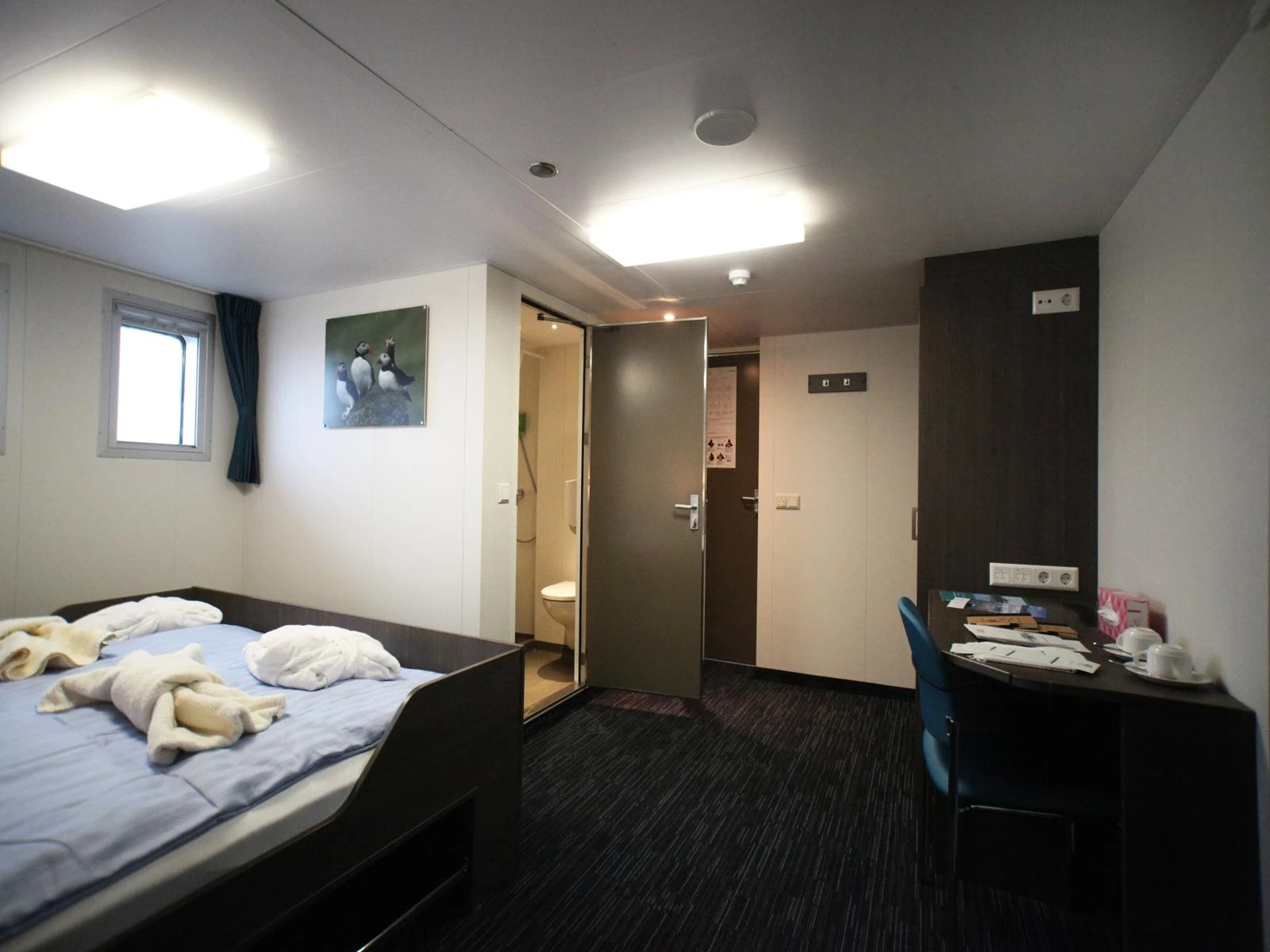
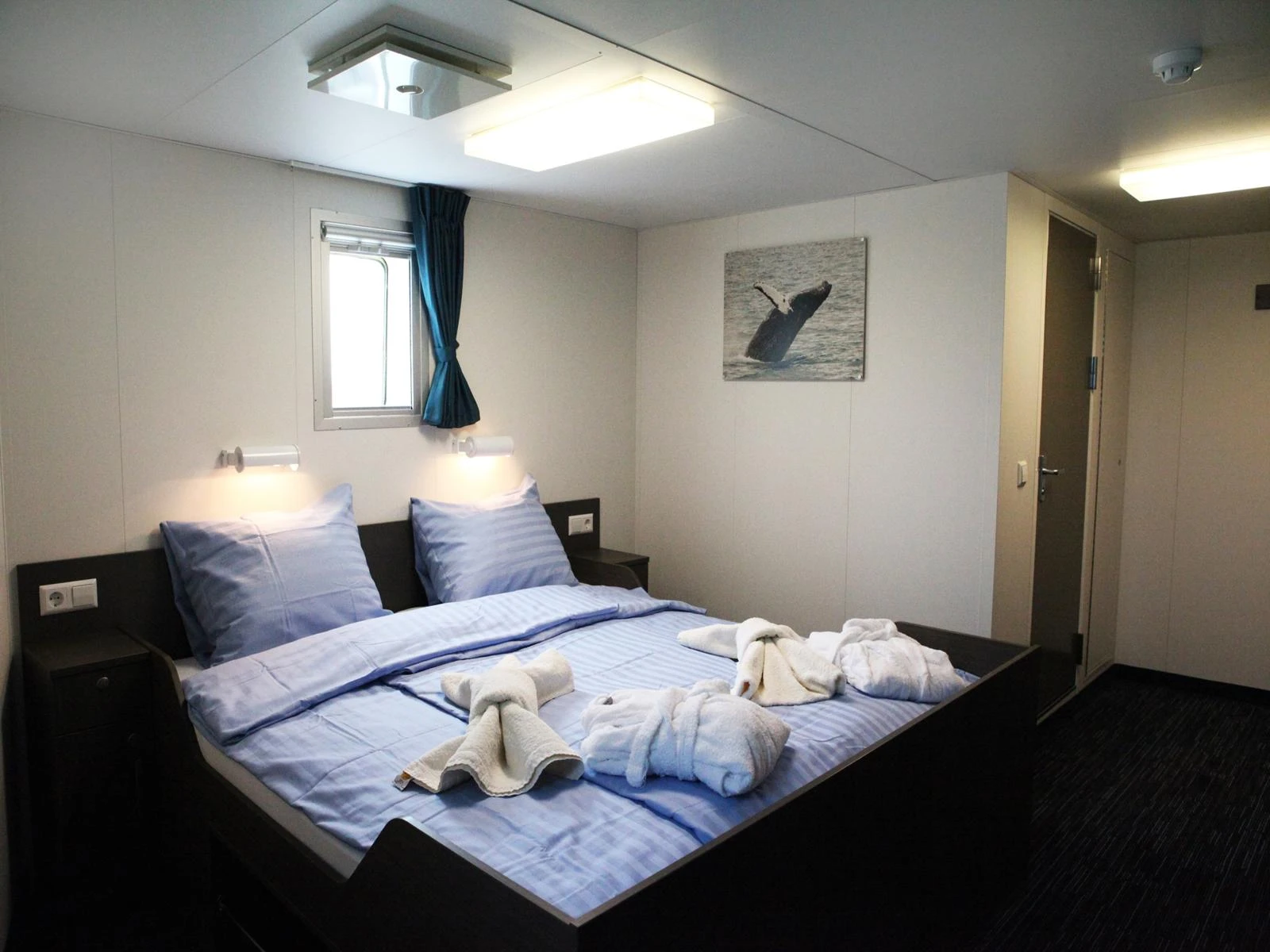
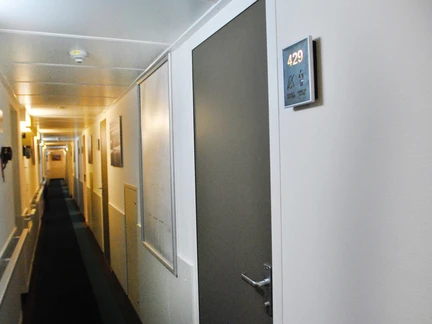
Cabins Gallery
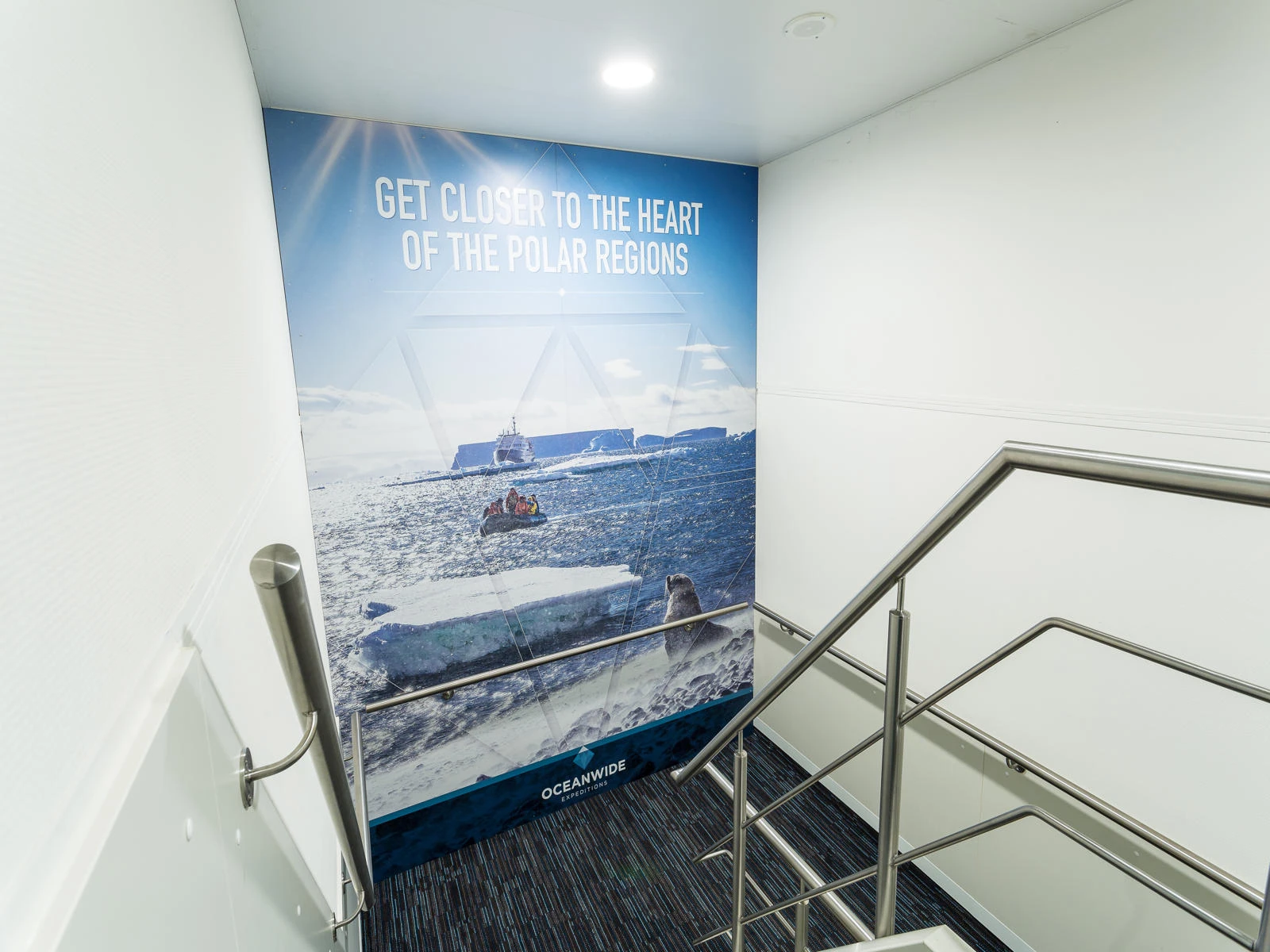
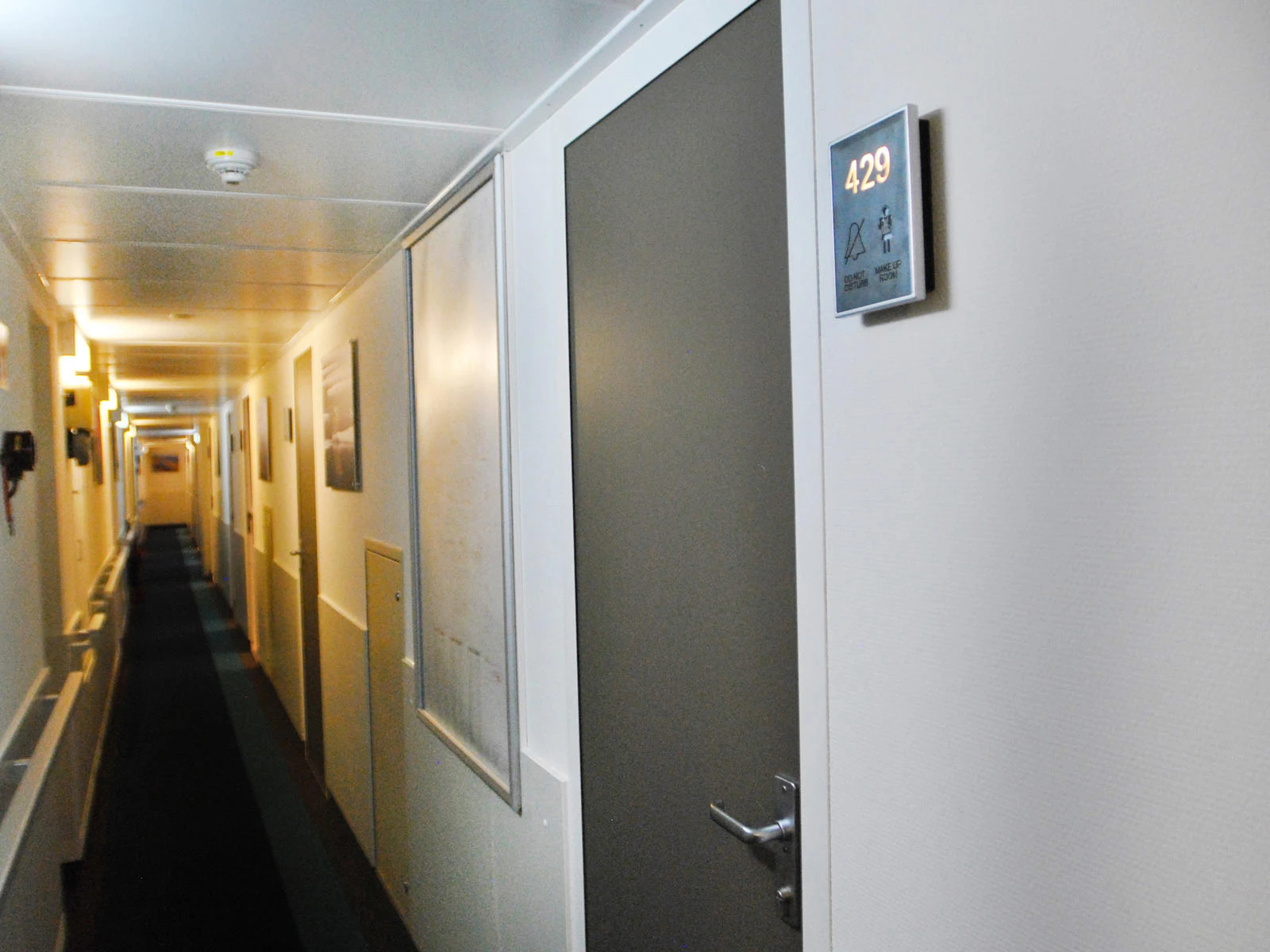
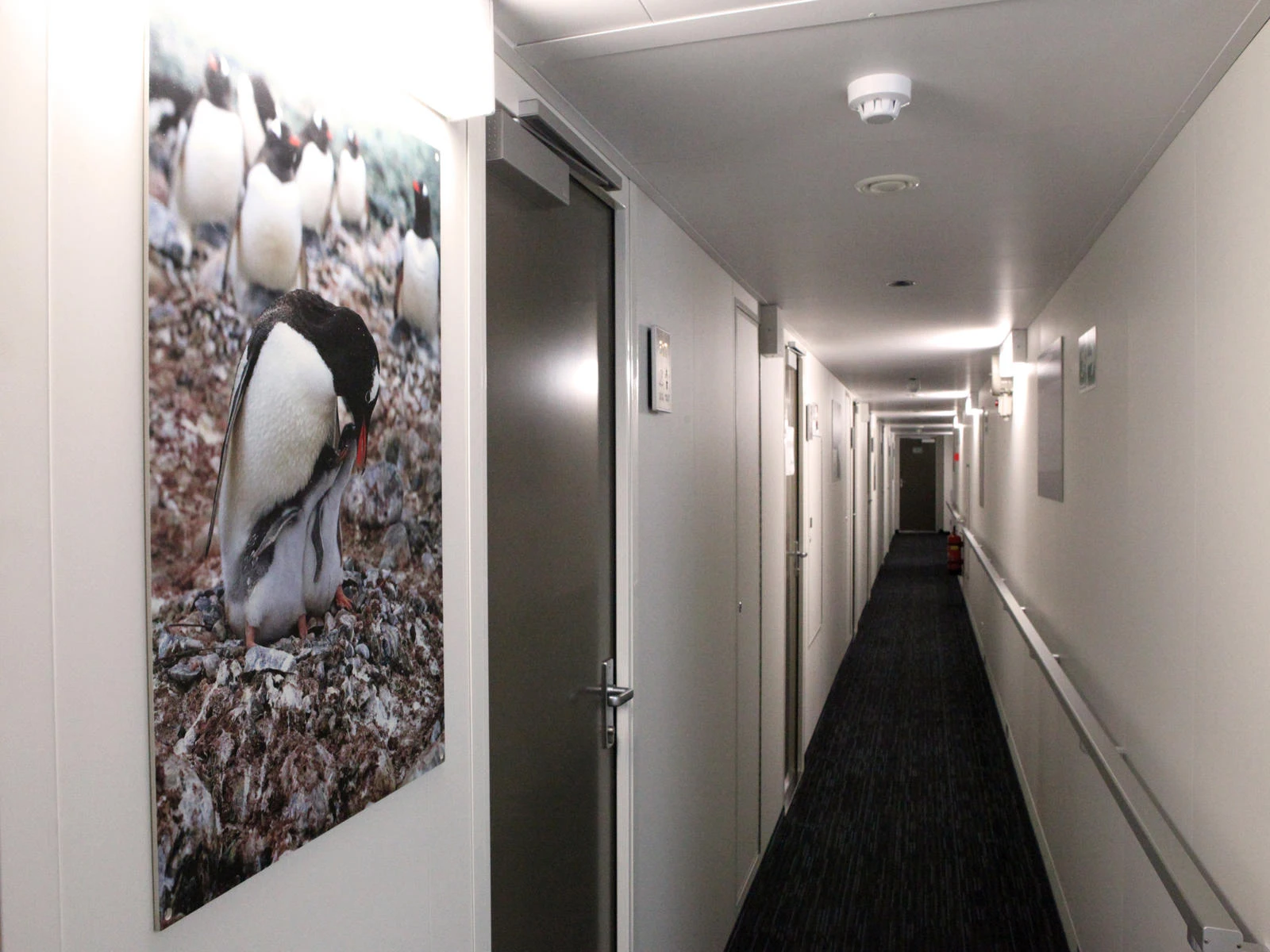
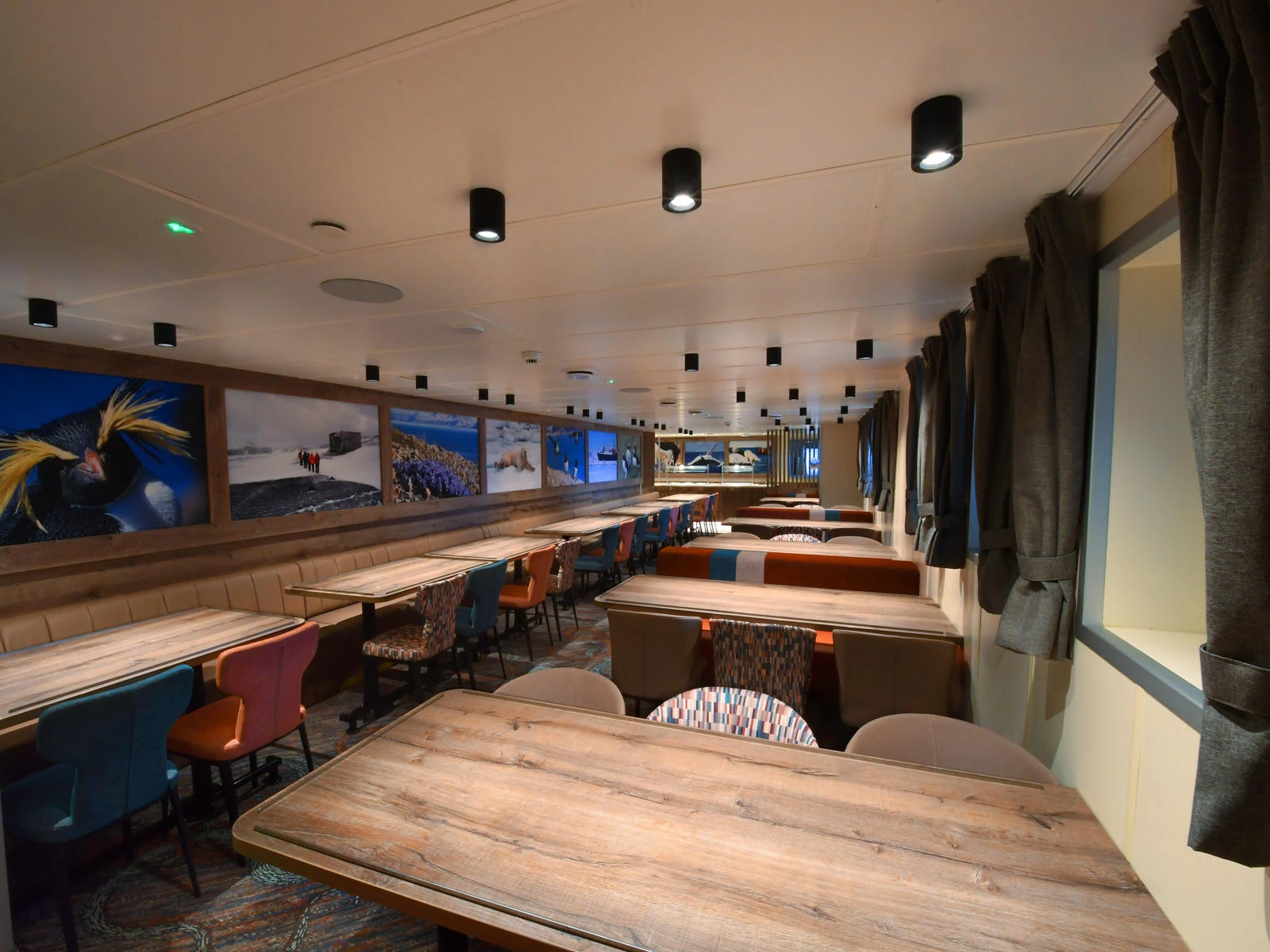
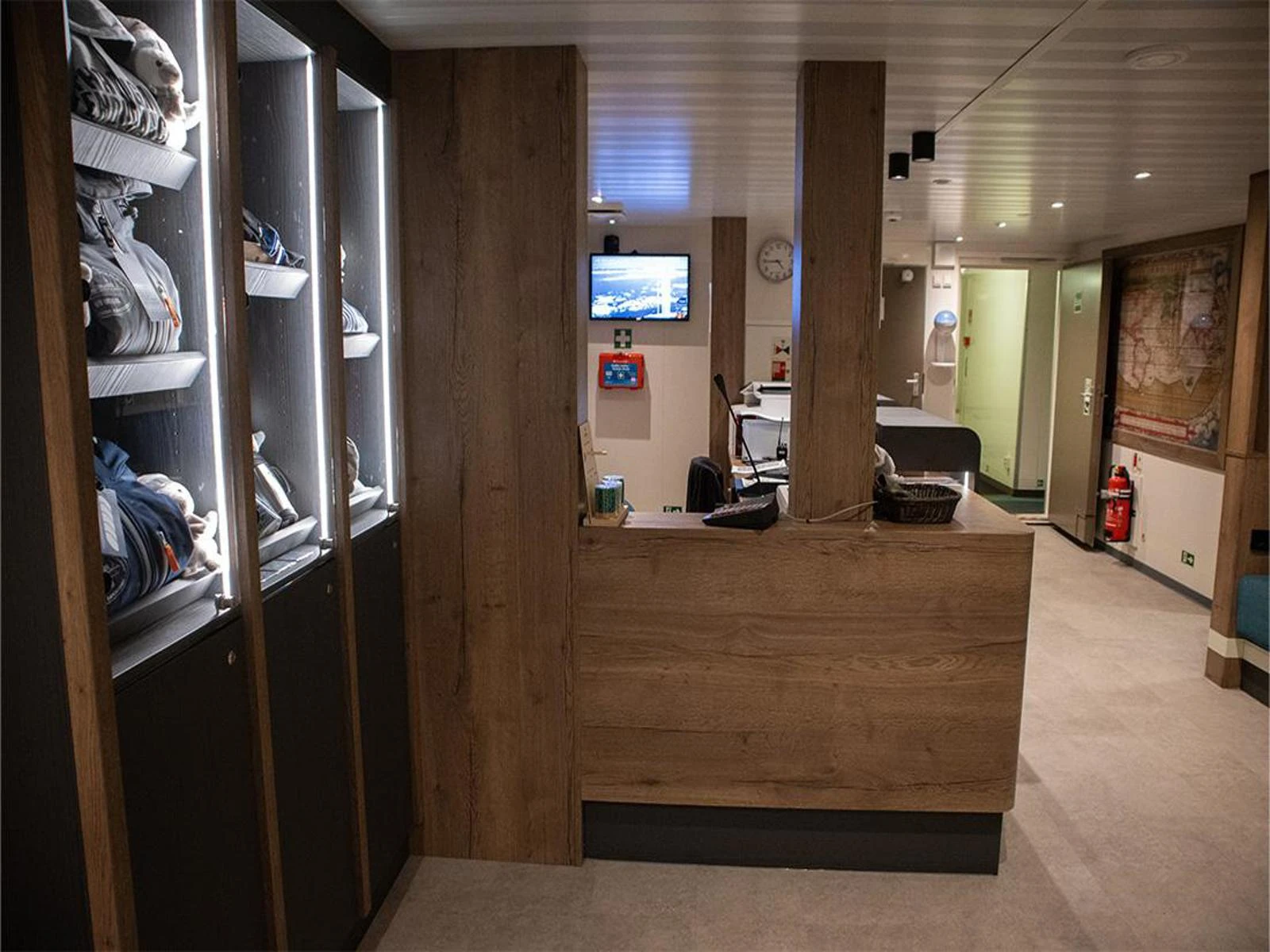
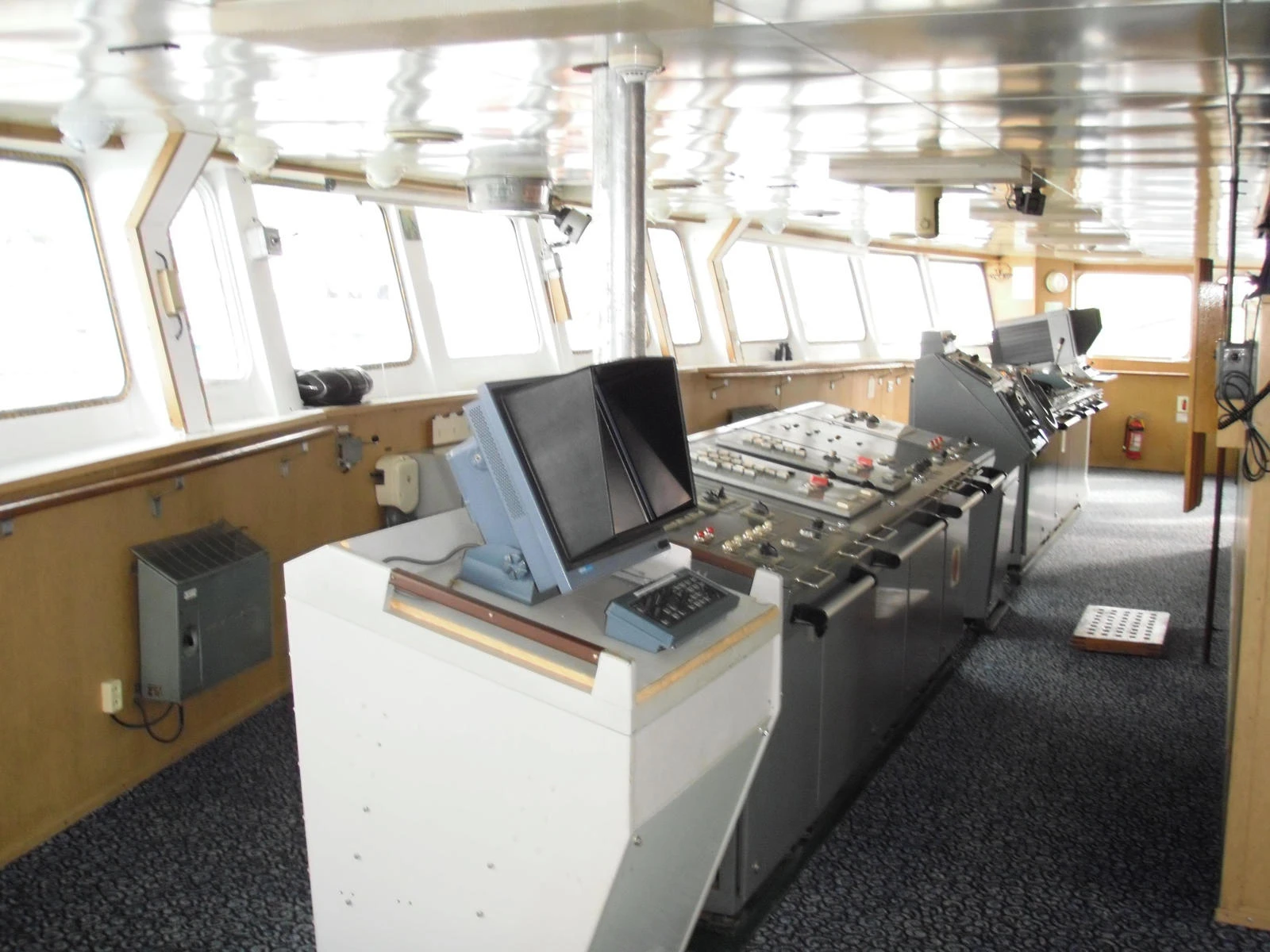
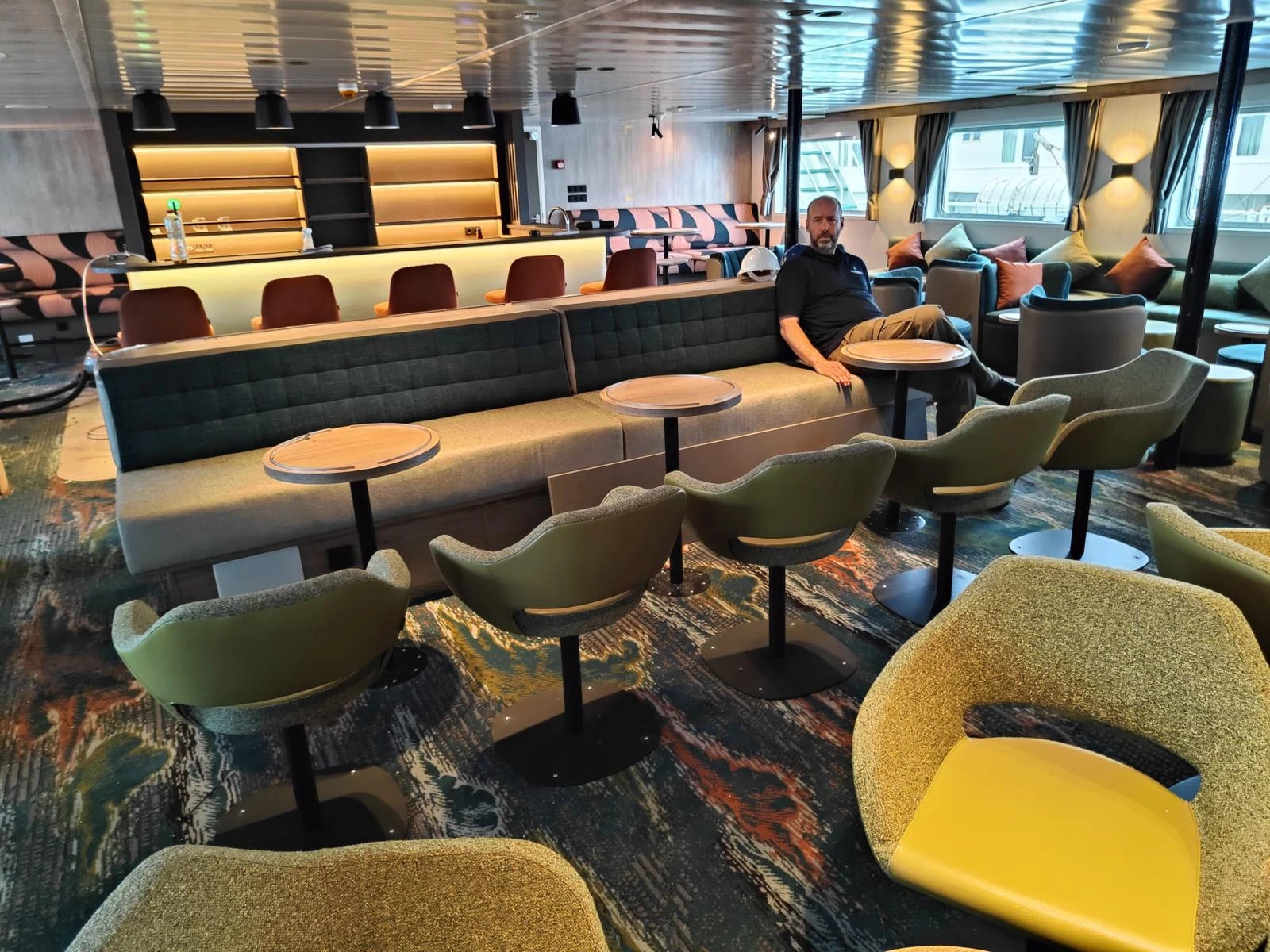
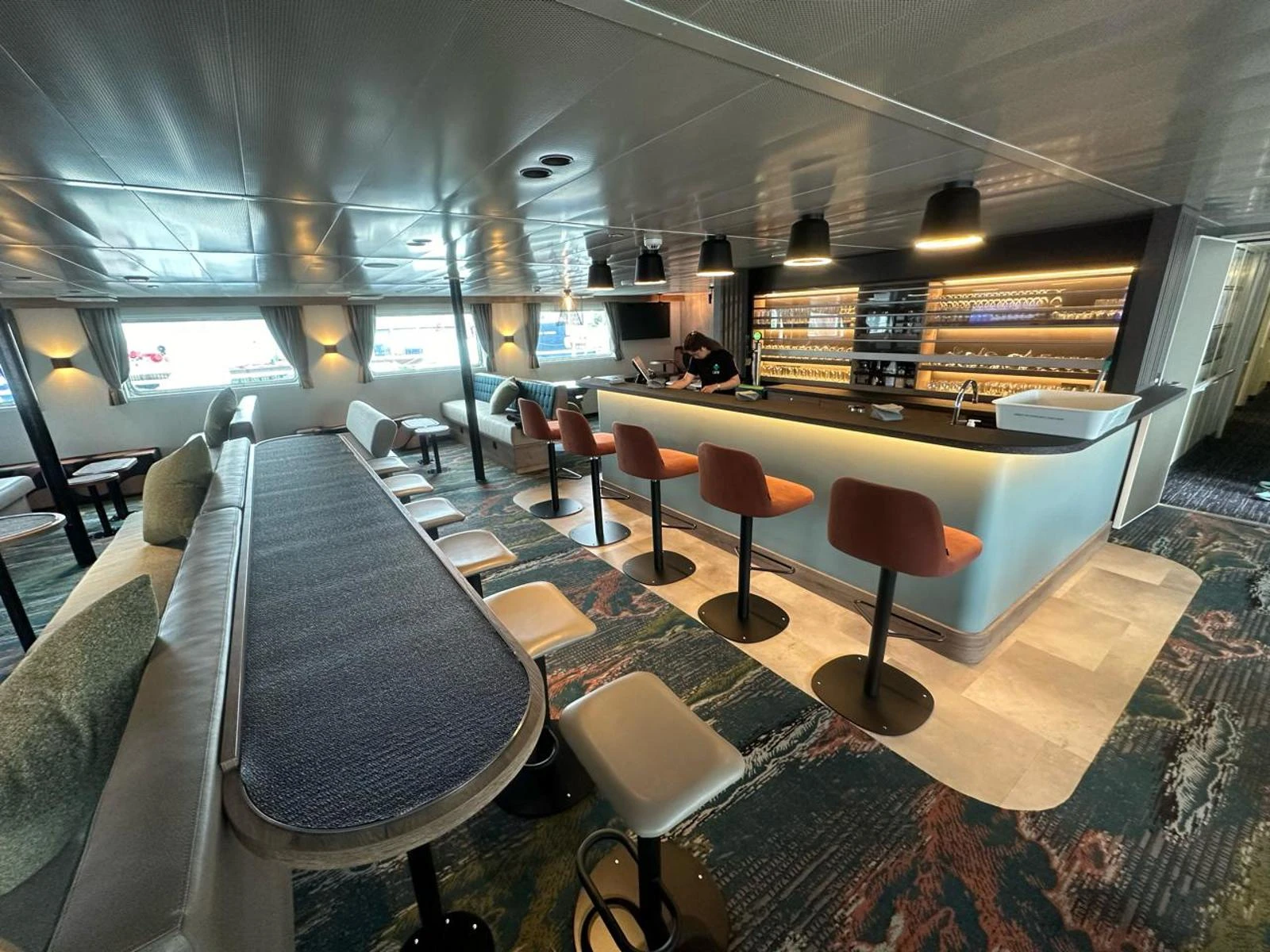
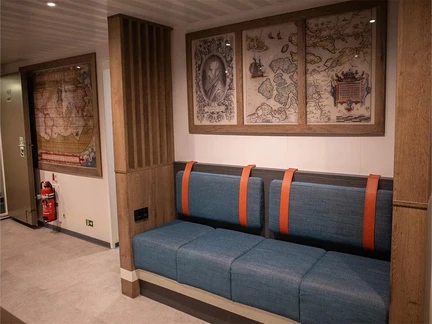
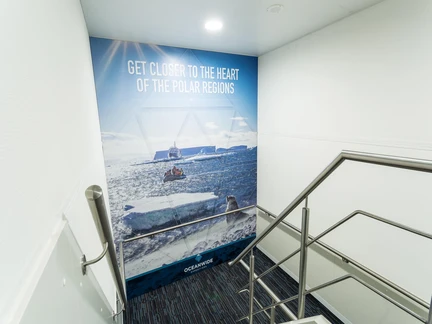
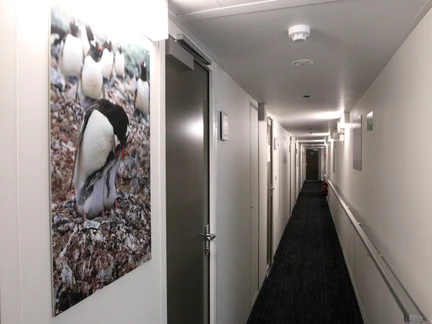
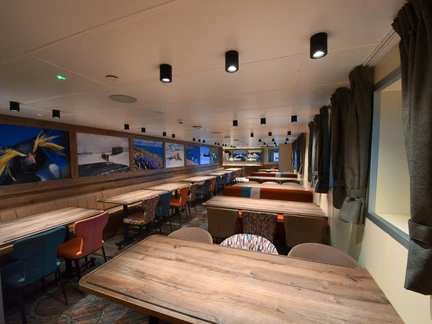
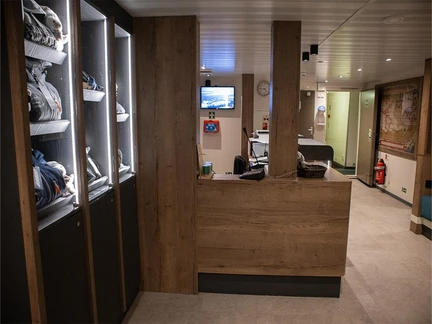
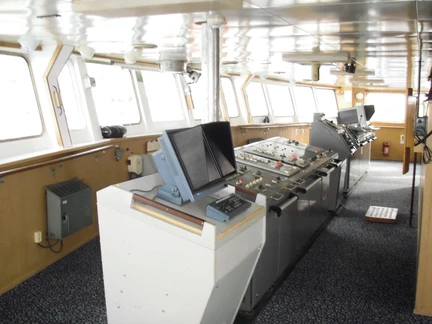
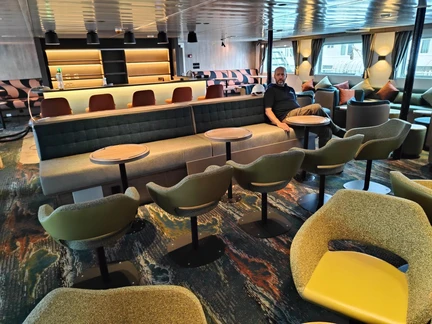
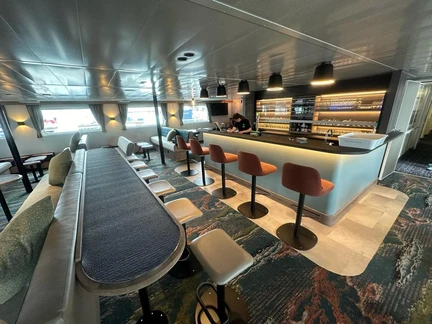
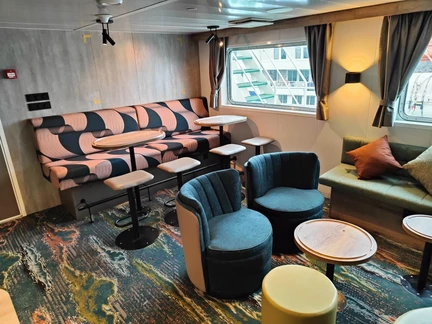
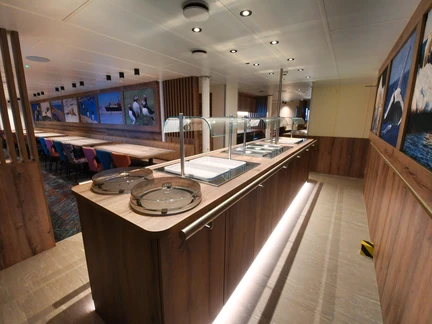
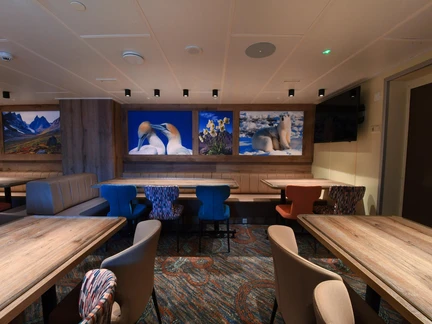
Ship Interior Gallery
Ship Exterior Gallery
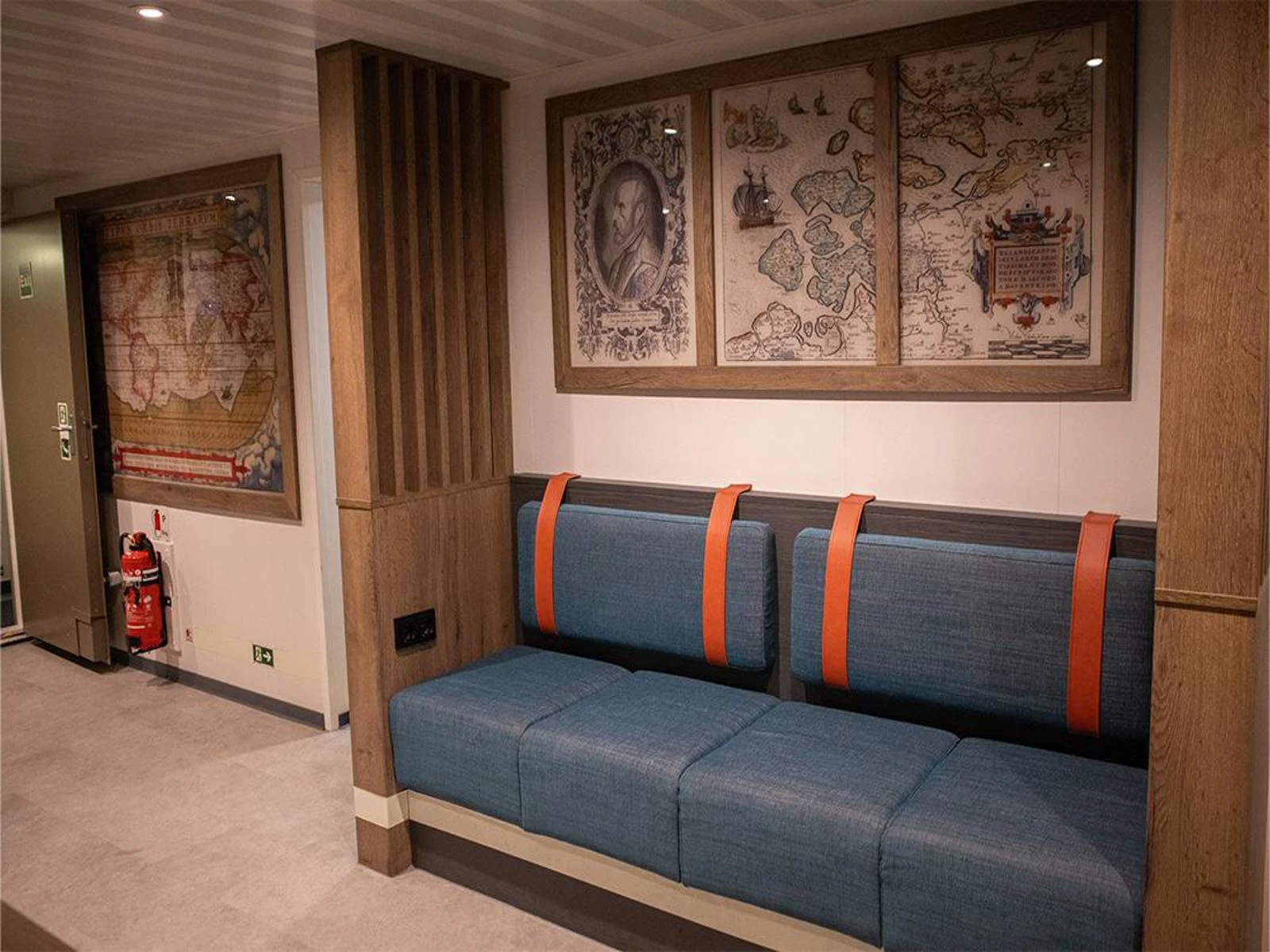
Ortelius was originally the Marina Svetaeva. Built in Gdynia, Poland in 1989, it served as a special-purpose vessel for the Russian Academy of Science. Later it was re-flagged and renamed after the Dutch/Flemish cartographer Abraham Ortelius (1527 – 1598), who in 1570 published the first modern world atlas: Theatrum Orbis Terrarum or Theater of the World. At that time his atlas was the most expensive book ever printed. Ortelius is classed by Lloyd’s Register in London and flies the Dutch flag.
Perfect for Any Expedition
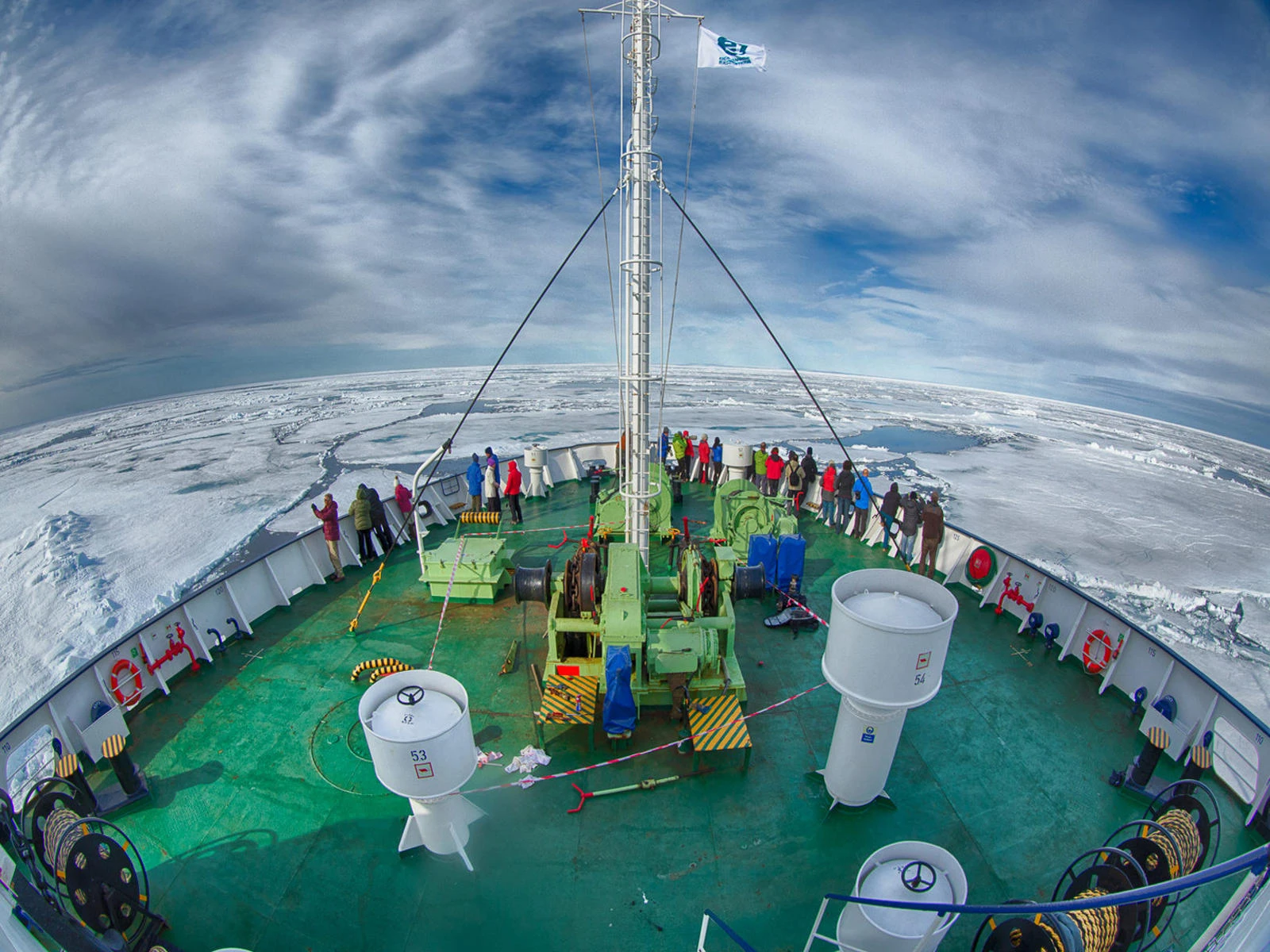
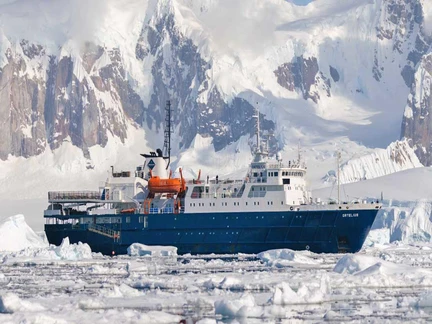
The vessel has the highest ice-class notation (UL1, equivalent to 1A) and is therefore suitable to navigate in solid one-year sea ice as well as loose multi-year pack ice. Ortelius can accommodate up to 108 passengers and has an abundance of open-deck spaces. It is manned by 24 highly experienced nautical crew members, 20 hotel staff, eight expedition specialists (one expedition leader, one assistant, and six lecturer-guides), and one doctor.
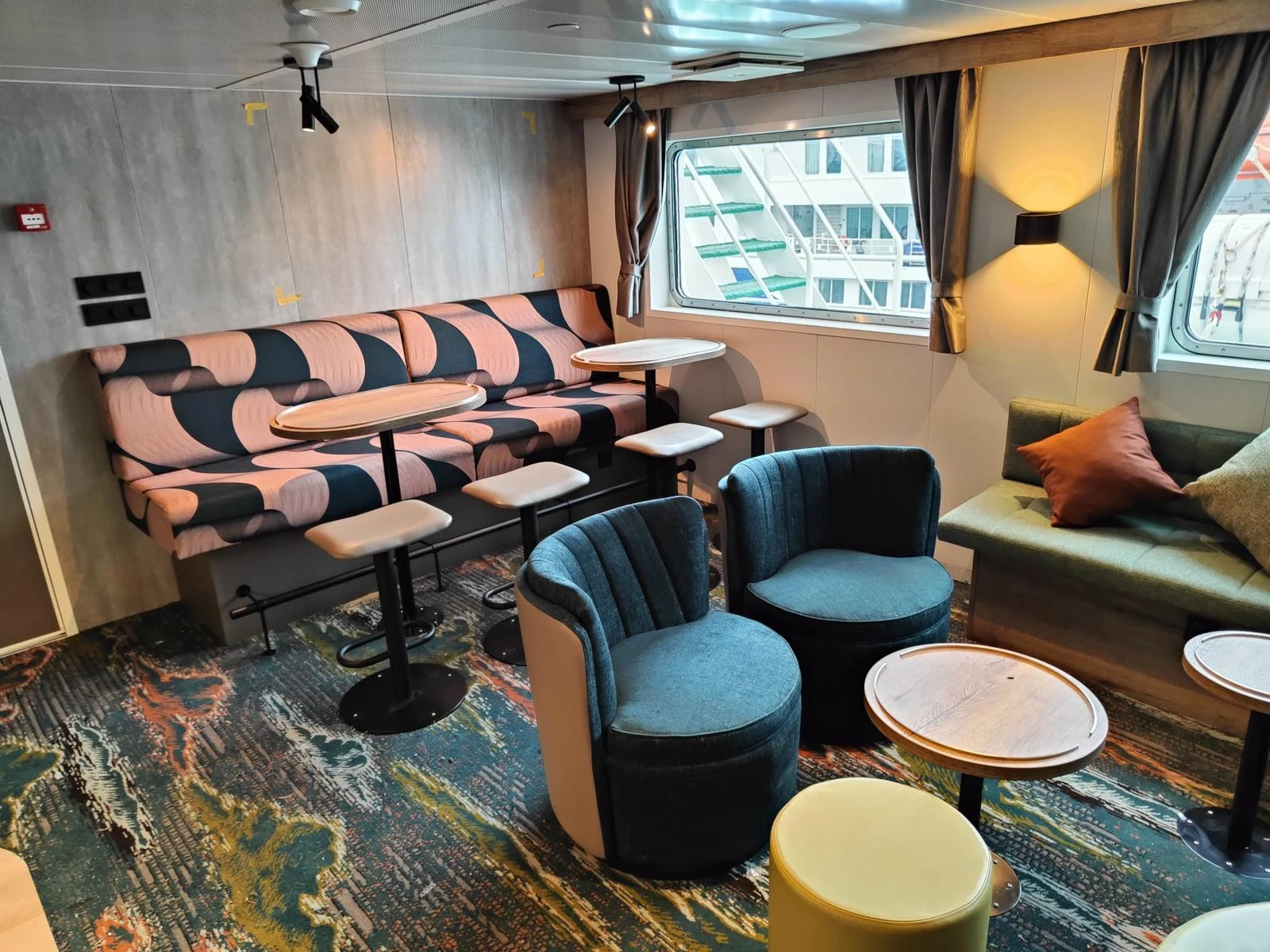
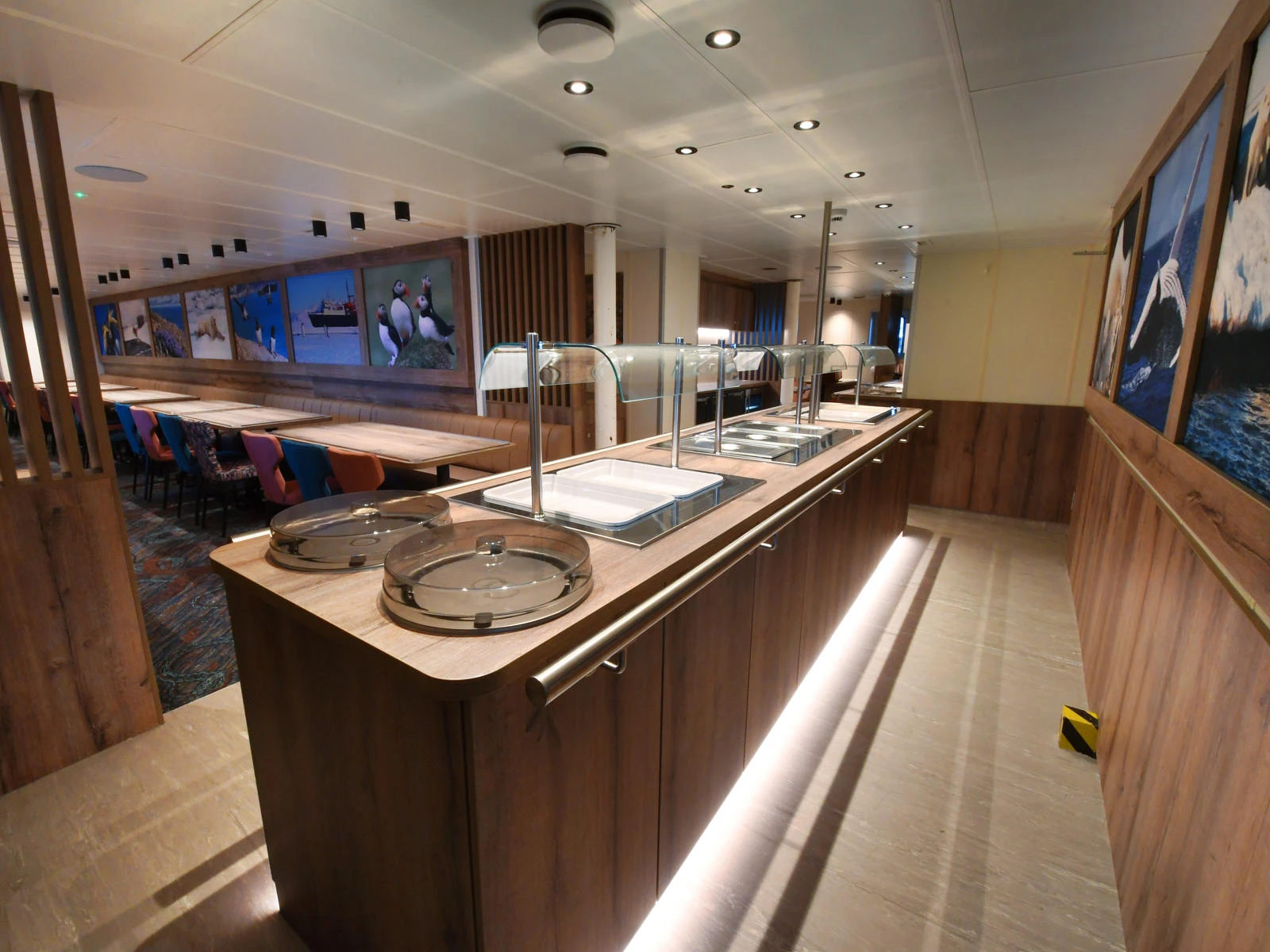
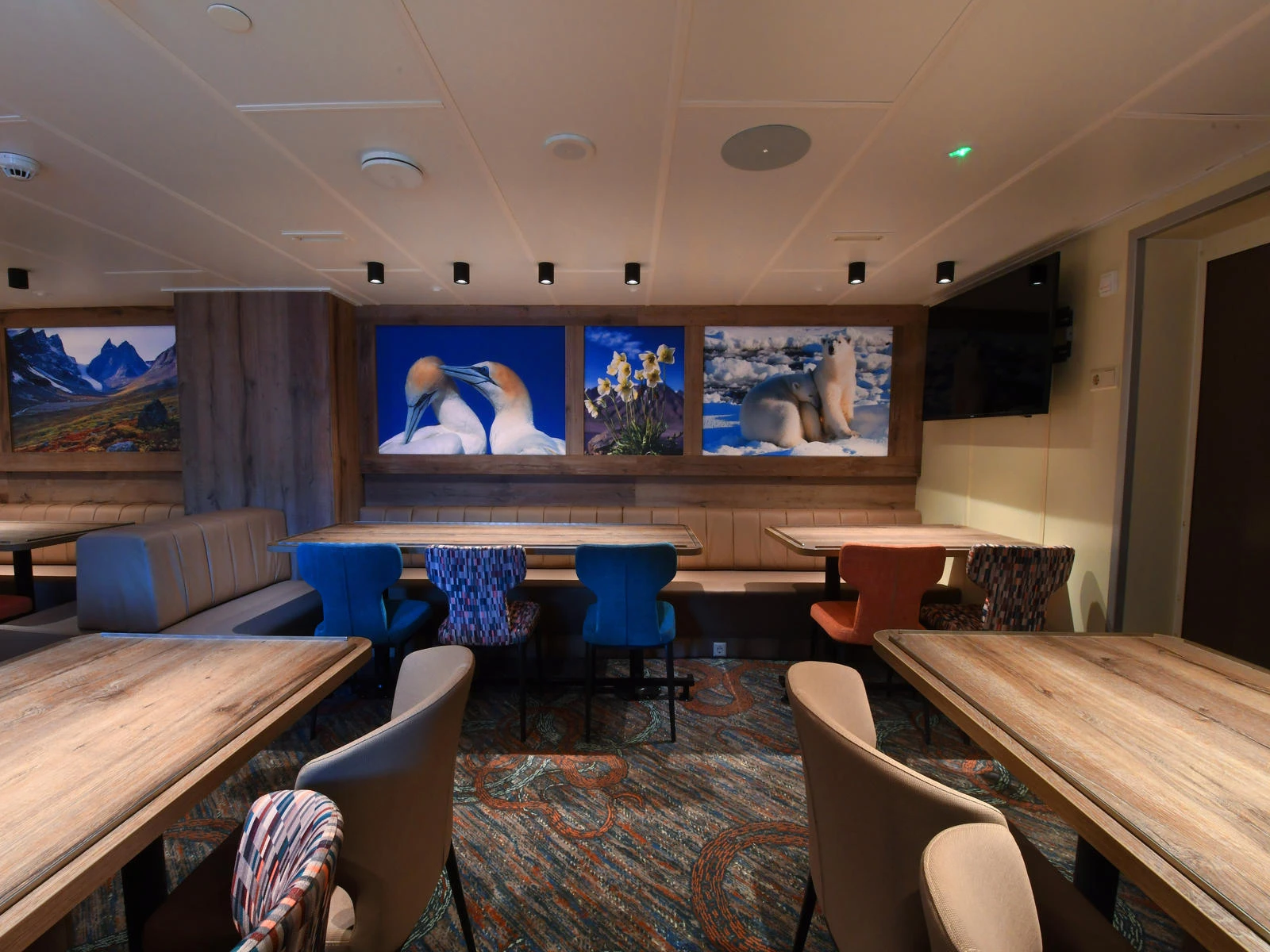
Ortelius: a Vessel with Comfort and Character
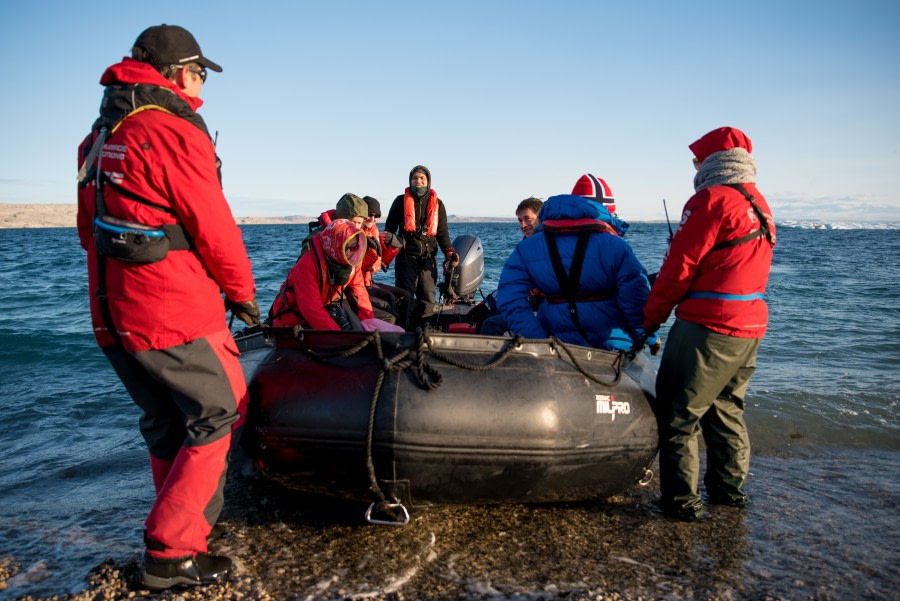
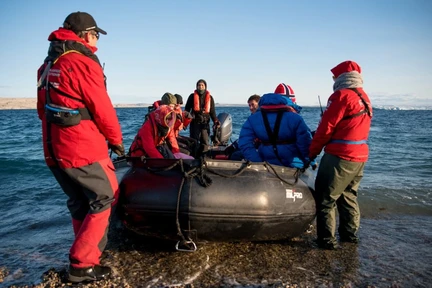
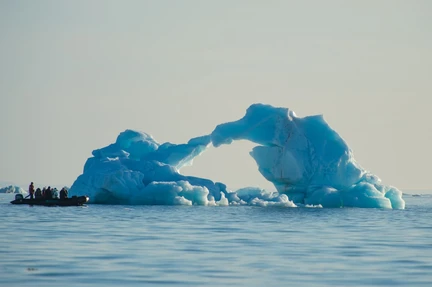
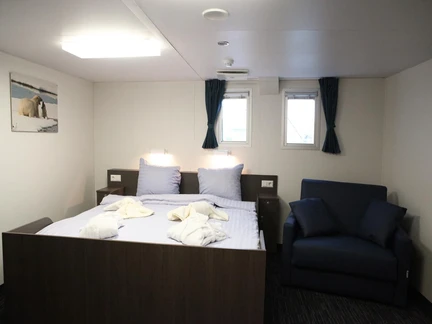
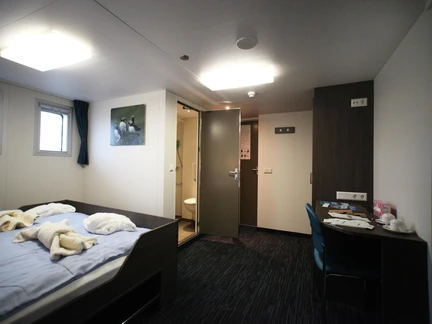
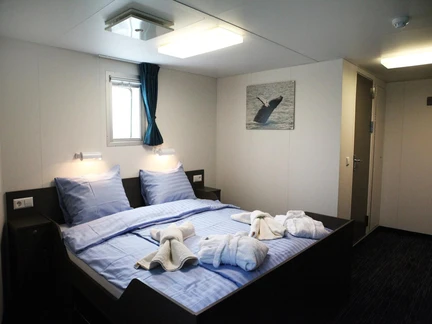
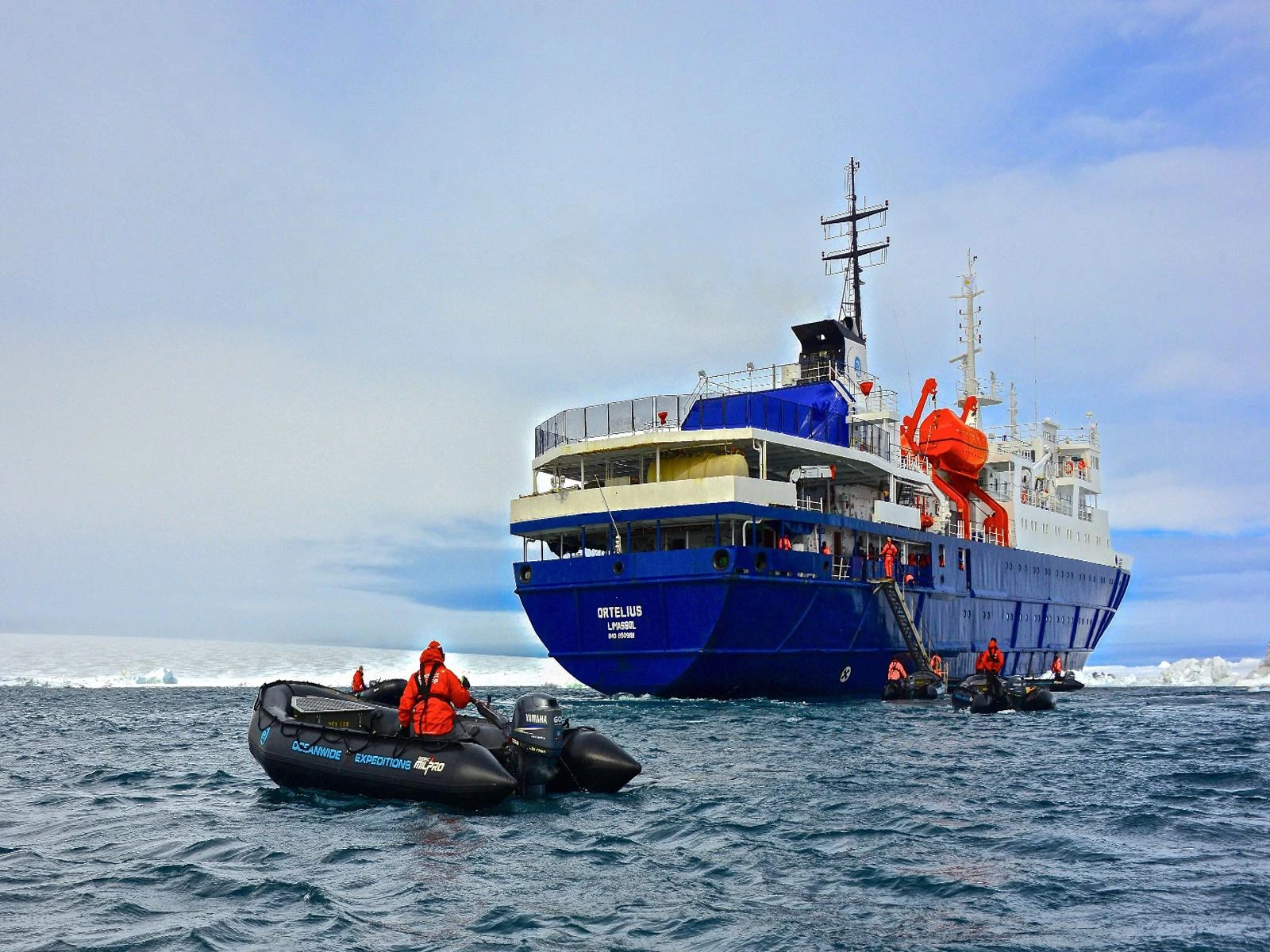
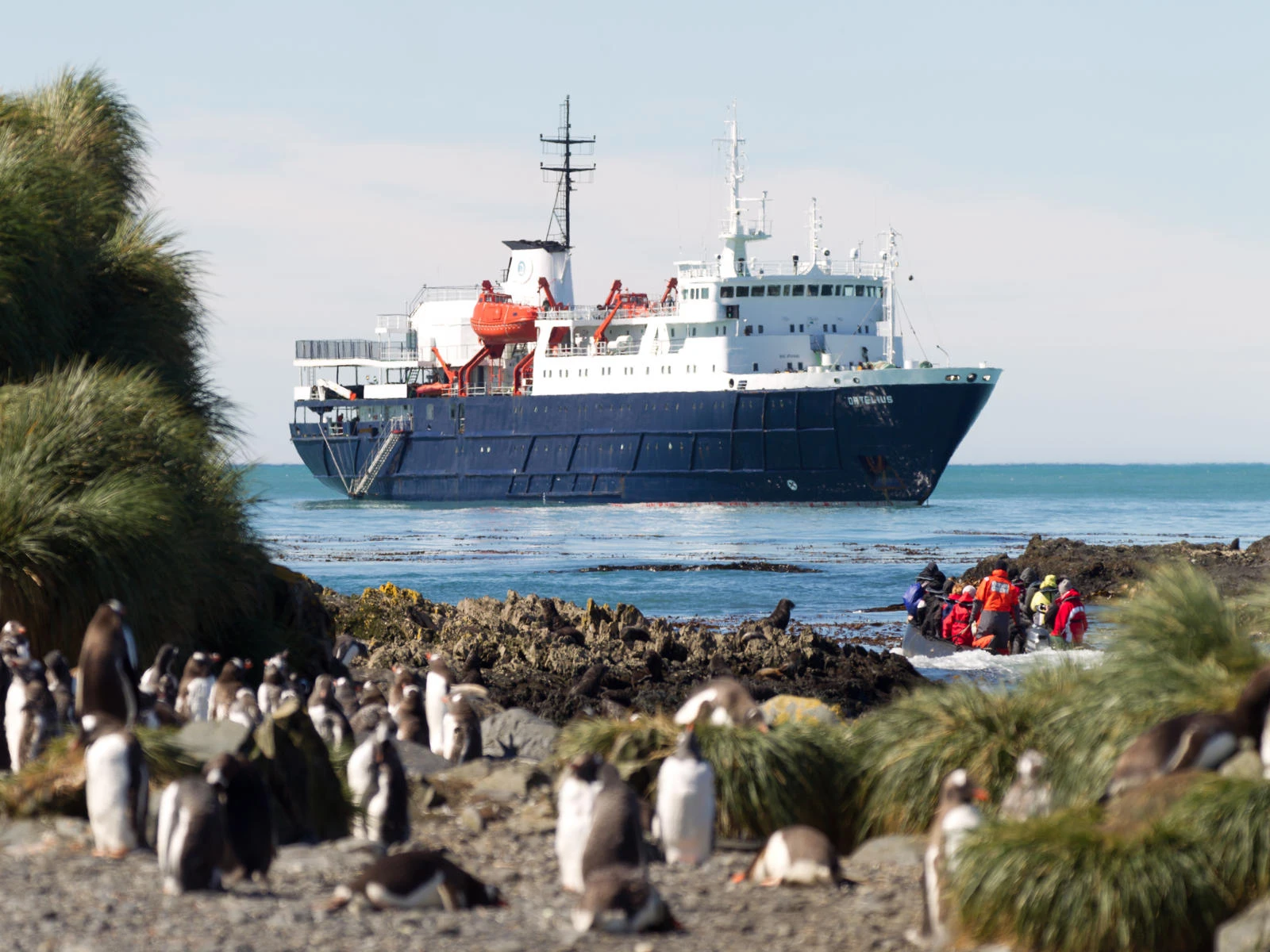
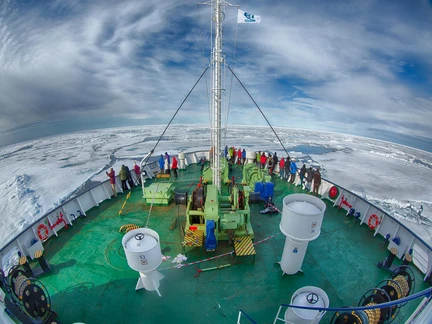
Please be aware that a small number of cabins may have a partially obstructed view due to the size of the windows and the design requirements of the ship. For example, some windows may be partly obstructed in the lower half by a gangway. The best view is always on the outer deck or the bridge. Though our voyages are primarily meant to offer our passengers an exploratory wildlife program with as much time ashore as possible, Ortelius offers all the comforts of a standard hotel ― along with a bar and lecture room. Flexibility assures maximum wildlife opportunities. As such, Ortelius carries 10 Zodiacs with 60hp Yamaha engines.
What to Wear
In keeping with the spirit of expedition, dress on board is informal. Bring casual and comfortable clothing for all activities, and keep in mind that much of the scenery can be appreciated from deck ― which can be slippery. Bring sturdy shoes with no-slip soles, and make sure your parka is never far away in case one of our crew shouts “Whales!” over the loudspeaker and you have to dash outside in a moment’s notice. Opt for layers, as it is comfortably warm aboard the ship though often cold on deck.
How to Pay
Refreshments and souvenirs will be charged to your cabin. The day before departure you can settle your bill with the hotel manager, paying by credit card (Visa or MasterCard) or cash (euro, or in some cases dollar). We cannot, however, accept checks. Though the prices and standard currency on board is in the euro, other currencies may be accepted at the discretion of the hotel manager, at prevailing rates.
Electric Current
The electrical supply aboard ship is 220v, 60Hz. Electrical outlets are standard European with two thick round pins, so some passengers may need a 220v/110v converter.
Gratuities
The customary gratuity to the ship’s service personnel is made as a blanket contribution at the end of the voyage and is divided among the crew. Tipping is a personal matter, and the amount you wish to give is at your sole discretion. As a generally accepted guideline, we suggest 8 ― 15 euros per passenger per day. It is better for the crew if you give cash.
Non-Smoking Policy
We have a non-smoking policy inside all our vessels, though you can smoke in certain designated areas. We ask that you please respect the wishes of non-smokers.
Your Physical Condition
You must be in good overall health and be able to walk several hours per day. The expedition is ship-based and physically not very demanding, but we spend as much time as possible on shore. You are, however, welcome to remain aboard the ship if you prefer. To join most excursions you must be able to get up and down the steep gangway ― from the ship to the water level ― to board the Zodiacs. Staff will assist you in and out of the boats, and boarding will become progressively easier with practice, but conditions on shore can be slippery and rocky. Remember, you will be traveling in remote areas without access to sophisticated medical facilities, so you must not join this expedition if you have a life-threatening condition or need daily medical treatment.
The average price for flights (round trip) to Longyearbyen
From Jakarta: $860
From Singapore: $976
From Kuala Lumpur: $886

- That is hard to say. It depends on the weather and constraints of time and distance. Depending on the voyage, you may spend several days aboard the ship, followed by a series of landings, each several hours long. On some cruises, you land two or three times every day. During our time at the high latitudes, we will have almost continuous daylight, which means we may schedule excursions before breakfast, after dinner, or in the middle of the night. Often the light for photography is best at these times. We would like to show you as much as possible, but we also want to leave it up to you to skip an excursion.
- It is difficult to determine this, as it depends on our distance from Stanley, the Falkland Islands, or Ushuaia. There are no helicopter or plane evacuations from South Georgia and the South Sandwich Islands, nor is there any medical facility able to help with a serious medical situation in this area. It will take at least 2-3 days from South Georgia to Stanley, and similar if a medical emergency happens between South Georgia and the Antarctic Peninsula. All scenarios are highly weather dependent. Near the Antarctic Peninsula, we have the chance to use the airfield at Frei/Bellingshausen station at King George Island in the South Shetlands, but this is not a given and needs to be arranged in advance. Assuming that such arrangements can be made, evacuation time may be between 1-2 days depending on weather conditions. If flight arrangements are possible but the weather does not cooperate, it could delay a medevac or force the ship back to Ushuaia. We are far away from any feasible medical facility in Antarctica. Any evacuation takes a lot of time and could have a severe impact on the rest of the trip. If you are in poor health or in doubt, please consult your physician for a check-up beforehand. On our motor vessels, we have a qualified physician who sails with us on all trips. The infirmary on board our motor vessels is only suited for first-aid care.
- We accept payment via bank transfer, Wise or credit card (Mastercard and Visa). When paying with a credit card, we have to pass on a credit card fee.
- No, you are not able to get cash advances on the vessel.
- An expedition to Spitsbergen, which is the only inhabited island within the Svalbard archipelago, will not reveal an overly crowded island. In fact, there are only 2,642 people living in Spitsbergen, and 2,040 of them are in Longyearbyen. Therefore, any trip to Spitsbergen that includes a voyage outside of Longyearbyen will be relatively isolated.
- As polar bears can travel great distances in a day, it is impossible to say where and when we will spot them. Sea ice is the best place to look, so we tend to focus our efforts there. Though you will have a good chance of seeing polar bears in Svalbard, nature makes the decisions. Sightings cannot be guaranteed.
- The number of passengers is limited to approximately 116 on the Ortelius. Furthermore the vessel is manned by 20 highly experienced international nautical crew, 19 international hotel crew, including stewardesses, 7 expedition staff in Antarctica (1 expedition leader and 6 guides/lecturers) and 1 doctor.
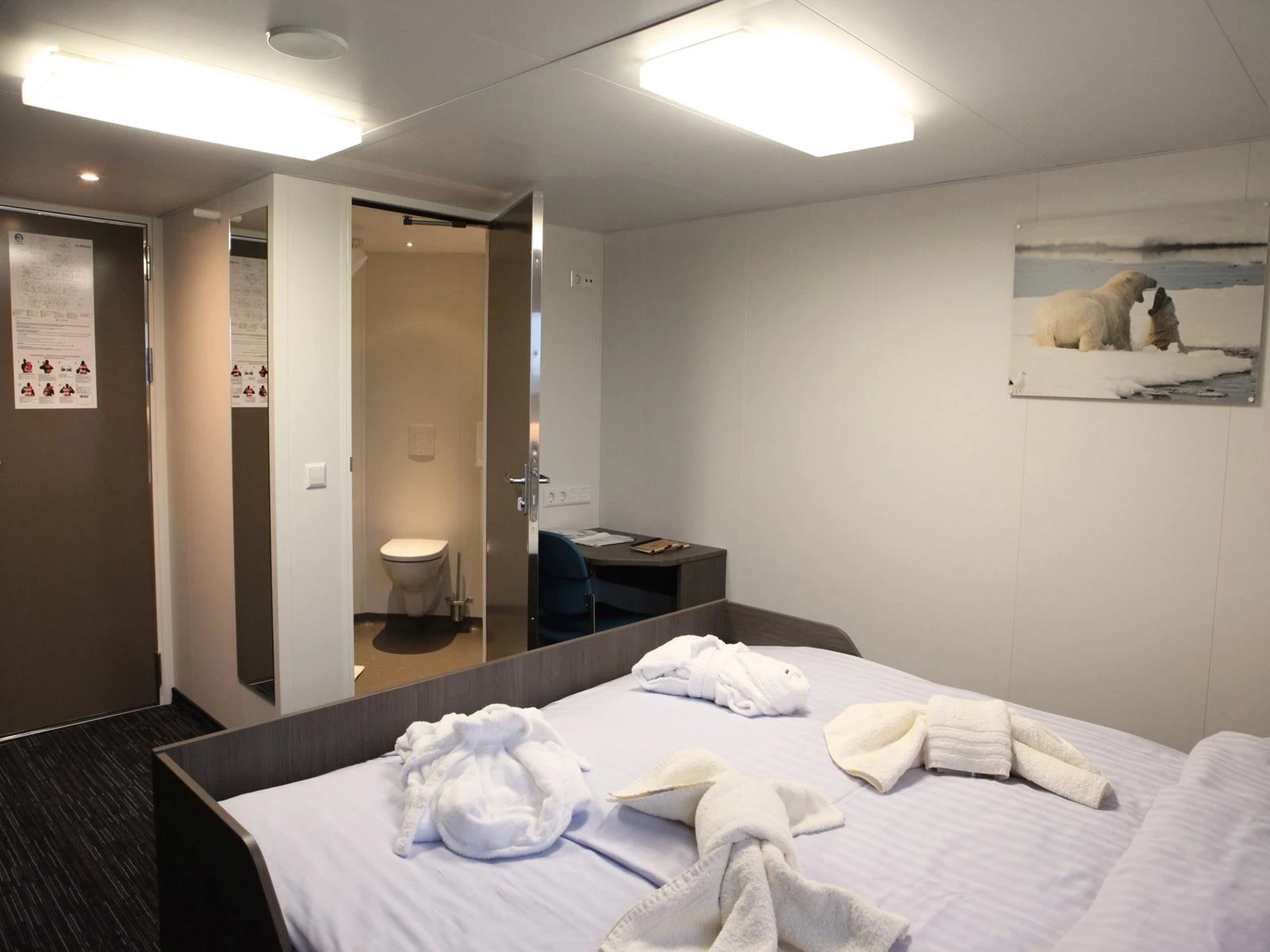
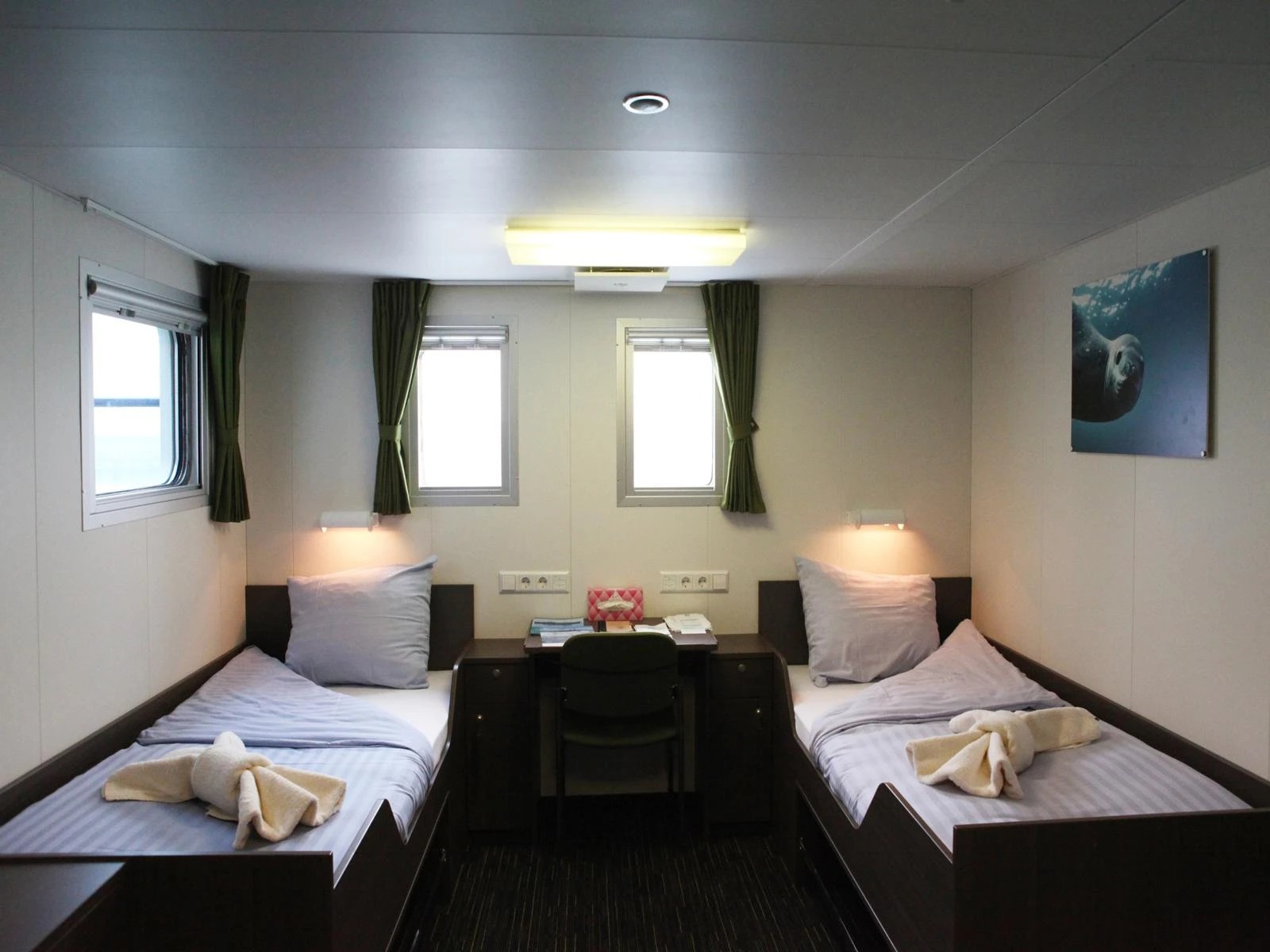
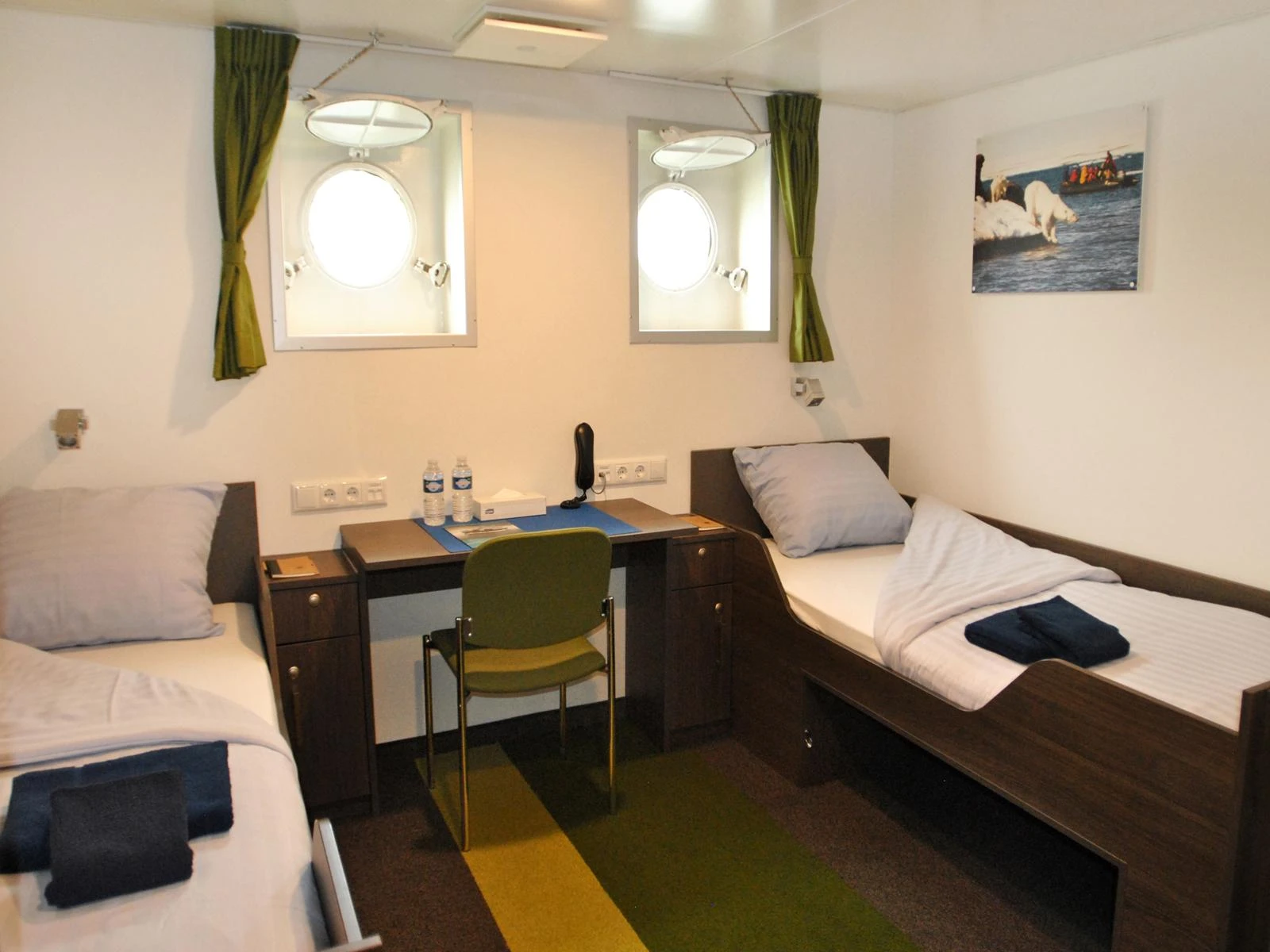
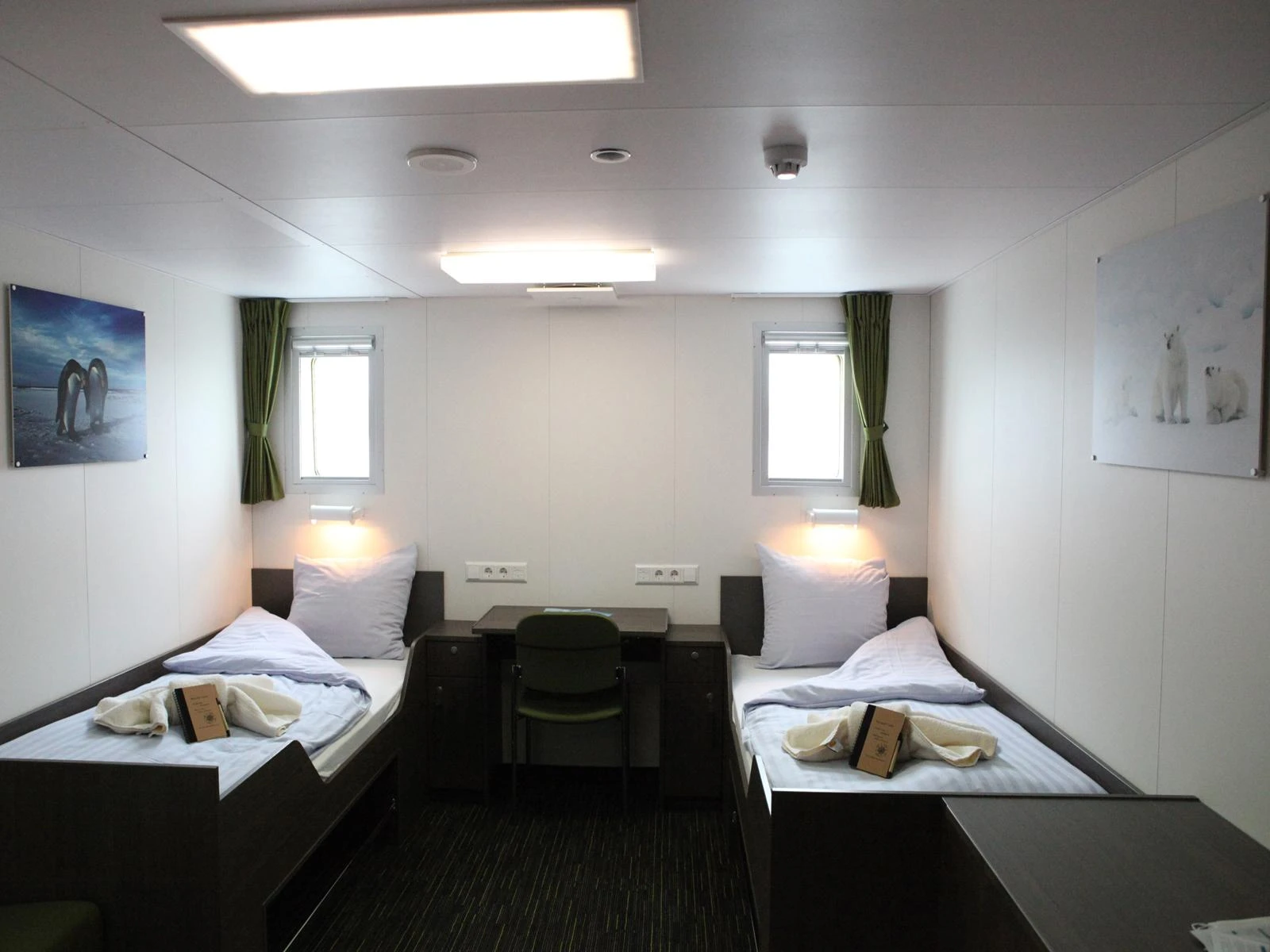
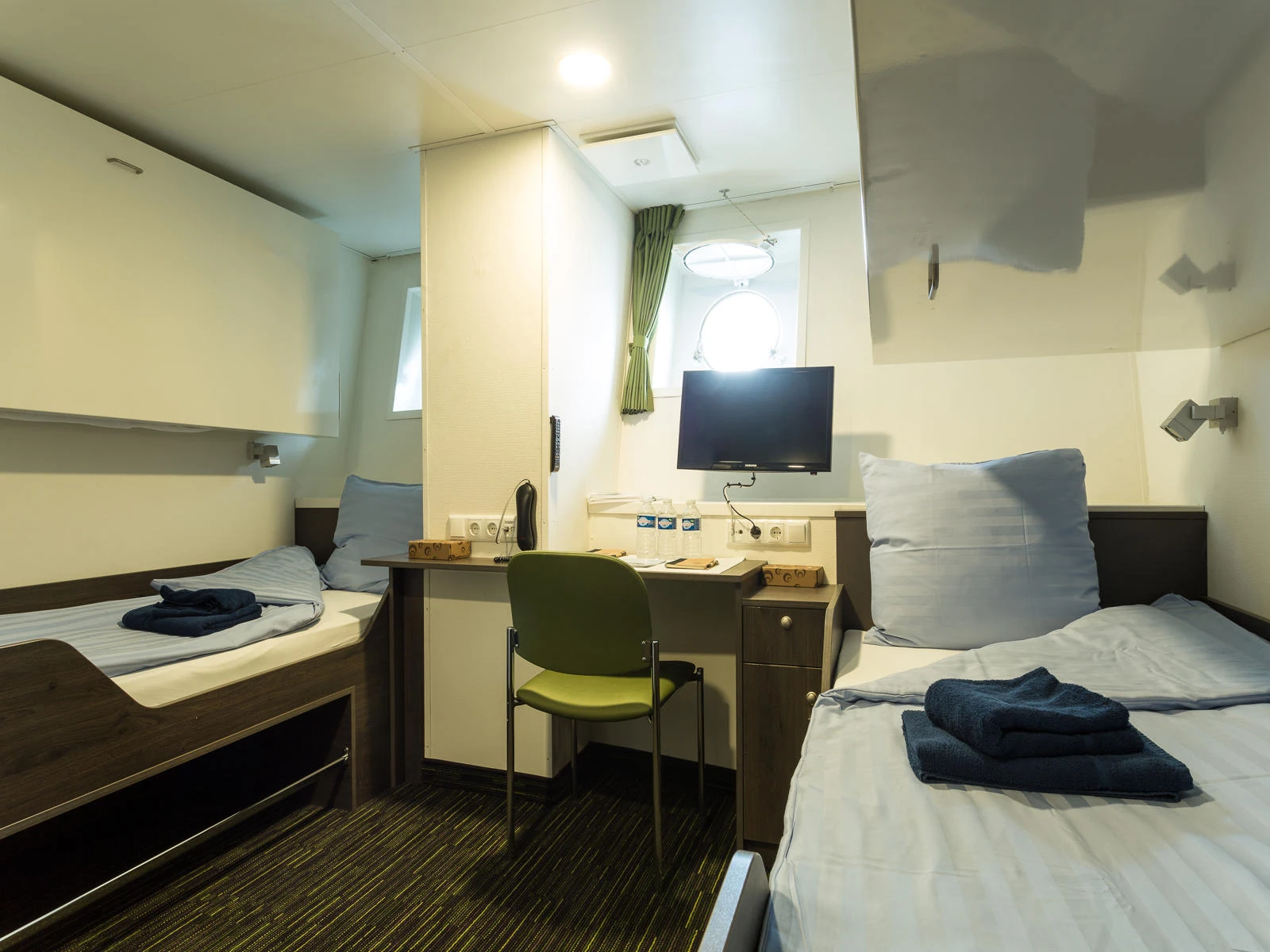
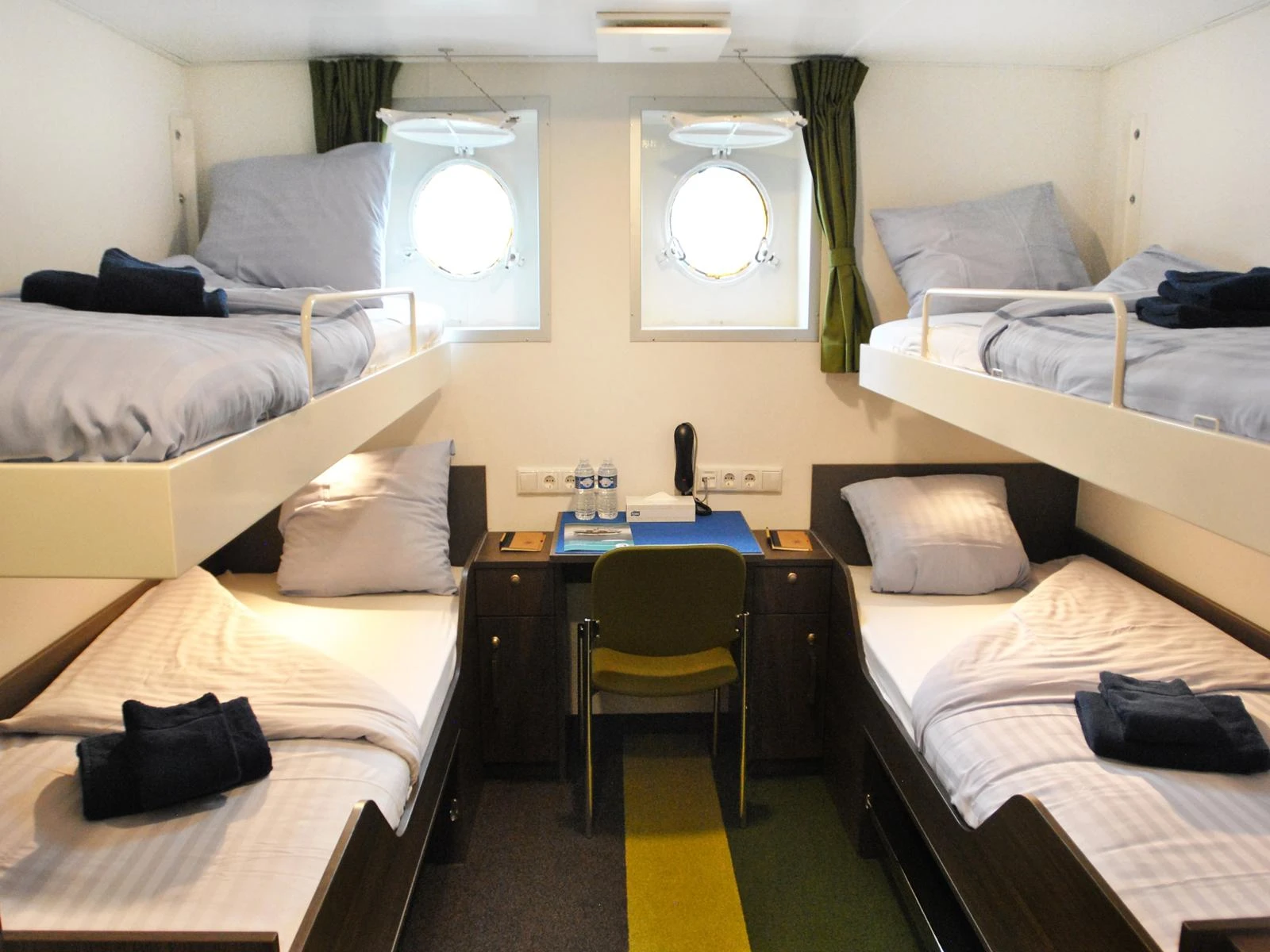
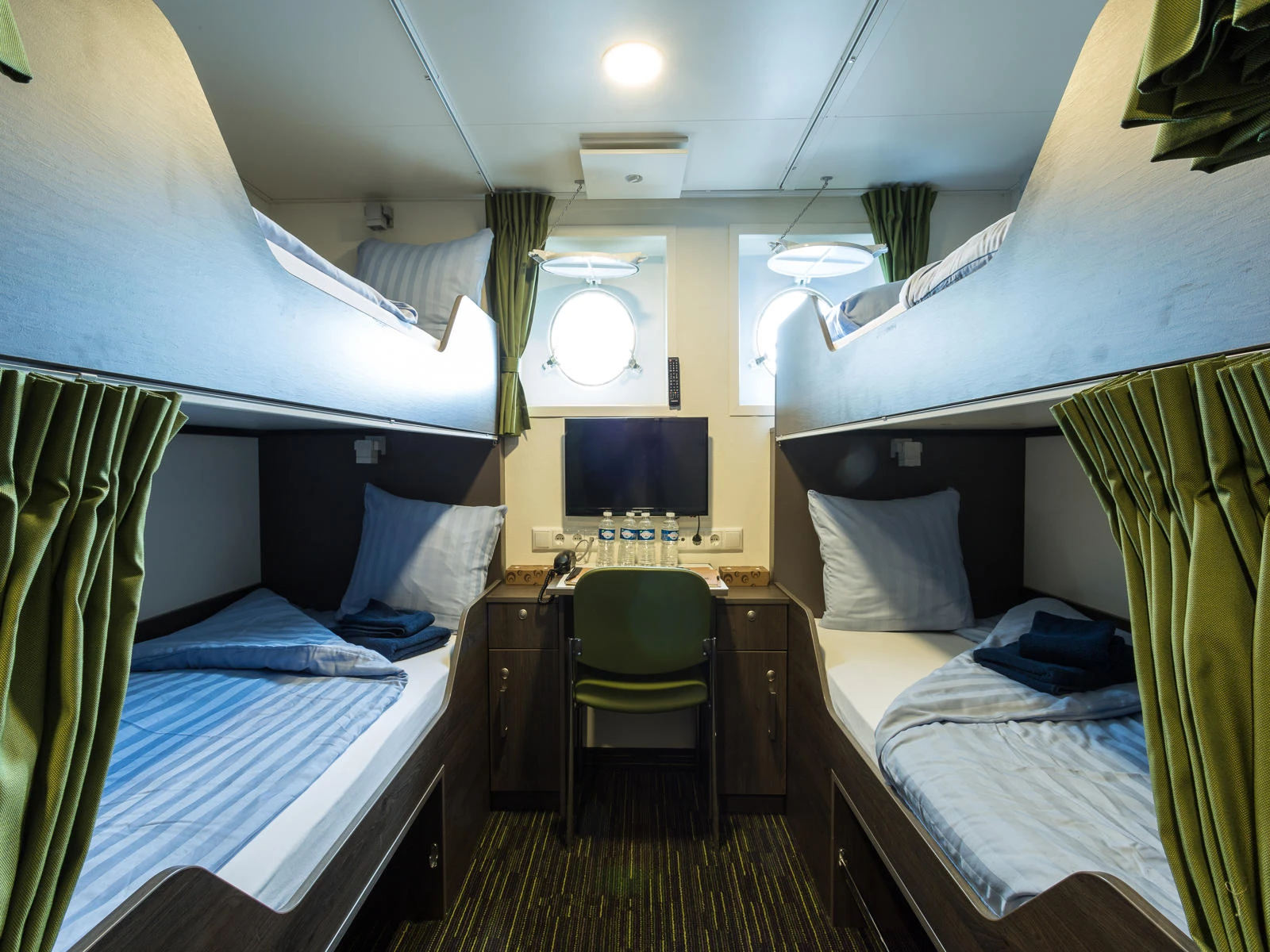
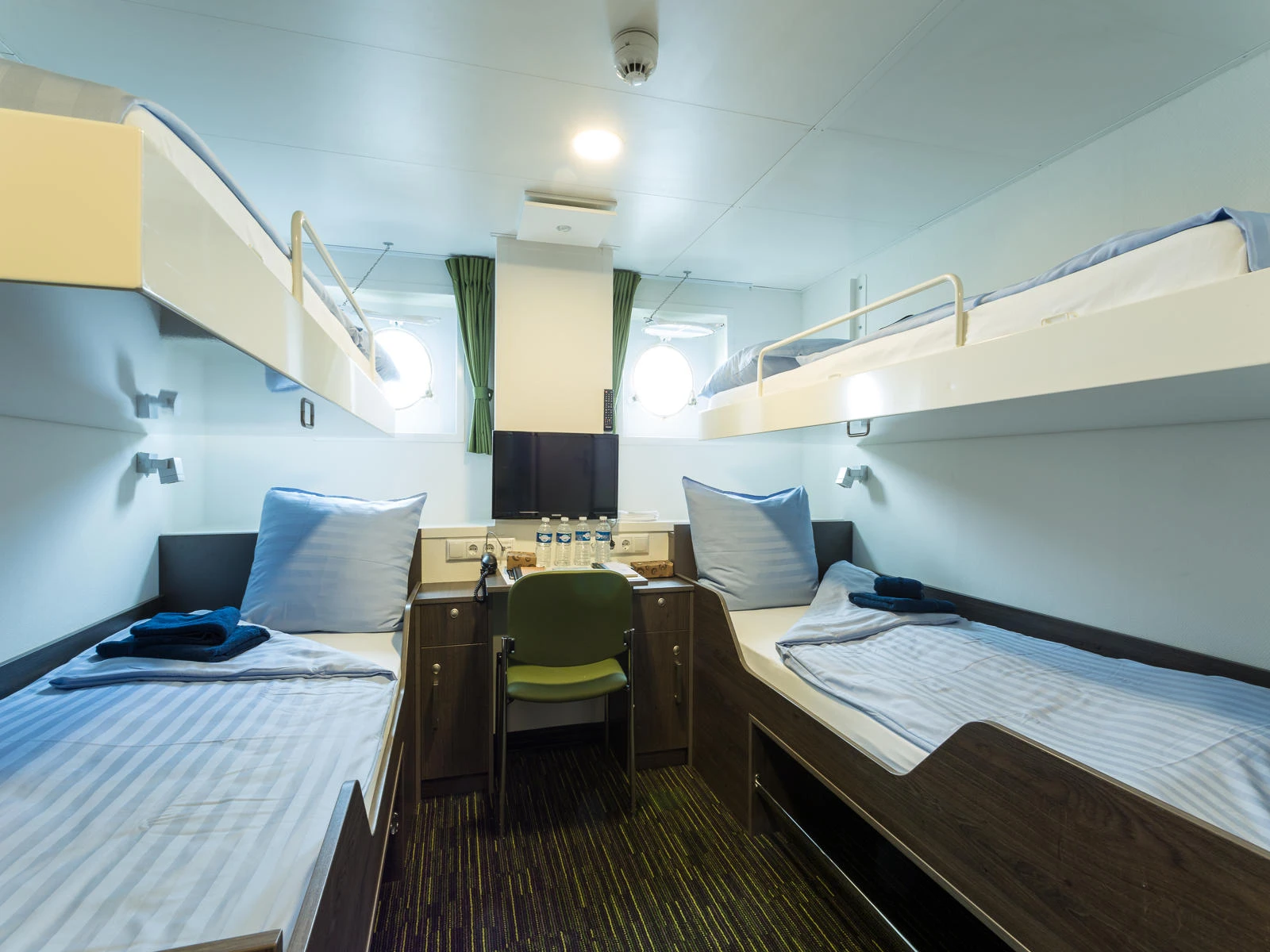
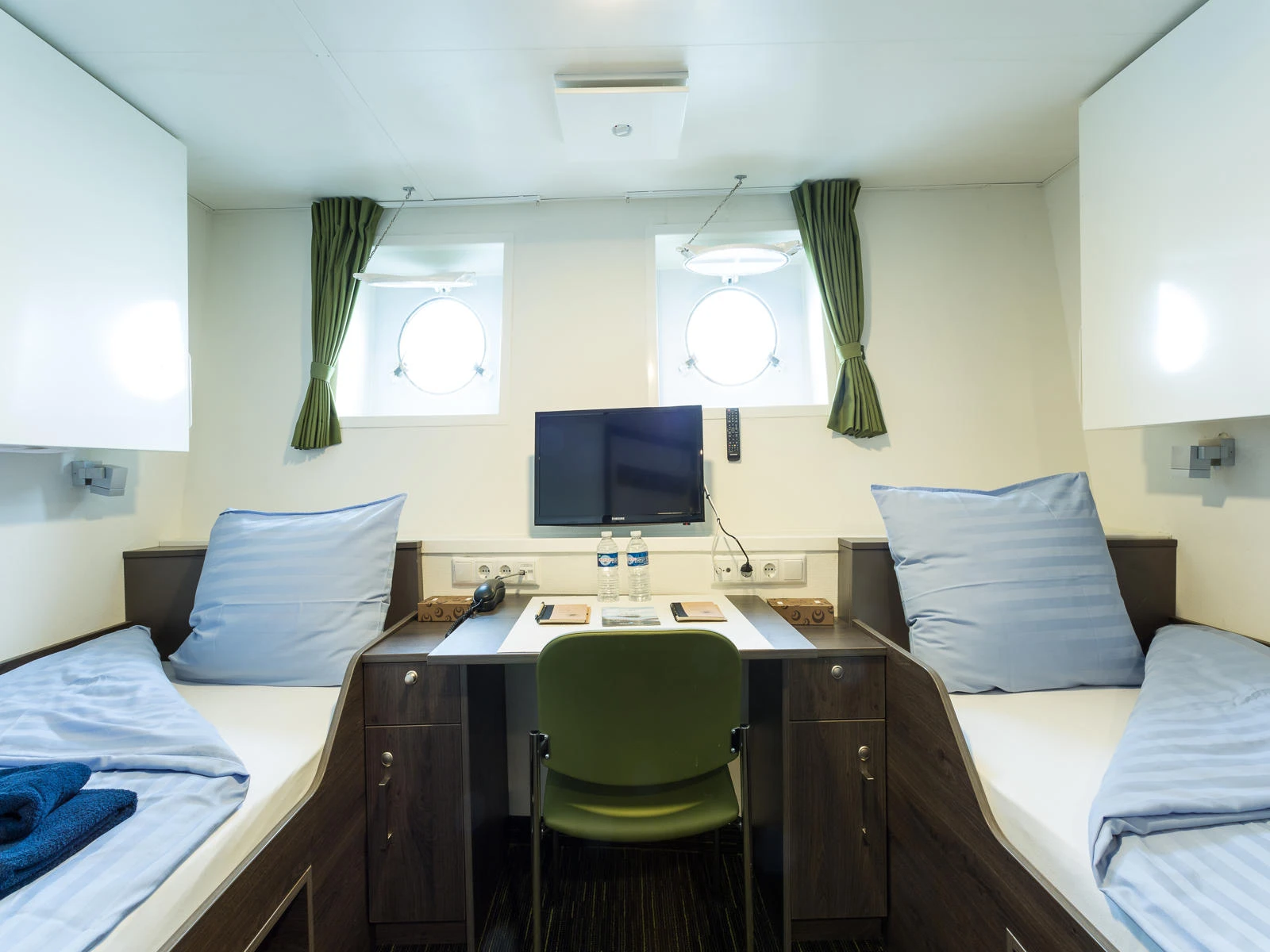
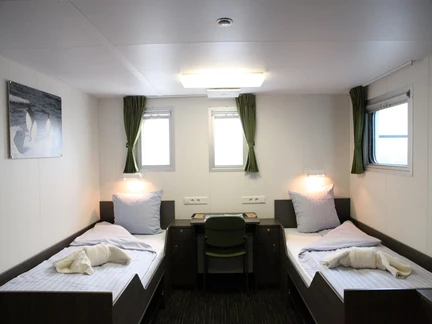
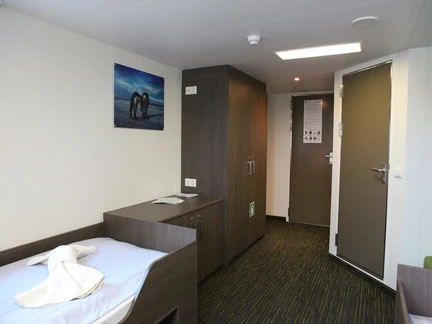
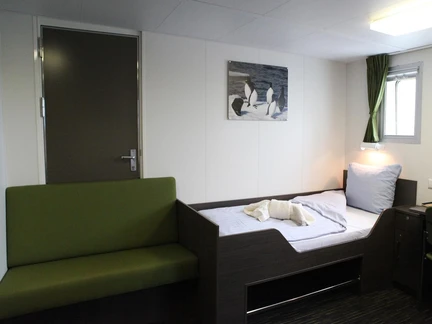
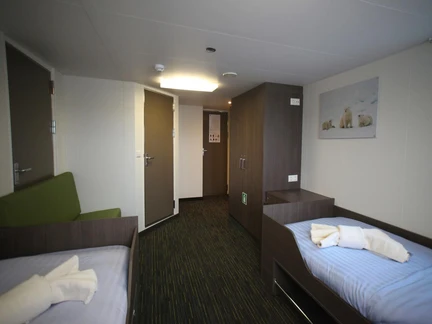
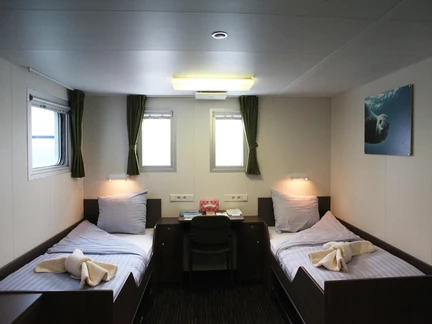
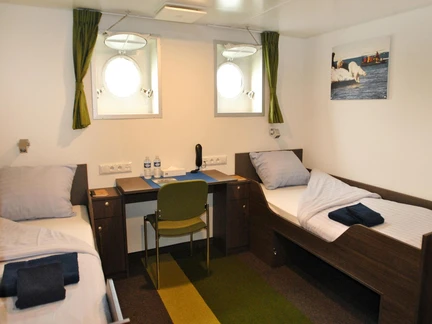
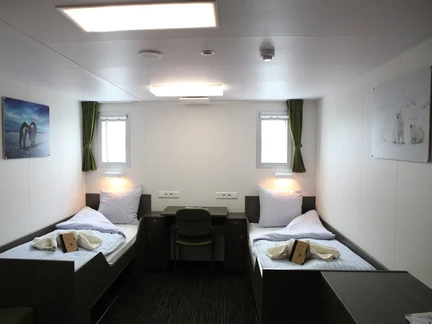
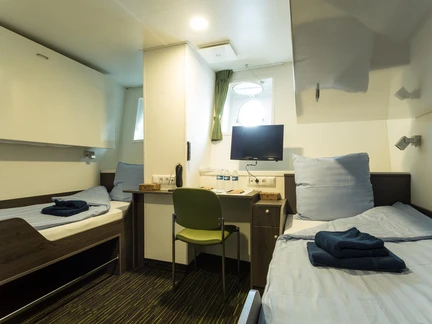
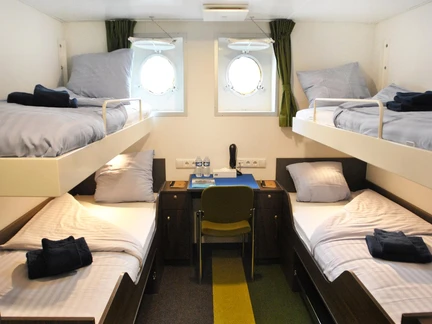
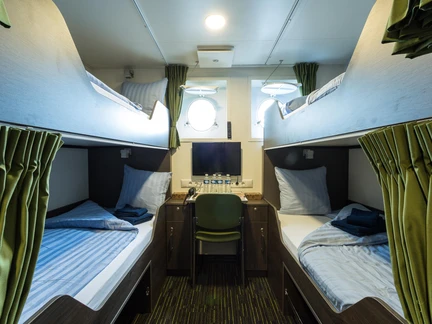
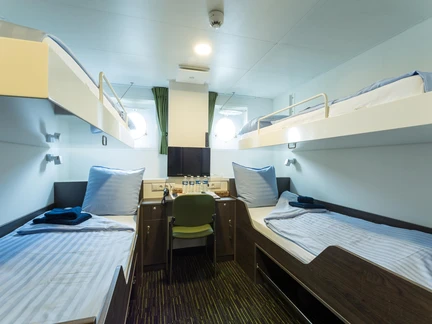
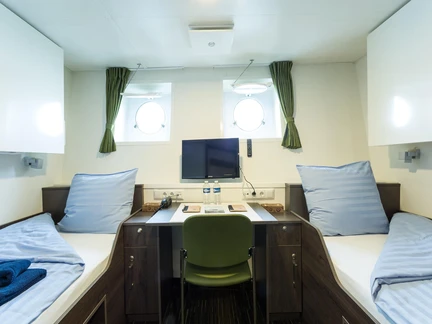
- There are in total 50 cabins at the Ortelius. 4 quadruple cabins with bunk beds. 26 twin porthole cabin with 2 single berths. 12 twin cabins with windows and 2 lower berths. 2 twin deluxe cabins with windows and 2 single lower berths. 6 superior cabins with double beds. All cabins are spacious outside cabins with a minimum of two portholes or windows per cabin and all cabins have a private shower and toilet.

You May Also Like


Alpine Peaks of Spitsbergen, Ski & Sail
24 Apr 2026 - 01 May 2026 8 Days / 7 Nights
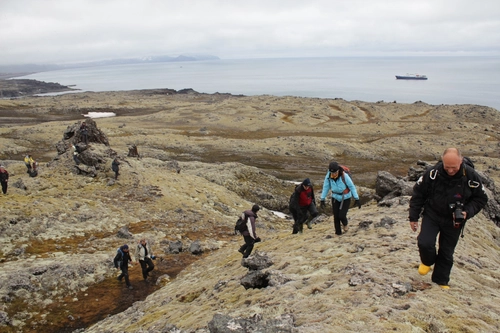
Arctic Ocean - Fair Isle, Jan Mayen, Ice Edge, Spitsbergen, Birding
27 May 2026 - 05 Jun 2026 10 Days / 9 Nights
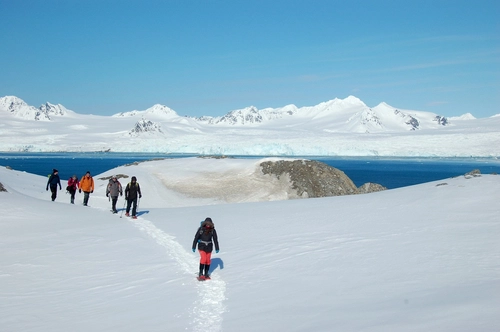
North Spitsbergen - Arctic Spring , Hike & Sail
29 May 2026 - 05 Jun 2026 8 Days / 7 Nights
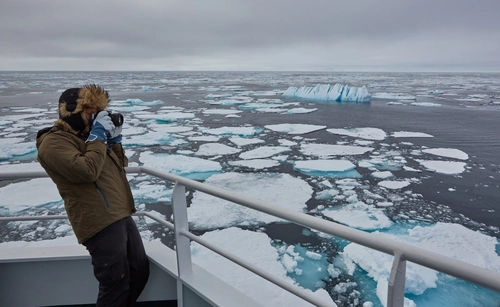
North Spitsbergen Explorer - Into the pack ice - Polar Bear Special
05 Jun 2026 - 12 Jun 2026 8 Days / 7 Nights

Arctic Ocean - Jan Mayen, Ice edge, Spitsbergen, Birding
05 Jun 2026 - 13 Jun 2026 9 Days / 8 Nights
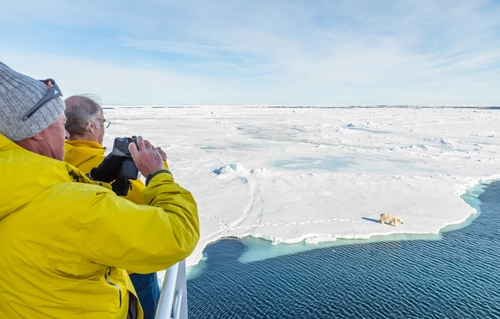
Arctic Ocean - Fair Isle, Jan Mayen, Ice edge, Spitsbergen, Birding - Summer Solstice
12 Jun 2026 - 21 Jun 2026 10 Days / 9 Nights
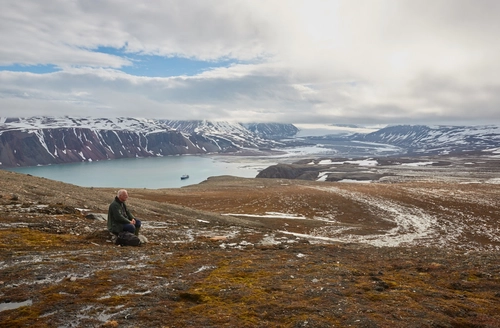
North Spitsbergen Explorer - Versatile landscapes, sea ice & wildlife
13 Jun 2026 - 20 Jun 2026 8 Days / 7 Nights
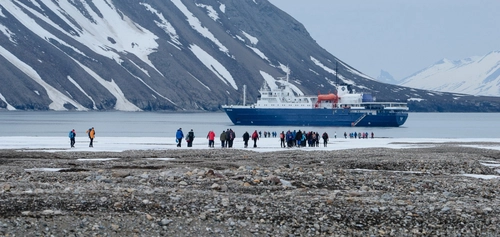
North Spitsbergen Basecamp – Summer Solstice - Free Kayaking, Hiking, Photo Workshop, Diving (supplemented)
19 Jun 2026 - 26 Jun 2026 8 Days / 7 Nights
North Spitsbergen Explorer - Versatile landscapes, sea ice & wildlife - Summer Solstice
20 Jun 2026 - 27 Jun 2026 8 Days / 7 Nights
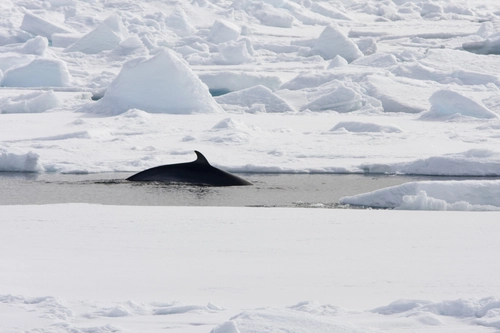
North Spitsbergen - Arctic Summer
25 Jun 2026 - 05 Jul 2026 11 Days / 10 Nights
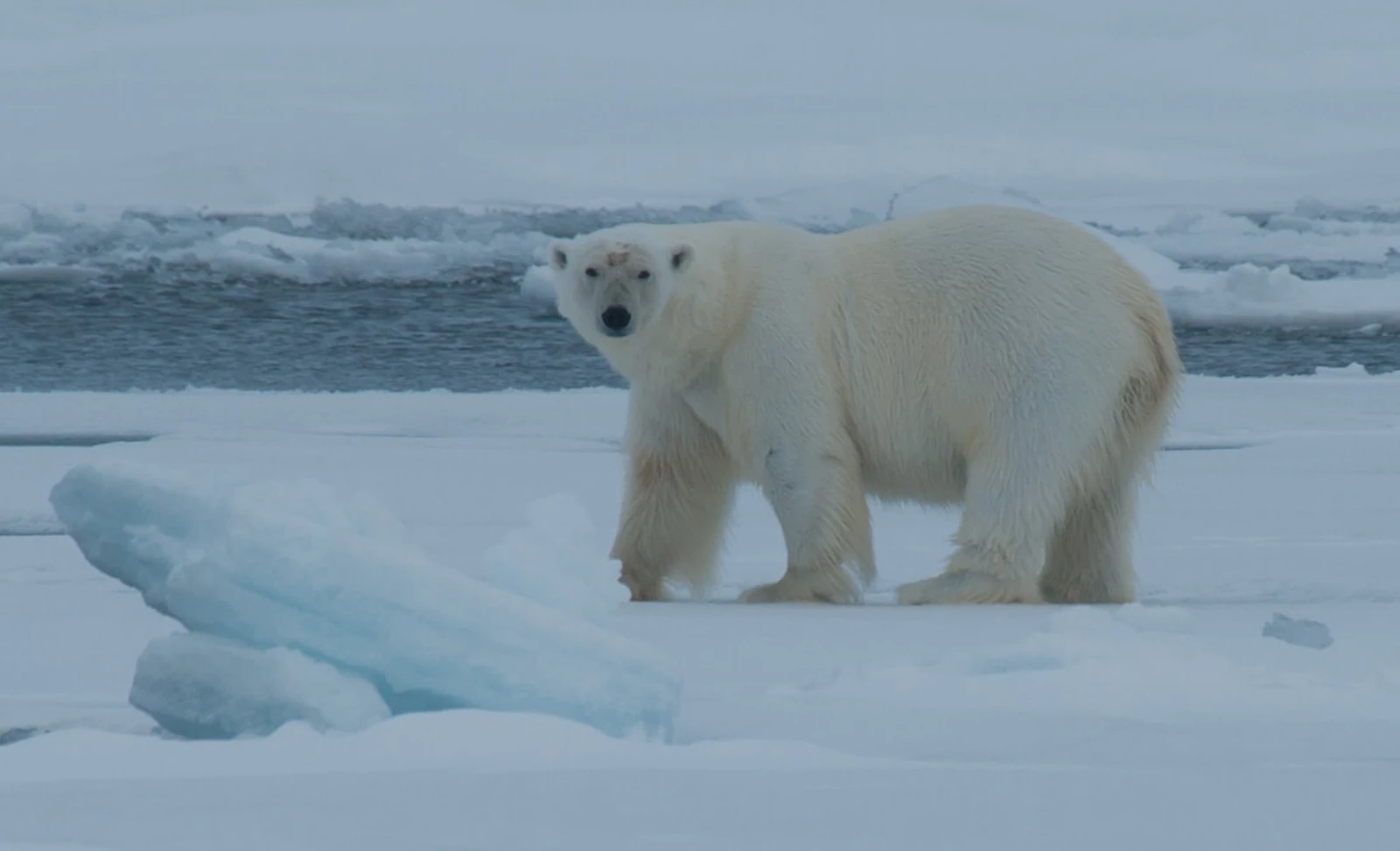
East Spitsbergen - Home of the Polar Bear, Including Long Hikes & Cleaning the Shores
26 Jun 2026 - 03 Jul 2026 8 Days / 7 Nights
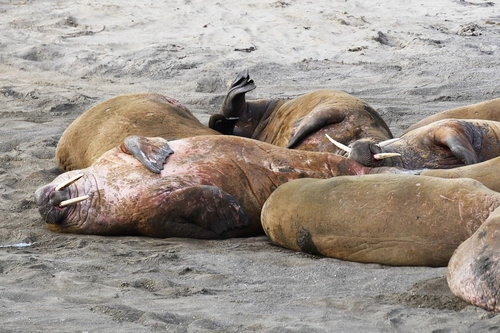
Around Spitsbergen, In the realm of Polar Bear & Ice
27 Jun 2026 - 06 Jul 2026 10 Days / 9 Nights
North Spitsbergen Explorer – Into the Pack Ice – Polar Bear & Whale Special
28 Jun 2026 - 07 Jul 2026 10 Days / 9 Nights
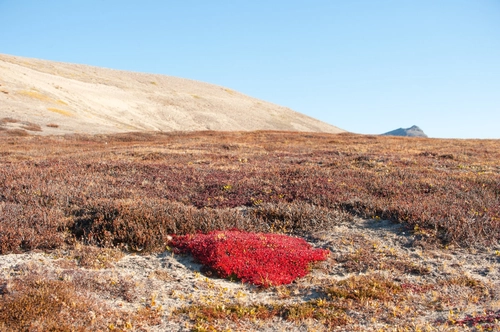
Northeast Greenland Solar Eclipse Explorer Voyage
02 Aug 2026 - 15 Aug 2026 14 Days / 13 Nights
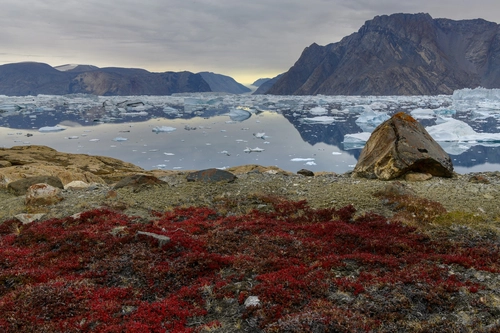
Spitsbergen - Northeast Greenland, Fly & Sail
12 Aug 2026 - 31 Aug 2026 20 Days / 19 Nights

Around Spitsbergen incl. Nordaustlandet
17 Aug 2026 - 26 Aug 2026 10 Days / 9 Nights
Alpine Peaks of Spitsbergen - Ski & Sail
07 May 2027 - 14 May 2027 8 Days / 7 Nights
Arctic Ocean - Fair Isle, Jan Mayen, Ice Edge, Spitsbergen, Birding Special
23 May 2027 - 01 Jun 2027 10 Days / 9 Nights
North Spitsbergen Explorer - Versatile Landscapes, Sea Ice & Wildlife
01 Jun 2027 - 08 Jun 2027 8 Days / 7 Nights
North Spitsbergen Explorer - Into the Pack Ice - Polar Bear Special
09 Jun 2027 - 16 Jun 2027 8 Days / 7 Nights
North Spitsbergen, Arctic Summer - Summer Solstice
14 Jun 2027 - 24 Jun 2027 11 Days / 10 Nights
North Spitsbergen Explorer - Versatile Landscapes, Sea Ice & Wildlife - Summer Solstice
15 Jun 2027 - 22 Jun 2027 8 Days / 7 Nights
North Spitsbergen Explorer - Into the Pack Ice - Polar Bear Special - Summer Solstice
16 Jun 2027 - 23 Jun 2027 8 Days / 7 Nights
Arctic Ocean - Spitsbergen: Jan Mayen, Ice Edge & Birding - Summer Solstice
21 Jun 2027 - 29 Jun 2027 9 Days / 8 Nights
North Spitsbergen Basecamp - Free kayaking, Hiking, Photo Workshop
23 Jun 2027 - 30 Jun 2027 8 Days / 7 Nights
North Spitsbergen, Arctic Summer
24 Jun 2027 - 04 Jul 2027 11 Days / 10 Nights
Around Spitsbergen, in the Icy Realm of the Polar Bear
29 Jun 2027 - 08 Jul 2027 10 Days / 9 Nights
A Taste of North Spitsbergen - Compact Arctic Adventure
30 Jun 2027 - 05 Jul 2027 6 Days / 5 Nights
South Spitsbergen Explorer - Bear Island - Diving (supplemented)
10 Jul 2027 - 19 Jul 2027 10 Days / 9 Nights
Around Spitsbergen - Arctic Summer
28 Jul 2027 - 11 Aug 2027 15 Days / 14 Nights
Around Spitsbergen and Nordaustlandet, In the Icy Realm of the Polar Bear
06 Aug 2027 - 15 Aug 2027 10 Days / 9 Nights
Spitsbergen, Northeast Greenland & Scoresby Sund, Including Long Hikes
20 Aug 2027 - 02 Sep 2027 14 Days / 13 Nights
South Spitsbergen, Bear Island & Mainland Norway - Aurora Borealis
17 Sep 2027 - 22 Sep 2027 6 Days / 5 Nights
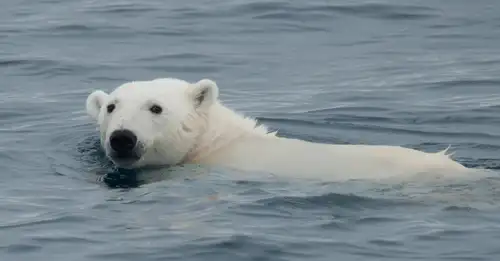
Polar Bear Sets Impressive New Diving Record
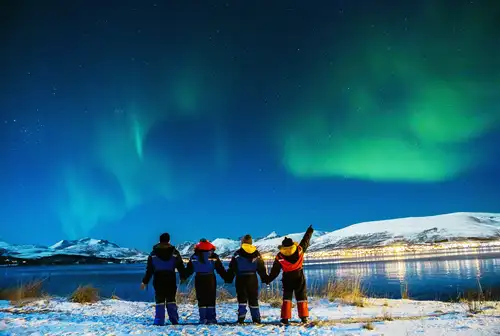
10 Tips for Photographing the Northern Lights
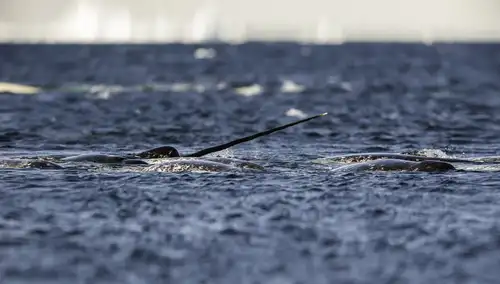
Narwhals: the Aquatic Unicorns of the Arctic
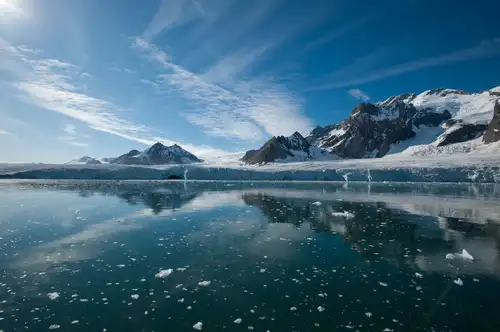
A Bug’s Life in Svalbard
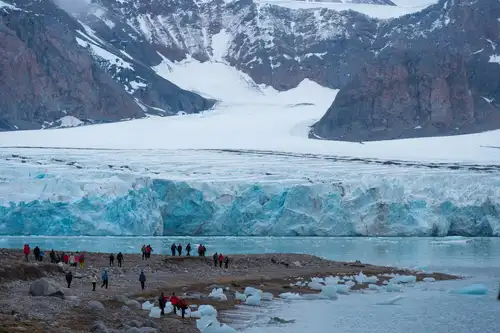
16 Conversation-Starting Svalbard Facts
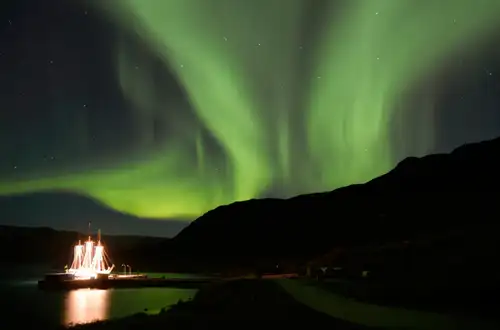
The Northern Lights dancing across the skies
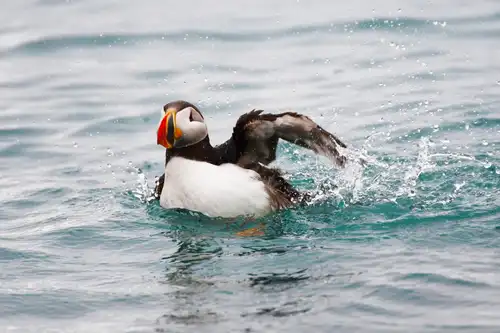
Puffins: Clown Birds of the Atlantic
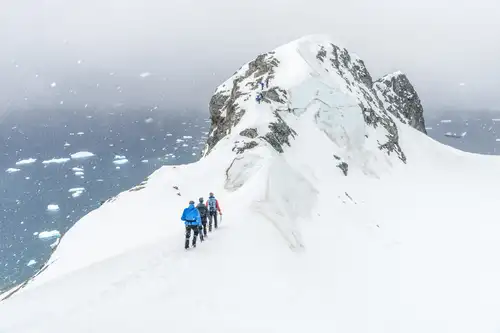
The Ins, Outs, and Ups of Polar Mountaineering & Ski Mountaineering
Arctic and Antarctic Basecamp Cruises – Choose Your Own Adventure
8 Scientific Wonders of the Arctic
Amphibian, reptiles and herbivore mammals in the Arctic
Inside the Svalbard Global Seed Vault
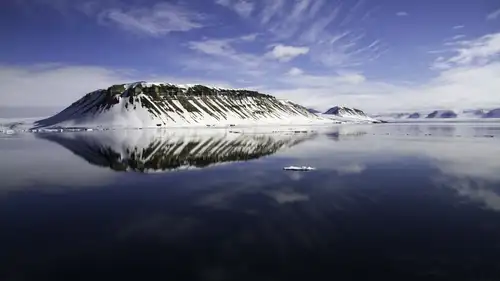
The Ice-Jewelled Geology of Spitsbergen
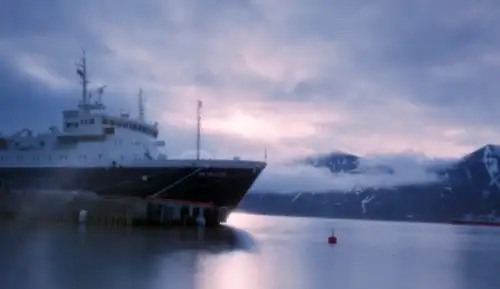
Solargraphy & Pin Hole photography in the Arctic
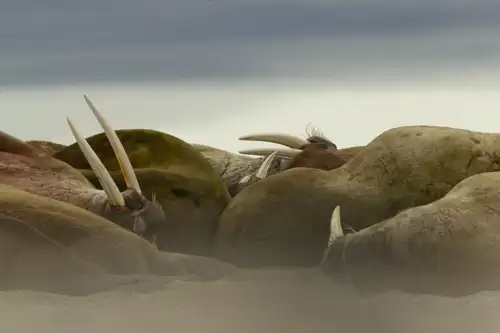
15 Toothy Facts About the Atlantic Walrus
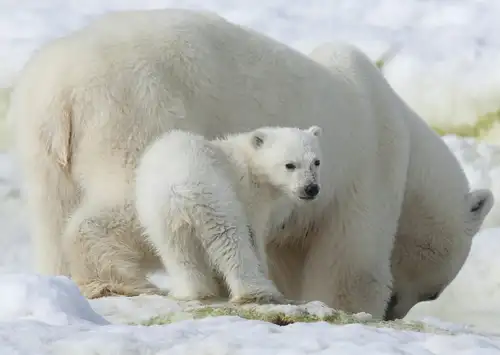
Arctic Icon: 10 Facts about the Polar Bear
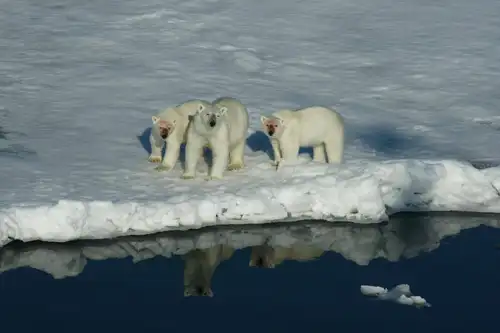
Polar Bear Primer: Eight Facts About the Arctic Wanderer
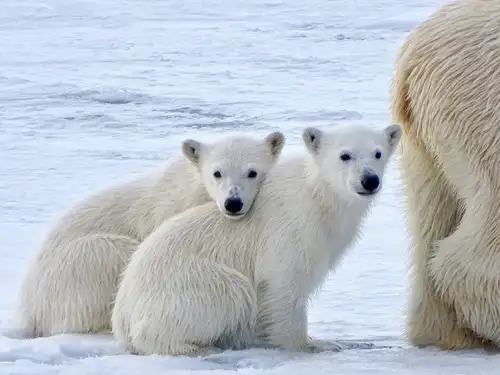
Where the Polar Bears Roam
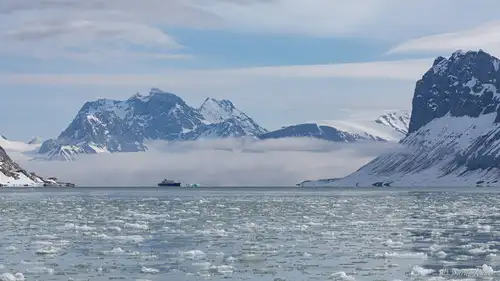
Svalbard vs. the Canadian Arctic