


The walrus is one of the most recognizable animals on the planet, and for good reason. Try sneaking into a cinema with those tusks!
A circumpolar marine animal whose habitat includes Arctic and sub-Arctic areas, the walrus is known for its large flippers, long whiskers, and of course, really big tusks. The walrus species includes three sub-species: Atlantic walruses, Pacific walruses, and (debatably) Laptev walruses. The only species of walrus we see are Atlantic walruses, and we find them in eastern Greenland and Svalbard during our Arctic cruise season.
But what is there to know about these wonderfully identifiable animals? Quite a lot, actually. Here are our 15 favorite walrus facts ranging from diet and tusks to size and habitat.

1. Walruses are particular about their habitat
While walruses are found across vast areas, they occupy a small ecological niche: shallow water with depths around 80 meters (262 feet) or less that has a bottom substrate rich in bivalves (a class of mollusc).
In addition, these shallow waters need to have reliable access to open water for feeding areas as well as ice or land so that the walruses can haul themselves out of the water.
A core goal of our Svalbard trips is to view these walrus haul-out locations.

2. There are white and pink walruses
Walruses are typically a cinnamon brown colour, but they can turn white after diving or even pink when they are warm. This owes to the ability of walruses to vary their blood supply to the periphery of their bodies under certain circumstances.
As for their size, walrus species are more or less uniform. They have small heads and broad muzzles with colorless whiskers.

3. Walrus tusks just keep growing
Both male and female walruses have tusks that grow continuously throughout their lives. These tusks are used as symbols of age, sex, and social status. Compared to the tusks of walrus females, male tusks are much longer and wider in proportion to their bodies.
Male walruses use their tusks to show dominance by turning their heads and thrusting their tusks in the air. Tusks aid walruses in climbing onto ice floes from the water, they can also be used for defence and males may use them while fighting during breeding season.

4. The walrus has a unique physique
It may surprise you to hear it, but the walrus has a streamlined body that makes it easy to swim and conserve heat. Because walruses have a small surface-to-volume ratio, along with few protruding body parts, they lose little heat in the cold Arctic weather.
Meanwhile, walrus forelimbs and hindlimbs are sleek and webbed, like oars. This means walruses can swim up to 35 kph (22 mph) if startled.
On land, the walrus uses its hind limbs to get around, but it cannot use them to stand up. Instead, the walrus uses its limbs to thrust its body forward in small lunges while hardly getting off the ground. And walrus blubber, which can be up to 15 cm (6 inches) thick, acts as a cushion when bouncing around the ice and other hard surfaces.

5. Walruses like to assemble into herds
Walruses are very social, typically found in large shoreline herds or living together on moving pack ice. These are the areas we most often encounter walruses on our Svalbard voyages.
The walrus also uses pack ice as a diving platform to take short, shallow dives. It can dive to about 80 - 90 meters (260 - 300 feet) and stay underwater from 10 - 30 minutes, though walruses usually take briefer dives to shallower depths in ordinary conditions.

6. The walrus has preferred haul-out sites
During the Arctic summer and autumn, walruses haul out in specific locations. Atlantic walruses like to haul out onto low, rocky shorelines with steep subtidal zones that provide them quick and easy access to feeding areas – as well as escape routes from predators.
Pacific walruses, on the other hand, haul out on a variety of surfaces ranging from sand to boulders. These locations are typically isolated islands, spits, and headlands.

7. Walrus diets are not picky
Adult walruses eat between three to six percent of their body weight per day and prefer molluscs, especially clams. They also eat other benthic invertebrates, including worms, gastropods, cephalopods, crustaceans, and sea cucumbers. At times, however, walruses also eat fish, such as polar cod. The carcasses of young seals will also suffice when food is scarce.
And while it is not common, some walruses even hunt ringed and bearded seals. These walruses are almost always sizable males with large shoulders and strong chest muscles.

8. The walrus uses its whiskers to find food
Walruses tend to forage at the bottom of the sea at depths up to 80 meters (262 feet), but most of their feeding occurs around 10 – 50 meters (33 – 164 feet). Because the water is too murky to see food, walruses rely on their sensitive whiskers to find it.
Once they’ve found molluscs, for example, walruses clear away any soft materials using their front flippers and then suck the meat out of their shells, leaving the remains on the sea floor.

9. Walruses give birth on the pack ice
About a month before giving birth, the pregnant female walrus separates from the herd and moves out onto the pack ice. She births her young in May and then remains on the ice, fasting for the first few days.
During this time, walrus females rely on their body fat for energy. Afterward, mothers and their young return to the herd, at which point female walruses start feeding again. Young walruses drink their mother’s low-fat milk for the next two to three years.

10. Breeding is a frequent part of walrus life
Walrus pups (also known as calves) are nursed at sea, hanging upside down in the water while being cradled by their mother’s flippers. When the mother needs to dive, calves are looked after by other members of the herd.
At about five months old, walrus calves are strong enough to dive and feed on benthic organisms. Nine months after giving birth, female walruses mate again.
Breeding takes place over the months of December and January, during which time male walruses show off to females along the ice edges. Males defend these small pieces of territory, performing vocal and visual displays to attract walrus females.
Males are aggressive with one another when finding a mate, with battles often resulting in injuries. After calves are weaned, female walruses are placed in the mother’s herd while males join male groups.
Walrus females give birth when they are around 10 years old, and males reach sexual maturity at this time as well.
Male walruses rarely live beyond 15 years in the wild, due the dangers and rigors of maintaining a harem. Female walruses, however, may live up to 25 or 30 years.

Five final facts on walrus tusks, weight, calves, and diet
1. Walruses have two large external tusks that can grow up to one meter long (3.28 feet) and weigh around 5 kg (11 pounds).
2. Male walruses can reach 3 – 3.5 meters long (9.84 – 11.48 feet) and weigh up to1,200 kg (2,645 pounds), while females usually grow to 2.5 meters long (8.2 feet) and weigh around 900 kg (1,984 pounds).
3. Walrus calves are born weighing about 85 kg (187 pounds) and are approximately 1.3 meters long (4.26 feet).
4. Male walruses are called “bulls” and have cornified chests and shoulder areas that protect them in battle.
5. Walruses can eat as many as 3,000 – 6,000 clams in one feeding session.

Want more walruses? Check out our walrus video
If you’re interested in learning more about walruses, don’t miss our interesting and informative video on this beloved Arctic animal. Not only will you see a lot of vibrant clips of walruses in action, but you’ll also learn 10 key facts that will make seeing walruses in person even more memorable.
 24 Apr - 01 May 2026
 01 May - 08 May 2026
 27 May - 05 Jun 2026
 29 May - 05 Jun 2026
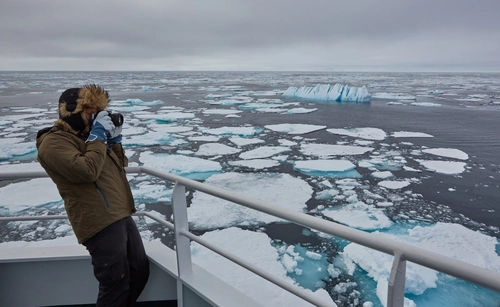 05 Jun - 12 Jun 2026
Related Trips
Alpine Peaks of Spitsbergen, Ski & Sail
24 Apr 2026 - 01 May 2026  8 Days / 7 Nights
Alpine Peaks of Spitsbergen, Ski & Sail
01 May 2026 - 08 May 2026 8 Days / 7 Nights
Arctic Ocean - Fair Isle, Jan Mayen, Ice Edge, Spitsbergen, Birding
27 May 2026 - 05 Jun 2026 10 Days / 9 Nights
North Spitsbergen - Arctic Spring , Hike & Sail
29 May 2026 - 05 Jun 2026 8 Days / 7 Nights
North Spitsbergen Explorer - Into the pack ice - Polar Bear Special
05 Jun 2026 - 12 Jun 2026 8 Days / 7 Nights

Arctic Ocean - Jan Mayen, Ice edge, Spitsbergen, Birding
05 Jun 2026 - 13 Jun 2026 9 Days / 8 Nights
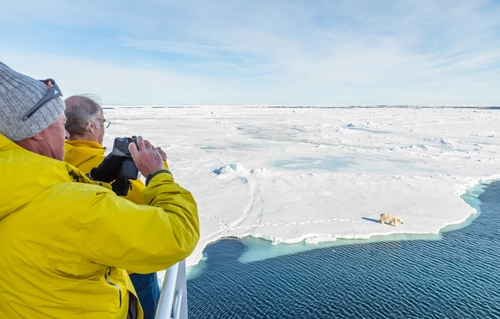
Arctic Ocean - Fair Isle, Jan Mayen, Ice edge, Spitsbergen, Birding - Summer Solstice
12 Jun 2026 - 21 Jun 2026 10 Days / 9 Nights
North Spitsbergen Explorer - Into the pack ice - Polar Bear Special
12 Jun 2026 - 19 Jun 2026 8 Days / 7 Nights
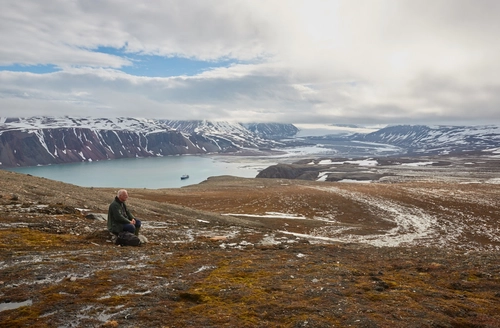
North Spitsbergen Explorer - Versatile landscapes, sea ice & wildlife
13 Jun 2026 - 20 Jun 2026 8 Days / 7 Nights
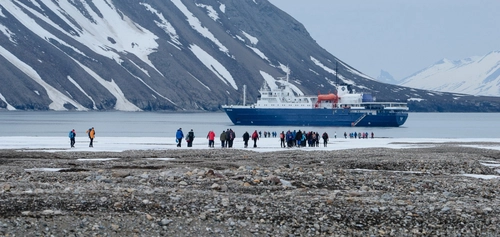
North Spitsbergen Basecamp – Summer Solstice - Free Kayaking, Hiking, Photo Workshop, Diving (supplemented)
19 Jun 2026 - 26 Jun 2026 8 Days / 7 Nights
North Spitsbergen Explorer - Versatile landscapes, sea ice & wildlife - Summer Solstice
20 Jun 2026 - 27 Jun 2026 8 Days / 7 Nights
North Spitsbergen Explorer - Versatile landscapes, sea ice & wildlife - Summer Solstice
21 Jun 2026 - 28 Jun 2026 8 Days / 7 Nights

Blog


Bouvet Island: The Most Remote Island in the World
Danger Beneath the Water: 10 Facts About Leopard Seals
Svalbard’s Texas Bar
Scenes from St. Andrews Bay: 12 Pics of Penguins, Seals, and More
The South Georgia Seven: Hikes, Fjords, Whales, & Penguins
The Ultimate Traveler’s Guide to the Arctic and Antarctica
Cheapest Antarctica Cruises: How to Save on Your Journey
Polar Marine Visitors: the Whales of Antarctica and the Arctic
Book Recommendations for Your Polar Cruise
Top 10 Antarctic Attractions
Albatross, penguin and krill research in Antarctica
Greenland: Where the Kayak Was Invented
Freshwater ecosystems in the Arctic
Antarctic Explorer’s Voyage
Everything you need to know about Antarctic icebergs
Explore Antarctica Without Leaving Your Couch
Orcas (aka Killer Whales) of Antarctica and the sub-Antarctic
A Day of Whale Watching in Antarctica
15 Falkland Islands Bird Photos