King Eider - Nexta Expeditions
King Eider

King Eider

These are some of the biggest sea ducks in the Northern Hemisphere. Their weight can change a lot, especially for females, who don't eat much while sitting on their eggs.
About

Name: King Eider (Somateria spectabilis)

Length: 50 to 70 cm

Weight: 1.5 kg

Location: Asia, North America, Europe

Conservation status: Least Concern

Diet: Krill, squid, fish

Appearance: Males have a black body, white chest, blue head and neck, green cheek, and red bill with a yellow "crown." Females are brown with darker flank markings and a light black bill.

How do King Eiders feed?

During breeding season, King Eiders feed in fresh water, capturing small invertebrates from the surface. Throughout the rest of the year, they dive in the ocean to forage for invertebrates near the shallow sea floor, diving up to 50 meters deep.

Are King Eiders social?

King Eiders are highly social, forming flocks of up to 100,000 individuals.

How fast do King Eiders fly?

They can reach speeds over 70 km per hour.

What are King Eider birthing rituals like?

King Eiders migrate to their breeding grounds in June and July. They build nests lined with down and grass in scrapes on the Arctic tundra. Females lay 4 to 7 eggs and incubate them for 20 to 25 days. Chicks are raised in groups by the females and fledge at about 50 days old.

How long do King Eiders live?

They typically live 15 to 20 years in the wild.

How many King Eiders are there today?

The global population is estimated between 790,000 and 930,000 individuals.

Do King Eiders have any natural predators?

Their young and eggs are preyed upon by Arctic Foxes, Ravens, Gulls, and Skuas (Jeagers).

7 Edifying King Eider Facts

  • King Eiders can cross-breed with Common Eiders.
  • The genus name Somateria comes from Greek words "soma" meaning “body” and "erion" meaning “wool,” referring to their thick down.
  • Despite their large range, they have no recognized subspecies.
  • "Spectabilis" means “remarkable display” in Latin, highlighting the males' colorful plumage.
  • Their weight varies seasonally, from 0.9 kg to 2.2 kg.
  • King Eiders are among the largest sea ducks in the Northern Hemisphere.
  • Females lose significant weight during incubation as they rarely feed.
Related Trips
go-leftgo-right

Alpine Peaks of Spitsbergen, Ski & Sail - Nexta Expeditions
The Arctic
Longyearbyen

Alpine Peaks of Spitsbergen, Ski & Sail

calendar24 Apr 2026 - 01 May 2026
clock8 Days / 7 Nights
From $ 3.950 per person
Alpine Peaks of Spitsbergen, Ski & Sail - Nexta Expeditions
The Arctic
Longyearbyen

Alpine Peaks of Spitsbergen, Ski & Sail

calendar01 May 2026 - 08 May 2026
clock8 Days / 7 Nights
From $ 3.950 per person
Arctic Ocean - Fair Isle, Jan Mayen, Ice Edge, Spitsbergen, Birding - Nexta Expeditions
The Arctic
Aberdeen

Arctic Ocean - Fair Isle, Jan Mayen, Ice Edge, Spitsbergen, Birding

calendar27 May 2026 - 05 Jun 2026
clock10 Days / 9 Nights
From $ 3.100 per person
North Spitsbergen - Arctic Spring ,  Hike & Sail - Nexta Expeditions
The Arctic
Longyearbyen

North Spitsbergen - Arctic Spring , Hike & Sail

calendar29 May 2026 - 05 Jun 2026
clock8 Days / 7 Nights
From $ 4.000 per person
North Spitsbergen Explorer - Into the pack ice - Polar Bear Special - Nexta Expeditions
The Arctic
Longyearbyen

North Spitsbergen Explorer - Into the pack ice - Polar Bear Special

calendar05 Jun 2026 - 12 Jun 2026
clock8 Days / 7 Nights
From $ 4.500 per person
Arctic Ocean - Jan Mayen, Ice edge, Spitsbergen, Birding - Nexta Expeditions
The Arctic
Akureyri

Arctic Ocean - Jan Mayen, Ice edge, Spitsbergen, Birding

calendar05 Jun 2026 - 13 Jun 2026
clock9 Days / 8 Nights
From $ 2.800 per person
Arctic Ocean - Fair Isle, Jan Mayen, Ice edge, Spitsbergen, Birding - Summer Solstice - Nexta Expeditions
The Arctic
Aberdeen

Arctic Ocean - Fair Isle, Jan Mayen, Ice edge, Spitsbergen, Birding - Summer Solstice

calendar12 Jun 2026 - 21 Jun 2026
clock10 Days / 9 Nights
From $ 3.100 per person
North Spitsbergen Explorer - Into the pack ice - Polar Bear Special - Nexta Expeditions
The Arctic
Longyearbyen

North Spitsbergen Explorer - Into the pack ice - Polar Bear Special

calendar12 Jun 2026 - 19 Jun 2026
clock8 Days / 7 Nights
From $ 4.500 per person
North Spitsbergen Explorer - Versatile landscapes, sea ice & wildlife - Nexta Expeditions
The Arctic
Longyearbyen

North Spitsbergen Explorer - Versatile landscapes, sea ice & wildlife

calendar13 Jun 2026 - 20 Jun 2026
clock8 Days / 7 Nights
From $ 4.500 per person
North Spitsbergen Basecamp – Summer Solstice - Free Kayaking, Hiking, Photo Workshop, Diving (supplemented) - Nexta Expeditions
The Arctic
Longyearbyen

North Spitsbergen Basecamp – Summer Solstice - Free Kayaking, Hiking, Photo Workshop, Diving (supplemented)

calendar19 Jun 2026 - 26 Jun 2026
clock8 Days / 7 Nights
From $ 4.500 per person
North Spitsbergen Explorer - Versatile landscapes, sea ice & wildlife - Summer Solstice - Nexta Expeditions
The Arctic
Longyearbyen

North Spitsbergen Explorer - Versatile landscapes, sea ice & wildlife - Summer Solstice

calendar20 Jun 2026 - 27 Jun 2026
clock8 Days / 7 Nights
From $ 4.500 per person
North Spitsbergen Explorer - Versatile landscapes, sea ice & wildlife - Summer Solstice - Nexta Expeditions
The Arctic
Longyearbyen

North Spitsbergen Explorer - Versatile landscapes, sea ice & wildlife - Summer Solstice

calendar21 Jun 2026 - 28 Jun 2026
clock8 Days / 7 Nights
From $ 4.500 per person
Blog
go-leftgo-right
Solargraphy & Pin Hole photography in the Arctic - Nexta Expeditions
Blog

Solargraphy & Pin Hole photography in the Arctic

Polar bear feast - Nexta Expeditions
Blog

Polar bear feast

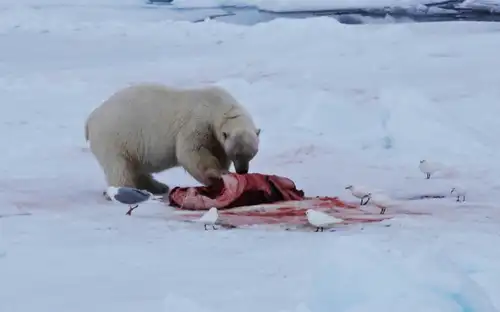
The polar bear was relishing his meal; the snow and his face were turning red from the blood. As we observed him eating, our own stomachs began to grumble. It was time for lunch.
The Ice-Jewelled Geology of Spitsbergen - Nexta Expeditions
Blog

The Ice-Jewelled Geology of Spitsbergen

The Svalbard archipelago is located in the Arctic Ocean, roughly 660 km (410 miles) north of Norway's northernmost point. This region is a haven for geologists, boasting a rich geological history that spans from the Mesozoic era (65-245 million years ago) through the Cambrian era (570 million years ago) and back to the Archean era, over 3.5 billion years ago.
A Bug’s Life in Svalbard - Nexta Expeditions
Blog

A Bug’s Life in Svalbard

When you think about Svalbard wildlife, you might imagine reindeer, Arctic foxes, polar bears – the primary animal attractions that draw passengers to an Arctic cruise. But in fact, the Svalbard archipelago is a thriving location for over 1,000 species of terrestrial and freshwater invertebrates: animals that lack backbones. Despite this richness of life, however, these invertebrates are only found in the Isfjord and Kongsfjord areas of these wonderfully diverse islands.
Spitsbergen: a true polar bear trip - Nexta Expeditions
Blog

Spitsbergen: a true polar bear trip

On the third day of our Svalbard cruise, we navigated through the sea ice north of Spitsbergen. The morning greeted us with fog and fragmented ice, but conditions gradually improved. A swarm of black-legged kittiwakes trailed behind us, as our ship stirred the waters, pushing aside ice floes to reveal the tiny dark polar cod beneath.
Polar bear encounter in Spitsbergen - Nexta Expeditions
Blog

Polar bear encounter in Spitsbergen

I watch the sea ice from the bridge of a ship in one of the fjords of Spitsbergen, an archipelago north of Norway. I observe a perfectly adapted animal moving on the ice, the results of hundreds of thousands of years of ecological fine-tuning. Snowshoe-sized paws distribute weight, fur handles the cold and sunlight to perfection, and an incredible sense of smell samples this monochromatic realm.
Polar Bear Sets Impressive New Diving Record - Nexta Expeditions
Blog

Polar Bear Sets Impressive New Diving Record

According to polar bear experts Rinie van Meurs and Dr. Ian Stirling, the new record for polar bear diving is an astounding three minutes and 10 seconds. Unless this particular polar bear has an unusually large lung capacity, we can now safely assume that these creatures have the ability to remain underwater for an extended period of time.
Birding Opportunities Abound in Spitsbergen - Nexta Expeditions
Blog

Birding Opportunities Abound in Spitsbergen

Seabirds are the most prevalent type of bird in Spitsbergen. Experts have estimated that there are 164 bird species that have been found throughout Spitsbergen at various points during recent history, but only 30 of them are known to turn to the Svalbard Islands as their primary breeding spot.
Svalbard a Disneyland for geologists - Nexta Expeditions
Blog

Svalbard a Disneyland for geologists

Svalbard is situated in the north-western corner of the Eurasian plate. Historically, Svalbard was part of a vast continent that included North America, Greenland, and Eurasia. At one point, both Northeast Greenland and Svalbard were submerged under the ocean before resurfacing.
Spitsbergen: Alkefjellet magic - Nexta Expeditions
Blog

Spitsbergen: Alkefjellet magic

If they knew their way home, why not follow them? Equipped with GPS and compass, we approached the cliffs by zodiac. First, we heard the noise from the colony – the distinct calls of guillemots, kittiwakes, and Glaucous gulls. Then the cliffs gradually emerged from the mist.
What’s so Special about East Spitsbergen? - Nexta Expeditions
Blog

What’s so Special about East Spitsbergen?

We’ve previously discussed our north Spitsbergen journeys and Spitsbergen circumnavigations, but the eastern parts of this incredible island have not received the attention they deserve. Despite the name, our east Spitsbergen voyages explore much more than just the eastern side of Spitsbergen.
Arctic Icon: 10 Facts about the Polar Bear - Nexta Expeditions

Blog

Arctic Icon: 10 Facts about the Polar Bear

Polar bears are to the Arctic what penguins are to Antarctica.
Puffins: Clown Birds of the Atlantic - Nexta Expeditions
Blog

Puffins: Clown Birds of the Atlantic

Puffins are part of a family of 22 seabird species known as auks, which are pigeon-sized birds that thrive on a diet of small fish and crustaceans.
16 Conversation-Starting Svalbard Facts - Nexta Expeditions
Blog

16 Conversation-Starting Svalbard Facts

It might seem odd that an icy, snowy, bear-packed cluster of islands at the edge of the world could be such a hotspot (so to speak) of outdoor tourism.
Svalbard’s Texas Bar - Nexta Expeditions
Blog

Svalbard’s Texas Bar

Texas Bar is one of the historic areas we visit on certain Svalbard trips, and it always proves to be a cherished landing site among both our guides and guests. This might be surprising, however, given that its name can be a bit misleading.
Eight Engaging Reindeer Facts - Nexta Expeditions
Blog

Eight Engaging Reindeer Facts

When we think about reindeer, we might also think of Saami herders or the holidays or teams of these beloved Arctic animals pulling a bell-covered sleigh across the nighttime sky. Only the first of these options, however, is something you're likely to encounter on an Arctic expedition cruise - and that's only in Northern Norway.
Polar Bear Primer: Eight Facts About the Arctic Wanderer - Nexta Expeditions
Blog

Polar Bear Primer: Eight Facts About the Arctic Wanderer

Polar bears inhabit the Arctic region across 19 subpopulations, including areas in Alaska, Canada, Greenland, Norway, and Russia. These majestic creatures prefer the edges of pack ice where currents and wind interact, creating a dynamic environment of melting and refreezing that forms ice patches and leads, which are open spaces in the sea between sea ice.
Tracking Greenland’s Wildlife from Space - Nexta Expeditions
Blog

Tracking Greenland’s Wildlife from Space

Despite Greenland’s harsh environment, life has found a way to thrive there. If you’re lucky enough to embark on a Greenland cruise, you stand the chance of encountering many species of cold-adapted mammals, birds, and fish.
The Pack Ice and Polar Bears of North Spitsbergen - Nexta Expeditions
Blog

The Pack Ice and Polar Bears of North Spitsbergen

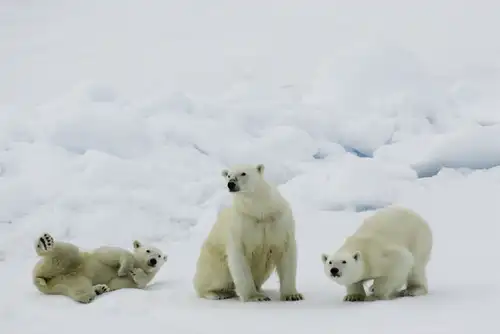
The Arctic archipelago of Svalbard is renowned for being one of the prime locations to observe polar bears. The largest island in this region, Spitsbergen, not only offers sightings of these majestic Arctic creatures but also provides a unique opportunity to experience the phenomenon of pack ice.
“The polar bear will still be there” - Nexta Expeditions
Blog

“The polar bear will still be there”

For several hours, we had been navigating the pack ice in search of polar bears. Despite numerous binoculars scanning the ice, no bears were visible, and only a few tracks were found. This suggested we might be in an area with fewer bears. Later that morning, we decided to head a few miles east, suspecting a higher bear population there.