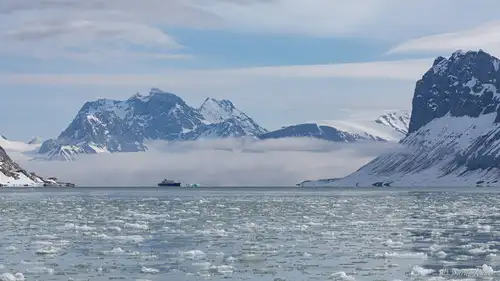


It might seem odd that an icy, snowy, bear-packed cluster of islands at the edge of the world could be such a hotspot (so to speak) of outdoor tourism.
But once you visit Svalbard, this apparent oddity starts to make a lot more sense.
That’s because this particular Arctic archipelago, situated so far north it redefines the term “off the grid,” is quick to prove itself worthy of repeated visits, extensive research, and lengthy coffee-fueled conversations.
To get a handle on what makes these Arctic islands so special, here are 16 Svalbard facts that just might prompt you to consider your own Svalbard trip.

1. There are more polar bears in Svalbard than people
This Svalbard fact will also explain the second entry on this list.
The most recent bear count, conducted by the Norwegian Polar Institute in 2004, estimated polar bear numbers in Svalbard at about 2,650 and possibly as high as 3,600. At the time of the count, there were around 2,000 human residents living in the archipelago’s capital, Longyearbyen, and some 2,600 living in Svalbard as a whole.
Another count done in 2015 revealed that polar bears have increased by 42% since 2004.
2. You’re legally required to carry heat in Svalbard
No, not the heat you’re probably thinking of. We mean guns. Big ones.
The law in Svalbard, published in 2012 by the governor of Svalbard, requires anyone traveling outside the archipelago’s settlements to equip themselves with the means necessary to scare off a polar bear. Translation: Pack a really big rifle, like the ones our guides carry.

3. Svalbard has one of the top ten globally ranked ghost towns
It seems fitting that the place with the largest polar bear population (and mandatory rifle rule) also has one of the world’s top ghost towns, doesn’t it?
Purchased from Sweden by the USSR in 1927, the town of Pyramiden was used for years as a mining community, and once housed over a thousand inhabitants. At the time, it wasn’t even that bad of a place: Pyramiden had its own indoor swimming pool as well as a theater, music room, and library.
But unfortunately, these are the only survivors of this hollowed-out haunt, which was deserted during the 1998 Russian currency crisis.

4. Svalbard has its own species of reindeer
There are an estimated 10,000 reindeer living in Svalbard, all comprising their own distinct subspecies. These are the aptly named Svalbard reindeer.
Svalbard reindeer are the smallest reindeer in existence. They have lighter fur color, more rounded heads, and shorter legs than other reindeer, and they have populated Svalbard for around 5,000 years.
Even so, a sadder Svalbard fact is that these animals were nearly hunted out of existence in the early 1900s until recovery programs came to their aid.

5. Svalbard is actually an Arctic desert
For the polar-savvy among us, this is perhaps the least surprising fact about Svalbard. After all, other polar areas like Antarctica and parts of Greenland receive such little rainfall that they also qualify as deserts.
Svalbard is no different: Its total precipitation averages about 200 mm (7.8 inches) of snow and rainfall per year, with the northeastern island of Nordaustlandet claiming most of the “Arctic desert” characteristics.
The west side of Svalbard is, by contrast, quite lush in places.

6. Over 40 nationalities call Svalbard home
The degree of cultural diversity in Svalbard would be impressive even for a centrally located town, much less a scatter of Arctic islands halfway between Norway and the North Pole.
Longyearbyen ceased to be simply a mining community in the early 1990s, filling up due to rising research, tourism, and educational interests. The people who relocated there were from all different parts of the globe, proving you don’t have to go to a big city (or town, or village) to enjoy the benefits of a multinational society.
Of all our Svalbard facts, we think this is among the most hopeful.

7. You can see the northern lights during the day in Svalbard
The northern lights are best seen when the sky is darkest, but a cool fact about Svalbard is that the hour doesn’t have to be late for the sky to be dark there.
Because of Svalbard’s far northern location, the daytime hours from October through February offer only a small window of light. During these long polar nights, if the sky is clear enough, you can easily marvel at the dance of these famed auroras.

8. You can also see the midnight sun
If you embark on a Svalbard cruise from mid-April to mid-August, you can also sail under the midnight sun. Because the colors are so vivid in this light, it can help to keep some photography considerations in mind.
For one, it’s a good idea to keep your pictures simple, training your viewfinder on two or three colors. You can also use foreground images to frame your subjects, creating a better sense of 3D.
We also recommend maximizing the impact of the light on the landscape by composing your pictures in viewfinder and keeping the horizon a third of the way from the bottom, ensuring your camera will expose properly.

9. The world’s largest sea carnivore was excavated in Svalbard
Though it may seem logical to group this fact with polar bears and Pyramiden, our intent is not to scare you off Svalbard.
In 2008 researchers uncovered the 150-million-year-old Jurassic fossil of one of Earth’s largest marine reptiles, a pliosaur that has since been named Predator X. Pieces of the skull, back, neck, teeth, and a forelimb measuring almost three meters (10 feet) long were found, remnants of an earlier world.
10. Svalbard hosts Earth’s northernmost blues festival
Svalbard can actually claim many of the world’s northernmost things: kindergarten, university, church, post office, museum, commercial airport, and gourmet restaurant.
But its music festival is one of the coolest, pun intended. This music festival, known as Dark Season Blues, takes place in late October, marking the start of the long Arctic nights. And indeed, the dark blue of the sky seems a perfect canopy under which to play such classic numbers.
Concerts are held at numerous Longyearbyen venues, including pubs, restaurants, the church, even the local kindergarten. This alone is a reason for an Arctic trip, one that would make Muddy Waters proud.

11. There are loads of fossils in Svalbard
Svalbard has a rich, diverse, and long geologic history, making the islands perfect for rock lovers. There is a great variety of geological events that can be studied there, including tectonic plate movements as well as continental drift.
Many Svalbard rocks also contain fossils of marine creatures that once lived in the Lapetus Ocean. Later in geological time, when Svalbard began sinking and rivers eroded the Caledonian Mountains, sandstones and conglomerates were deposited on near-shore environments, lakes, and deltas.
In these deposits you might still find the many primitive fish and plants, a Svalbard fact of special interest to fossil fiends.

12. Svalbard is also lousy with Arctic terns
In other words, it’s full of them.
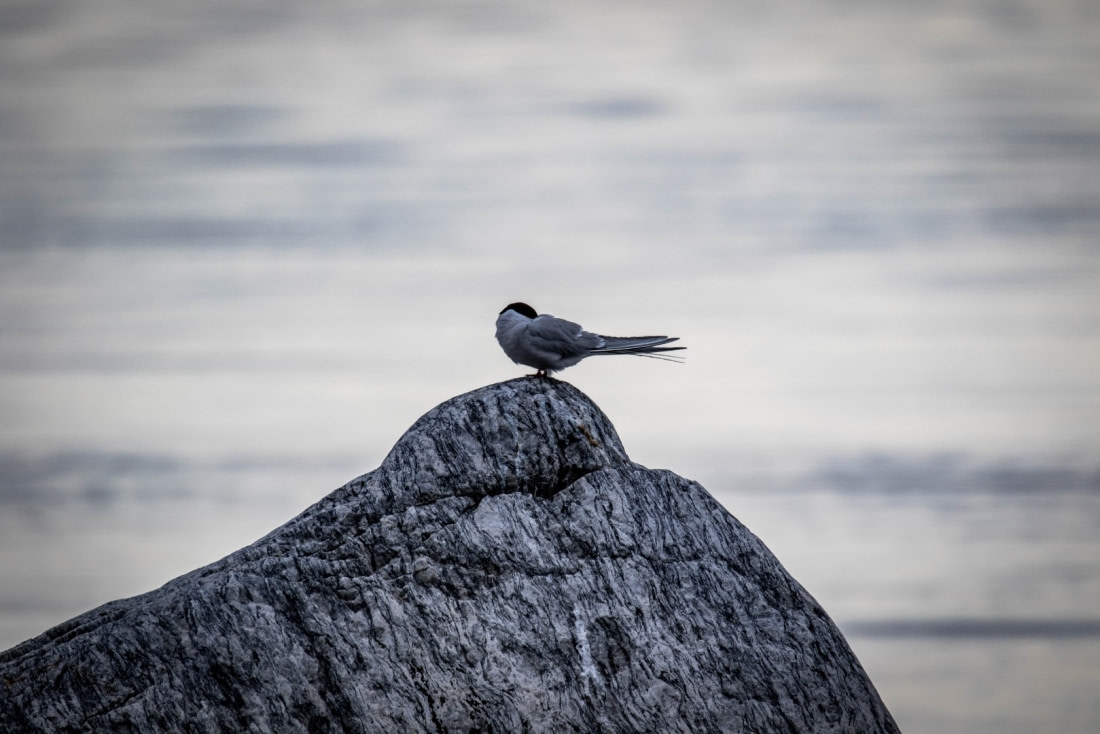
The Arctic tern is a small seabird species that has a circumpolar distribution and is the most northern of all terns. In the Arctic, terns can be spotted along the coast of Svalbard, mostly in the western and northern parts of Spitsbergen.
Arctic terns breed as single pairs but most commonly in colonies, with pairings numbering in the hundreds. Another interesting fact is that they spend most of their winter in the pack ice of the Antarctic Ocean before returning to Svalbard at the end of May or beginning of June.
They then head back south between the end of August and mid-September.
13. Actually, Svalbard is a summer paradise for birds
The last Svalbard fact partly illustrates the reason for Svalbard’s enduring popularity: It is one of the world’s greatest bird-watching locations.
Millions of birds are attracted to the islands of Svalbard due to their abundance of food. With these ample food supplies, various species of bird can breed and raise their young in relative safety before heading south for warmer temperatures during the Arctic winter.
Bird watchers heading to Svalbard are recommended to arrive in early May and June, when the ice retreats and the tundra clears of snow. During this time up to three million birds call the islands home, with the majority coming from continental Europe and the UK.

14. Polar bears roam from Svalbard to Russia
Nobody can promise you a polar bear sighting in the wild, but an encouraging fact about Svalbard is that if you visit these islands you’ll have at least a fair chance of seeing them.
Polar bears in Svalbard occupy a region from Spitsbergen all the way to the Russian archipelagos of Franz Josef Land and Novaya Zemlya. These bears are called the Barents Sea population.
Female bears on the east coast of Svalbard often display two types of behaviour: Some roam over a large area that stretches from Svalbard to Russia, spending most of their time hunting for seals in the southern limits of the Arctic ice; others have a smaller home range and just stick to Svalbard and its waters.
There’s no place like home, especially if your home is Svalbard.

15. Svalbard is also home to roaming foxes
The Arctic fox is commonly seen scavenging across Svalbard. The species is found on all the islands, ranging from drift ice to the Svalbard mountains.
They do, however, prefer to be in the tundra near bird cliffs during the summer. They eat a variety of food depending on food availability, and are happy to feed on baby seals, seabirds, and geese during the spring and summer.
In the winter, Arctic foxes turn their attention to carrion from seals and reindeer.

16. The Svalbard Global Seed Vault (aka Doomsday Vault) is on Spitsbergen
If you think this final Svalbard fact sounds made up, you’re not alone.
The Svalbard Global Seed Vault is the end-all, be-all, hold-all repository of the world’s vital crops. Locked deep in a mountain veined with permafrost, the Vault protects these crops in seed form in the event of global catastrophe.
Gene banks from all over the world have contributed, filling the Svalbard Global Seed Vault to an astounding 930,000 crop varieties.
Even so, this is only a fraction of what the Vault will hold: 4.5 million crop types, with an average of 500 seeds each, yields a total Vault capacity of 2.5 billion seeds.
Not long ago the Vault made global headlines when melting permafrost threatened its seeds, but its Norwegian operators have since made improvements to prevent a reoccurrence. The Vault is a precaution we hope we’ll never need, but we definitely do not need it to fail.
 24 Apr - 01 May 2026
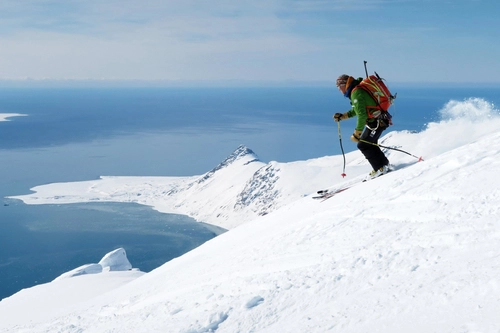 01 May - 08 May 2026
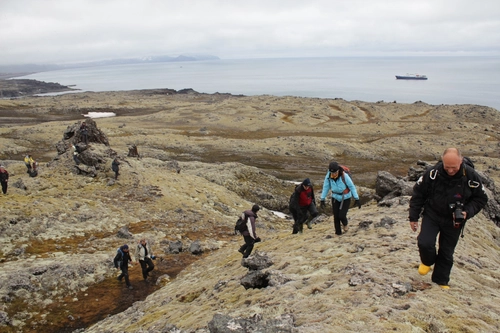 27 May - 05 Jun 2026
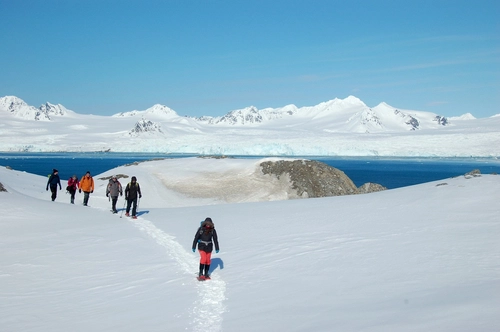 29 May - 05 Jun 2026
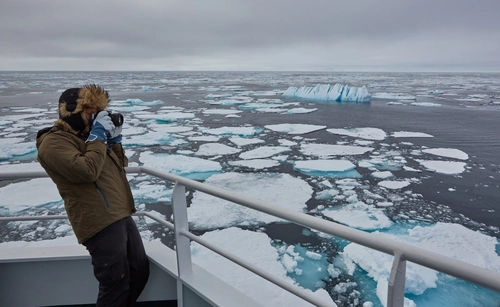 05 Jun - 12 Jun 2026
Related Trips
Alpine Peaks of Spitsbergen, Ski & Sail
24 Apr 2026 - 01 May 2026  8 Days / 7 Nights
Alpine Peaks of Spitsbergen, Ski & Sail
01 May 2026 - 08 May 2026 8 Days / 7 Nights
Arctic Ocean - Fair Isle, Jan Mayen, Ice Edge, Spitsbergen, Birding
27 May 2026 - 05 Jun 2026 10 Days / 9 Nights
North Spitsbergen - Arctic Spring , Hike & Sail
29 May 2026 - 05 Jun 2026 8 Days / 7 Nights
North Spitsbergen Explorer - Into the pack ice - Polar Bear Special
05 Jun 2026 - 12 Jun 2026 8 Days / 7 Nights

Arctic Ocean - Jan Mayen, Ice edge, Spitsbergen, Birding
05 Jun 2026 - 13 Jun 2026 9 Days / 8 Nights
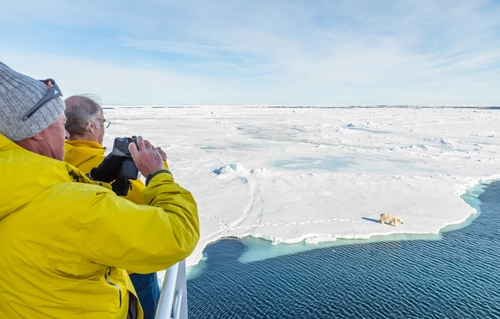
Arctic Ocean - Fair Isle, Jan Mayen, Ice edge, Spitsbergen, Birding - Summer Solstice
12 Jun 2026 - 21 Jun 2026 10 Days / 9 Nights
North Spitsbergen Explorer - Into the pack ice - Polar Bear Special
12 Jun 2026 - 19 Jun 2026 8 Days / 7 Nights
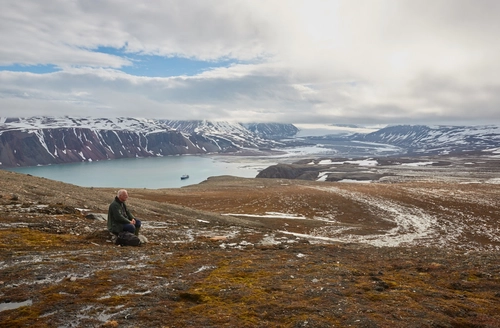
North Spitsbergen Explorer - Versatile landscapes, sea ice & wildlife
13 Jun 2026 - 20 Jun 2026 8 Days / 7 Nights
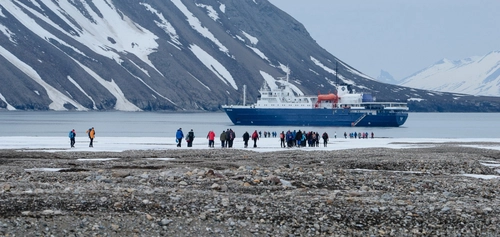
North Spitsbergen Basecamp – Summer Solstice - Free Kayaking, Hiking, Photo Workshop, Diving (supplemented)
19 Jun 2026 - 26 Jun 2026 8 Days / 7 Nights
North Spitsbergen Explorer - Versatile landscapes, sea ice & wildlife - Summer Solstice
20 Jun 2026 - 27 Jun 2026 8 Days / 7 Nights
North Spitsbergen Explorer - Versatile landscapes, sea ice & wildlife - Summer Solstice
21 Jun 2026 - 28 Jun 2026 8 Days / 7 Nights

Blog


The Ancient Fossil Forests of Antarctica
The disastrous expedition in the Arctic west
The Small but Social Commerson’s Dolphin
10 Illuminating Facts about the Northern Lights
Five Reasons You Should Cruise the Ross Sea Immediately
An igneous paradise: Franklin Island
Narwhals: the Aquatic Unicorns of the Arctic
The Most Enchanting Antarctica Cruise Islands
Arctic Flowers, Trees, and Other Plant Life
Kayaking In Greenland
Port Pastimes: 7 Fun Things to Do in Longyearbyen
Bouvet Island: The Most Remote Island in the World
Scoresby Sund: the Greatest Greenland Adventure
Life in a Penguin Colony
The Wonderful Weddell Sea: Places, Pics, and Impressions
Earth vs. Mars: Polar Regions Compared
Baleen Whales – The Gentle Giants of the Ocean
Day and night in Antarctica
Antarctica’s first Marine Protected Area