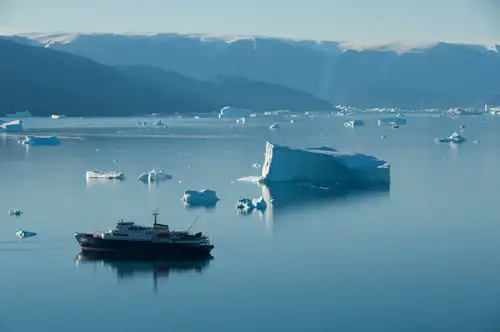


When you think about Svalbard wildlife, you might imagine reindeer, Arctic foxes, polar bears – the primary animal attractions that draw passengers to an Arctic cruise. But in fact, the Svalbard archipelago is a thriving location for over 1,000 species of terrestrial and freshwater invertebrates: animals that lack backbones. Despite this richness of life, however, these invertebrates are only found in the Isfjord and Kongsfjord areas of these wonderfully diverse islands.
The bountiful bugs of Svalbard
There are over 250 species of insects recorded on Svalbard, including flies, fleas, and aphids. Beetles are found there too, though in lesser numbers compared to their global population: Beetles make up nearly 40% of insect species worldwide, but on Svalbard, they comprise only 8.8%. Indeed, only 20 recorded beetle species are located on the islands. The beetles found there are nonetheless tough: Predatory rove beetles, for example, are commonly found under stones at the base of bird cliffs. They eat springtails, six-legged invertebrates that measure just 3 millimeters (.1 inch) in length.
Svalbard wasps
Wasps are common on Svalbard and consist of two groups: the plant-feeding wasp and the parasitic wasp. The plant-feeding wasps are known as sawflies due to the female’s saw-like ovipositor, which she uses to cut holes in plants to lay her eggs. Meanwhile, the parasitic wasps lay their eggs in the larvae of flies and sawflies, eventually eating the host larvae.
The Svalbard moth duo
Typically, locations around the world are full of butterflies and moths, but on Svalbard, there are only two species of moths, and no butterflies. There are also moths that occasionally get blown over the sea from the Norwegian mainland or from Finland, but these do not survive for long in the harsh conditions of Svalbard. Aphids are also found on the islands and survive by feeding on the Dryas octopetula, usually at the base of the leaves or on the flower shoots under the petals.
Svalbard’s many mites
At the smaller level, over 140 species of mite are known to live on Svalbard. The majority of them live in the soil, though they are also known to run over rocks on warm days. There are two groups of mites on Svalbard: hard-bodied and soft-bodied. Hard-bodied mites have the greatest diversity, with over 80 species found on Svalbard. The mites usually feed on dead plant material or fungi, and though they are very small (around 1 mm long, or .04 of an inch), they can live for many years. In fact, one species takes five years just to reach adulthood.
The small (but tough) of Svalbard
At the microscopic level, Svalbard is home to tardigrades, which range from 50-2,100 µm in size. They are a remarkably hardy species, surviving in extreme conditions around the world as well as low orbit over the Earth. On Svalbard, they live in small microhabitats, including mosses, lichens, soil, and small meltwater hollows on glaciers.
Surviving Svalbard
But the question is, how do all these species survive the cold, harsh environment for which Svalbard is known? Invertebrates in Svalbard face long winters and short, cool summers. These species must not only be able to tolerate the cold but also grow and reproduce during a limited number of summer months. Invertebrates have adapted to the harsh conditions of Svalbard.
Frozen-solid state
Unlike Svalbard reindeer, which maintain an elevated core temperature using their insulating fat and fur, invertebrates have core temperatures that can plummet to -30°C (-22°F). In addition, these tough species need to deal with extreme desiccation and anoxia (dryness and absence of oxygen, respectively). Pushing the boundaries of life still further, invertebrates can survive in outside temperatures of -60°C (-76°F). Many invertebrate species, once frozen, are very tolerant and able to survive for over four years at temperatures below -20°C (-4°F). There are a few strategies these invertebrates employ in order to survive these brutal conditions.
Strategies of Svalbard invertebrates
When temperatures fall below 0°C (32°F), the chance of freezing can be fatal. Invertebrates have three choices to make in such conditions: First, they can survive the formation of ice inside their bodies by becoming freeze-tolerant (freeze tolerance); second, they can prevent the water inside their bodies from freezing (freeze avoidance); or third, they can remove the water from their bodies (dehydration).
Tolerating the Svalbard cold
Invertebrates that tolerate the cold do so by creating specialized ice-nucleating proteins in their haemolymph. This means freezing is restricted to extracellular water. This act enables insects to survive for long periods of exposure, reducing its metabolic rate and conserving fluids.
Svalbard frost avoidance
Freeze-avoidant species produce polyhydroxy alcohols, such as glycerol or trehalose, to avoid freezing. They also produce antifreeze proteins, which bind ice crystals and prevent them from growing further. One Svalbard aphid species even overwinters as an egg. This aphid’s life cycle is finely tuned to the short summer, producing eggs well before winter. These eggs are cold-resistant, capable of enduring temperatures of -38°C (-36.4°F). During the overwinter period, these eggs are attached to the leaves of trees found along ridgelines or at the top of slopes, where only a thin layer of insulating snow lies. This means the egg is exposed to low temperatures around -30°C (-22°F). By overwintering in places with low snow cover, however, aphids enjoy one of the first places free of snow after the spring melt.
Dry out or die out
Another species that uses dehydration to survive the winter is the earthworm, whose cocoon remains unfrozen even during subzero temperatures. The earthworm has a system in which water vapor inside its body is pushed to the surrounding ice. The species will dehydrate until the vapor pressure of its bodily fluid equals that of the atmosphere. As temperatures begin to warm, the humidity of the air surrounding the insect increases. The earthworm then rehydrates and eventually regains activity. Another species, the Megaphorura arctica, is able to survive the winter by dumping more than 60% of its water in less than an hour.
 24 Apr - 01 May 2026
 01 May - 08 May 2026
 27 May - 05 Jun 2026
 29 May - 05 Jun 2026
 05 Jun - 12 Jun 2026
Related Trips
Alpine Peaks of Spitsbergen, Ski & Sail
24 Apr 2026 - 01 May 2026  8 Days / 7 Nights
Alpine Peaks of Spitsbergen, Ski & Sail
01 May 2026 - 08 May 2026 8 Days / 7 Nights
Arctic Ocean - Fair Isle, Jan Mayen, Ice Edge, Spitsbergen, Birding
27 May 2026 - 05 Jun 2026 10 Days / 9 Nights
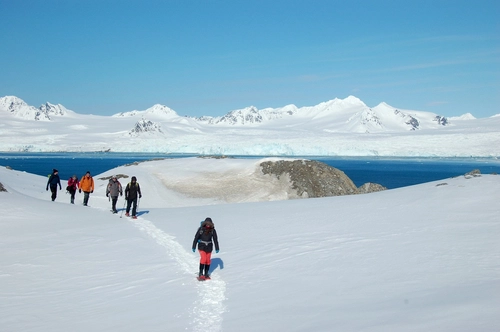
North Spitsbergen - Arctic Spring , Hike & Sail
29 May 2026 - 05 Jun 2026 8 Days / 7 Nights
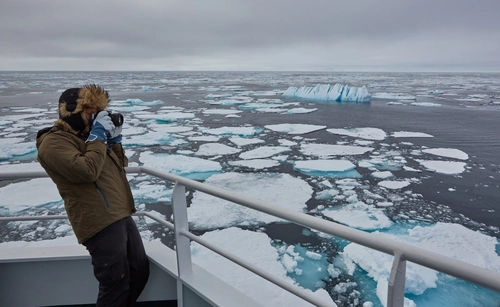
North Spitsbergen Explorer - Into the pack ice - Polar Bear Special
05 Jun 2026 - 12 Jun 2026 8 Days / 7 Nights

Arctic Ocean - Jan Mayen, Ice edge, Spitsbergen, Birding
05 Jun 2026 - 13 Jun 2026 9 Days / 8 Nights
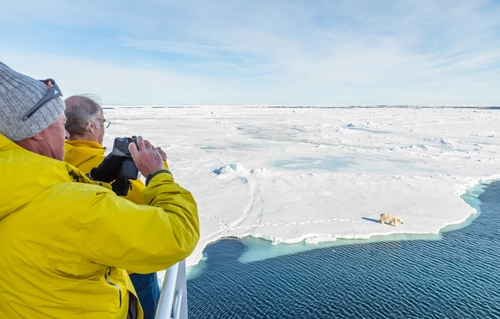
Arctic Ocean - Fair Isle, Jan Mayen, Ice edge, Spitsbergen, Birding - Summer Solstice
12 Jun 2026 - 21 Jun 2026 10 Days / 9 Nights
North Spitsbergen Explorer - Into the pack ice - Polar Bear Special
12 Jun 2026 - 19 Jun 2026 8 Days / 7 Nights
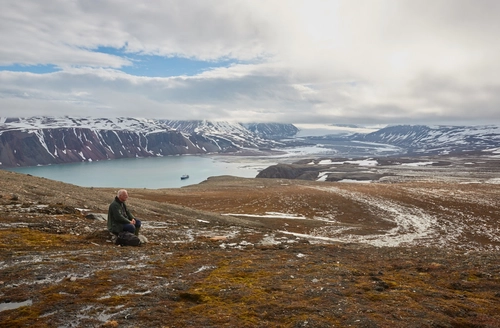
North Spitsbergen Explorer - Versatile landscapes, sea ice & wildlife
13 Jun 2026 - 20 Jun 2026 8 Days / 7 Nights
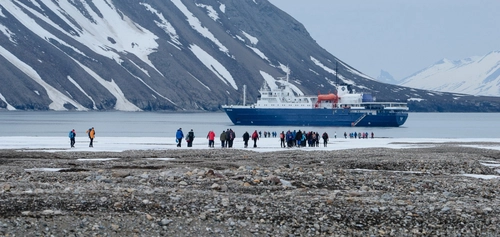
North Spitsbergen Basecamp – Summer Solstice - Free Kayaking, Hiking, Photo Workshop, Diving (supplemented)
19 Jun 2026 - 26 Jun 2026 8 Days / 7 Nights
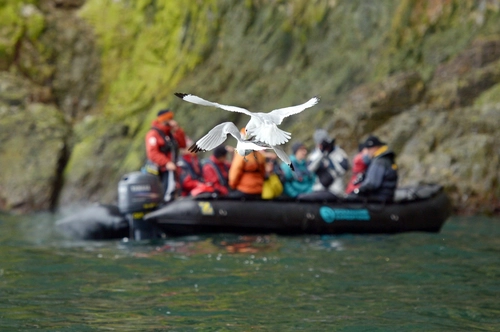
North Spitsbergen Explorer - Versatile landscapes, sea ice & wildlife - Summer Solstice
20 Jun 2026 - 27 Jun 2026 8 Days / 7 Nights
North Spitsbergen Explorer - Versatile landscapes, sea ice & wildlife - Summer Solstice
21 Jun 2026 - 28 Jun 2026 8 Days / 7 Nights

Blog


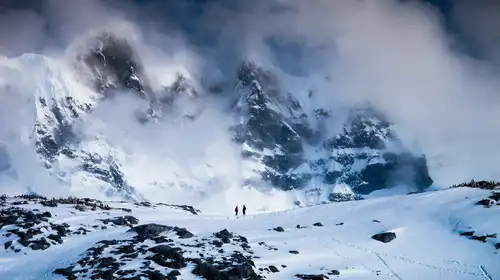
Eight Antarctic Misconceptions
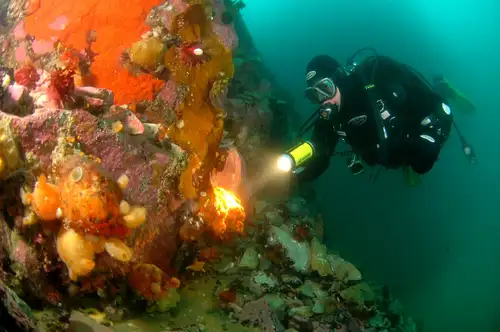
Diving in Antarctica: The Ultimate Underwater Experience
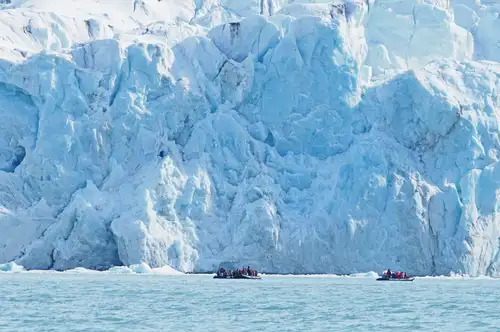
All About Ice: Glaciers and Icebergs of the Arctic and Antarctica
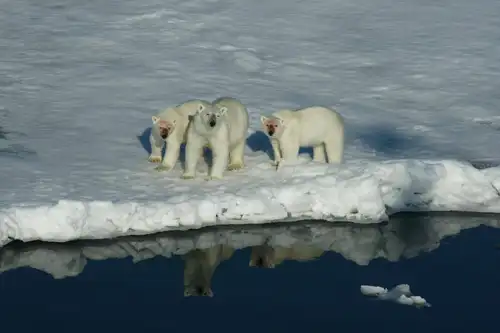
Polar Bear Primer: Eight Facts About the Arctic Wanderer
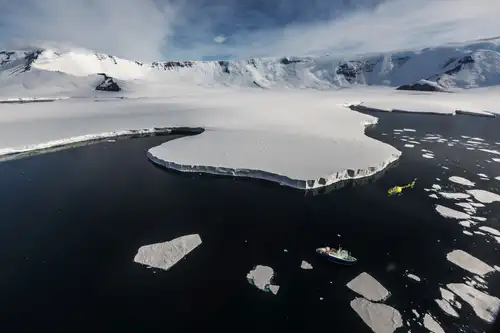
Taking a polar expedition cruise delivers no shortage of show-stopping highlights, but one of the most exhilarating is lifting off from the ship in a helicopter and taking flight over the incomparable Antarctic wilderness.
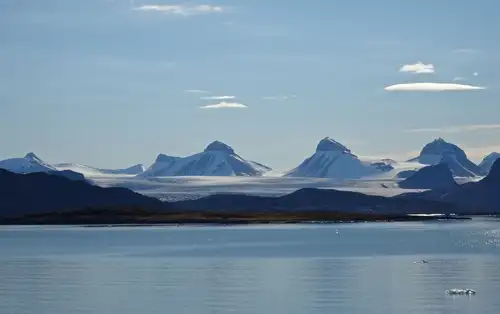
The Arctic Borderland of Kongsfjorden, Svalbard
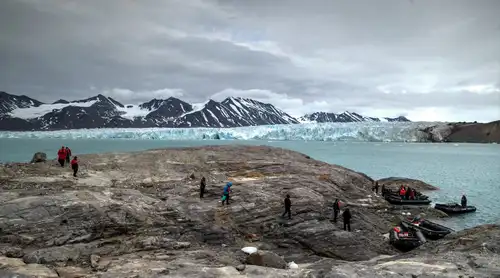
The Enchanting Islands of Svalbard
The Ultimate Traveler’s Guide to the Arctic and Antarctica
Albatross, penguin and krill research in Antarctica
Around Spitsbergen vs. North Spitsbergen
Cheapest Antarctica Cruises: How to Save on Your Journey
10 Tried-and-True Bird Photography Tips
Amphibian, reptiles and herbivore mammals in the Arctic
Light in the Land of the Midnight Sun
Secrets of the Snowy Owl: Habitat, Adaptations, and Other Facts
Shackleton’s Long-Lost Endurance Discovered in Antarctica
The disastrous expedition in the Arctic west
Five Birds You Might See on Your Greenland Cruise
Arctic on Foot: Hiking and Snowshoeing the Far North