Polar Bear Primer Eight Facts About The Arctic Wanderer - Nexta Expeditions
Polar Bear Primer: Eight Facts About the Arctic Wanderer

Polar Bear Primer: Eight Facts About the Arctic Wanderer

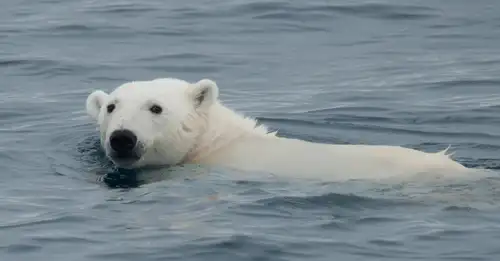
Polar bears inhabit the Arctic region across 19 subpopulations, including areas in Alaska, Canada, Greenland, Norway, and Russia. These majestic creatures prefer the edges of pack ice where currents and wind interact, creating a dynamic environment of melting and refreezing that forms ice patches and leads, which are open spaces in the sea between sea ice.

1. Polar bears are travelers

Throughout the year, as sea ice advances and retreats, polar bears travel extensively to find food in the openings of the sea. Unlike other large carnivores, polar bears do not have fixed territories due to their dependence on sea ice. A young polar bear may travel over 1,000 km (600 miles) to establish its own home range, separate from its mother’s.

Scientists have tracked polar bears with home ranges spanning hundreds of miles. One satellite-tracked bear had a home range of nearly 5,000 km (3,100 miles), stretching from Alaska’s Prudhoe Bay to Greenland, then back to Ellesmere Island in Canada, before returning to Greenland.

blog-image

2. Adapting to cold is a polar bear talent

Scientists believe that polar bears evolved from a common ancestor of the brown bear between 350,000 and 6 million years ago. As they moved north, the ancestors of modern polar bears had to adapt to cold conditions.

Polar bears have dense, insulating underfur topped by guard hairs of varying lengths. This fur is so effective at insulation that it prevents nearly all heat loss, making adult males susceptible to overheating when they run.

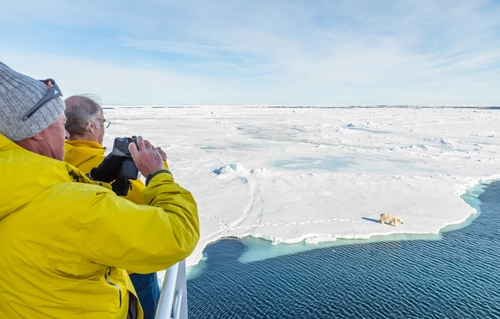
Travelers lucky enough to see them during Arctic cruises usually spot them walking at a conservative pace of around 5 kph (3 mph).

blog-image

3. Polar bear fur is not actually white

Each polar bear hair shaft is pigment-free and transparent, with a hollow core that disperses and reflects light. Polar bears appear pure white when clean and in high-angle sunlight, especially after molting, which usually happens in spring and finishes by late summer. Before molting, accumulated oils from their seal diet can make them look yellow.

Underneath their fur, polar bears have warm black skin over a thick layer of fat, which can be up to nearly 11.5 cm (4.5 inches) thick. This fat layer is crucial for staying warm in the water, as wet fur is a poor insulator.

blog-image

4. Polar bears know how to tread lightly

Polar bears are adept at moving around the Arctic without slipping on or crashing through thin ice. Their paws, which can be up to 30 cm (12 inches) across, help them tread on ice by allowing the bear to extend its legs far apart and lower its body to evenly distribute its weight. The footpads on the bottom of each paw are covered in small, soft bumps called papillae, which help the polar bear grip the ice and avoid slipping.

Their claws, each measuring more than 5 cm in length (2 inches), also aid in walking across the ice by gripping the slippery surface. This ability allows polar bears to reach speeds of up to 40 kph (25 mph) on ice.

blog-image

5. Seals make up the preferred polar bear diet

Polar bears spend much of their time hunting for food, but success is not guaranteed. Ringed and bearded seals are their preferred catch to maintain their thick layer of fat. When in a fit and healthy state, polar bears may only eat the seal’s blubber and skin, leaving the carcass for scavengers like Arctic foxes, ravens, and other bears. While polar bears do not exclusively feed on seals, they are their most ideal nutrient source.

blog-image

6. Polar bears prioritize their cubs

Pregnant polar bears need to eat a lot over the summer and autumn to build up enough fat reserves to survive the denning period. During October and November, the female bear seeks out maternity dens, usually on land where snow accumulates, such as coastal bluffs, river banks, or pressure ridges on the sea ice.

The polar bear typically gives birth to cubs weighing less than 1 kg (around 1 – 2 pounds) between November and January. She then nurses them until they are about 9 – 13 kg (20 – 30 pounds) before emerging from the den in March/April. The cubs remain with their mothers for about two years. Over a female’s lifetime, she can have five litters, one of the lowest reproductive rates of any mammal.

blog-image

7. It takes a lot of sleep to sustain a polar bear

Scientists have recorded life from the polar bear perspective using collar cameras, providing insights into how polar bears in seasonal ice areas – where the sea ice melts completely in summer – spend their time and energy when forced to live on land. These recordings, combined with data from an accelerometer that measures changes in motion, reveal what polar bears do on land and how many calories they expend.

The data shows that polar bears spend about 78 percent of their time resting, 8 percent eating berries, 4 percent walking, and 10 percent on other activities like drinking and grooming. Polar bears are most active in the morning, between 7am and midday, and least active in the early evenings, from 5pm to 8pm.

blog-image

8. DNA can be taken from a polar bear footprint

Researchers have managed to isolate polar bear DNA by collecting two scoops of snow from a polar bear footprint during an expedition to Svalbard. This Arctic archipelago has one of the world’s densest populations of polar bears.

A DNA specialist analyzed the sample and found that the polar bear’s last meal was a seal and a gull that were eaten after death. This method of studying polar bears is a significant advancement, as it is less intrusive than traditional tracking methods.

blog-image

Best Deals

Related Trips

Alpine Peaks of Spitsbergen, Ski & Sail - Nexta Expeditions
The Arctic
Longyearbyen

Alpine Peaks of Spitsbergen, Ski & Sail

calendar24 Apr 2026 - 01 May 2026
clock8 Days / 7 Nights
From $ 3.950 per person
Alpine Peaks of Spitsbergen, Ski & Sail - Nexta Expeditions
The Arctic
Longyearbyen

Alpine Peaks of Spitsbergen, Ski & Sail

calendar01 May 2026 - 08 May 2026
clock8 Days / 7 Nights
From $ 3.950 per person
Arctic Ocean - Fair Isle, Jan Mayen, Ice Edge, Spitsbergen, Birding - Nexta Expeditions
The Arctic
Aberdeen

Arctic Ocean - Fair Isle, Jan Mayen, Ice Edge, Spitsbergen, Birding

calendar27 May 2026 - 05 Jun 2026
clock10 Days / 9 Nights
From $ 3.100 per person
North Spitsbergen - Arctic Spring ,  Hike & Sail - Nexta Expeditions
The Arctic
Longyearbyen

North Spitsbergen - Arctic Spring , Hike & Sail

calendar29 May 2026 - 05 Jun 2026
clock8 Days / 7 Nights
From $ 4.000 per person
North Spitsbergen Explorer - Into the pack ice - Polar Bear Special - Nexta Expeditions
The Arctic
Longyearbyen

North Spitsbergen Explorer - Into the pack ice - Polar Bear Special

calendar05 Jun 2026 - 12 Jun 2026
clock8 Days / 7 Nights
From $ 4.500 per person
Arctic Ocean - Jan Mayen, Ice edge, Spitsbergen, Birding - Nexta Expeditions
The Arctic
Akureyri

Arctic Ocean - Jan Mayen, Ice edge, Spitsbergen, Birding

calendar05 Jun 2026 - 13 Jun 2026
clock9 Days / 8 Nights
From $ 2.800 per person
Arctic Ocean - Fair Isle, Jan Mayen, Ice edge, Spitsbergen, Birding - Summer Solstice - Nexta Expeditions
The Arctic
Aberdeen

Arctic Ocean - Fair Isle, Jan Mayen, Ice edge, Spitsbergen, Birding - Summer Solstice

calendar12 Jun 2026 - 21 Jun 2026
clock10 Days / 9 Nights
From $ 3.100 per person
North Spitsbergen Explorer - Into the pack ice - Polar Bear Special - Nexta Expeditions
The Arctic
Longyearbyen

North Spitsbergen Explorer - Into the pack ice - Polar Bear Special

calendar12 Jun 2026 - 19 Jun 2026
clock8 Days / 7 Nights
From $ 4.500 per person
North Spitsbergen Explorer - Versatile landscapes, sea ice & wildlife - Nexta Expeditions
The Arctic
Longyearbyen

North Spitsbergen Explorer - Versatile landscapes, sea ice & wildlife

calendar13 Jun 2026 - 20 Jun 2026
clock8 Days / 7 Nights
From $ 4.500 per person
North Spitsbergen Basecamp – Summer Solstice - Free Kayaking, Hiking, Photo Workshop, Diving (supplemented) - Nexta Expeditions
The Arctic
Longyearbyen

North Spitsbergen Basecamp – Summer Solstice - Free Kayaking, Hiking, Photo Workshop, Diving (supplemented)

calendar19 Jun 2026 - 26 Jun 2026
clock8 Days / 7 Nights
From $ 4.500 per person
North Spitsbergen Explorer - Versatile landscapes, sea ice & wildlife - Summer Solstice - Nexta Expeditions
The Arctic
Longyearbyen

North Spitsbergen Explorer - Versatile landscapes, sea ice & wildlife - Summer Solstice

calendar20 Jun 2026 - 27 Jun 2026
clock8 Days / 7 Nights
From $ 4.500 per person
North Spitsbergen Explorer - Versatile landscapes, sea ice & wildlife - Summer Solstice - Nexta Expeditions
The Arctic
Longyearbyen

North Spitsbergen Explorer - Versatile landscapes, sea ice & wildlife - Summer Solstice

calendar21 Jun 2026 - 28 Jun 2026
clock8 Days / 7 Nights
From $ 4.500 per person

Blog
go-leftgo-right

The Enchanting Islands of Svalbard - Nexta Expeditions
Blog

The Enchanting Islands of Svalbard

Svalbard is an Arctic archipelago situated between the North Pole and the Norwegian mainland, offering visitors some of the most stunning wildlife and landscapes in the world. Here we explore seven of the most visited Svalbard islands, highlighting the many wonders that draw people back year after year.
Hot Ice: Breeding Practices of Five Polar Animals - Nexta Expeditions
Blog

Hot Ice: Breeding Practices of Five Polar Animals

Last Valentine's Day we gave you 14 wildlife pictures highlighting the ins, outs, ups, and downs of polar romance. This year we're moving on to something a little more advanced: the nitty-gritty details of polar wildlife breeding rituals.
Five of History’s Greatest Polar Explorers - Nexta Expeditions
Blog

Five of History’s Greatest Polar Explorers

Today's visitors to the polar regions follow in the footsteps of some of the most famous explorers in history. Here is a list of five great explorers who braved the harsh lands of the Arctic and Antarctica.
A Day of Whale Watching in Antarctica - Nexta Expeditions
Blog

A Day of Whale Watching in Antarctica

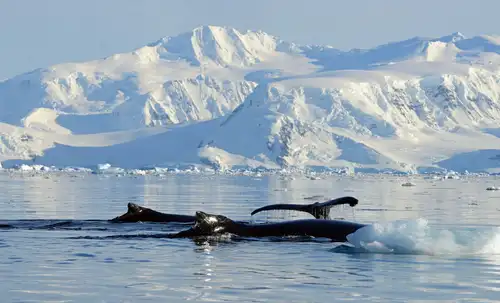
This morning we awoke early to enjoy the first light in Wilhelmina Bay, with the snow and cloud blanketing the surrounding mountains. As dawn broke, we could see the blows of humpback whales scattered throughout the bay. Some of the whales were closer to the ship and we spotted their small dorsal fins and occasionally their white patterned tails. It was a terrific start to our first full day in Antarctica.
Six Facts About the Crabeater Seals of Antarctica - Nexta Expeditions
Blog

Six Facts About the Crabeater Seals of Antarctica

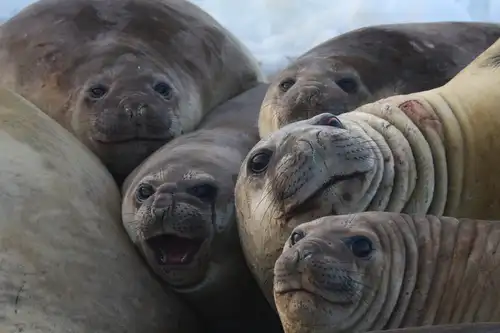
Antarctic fur seals, leopard seals, Weddell seals, Ross seals, southern elephant seals... The many seal species of Antarctica all have names that are in some way explained by their appearance or primary region of distribution.
Life migrating through the Polar Front - Nexta Expeditions
Blog

Life migrating through the Polar Front

Since James Cook’s second voyage to Antarctica from 1772-1775, which provided the first descriptions of Antarctic animals, scientists have progressively uncovered the biodiversity of the Antarctic and sub-Antarctic regions. Numerous expeditions and research projects have since been undertaken to understand the unique ecosystems of this continent.
Antarctica’s first Marine Protected Area - Nexta Expeditions
Blog

Antarctica’s first Marine Protected Area

In October of this year, the Commission for the Conservation of Antarctic Marine Living Resources, which includes 24 countries such as the United States, the European Union, Australia, and New Zealand, reached a consensus on a New Zealand/United States proposal to establish a large-scale Marine Protected Area (MPA) in the Ross Sea region.
Arctic and Antarctic Basecamp Cruises – Choose Your Own Adventure - Nexta Expeditions
Blog

Arctic and Antarctic Basecamp Cruises – Choose Your Own Adventure

There’s an astonishing variety of activities to choose from when planning an Arctic trip or Antarctic cruise, which can be a bit overwhelming. How do you choose just one voyage over another when you want to experience everything? Happily, you don’t have to give up one activity for another. Basecamp cruises have you covered.
Port Pastimes: 7 Fun Things to Do in Longyearbyen - Nexta Expeditions
Blog

Port Pastimes: 7 Fun Things to Do in Longyearbyen

Waiting in port for an Arctic expedition cruise to begin might seem a little like waiting for water to boil or coffee to brew or a Seinfeld reunion to materialize: Time seems to defy its own laws, life slows to a crawl, and you begin to wonder if it’s really going to be worth it.
Scenes from St. Andrews Bay:  12 Pics of Penguins, Seals, and More - Nexta Expeditions
Blog

Scenes from St. Andrews Bay: 12 Pics of Penguins, Seals, and More

If you ever find yourself exploring the breathtaking sub-Antarctic island chain of South Georgia, one of the most captivating spots you'll encounter is the picturesque shoreline of St. Andrews Bay.
Polar Marine Visitors: the Whales of Antarctica and the Arctic - Nexta Expeditions
Blog

Polar Marine Visitors: the Whales of Antarctica and the Arctic

Whales are the world’s largest mammals, found in the Arctic and Antarctica. This article covers some of the major species you may see on voyages to these remarkable areas.
The History of Antarctica in Maps - Nexta Expeditions
Blog

The History of Antarctica in Maps

Long before human eyes ever beheld Antarctica, the ancients were convinced that it existed – or at least something like it.
Deep Sea Dwellers: 10 Facts about The Antarctic Giant Isopod - Nexta Expeditions
Blog

Deep Sea Dwellers: 10 Facts about The Antarctic Giant Isopod

On average, the Giant Antarctic Isopod grows to 9cm (3.5in.) in length. This may not seem very large, but factors including low light levels, freezing cold water, and a lack of oxygen prevent these isopods from growing very large. Other species of isopods, including the Giant Isopod, have been known to grow up to 40 cm (16 inches) in length!
Polar Bear Primer: Eight Facts About the Arctic Wanderer - Nexta Expeditions
Blog

Polar Bear Primer: Eight Facts About the Arctic Wanderer

Polar bears inhabit the Arctic region across 19 subpopulations, including areas in Alaska, Canada, Greenland, Norway, and Russia. These majestic creatures prefer the edges of pack ice where currents and wind interact, creating a dynamic environment of melting and refreezing that forms ice patches and leads, which are open spaces in the sea between sea ice.
Albatross, penguin and krill research in Antarctica - Nexta Expeditions
Blog

Albatross, penguin and krill research in Antarctica

In the Antarctic region, extensive research is being conducted by national Antarctic programmes from countries like the UK, Australia, and Japan. These studies aim to understand species in the air, on the ground, and in the sea, and how these species are interconnected without variables such as human impacts and climate change.
Penguins, Petrels, and Prions: Top Antarctica Bird Tour Spots - Nexta Expeditions
Blog

Penguins, Petrels, and Prions: Top Antarctica Bird Tour Spots

If anyone tells you Antarctica is for the birds, they’re right.
Graham Land: A landscape dominated by volcanoes - Nexta Expeditions
Blog

Graham Land: A landscape dominated by volcanoes

An Antarctic cruise may explore the upper tip of the Antarctic Peninsula where one finds Graham Land, a jagged, glaciated part of Antarctica with a landscape dominated by volcanoes. Despite the volcanoes being over 200 million years old they are far from extinct with volcanic activity occurring today. Graham Land is connected to Palmer Land at the point where the Antarctic Peninsula widens from around 75 km to around 200 km south of Marguerite Bay.
Camping in Antarctica: a True Expedition Experience - Nexta Expeditions
Blog

Camping in Antarctica: a True Expedition Experience

We often think of camping as a summer activity, filled with warm nights, campfire dinners, and serene mountain lakes. However, there's a whole other world of camping to explore.
Top Antarctica Cruise Experiences for 2025 - Nexta Expeditions
Blog

Top Antarctica Cruise Experiences for 2025

Antarctica, the world’s southernmost continent, captivates adventurous travelers with its breathtaking landscapes and rich biodiversity. Cruises to this icy destination offer unparalleled access to pristine wilderness, unique wildlife, and transformative experiences. In 2025, the allure of Antarctica promises to be even greater, with cutting-edge expeditions and eco-conscious travel options reshaping the journey south.
Gough Island: Seabird Capital of the South Atlantic - Nexta Expeditions
Blog

Gough Island: Seabird Capital of the South Atlantic

Gough Island is a remote volcanic island in the South Atlantic, uninhabited except for a small party of meteorologists and (sometimes) biologists.