Solargraphy Pin Hole Photography In The Arctic - Nexta Expeditions
Solargraphy & Pin Hole photography in the Arctic

Solargraphy & Pin Hole photography in the Arctic

blog-image

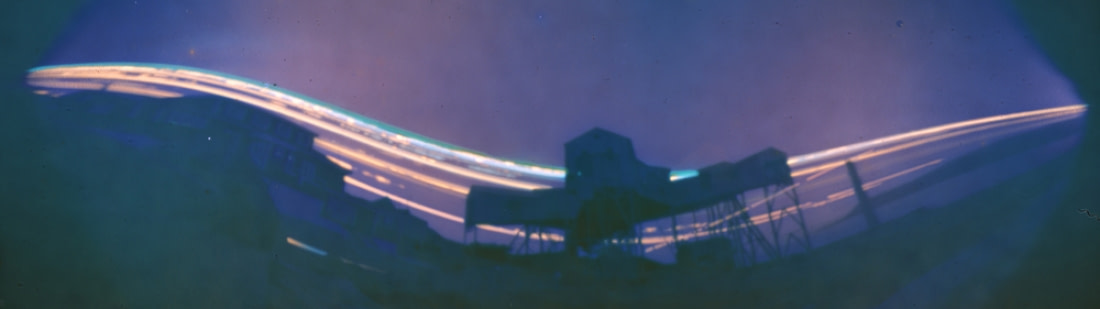
Taubanesentralen, Longyearbyen, exposure time 2 months

A large glaucous gull peers at us from outside the breakfast room. This bird has been a daily visitor since our arrival, eyeing our delightful spread of bread, cheese, meat, and eggs through the glass. Unlike most cafe terraces worldwide, where pigeons and sparrows are common, Spitsbergen seems to be pigeon-free. At the Polarrigg hotel, everyone is content to be inside, as the gull outside looks quite determined.
blog-image

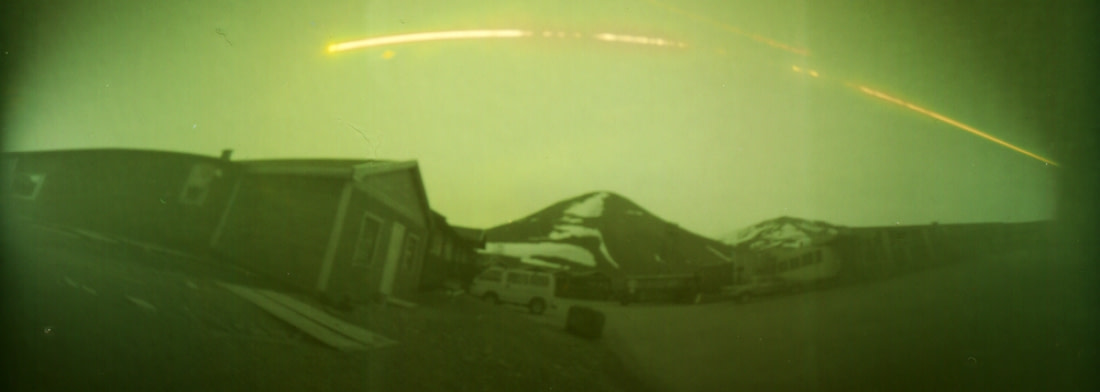
Hotel Polarrigg, exposure time 1 day.

Ready to leave

The breakfast room fills with SeesNL participants, all eager to depart. However, we must wait until the afternoon. Some scientists leave early to start setting up the laboratory on the vessel Ortelius, which will serve as a workspace during the Spitsbergen expedition. This temporary lab will be dismantled after the journey.

A taxi is scheduled for 15:00 to collect luggage and passengers, including scientists, tourists, and two fortunate artists—myself and actor/writer Ramsey Nasr. We feel a bit out of place without any scientific contributions, but everyone has been welcoming, and we are definitely part of the team. Like historical expeditions that included writers and visual artists to document the journey, we are here to fulfill that role.

Ortelius beautiful in the fjord

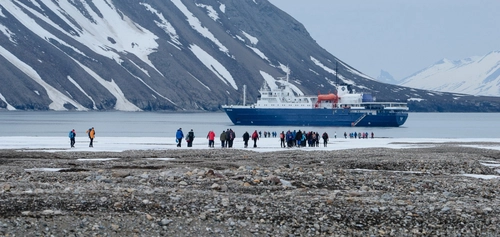
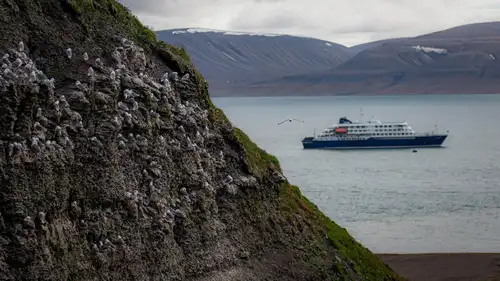
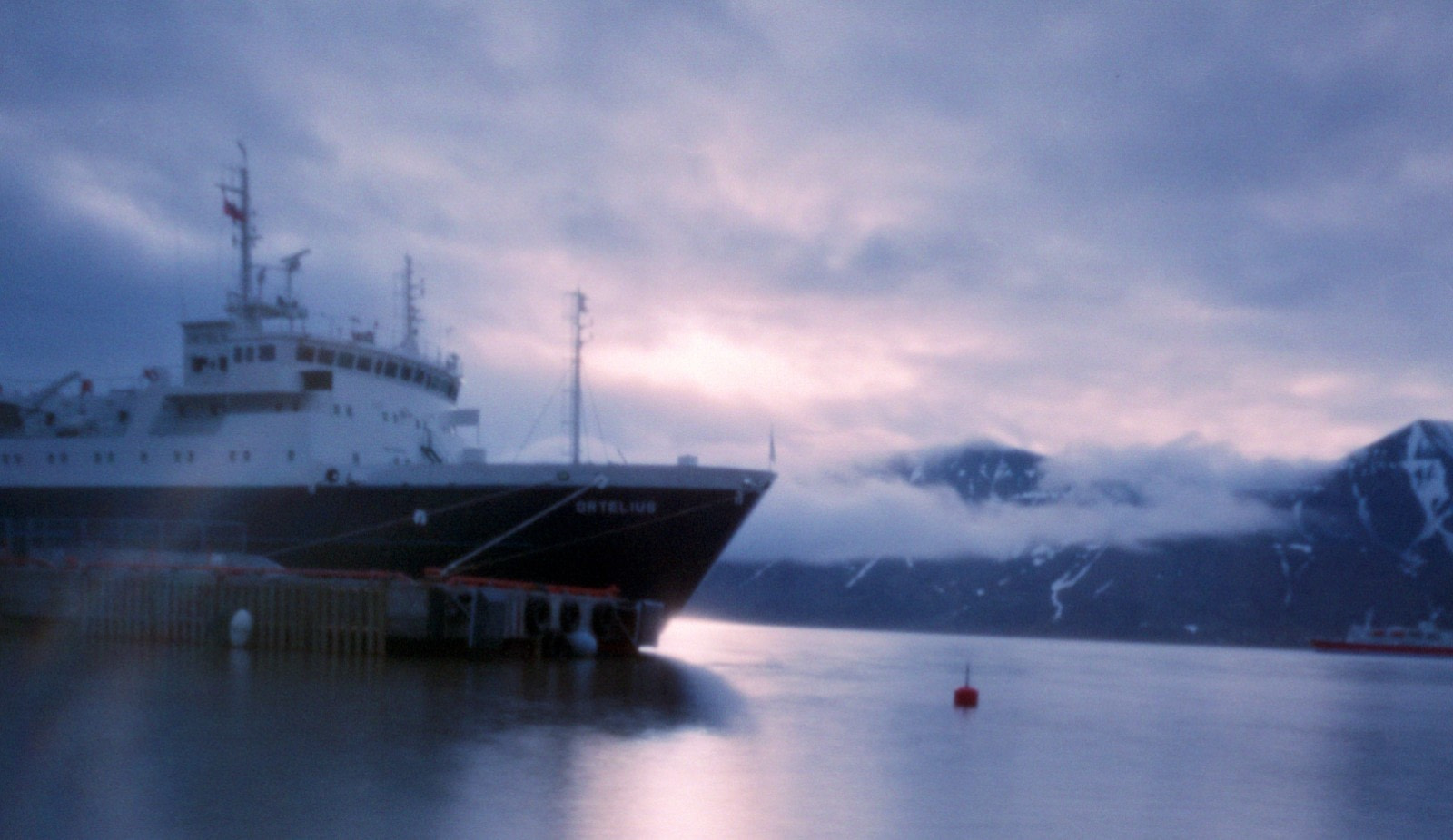
The wait begins, and some of us go walking, shopping, or geocaching. I decide to collect a few more pin-hole cameras. After a quick visit to the mining cart station, I take some Super8 mm film shots from a higher vantage point where the Ortelius looks stunning in the fjord. During my first days in Longyearbyen, I had already retrieved some cameras I set up two months earlier. I rush to the post office to send the first batch of pin-hole cameras to Holland for later processing. It's better to spread the risk of losing them, so this is the first group to be sent home.

blog-image

Ortelius in Longyearbyen harbour. Pinhole photo, exposure time 15 seconds.

Finally to the harbor

The taxi arrives! We head to the harbor to board the zodiacs that will take us to the Ortelius. From various hotels and the campsite in Longyearbyen, everyone gathers at the platform, waiting for the next steps. Maarten Loonen, the scientific expedition leader, arrives along with the early pioneers of a Dutch Polar station in Kapp Lee, Edgeøya. Eric Flipse, Piet Oosterveld, Paul de Groot, and Ko de Korte spent a year in 1968/1969 building a polar station and collecting biological data. They are now invited to revisit the place they once stayed. Sadly, Eric is not with us, having passed away in the 1970s.

Embarkation

Once all the luggage is on board, it's our turn. In small groups, we board the zodiacs and are taken to the ship. The zodiac slides next to a small platform where we are helped onto a staircase leading to deck three, where we check in at the reception. My bags are already in my room when I enter. It's a great room, more luxurious than I need, but I requested it to start creating long exposure photographs from my window immediately. I have ample space to work on my project, and the bathroom can serve as a darkroom for making new cameras while we're at sea. I begin my sunlight painting experiment right away.
blog-image

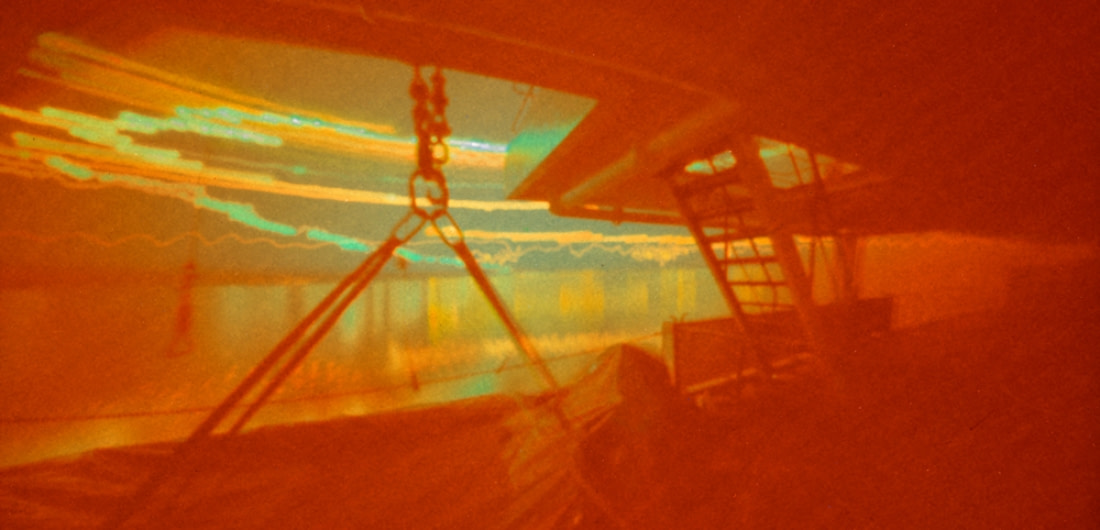
Ortelius deck 5, exposure time 7 days.

Sailing out of the main Isfjorden

The ship sails out of the main Isfjorden, turns left into the open ocean, and we encounter a beautiful rolling swell that makes some people feel a bit seasick. I wasn't sure how I would react, as this is my first time on such a vessel in open ocean. Fortunately, apart from feeling a bit "drunk" without drinking, I don't experience motion sickness. In fact, I find that I quite enjoy it.

A living breathing sea creature

The sounds of the Svalbard cruise ship enhance the experience. I love the creaks and squeaks around me as I move through the deck and corridors. The combination of wood and metal, along with the constant soft hum of the engine, makes it feel as if the ship is alive—a living, breathing sea creature protecting its cargo of eager scientists. My sleep is quite good that night. A lone gull drifts south, side by side with the m/v Ortelius.
blog-image

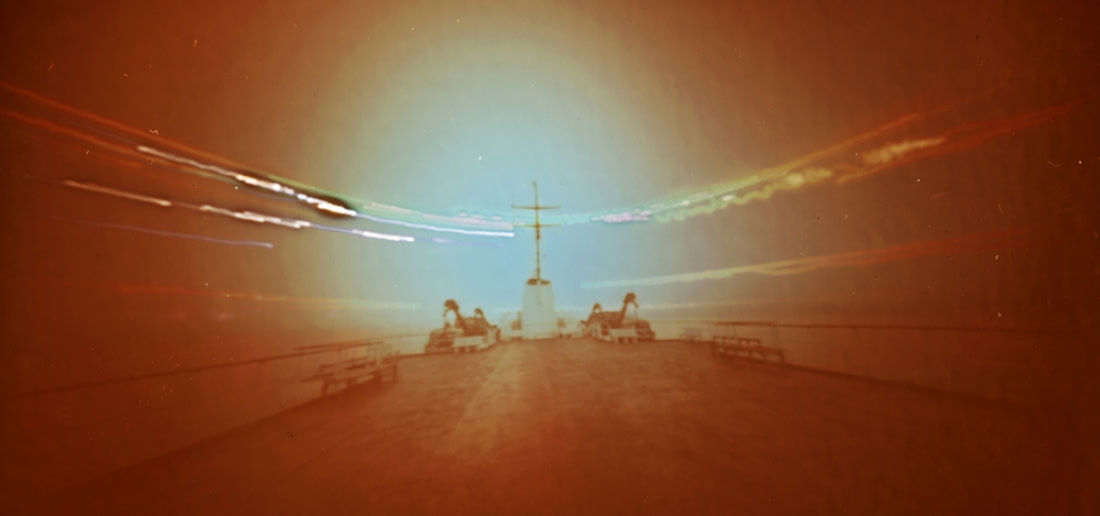
Ortelius deck 7, exposure time 7 days.

About the author

Udo Prinsen is a visual artist with a background in film and animation design. He participated as a member of the Sees NL expedition to Spitsbergen and Edgeøya. During the voyage, he engaged in 'painting with sunlight,' as described on his website, using analogue photography and film methods to capture the cultural and historical aspects of the expedition. Prinsen is fascinated by this technique and dreams of creating a solargraphy storybook of vessels around the world, with many exciting plans in mind.

About the images

In solargraphy, solar tracks are directly recorded through a lensless pin-hole camera onto light-sensitive paper. The exposure time can range from months to years. The images in this project were exposed for several hours to just over two months.
Best Deals

Related Trips

Alpine Peaks of Spitsbergen, Ski & Sail - Nexta Expeditions
The Arctic
Longyearbyen

Alpine Peaks of Spitsbergen, Ski & Sail

calendar24 Apr 2026 - 01 May 2026
clock8 Days / 7 Nights
From $ 3.950 per person
Alpine Peaks of Spitsbergen, Ski & Sail - Nexta Expeditions
The Arctic
Longyearbyen

Alpine Peaks of Spitsbergen, Ski & Sail

calendar01 May 2026 - 08 May 2026
clock8 Days / 7 Nights
From $ 3.950 per person
Arctic Ocean - Fair Isle, Jan Mayen, Ice Edge, Spitsbergen, Birding - Nexta Expeditions
The Arctic
Aberdeen

Arctic Ocean - Fair Isle, Jan Mayen, Ice Edge, Spitsbergen, Birding

calendar27 May 2026 - 05 Jun 2026
clock10 Days / 9 Nights
From $ 3.100 per person
North Spitsbergen - Arctic Spring ,  Hike & Sail - Nexta Expeditions
The Arctic
Longyearbyen

North Spitsbergen - Arctic Spring , Hike & Sail

calendar29 May 2026 - 05 Jun 2026
clock8 Days / 7 Nights
From $ 4.000 per person
North Spitsbergen Explorer - Into the pack ice - Polar Bear Special - Nexta Expeditions
The Arctic
Longyearbyen

North Spitsbergen Explorer - Into the pack ice - Polar Bear Special

calendar05 Jun 2026 - 12 Jun 2026
clock8 Days / 7 Nights
From $ 4.500 per person
Arctic Ocean - Jan Mayen, Ice edge, Spitsbergen, Birding - Nexta Expeditions
The Arctic
Akureyri

Arctic Ocean - Jan Mayen, Ice edge, Spitsbergen, Birding

calendar05 Jun 2026 - 13 Jun 2026
clock9 Days / 8 Nights
From $ 2.800 per person
Arctic Ocean - Fair Isle, Jan Mayen, Ice edge, Spitsbergen, Birding - Summer Solstice - Nexta Expeditions
The Arctic
Aberdeen

Arctic Ocean - Fair Isle, Jan Mayen, Ice edge, Spitsbergen, Birding - Summer Solstice

calendar12 Jun 2026 - 21 Jun 2026
clock10 Days / 9 Nights
From $ 3.100 per person
North Spitsbergen Explorer - Into the pack ice - Polar Bear Special - Nexta Expeditions
The Arctic
Longyearbyen

North Spitsbergen Explorer - Into the pack ice - Polar Bear Special

calendar12 Jun 2026 - 19 Jun 2026
clock8 Days / 7 Nights
From $ 4.500 per person
North Spitsbergen Explorer - Versatile landscapes, sea ice & wildlife - Nexta Expeditions
The Arctic
Longyearbyen

North Spitsbergen Explorer - Versatile landscapes, sea ice & wildlife

calendar13 Jun 2026 - 20 Jun 2026
clock8 Days / 7 Nights
From $ 4.500 per person
North Spitsbergen Basecamp – Summer Solstice - Free Kayaking, Hiking, Photo Workshop, Diving (supplemented) - Nexta Expeditions
The Arctic
Longyearbyen

North Spitsbergen Basecamp – Summer Solstice - Free Kayaking, Hiking, Photo Workshop, Diving (supplemented)

calendar19 Jun 2026 - 26 Jun 2026
clock8 Days / 7 Nights
From $ 4.500 per person
North Spitsbergen Explorer - Versatile landscapes, sea ice & wildlife - Summer Solstice - Nexta Expeditions
The Arctic
Longyearbyen

North Spitsbergen Explorer - Versatile landscapes, sea ice & wildlife - Summer Solstice

calendar20 Jun 2026 - 27 Jun 2026
clock8 Days / 7 Nights
From $ 4.500 per person
North Spitsbergen Explorer - Versatile landscapes, sea ice & wildlife - Summer Solstice - Nexta Expeditions
The Arctic
Longyearbyen

North Spitsbergen Explorer - Versatile landscapes, sea ice & wildlife - Summer Solstice

calendar21 Jun 2026 - 28 Jun 2026
clock8 Days / 7 Nights
From $ 4.500 per person

Blog
go-leftgo-right

Arctic Flowers, Trees, and Other Plant Life - Nexta Expeditions
Blog

Arctic Flowers, Trees, and Other Plant Life

When many people think of the Arctic, they probably imagine a stark white wasteland devoid of anything except snow, glaciers, and the occasional far-wandering polar bear.
5 Misconceptions You Might Have About Greenland - Nexta Expeditions
Blog

5 Misconceptions You Might Have About Greenland

The Research Stations of Antarctica and the sub-Antarctic - Nexta Expeditions
Blog

The Research Stations of Antarctica and the sub-Antarctic

Numerous research stations operate throughout the Antarctic and sub-Antarctic, engaged in all manner of scientific inquiry. This article will cover the stations under the management of the British Antarctic Survey (BAS), which conducts year-round terrestrial and atmospheric research in some of the most compelling polar locations on Earth.
Seven Tips to Get the Most out of Your Expedition Cruise - Nexta Expeditions
Blog

Seven Tips to Get the Most out of Your Expedition Cruise

Polar cruises are easy to enjoy, but there’s an art to getting the most out of them.
Albatross, penguin and krill research in Antarctica - Nexta Expeditions
Blog

Albatross, penguin and krill research in Antarctica

In the Antarctic region, extensive research is being conducted by national Antarctic programmes from countries like the UK, Australia, and Japan. These studies aim to understand species in the air, on the ground, and in the sea, and how these species are interconnected without variables such as human impacts and climate change.
South Georgia in Spring - Nexta Expeditions
Blog

South Georgia in Spring

What a fantastic time to be in South Georgia! Perhaps the best time of the year! The wildlife is abundant, and the light is simply magical for photography. Kings, Gentoos, Chinstraps, and Macaronis are all present along the shorelines. Elephant and Fur seals are also plentiful! Wandering albatrosses are welcoming their newly hatched chicks, while the non-breeders are actively engaged in their courtship rituals, practicing a ceremonial dance. Light-mantled, Sooty, and Grey-headed albatrosses are still feeding their fluffy chicks, as are the Giant petrels. We've been fortunate with the weather, finding ourselves in the right place at the right time to succeed in all our landings and zodiac cruises so far.
Narwhals: the Aquatic Unicorns of the Arctic - Nexta Expeditions
Blog

Narwhals: the Aquatic Unicorns of the Arctic

Though narwhals are among the rarest whale species encountered during our Arctic expeditions, a journey to the Arctic regions of Greenland and Svalbard always holds the potential for spotting these elusive creatures.
10 Illuminating Facts about the Northern Lights - Nexta Expeditions
Blog

10 Illuminating Facts about the Northern Lights

In Roman mythology, Aurora was the goddess of the dawn. The term "borealis" is derived from the Greek word for "wind." Thus, "aurora borealis" translates to "dawn wind," commonly known as the Northern Lights. This natural phenomenon has captivated humanity for millennia and remains a major attraction in the Arctic, with numerous cruises dedicated to witnessing this mesmerizing light display.
Kayaking In Greenland - Nexta Expeditions
Blog

Kayaking In Greenland

Think of Greenland and two images come to mind:
Polar Marine Visitors: the Whales of Antarctica and the Arctic - Nexta Expeditions
Blog

Polar Marine Visitors: the Whales of Antarctica and the Arctic

Whales are the world’s largest mammals, found in the Arctic and Antarctica. This article covers some of the major species you may see on voyages to these remarkable areas.
The Norse Settlement of Greenland - Nexta Expeditions
Blog

The Norse Settlement of Greenland

Erik the Red is a significant and vibrant figure in the history of the Norse Vikings. His story is primarily documented in the Icelandic Sagas Huaksbók (14th Century) and Skalhóltsbók (15th Century). These accounts offer slightly different versions of events that occurred 3-400 years earlier. The original saga of Erik the Red is believed to have been written around 1200 A.D., with the Skalhóltsbók version considered closest to the original. Additionally, Flateyjarbók (13th Century), which includes the Saga of the Greenlanders, is a crucial source for understanding the settlement of Greenland and the discovery of Vinland – North America.
A Diving Dream Fulfilled - Nexta Expeditions
Blog

A Diving Dream Fulfilled

Last January, Mark Hatter achieved a dream he’d been training for over two years. Booking his berth aboard the m/v Ortelius and making the long flight to Ushuaia, Argentina, he and two of his friends sailed down the famous Drake Passage, bound for Earth’s southernmost continent. But their Antarctica trip was not just about shoreline walks and photographing penguins.
Ancient Arctic Exploration - Nexta Expeditions
Blog

Ancient Arctic Exploration

When it comes to polar exploration, the Arctic boasts a much longer history compared to Antarctica.
Eight Engaging Reindeer Facts - Nexta Expeditions
Blog

Eight Engaging Reindeer Facts

When we think about reindeer, we might also think of Saami herders or the holidays or teams of these beloved Arctic animals pulling a bell-covered sleigh across the nighttime sky. Only the first of these options, however, is something you're likely to encounter on an Arctic expedition cruise - and that's only in Northern Norway.
Seven Sublime Antarctic Bays - Nexta Expeditions
Blog

Seven Sublime Antarctic Bays

Antarctica is renowned for its glaciers, icebergs, and panoramic colonies of penguins. However, less known are the stunning crystal-clear bays that dot the Great White Continent, many of which are explored on our Antarctica cruise routes.
The Arctic’s Most Phenomenal Fjords - Nexta Expeditions
Blog

The Arctic’s Most Phenomenal Fjords

Fjords are often linked with Norway, but they are not exclusive to that region. They are a common feature of the Arctic and are major attractions in Greenland and Svalbard.
Svalbard vs. the Canadian Arctic - Nexta Expeditions
Blog

Svalbard vs. the Canadian Arctic

It’s easy to assume the Arctic is uniform, a vast expanse of northern freeze shaped by snow, ice, and endless darkness.
Northeast Greenland National Park - Nexta Expeditions
Blog

Northeast Greenland National Park

Northeast Greenland National Park is the world’s largest national park and the ninth largest protected area on Earth. It should come as little surprise, then, that it’s also bigger than most countries, covering an impressive 972,000 square km (375,300 square miles).
Weddell seals: The data collectors scientists of Antarctica - Nexta Expeditions
Blog

Weddell seals: The data collectors scientists of Antarctica

Weddell seals inhabit some of the coldest and darkest waters deep within the Ross Sea ice, making them the southernmost naturally occurring mammals on Earth. During the winter and summer months, their movements are largely governed by the presence of sea ice and the availability of suitable breathing and exit holes.
Graham Land: A landscape dominated by volcanoes - Nexta Expeditions
Blog

Graham Land: A landscape dominated by volcanoes

An Antarctic cruise may explore the upper tip of the Antarctic Peninsula where one finds Graham Land, a jagged, glaciated part of Antarctica with a landscape dominated by volcanoes. Despite the volcanoes being over 200 million years old they are far from extinct with volcanic activity occurring today. Graham Land is connected to Palmer Land at the point where the Antarctic Peninsula widens from around 75 km to around 200 km south of Marguerite Bay.