



General
What is the difference between an ice-strengthened ship and an icebreaker ship?
- An ice-strengthened ship is a ship made of steel. These ships are made to get through the ice at Antarctica and the Arctic. Nowadays, most of the ships that cruise to Antarctica and the Arctic are ice-strengthened ships. Ortelius and Plancius are both are ice-strengthened ships. Ortelius has the highest ice-class notation (UL1 equivalent to 1A) and is therefore very suitable to navigate in solid one-year sea ice and loose multi-year pack ice. Plancius has an ice-class notation of 1D. Icebreakers are needed if there is a trade route to keep ice free, if there are military reasons for patrolling in areas with heavy sea ice or if you need to work in heavy ice conditions, particularly in winter. Icebreakers are expensive to build and very expensive in fuel to run (sometimes powered by gas turbines or a nuclear generator). They are uncomfortable to travel in on the open sea.
What is the currency at the Arctic and Antarctica?
- The currency on board our vessels is the Euro, but it is also possible to pay with USD on board.
How much cash per person should we bring?
- We advise that you bring as little cash as possible. You can pay the bill at the end of your expedition with a credit card while still on board. You might need some cash for purchases during excursions, but most places also accept payment with credit cards. For tipping the crew and expedition team, however, we prefer that you use cash.
Do I have to be really fit to join an expedition?
- You need to be in good general health and able to walk several hours per day. Though our expeditions are ship-based, they can be physically demanding. You can choose to stay on the vessel if you prefer, but you will still need to be able to move safely around the ship even in bad weather. Assuming you choose to join landings, you will need to be able to get in and out of the Zodiacs. You must also be capable of getting up and down the gangway. This will become easier with practice, but the gangway is steep and moves with the rocking of the vessel. Conditions on shore can also be rocky, uneven, and slippery, and we will be in remote areas without access to sophisticated medical facilities. You must not join an expedition if you have a life-threatening condition or need daily medical treatment. Any major health problem or physical condition that requires emergency care must be brought to our attention prior to the voyage. Please fill out our Personal Information Form, which we will send at the time of booking. This form must be completed and returned within one month of your book date. Since we travel in such remote areas, medical evacuation by air is often impossible. We therefore reserve the right to refuse travel or participation in activities to anyone whose health concerns might pose a safety risk to our staff or other passengers.
What is an expedition cruise?
- Expeditions cruises are trips that focus on maximum contact with local wildlife, natural phenomena, and locations of cultural/scientific significance. These trips are best enjoyed in relatively small groups led by highly experienced expedition guides.
Can I bring children on my voyage?
- Yes, but the minimum age we can allow on board is three years old, however we advise against travelling with children under 8 years old. The maximum age we consider to be a child is 16 years old. We offer a 40% child discount in certain cabin types on a selection of voyages for children between three and 15 years old.
Can I fly my UAV/quadcopter/drone during an Nexta Expeditions trip?
- Nexta Expeditions does not allow the use of recreational UAVs/quadcopters/drones during its voyages. This applies both on the ship and off, regardless of any permits held by the passenger. The International Association of Antarctic Tour Operators (IAATO) has prohibited the recreational use of UAVs/quadcopters/drones on member vessels, Zodiac boats, and during scheduled landings. Also, the Government of South Georgia and the South Sandwich Islands have issued a ban on recreational use of these devices in their territories. The Association of Arctic Expedition Cruise Operators (AECO) has also prohibited the recreational use of UAVs/quadcopters/drones on member vessels and during all cruise excursions. As a full member of both IAATO and AECO, Nexta Expeditions supports their prohibition on the recreational use of drones in order to minimize environmental impact and enhance passenger experience.
Are there age restrictions for the voyages?
- Children must be at least three years old to sail with us, however we advise against travelling with children under 8 years old. We do not have an upper age restriction, but all passengers must be mentally and physically capable of making the voyage.
Where can I secure my valuables?
- All of our motor vessels have safe deposit boxes in the cabins. These small compartments (height 170mm x width 230mm x depth 170mm) are suitable for such items as phones, passports, keys, and jewelry but are not large enough to store larger items like laptops.
Will I experience sea sickness?
- This is one of our most common questions, and the answer depends very much on the individual and whether or not you're going to the Arctic or Antarctica. If you are going to Antarctica, you will have to cross the Drake Passage, which can be stormy and turbulent. In this case, we advise bringing motion sickness medication or purchasing it on our vessels, if supplies last. In the Arctic, however, our voyages stay closer to shore, so you may not need seasickness medication as much, if at all. Nevertheless, we encourage you to bring it if you are prone to motion sickness, regardless of whether you're going to the Arctic or Antarctica. Most people recover from motion sickness within a day or two, and we always have a doctor on board our larger vessels (Plancius, Ortelius, and Hondius) should you need additional help with seasickness.
How much time do we spend on shore?
- That is hard to say. It depends on the weather and constraints of time and distance. Depending on the voyage, you may spend several days aboard the ship, followed by a series of landings, each several hours long. On some cruises, you land two or three times every day. During our time at the high latitudes, we will have almost continuous daylight, which means we may schedule excursions before breakfast, after dinner, or in the middle of the night. Often the light for photography is best at these times. We would like to show you as much as possible, but we also want to leave it up to you to skip an excursion.
What would be the longest delay for medical attention during a trip to Antarctica?
- It is difficult to determine this, as it depends on our distance from Stanley, the Falkland Islands, or Ushuaia. There are no helicopter or plane evacuations from South Georgia and the South Sandwich Islands, nor is there any medical facility able to help with a serious medical situation in this area. It will take at least 2-3 days from South Georgia to Stanley, and similar if a medical emergency happens between South Georgia and the Antarctic Peninsula. All scenarios are highly weather dependent. Near the Antarctic Peninsula, we have the chance to use the airfield at Frei/Bellingshausen station at King George Island in the South Shetlands, but this is not a given and needs to be arranged in advance. Assuming that such arrangements can be made, evacuation time may be between 1-2 days depending on weather conditions. If flight arrangements are possible but the weather does not cooperate, it could delay a medevac or force the ship back to Ushuaia. We are far away from any feasible medical facility in Antarctica. Any evacuation takes a lot of time and could have a severe impact on the rest of the trip. If you are in poor health or in doubt, please consult your physician for a check-up beforehand. On our motor vessels, we have a qualified physician who sails with us on all trips. The infirmary on board our motor vessels is only suited for first-aid care.
What would be the longest delay for medical attention during an Arctic trip?
- In Svalbard, a medevac is usually not more than a few hours away. In East Greenland, an evacuation via a remote airfield or to the hospital in Ittoqqortoormiit could take 1-3 days. All scenarios are highly weather dependent. It is therefore obligatory to acquire a travel insurance that also includes coverage for medical repatriation costs and evacuation by helicopter, plane, or ship. After the booking process, you will be asked to provide us with details of your acquired insurance policy. If you are in poor health or in doubt, please consult your physician for a check-up. All passengers need to be healthy enough to travel to remote places with limited or no medical facilities. On our motor vessels, we sail with a qualified physician at all times. The infirmary on board our motor vessels is only suited for first-aid care, however, and on our sailing vessel we have no doctor or medical facility.
Can I watch movies, TV shows, or any other such content on the ship?
- Yes, we have an onboard entertainment system that gives you access to movies and series as well as information about our menus, daily activities, and related trip information. Just connect to the vessel's Wi-Fi, click on the link or scan the QR code, and search for media at your leisure.
Can I join your trips if I am in a wheelchair or disabled?
- Unfortunately, we're only able to provide voyages to passengers who meet a certain level of physical ability. Rough seas, rugged terrain, and physically demanding weather conditions are all commonly encountered during our voyages, which can at times be challenging even for people in peak physical fitness. The added difficulty of a wheelchair or other physical disability, therefor, could prevent us from making safe and timely shore landings, which in turn may undermine our voyage schedules and potentially put other passengers at risk.
What if one of my scheduled activities is cancelled due to weather conditions?
- When an activity is cancelled due to weather (or any other) conditions, we will offer an alternative activity when possible. We may also reschedule the activity for another time. If neither option is possible due to local conditions, however, we can offer no refund for the missing activity. This is the unpredictable nature of expedition travel. Sometimes we are lucky, sometimes we are not. Itineraries are always subject to change due to ice, weather, or wildlife conditions.
Do you offer discounts for children?
- We offer a 40% child discount in certain cabin types on a selection of voyages for children between three and 15 years old.
How do I know our location during a trip?
- The expedition team keeps you informed about our location and destination.
Do I need binoculars?
- Yes, binoculars are often needed to see wildlife, whales and for example birds in the wild.
Will I get seasick on the Drake Passage?
- This largely depends on your own tendency to get motion sick. The Drake Passage can get turbulent, but it is occasionally placid as a lake. We highly recommend purchasing motion sickness medication in case the former occurs. If you find yourself without any such medication, we sell very effective brands on board. There are also a number of best practices you can adopt should the seas get rough, such as avoiding alcohol, smoking, or any foods that are spicy, fatty, or have strong odors. You can also keep to the lower decks of the vessel, where rocking will be less severe, fix your gaze on the horizon, or simply lie down. But not all of these remedies will work for everyone, so you have to decide what will help you based on your own experience. We can recommend reading our blog: 7 tips to defeating motion sickness.
What happens if we cannot camp?
- Our expedition leaders always do their best to ensure the camping activity is carried out, but sometimes this is impossible due to unsafe environmental conditions. If such is the case, we may offer camping on the outer decks of the ship.
What is the age range of the passengers?
- Our passengers range from their 30s to their 80s, with the majority being between 45 and 65 years old. On our sailing vessels, passengers tend to be slightly younger. Our expeditions usually attract independent travelers from around the world who are characterized by a strong interest in exploring remote regions. The camaraderie and spirit of adventure that develops between our passengers is an important part of the expedition experience.
Does the crew speak English?
- We have an international crew aboard our vessels. The primary language of our ships is English, but some voyages are bilingual. Though all of our staff speak English, other languages are common as well.
How do we get to shore?
- We use sturdy inflatable Zodiac boats for all landings. As there are few harbors in the areas we sail, these boats are critical to our expeditions. Our motor vessels are equipped with gangways for boarding the Zodiacs, but our sailing vessel uses a small side ladder. Using this ladder is not very demanding, but passengers must be physically able to climb and descend them.
Which ships travels to the Arctic?
- All of our motor vessels and our sailing vessel make Arctic trips.
Is it it cold in the polar regions?
- Not during the summer, which is when the majority of our voyages take place. It depends on where you go in the Arctic, but temperatures can get up to 10°C (50°F) and don't tend to drop too far below 0°C (32°F). Antarctica is slightly colder, but still warm in the austral summers, reaching up to 2°C (36°F) depending on your location, and tending not to get too much lower than that during the warm months. You're only likely to experience colder weather during our fall and winter Arctic trips, where temps can range between -34°C to 0°C (-29°F to 32°F). But you'll have the northern lights to keep you warm.
Can I access any digital reading material while on board?
- Yes, we offer an app called PressReader that gives you access to a number of magazines and periodicals while you're on board. Simply connect to the ship's Wi-Fi, use the QR code or link to access the app, and enjoy reading.
Are the sailing trips the same as the motor trips?
- Our sailing vessel is much smaller compared to our motor-vessels. The maximum number of passengers is 33 on s/v Rembrandt van Rijn. The atmosphere on board is very intimate and there is more direct contact with the sailing crew. The number of guides on board is also lower, on Rembrandt van Rijn there are two staff members who will lead shore and Zodiac activities. Rembrandt's sailing speed is slower compared to our motor vessels so the distances covered will also be different. With Rembrandt being smaller though this opens more possibilities for activity sites as she can access more areas, because of this there is a greater amount of flexibility with the sailing itineraries.
What will the weather be like in the polar regions?
- Weather is always an unknown factor and can change quickly and often. Temperatures can be cold, though not perhaps as cold as you might expect. On calm sunny days, it can feel quite warm. But wet, windy weather must also be expected. Wind chill factor is always a consideration.
What are the requirements of children under age 18 traveling with one parent or legal guardian?
- Children under the age of 18 are not allowed to stay in a cabin without parental or adult supervision.
Are there restrictions on what can be done while on shore?
- Yes, an overriding concern is the protection of the wildlife, environment, and cultures in all of the areas we visit. We will address conservation issues in the onboard briefings, and the expedition staff will assist you on shore. We are members of IAATO and AECO and will abide by their guidelines. We will also follow all local requirements to minimize our impact on the environment and wildlife. When in doubt, remember our two most important rules: Do not leave anything but footprints Do not take anything but memories
Payment
What is the currency used aboard the ship?
- The currency used on all vessels is the Euro, but you can also pay with USD.
Do I have to make a payment at the same time that I make a reservation?
- When you make a confirmed reservation, we require a 40% deposit. But if the reservation is made within two months prior to departure, the full price of the voyage is due at the time of booking.
What form of payment do you accept on board?
- Aboard Hondius, Ortelius, Plancius, and Rembrandt van Rijn, refreshments and souvenirs will be charged to your cabin. The day before disembarking, you can settle your bill with the hotel manager and pay by Visa or MasterCard, Diners Club/Discover, Union Pay, or cash (Euro or USD). The prices and standard currency on board all of our vessels is the Euro.
What forms of payment do you accept when making a reservation?
- We accept payment via bank transfer, Wise or credit card (Mastercard and Visa). When paying with a credit card, we have to pass on a credit card fee.
Will I be able to change currency on board?
- No, you are not able to change currency on board.
Can I get a cash advance on board the ship?
- No, you are not able to get cash advances on the vessel.
Cabins
What is the temperature on the ship and in the cabins?
- Ambient temperature on the vessels ranges between 18 - 20°C (64 - 68°F) in public areas, while cabin temperatures may be adjusted according to your preference.
Can I recharge my batteries and use electrical appliances on board?
- Yes, the power supply is 220 volts, 50 cycles. The wall plugs accommodate two thick round pins like those found in most European countries. You may need an adapter for your particular equipment.
What is the maximum number of passengers in one cabin?
- This depends on the cabin you choose. We offer twin, superior, triple, and quadruple cabins. You can book a twin cabin for yourself at 1.7 x the shared rate. You can also choose to share a twin cabin with another passenger (at no extra cost if you end up in the cabin alone). We offer four kinds of cabins: Quadruple: maximum four passengers Triple: maximum three passengers Superior: maximum three passengers (one double bed and single sofa bed) Twin: maximum two passengers (also possible to book a twin cabin for single use)
Are there hair dryers in the cabins?
- Yes, we have hair dryers available in all cabins of our large motor vessels. On s/v Rembrandt van Rijn, you can request a hair dryer with the hotel manager.
Are there TVs on the vessels and in the cabins?
- On our large motor vessels, all cabins are equipped with a TV. Rembrandt, however, does not have TVs. There is normally no satellite TV on any vessel, as this is mostly unavailable in our areas of operation. Hondius is equipped with a satellite TV system, but reception cannot be guaranteed due to our remote routes. There is an onboard TV system on all of our large motor vessels that shows content like movies, documentaries, and important trip information.
Is it possible to make special cabin requests?
- Yes, this is possible. We offer a range of different cabins, so in order to make a special cabin request, we recommend you book as early as possible to give us time to accommodate you.
Do all cabins have windows and the same outside view?
- All cabins on our large motor vessels have an outside view. Some cabins have windows, while others have portholes as described on the cabins section of every cruise page.
The view from each cabin is different due to the design requirements of the ship. As a result, the view from some cabins may be partially obstructed. T
he best view is always on the outer deck or the bridge.
The cabins on Rembrandt van Rijn do not have an outside view.
How many cabins are there on Hondius?
- There are in total 80 cabins at the Hondius. 4 quadruple porthole cabins 2 triple porthole cabins 27 twin porthole cabins 14 twin window cabins 11 twin deluxe cabins 8 superior cabins 8 junior suites 6 grand suites with balcony For more information about Hondius cabins, please visit our Hondius page.
What if the cabin I request is not available?
- When the cabin is not available, it is possible to choose an alternative cabin. It is also possible to be placed on a waiting list, but there is no guarantee your desired cabin will become available.
Clothing advice
What kind of clothing should I take during my expedition cruise?
- All guests are required to wear a waterproof jacket and trousers (the clothing must be fully waterproof - water resistant or repellant is not suitable sufficient) while in our Zodiacs. This is for safety reasons owing to the increased risk of exposure related illness if you get wet. In Norwegian waters this is also a legal requirement - any person not properly dressed will not be permitted to leave the vessel. Apart from that, our advice is to take warm, windproof clothes that you can easily add or remove in layers. Multiple layers of medium-warmth clothing provide more insulation than single heavier articles. This is due to warm air getting trapped between the layers and acting as further insulation. Look for clothing made of wool, silk, and new synthetic fibers, all of which retain heat better than other materials. Layers give you the flexibility to control your temperature. The most important layer is the outer waterproof and windproof shell. More information about this can be found in our expedition manual, which you will receive at time of booking.
Do I need special Antarctic clothing?
- As it can be quite cold in the Weddell Sea and Ross Sea, warm clothing is essential. Waterproof trousers and jacket against wind, rain and salt spray coming into the zodiac. Furthermore thermal underwear, fleece jackets, warm gloves and a warm hat. A down-jacket will make a stay on the ice near the penguin colony more comfortable. Rubber-boots for the landings are also needed but are provided on board.
What do I have to pack for my shore excursions?
- We require you to bring a waterproof jacket and pants (minimum 15,000mm rating) for the Zodiac cruises to shore as well as high rubber boots (provided on motor vessels). Apart from that, we recommend you pack the following: Sweaters and a fleece jacket Mittens and gloves Woolen cap Warm socks Thermal underwear Waterproof backpack Sunglasses Sunscreen SPF 30+ Pair of binoculars Camera and plenty of memory cards/film Ski poles (for snowshoeing) T-shirts High rubber boots (for our sailing vessel) NOTE: Only on Plancius, Ortelius and Hondius do we provide rubber boots to all passengers. No boots are available on Rembrandt van Rijn.
What should I bring and what is required for the Basecamp?
- You should bring the following items for the Basecamp activities. Snowshoe Walkers and Mountaineers Snowshoe walkers should bring mountain boots for comfort, grip and stability, (to protect the ankle). Mountaineers must bring their personal sturdy mountain boots with sufficient ankle support and stiff sole. Mountain boots must be designed to fit crampons. Crampons will be supplied onboard. Please note: Participants can be excluded from the activity if they don't bring proper mountain boots. Soft hiking boots and trainers are insufficient footwear. Clothing - (outer layer) Windproof, waterproof, breathable jacket with hood Windproof, waterproof, breathable pants/salopettes Thermal Layer (underwear) Synthetic/wool fleece/pile jacket/pull-on Synthetic/wool fleece/pile pants/salopettes Fleece vest or jacket Base Layer (underwear) Synthetic/wool thin top (long/short sleeves/zipped) Synthetic/wool thin pants/long johns Head Synthetic/wool balaclava or Neck gaitor/scarf Synthetic/wool hat Windproof cap with peak/ear protectors Sun hat Facemask Feet/Legs Gaitors (Gamaschen) Synthetic/wool thin/thick long socks Thin synthetic under socks ( against blisters ) Sleep : woollen clothes and socks Hands Gloves (GoreTEx outside and Thinsulate inside, preferably ski/snowboard/mountain gloves with some grip) Windproof over mitts Synthetic/wool thermal mitts/ finger gloves Down mitts Thin (base layer) synthetic/wool mitts/gloves Mitt/glove support (around neck) Eyes Facial protection Sun glasses/glacier glasses with sides Spare glasses/lenses Skin and Hygiene Sun block, sun screen, fatty lip salve (no water) Eye shield/Earplugs Toilet/Hygiene kit, towel Miscellaneous Personal medication 25 Litre rucksack 1 Litre water bottle Waterproof bag (for camera equipment) Film or memory cards
Where can I reserve rubber boots?
- If you book on one of our motor vessels, you will receive an online PIF (Personal Information Form) on which you can indicate your boot size. You need to complete this form and return it to Nexta Expeditions or your booking agent. We do not provide boots on our sailing vessel.
How do I stay warm and comfortable during a Zodiac excursion?
- For Zodiac rides, our recommendations are not much different than what we advise on shore. The added risk during Zodiac cruises is being splashed with water, so dress accordingly (and protect your electronics) by following this basic advice: Wear waterproof outer garments that keep you dry Keep your hands and feet dry Wear a hat to stay warm Dress in comfortably loose layers
Does Nexta Expedition provide expedition clothing? If so, where can I order it?
- For departures starting and ending in Ushuaia, it is possible to rent expedition clothing in New Headings, an outdoor gear shop located in town. You will receive contact details for New Headings at your time of booking.
Do I have to wear specific clothing when kayaking?
- Do not wear cotton clothing or jeans during kayaking. When wet, this material will increase the chance of hypothermia. Also, it is not very comfortable while kayaking. Normal gloves like Gore-Tex or leather are also not appropriate for kayaking. Neoprene gloves are best for keeping your hands warm in the frigid water.
What kind of rubber boots do you recommend?
- Boots should be waterproof, warm, and comfortable, with a sturdy anti-slip sole, and close to knee-high. Rubber boots are provided on our motor vessels, but not our sailing vessel.
Where is the best place to buy excursion-worthy clothing?
- At designated expedition shops in your country.
Where can I buy quality clothing for my expedition?
- This is not something we can answer, as clothing stores and availability vary by region. You can, however, refer to our polar clothing guide for detailed information on what to wear.
How do I know if my size of rubber boots is available?
- The available sizes are mentioned on the pre-order form for the relevant vessels. Only our motor vessels provide rubber boots, not our sailing vessel.
Meals
When are the meal times?
- All meals are announced on the ships and depend on the daily program. Normally, breakfast starts at 07:30, lunch at 12:30, and dinner at 19:00 (7pm).
What kind of food do we get on board?
- Our motorized vessels and sailing vessels have nearly identical dishes, though the method of dining is slightly different. Motorized vessel meals We serve buffet-style breakfasts on board our motor vessels, and lunches are often buffets as well. Dinners include a choice of main courses, and these are served at the table. Buffet breakfasts include: eggs, bacon, & sausage hot cereal baked beans variety of breads cold-cut meats cereals crackers yogurt jams & preserves fruit platters pastries Lunch buffets: soup & salad sandwich foods main course meal fruit basket dessert Dinners served at the table include: appetizer, soup, or salad main course meal (meat, fish, or vegetarian) dessert or fruit plate Sailing vessel meals Cuisine aboard our sailing vessel is nearly the same. Rembrandt offers buffet-style breakfasts and includes prepared eggs every morning. Breakfasts include: fresh bread coffee, tea, milk, & orange juice muesli yogurt jam & preserves peanut butter, spreads, sprinkles fresh fruit cheeses meats (salami & ham) Lunch buffets: soup & salad main course meal fruit basket Dinners served at the table include: choice between starter or salad main course meal (meat, fish, or vegetarian) dessert or fruit plate
Can I drink the water on the vessels?
- The tap water on Hondius, Plancius, and Rembrandt is safe to drink. On Ortelius, we provide water stations on every deck where you can refill our water bottles.
Are snacks available during the day and between meals?
- Yes, there are snacks available. All snacks are free of charge. Ready-made soups, cookies, and crackers are available 24 hours per day.
Do you serve drinks with meals?
- Yes, there is water, coffee, and tea served with all meals, free of charge. Other drinks are available at a reasonable price charged to your cabin account.
Are vegetarian meals offered on the vessels?
- Yes, there is always one vegetarian dish available per meal time. But while passengers eating meat and fish have a choice of three meals, there is only one vegetarian option, so please specify your preference in our Personal Information Form (PIF) so that our hotel manager and chef can ensure the vegetarian meal is to your liking. If possible, meals may be adjusted.
What can I eat if I have dietary restrictions?
- Please let our hotel manager know if you have dietary requirements so that our chefs have time to prepare something special for you.
Please also inform us as to your requirements on our Personal Information Form (PIF), offered by our reservations department.
For cultural / religious dietary requirements, we have limited options. Kosher food is unfortunately not possible, as we do not have such products on board and our galleys are not suitable for it.
We can prepare halal food, but please tell us at least three months in advance of your trip.
Are vegan meals offered on the vessels?
- In order to request vegan meals, please use our Personal Information Form (PIF), offered by our reservations department. Please note: Vegan meals cannot be arranged on our sailing vessel Rembrandt van Rijn.
Health & safety protocol
Coronavirus: What measures are in place to protect passengers and staff?
- While we have relaxed some of our strictest safety measures, we still have many items in place to assure the health and wellbeing of our passengers and staff: Automated temperature screening Enhanced cleaning measures Dispersion technology Updated air filtration and HVAC systems UV air filtration units As usual, we continue to adjust operations according to the risk of an outbreak on board. We maintain a thorough Covid-19 management and outbreak prevention plan for this purpose. For more details, please visit our Health and Safety Protocol page.
Do I need any health documents and vaccinations for my voyage?
- Please see updated information on our Health and Safety Protocol page.
Guidelines
What should I take into account when travelling to the Arctic?
- Avoid unnecessary damage to the ground surface and vegetarian cover, as regeneration rates are extremely slow. Do not take specimens from plants. Do not pick flowers. Avoid disturbing or feeding the wildlife. Be aware of your activities and whether they are resulting in a change of the animals' behaviour. Be aware that Rabies does occur on Spitsbergen, particularly in Arctic Foxes. Be careful when moving in areas where birds are nesting. If birds are disturbed and leave their nests, the uncovered eggs cool quickly and are easy prey for gulls and foxes. Avoid herding or alarming geese and ducks. On several locations on the islands, cultural monuments and items such as burial sites, blubber ovens, crosses, hunting tools, etc. are regularly encountered. Such cultural monuments are generally protected by law. It is unlawful to destroy or remove such monuments and items from the place where they are found. Do not take souvenirs, including whale or seal bones, live or dead animals, rocks, fossils, plants, or other organic material.
What checks should I undertake before going to the Arctic?
- Ensure that the footwear you intend to take has been scrubbed clean and all soil and seeds removed. Check all of your clothing for soil, seeds and insects, especially cuffs, pockets, hoods and all Velcro. Check that any equipment and luggage you plan to bring is clean and free of soil and seeds. This includes walking sticks, ski poles and tripods for cameras.
Who is in charge of driving the Zodiacs?
- The Zodiacs are driven by our staff and crew. The driver is in charge of the boat and its operations. Please follow their instructions at all times.
How close can I get to the wildlife?
- We are required to keep a minimum distance from all wildlife. This distance may vary depending on the species, but the aim is always to reduce the possibility of disturbing the animals while also keeping our passengers safe. Your expedition guides will inform you as to the distance we are required to keep from various animals. Sometimes curious wildlife (such as penguins and young seals) may approach you, but we ask that you refrain from physically interacting with them. Please always follow local guidelines and the advice of our staff.
Embarkation and disembarkation
What will be done if my flight is delayed? Will I still be able to get on the vessel?
- That depends on whether your trip is to the Arctic or Antarctica. For Antarctic trips, we advise that you arrive in Ushuaia a day prior to departure. The ship will not wait for a few delayed passengers, only large groups. For trips to the Arctic, most passengers arrive on the same flight the day of embarkation. If this flight is delayed, the ship will wait for the passengers.
How early do we embark?
- That depends on the voyage. Standard embarkation time is between 4PM and 5 PM, but on some voyages we have different embarkation times.
Where can I find embarkation and disembarkation times?
- You can find this in the cover letter and boarding pass you will receive via email before your voyage.
What is embarkation?
- Embarkation is the check-in procedure on a vessel.
What is disembarkation?
- Disembarkation is the check-out procedure on a vessel.
How early do we disembark?
- That depends on the voyage. Standard disembarkation time is around 9AM, after breakfast, but on some voyages we have different disembarkation times.
Life aboard the ship
Is there internet, WiFi, E-mail or telephone access on board?
- We offer various options for staying connected during your voyage. Each of our motor vessels — m/v Hondius, m/v Plancius, and m/v Ortelius—provides complimentary Wi-Fi with 1.5 GB of data per day, which resets every 24 hours. Additional internet access can be purchased on board, with data available in the following increments:
5 GB for €25
10 GB for €50
How much room is there for luggage in the cabins?
- Aboard the Rembrandt van Rijn there is not much room for suitcases in the cabins. Therefore, we recommend you use soft luggage: backpacks, duffel bags etc. Aboard the Hondius, Ortelius and Plancius the suitcases can be placed under the bed but we still advise that you use soft luggage.
Am I allowed to bring my own alcohol on board?
- Yes, you can bring your own alcohol on the vessel. We do, however, require that you drink your own supply only in your own cabin. A cork fee of EUR 15 will be charged in case you wish to drink your own alcohol in the public areas. If you want to have a beverage in the vessel's public areas, our ships have very well-stocked lounge bars staffed with very well-trained bartenders.
Are there laundry facilities on board?
- Although limited, there is a laundry service on our motor vessels. There is no such service on our sailing ship. In your cabin, you will find laundry forms and laundry bags. Please fill out the form and put the laundry in the provided bag and leave it on your bed. The cabin workers will pick it up and return it to you within 24 hours. Dry cleaning is not available. Laundry is charged to the cabin.
What if I get ill on board?
- On our motor vessels, we have an onboard doctor as well as a basic infirmary equipped to provide first-aid assistance for small injuries. If you feel sick or uncomfortable, please do not hesitate to consult the doctor. If you take special medication or are allergic to any medication, please inform us well in advance of your trip. In case of emergencies, please contact the ship's doctor. Please note: There is no doctor or infirmary on our sailing vessel.
Do you provide toiletries on board?
- We provide shampoo and shower gel in the cabins of all our vessels.
Is tipping included, and if not, how much should I budget?
- The customary gratuity to the ship's service personnel is made as a blanket contribution in one envelope at the end of the voyage, then divided among the crew and staff. Tipping is a personal matter, and the amount you give is at your sole discretion, but we advise 10 - 12 EU/USD per guest, per day. Cash preferred, given either individually or as a group.
Am I allowed to smoke on board?
- Yes, but only outside in designated areas. It is prohibited to smoke inside our ships at any time. It is also strictly prohibited to throw tobacco waste (cigarette butts, cigar butts, pipe ash) anywhere in the polar environment, whether on land or at sea. Please note: Do not smoke on the aft deck in the proximity of Zodiacs, engines, and fuel.
Will my device (laptop, tablet, mobile) work on board?
- Depending on the satellite coverage in our areas of operation, we have Wi-Fi on our motorized vessels. Vouchers can be purchased at reception. Satellite coverage in the Arctic, however, is nearly non-existent. We can only offer onboard email accounts there. Vessel internet runs via satellite connection, which may be considerably slower than what you're used to. We have an onboard cellular service, also depending on satellite coverage. Price rates are based on the roaming costs of your mobile provider.
What is the on-board language during the voyages?
- English is spoken by all staff and crew. Some departures are bilingual or fully German speaking. These voyages are marked with B (Bilingual) or G (German speaking) in our Dates & Rates page. You will also see the note "important" on the specific page of such voyages.
What are the activities on board?
- Our goal is to be off the vessel as much as possible, while onboard schedules tend to revolve around mealtimes. Around breakfast, lunch, and dinner, we offer a range of informative and educational lectures that you have the option to enjoy. You can also simply relax in the lounge with a coffee, tea, or other drink and enjoy the spectacular views. We have dedicated libraries on Plancius and Hondius where passengers can read a book or use public computers. You can also look for wildlife on the deck or bridge.
Are there shops on board?
- There is a basic souvenir shop on board our motor vessels offering shirts, sweaters, post cards, and similar items. The opening hours will be announced on board.
What will our daily program be?
- Daily programs will be announced during briefings and displayed around the vessel (on TVs and posters). Please check this information on a regular basis in case of changes. Our planned schedule and activities are always subject to change due to local conditions (ice, weather, wildlife). If a lecture is cancelled due to excursions or activities, it will be rescheduled for the next possible time. Our expedition leaders and captains consider all factors in advance and will adapt the program as necessary to give you the best possible experience. You will be informed of all changes.
How many passengers are there on board?
- This depends on the vessel. Hondius offers accommodation for 170 passengers in 82 cabins, while Ortelius and Plancius accommodate up to 108 passengers in 53 cabins. On Rembrandt van Rijn, we have room for 33 passengers in 16 cabins.
Can my family and friends contact me while I'm on board in case of an emergency at home?
- Yes, the contact information of each vessel will be provided at the time of booking.
Is there a gym or fitness room on board?
- No, we currently do not have a gym or fitness room on board our vessels.
What kind of lectures are offered on board?
- Lectures are selected based on voyage destinations. We cover major topics like marine biology, geography, geology, glaciology, ornithology, botany, climatology, and local history. While we cover core subjects on each trip, we occasionally have experts in other areas on board.
Is there a doctor on board?
- Yes, but only on our motor vessels. Our sailing vessel does not staff a doctor.
Are the Arctic and Antarctica cruise programs final?
- All promoted Arctic and Antarctica cruise itineraries are for general guidance only. Programs may vary depending on local ice, weather, and wildlife conditions. The expedition leader and captain make these decisions in order to provide you the safest and most exploratory experience. Landings may also change due to site availabilities and environmental regulations per IAATO or AECO.
You often refer to your flexible cruising schedules. What does this mean?
- With expedition cruising, no two voyages are the same. The itineraries we provide are simply a guide. The actual sailing and landing programs must be created by the expedition leader and captain at the time of the voyage, since the changing ice, weather, and wildlife conditions of the polar regions always determine what is possible for us.
Where do Nexta Expedition's passengers come from?
- We have passengers from all over the world on our vessels, which is an aspect of our voyages that makes our onboard experience more enjoyable.
In what language are the announcements given?
- All of the announcements will be made in English (or a second language during bilingual voyages). On German-speaking voyages, announcements are naturally made in German.
What are the communication facilities on board?
- We have email and phone facilities on our vessels. All costs are at the expense of the user.
How do I find out about the weather conditions during a voyage?
- The expedition leader will provide passengers an overview of local weather as required, but you are also welcome to ask the bridge team or look online using your onboard internet vouchers. For more information, please visit Weatherbase.
Are the lectures and activities also in my own language?
- Expedition guides organize the informative ship program and shore excursions in English, unless it's a bilingual or German speaking voyage.
Do I have to bring my own towels or are they provided?
- On all our vessels, bathroom towels are included and refreshed on request. If you want to use your towel again, please leave it hanging. If it is on the floor, we will change it. Reusing towels is more environmentally friendly, saving significant amounts of water, detergent, and energy.
Are there any children's programs or services on board?
- No, there are no programs tailored specifically to children on our voyages.
Preparation of the voyage
Are binoculars expensive and does Nexta Expeditions Expeditions provide binoculars?
- Good binoculars are not cheap but will give more joy while looking at wildlife and can last a lifetime. At the lower end of the price range there are still reasonable binoculars for sale but try them out before you buy them. Normally we do not provide binoculars on board but on some of our departures it is possible to borrow a pair of binoculars from Swarovski Optik for the duration of the voyage.
Do I need insurance for my voyage?
- Yes, you need to be insured in the unlikely event of a medical evacuation and/or repatriation. Coverage required for the Arctic is a minimum of EUR/USD 50,000 per person, for Antarctica and the sub-Antarctic islands a minimum of EUR/USD 100,000 per person, and for the Ross Sea a minimum of EUR/USD 300,000 per person. A good comprehensive travel insurance should support this. All passengers must also sign a liability statement agreeing that Nexta Expeditions and its staff are exempt from responsibility for personal injury and property damage, including loss of items, and therefore cannot accept any claims. You can find this statement in our travel documentation. After your voyage is booked, we will ask you to provide us the details of your insurance policy. Participation in an expedition cruise is 100% at your own risk.
How do I prepare for my expedition trip?
- Our trips can best be described as expedition-style cruises. The emphasis is on viewing wildlife, visiting interesting locations, and participating in activities. For example, we may go to places where there is a good chance of seeing penguins or polar bears, or we may visit culturally significant sites or research stations, or we might embark on a kayaking trip or shoreline snowshoeing hike. The aim is always to give you the utmost firsthand contact with the polar world. This is why we keep our program flexible, so that we can take the best possible advantage of local ice, weather, and wildlife conditions as they occur. No two voyages are the same. There is always an element of the unexpected in our trips. When packing for an expedition cruise, avoid weighing yourself down with too much gear. Select informal, practical attire that can be worn in layers. Please ask for our expedition manual with detailed information on clothing lists, what to pack, and what to expect on our voyages.
What documents are required for my voyage?
- A valid passport and visa is required. Please make sure your passport is valid for at least six months after your trip ends. Since visa requirements differ for each nationality, we ask that you check with the nearest consulate or embassy and secure visas if required.
Do I have to be completely healthy in order to join the expedition?
- Any health problem or physical condition that may require emergency care must be brought to our attention prior to the voyage. In order to let us know about health problems, you have to fill out the Personal Information Form you will receive from us at your time of booking. This form must be completed and returned within one month of booking. We travel in very remote areas, so a medical evacuation by air is often impossible.
Do I need any medication for my voyage?
- Please carry any prescription medications you require as well as medication for sea sickness. Always carry your medication in your hand luggage.
What are the luggage restrictions?
- Please contact your airline about their luggage restrictions and request a special allowance for your dive equipment prior to departure. All excess baggage is at your own expense.
What equipment is needed to make photos of the solar eclipse, and do passengers have to bring that equipment themselves?
- That depends on whether they only want eclipse photography or also pictures of wildlife and landscapes. Advise the passengers to look at the photography pages on our website. We avoid saying what specific equipment they might need, as this is very subjective, but we do provide general advice based on what our guides bring. We also have a how-to video on the topic of polar photography: Photography Equipment for the Polar Regions >
Reservations
If I am traveling alone, will you find a roommate for me?
- Yes, though we always pair you with someone of the same gender. If you do not want to share a cabin with another passenger, you can book a twin cabin for your own individual use. The single supplement of 1.7 will then apply. The single supplement is only applicable when you request a guaranteed single cabin. If you end up being alone in your cabin simply by chance, we do not charge the single supplement.
Are all costs included in the booking price, or are there additional charges I will incur later?
- All cost inclusions and exclusions can be found on the specific voyage page on our website as well as on our dates & rates overview under general notes.
Can you help arrange my travel visas?
- Unfortunately, we are not able to arrange travel visas for passengers. You have to take care of travel visas yourself. On request, we can provide an Invitation Letter for Visa that you can provide to your local embassy.
What is the most appropriate type of luggage to bring?
- We advise that you use a softshell suitcase as there is not much space for large suitcases in the cabins.
How far in advance should I make a reservation?
- We always recommend that you make a booking as early as possible. The earlier you book, the greater the chances your preferred trip and cabin are available.
What kind of documents will I receive when I book an expedition?
- The following documents will be emailed to you when you book an expedition:
- Expedition manual
- Contact information of the vessel
- Personal Information Form (PIF), including boots form and activity forms when applicable
You can also select the boot size and activities in the online booking process.
As soon as your payment is fulfilled and PIF is completed and returned, you will receive the following documents:
Port information for the start and end of your voyage
- Cruise vouchers
- Activity vouchers (when applicable)
- Transfer vouchers (when applicable)
- Travel guidelines for the Arctic / Antarctica Biosecurity rules (for Spitsbergen only)
- Pest guidelines (for Antarctica only)
- Transfer + tax information for Buenos Aires (for Antarctica only)
When is the latest that I can make a reservation?
- Making a reservation is possible at any time, as long as availability allows. Even on the day of departure, it is possible to make a reservation for a trip. You will, however, need to be at the vessel's departure location on time. Our vessels cannot wait for late passengers.
What happens if I need to change or cancel my voyage?
- The deposit is always non-refundable in the event of passenger cancellation. Depending on the timing of cancellation, we will also charge a percentage of the voyage price. Please see our terms and conditions for exact details. If you want to rebook for another departure, there may be additional charges depending on the booking status of the cancelled trip and the time of rebooking.
How can I make a reservation?
- Reservations can be made online, via email or by Whatsapp.
If you encounter any problems while making a reservation, please feel free to whatsapp call or email us, and we will help you with your reservation.
Contact information:
Whatsapp: +65 8913 4382
Email: [email protected]
Web: https://nexta-expeditions.com
What are the business hours of the reservations department?
- Monday to Friday, 9 am to 6 pm (Singapore Time GMT+8).
When do I receive my travel vouchers?
- You will receive travel vouchers after we have received your full payment and completed Personal Information Form(s). Final documents are usually sent by email about one month prior to departure.
Will I receive the documents by email or post?
- Normally, we send all documents by email. If you do not have internet at home, we will send them by post.
Do I need to bring all documents with me during the voyage?
- No, you only need to bring boarding passes, activity vouchers, and charter flight vouchers.
Can I join a voyage after the official embarkation or leave before disembarkation?
- No, this is not possible. Our trips are performed in groups. Once on board the ship, it is not possible to join the trip at a later time or get off the ship in order to leave earlier.
Where can I book a shore excursion with Nexta Expeditions?
- Shore excursions are not booked separately but are already included in the program.
Safety
How safe are the trips?
- We design all of our voyages with safety foremost in mind, but every passenger is also responsible for keeping themselves safe on the vessel and during outings. There are life jackets available in each cabin, and we do a life boat (abandon ship) drill at the beginning of each voyage. This drill is mandatory for all passengers. We may perform additional safety drills during the voyage, which will be announced if necessary. As on all ships, please leave one hand free to steady yourself as you move about the inner areas and decks. The ship may suddenly lurch or stop as it works its way through the ice. Use handrails whenever possible, especially when going up stairways and ladders. Be careful when walking on the open decks, as they can be very slippery. Watch your footing when going out on deck as well, since there are high steps in many doorways. Never place your hands on the edge of doors or on door frames, as a lurching movement could slam the door on your fingers. Please wear appropriate footwear at all times, no open-backed shoes without straps, such as flip-flops or crocs.
Are life jackets provided during the cruises?
- Yes, we provide all passengers lightweight life jackets that inflate automatically on contact with the water. It is mandatory to wear these life jackets at all times while cruising in the Zodiac boats.
What safety equipment is provided on board?
- For the safety of all passengers, we provide lightweight life jackets that inflate automatically on contact with the water. When in the Zodiacs, it is mandatory to wear these life jackets at all times. Please handle your life jacket with care, and do not leave it lying around. Always bring your life jacket back to your cabin. On windy days, please also wear your life jacket on deck. Additional SOLAS life jackets are available for all guest in case of ship emergencies.
Do I have to bring any safety equipment with me?
- No, all of our ships are equipped with the necessary safety equipment according to the International Maritime Organization (IMO) / Safety of Life at Sea (SOLAS) regulations. During landings and Zodiac cruises, our staff also bring along safety bags carrying emergency gear.
How big is the chance that we will encounter a polar bear during a landing or activity?
- There is a chance you will see polar bears in places like Svalbard and Franz Josef Land, but the odds that you will see one during a landing or onshore activity is highly unlikely - and we work hard to keep it that way. Most people who visit the Arctic want to see a polar bear, but it is our top priority to ensure that all wildlife sightings are safe both for our passengers and the wildlife. In a few of our Arctic areas of operation, polar bears sightings are fairly common. Though we can obviously never guarantee we'll see polar bears, these areas are great places to look for them. Our captains, crews, and guides (with help from our passengers) keep a close lookout for polar bears at all of our landing sites, and if we see any, we do not go to shore. If no bears are spotted, however, our guides will scout the area from our Zodiac boats to make sure no polar bears have escaped notice. Only then will we attempt a landing. During landings in polar bear country, our guides carry powerful rifles in case of the unlikely event of an encounter with a bear that has gone undetected. If we spot a bear, we immediately evacuate and return to the ship. You can find out more about our bear safety procedures below:
Are there safety systems in place for all activities?
- Yes, all of our activities are designed with safety systems in place and are reviewed on a regular basis. We have comprehensive procedures and policies to ensure our activities are as safe as possible.
s/v Rembrandt van Rijn
How many cabins are there on the Rembrandt van Rijn?
- There are in total 16 cabins at the Rembrandt van Rijn: 1 triple Private cabin with porthole (with shower and toilet). 6 twin private inside cabins (with shower and toilet, no porthole). 9 twin cabins (with shower and toilet and porthole) .
How often do we sail during sailing voyages?
- Sailing depends on wind, ice conditions, and the itinerary. When these conditions are right, our sailing ship will usually attempt to sail. In case the wind is not favorable, ship engines will be used. On each voyage, several sailing attempts will be made.
Will there be a fuel surcharge for my trip?
- We reserve the right to apply a fuel surcharge. If a fuel surcharge is applicable, you will be informed. Please see our Terms and Conditions section 4.2 for details.
Who leads the sailing excursions?
- Our sailing vessels are operated by experienced captains and crew. Passengers are invited to help with the sailing process under crew supervision.
How many people can be on board the Rembrandt van Rijn?
- The vessel Rembrandt van Rijn can accommodate maximum of 33 passengers in 16 cabins. Furthermore, there is an experienced crew of 12 on board including two tour guides.
When was the Rembrandt van Rijn built?
- The sailing vessel Rembrandt van Rijn was originally built as a herring lugger in 1947, then rebuilt in the Netherlands in 1994.
m/v Plancius
How many cabins are there on the Plancius?
- There are in total 50 cabins at the Plancius: 4 quadruple cabins with private toilet and shower 9 twin porthole cabins 25 twin cabins with window 2 twin deluxe cabins (ca 15 square meters) 10 superior cabins (ca 21 square meters)
How many people can travel on board the Plancius?
- There is place for 116 passengers aboard the Plancius. Furthermore there are 45 staff & crew on board : 17 nautical crew, 19 hotel staff (6 chefs, 1 hotel manager, 1 steward-barman and 11 stewards/cabin cleaners), 7 or 8 expedition staff and 1 doctor on board.
When was the Plancius built?
- The ship Plancius was built in 1976 as an oceanographic research vessel for the Royal Dutch Navy.
m/v Ortelius
How many people can travel on board the Ortelius?
- The number of passengers is limited to approximately 116 on the Ortelius. Furthermore the vessel is manned by 20 highly experienced international nautical crew, 19 international hotel crew, including stewardesses, 7 expedition staff in Antarctica (1 expedition leader and 6 guides/lecturers) and 1 doctor.
When was the Ortelius built?
- The Ortelius was built in Poland in 1989 for the Russian Academy of Science.
How many cabins are there on the Ortelius?
- There are in total 50 cabins at the Ortelius. 4 quadruple cabins with bunk beds. 26 twin porthole cabin with 2 single berths. 12 twin cabins with windows and 2 lower berths. 2 twin deluxe cabins with windows and 2 single lower berths. 6 superior cabins with double beds. All cabins are spacious outside cabins with a minimum of two portholes or windows per cabin and all cabins have a private shower and toilet.
m/v Hondius
When was the Hondius built?
- The Hondius was built in Croatia in 2018 and delivered in 2019.
How many people can travel on board the Hondius?
- The number of passengers is limited to 174 on the Hondius. Furthermore the vessel is manned by 24 highly experienced international nautical crew, 32-34 international hotel crew, 13 expedition staff (1 expedition leader, 2 assistant expedition leaders and 10 guides/lecturers) and 1 doctor.
Antarctica
How many people live in Antarctica?
- No one is allowed to take up permanent residence in the Antarctic Peninsula or anywhere else in Antarctica. However, research groups are allowed to stay in Antarctica for limited periods of time. Due to this, the overall temporary population of Antarctica can go as high as 10,000.
What is the climate at Antarctica?
- Antarctica is the coldest and also the windiest continent in the world. The lowest temperature on Earth was recorded in Antarctica. There are three climatic regions in Antarctica: The interior of the continent: This is the extremely cold area of Antarctica. The coastal areas: These areas have milder temperatures and much higher precipitation rates. The Antarctic Peninsula: This is the region which has a warmer and also wetter climate; above freezing temperatures are common in the summer months. During the summer months temperatures in the Antarctic Peninsula range between -2°C - +5 °C. In the Ross Sea it can get significantly colder with temperatures down to -20°C.
What kinds of plants and animals are there in Antarctica?
- The vegetation at Antarctica is limited to around 350 species of mostly lichens, mosses, and algae. Various sea birds, seals, and penguins are often seen in Antarctica such as the Emperor Penguin, Adelie Penguin, Orcas, Humpback whales, Weddell Seals and Leopard seals.
Where is Antarctica?
- Antarctica is the fifth largest of the seven continents. Antarctica has two large indentations which are the Ross Sea and the Weddell Sea. The nearest continent is South America. The total surface of Antarctica is 14.2 Million square kilometres (about 5.5 million square miles) in summer.
What is the Antarctic landscape like?
- Antarctica consists of two main areas. East Antarctica (Greater Antarctica) and West Antarctica (Antarctic Peninsula). More than 98% of Antarctica is covered with ice. The land is covered with ice and snow. Antarctica's two parts are separated by the Transarctic Mountains. Furthermore, There are at least two active volcanoes in Antarctica, Mount Erebus (3,794 m/12,448 ft) is the highest and has a permanent molten lava lake. The other is on Deception Island, situated just north of the Antarctic Peninsula, a popular stop-off for tourist ships where it is possible to have a warm bath in the volcanically warmed waters while being surrounded by Antarctic ice and penguins.
Who owns Antarctica?
- The Antarctic Continent or any part of it is not controlled by any nation. Instead, it is covered by the Antarctic Treaty, which provides every signatory nation with the ability to conduct non-military related research within the Antarctic Peninsula. Argentina, the U.K. and Chile have all attempted to claim the Antarctic Peninsula in the past, but all three of these nations are currently abiding by the Antarctic Treaty.
What is the time zone in Antarctica?
- The time zone in Antarctica is the same as the time zone in New Zealand: GMT + 12 hours. On regular Antarctic trips we operate in the same time zone as Ushuaia, Argentina: GMT - 3 hours.
Is it dangerous to visit Antarctica?
- No, the remote location, frozen landscape, and unpredictable weather can make tourism operations in Antarctica tricky, but have the right experience, knowledge, and expertise to stay safe in the Antarctic.
What time of year do tourists visit Antarctica?
- The best time for visiting most of Antarctica is between mid-November and early March. For east Antarctica, December through March is best. The summer in Antarctica means warmer temperatures, less ice, and more visible wildlife.
Can I do the polar plunge during my trip?
- Yes, but only if the expedition leader considers local conditions safe. In that event, we may offer this swimming activity from shore under the supervision of our guides. For safety reasons, we do not do the polar from our vessels or Zodiac boats.
What is your protocol regarding avian flu?
- We follow the protocol advised by IAATO. Before leaving for your voyage, please make sure anything you bring that may come into contact with the environment (clothes, equipment, etc.) is thoroughly cleaned and disinfected. We ask that you do not sit, kneel, or lay down during our landings. Please also do not place anything on the ground. You will receive a document with further information after booking. On this page you find all information you need to know about the avian influenza outbreaks, including biosecurity protocols.
Arctic
Where is the Arctic?
- The north Pole is the top point of earth. At the North Pole, night and day occurs continuously half the year. This depends on whether the pole is facing the sun or not.The North Pole is in the middle of the Arctic Ocean and is surrounded by Alaska, Canada, Greenland and Russia.
Who lives in the Arctic?
- The Arctic is inhabited by different groups of people with mostly an European background. People from the surrounding countries live at the North Pole.
What is the time in the Arctic?
- The time zone in the Arctic is GMT +1.0 hour.on Svalbard trips is CET. East Greenland trips switch time zones mid-trip to fit Iceland time (GMT), West Greenland trips stays at GMT -2.
When does Nexta Expeditions travel to the Arctic?
- Our Arctic trips take place during the Northern Hemisphere summer.
Antarctic Circle
Where is the Antarctic Circle Located?
- The Antarctic Circle, which is also referred to as a polar circle, is one of the five latitude circles that are used to divide maps of Earth. An expedition cruise to the Antarctic Circle will take travelers south of the Equator to the 66°33′45.9″ coordinates. The Antarctic Circle is between the Southern Temperate Zone and the Antarctic. This polar circle crosses through Antarctica, the Southern Ocean and the Balleny Islands.
What is the Average Temperature and Weather of the Antarctic Circle?
- Due to the range of the Antarctic Circle, the average weather conditions can vary greatly. However, most expedition cruises that go near the Antarctic Circle stop at Detaille Island. This area can be warmer than many travelers would imagine. For example, in October, the temperature usually ranges from -7 to 0 degrees Celsius (19.4 to 32 degrees Fahrenheit). Of course, the Antarctic Circle can also be extremely frigid, depending on the time of year.
Who Discovered the Antarctic Circle?
- Although we do not know which individual determined the existence of this Polar Circle, history does tell us that James Cook was the first person to travel to the Antarctic Circle. Cook reportedly crossed the circle via boat in 1773 as part of his second voyage to discover new regions.
What Are the Unique Features of an Antarctic Circle Cruise?
- A cruise to the Antarctic Circle is definitely a unique experience, and you may see a variety of photo-worthy things. Examples include wildlife, glaciers and icebergs. One of the most intriguing facts about the Antarctic Circle is the region's 24 hours of daylight and nighttime that take place once a year. To explain, December is filled with a full 24 hours of daylight to mark the solstice, and the opposite event occurs in June.
How Big is the Antarctic Circle?
- The Antarctic Circle is slowly moving southward. This movement changes its exact coordinates by approximately 15 meters (49 feet) every year. At the current time, the entire area beneath the Antarctic Circle takes up 20 million square km (7.7 million square miles), which accounts for 4 percent of the Earth's total landmass.
What Wildlife Can Be Seen in the Antarctic Circle?
- The exact area of the Antarctic Circle that you visit will directly impact the type of wildlife that you might encounter. During a cruise to the Antarctic Circle, it is possible that you will see a variety of penguin species, along with whales, seals and seabirds.
Antarctic Peninsula
What is the Temperature and Weather Like in the Antarctic Peninsula?
- The climate in the Antarctic Peninsula is much milder than most people would imagine because it is located near the most northerly part of Antarctica. If you travel to the Antarctic Peninsula during January, which is summertime, you can expect an average temperature of 1 to 2 degrees Celsius (33.8 to 35.6 degrees Fahrenheit). June is the coldest part of the year, and the temperature range is typically -20 to -15 degrees Celsius (-4 to 5 degrees Fahrenheit) during this part of the winter. Precipitation amounts vary throughout the region. On your voyage to the Antarctic Peninsula you can expect at least some rain on occasion. On the other hand, the interior of Antarctica is similar to a desert in that it only receives an annual precipitation amount of 10 cm (3.93 inches).
What is the Time in the Antarctic Peninsula?
- The Antarctic Peninsula follows Coordinated Universal Time -3 (UTC -3). This means that if it is 18:00 UTC-3 (6 p.m.) during your expedition cruise trip to the Antarctic Peninsula , it would be 17:00 (5 p.m.) in New York City, USA and 22:00 (10 p.m.) in London, U.K.
What Unique Features Does the Antarctic Peninsula Have?
- The Antarctic Peninsula is one of the most beautiful regions of the entire continent. Your cruise to the Antarctic Peninsula will reveal the most diverse mixture of wildlife throughout Antarctica. The scenery in this region is dramatic, filled with icebergs and of course, very photo-worthy. The prevalence of penguins is a highlight during most expeditions, and a visit during the summer can even reveal plant life such as the area's only two flowering plants: the Antarctic pearlwart and Antarctic hair grass.
What Wildlife Can I See in the Antarctic Peninsula?
- Animal lovers who take their holiday in the Antarctic Peninsula will be treated to a diverse list of wildlife that is especially suited to the area's cold climate. It is common to encounter several penguin species such as the Gentoo penguins. Other types of wildlife that can be spotted from an Antarctic cruise or an Antarctic Peninsula land expedition include the Weddell seal, the Antarctic shag and Snow petrels.
Ascension Island
How Many People Live in Ascension Island?
- Ascension Island has a population of 880 residents, and an estimated 450 of them live in the capital city of Georgetown. Interestingly, none of the citizens are indigenous to Ascension Island. Instead, the population is made up of people who originated from 15 places worldwide, including the U.K., the U.S. and Saint Helena.
Who owns Ascension Island?
- Ascension Island is a British overseas territory. It was reportedly first spotted in 1501, but its official date of discovery is listed as May 21, 1503. That date was a holiday, Ascension Day, and this is how the island got its name. The area has been under British control since 1815, and it is currently home to a Royal Air Force station with a runway extended to serve as an emergency landing strip for the now decommissioned US Space Shuttles.
What is the Capital of Ascension Island?
- Georgetown is the capital of Ascension Island, and it is home to approximately half of the island's population. This is Ascension Island's chief settlement, and it is found on the west coast. There is a small downtown area that includes a hospital, grocery store and library, but local school children have to travel three miles each way per boat to attend classes.
What is the Temperature Like on Ascension Island?
- The average annual temperature ranges from 22 to 31 degrees Celsius (72 to 88 degrees Fahrenheit). The temperature in Georgetown is typically between 23 and 30 degrees Celsius (73 to 86 degrees Fahrenheit) in January, but it cools down by about one degree from August through November. The tropical dessert climate and remote location makes Ascension Island a good choice for adventurous individuals who would like to experience a once in a lifetime expedition cruise to Ascension Island.
What Wildlife Can I See in Ascension Island?
- Ascension Island is a very notable location for wildlife lovers. In fact, it has the Important Bird Area designation from BirdLife International. People who travel to Ascension Island can expect to see numerous seabirds, including Black Noddies, Red-Billed Tropicbirds, Sooty Terns and Ascension Frigatebirds. Another major reason that people take a voyage to Ascension Island is that it provides travelers with the opportunity to see Green sea turtles nesting.
What Unique Features Does Ascension Island Have?
- The nesting spot of the green sea turtles is by far one of the most unique aspects of Ascension Island. Green Mountain contains a planned forest, and it reaches a height of 859 meters (2,817 feet). There is a volcanic peak located near the Mid-Atlantic Ridge, and there are at least 44 dormant craters located within the island's 88 square kilometers (33.97 square miles). Keen birders will undoubtedly find a Zodiac cruise near Boatswain Bird Island with thousands of nesting sea birds a major highlight of a visit to Ascension Island.
What is the Time in Ascension Island?
- Ascension Island follows Greenwich Mean Time (GMT). This means that if it is 20:00 GMT (8 p.m.) during your expedition cruise to Ascension Island, it would be 16:00 (5 p.m.) in New York City, USA, 21:00 (9 p.m.) in London, U.K. and 8:00 (8 a.m.) the following morning in the Antarctic South Pole.
Falkland Islands
Who owns the Falkland Islands?
- The Falklands (or Islas Malvinas) exercised its right to self-determination in 2013 and voted to retain their status as an overseas territory of the UK. The island has its own government and is financially independent.
What is the capital of the Falkland Islands?
- Stanley is the capital of Falkland Islands (Islas Malvinas). This town is located on East Falkland Island, and it is the region's largest settlement. Stanley provides the main shopping hub for the Falkland Islands. In 1843 work first began on turning Stanley into a settlement, and it was named the capital just two years later.
What is the temperature and weather like in the Falkland Islands?
- The climate in the Falkland Islands (Islas Malvinas) is typically cool with limited annual precipitation, and snow does not usually stick to the ground. Small amounts of rain fall regularly.No matter the time of year, temperatures in the Falkland Islands range between -5°C to 24°C (23°F to 75°F). Cloud cover is common, which minimizes the effect of long summer days.Summertime can reach up to 24°C (75°F), but the average high temperature in January and February is around 9°C (48°F). During the winter months, the average high is about 2°C (36°F).
How many people live in the Falkland Islands?
- As of 2012, the Falkland Islands (Islas Malvinas) had a population of 2,932. More than 2,100 of these people live in Stanley, which leaves the rest of the islands sparsely populated. Residents of the islands are referred to as Falklanders, and they typically use the name â€town†when referring to Stanley. The majority of the island's residents are native-born and descend from British ancestors.
What unique features does the Falkland Islands have?
- Many visitors to the Falkland Islands (Islas Malvinas) include a stop around West Falklands during their travels. Several islands in the area hosts a great variety of breeding birds and rookeries of rockhopper penguins, black-browed albatrosses, and imperial shags. Most of the islands are hilly and mountainous, which makes them an interesting place to explore during an expedition cruise. Additionally, the Falklands' biodiversity makes the islands an ideal choice for bird and wildlife lovers around the world.
What wildlife can I see in the Falkland Islands?
- Anyone who takes a voyage to the Falkland Islands (Islas Malvinas) can expect to see a large and diverse group of birds. In fact, this is one of the area's primary sources of biodiversity. There are 16 endemic bird species, and a total of 63 species use the Falkland Islands for breeding purposes. Some wildlife highlights include southern rockhopper penguin, South American terns, and the black-browed albatrosses. Travelers might also spot South American fur seals and southern elephant seals.
Greenland
Who Owns Greenland?
- Greenland is part of the Kingdom of Denmark. However, the local population has been enabled to develop and run their own political system. The monarch of Denmark does have executive power, but she mostly serves in a ceremonial and representative capacity. Greenland offered a home to Paleo-Eskimo tribes as far back as 2500 B.C.E., but it became settled by Norwegians and Icelanders by 986 C.E. In the 14th Century Norway became a part of Denmark. The Treaty of Kiel gave Denmark final control of Greenland in 1814, but Norway claimed the eastern section of the country. This claim was successfully disputed in 1933, and Denmark has had control of Greenland ever since. The country was granted home rule by Denmark in 1979. Interestingly, the U.S. has shown a high level of interest in Greenland, including once offering to buy the nation for $100 million USD.
What is the temperature and weather like in Greenland?
- The size of Greenland creates a diverse range of temperature and climate conditions. For example, the populated sections of Greenland are all found on the coast because this area is free of ice. Meanwhile, the central region of Greenland is covered by an ice sheet. In Nuuk, the average winter temperature reaches as low as -8 degrees Celsius (18 degrees Fahrenheit), but this climbs up to 7 degrees Celsius (45 degrees Fahrenheit) in the summer. The area only rarely experiences any temperatures that go above this range, which makes the summer cool but renders the winter more tolerable than many regions that have a more variable climate.
What is the Capital of Greenland?
- Nuuk is the capital of Greenland. Nuuk is the largest city in the entire country, and it is also the economic and cultural center of Greenland. There are about 17,000 people living in Nuuk, and they enjoy a geographic region that contains mountains and easy access to water. Nuuk has been inhabited since at least 2200 B.C.E., and it was once home to Viking explorers.
How Many People Live in Greenland?
- Even though Greenland is the largest island in the world, it only has a population of just under 56,000 people. This lack of population is caused by the majority of Greenland being uninhabitable. Approximately 88 percent of the people living in Greenland are Inuit, with the rest being mostly a mixture of Danes and Europeans.
Where is Greenland?
- Greenland is the world's biggest island stretching approximately 2800 kilometres (1750 miles) from north to south. 85% of Greenland is covered in ice and is therefore white on the map.
What wildlife can I expect in Greenland?
- A Greenland cruise may enable you to see a large variety of birds. There are about 52 bird species on the island. The number of land mammal species is relatively small, but it is still possible to see polar bears, Arctic hares, reindeer, musk oxen and Arctic foxes. Marine mammals such as Fin whale, Minke whale and Humpback whales are frequently seen. Blue Whales, Sperm Whales, and Pilot Whales are also seen occasionally. Greenland is home to more terrestrial mammal species than Spitsbergen: The extremely rare Arctic Wolves, Arctic Foxes, Ermines, Collared Lemmings, Muskoxen, and Arctic Hares. The Polar Bear is rarely seen on the west coast, but is regularly seen on the northern and north-eastern coasts.
What does the surface of Greenland look like?
- Huge outlet glaciers slowly slide down the mountains towards the sea where the ice breaks of and creates the huge cathedral like icebergs that are so abundant in the Greenlandic waters.
What Unique Features Does a Greenland cruise have?
- A cruise to Greenland offers a diverse list of options, including the Northern Lights, hiking Viking trails and the opportunity to meet the native Inuit. Greenland is home to the second largest ice sheet in the world and a major attraction. Art lovers often make purchases from Inuit gift shops. There are also several places where wildlife is plentiful such as the national park in the northern eastern section of the country. Additionally, the glaciated area of Greenland is a beautiful, remote place that has not been traveled by the majority of mankind.
What will I see along the coastline of Greenland?
- The surface of Greenland is dramatic and spectacular. Heavily indented with numerous fjords, the coast is formed by spectacular high mountains, 2000 meters (6500 feet) high cliffs and innumerable glaciers. The large glaciers produce the huge cathedral-like icebergs that are abundant in the Greenlandic waters. Greenland and its surrounding waters are home to an impressive array of wildlife.
What is the time in Greenland?
- Greenland uses Coordinated Universal Time (UTC), with a range of UTC +0 to -4. This means that if it is 18:00 UTC (6 p.m.) in Nuuk when you travel to Greenland, it would be 16:00 (4 p.m.) in New York City, USA, 21:00 (9 p.m.) in London, U.K. and 09:00 (9 a.m.) the next morning in the Antarctic South Pole.
South Georgia
How many people live in South Georgia?
- South Georgia has no resident population. Throughout the year, the research station and governmental facilities are staffed from GSGSS and BAS. In the summer season, the numbers increase with staff from SGHT as well as science and government projects. The winter population is generally about eight people, and in the summer around 40.
Who owns South Georgia?
- South Georgia is a British overseas territory. The island was first sighted in 1675 by a London merchant, but it does not appear to have been explored until 1775, when it was claimed for the British. The area was primarily used during the 19th and 20th centuries as a base for sealing and whaling. The first semi-permanent inhabitants moved to the island in 1904 as part of the industrial scale whaling that commenced at the time in this area.
What is the temperature and weather like in South Georgia?
- The climate in South Georgia is polar. It is possible that you will experience a variety of different weather types while on a South Georgia cruise. The average temperatures vary widely depending on your exact location. For example, it is usually 0.7 to 5.5°C (33.3 to 41.9°F) on Bird Island during January, but King Edward Point experiences January temperatures ranging from 1.4 to 8.4°C (34.5 to 47.1°F). In August, the temperature in South Georgia can vary from -4.8 to 1.5°C (23.4 to 34.7°F). Summer winds can produce a warmer than average day, but snow can still fall during this time period above 300 meters (984 feet).
What unique features does South Georgia have?
- Grytviken is surprisingly well-sheltered, and it has become a popular spot for couples that want a truly unique wedding. The highest peaks on the island are permanently covered in snow, and it is common to see icebergs in the water around South Georgia. The local flora and fauna are a big draw, and stamp collectors may be able to purchase a couple of rare South Georgia stamps during their trip. This remote island's topography is also very noteworthy, and it contains a spectacular central high alpine mountain range. History is abundant here, ranging from tales of early 20th-century whaling to the exploits of the famous explorer Sir Ernest Shackleton. The main attraction, however, is the wildlife, which is second to no other place on Earth. It is truly a paradise for wildlife lovers!
What wildlife can I see in South Georgia?
- Many people take a cruise to South Georgia specifically with wildlife in mind, and for good reason. The area has rich and diverse bird life, not only for its huge king penguin colonies. Other birds that you may see when you travel to South Georgia include albatrosses, terns, and several species of petrels. Additionally, you may encounter marine life that ranges from whales to a great number of seals, such as Antarctic fur seals and southern elephant seals. South Georgia has the highest concentration of marine life on the planet.
What is the time in South Georgia?
- South Georgia follows Gulf Standard Time (GST). This means that if it is 16:00 GST (4 p.m.) during your holiday to South Georgia, it would be 14:00 (2 p.m.) in New York City, 19:00 (7 p.m.) in London, and 6:00 (6 a.m.) the following morning in the Antarctic South Pole. On an expedition cruise, the vessel often stays at Argentinean time (GMT °3) in order to avoid several time changes on board.
South Orkney Islands
Who Owns the South Orkney Islands?
- The South Orkney Islands are part of the Antarctic Treaty System, which means that they are not technically owned by any country. However, Argentina and the U.K. have both made claims upon these islands in the past. This region was first discovered by British and American sealers in 1821, and the first weather station was established in the South Orkney Islands in 1903 by the Scottish National Antarctic Expedition. The station was later taken over by the Argentineans (Orcadas Station) and is now the place of the longest running scientific station in the Antarctic.
What is the Temperature and Weather Like in the South Orkney Islands?
- The climate in the South Orkney Islands is typically windy, wet and cold. Summer lasts from December to March, and individuals who participate in an expedition cruise to the South Orkney Islands can expect an average temperature of 3.5 degrees Celsius (38.3 degrees Fahrenheit). The South Orkney Islands are mostly inaccessible from late April to November due to the nearby water being ice-covered during this time period. The average winter temperature in July drops to -12.8 degrees Celsius (9 degrees Fahrenheit).
What Unique Features Do the South Orkney Islands Have?
- Coronation Island has the region's highest point with Mount Nivea, which is located on Sunshine Glacier and stands 1,265 meters (4,050 feet) tall. This combined with the high percentage of glaciation and diverse mixture of seabirds and penguins helps make the South Orkney Islands an attractive destination for explorers and adventurers who are seeking a once in a lifetime experience. The area around the islands is often littered with massive icebergs making cruising there a great experience.
What Wildlife Can I See in the South Orkney Islands?
- Bird enthusiasts will enjoy a visit to the South Orkney Islands because of the prevalence of penguins and seabirds. It is common to spot Gentoo, Adelie and Chinstrap penguins, and you may also see Snow petrels, Pintado petrels, Kelp gulls, Sheathbills, Antarctic shags, terns and skuas. The surrounding waters will also be home to many seals - especially Antarctic fur seal in the later summer season.
South Shetland Islands
Who Owns the South Shetland Islands?
- The South Shetland Islands are not under the control of any nation. Instead, the Antarctic Treaty enables all signatories to utilize the region for any non-military related purposes. This has led to 13 countries establishing research stations and field camps. Before the Antarctic Treaty was signed, the islands were claimed by the U.K., Argentina and Chile.
What is the Temperature and Weather Like in the South Shetland Islands?
- The climate in this area is typically very cool and corresponds well with the rest of the northern Antarctic Peninsula.The average summer temperature only reaches 1.5 degrees Celsius (34.7 degrees Fahrenheit), and the typical winter temperature hovers around -5 degrees Celsius (23 degrees Fahrenheit). Even in the summertime, the South Shetland Islands retain an ice and snow coverage of 80 percent. It is humid and often cloudy, and the sunniest days are typically accompanied by colder temperatures. Due to this, anyone who is taking a expedition cruise to the South Shetland Islands needs to bring the proper type of clothing with them.
How Many People Live in the South Shetland Islands?
- The number of people living in the South Shetland Islands is extremely hard to say. Research stations may only have a skeleton crew - if any at all - during the winter. During the summer months it's booming with scientists and support crew.
What Unique Features Does the South Shetland Islands Have?
- The South Shetland Islands are volcanic, primarily mountainous and approximately 80 percent glaciated. A voyage to the South Shetland Islands will often provide visitors with the opportunity to see penguins and seals. Deception Island is always a highlight, and it is uninhabited aside from Spanish and Argentinean research bases. The glaciers and steep peak on the eastern side of the island provide a challenging environment for hiking. Kayaking is also an exciting way to explore Port Foster - the flooded caldera of Deception island.
What Wildlife Can I See in the South Shetland Islands?
- A visit to the South Shetland Islands will reveal a surprising amount of life for such a harsh environment. South Shetlands wildlife such as, seals, penguins and seabirds utilize the surrounding water as a feeding spot, and they can often be spotted from the cruise ship. On land, there are many examples of vegetation, including algae, lichens and mosses. This helps highlight the fact that life can find a way in even the most inhospitable places.
What is the Time in the South Shetland Islands?
- The South Shetland Islands follow Greenwich Mean Time +12 (GMT +12). This means that if it is 9:00 GMT +12 (9 a.m.) during your trip to the South Shetland Islands, it would be the previous day at 17:00 (5 p.m.) in New York City, USA and 22:00 (10 p.m.) in London, U.K.. The South Shetland Islands officially have the same time as the Antarctic South Pole. During an expedition cruise to the South Shetland Islands and the Antarctic Peninsula, the ship will be using Argentinean time (GMT -3).
Jan Mayen
What is the weather on Jan Mayen like?
- The weather around Jan Mayen is often not so good: it is said the weather is foul for 362 days of the year. There may be heavy rain, wind and fog but then, soon after, the sun may break through and the air becomes clear. In June, when our ships visit Jan Mayen, the average temperature is around 2º to 3ºC (36º to 37ºF).
What to wear during a trip to Jan Mayen?
- Although it is not always cold, warm and waterproof clothing is needed on Jan Mayen. Waterproof trousers and jacket against wind, rain and salt spray coming into the zodiac. Furthermore fleece jackets, gloves and a warm hat. Rubber-boots for the landings are provided on board our vessels Plancius, Ortelius and Hondius.
Ross Sea
Where is the Ross Sea Located and how big is it?
- The Ross Sea is located between the Marie Bryd Land and Victoria Land in the Southern Ocean. This deep bay is part of the Antarctica region, and it is near the Amundsen Sea. During an expedition cruise to the Ross Sea, you will see several islands and land masses. New Zealand has placed a claim on all of this land. However, most of the non-Commonwealth nations do not recognize New Zealand's claim to any of the land formations within the Ross Sea. The Ross Sea is relatively shallow, and it accounts for up an area that is approximately 960,000 square km (370,000 square miles). In many areas, the Ross Sea does not extend down more than 300 meters (985 feet) to the sea floor, but the southwestern section reaches a depth of 914 meters (3,000 feet). New Zealand has placed a claim on all of this land. However, most of the non-Commonwealth nations do not recognize New Zealand's claim to any of the land formations within the Ross Sea.
What is the weather at Ross Sea like?
- As the Ross Sea is under the direct influence of the harsh Antarctic continental climate, temperatures are on the average low, around 1ºC (34ºF). In February - March, at the end of the Austral summer, temperatures can even drop slightly below zero. Strong katabatic winds can occur at any time though and may have an influence on the programme. Please note: pack-ice is formed in the Ross Sea early in the winter season and can stay there until late summer. Although we do expect to be able to penetrate into the Ross Sea, nature does not give us a guarantee. Pack-ice is unpredictable and may prevent our ships from completing the planned itinerary.
What is the Ross Sea voyage like?
- The Ross Sea in Antarctica is one of the most remote places on Earth. Due to heavy pack-ice cover for the biggest part of the year it is off the beaten tourist track of Antarctica. Only the strongest ice-strengthened ships are able to penetrate this high-Antarctic region. The rewards are obvious; the Ross Sea possesses an abundant Antarctic wildlife, amazing scenery and exceptional artefacts from historic Antarctic expeditions. Some of the highlights are: huge colonies of Emperor and Adélie Penguins, Mount Erebus, the Ross Ice-shelf, the Dry Valleys, McMurdo Station, Cape Evans (hut of Scott) and Cape Royds (hut of Shackleton).
Who discovered the Ross Sea?
- Captain James Clark Ross commanded the first two ships (HMS Erebus and HMS Terror) to enter the frigid waters of the Ross Sea. Though he did not succeed in his mission to reach the magnetic South Pole during this 1839 - 1843 expedition, he did chart the Ross Sea and discover the Ross Ice Shelf. You can see both of these amazing Antarctic attractions on our Ross Sea cruises, which include the use of helicopters.
What Wildlife Can Be Seen in the Ross Sea?
- It is easy to assume that a cruise to the Ross Sea would not reveal a lot of biodiversity, especially when you consider the brutal winters that this area deals with. The good news is that a summertime visit to the Ross Sea will actually give you the opportunity to see many types of wildlife, including emperor penguins, seals and baleen whales. The Ross Sea is also filled with approximately 200 species of Antarctic finfish.
What Are the Unique Features of the Ross Sea?
- One of the most thrilling aspects of everyone's journey to the Ross Sea is being able to see the largest ice shelf in the world. The Ross Ice Shelf is a stunning 472,000 square km (182,000 square miles), which means that it is comparable in size to the entire country of Spain. The diverse marine life is also able to thrive within the Ross Sea because the immediate area off the Ross Ice Shelf does not freeze easily due to its high salt content. Scientists have used this to their advantage to fully explore and map the surrounding region.
What to wear at the Ross Sea trip?
- As it can be cold in the Ross Sea warm clothing is essential. Waterproof trousers and jacket against wind, rain and salt spray coming into the zodiac. Furthermore thermal underwear, fleece jackets, warm gloves and a warm hat are essential. Rubber-boots for the landings are also needed but are provided on board.
How do I get ashore at the Ross Sea?
- There are no harbours in the Ross Sea. Landings are carried out by zodiac and helicopter.
Weddell Sea
Where is the Weddell Sea Located?
- The Weddell Sea is located between the land boundaries of the Antarctic Peninsula to the west and Coats Land to the east. When you travel to the Weddell Sea region, your cruise will take you through territorial areas that have been claimed by Britain, Argentina and Chile. Most of the Weddell Sea is covered in dense sea ice all year around and only the northwestern part can be visited by ships.
What is the climate at the Weddell Sea?
- The Weddell Sea has a big impact on the local climate. The area typically has strong surface winds, and this carries strong winds into the mountains and lower latitudes. These winds also have an impact on the South Atlantic Ocean because they tend to push ice into this area. The Antarctic Bottom Water of the Weddell Sea usually ranges from -0,8 to 0 degrees Celsius (31.8 to 32 degrees Fahrenheit), but surface temperatures are generally below freezing. The western Weddell Sea (the Antarctic Peninsula) is experiencing warming conditions and decreasing sea ice while in the eastern Weddell Sea, sea ice has been increasing over the past few decades contributing significantly to an overall increase in Southern Ocean sea ice extent.
How Big is the Weddell Sea?
- The Weddell Sea takes up an area that is approximately 2.8 million square km (1.1 ×10⁶ square miles). The widest part of the Weddell Sea is 2,000 km (1,200 miles).
Who Discovered the Weddell Sea?
- James Weddell is believed to be the first person to discover and explore what would eventually become known as the Weddell Sea. Weddell and his crew reached the area in 1823, after mistaking some icebergs for land.
What Wildlife Can Be Seen in the Weddell Sea?
- There is an abundant amount of marine life in this region, and this is one of the primary reasons that people decide to take a cruise to the Weddell Sea. During a Weddell Sea expedition, you will have a good chance of seeing Adelie penguins, Orcas, Leopard seals and Minke whales.
What animals can I spot at the Weddell Sea?
- You can see enormous amounts of animals in and around the Weddell Sea such as Adelie penguins, Emperor penguins, Weddell seals and Orca.
What Are the Unique Features of the Weddell Sea?
- A cruise to the Weddell Sea will offer a chance to experience the region where Sir Ernest Shackleton famously lost his ship the Endurance on a failed attempt to reach the South Pole. With small boats Shackleton and his crew managed to survive an incredible journey through the northwestern part of the Weddell Sea ending at Elephant to the northwest of the Antarctic Peninsula. The Swedish explorer and scientist Nordenskiold also endured an incredible survival ordeal in this area a few years before Shackleton. Paulet Island is one of the peals of the Weddell Sea and is home to some 100.000 Adelie penguins. Massive tabular icebergs drift in this area making it a truly amazing Antarctic experience.
How can I reach the Emperor Penguins?
- Although we may not be able to reach the emperor penguin rookery of Snow Hill Island in the Weddell Sea (less than 50% chance) we have good chances to observe individual emperors on the edge if the pack-ice.
St. Helena
Who Owns Saint Helena?
- St. Helena is a British overseas territory. The island was discovered during a Portuguese voyage in 1502. The Dutch Republic claimed St. Helena first, but there is no evidence that they ever actually did anything with this claim. By 1659, a British Governor was in place. St. Helena has remained under British control ever since, with the brief exception of five months in 1673.
What is the Capital of Saint Helena?
- Jamestown is the capital of St. Helena, and it is on the north-western coast of the island. St Helena also has the distinction of being one of the oldest remaining British overseas territories. People who take a holiday to St. Helena end up traveling through Jamestown.
How Many People Live in Saint Helena?
- St. Helena has a population of more than 4,200. The capital city, Jamestown, is home to 714 of these residents. However, Half Tree Hallow is actually the largest settlement in St. Helena with a population of 901 people.
What Unique Features Does Saint Helena Have?
- St. Helena is perhaps best known for housing a very famous prisoner from 1815 - 1821: Napoleon after his final defeat at Waterloo in Belgium. Most of the island has rugged topography, but it is also a popular spot for hikers. Diana's Peak reaches 818 meters (2,684 feet) high, and it was designated in 1996 as St. Helena's first national park. The island is part of a remote set of British controlled colonies, which also includes Ascension Island and Tristan da Cunha.
What is the Temperature Like in Saint Helena?
- The climate in St. Helena is typically mild and sub-tropical, which makes it a nice choice for an expedition. Throughout most of the year, the north leeward shore ranges from 17 to 24 degrees Celsius (63 to 75 degrees Fahrenheit), but this area warms up by about four degrees from January to April. The central section of St. Helena is usually cooler than the north leeward by approximately 5-6 degrees Celsius (9-10.8 degrees Fahrenheit).
What Wildlife Can I See in Saint Helena?
- When you travel to the St. Helena region, you can expect to see a diverse variety of birds. Some of the most notable species include the Wirebird, and the St. Helena Waxbill. This remote island has a highly unusual amount of endemic birds, which has caused BirdLife International to recognize St. Helena as an important area for wildlife conservation. Therefore, a voyage to St. Helena can be a dream come true for birders.
Svalbard
What is the temperature and weather like in Svalbard?
- The weather in Spitsbergen differs per area and location. Although snow can occur throughout the year in Svalbard, the North Atlantic Current helps provide Svalbard with warmer temperatures than many other areas within similar latitudes. However, strong winter breezes, low pressure and the combination of wet sea air and cold polar air can lead to rapidly changing weather conditions, especially during the winter months. During the winter season, the temperature in Spitsbergen can can drop to -16 to -12 degrees Celsius (3 to 10 degrees Fahrenheit). Adding in the wind chill factor means the weather can feel much colder. July is the warmest month of the year with an average temperature between 3 and 8 degrees Celsius (37 to 46 degrees Fahrenheit). We therefore recommend that you bring a variety of warm clothes for your Spitsbergen cruise.
What wildlife can I see in Spitsbergen?
- Your cruise to Spitsbergen will come with an enormous amount of opportunity to spot wildlife. Polar bears are obviously the main attraction regarding wildlife. There are six national parks throughout Spitsbergen, and Svalbard alone is known to contain, Polar bears, reindeer, Arctic fox, numerous birds (such as guillemots and little auks) and several high Arctic seal species inhcluding the iconic Walrus. You might also encounter a variety of whales including the largest of them all: the Blue whale.
What is the best time to travel to Spitsbergen?
- This depends on what you want to experience at Spitsbergen. In case you want to experience the Polar night or the Aurora Borealis, November to February is the best time to travel to Spitsbergen. Do you want to see the midnight sun and enjoy boat trips, kayaking or hiking? Then the best time to visit Spitsbergen is around May until September. This is the summer period of Spitsbergen.
Who Owns Svalbard?
- Svalbard is part of the non-mainland Norwegian islands. This West Spitsbergen island was first spotted in 1596 by Wilhelm Barents, and it was originally claimed by the Danish. The Spitsbergen Treaty granted Norway sovereignty over Spitsbergen as of 1920, but anyone who is a citizen of the more than 40 signatory nations has the legal right to settle within Spitsbergen.
What is the Capital of Svalbard?
- Longyearbyen is the capital of Svalbard, and it also serves as the capital region for Jan Mayen. Longyearbyen is the largest Svalbard settlement, and it is utilized as the administrative center. There are more than 2,000 people living in Longyearbyen, which accounts for almost all of the residents within this particular region.
How Many People Live in Svalbard?
- An expedition to Spitsbergen, which is the only inhabited island within the Svalbard archipelago, will not reveal an overly crowded island. In fact, there are only 2,642 people living in Spitsbergen, and 2,040 of them are in Longyearbyen. Therefore, any trip to Spitsbergen that includes a voyage outside of Longyearbyen will be relatively isolated.
Where can I see polar bears during a Svalbard voyage?
- As polar bears can travel great distances in a day, it is impossible to say where and when we will spot them. Sea ice is the best place to look, so we tend to focus our efforts there. Though you will have a good chance of seeing polar bears in Svalbard, nature makes the decisions. Sightings cannot be guaranteed.
When is the winter season in Spitsbergen?
- The sun sets for the last time in Spitsbergen in mid-September and rises above the horizon again in mid-February. The winter landscape and temperatures prevail until May.
What is the time in Svalbard?
- Spitsbergen uses CET/Greenwich Mean Time +1 (GMT +1). This means that if it is 22:00 GMT (10 p.m.) during your cruise to Spitsbergen, it would be 16:00 (4 p.m.) in New York City, USA, 21:00 (9 p.m.) in London, U.K. and 09:00 (9 a.m.) the next morning in the Antarctic South Pole.
Where do we go on Svalbard?
- Svalbard is one of our core Arctic locations, a great place for enjoying wildlife, activities, and scenery. For this reason, there are too many areas we visit to list here. For details on intended routes and landing sites, see the Svalbard page at our website.
What Unique Features Does Spitsbergen Have?
- Svalbard's diverse list of wildlife is one of its most compelling features, especially for photographers and wildlife enthusiasts. Svalbard cruises also offers an intriguing landscape with many different types of geological features from high mountains to ice capped ancient sea floor. Glaciers and fjords are multifold and the sea ice is a major attraction.
Tristan da Cunha
Do People Live in Tristan da Cunha?
- As of the 2015 census, Tristan da Cunha has a permanent population of 268. All of the residents live in Edinburgh of the Seven Seas, which means that only a small portion of Tristan da Cunha is inhabited. Cruises to Tristan da Cunha can temporarily increase the area's population, but no one new is allowed to move to the island without the approval of every permanent resident.
What is the Temperature Like in Tristan da Cunha?
- Tristan da Cunha has pleasant temperatures all year long. The wet climate causes a large amount of rainfall, and it is highly unlikely for areas below 500 meters (1,600 feet) to experience frost. The average annual temperature in Tristan da Cunha is a mild 14.8 degrees Celsius (58.6 degrees Fahrenheit). The temperature range in January is typically 15.4 to 20.4 degrees Celsius (59.7 to 68.7 degrees Fahrenheit). During August, you can expect a temperature range of 9.7 to 14.3 degrees Celsius (49.3 to 57.6 degrees Fahrenheit).
What Unique Features Does Tristan da Cunha Have?
- Aside from the limited infrastructure and extensive amount of seabirds, Tristan da Cunha is perhaps best known for its uninhabited wildlife reserves: Gough Island, Inaccessible Island and Nightingale Island which are the largest islands in the archipelago. In total, there are six volcanic islands that make up the Tristan da Cunha region. The North-West coast is the only area of the mainland that is not mountainous. A massive and very beautiful active volcano comprises most of the land mass of the main island Tristan da Cunha. A trip to Tristan da Cunha has also inspired many creative minds, and it was featured in novels written by Edgar Allan Poe and Jules Verne.
Who owns Tristan da Cunha?
- Tristan da Cunha is a British overseas territory. The area was first discovered in 1506, but it did not have any permanent settlers until 1810. In 1816, Tristan da Cunha was annexed by the U.K., and it has stayed under British control ever since. The area does have its own political system, but the Queen has executive authority.
What Wildlife Can I See in Tristan da Cunha?
- Tristan da Cunha has earned the BirdLife International designation of an Important Bird Area. There are two species of land birds that stay local all year, and an additional 13 species of seabirds breed on the island. The Atlantic Petrel has chosen Tristan de Cunha and Gough Island as its only breeding locations worldwide. You may also see the Tristan Wandering albatross, Antarctic Terns and Northern rockhopper penguins during a trip to Tristan da Cunha. Marine mammals are quite often spotted around the islands but in particular the Sub-Antarctic fur seal is a species to look out for as it is not easily seen anywhere else. One of the most difficult to see birds in the world is found only on Inaccessible Island: The Inaccessible Island flightless rail. The name says it all - it is not an easy place to land.
Adelie Penguin
What other penguins do I expect to see?
- In the Antarctica Area and Antarctic Peninsula area native penguins can be seen such as the Adélie penguin, Chinstrap penguin, Gentoo penguin and the Emperor Penguin.
Polar Bear
In what areas do polar bears live?
- Polar bears live in the Arctic region of the circumpolar north. They are found in Canada, Alaska, Greenland, Russia, and Norway (particularly the Svalbard archipelago). Scientists have identified 19 populations of polar bears living in four different sea ice regions across the Arctic.
Are polar bears aggressive?
- Polar bears are apex predators, and we must remember that we are in their habitat when in the Arctic. There have been instances of polar bears attacking people, but this must be viewed in perspective. These animals will only attack if they feel threatened, are hungry, or are protecting their young. Climate change is altering the habitat of bears, making it harder for them to find food. More and more, they are going to places where humans are found. With the increase in human activity and shrinking habitat for bears, the likelihood of encounters increases. We avoid direct encounters with bears as a first priority and always check our landing sites before bringing passengers to shore. During our operations, we seek to view bears safely from the ship or our Zodiacs. Please check out our polar bear safety video for more details.
Can I get close to polar bears?
- No, we are entering their environment and must respect that. Also, polar bears can be dangerous, and we do not want to put ourselves in a position in which we are required to use lethal force against a bear. We operate according to strict guidelines and local law when observing these majestic creatures.
What are the safety rules when seeing a polar bear?
- When you travel with us to polar bear country, your expedition leader will give you a safety briefing on the vessel. The golden rule is to ALWAYS listen to the guides. They are experienced in polar bear regions and know how to keep you safe. Our guides carry powerful rifles for protection, though this is obviously a last resort. The Arctic is the bears' habitat, and we must respect that. Please see our polar bear safety video for more information.
How often will I see polar bears during voyages?
- We are observing these creatures in the wild, so it is impossible to predict. Also, polar bear habitats range thousands of kilometers. While our experienced staff will use their knowledge to find polar bears, ultimately it is in the hands of nature. Our Svalbard and Franz Josef Land voyages offer the best chance of sightings, but we rarely encounter bears in Greenland.
Emperor Penguin
Where are the Emperor Penguins located?
- The Emperor Penguin colonies are located in the south of Antarctica in areas that are blocked by ice for most of the year. We hope to see Emperors on our Weddell Sea voyages and the Ross Sea journeys.
As the Emperor Penguin lives so far south in Antarctica, do I need to book a very long and expensive voyage in order to reach them?
- Our Ross Sea voyage is indeed a long and more expensive voyage. But we also offer short voyages to a more accessible Emperor Penguin colony in the Weddell Sea. Only a few years ago this Emperor Penguin colony was discovered just south of Snow Hill Island. As the Weddell Sea is often clogged with heavy pack-ice we use our strongest ice-class vessel, the Ortelius to reach this colony. The ship is equipped with helicopters which is a great advantage and can support us in our goal to reach this Emperor Penguin colony.
How can I find Emperor Penguins?
- Individual Emperor Penguins have been found during all of our previous Weddell Sea voyages. The helicopters give us the best opportunity to spot those beautiful creatures. If the ice-conditions are favourable (based on our previous trips in the last three seasons, the chances are less than 50%) we will proceed to Snow Hill Island to offer helicopter transfers to the Emperor Penguin rookery of 4,000 breeding pairs.
How close will we get to the Emperor Penguins?
- The plan is to see the Emperor Penguins from a short distance. Still we do respect the wildlife and do not want to disturb it. Therefore we follow the regulations of the IAATO, the International Association of Antarctica Tour Operators. These regulations are quite strict but in this way we are sure not to have a negative influence on the animals.
How often will I see Emperor Penguins?
- It all depends if we are able to reach the colony at Snow Hill Island. If we are unable to reach the colony then there is a chance to see individual travelling emperor penguins, but this varies per voyage. They are wild animals and we do not know in advance where they are.
Mountaineering
Is there a possibility to go to the toilet during mountaineering?
- In Antarctica there are no toilet visits possible on land (Antarctic Treaty/ IAATO regulations). If someone knows he/she has a frequent need for a toilet then this person has to take a bottle (e.g. a Nalgene bottle with a wide opening, sold in outdoor shops) with him/her. One important tip is not to drink too much before the walk. Then during the walk only drink when feeling thirsty. For solid human waste we provide biodegradable poo bags, which have to be taken back to the ship for disposal.
What is the maximum number of participants when mountaineering?
- A qualified mountain guide and assistant will supervise and guide the activity for a maximum of 12 mountaineers at a time.
How fast do we walk during mountaineering?
- Normally the walking speed is fairly slow. The lack of a footpath and the presence of loose rocks and snow demand a slow speed. Everyone wants to enjoy the views and take pictures, so that also can make the walking fairly slow. We will make frequent stops.
Is it possible to take food during mountaineering?
- In Antarctica eating snacks on shore is not allowed (Antarctic Treaty/ IAATO regulations) to prevent the spread of disease and the seeds of alien plant species, so unfortunately we are not allowed to take food while mountaineering.
How long are the mountaineering excursions?
- We aim to get 3 to 4 hours of mountaineering excursions in the morning or afternoon, though occasionally we may stay out longer. In Antarctica we are not allowed to eat or leave any toilet waste behind per Antarctic Treaty/ IAATO regulations, so our time on land in Antarctica is limited. We plan to go ashore immediately after breakfast or lunch and will be back for the next meal.
How difficult are the climbs during mountaineering?
- You need to be fit and to be able to do the more difficult and demanding hikes. But there is always an option to join one of the less demanding hikes at a lower level. Our guides can advise you which hikes will suit you best. You need to be able to do prolonged walks in fairly rugged terrain with up and downhill walking. No other special skills are required. Please note that we are going into fairly unknown terrain. There can be rocks, snow, mud or a frozen hard surface to walk on. We sometimes can only tell more about the difficulties of the hike when we are there at that spot, just before the landing. The weather can also make a walk easy or difficult.
Is any experience required for hiking and mountaineering?
- No, but you must be in good health. For snowshoeing, you must be able to do prolonged walks (four consecutive hours) in fairly rugged terrain, with uphill and downhill travel. No other special skills are required. See our snowshoeing page for more details. Mountaineering is open to all those who have pre-registered. The type of mountaineering we do will depend on participant ability and footwear. See our mountaineering page for more details. If participants are not able to meet activity requirements, they may be disqualified for safety reasons and the satisfaction of other passengers. If you have any questions about required skills, please see our activity pages or contact our office.
What kind of terrain can I expect during mountaineering?
- Antarctica comprises a wide range of different landscapes; rugged, jagged mountains and crevassed glaciers surrounded by a maritime environment. Glaciers are crevassed and dangerous , therefore we will only venture out under the leadership of qualified mountain guides. Fairly easy excursions on snowshoes will be made to see wildlife like bird colonies for those who do not wish to climb the high peaks. Mountaineers climb some accessible mountain peaks to enjoy the fantastic views on the snow covered mountains of Antarctica. These climbs demand good physical fitness.
How and when can I book in order to take part in mountaineering?
- Mountaineering must be pre-booked with Nexta Expeditions reservations department prior to departure. Please note: For this activity, we operate on the rule of first come, first served.
Do we walk as one group or do we split up into smaller groups while mountaineering?
- We can accept 6 participants per rope party, each party led by one mountain guide. We have two mountain guides on board, so there is a capacity for a maximum of 12 mountaineering guests per mountaineering outing. We will group parties by ability to ensure you have the best time.
What is mountaineering?
- Mountaineering is a special activity we offer on select Antarctica voyages aboard our vessels m/v Hondius, Plancius, and Ortelius (Basecamp). The activity is marked â€M†on the tour program. The mountaineering activity is broken down to glacier hikes, crampon-based hikes/mountaineering, and alpine ascents. The type of activity you carry out will be based on your experience, ability, and boots. With the exception of alpine ascents, this activity is not considered technical climbing. This is a more strenuous activity for mountaineers who wish to walk beyond the shore radius in order to reach higher grounds and view wider vistas. All guests can enjoy this activity. Please read our notes on boot selection. To be considered for alpine climbs, you MUST have related experience and be physically capable. Owning the correct boots alone is not enough for safety purposes.
How often is mountaineering organized during an expedition?
- We try to get 4 to 5 half-day mountaineering outings in the morning or afternoon during the course of the voyage. Additional outings will be planned on board if availability allows.
Is mountaineering free of charge, or are there any additional costs?
- One mountaineering excursion is free of charge. Every mountaineer will be able to take advantage of at least one outing, but they might be able to do more. Space is limited to 48-60 participants on a first come, first served basis. Please note: There is no extra charge for mountaineering as part of Basecamp Hondius, Plancius, or Ortelius voyages. Please refer to our dates & rates.
What equipment do I have to take with me during mountaineering outings?
- Participants need to bring the following items during the mountaineering activity: Personal protective outdoor clothes Sturdy mountain boots with sufficient ankle support and a very rigid flex in the sole. (Please see our boot guide.) Ski/mountain gloves Sunglasses/glacier glasses with sides Sunblock or sunscreen Toilet/hygiene kit (pee bottle, such as a wide-opening Nalgene bottle) 25-liter rucksack 1 liter of water Please note: Participants can be excluded from the activity if they do not bring proper footwear.
Who will guide the mountaineering activity?
- Under the guidance of an internationally certified guide and assistant guide, participants will often travel into steep, partly glaciated, deeply snow-covered, potentially dangerous alpine terrain. The lead mountain guide is responsible for the overall management of the mountaineering program and is responsible for the safety of the group.
What will be provided during the mountaineering activity?
- We provide ropes, carabineers, harnesses, helmets, ice axes, and crampons.
Are the hikes during the mountaineering activity optional? Can I stay behind on shore?
- Passengers can of course stay on board during activities, but you cannot be left alone on shore for safety reasons and local guidelines. There is, however, always the opportunity to join those not doing activities either on a short hike, watching wildlife, or similar activity.
Antarctic Camping
Is any prior camping experience required?
- No, everyone can participate in this activity. You must be physically able to set up your equipment and reach the camp site. Our staff will be here to guide you. We will camp on snow, and you will be shown how to prepare a small shelter to protect you from wind while you sleep in your bivouac bag.
Is there a possibility to go to the toilet at the camp site?
- Toilet visits should be avoided on land (per Antarctic Treaty / IAATO regulations). Campers are encouraged to use the toilet facilities on board prior to the camping. A portable toilet facility will be available on shore. All solid waste has to be returned to the ship, so we prefer you use the restroom on board. It is advisable that campers bring an individual pee bottle (e.g., wide opening plastic Nalgene bottle) for use during the night in order to avoid the use of the portable toilet.
Is it possible to take food while camping?
- Eating food or snacks on shore is not allowed (per Antarctic Treaty / IAATO regulations) to prevent the spread of disease or the seeds of foreign plants.
What are the weather conditions while camping?
- Around the coasts of Antarctica, temperatures are generally close to freezing in the summer (December-February) or even slightly positive in the northern part of the Antarctic Peninsula. The temperatures in Antarctica vary between about -5 and 8 °C. Together with strong winds, these low temperatures can feel sub-zero. Warm and efficient clothing (and a flexible attitude) are the best means to overcome these sometimes-harsh circumstances.
What is the camping activity?
- Nexta Expeditions offers an exciting open-air camping option, providing an immersive experience of the Antarctic wilderness.
On the camp night, how long do we stay on shore and where?
- We offer near-shore camping on the Antarctic Continent or nearby islands, depending on the itinerary, weather, and site conditions. Camping groups will stay up to a maximum 10 hours on shore.
Who is allowed to participate in camping?
- Everyone can participate with the activity. There is no previous experience required.
How and when can I book for camping?
- Antarctic camping must be pre-booked with Nexta Expeditions reservations department as far in advance of your trip as possible. It is only possible for passengers to have one night of camping per voyage. A wait list is available, and should any further places become available, these will be managed on board by the expedition leader.
What equipment will be provided during field camping?
- All campers will be equipped with a personal waterproof bag containing a sleeping mattress, a polar synthetic sleeping bag with inner liner, and a breathable bivouac bag.
How often is camping organized?
- We aim to deliver one camping night per guest per trip.
What is the maximum number of participants for camping?
- The maximum number is limited to 30 persons per night.
Is camping always possible in Antarctica?
- Camping can only be offered when the vessel can stay close enough to shore during the night. The camping group will be taken to shore after dinner and will return to the ship before breakfast. This means the night hours are spent on shore. The schedule will determine exact hours. Please note: Camping is always subject to weather, wildlife, ice conditions, and regulations.
When will camping be organized?
- The camping group will be taken to shore after dinner and return to the ship before breakfast. This means the night hours are spent on shore. The schedule will determine exact hours.
Where will camping take place?
- A camp will be made near shore, in a place where wildlife will not be disturbed, to minimize our environmental impact and to comply with regulations.
What equipment do I have to take with me for camping?
- Campers must bring their own warm and protective clothing.
Is camping free of charge, or do I have to pay additional costs?
- On our basecamp voyages, everyone has the possibility to participate with camping. There is no extra charge. On regular trips, you must pay for camping as a supplemental activity.
During which voyages will camping be offered?
- The field camping option will be offered on select voyages in Antarctica only.
Who assists in the field camping activity?
- Our expedition guides supervise and assist all campers during this activity.
Who leads the field camping excursions?
- Our expedition guides supervise and assist all campers during this activity.
Basecamp
Are basecamp activities free of charge or do I have to pay additional costs?
- All basecamp activities are free of charge during the voyage.
What should I be aware of during Hiking?
- Be aware of the fact that there is no turning back to the starting point of the hiking activity and you should be aware of your own limitations before signing up for a long hike.
Can I book an extra basecamp activity on my voyage?
- There are no extra activities available on basecamp voyages. On our regular voyages, however, you can book activities as special stand-alone supplements that run for the duration of the voyage. Please refer to our dates and rates page, where you can see all activity codes per cruise.
Who are the basecamp guides?
- Your guide staff is composed of an international team of polar experts and field guides who are certified, experienced, and highly enthusiastic about sharing their in-depth knowledge with you during lectures, briefings, and field excursions.
What equipment does Nexta Expeditions provide during Basecamp activities?
- We provide the following equipment during Basecamp cruises: Hiking / snowshoeing Lightweight snowshoes Warm, insulated, waterproof rubber boots Mountaineering (only in Antarctica) Helmets Harnesses Crampons Ice axes Screw gate carabineers Ropes, tape slings, prussic loops Camping (only in Antarctica) Polar sleeping bags (two in one) with inner cotton liner Thermarest mattresses and foam mattress Gore-Tex bivouac bags Snow shovels Kayaking Double-seat kayaks Neoprene wets suits Personal floatation devices (buoyancy aids) Neoprene booties Cags
What do I have to bring myself during a basecamp voyage?
- We recommend the following items for your basecamp cruise:
- Outer clothing layer Windproof, waterproof, breathable jacket with hood
- Windproof, waterproof, breathable pants/salopettes
- Middle clothing layer Synthetic/wool fleece/pile jacket/pull-on
- Synthetic/wool fleece/pile pants/salopettes
- Fleece vest or jacket
- Base clothing layer Synthetic/wool thin top (long/short sleeves/zipped) Synthetic/wool thin pants/long johns
- Neck, head, and face Synthetic/wool balaclava or Neck gaiter/scarf Synthetic/wool hat Windproof cap with peak/ear protectors
- Sun hat Facemask Feet and legs Gaiters (Gamaschen)
- Synthetic/wool thin/thick long socks
- Thin synthetic under-socks (against blisters) Woolen sleeping clothes and socks Hands Gloves (Gore-Tex outside, Thinsulate inside, preferably ski/snowboard gloves with grip) Windproof mittens Synthetic/wool thermal mitts/ finger gloves Down mittens Thin (base layer) synthetic/wool mitts/gloves Mitt/glove support (around neck)
- Eyes Sun glasses/glacier glasses with sides
- Spare glasses/lenses Skin and hygiene
- Sunblock, sunscreen, fatty lip salve (no water)
- Eye mask/earplugs Toiletry kit/towel
- Miscellaneous Personal medication 25-litre rucksack
One-liter water bottle
Waterproof bag (for camera equipment)
Film or memory cards
Snowshoeing and mountaineering
Please be aware that for some mountaineering activities, previous experience may be required. Having the correct boot type does not mean automatic inclusion for more technical activities. This is for your safety as well as our own.
Please see our mountaineering manual for further information.
Mountaineers must bring their personal sturdy mountain boots with sufficient ankle support and stiff soles. Mountain boots must be designed to fit crampons. Crampons will be supplied on board.
How can I know if a trip is offers a Hiking activity?
- The type of trip including the hiking activity it is marked in the trip description.
What kind of activities are offered during basecamp trips?
- Our basecamp cruises emphasize multiple outdoor activities that run alongside our regular landings and Zodiac excursions. These activities are different in Antarctica as opposed to the Arctic, where we may encounter polar bears. In the Arctic, basecamp activities include kayaking, hiking/snowshoeing, and photo workshops. In Antarctica, mountaineering and camping are also available in addition to the above-listed activities. Certified and experienced expedition guides lead all activities, which are included in the price of the booking.
Who is in charge of the activities offered during basecamp trips?
- Our staff are trained, certified, and experienced in the activities they lead, such as hiking, kayaking, and photography.
Do I have to pay extra for the Basecamp activities?
- All adventure activities are free of charge during the Basecamp voyage when pre-booked. Diving, however, is not part of Basecamp trips and is a separate supplemented activity.
What is the maximum number of participants per photo workshop?
- The maximum number of photo workshop participants is 20 per outing per guide.
Is there only one Hiking option?
- This trip offers different hiking options. There are shorter leisurely excursions, medium excursions, and more strenuous hikes. You are able to choose between the several options.
What is a basecamp cruise?
- Our signature basecamp cruises, which are primarily offered in Antarctica, provide adventure-loving polar travelers the maximum range of outdoor activities available on an expedition cruise. These exciting voyages include all the core activities we normally offer only as supplements: kayaking, mountaineering, hiking/snowshoeing, photo workshops, even camping (though only in Antarctica, due to the Arctic risk of polar bears). Shoreline walks and Zodiac cruises, which are part of our usual cruise program in both the Arctic and Antarctica, are also part of the basecamp experience. For more details on what makes our basecamp cruises so uniquely immersive, check out our dedicated basecamp page.
Polar Diving
What is the water temperature during polar diving?
- The water temperature is around freezing.
What is the check dive?
- The voyage will start with a check dive so that all divers can get used to the cold water, further check their equipment, and determine the number of weights they need. Before each dive, there will be a briefing about the dive location, weather, ice conditions, and procedure of the dive.
How deep do we dive during polar diving?
- The maximum depth we allow our divers to dive is 20 meters (60 feet).
Is previous experience required for polar diving?
- Yes, diving in the polar regions is not for beginners. You will have to be a very experienced diver with at least 30 logged cold-water, dry suit dives. Before departure, you will have to submit an internationally accepted diving certificate to Nexta Expeditions.
What type of gloves is best during polar diving?
- You can use a minimum of 7mm wetsuit gloves. Otherwise we would recommend dry-suit gloves.
Is the polar diving activity compulsory?
- No, polar diving is not a compulsory activity. This activity is as a supplement on select voyages and is offered for divers with suitable cold-water and dry suit experience.
What about currents and drift dives during polar diving?
- Currents are specifically mentioned as a possible challenge at some of our dive sites and can be present anywhere at any time. We always check the currents before diving. We do not do drift dives. Drifting ice is a real hazard. If it comes in while divers are underwater, it can be very hard to see people if they surface in the middle of it. Icebergs should be either hard aground or floating in water well clear of brash or pack ice.
What is the minimum and maximum number of diving passengers?
- We need a minimum of 8 divers in order to guarantee this activity, and 24 divers is the maximum number we can include.
Who will be my dive buddy?
- Dive buddy selection is an important issue. We let our divers match themselves up as much as possible, but sometimes our diving staff must help. They will sit down with all divers who are not paired and discuss their expectations and level of experience. They will then try to pair the divers based on interest, experience, and preferred dive duration. We do all dives using the buddy system. The dive master and guides will not necessarily be in the water to accompany and lead the divers but will often stay on the surface for the divers' safety. The divers must be experienced enough to read their compasses, depth gauges, and look after each other in order to have a safe dive. If there is an uneven number of divers at some dives and if no three-person group is feasible, the guides will come along.
Do I need to bring additional equipment for polar diving?
- Yes, and that equipment can be found on our diving activity page. Do not, however, bring any equipment on this expedition that you are not familiar with and have not already tested in the water. The polar regions are not the place to try out new equipment. Please make sure that you have done at least four or five dives with your new equipment. Other equipment, such as cameras, are your decision. Testing your equipment beforehand will allow you to fine-tune your buoyancy, trim characteristics, and make note of how much weight you need when diving with all your equipment.
What is the average visibility during polar diving?
- This varies with weather, plankton blooms, and proximity of glaciers, making each site's visibility highly variable and impossible to predict in advance.
Do I need a full facemask during polar diving?
- This is up to you. Many divers choose to dive without one, in which case Vaseline is a great help in protecting your face against the cold water.
Why do I need two regulators during polar diving?
- We dive with two separate outlets (DIN and Yoke connection) in case of a free flow (freezing) of one of your regulators. You will then have a second regulator as a backup.
Can I have one regulator with DIN valves and the other with ISO during polar diving?
- Yes, we have adapters on board that we can put into the valve to connect to an ISO regulator. We recommend the DIN type over ISO. The DIN connection will fit without the adapter.
Do I need to bring a waterproof bag to carry my smaller items during polar diving?
- It is handy to bring a waterproof bag to use while you are preparing your dive equipment on deck. In the Zodiac, it is best not to bring too much except your necessary dive equipment.
How often is polar diving planned?
- We aim for at least one to two dives per day, one in the morning and one in the afternoon. All dive activities, however, depend on the weather, ice, and general safety conditions. Please note: While we do our best to meet diving expectations, we do not control all the variables involved in diving. If we are unable to make the planned number of dives due to safety concerns, this is not grounds for claims or reimbursements.
Who leads the polar diving activities?
- The polar diving activity is guided by one dive master and two to three dive guides who are highly qualified and experienced in their field. The main language of the dive operation will be in English unless otherwise stated. There will be eight divers per dive guide.
What will I see while polar diving?
- While snorkeling or diving along icebergs, you will be amazed by the light and colors you may see. You may also encounter interesting marine life, such as sea snails, crabs, sea butterflies, shrubby horsetails, jellyfish, sea hedgehogs, and starfish. You may even have the possibility to snorkel or dive with a variety of seals and penguins. For more details, please see our polar diving page.
What will the weather be like during a polar diving trip?
- The voyages in Svalbard (Spitsbergen) are organized during the Northern Hemisphere summer. During this period, the sun shines 24 hours a day. Temperatures vary between 5°C to 15°C (41°F to 59°F) from June to September.In Antarctica, temperatures exceed 0°C (32°F) for one to two months in summer and generally range between -2°C to +5°C (28°F to 41°F). Precipitation is 35 cm (14 inches) or less, with occasional rain. The climate on the east coast of the Antarctic Peninsula is generally much colder due to the extensive pack ice of the Weddell Sea. Water temperatures on dives in either hemisphere are around 0°C (32°F).
Do I need any equipment for polar diving?
- Scuba tanks, compressor, weights, and belts are available on board, but you will need to bring your own personal gear. (Find details at our polar diving page.) Only bring equipment you are familiar with and have thoroughly tested in the water. The polar regions are not the place to test out new equipment. Please make sure you have done at least 4 or 5 dives with your new equipment. This will allow you to fine-tune your buoyancy and trim characteristics and note how much weight you will need when diving.
What equipment will be provided during polar diving?
- We provide cylinders and weights. Also, each ship has a fully serviced compressor for re-filling our 12-liter cylinders. Each cylinder allows for the attachment of two regulators that can be independently isolated in event of a free-flow or malfunction. The cylinders have DIN valves fitted, and this is our recommended type. DIN inserts are available on board. For a more detailed list of equipment we provide versus what you must bring, please see our polar diving activity page.
What should I know before taking part in polar diving?
- Each diver is expected to prepare their own equipment well in advance of each dive. Bring your own spare parts for your regulators and dry suit in case of leakage or damage. Divers will also have to carry their own equipment in and out of the Zodiacs and sometimes up and down the gangway.
Hiking
How long are the hikes?
- In the Arctic, morning and afternoon hikes vary between two to three hours each. Full-day hikes can last up to eight hours. In Antarctica, we are not allowed to eat nor leave any toilet waste behind (per Antarctic Treaty/ IAATO regulations), so those hikes are limited. We plan to go on shore immediately after breakfast or lunch in Antarctica, and we will be back for the next meal. That means that there is only about three to four hours for hikes. When possible, we will offer one longer walk of about six hours at Deception Island.
Is it possible to hike in Antarctica?
- On our regular Antarctica cruises, the hiking options we offer are limited due to the challenges of Southern Hemisphere topography. The polar landscape in the south is different than in the north, featuring exceedingly rugged terrain that consists mainly of steep cliffs and dangerously crevassed glaciers. Even though polar bears are not a concern in Antarctica, we can usually offer more extensive hikes as well as better hiking spots there.
How often do we go for hikes?
- We aim for two hikes per day, depending on the local conditions and our itinerary.
How difficult are the hikes?
- In the Arctic, you can choose between difficult and less demanding hikes. Our guides can advise you in this. In Antarctica, hikes are generally not too difficult for people in good health. Please note: We hike into fairly unknown terrain. There may be rocks, snow, mud, or frozen surfaces. We sometimes only know the difficulties of a hike when we are near the hiking spot, just before landing. Local weather can also make a walk easier or more difficult.
How fast do we hike?
- Normally, the walking speed is fairly slow. Most people want to enjoy the view and take pictures, so there will be frequent stops. We often split hiking groups according to abilities and interests.
Are the hikes optional? Can I stay behind on shore?
- Passengers can stay on the vessel during a hike, but they cannot stay behind on the shore. All the guides are needed for the hikes, so they cannot stay behind with passengers. Safety regulations forbid passengers from being alone on shore.
How can I know if a trip offers hiking?
- The voyages that include hiking are marked with an H in their trip description.
Is there only one hiking excursion during a voyage?
- Different sites offer different options for your personal ability and interest. We aim to split groups where possible to offer the best experience for all passengers. In the Arctic, there are more hiking options. But in both regions, we hope to carry out two landings per day. Some of these will be hikes. Our dedicated hike-and-sail voyages offer more focused hiking options.
Which points should I be aware of during hikes?
- Be aware that there is no turning back during the hike, so you should know your own limitations. All hiking options, however, will be explained to you. For safety reason, you will not be allowed to return to the landing site on your own.
Can I walk alone during the hiking excursion?
- Passengers are never allowed to go on individual walks or excursions. The polar regions can be too dangerous in terms of wildlife, weather, or other local conditions for solitary activities.
Are hiking activities offered only on specific voyages?
- On our regular Arctic voyages, we offer many good hiking possibilities. In the Southern Hemisphere, our hikes are focused in the Falklands and South Georgia. We hike less often in Antarctica due to the surrounding glaciers and ice fields, but we try to offer walks when possible.
What are we supposed to take with us during hiking excursions?
- We recommend walking boots and gaiters when sailing on our smaller ships. When sailing on our larger motor vessels, we will loan you sturdy rubber boots suitable for hikes.
Who will guide me during the hiking excursion?
- Hikes will be guided by experienced expedition guides.
Do we walk as one big group during hikes, or do we split up into smaller groups?
- We usually split up into two to three smaller groups. There will be an easy and more difficult hiking option. Every group will have at least one guide with them. Group size will determine the number of guides per group.
Is it possible to take food on the hikes?
- In the Arctic, eating is allowed. In Antarctica, eating snacks on shore is not allowed (per Antarctic Treaty / IAATO regulations) to prevent the spread of disease and foreign plant life.
Where is the hike activity planned?
- Hikes with or without snowshoes will be offered mostly outside glaciated terrain. Hiking and regular landings will only offer a very limited access to glaciers, and only on snow-free and crevasse-free areas.
Are the hiking activities based on a voyage?
- On our regular voyages, we offer good hiking possibilities. Our Spitsbergen expeditions with the sailing vessel Noorderlicht, for example, are generally quite active and hike minded. Please note that on Noorderlicht there is no possibility to split up passengers into smaller hiking groups, as only one guide is present. On our normal trips to such areas as the Falklands and South Georgia, longer hikes may be offered for more active passengers.
Are there special hiking offers?
- For those who want to venture away from the Antarctic coastline, we occasionally offer special hiking trips on islands in the northern part of the Weddell Sea and on the South Shetland Islands. These Antarctic islands are more suitable for hiking, as they tend to be less covered by ice and are more accessible than the alpine northwestern part of the Antarctic Peninsula.
What is needed during the hiking activity?
- The following items are required during hikes: Ankle high, sturdy hiking boots with good soles (sailing ships only) Gaiters, preferably when wearing hiking boots (sailing ships only) 25-liter rucksack (in the Arctic, a packed lunch may be brought along) One-liter water bottle Pee bottle for Antarctica (e.g., wide opening Nalgene bottle) On our larger motor vessels, we will loan you sturdy rubber boots that also fit our snowshoes.
Ski Mountaineering
What is the maximum number of passengers in the ski mountaineering groups?
- Groups normally range between 6 - 8 skiers per guide. On specific ski & sail voyages, we allow skiers to book the full ship's capacity.
What are the requirements and conditions for ski mountaineering?
- Ski mountaineering experience and good physical health are essential and must be backed up by a health statement. Participants must be able to master techniques of alpine skiing in off-piste terrain (ascent and descent). Ski mountaineering is a technical and often strenuous activity for experienced ski mountaineers who wish to climb higher peaks and achieve wider viewpoints. Ski mountaineers climb and ski (if necessary, in rope parties) in sometimes steep, deeply snow-covered, glaciated, and potentially dangerous alpine environment.
Do I always have to take part in ski mountaineering? If not, what replacement will be provided?
- On most ski mountaineering voyages, we also offer snowshoeing as an easier alternative to ski mountaineering.
Is previous experience required for ski mountaineering?
- Yes, we expect that you will bring solid skiing skills for uphill climbs and downhill skiing (off-piste). These voyages are not for beginners, so you'll have to be an experienced alpine skier. We need to learn about your ski mountaineering background for safety reasons, and that's why we ask you to fill out a questionnaire before you book.
Why do I have to pay a supplement in order to take part in ski mountaineering?
- Ski mountaineering is a special operation for small groups escorted by additional ski leaders. These ski leaders join the expedition on top of our usual team of expedition guides. Because the small ships that offer ski mountaineering have a limited amount of berths, we offset the cost of bringing ski leaders on board by charging for this supplement.
Who are the ski mountaineering guides?
- Fully approved IFMGA (International Federation of Mountain Guides Association) mountain and ski guides lead all ski mountaineering outings and are responsible for the safety of the group. The ratio of skiers to guides is 8:1.
What equipment is required for ski mountaineering?
- Bring your mountaineering skis (Randonées or Telemark skis), skiing boots, and personal expedition clothing. Basic alpine mountaineering essentials needed for glacier travel are available on board (ropes, carabiners, harnesses, ice axes, and crampons).
For whom is the ski mountaineering activity organized?
- This activity is only for experienced ski mountaineers who want to reach some of the higher peaks we visit during our polar expeditions.
What will be provided during the ski mountaineering excursion?
- Basic mountaineering equipment for glacier travel will be provided free of charge: ropes, carabineers, harnesses and ice axes.
Photo Workshop
What can I expect from a photo workshop?
- These workshops are designed to help our guests get the best photos out of their trip. Our guides will give info, training, and advice on photo composition and camera settings. For more details about this activity, please see our photo workshop page.
For whom is the photo workshop organized?
- Our photography workshops are intended to be suitable for all levels of photographer and will be run by our expert staff. During cruise days, everyone will be able to listen to photo lectures in order to learn more about objects, exposures, and photo composition.
What do I use for photo file storage on the trip?
- You will have to make sure to bring enough memory cards or a suitable hard drive card reader. You can also bring your own laptop to store your pictures. Please remember to back up each day.
Who will guide the photo workshop?
- The workshop will be led by a photography expert. Photo lectures will be offered on board and practice will often take place in the field.
Is the photo workshop free of charge or do I have to pay additional costs?
- Photo workshops are free of charge on all voyages.
Can everyone participate in the photo workshop?
- Yes, everyone can take part as long as you bring a camera. The workshops do not require any previous knowledge, and everyone is welcome to participate.
Will I have to bring my own camera for the photo workshop?
- Yes, we advise you to bring your own camera (any brand, any model) for the workshop. During photo workshops instructed by Leica Akademie, you may want to test Leica camera equipment for free, in which case equipment will be provided.
Is there any experience required for the photo workshop?
- In order to participate, no previous experience is required. This workshop is organized for every passenger and therefore everyone is welcome to participate.
What equipment is required for the photo workshop?
- Participants should bring their own photography equipment; no special purchases needed.
When and how can I book for the photo workshop?
- The photo workshop must be pre-booked with our reservations department prior to departure.
How do I keep my cameras dry during the photo workshop?
- In order to keep your camera dry, we highly recommend you to carry a waterproof camera bag.
Is experience necessary for the photo workshop?
- No previous experience is required. This workshop is organized for all passengers.
How should I transport my camera equipment?
- Cameras and equipment can be costly, so we advise you to bring a waterproof bag or camera case.
Helicopter Tours
What are the general instructions when boarding a helicopter?
- Passengers are given an in-depth briefing on the vessel, and nobody is allowed near the helicopters without supervision. Please follow all staff advice in addition to the following instructions: Do not approach or leave the helicopter without being cleared to do so by the designated crew member, who will also have received clearance from the helicopter crew. When approaching or leaving the helicopter door, always assume a crouching posture. Walk briskly but do not run. Keep within the safe approach sector of the helicopter, and always keep in full view of the helicopter pilot or crewman. Do not wear clothing that is loose or could become entangled at any time. Keep well clear of the helicopter tail rotor. The tail rotor is difficult to see because of the speed at which it rotates. To avoid being scorched by hot gases, stay well clear of the helicopter exhaust outlets. Wear a lifejacket at all times during flight. However, clothing that inflates automatically or has built-in buoyancy should not be worn in the helicopter. Wear ear protection, which will be provided by the helicopter operator.
What should I do when getting in and out of the helicopter?
- Please follow these rules (in addition to all crew instructions) when embarking or disembarking the helicopter: Enter the operating area only when instructed by the designated crewmember after receiving clearance by the helicopter crew. Keep your head low (crouching position) when near the helicopter and sit where directed by the crew. Fasten your seat belt and read the in-flight safety regulations. When disembarking, remain seated until instructed to leave by the helicopter crew. Assume a crouching position when disembarking and walk briskly away from the helicopter as directed.
Do I need special ear protection during a helicopter flight?
- All passengers must wear ear protection, which will be provided for you.
Can I sit anywhere I want in the helicopter?
- No, please only sit where instructed by the helicopter crew.
Do I need to wear a lifejacket during helicopter flights?
- Yes, please always wear your lifejacket during all helicopter flights.
How often do we fly in the helicopters?
- On every voyage, we plan several occasions for passengers to make helicopter flights. How often this happens depends mainly on weather conditions and will be decided during the voyage by the captain, expedition leader, and helicopter pilots.
Who can join a helicopter trip?
- Everybody can join a helicopter trip as long as they are in good health.
Can I fly together with my travel partner during the helicopter trip?
- This is not always possible. We cannot have empty seats in the helicopter because of time restraints, and passenger weight is something we need to take into consideration as well. Your seat assignment cannot be changed. Please listen carefully to announcements when your helicopter group is called.
When the helicopters are not in use, can I see them?
- No, non-crew are prohibited from entering the sheltered hangar in which our helicopters are stored.
Do helicopters disturb the wildlife?
- Helicopters have the potential to disturb wildlife, which is of course not what we want, so we keep a respectful distance to prevent disturbing them. We always land our helicopters a short walk from any rookeries we plan to visit.
Where is the helicopter deck located?
- The helicopter deck is located on deck 6 near the stern (back end) of Ortelius.
Will a flight always take place during cruises that include helicopters?
- Helicopter operations depend on a lot of factors, such as weather, sea, and ice conditions as well as distance restrictions, visibility, and technical issues. We will only operate helicopters if all conditions are safe, so we can never guarantee that helicopter operations will take place. They can be cancelled at any moment due to unsafe conditions.
Kayaking
Are there extra kayak clothes on board?
- We provide a thick neoprene long-john wetsuit, neoprene kayak mittens, neoprene booties, a kayak splash skirt, and a personal floatation device. All other gear you must bring yourself.
What equipment should I bring with me for kayaking?
- As conditions can change rapidly, make sure you have clothing and equipment suitable for the worst weather. Weather in the polar regions is around the freezing point (between -2 and +3 °C), so good kayak clothing is essential. Kayakers need only bring their personal thermal clothing to keep warm, but passengers will also need suitable clothing and equipment for non-kayak activities. Please bring this kayaking gear yourself: Thermal underwear, top to bottom Fleece vest or jacket to wear over thermals Warm fleece hat that covers the ears Turtleneck, scarf, or neck gaiter Gloves (Gore-Tex outside and Thinsulate inside, preferably ski gloves with grip) Thick socks and thin under-socks UV-blocking sunglasses Sunscreen or sun block Waterproof bag (for camera, etc.)
How often do we go out for kayaking?
- On every cruise with a kayak option, we hope to schedule at least four kayak excursions. It must be said, however, that the polar regions are unpredictable in terms of weather. Kayaking cannot take place in unsafe conditions, which may limit or cancel the activity altogether.
Where can I buy neoprene gloves and shoes for kayaking?
- We will provide you with footwear. But if you need an extra-large or extra-small size, you may wish to bring your own. Neoprene gloves (and boots, if needed) can be purchased from most outdoor stores or dive shops.
Do I need special skills for kayaking?
- To take part in the kayak excursions, passengers are required to be in good health and have basic kayak experience. It is not necessary to be able to do kayak rolls, but you have to feel comfortable in a kayak. Kayak participants with a clear lack of these abilities may be removed from further kayak excursions due to safety reasons. If you have any further questions about the required skills, please contact our office.
What is the maximum number of kayakers per outing?
- The maximum number of kayakers is 14 per outing on Plancius and Ortelius. On Hondius, we can take 28 kayakers per outing, but they will be split into two groups of 14 kayakers.
Is kayaking free of charge, or do I have to pay additional costs?
- Kayaking is only free of charge during our Basecamp voyages. On other voyages, kayaking is a supplemented activity you must book and pay for in advance.
Is there any experience required for the kayaking excursion?
- Yes, basic sea kayaking experience is required. Physical fitness is essential.
What equipment will be provided during kayaking?
- We will provide the following kayaking items: Tandem kayaks and single kayaks (though we will predominantly use tandem kayaks, depending on participant numbers and experience) Paddles with anti-drip rings Basic (4-mm neoprene) wetsuits in different sizes Kayak spray decks Personal floatation devices (PFD) Neoprene booties & neoprene mittens
How do I know if kayaking is offered during a voyage?
- Kayak trips are designated with a K in our tour program or with a kayak pictogram.
When will kayaking take place? Is kayaking always guaranteed?
- Kayaking will only take place in safe conditions.
How do I give my size for the provided kayaking clothes?
- We have a range of sizes on board, and there is no need to tell us in advance unless you need an uncommon size.
Can I take a camera kayaking?
- Yes, but please note that splashing and sea spray is common while kayaking. All cameras should have a lanyard to secure it to your PFD (personal floatation device) or wrist. We recommend small point-and-shoot cameras. If you use a mobile phone, please ensure it is in a waterproof case with a lanyard attached. We do not encourage the use of mobile phones that are not secured, however, to prevent environmental damage if they are dropped in the water.
Where do we go during the kayaking activity?
- The kayaking program runs parallel to the regular program. When the non-kayakers go for a landing or Zodiac cruise, the kayakers go kayaking. This means you can always join the regular program. The kayaking is done near the landing sites of the regular program. These sites are mentioned in your itinerary. As the itineraries are different for each trip, you have to look at your program to find roughly the area where kayaking will be done.
How long are the kayak excursions?
- Kayak excursions normally last three to four hours. We leave after breakfast or lunch and are back on the ship for the next meal. The kayak excursions run parallel to the normal expedition program.
During which season is kayaking offered, and where do we go?
- Our voyages with a kayaking option run parallel our regular program in the Antarctic and Arctic regions. We kayak, then, during the normal summer seasons of these hemispheres.
Who supervises the kayaking activity?
- A dedicated kayak guide will supervise the activity. Kayakers will also be accompanied by a safety boat.
When can I book a kayaking supplement?
- Kayaking must be pre-booked with our reservations departments prior to departure. There is a maximum of one outing for basecamp voyages, and there are no wait lists for extra outings that may be offered.
Where will the kayak excursion take place?
- All kayak excursions will take place within a safe distance from the ship, and a supervising expedition guide and safety boat will always be present.
Are there special offers for kayaking?
- Kayaking is included free of charge on our basecamp voyages.
Snowshoeing
What kind of terrain can I expect when snowshoeing?
- There are virtually no hiking paths, and almost everything will be covered by snow, so we have to find our own route. Spitsbergen is made up of a wide range of different landscapes: rugged mountains and crevassed glaciers exist beside miles and miles of gentle tundra. As glaciers are normally crevassed and dangerous, we will not venture out on them. We will make excursions on snowshoes to see bird colonies and other wildlife. Aside from gentle walks on the wide tundra, we will also try to climb some accessible mountain slopes to enjoy the fantastic views. These climbs demand some stamina but are optional.
Are the snowshoes already on board?
- Yes, the snowshoes are supplied by Nexta Expeditions and already on board. There is one pair per passenger available.
Do I have to pay extra fees for the snowshoeing activity?
- There is no fee needed for the snowshoeing activity. The complete activity is free of charge.
Are there options to do easy or more difficult snowshoe outings?
- Yes, we normally offer three snowshoeing options: easy (near shore), moderate (for a viewpoint), and more strenuous (higher peaks and longer walks).
How long are the snowshoe hikes, and how often do we go out?
- This can be difficult to say in advance, as these outings are determined by local weather, wildlife, and other safety conditions. Please see our snowshoeing page for more details.
Do I need special skills for snowshoeing?
- No, you only need to be in reasonably good walking shape to participate.
When can I book the snowshoeing activity?
- Snowshoeing must be booked with our reservations department prior to departure.
Is the snowshoeing activity divided into groups?
- Yes, but there is no maximum number per group.
Northern Lights
What is the Aurora Borealis?
- The Aurora Borealis, also known as the Northern Lights, are a spectacular and colourful spectacle forming waves or curtains of colour in the sky. The lights are best seen during the late fall, winter, and early spring. The Northern Lights are caused by eruptions on the sun and can only be seen when it is dark.
Where can I spot the Aurora Borealis?
- In order to spot the Aurora Borealis you have to travel to Iceland, Svalbard, Northern Norway, the Canadian or Alaskan Arctic or Greenland.
When is the best time to see the Aurora Borealis?
- The best time to see the Aurora Borealis is between October and February. In this time, it is guaranteed dark at night when the chance of seeing the northern lights is greatest. Seeing the Northern lights also depends on the weather. During cloudy nights the lights cannot be seen. Furthermore, not many people know that central Greenland is located at exactly the right latitude for seeing the Aurora Borealis. The fairly long periods of darkness in September make our Greenland expeditions an ideal opportunity to admire this unbelievable phenomenon.
Bird Watching
Are binoculars expensive and does Nexta Expeditions provide binoculars?
- Good binoculars are not cheap but will give more joy while looking at wildlife and can last a lifetime. At the lower end of the price range there are still reasonable binoculars for sale but try them out before you buy them. Normally we do not provide binoculars on board but on some of our departures it is possible to borrow a pair of binoculars from Swarovski Optik for the duration of the voyage.
What is the best time of year to see many birds?
- The bird species and the number of birds that you can expect on our voyages varies depending on the destination and the time of the year of the voyage. In general spring, summer and early autumn are good for bird watching. Later in autumn many birds migrate to warmer regions to winter and therefore less birds might be seen on these departures. In Greenland there is much hunting done by locals and therefore several areas in Greenland are unfortunately lacking large numbers of birds and other wildlife.
What types of birds will I see during the bird watching ?
- Bird species that can be seen vary per voyage. More information can be found in our day by day itineraries.
Who will guide bird watching?
- Our well trained staff consists often of ornithologists or keen birders and they are there to help you and point out the different species. On-board lectures will help you to gain knowledge of the wildlife.
On which trips are bird watching excursions organized?
- Although many birds can be seen on all of our polar voyages some voyages and destinations have more birds to offer than others. For the keen birders and bird enthusiasts special itineraries or birding groups are sometimes arranged to offer a better bird-watching experience. Enjoy birding together with fellow birders and visit remote places with rare bird-species such as South Georgia where the Wandering Albatross breeds, the Weddell Sea and Ross Sea with Emperor Penguin rookeries or Spitsbergen with the elusive Ivory Gull.
Do I need binoculars while bird watching?
- Yes, binoculars are often needed to see birds in the wild. Although we often visit breeding colonies where you can approach bird from close-by some birds are not keen on visitors and we therefore have to stay away a certain distance in order not to disturb them. Local regulations sometimes prohibit visitors from getting close to bird-cliffs and other nesting sites. Observing birds in flight, such as Albatrosses in the Drake Passage on-route to Antarctica, is much better done with binoculars.
Zodiac Cruising & Shore Program
What is a Zodiac?
- Zodiacs are specially made inflatable boats that we use for our daily operations. These safe, durable, dependable boats are crucial for our exploratory voyages, allowing us to land in many normally inaccessible sites like remote beaches, shallow river banks, and rocky outcrops. Zodiac boats also allow us to land at more conventional places like docks, sea walls, and jetties.
Am I allowed to smoke in the Zodiacs?
- Smoking is NEVER allowed in the Zodiacs. There are exposed fuel tanks connected to the Zodiac outboard engines, and smoking is also hazardous to the rubber shell of the boats. The only place smoking is allowed is in designated areas on the outer decks of the main vessels.
What is the Zodiac cruising and shore program?
- This refers to our standard expedition program, which focuses on Zodiac excursions, shoreline walks, and wildlife spotting. Our voyages are primarily defined as expedition-style cruises, meaning we spend as much time on shore as possible. Our itineraries are therefore designed to be flexible, taking advantage of any wildlife and weather opportunities that occur.
What do I have to take with me during Zodiac excursions?
- A waterproof backpack and/or camera bag is a must-have for Zodiac excursions, since there will be sea spray as well as the possibility of snow or rain. A camera, sunscreen, sunglasses, and additional piece of warm clothing is advised. Our expedition team can offer you further advice about what to pack, and you can also consult our thorough packing blogs and videos. Never take too many things during a Zodiac excursion, and always store all articles in your backpack to keep your hands free. Again, we recommend waterproof backpacks during these outings.
Who is in charge of the Zodiac cruising and shore program?
- The expedition leader is in charge of the daily program, but the Zodiacs have their own drivers who are in charge of the boat and its operations. Please follow their instructions at all times.
Will we be given information during our Zodiac cruises?
- The guides who pilot the Zodiacs will happily share with you their knowledge as to the history, wildlife, and landscapes we encounter during Zodiac excursions. Sometimes members of the ship crew will drive our Zodiacs, but our guides will always be nearby to ensure you don't miss anything.
Do I have to pay extra for the Zodiac cruising and shore program?
- No, you do not have to pay extra for this program. It is included in the fare and offered to all passengers for the duration of the expedition voyage.
How difficult is it to board and exit the Zodiacs?
- On Rembrandt van Rijn, you will climb in and out of the Zodiac via a rope ladder hanging on the side of the ship. On our larger motor vessels, you will step in and out of the Zodiac via a gangway or shell-door. As long as you can walk by yourself and can act quickly when necessary, you will have no problem. There will always be staff present to assist you with boarding and exiting the Zodiacs, both at the vessels and at landing sites.
What do I have to take with me during the Zodiac excursions?
- Never take too many separate articles with you during the Zodiac excursions. We highly recommend you take backpacks for these trips. Always store all the articles in your backpack and try to keep your hands free. Moreover, always take a plastic bag with you to protect all your items for preventing them .
Whale safari
What type of whales will I see during the expeditions?
- This depends on the voyage. More information about which whale species can be seen during which voyages can be found in our day by day itineraries.
Where can I spot whales?
- Whales can be spotted on all of our trips to the Arctic and Antarctica, though not all species appear in both of these regions, and some voyages make whales a special priority within their itineraries. Our Antarctica Whale-Watching Discovery and Learning Voyage, for example, travels far south along the Antarctic Peninsula, crossing the Polar Circle sailing into waters where we have a good chance of spotting humpback, minke, and fin whales.
Sailing
Are the sailing voyages the same as the voyages on a motor vessel?
- Our sailing-vessels are much smaller compared to our motor-vessels. The maximum number of passengers is 20 on s/v Noorderlicht and 33 on s/v Rembrandt van Rijn. The atmosphere on board is very intimate and there is more direct contact with the sailing crew. The number of guides on board of the sailing-vessels is also lower. On s/v Noorderlicht there is only one guide, on the Rembrandt van Rijn two. As a consequence groups of s/v Noorderlicht cannot split up on shore into smaller groups making the hikes maybe more demanding for less fit passengers. Besides the size of the sailing-vessels these ships are also less fast compared to the motor-vessels. The distances covered by the sailing-vessels are therefore less long. The sailing-vessels often make more frequent stops and have a less strict program, due to the nature of sailing.
Do I need special gear for sailing trips?
- You do not need special sailing gear. Normal waterproof cold weather clothing will do, together with sturdy waterproof hiking boots or rubber boots.
Will I get seasick on sailing voyages?
- This depends on the individual. Not everybody is prone to seasickness, and our experience is that only a small percentage of passengers get sick on any trip. Most passengers who get sick recover after a day or two at sea. If you feel you are particularly susceptible to seasickness, it is a good idea to talk to your doctor. Bring enough motion sickness tablets or appropriate meds, and be sure you have eaten enough and are rested. Please note: On our sailing vessel, there is no doctor on board.

Blog


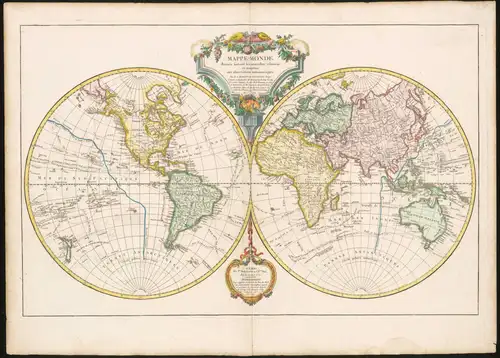
Blog
The History of Antarctica in Maps
Long before human eyes ever beheld Antarctica, the ancients were convinced that it existed – or at least something like it.
Blog
Polar Cuisine in Pictures
Embarking on a polar expedition cruise to some of the world's most remote and wild locations doesn’t mean you have to compromise on fine dining.
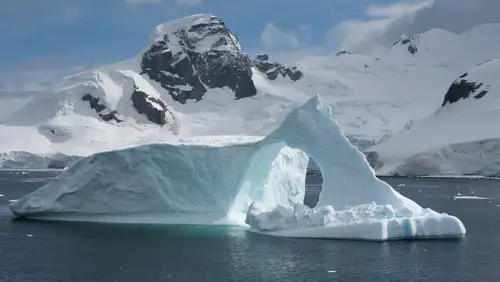
Blog
All things ice in the Antarctic
The first documented sighting of an iceberg in Antarctica occurred on February 1, 1700, when Edmond Halley was on an expedition to measure the Earth's magnetic field. He noted in his diary that he encountered "great Islands of Ice, of Soe Incredible a hight and Magnitude that I scare dare to write my thoughts on it."
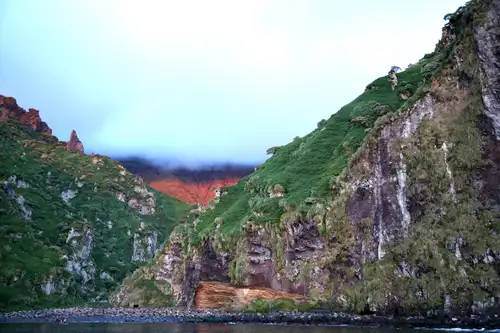
Blog
Gough Island: Seabird Capital of the South Atlantic
Gough Island is a remote volcanic island in the South Atlantic, uninhabited except for a small party of meteorologists and (sometimes) biologists.
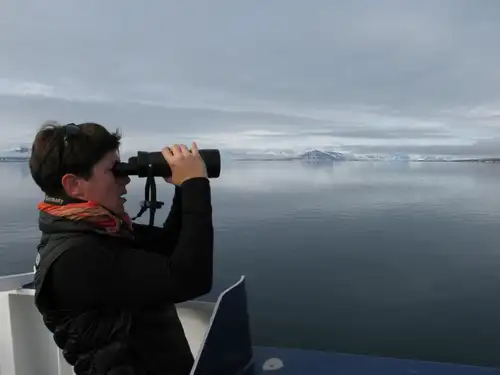
Blog
10 Popular Bird Watching Binoculars
Binoculars are a staple for outdoor enthusiasts, often packed with minimal thought alongside essentials like bug spray, sunblock, and waterproof matches. However, for certain groups, binoculars are indispensable, particularly for bird watchers. If you're part of this technical hobbyist community, here are 10 birding binoculars you should know about.
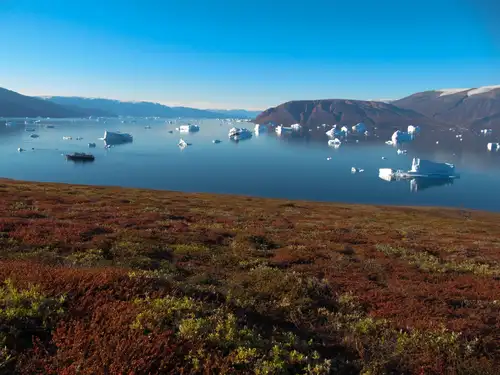
Blog
Northeast Greenland National Park
Northeast Greenland National Park is the world’s largest national park and the ninth largest protected area on Earth. It should come as little surprise, then, that it’s also bigger than most countries, covering an impressive 972,000 square km (375,300 square miles).
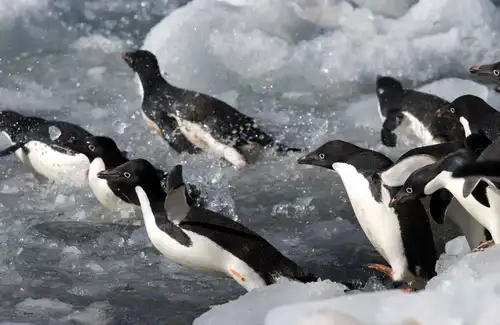
Blog
Adélie Penguins: the Little People of the Antarctic
Described as “an object of endless pleasure and amusement” by Apsley Cherry-Garrard, survivor of Robert Falcon Scott’s ill-fated Terra Nova expedition to the South Pole, the Adélie penguin stands with the regal and iconic emperor penguin as one of only two penguin species found on mainland Antarctica.
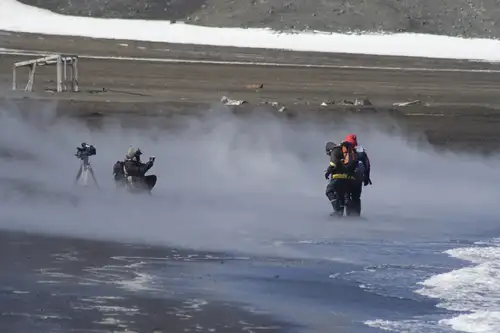
Blog
Deception Island deceptively active
In Antarctica, the South Shetland archipelago is home to Deception Island, a volcanic-rounded island that is 15 km in diameter with a shield volcano. The volcano is mainly basalt-andesite and was one of the first parts of Antarctica to be discovered, probably around 1820 by UK and USA sealers.
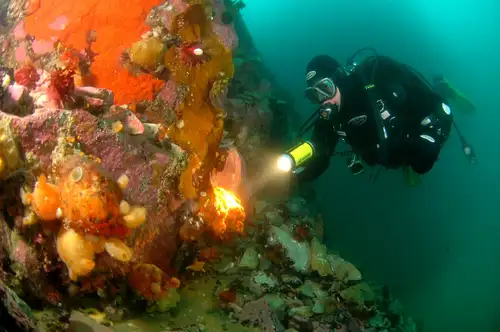
Blog
Diving in Antarctica: The Ultimate Underwater Experience
Ice diving offers an extraordinary experience on an Antarctica diving trip. The dive sites are teeming with a unique array of colorful marine life, including penguins and leopard seals, which are exclusive to this region.
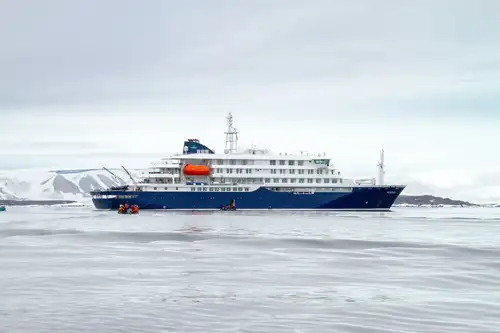
Blog
Seven Tips to Get the Most out of Your Expedition Cruise
Polar cruises are easy to enjoy, but there’s an art to getting the most out of them.
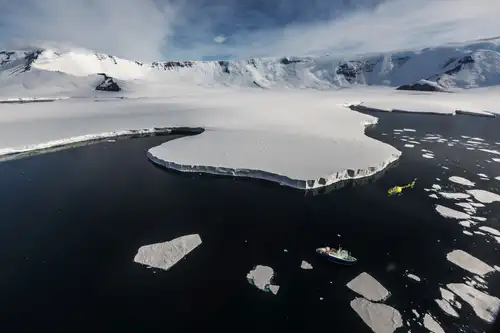
Blog
Taking a polar expedition cruise delivers no shortage of show-stopping highlights, but one of the most exhilarating is lifting off from the ship in a helicopter and taking flight over the incomparable Antarctic wilderness.
Embarking on a polar expedition cruise offers a plethora of breathtaking experiences, but one of the most thrilling is taking off from the ship in a helicopter and soaring over the stunning Antarctic wilderness.
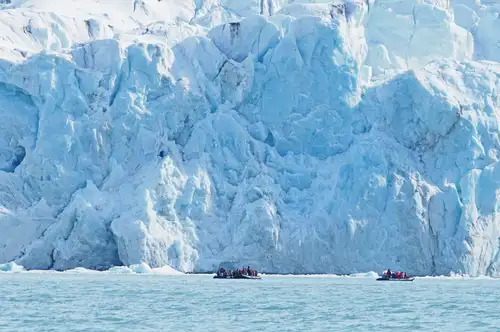
Blog
All About Ice: Glaciers and Icebergs of the Arctic and Antarctica
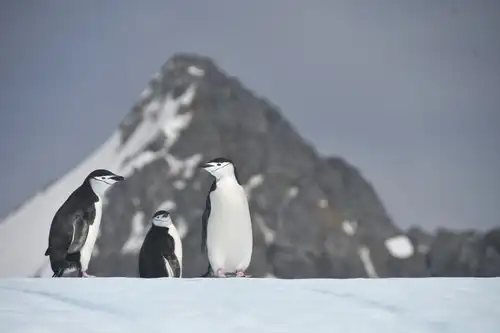
Blog
11 South Orkney Animals: Whales, Seabirds, and Penguins Aplenty
The South Orkney Islands are often overlooked as a destination for Antarctic travel.
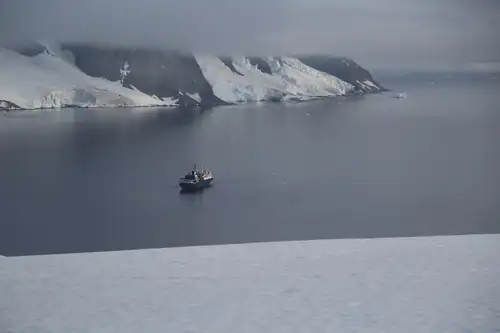
Blog
The Most Enchanting Antarctica Cruise Islands
Whether it’s Greenland in the Arctic or Snow Hill Island in Antarctica, the bulk of our polar expeditions take place around, between, and upon islands.
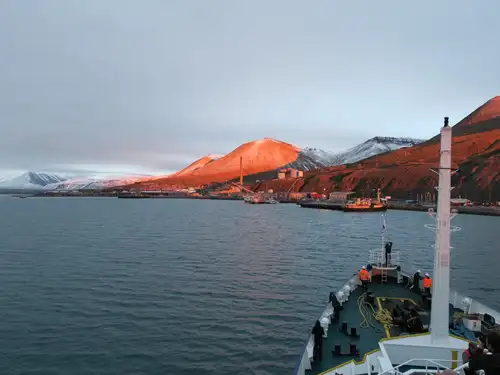
Blog
Port Pastimes: 7 Fun Things to Do in Longyearbyen
Waiting in port for an Arctic expedition cruise to begin might seem a little like waiting for water to boil or coffee to brew or a Seinfeld reunion to materialize: Time seems to defy its own laws, life slows to a crawl, and you begin to wonder if it’s really going to be worth it.

Blog
Earth vs. Mars: Polar Regions Compared
It’s well-known that Mars, like Earth, has its own polar regions, often referred to as the Martian ice caps. These regions, similar to Earth's, are situated at the north and south poles and experience much lower temperatures compared to the areas in-between.

Blog
The Arctic Hare: Easter Bunny
Although the Arctic hare’s stern expression might make it seem like the least amused member of a serious tribunal, this polar animal is actually one of the most charming creatures on the planet – especially when Easter Sunday comes around.
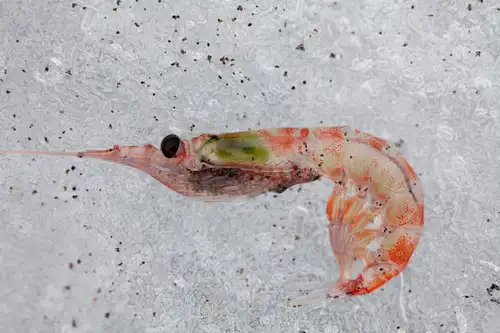
Blog
Antarctic krill: Antarctica's Superfood
The size of a paper clip, pink, krill is a shrimp-like crustacean that does not look like much. Without them, though, the Earth's marine ecosystems would collapse completely.
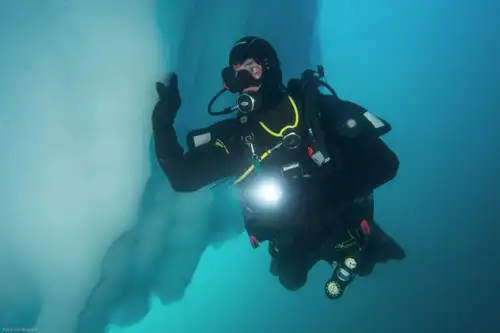
Blog
Polar Diving: A Supreme Underwater Adventure
Most scuba divers are drawn to warm waters and tropical reefs, and it's easy to see why. However, even the most thrilling experiences can become repetitive if done too often.
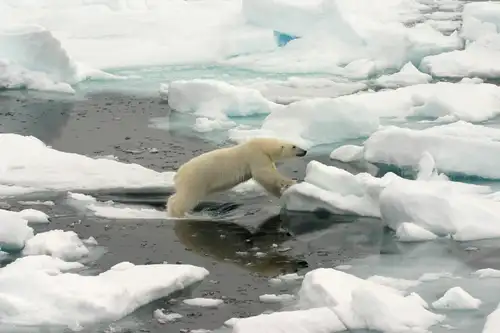
Blog
Spitsbergen: a true polar bear trip
On the third day of our Svalbard cruise, we navigated through the sea ice north of Spitsbergen. The morning greeted us with fog and fragmented ice, but conditions gradually improved. A swarm of black-legged kittiwakes trailed behind us, as our ship stirred the waters, pushing aside ice floes to reveal the tiny dark polar cod beneath.