
The Arctic’s frozen landscape not only contains scenic gems, it also prompts fascinating advances in research. Here are some of the eight best.
An tough Greenland plant
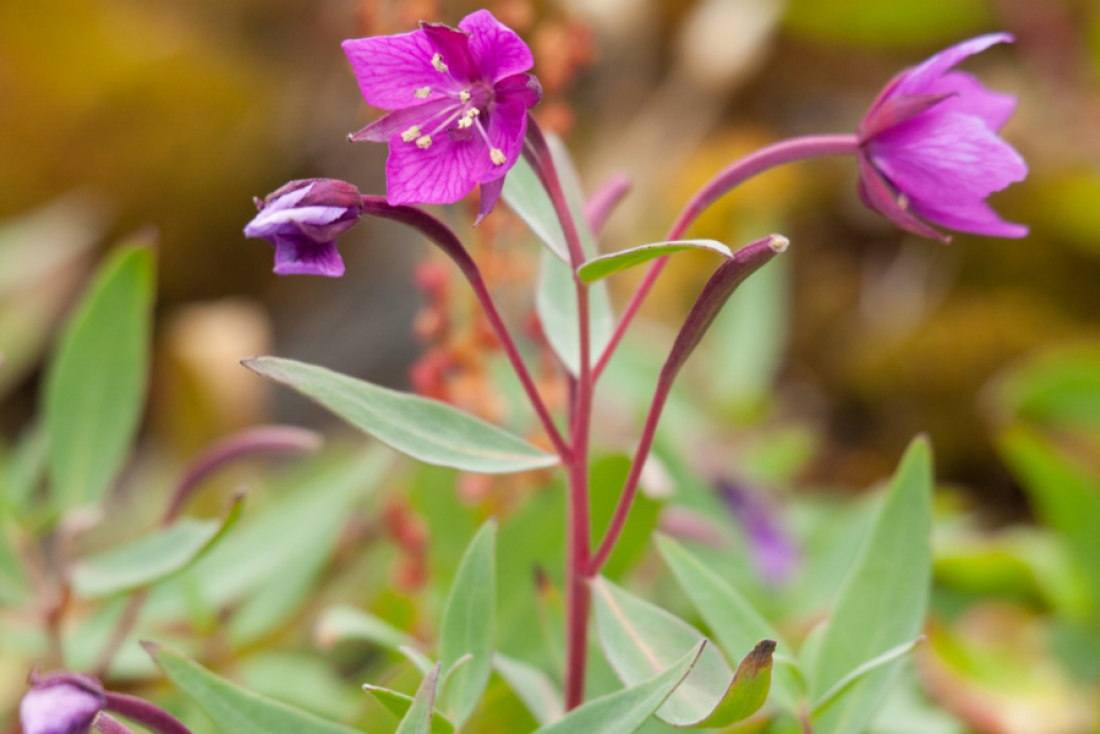
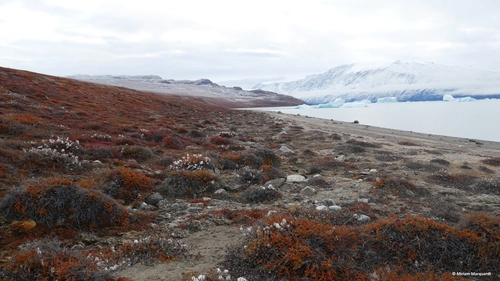
If you’re lucky enough to embark on a Greenland trip, you will be surprised to find that tundra is a common feature that dominates the landscape as far as the eye can see. Littered throughout the tundra are small, delicate-looking flowers. But they are far from delicate. In 2011, a caterpillar outbreak just outside Nuuk decimated an area of all its vegetation, leading to scientists speculating that the area’s slow-growing Arctic plants may never recover their former glory.
However, a new study has found that not only did the decimated vegetation sprout new leaves in the year following the attack, but they bounced back greener and brighter than ever before. It turns out that instead of the tundra investing its energy in reproduction, the plants invested in growing lush, green foliage.
The scientists also monitored how much carbon dioxide was exchanged between the soil, plants, and the atmosphere before, during, and after the attack and found that because the plants produced a lot of leaves, they incorporated a lot more carbon dioxide than ever measured before.
An Arctic moth comes out 145 years later
Norwegian researchers in Svalbard have found a vegetarian grey moth alive and well, despite the belief that it had gone extinct in the area nearly 145 years ago. The discovery was made by scientists who went on an expedition to Wijdefjord on the north coast of Spitsbergen, an area in which you can admire amazing glaciers. The area is known to be very dry and has relatively warm air due to the valleys catching of lot of the Sun’s rays.
The moth, one of three registered resident insects in Svalbard, hasn’t been spotted since 1873 after a vicar caught seven specimens. However, these lucky scientists managed to catch this small moth flying about in a glacial valley. It would appear that the moth species thrives in the valley area, as it is warm and has a plentiful supply of plant material from the early spring and parts of summer.
A super pollinator in Greenland
If you think of the northern parts of Greenland as being lifeless due to its cold temperatures, you will be surprised to learn that the ice-free parts contain thriving ecosystems packed with insects. One in particular is vital to the propagation of Arctic plants. In a recent study, an international group of scientists found that a relative of the housefly is responsible for the majority of the plant pollination in the Arctic.
Researchers from Sweden, Finland, Denmark, and Canada were studying a common plant in northeast Greenland called Dryas octopetalan, or more simply, the eight-petal mountain avens. They investigated which insects visited the mountain avens at 15 sites in the area and how many seeds these plants had at each spot.
From the study, the more the little fly had visited these flowering plants, the more seeds they produced. This reliance on the fly for pollination was a surprise to the scientists, as a total of 117 different species, representing two-thirds of all known insects in the area, visited the mountain avens.
The secret of Arctic seabird colonies
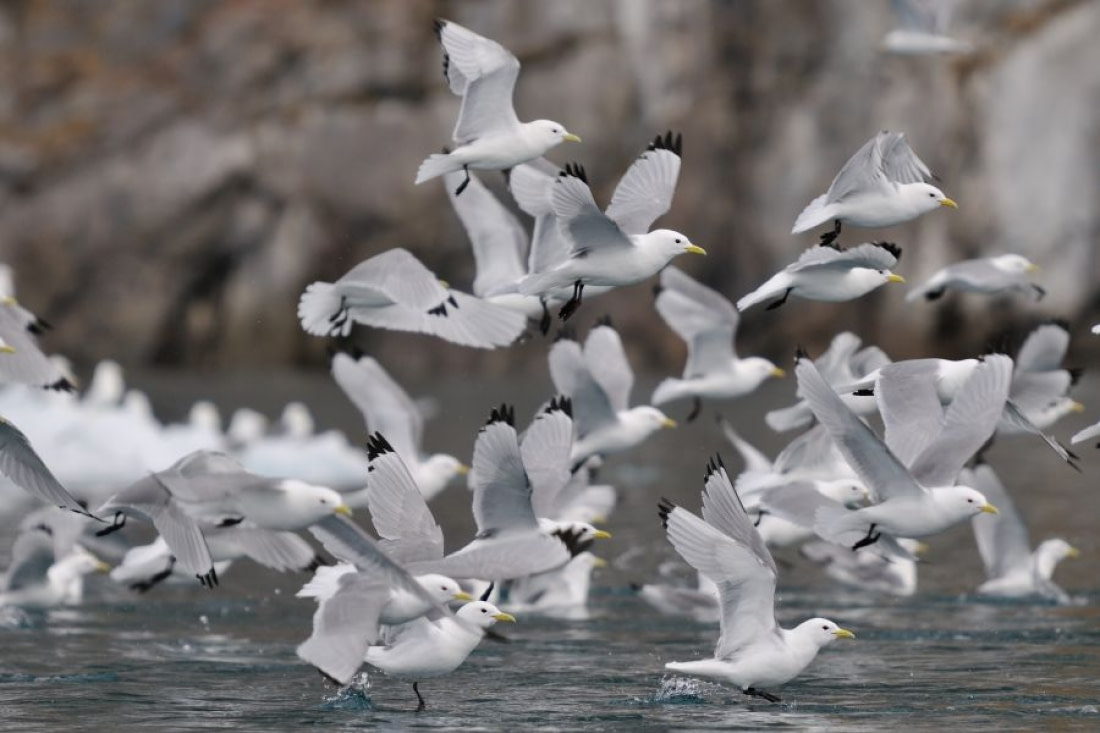
Avid bird watchers heading north will be surprised to know that 90 percent of Norway’s two million pairs of cliff-nesting seabirds are located in nesting colonies high above the Arctic Circle. The question scientists are trying to answer is, why are these colonies located where they are? Most of the coastline from the Arctic Circle to the border between Norway and Russia has features that should be attractive to birds, including steep cliffs that are hard for terrestrial predators to climb.
Using computer models, the researchers found that, based on ocean currents and transport of floating fish larvae, bird colonies actually form where the currents and the shape of the coastline cause fish larvae to concentrate. This means that scientists can predict where bird colonies should be based on fish larvae hot spots. The researchers also found that cold larvae from spawning grounds in the Lofoten Islands were an important source of food, with the association of cold larvae concentrations highly significant in statistical terms.
Strands of hair to monitor the Arctic musk ox
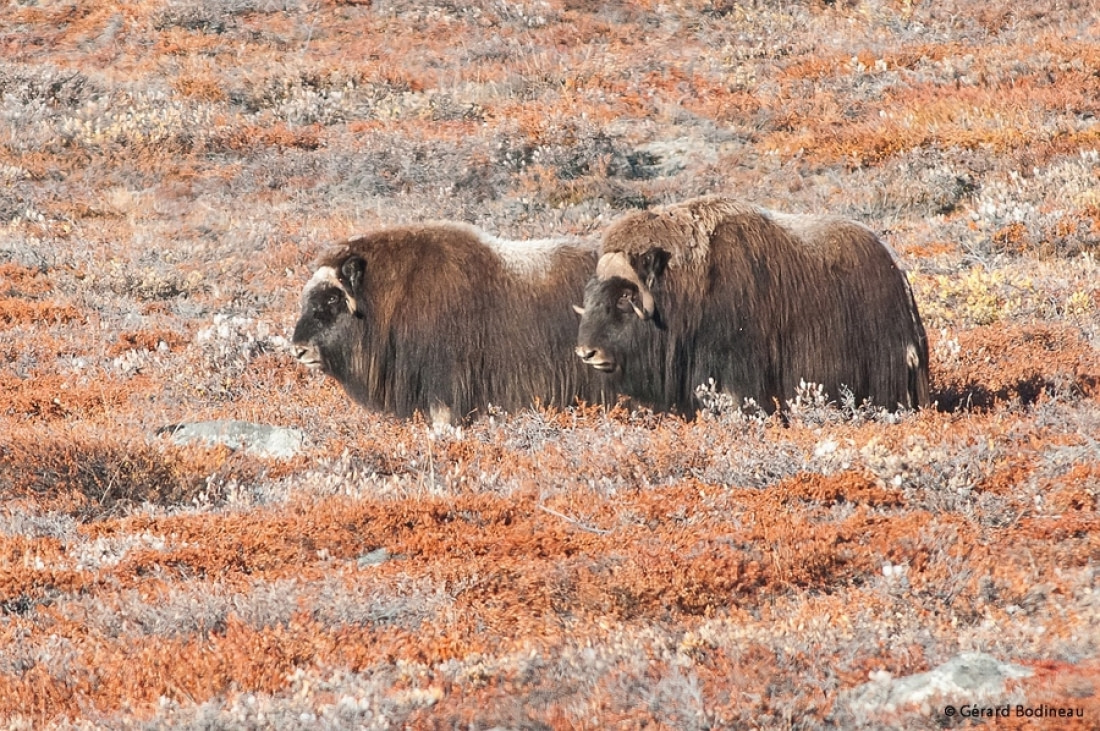
Musk ox are a key component of the Arctic’s ecosystem and much-loved sight during Arctic cruises, yet researchers know very little about the species. To change that, scientists have found that hair from the musk ox’s buttocks grows throughout the year and so gives an overview of a year’s food intake. Some of the initial findings include the fact that the animal’s diet is directly linked with the environment that surrounds them: During the winter, when there are large volumes of snow being dumped, the musk ox starve themselves and burn their layers of body fat.
3D mapping of a sliver of Greenland
Scientists have mapped a tiny piece of Greenland in 3D for the first time and in the process discovered new information about the geological history of the area. To create the images, the scientists flew over the area of Kilen in a helicopter and took overlapping pictures out of the window with a camera equipped with GPS. They then converted the images on a computer to produce the 3D images. The resulting 3D map showed what happened when Greenland and Norway drifted apart as the North Atlantic Ocean opened up. The new mapping and 3D modelling supported the theory that Svalbard collided with northern Greenland before finally drifting apart 35 million years ago.
Iceland, home to seven new minerals
A quarter century after scientists took samples following the volcanic eruption of Hekla, they have discovered that the volcanic material contained not just one unknown mineral but seven. One of the new minerals, named Topsøeite, is found to have formed from the elements of iron and fluorine, along with water molecules. Scientists have seen this chemical structure before, but this is the first time it has been identified in its mineral form. Before now, scientists did now know that it could occur in nature as a mineral. There are around 5,200 known minerals on Earth, and any new discovery has to be assessed by the International Mineralogical Association before it can be officially recognised as a mineral.
An Aurora Forecast 3D app
Researchers from the University Centre in Svalbard have released an Aurora Forecast 3D app that lets users forecast the aurora oval up to +0, +1, and +4 hours ahead of time anywhere on Earth using a 3D geographical layout. The app is updated every 15 minutes and also lets users track down where the aurora is located in the sky. A compass is included that shows the auroral oval, the Moon, and the Sun as you look up at the sky. Some of the specific features include a 3D viewport of Earth with zoom and rotation enabled, solar illumination of the Earth and Moon, aurora oval size and location in real time, and forecasts based on predicted NOAA-SWPC Kp index.
 12 Aug - 31 Aug 2026
 15 Aug - 28 Aug 2026
 16 Aug - 25 Aug 2026
 25 Aug - 07 Sep 2026
 21 Sep - 01 Oct 2026
Related Trips
Spitsbergen - Northeast Greenland, Fly & Sail
12 Aug 2026 - 31 Aug 2026  20 Days / 19 Nights
Northeast Greenland Extreme
15 Aug 2026 - 28 Aug 2026 14 Days / 13 Nights
East Greenland, Scoresby Sund, Including Long Hikes
16 Aug 2026 - 25 Aug 2026 10 Days / 9 Nights
Northeast Greenland Extreme
25 Aug 2026 - 07 Sep 2026 14 Days / 13 Nights
East Greenland, Scoresby Sund - Aurora Borealis, Fly & Sail
21 Sep 2026 - 01 Oct 2026 11 Days / 10 Nights
East Greenland, Scoresby Sund - Iceland , Aurora Borealis, Fly & Sail
01 Oct 2026 - 12 Oct 2026 12 Days / 11 Nights

Blog


South Georgia Whaling Stations
Weddell seals: The data collectors scientists of Antarctica
Five Reasons to Love St. Helena
10 Illuminating Facts about the Northern Lights
The Dirty Details of Antarctica's Dry Valleys
Antarctica’s first Marine Protected Area
15 Fantastic Photos of Antarctica
The Arctic Borderland of Kongsfjorden, Svalbard
A Bug’s Life in Svalbard
10 Tips for Photographing the Northern Lights
Seizing the Season: Spitsbergen’s Late Spring, Early Summer
Adélie penguins in the Ross Sea - Antarctica
10 Bountiful Blue Whale Facts
Amazing Greenland

The World Is Changing for Greenland's Native Inuit People

Visa to Argentina for Antarctic Expedition Travelers (2025 Guide)
Life in a Penguin Colony
Fierce and Feathered: the Skuas of Antarctica
12 Tips to Help Keep Birds Safe During an Antarctic Cruise