

Arctic ecosystems are relatively young in geological terms, having primarily developed over the past three million years. Generally, species richness is lower in the Arctic compared to more southerly regions, aligning with scientific observations that biodiversity decreases from the Equator to the poles.
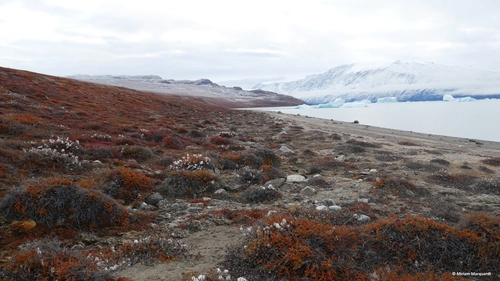
The terrestrial Arctic ecosystems are characterized by a short productive summer season and significant regional climate variations. For instance, on the Taimyr Peninsula in Siberia, only 500 kilometers separate the lush Arctic from the high Arctic 'desert.' These sharp regional contrasts challenge terrestrial species with extreme seasonality, where ground-level temperature differences can reach up to 80° Celsius between winter minimums and summer maximums, along with strong north-south and coastal-inland gradients.
Minimal Representation of Species in the Arctic
Regarding terrestrial carnivorous mammals, there are 13 species found in the Arctic, representing about 10 percent of the 128 species found worldwide. All 13 species inhabit the high Arctic.
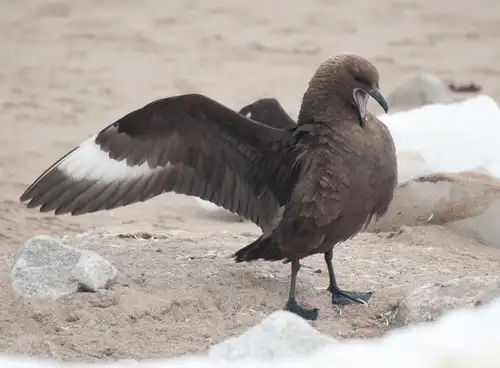
Despite its harsh environment, the Arctic is home to a variety of bird species. Approximately 200 bird species, corresponding to around 2 percent of global avian species diversity, are found here. Birds thrive in the Arctic due to strong seasonal bursts of food availability, including plant material, invertebrate biomass, or zooplankton. This constant food supply, combined with relative safety from predators and continuous daylight during the summer months, creates a viable environment for survival.
Though hundreds of bird species breed in the Arctic, only a portion of these are typically seen during expedition cruises. Most Arctic bird life is encountered on and around the archipelago of Svalbard, where guests have the chance to see some or all of the birds mentioned in the following video.
Amphibians and Reptiles in the Arctic
Amphibians and reptiles are the least represented species in the Arctic. Globally, amphibians and reptiles account for nearly 15,000 species, but only five amphibians and one reptile are found in the Arctic. This lack of species richness is similar to desert regions worldwide. Their limited presence in the Arctic is mainly due to their body temperatures being determined by ambient conditions.
While the first records of Arctic amphibians date back to expeditions in the 19th and early 20th centuries, scientific knowledge of these species is limited, with few studies conducted on their distribution, genetics, development, hibernation patterns, and diet. Nonetheless, it is known that amphibians and reptiles reach the Arctic on its periphery, where their overall population numbers are very low.
Scientific Studies of Amphibians and Reptiles
There have been only two main research studies on amphibians and reptiles in the Arctic, both conducted over the past 10 years.
One study examined the molecular genetics of the Siberian newt throughout its range and found different genetics among the populations. This variation is speculated to be due to the repeated process of colonization of new territories during warm inter-glacial periods and subsequent retreats during glacial peaks. The study found that the Siberian newt first colonized territories in the Eastern part of Siberia, followed by migration towards the Urals before heading east towards Beringin and Kamchatka.
Meanwhile, a study in North America on the wood frog found the species migrating northwards towards the Arctic at a rapid pace, expanding towards the north and northwest into Arctic Alaska and most of sub-Arctic Canada.
The Siberian Newt: A Popular Amphibian in the Arctic
The Siberian newt is notable for being the most widespread amphibian species in the Arctic and sub-Arctic, with the widest geographical range of any recent amphibian species, covering around 12 million square kilometers. Their northernmost habitats mainly consist of grass undershrubs, lichen moss bogs, and low shrub-moss and grass-moss tundras. The Siberian newt enters the Arctic in the polar Urals and reaches the Arctic Ocean in some areas.
The common frog also makes its way up to the Arctic in the eastern hemisphere, crossing into the low Arctic region through the northernmost peninsulas of Norway and along the eastern slope of the Polar Urals. The common lizard also appears in the Arctic, journeying northwards through the Kanin Peninsula.
Herbivorous Mammals in the Arctic
Herbivores comprise the majority of Arctic terrestrial mammal species, with three main types based on body size: small-bodied voles, lemmings, and pikas (24 species with body weights ranging from 25 to 250 grams), which are often the most numerous mammals in the tundra ecosystem; medium-bodied herbivores (9 species with body weights ranging between 0.5 to 35 kilograms), including hares, ground squirrels, and the American beaver.
These species are usually found at lower densities than small mammals but can be more locally abundant depending on habitat suitability. Large-bodied herbivores (6 species with body weights ranging from 40 to 600 kilograms), including the caribou and elk, are also present.

Variations in Herbivore Population Numbers
The only species with natural distributions in the high Arctic regions are brown lemmings and collared lemmings. Additionally, they are also found in the low Arctic. Pikes and hares are found in regions of the low Arctic. Two species are found in Russia, the northern pika and the Turuchan pika, while one is found in North America. Four species of hares are found in the Arctic: the snowshoe hare, Arctic hare, Alaskan hare, and mountain hare.
Scientists have conducted experiments to monitor lemming population abundances using density of winter nests, mark-recapture live trapping, or snow trapping. Research has found that on the Taymyr Peninsula of Russia, the Siberian brown lemming population has a cyclical pattern with large increases every 3-4 years from the 1960s to 1990s. Collared lemmings, while being less numerous, also have a cyclical population pattern.
On Wrangel Island in the North East of Russia, the period between years with peak population densities has increased from five years in the 1970s to almost 8 years in the 1990s and 2000s. Scientists speculate this could be due to snow conditions more conducive to winter reproduction as a result of more frequent winter thaws.
In the western part of the Canadian Arctic Archipelago, Nearctic collared and Nearctic brown lemmings have shown a similar population trend, with both species' population numbers increasing every 3-4 years over the 1960s to 1990s.
Similar to the findings in Russia, the cyclical period in the Canadian Arctic has increased to five years since the late 1990s. In Greenland, Nearctic collared lemming population abundance is calculated from winter nest counts at Traill Island. Until 2000, the species had a regular population cycle of increasing in density every four years.

Herbivore Distribution Only Partially Determined by Temperature
In a recent study by scientists from the University of Lapland, researchers found evidence that patterns of Arctic herbivores are only partially determined by temperature, with interactions with plants and predators playing a more significant role in population numbers. The study, part of a collaborative research initiative called Herbivory Network involving researchers from 10 countries, collected information on the distribution of 73 species of vertebrate species found in the Arctic, including migratory geese, reindeer and caribou, lemmings, and free-ranging domestic sheep. Until now, scientists did not know whether the diversity of herbivores in the Arctic was due to physical environmental factors, including temperature, or biotic factors, including plant productivity.
 12 Aug - 31 Aug 2026
 15 Aug - 28 Aug 2026
 16 Aug - 25 Aug 2026
 25 Aug - 07 Sep 2026
 21 Sep - 01 Oct 2026
Related Trips
Spitsbergen - Northeast Greenland, Fly & Sail
12 Aug 2026 - 31 Aug 2026  20 Days / 19 Nights
Northeast Greenland Extreme
15 Aug 2026 - 28 Aug 2026 14 Days / 13 Nights
East Greenland, Scoresby Sund, Including Long Hikes
16 Aug 2026 - 25 Aug 2026 10 Days / 9 Nights
Northeast Greenland Extreme
25 Aug 2026 - 07 Sep 2026 14 Days / 13 Nights
East Greenland, Scoresby Sund - Aurora Borealis, Fly & Sail
21 Sep 2026 - 01 Oct 2026 11 Days / 10 Nights
East Greenland, Scoresby Sund - Iceland , Aurora Borealis, Fly & Sail
01 Oct 2026 - 12 Oct 2026 12 Days / 11 Nights

Blog



Polar Cuisine in Pictures
Arctic Seals
The Overlooked Treasures of Ascension Island
8 Whales You Might See During Your Antarctica Cruise
How and When Did Greenland Become Covered in Ice?
Orcas of the Polar Seas
Peaks, Fjords, and Auroras: 14 East Greenland Attractions

The ozone layer in Antarctica
The Research Stations of Antarctica and the sub-Antarctic
Penguins, Petrels, and Prions: Top Antarctica Bird Tour Spots
The Plants of Antarctica
Arctic vs. Antarctica: A Traveler’s Guide
Ice streams and lakes under the Greenland Ice Sheet
Tracking Greenland’s Wildlife from Space
A Day on m/v Plancius
10 Bountiful Blue Whale Facts
Antarctica’s first Marine Protected Area
North Norway, Northern Lights, and All the Pretty Whales
Five Birds You Might See on Your Greenland Cruise