

Although the Arctic hare’s stern expression might make it seem like the least amused member of a serious tribunal, this polar animal is actually one of the most charming creatures on the planet – especially when Easter Sunday comes around.
After all, wouldn’t you be cheerful if your wardrobe automatically changed with the surroundings and biologists described your mating season as “March madness?”
But like many inhabitants of cold-weather regions, the Arctic hare prefers to keep its festive glow on the down low. Deep down low. And buried under a low-carb diet of lichens, mosses, and the contents of other animals’ stomachs.
We’ll get to that.
For now, let’s prepare for Easter Sunday by exploring all the ways this so-called polar rabbit (which isn’t really a rabbit) makes a superior, superlative Easter mascot.

First things first: why the Arctic hare isn’t a rabbit
Lepus arcticus is the binomial name for the Arctic hare, and “polar rabbit” is the name people use who don’t know what the Arctic hare’s real name is.
This particular hare is one of the largest examples of the taxonomic order lagomorph, which includes (but is not exclusive to) rabbits, so the confusion is easily understood.
The Arctic hare, however, is as much a hare as its name indicates. A hare differs from a rabbit in that it’s taller and has shorter ears, which reduces heat loss and is one of many reasons the Arctic variety can survive in the cold polar climate.
But as we’ll see, the Arctic hare does a little more than merely survive.

How big, heavy, and handsome the Arctic hare is
The Arctic hare grows to about 40 – 70 cm (15.7 – 27.6 inches) long and can weigh from 2.5 – 5.5 kg (5.5 – 12.1 pounds), not including the tail.
Add the tail to those figures and, well… Don’t. Trust us, just don’t.
Along with its epic proportions, the Arctic hare is also gorgeously coated: Its thick, lustrous fur comes in creamy tones of white or brown, depending on the season and where the hare lives. Northern hares are usually white, southern hares usually brown.
And New York hares are neither, because color is so 2018.

The Arctic hare Achilles heel, i.e., predators
Despite the fact that the Arctic hare is beloved across the universe and would be nearly impossible to kill even if it weren’t, this super species still has its arch enemies.
Arctic hare predators include grey wolves, Arctic foxes, red foxes, mountain lions, Canadian lynxes, ermines, rough-legged hawks, peregrine falcons, gyrfalcons, snowy owls, and of course, humans. (But when you think about it, what don’t we make worse?)

Because of the Arctic hare’s eye placement, however, it is uniquely aware of any approach by predators, seeing 360 degrees around itself without even turning its head.
In other words, unless you’re clever as a fox, nimble as a lynx, fast as a falcon, or flagrantly polluting as a standard human being, trying to knock off an Arctic hare is just another way to feel slow, clumsy, and generally bad at life.

Where the Arctic hare lives and how
By now it should be readily apparent that the Arctic hare makes its own rules, up to and including where it hangs its hat. So far this has been Greenland and northern Canada, Arctic tundra areas in which larger polar animals need a leader.
The aforementioned north-living Arctic hare stays white all year round, while the more southerly hare molts and replaces its white fur with brown for better summer camouflage.

And this isn’t the Arctic hare’s only adaption: To ward off the intense glare of sunlight off the snow, this hare has black eyelashes to protect its eyes and give them that irresistible come-hither twinkle.
Whether the Arctic hare lives in the northern or southern Arctic, however, it has a common housing habit of digging holes into the snow or solid ground to keep warm and to sleep. It also does this to find food, which leads nicely to our next topic.

What the Arctic hare eats
Generally speaking, the Arctic hare eats its portion and yours too.
More specifically, it is known to dig its way through both hard winter snow and frozen earth in search of lichens, woody plants, and mosses. In the warmer season, the Arctic hare prefers berries, tree bark, roots, buds, and leaves to keep its physique celebrity-svelte.
Seriously, just admire the below specimen for a moment. Nobody will judge you for making it your wallpaper. That hare is a solid Arctic dime, a full-on polar smoke show.

And though the Arctic hare is a folivore (leaf eater) and beautiful enough to be insufferably high-maintenance, it’s not picky. In times of scarcity, it will happily eat fish and even sate itself on the stomach contents of dead animals, making it inarguably the most drop-dead gorgeous zombie you’ve ever set eyes on.
Remember when your parents used to chastise you for not finishing your meal because of all the starving children in the world? Well, the Arctic hare actually listened.

The Arctic hare social scene
When you’re an Arctic hare, you don’t let anything cramp your style – least of all messy roommates with a misguided love of Ed Sheeran.
By consequence, the Arctic hare tends to live alone. But occasionally, hard times call for it to group up with other Arctic hares, which usually involves huddling together for warmth against pulverizing winter blizzards.
Arctic hare huddling groups can number in the dozens or even hundreds, which has been known to singlehandedly drive up real estate in the Arctic for the better part of forever.

Arctic hare mating rituals (content may be unsuitable for children and insecure adults)
We know this is supposed to be an Easter-related article and therefor inherently family friendly, but odds are some of you are only reading this to learn about the rather – ahem – prolific nature of the Arctic hare breeding cycle.
Whatever the case, prepare to feel inferior.
Unlike most animals, for which mating season signals a time to join together in relatively peaceful breeding colonies, the Arctic hare population disperses into pairs only after their version of a 12-round title fight: The hare female, far from a pushover, Tyson-punches all unwanted admirers before settling on her beau-of-the-moment.

But pairing is not necessarily forever. It sometimes happens that a male Arctic hare will mate with more than one female hare, which may be why some researchers have characterized their breeding season as “March Madness,” or alternately “Midnight Madness” when it takes place in the far north’s midnight sun region.
After cage-fighting her way to an acceptable mate, the Arctic hare female will have as many as eight offspring. These sly young hares are called leverets (too fatally cute to picture here) and are born in spring or early summer.

Not surprisingly, the Arctic hare baby grows fast. By September, it’s a young adult. By the next mating season, it’s ready to mate itself (you know what we mean). And by the following September, it’s old enough to run for president.
All is not lost, America.
And because Arctic hare populations are so incredibly abundant, we’re not yet aware of any official count or estimate of their numbers. Even so, the Arctic hare is not terribly long-lived, tending to survive only about three to five years in the wild.
Only the good die young, indeed.

The Arctic hare, by far the most rugged non-rabbit this side of Easter Sunday
So after reading this, who would you rather delivered your Easter eggs this Sunday?
You could stick with the traditional Easter bunny, an unidentifiable species of vague origin most easily characterized by its pink-dyed underbelly, Willy Wonka wardrobe, and smile so manic there’s no doubt it conceals Lecter-level psychosis.

Or you could opt for the Arctic hare, which can run 60 kph (40 mph) over unbroken snow, see completely around itself without moving its head (or being possessed), and probably repair your water heater if you gave it five minutes and a screwdriver.
The drink, not the tool. Does this hare look like it needs a tool?

(As a third option, you could pick the Killer Rabbit of Caerbannog for your Easter mascot, but rest assured the Arctic hare doesn’t have nearly the same bad luck with hand grenades.)
For these reasons and the many others here mentioned, we dedicate this Easter to the honorable Arctic hare. Embark on one of our adventurous Greenland cruises and you can visit these impossibly stylish, sophisticated, all-around spellbinding animals.
Just don’t make rabbit noises at them. They really hate that.


 12 Aug - 31 Aug 2026
 15 Aug - 28 Aug 2026
 16 Aug - 25 Aug 2026
 25 Aug - 07 Sep 2026
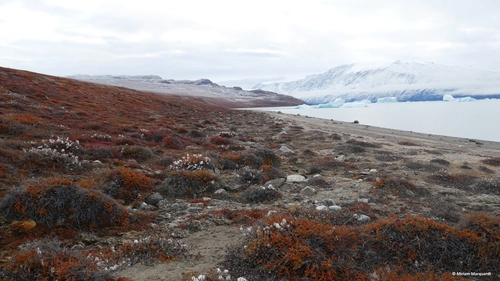 21 Sep - 01 Oct 2026
Related Trips
Spitsbergen - Northeast Greenland, Fly & Sail
12 Aug 2026 - 31 Aug 2026  20 Days / 19 Nights
Northeast Greenland Extreme
15 Aug 2026 - 28 Aug 2026 14 Days / 13 Nights
East Greenland, Scoresby Sund, Including Long Hikes
16 Aug 2026 - 25 Aug 2026 10 Days / 9 Nights
Northeast Greenland Extreme
25 Aug 2026 - 07 Sep 2026 14 Days / 13 Nights
East Greenland, Scoresby Sund - Aurora Borealis, Fly & Sail
21 Sep 2026 - 01 Oct 2026 11 Days / 10 Nights
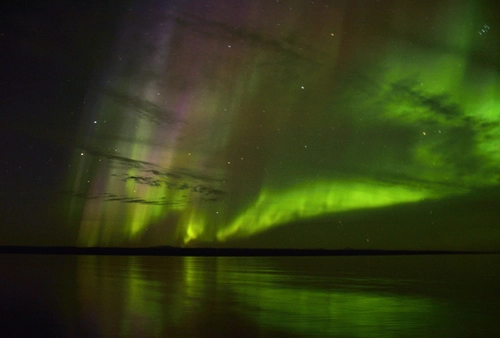
East Greenland, Scoresby Sund - Iceland , Aurora Borealis, Fly & Sail
01 Oct 2026 - 12 Oct 2026 12 Days / 11 Nights

Blog



12 Things to Do in Antarctica
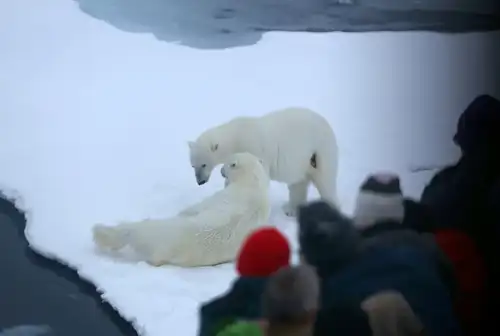
The Pack Ice and Polar Bears of North Spitsbergen

Exploration of the Polar Regions

The South Georgia Seven: Hikes, Fjords, Whales, & Penguins
Diving in Antarctica: The Ultimate Underwater Experience
Penguin Wisdom: Life Lessons from Our Favorite Flightless Birds
Scenes from St. Andrews Bay: 12 Pics of Penguins, Seals, and More
Where the Polar Bears Roam

The Classic Polar Cruise: Antarctic Peninsula Facts, Pics, and More

10 Tried-and-True Bird Photography Tips
Seven Facts About Antarctic and Sub-Antarctic Penguins

What to Pack for Your Expedition Cruise to the Arctic or Antarctica

The Seasons of Antarctica: When to Visit and Why

Five Reasons Why Snowshoeing is a Perfect Polar Activity

The ozone layer in Antarctica
Taking the Polar Plunge
11 South Orkney Animals: Whales, Seabirds, and Penguins Aplenty
Amphibian, reptiles and herbivore mammals in the Arctic

The Ultimate Traveler’s Guide to the Arctic and Antarctica