

 25 August 2026 - 07 Sep 2026
 14 Days/13 Nights
 Akureyri - Longyearbyen

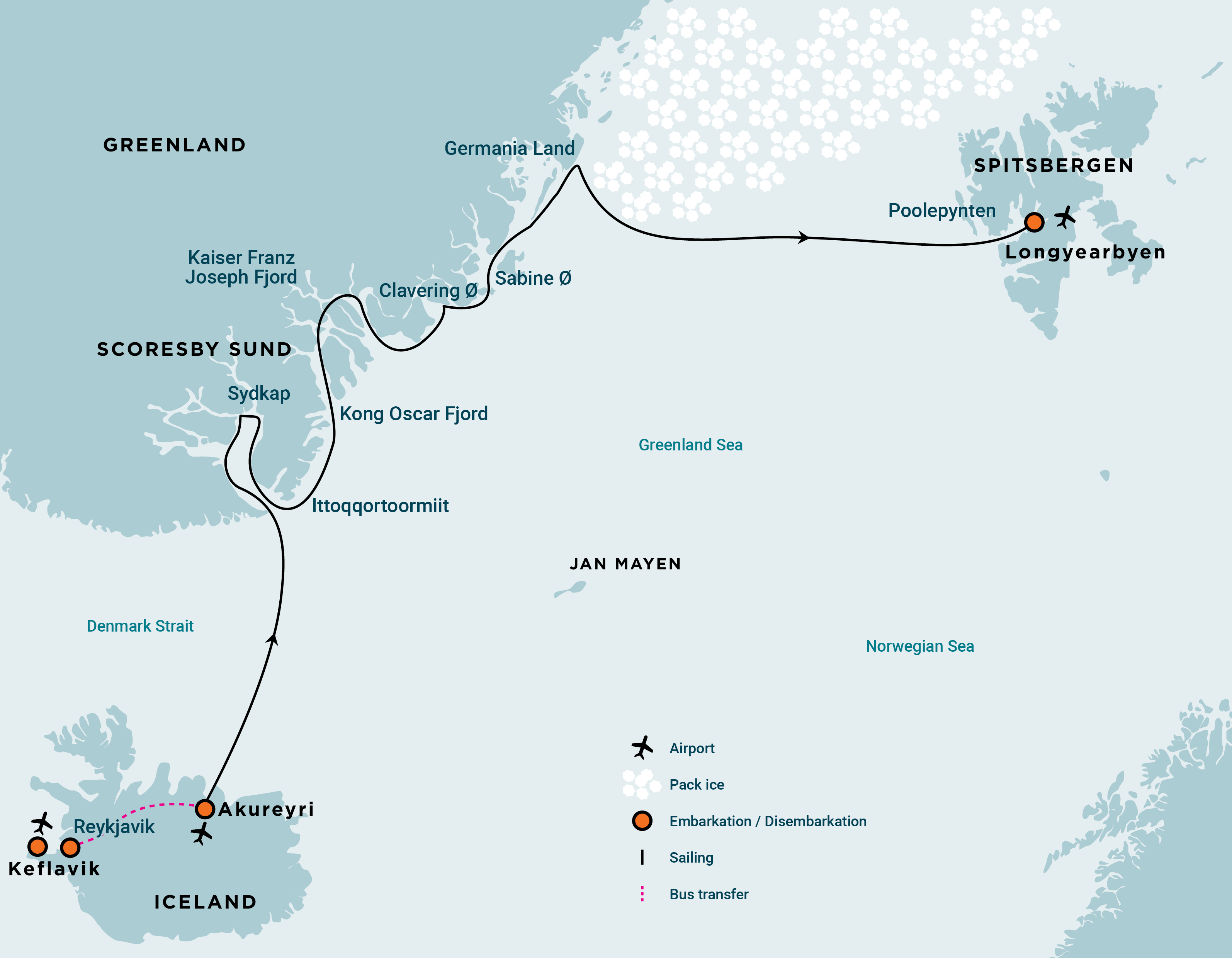
Your journey starts in the morning. You can take a bus from Reykjavik to the ship in Akureyri, arriving in the afternoon after a six-hour drive. This bus ride must be booked and paid for in advance.
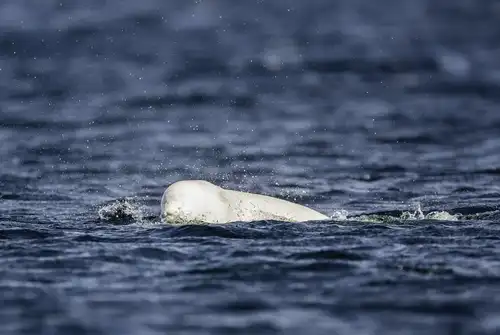
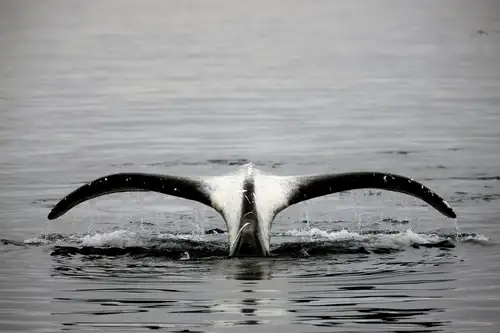
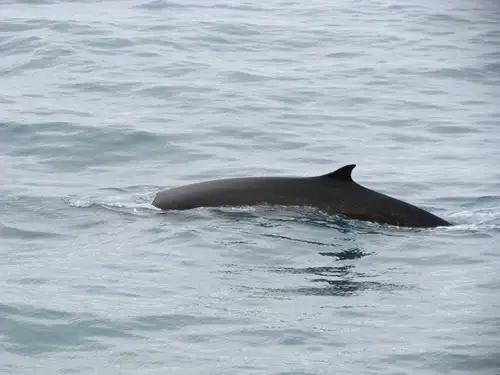
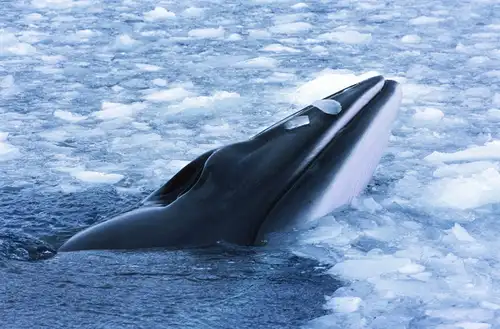
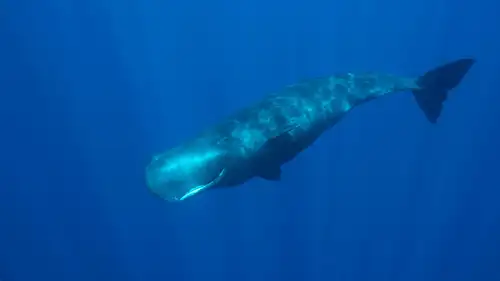
In the evening, the ship leaves Akureyri, and you might see whales at the fjord's mouth. At night, we cross the Arctic Circle.
Heading to East Greenland
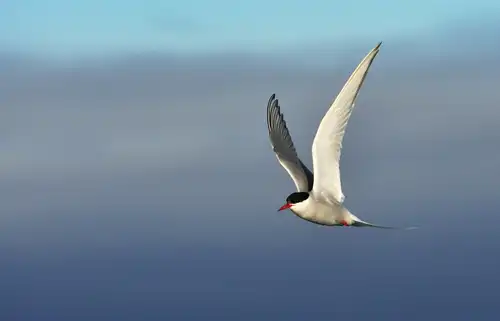
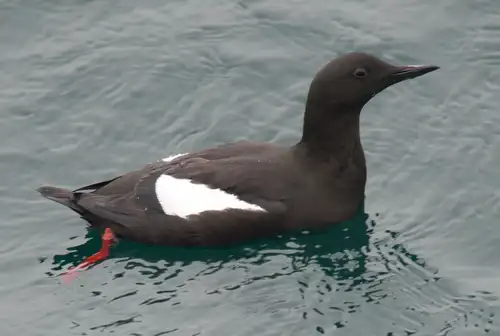
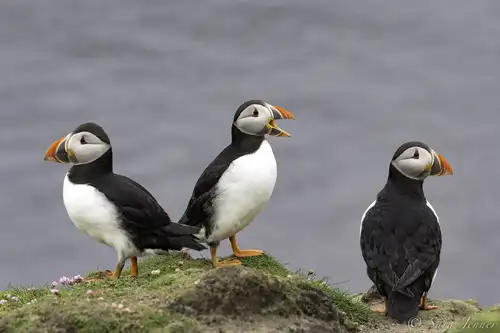
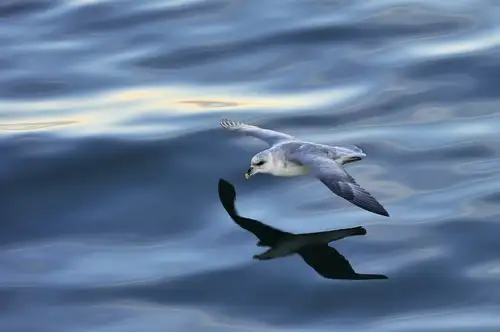
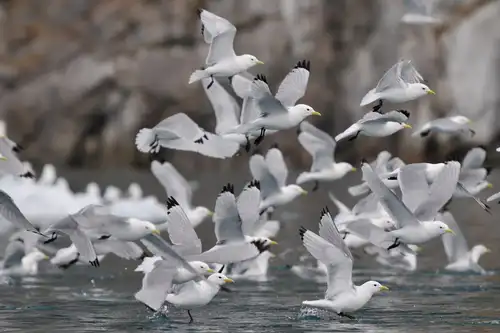
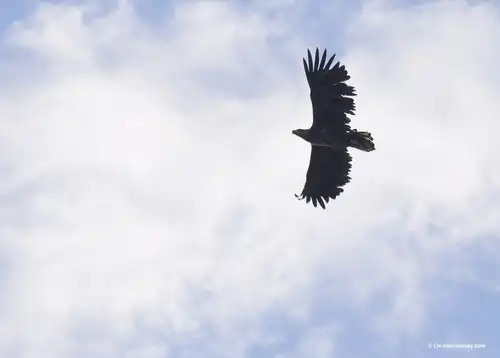
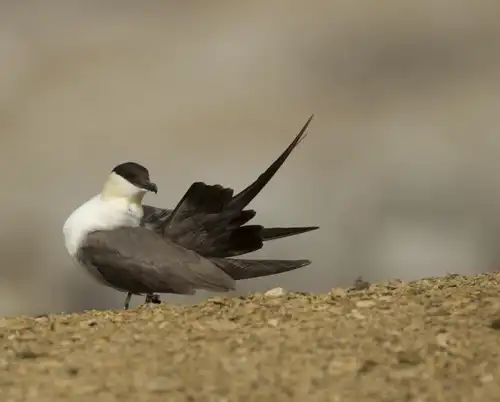
As we sail north, you might spot birds like fulmars and kittiwakes, and maybe even whales. By evening, icebergs appear as we near the east Greenland coast.
Reaching the World's Largest Fjord
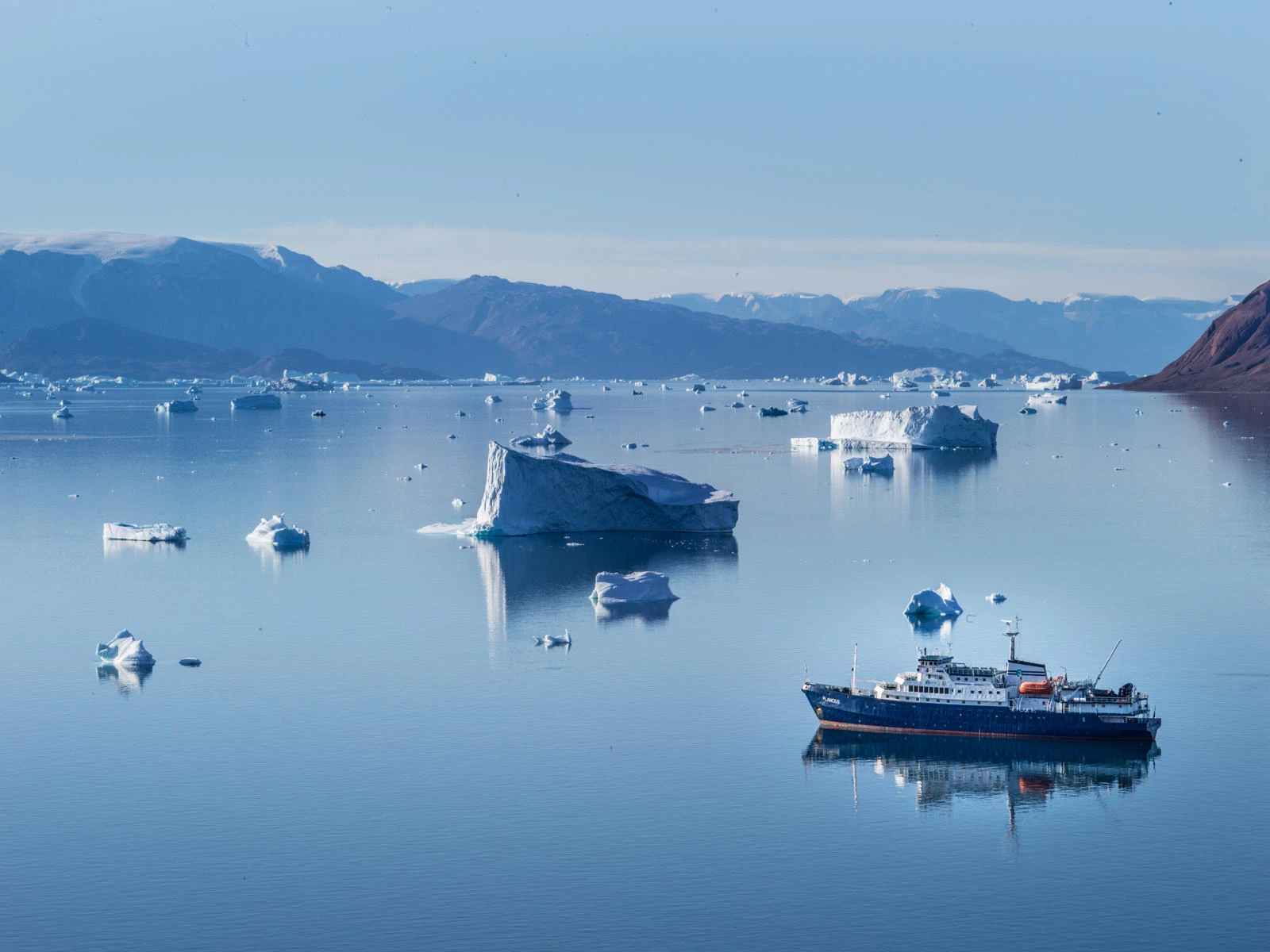
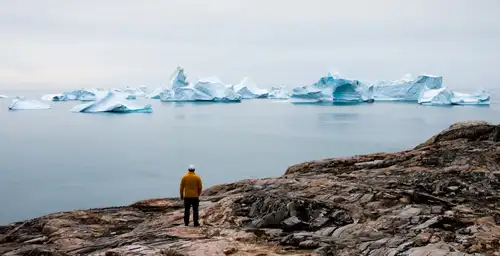
We arrive at Scoresby Sund, sailing along the icy coast. You might take a small boat ride past glaciers and see ice formations. In the afternoon, we sail among giant icebergs and may land at Charcot Havn to walk to the Charcot Glacier.
Huge Icebergs & Arctic Hares
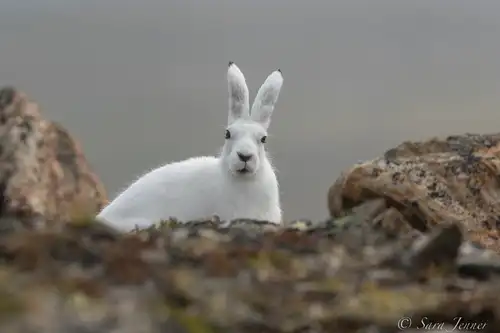
In the morning, you’ll see massive icebergs. We land near Sydkap, with views of Hall Bredning and a chance to see Arctic hares. A long walk is planned from Sydkap to Nordøstbugt, where you might see whale bones and old Thule houses.
Visit to Ittoqqortoormiit
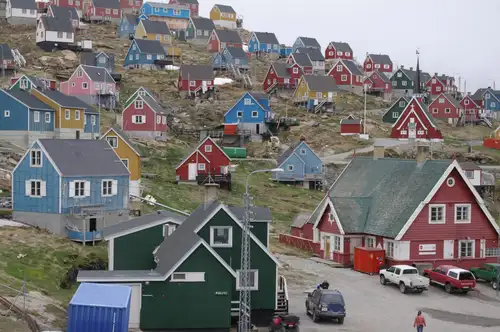
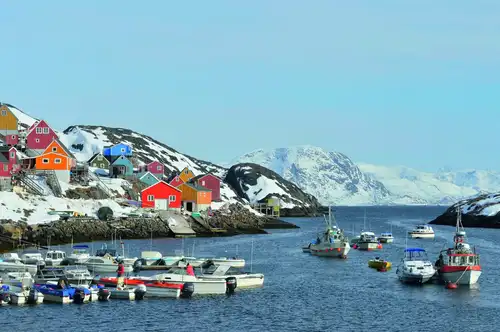
We stop at Ittoqqortoormiit, the only settlement in Scoresby Sund. You can buy stamps or explore the area. In the afternoon, we sail past Liverpool Land and into Kong Oscar Fjord at night.
Alpefjord's Peaks
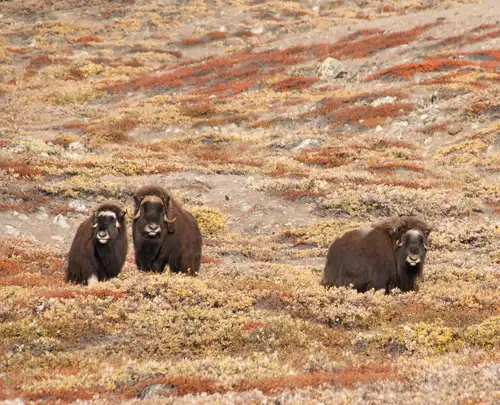
We enter Segelsällskapets Fjord, landing on the south shore to see ancient formations. A hike might reveal musk oxen and Arctic hares. Alternatively, we explore Alpefjord and cruise around Gully Glacier.
Islands of Antarctic Sound
We pass by Ruth, Maria, and Ella islands, then reach Teufelschloss, a mountain with unique geology. In the afternoon, we sail through Kaiser Franz Joseph Fjord.
Thule Culture Remains at Eskimonaes
We hope to land at Eskimonaes, where Thule culture people were once seen. Their remains are scattered across Greenland.
Islands with Polar History
We sail by islands where early polar expeditions landed, like Sabine Ø and Bass Rock. At night, we pass Shannon Ø.
Store Koldewey
This island was named by a German expedition. We aim to land at historical sites like Kap Alf Trolle. The landscape is less alpine, and we may encounter sea ice.
Germania Land
We might land at sites in Germania Land, home to musk oxen and sometimes wolves. Landings depend on conditions.
Through the Sea Ice
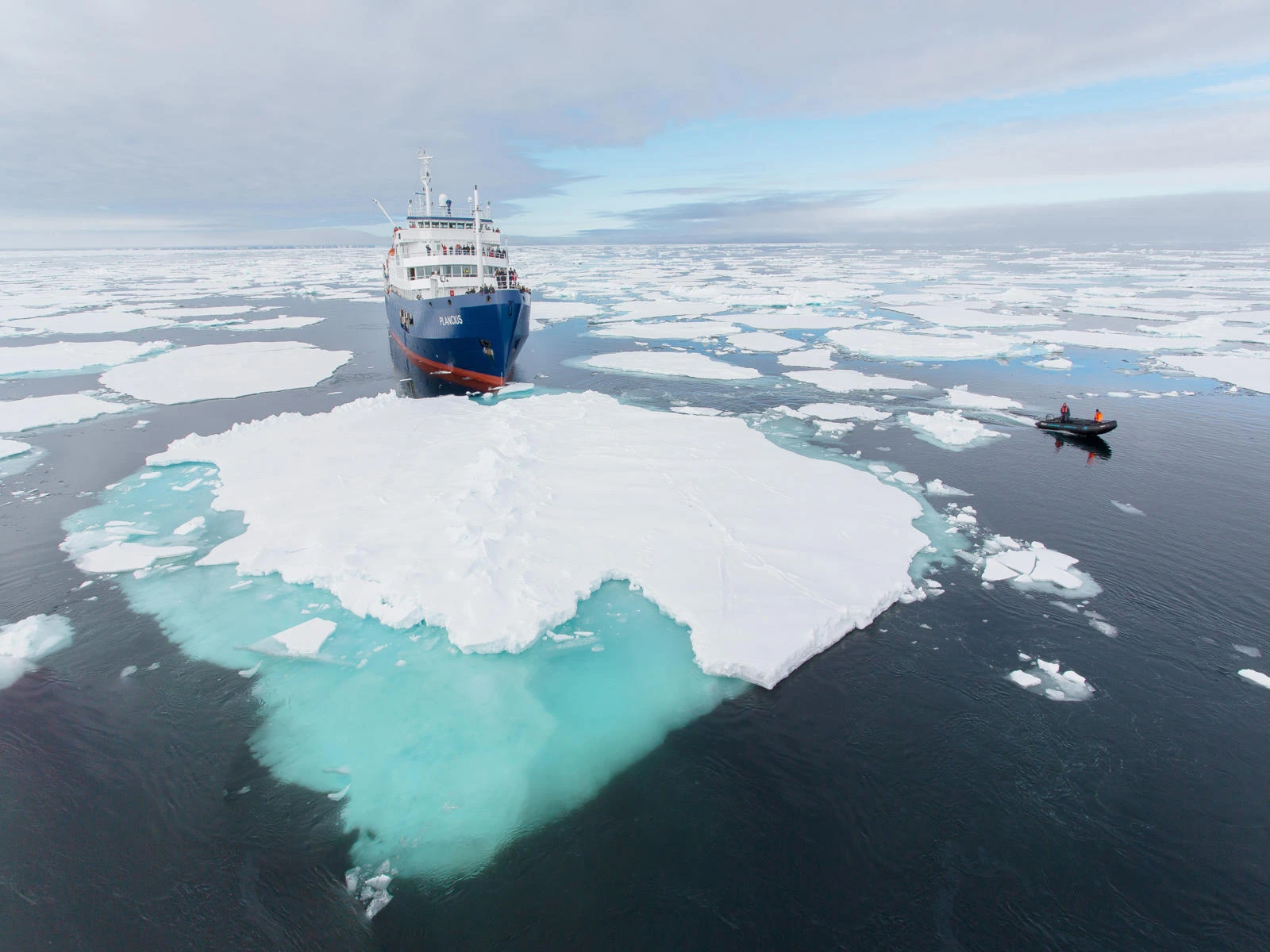
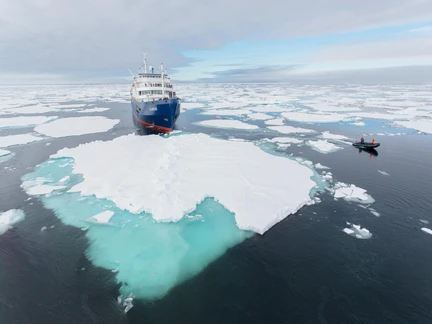
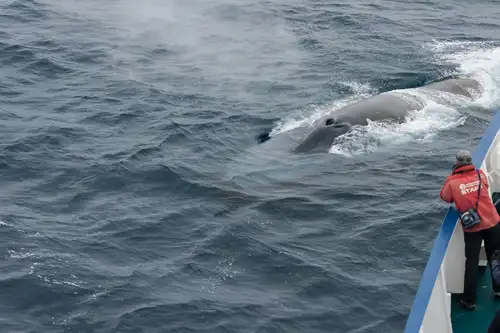
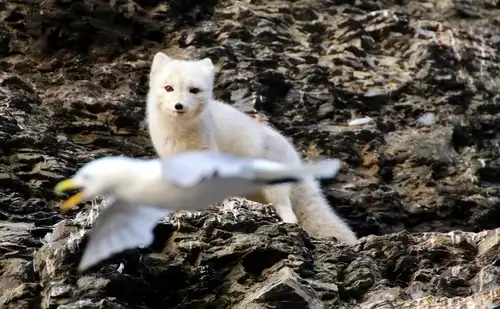
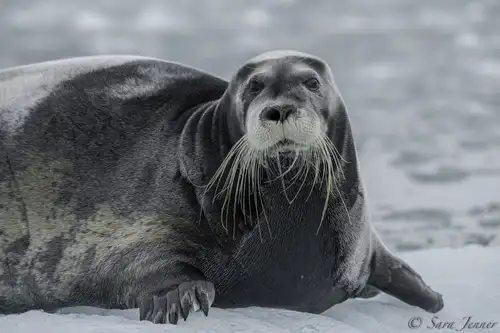
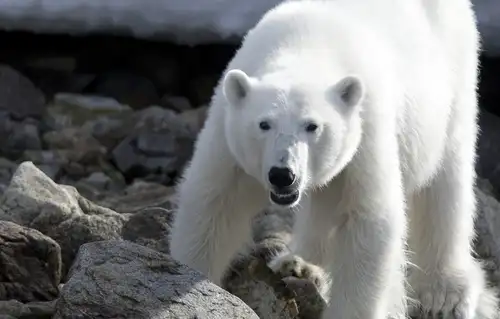
We sail eastward, watching for whales, seals, and polar bears. This area is a dynamic Arctic frontier.
Approaching Spitsbergen
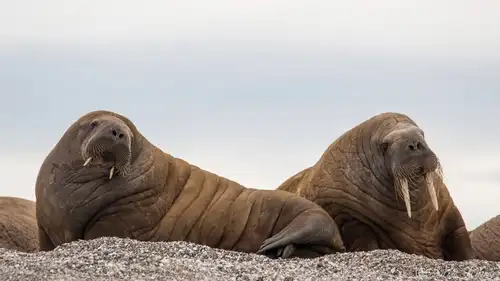
We sail eastward toward Spitsbergen. If time allows, we may land at Poolepynten to see walruses.
Longyearbyen
In Longyearbyen, you can explore this former mining town or catch a flight to Oslo for your next journey.

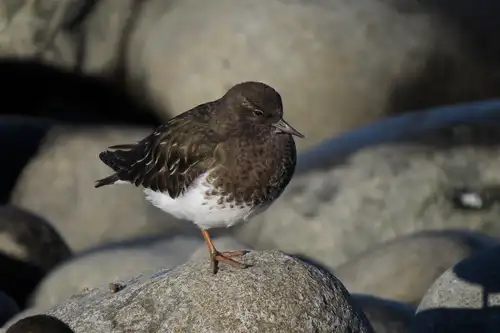
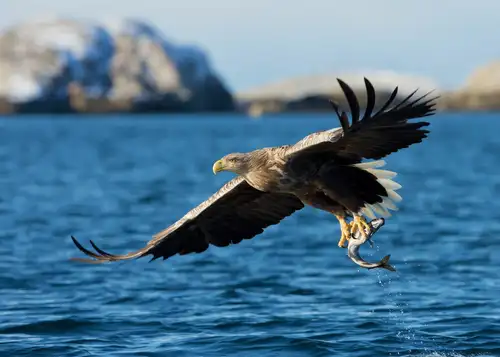
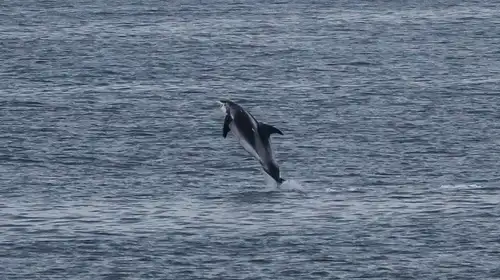


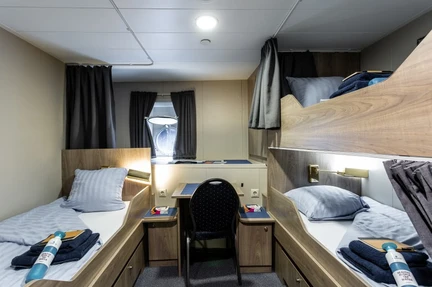

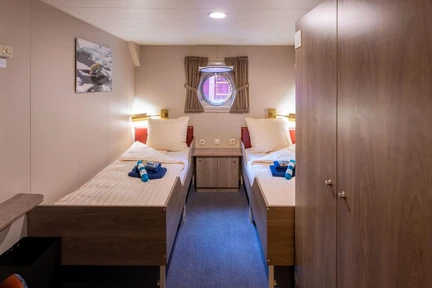
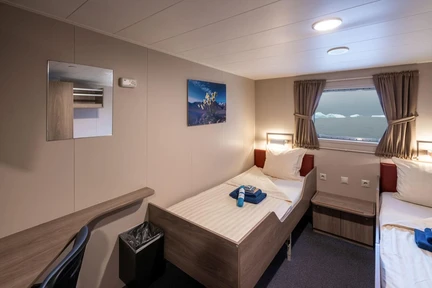
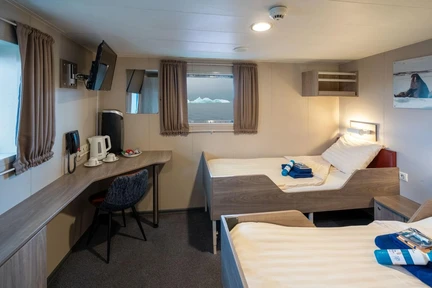
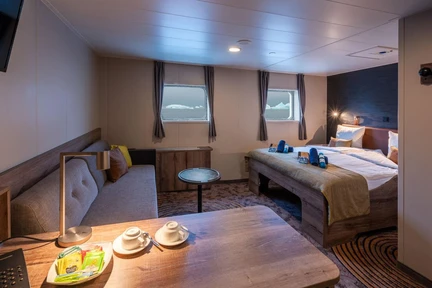


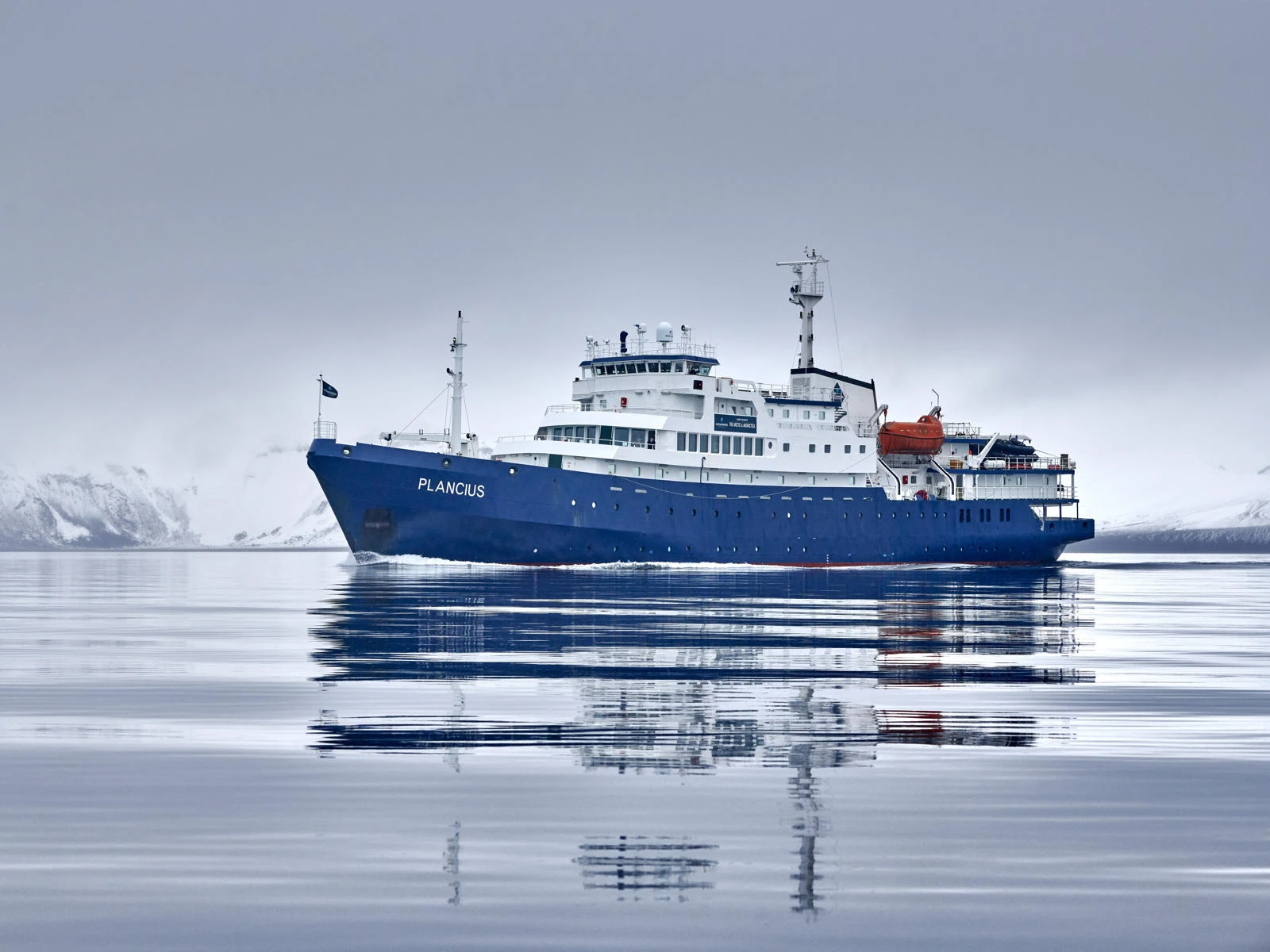
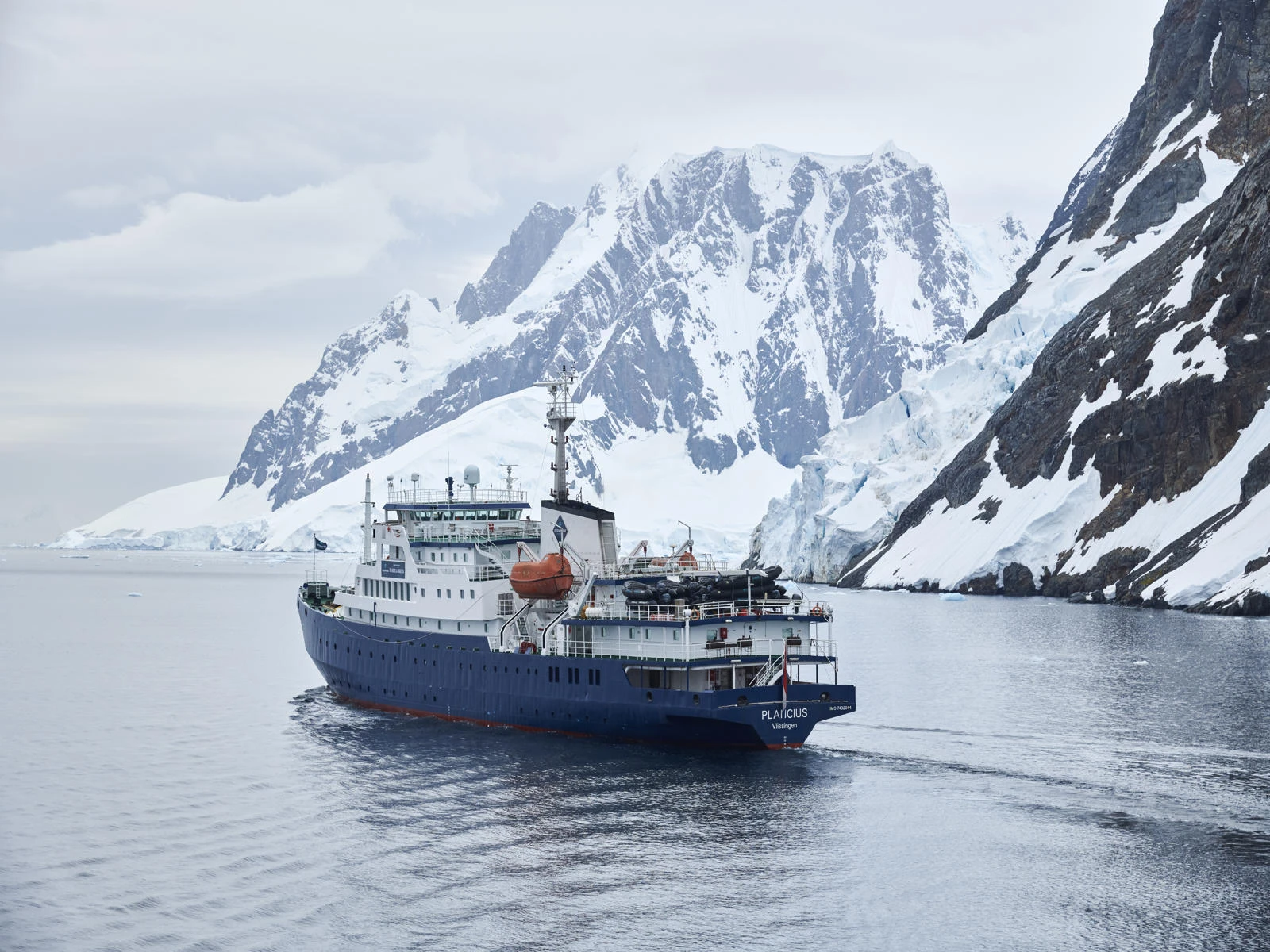
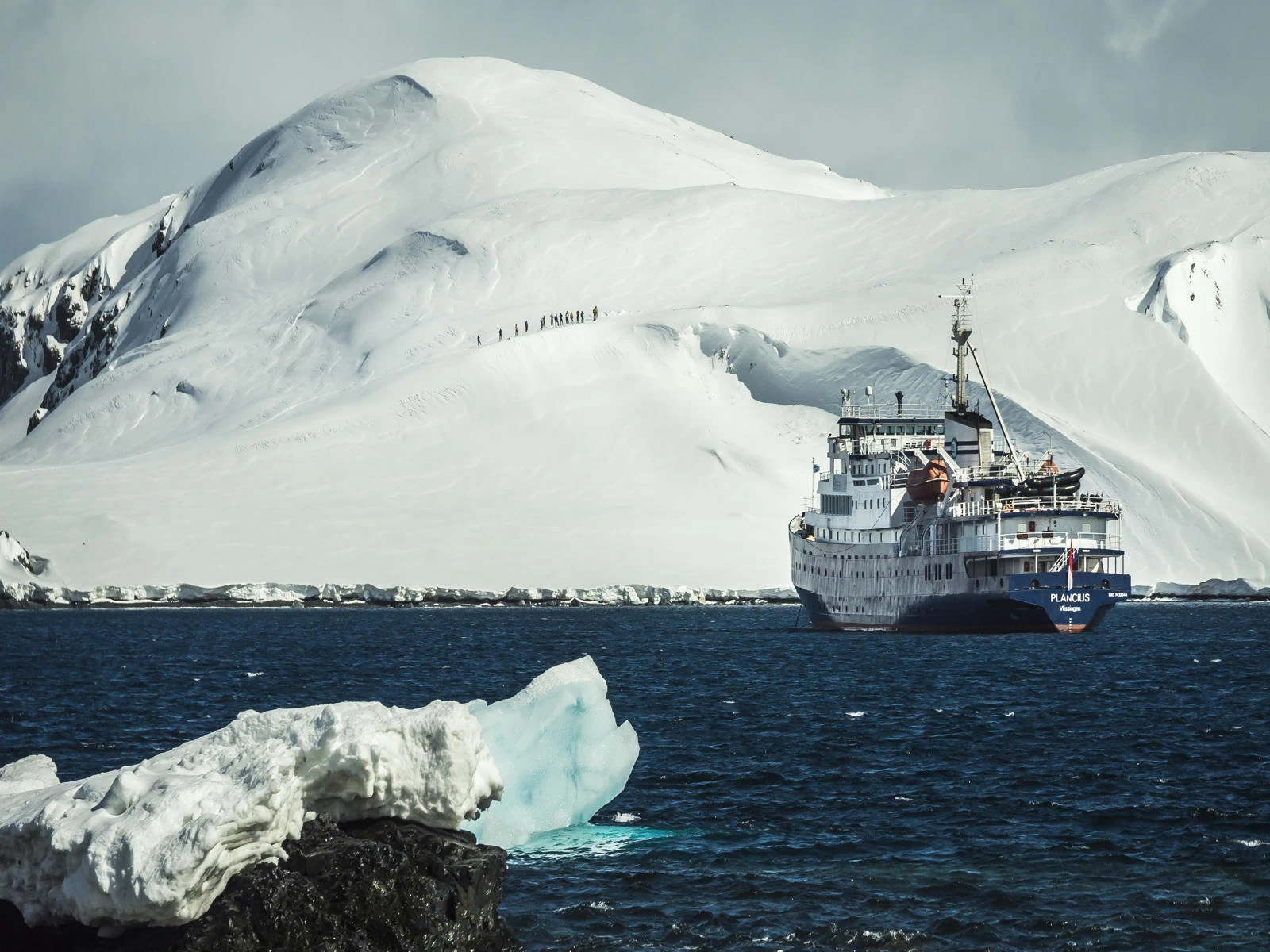
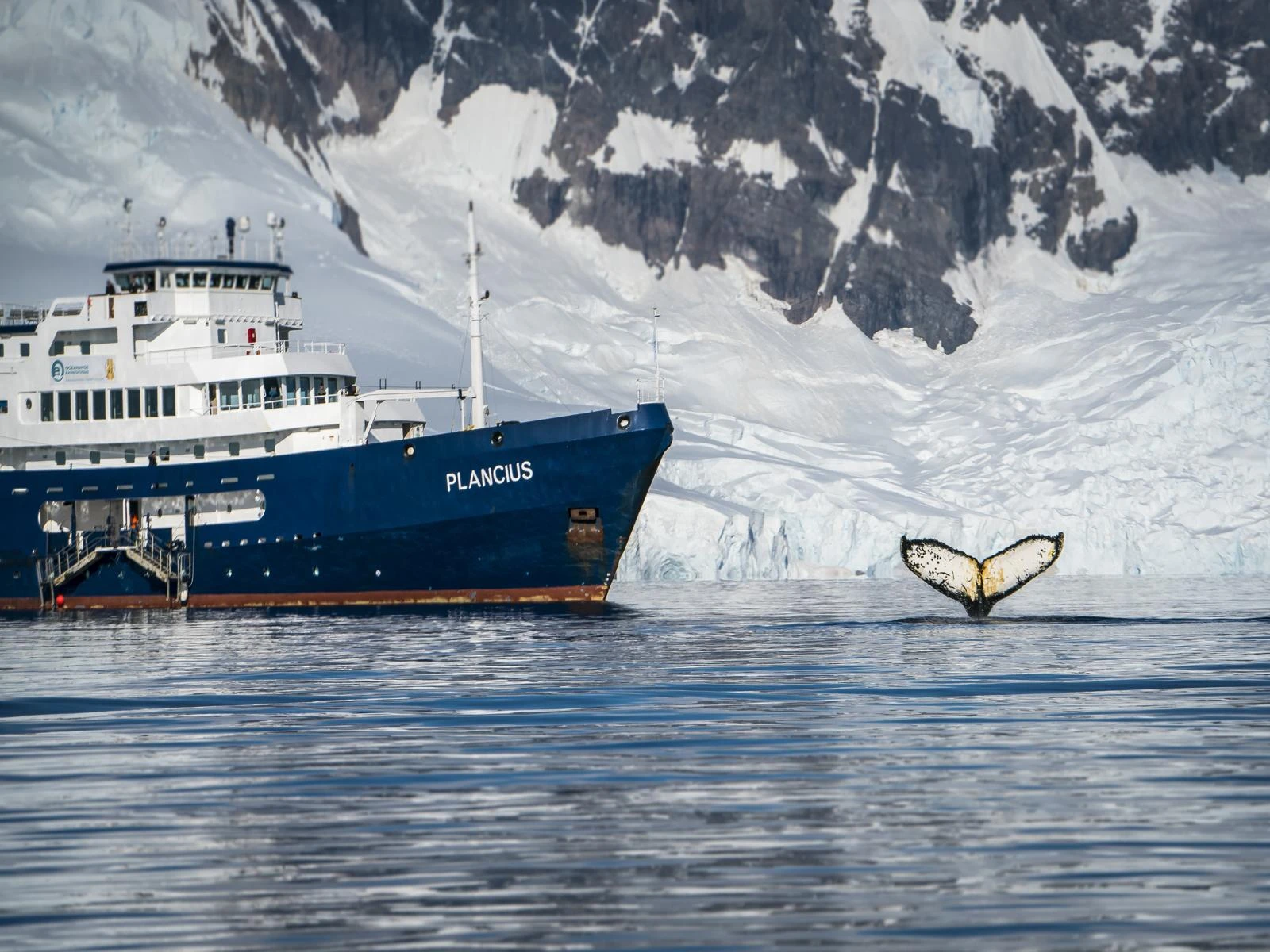
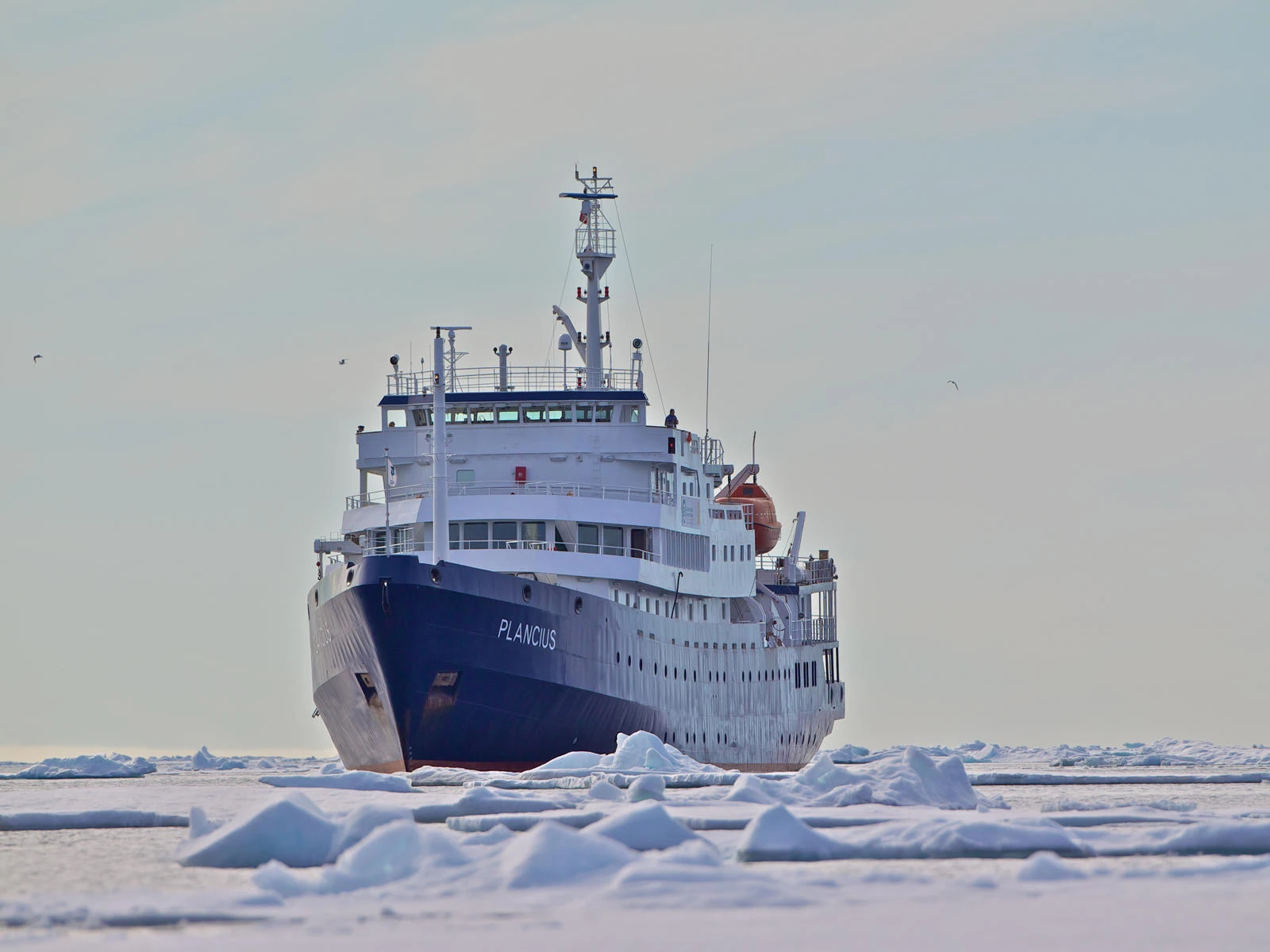
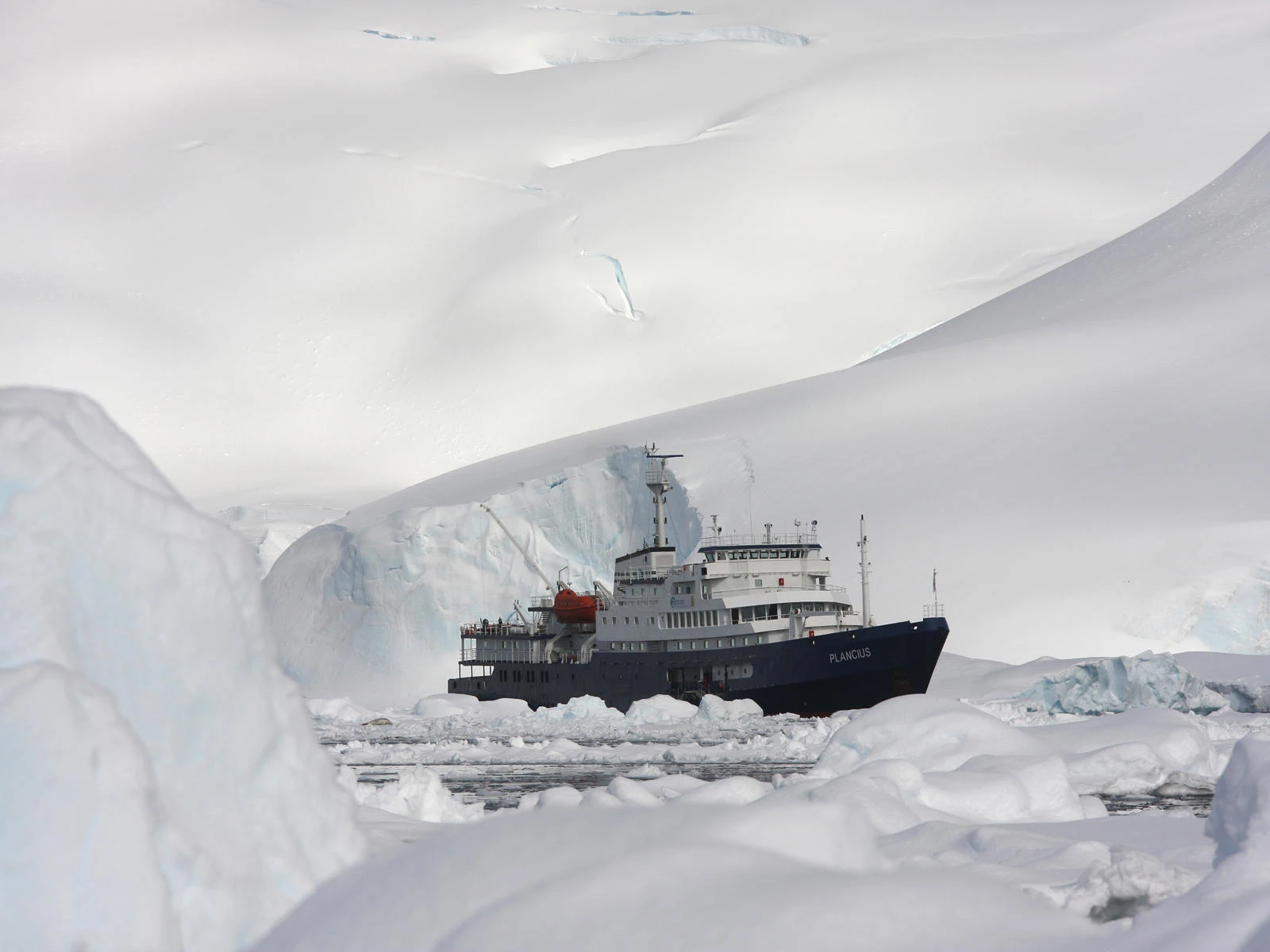
m/v Plancius
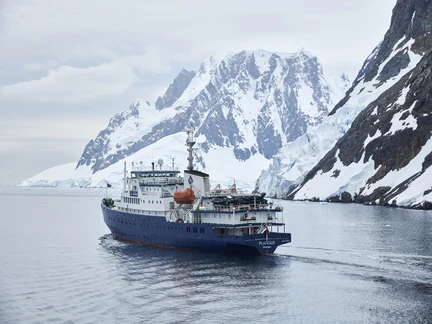
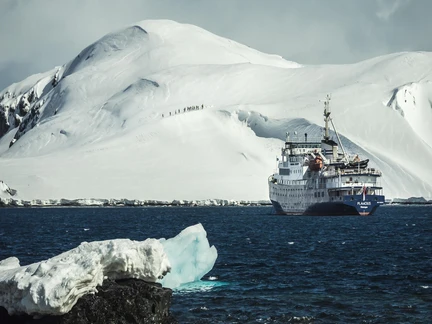
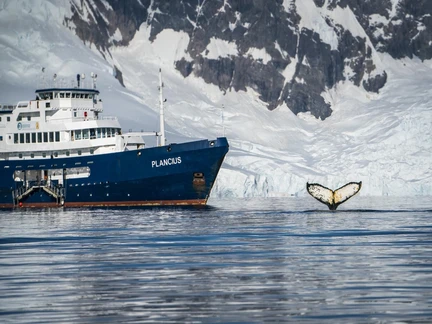
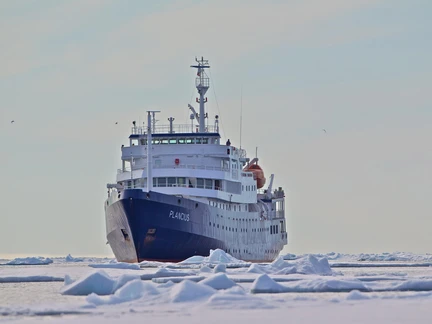
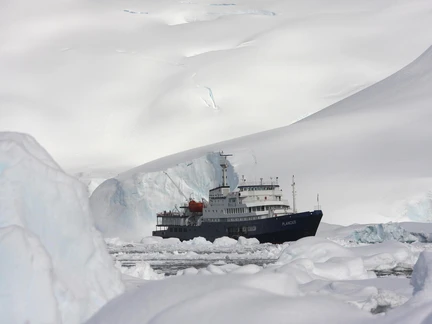
Our most longstanding vessel, Plancius, is a classic choice for many of our most popular polar voyages.
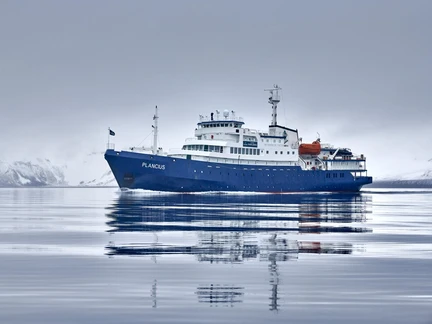
Specifications
| Passengers: | 108 passengers in 50 cabins |
| Staff & crew: | Crew 40 | Guides 8 | Doctor 1 |
| Length: | 89 meters (293 feet) |
| Breadth: | 14,5 meters (47 feet) |
| Draft: | 5 meters (16 feet) |
| Ice class: | 1D (Plancius has a Lloyds class notation 100A1 Passenger ship, Ice Class 1D at a draught of 5 meters) |
| Displacement: | 3211 tonnes |
| Propulsion: | 3x Diesel-Electric |
| Speed: | 10.5 knots average cruising speed |
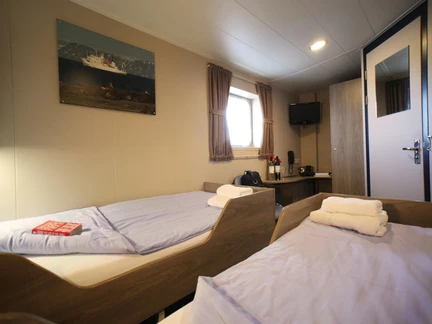
Cabins Gallery
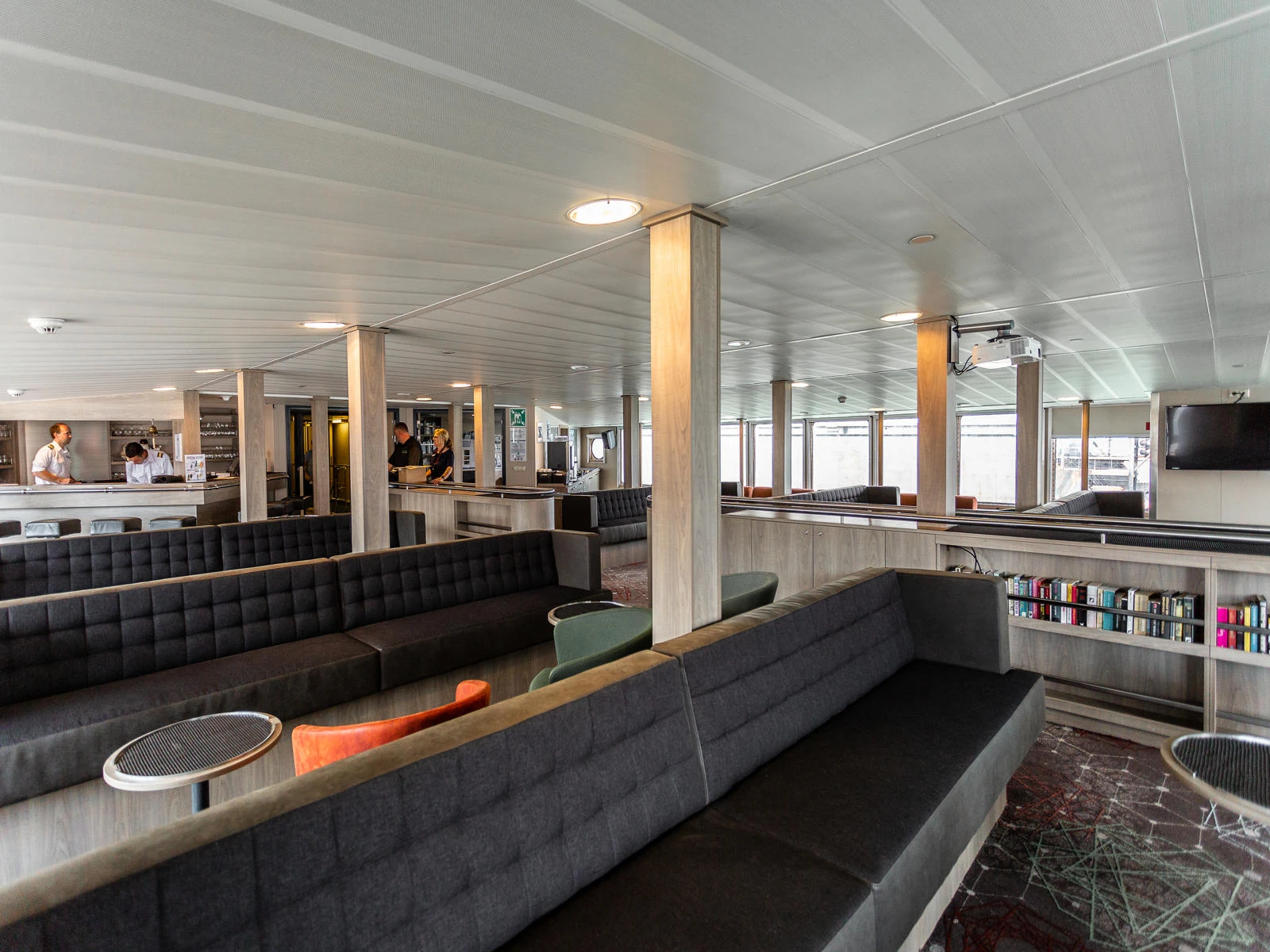
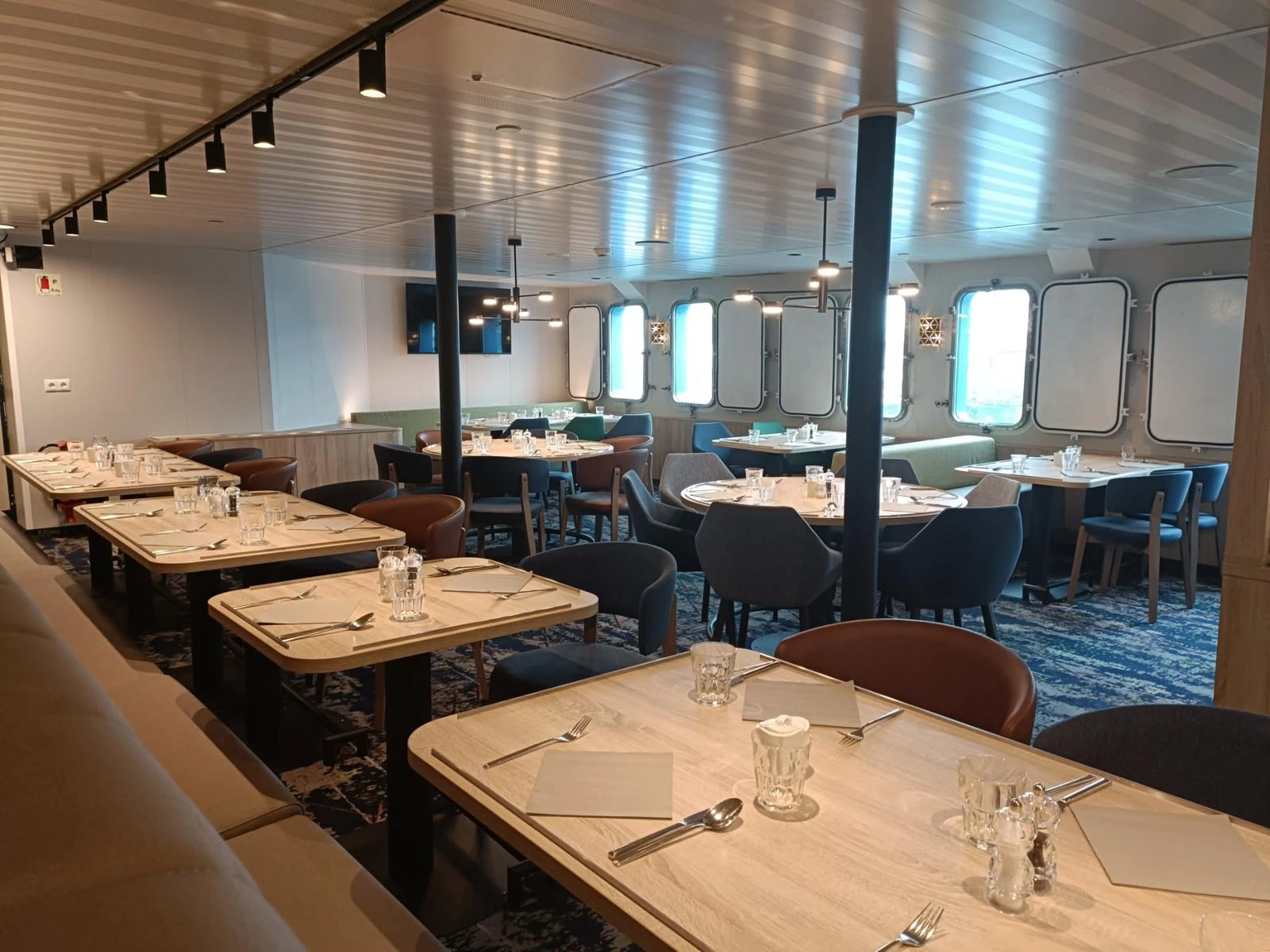
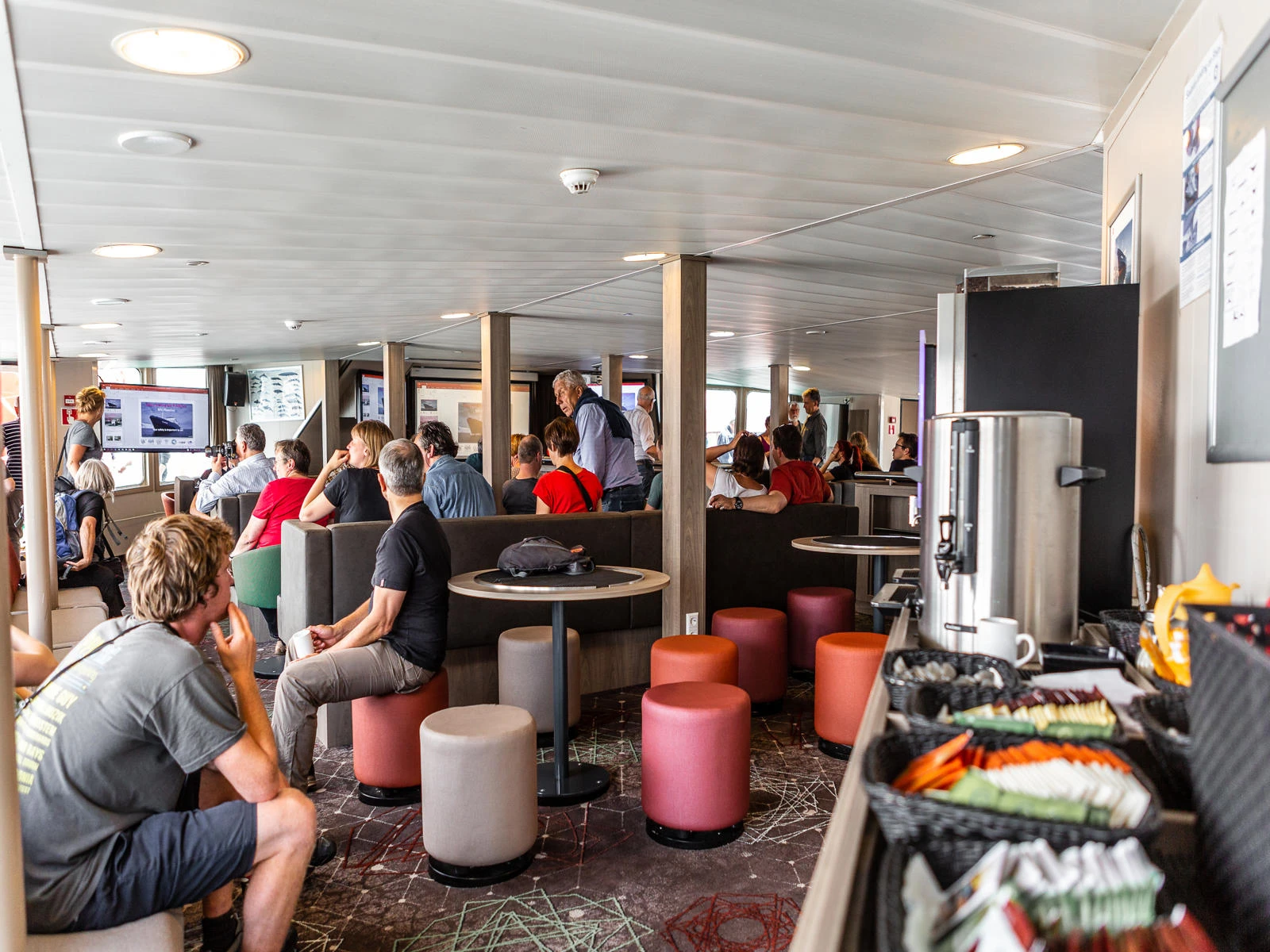
Ship Interior Gallery
Ship Exterior Gallery
M/v “Plancius” was built in 1976 as an oceanographic research vessel for the Royal Dutch Navy and was named “Hr. Ms. Tydeman”. The ship sailed for the Dutch Navy until June 2004 and was eventually purchased by the company. The vessel was completely rebuilt as a passenger vessel in 2009 and complies with the latest SOLAS-regulations (Safety Of Life At Sea). M/v “Plancius” is classed by Lloyd’s Register and flies the Dutch flag.
Perfect for any expedition
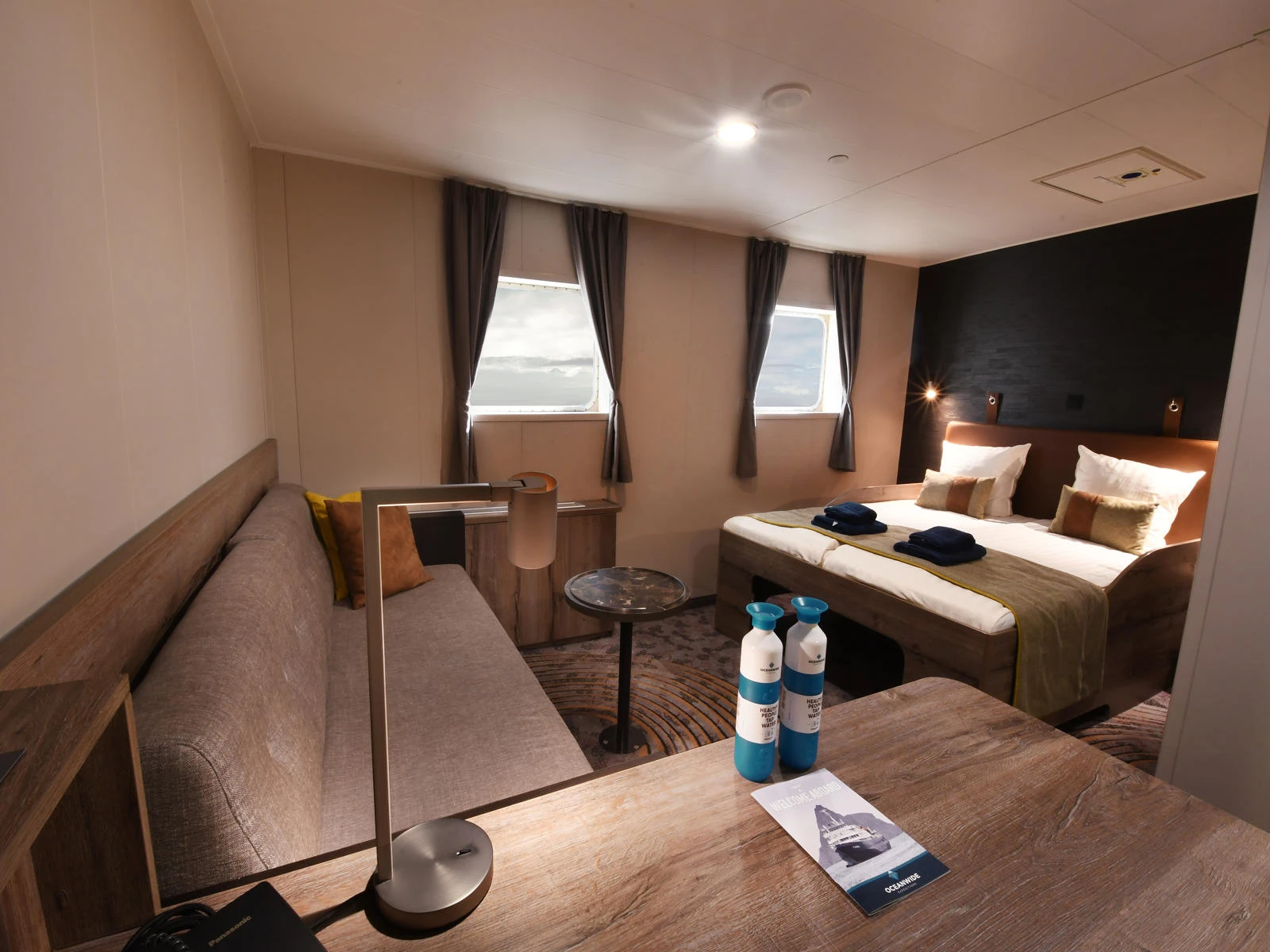
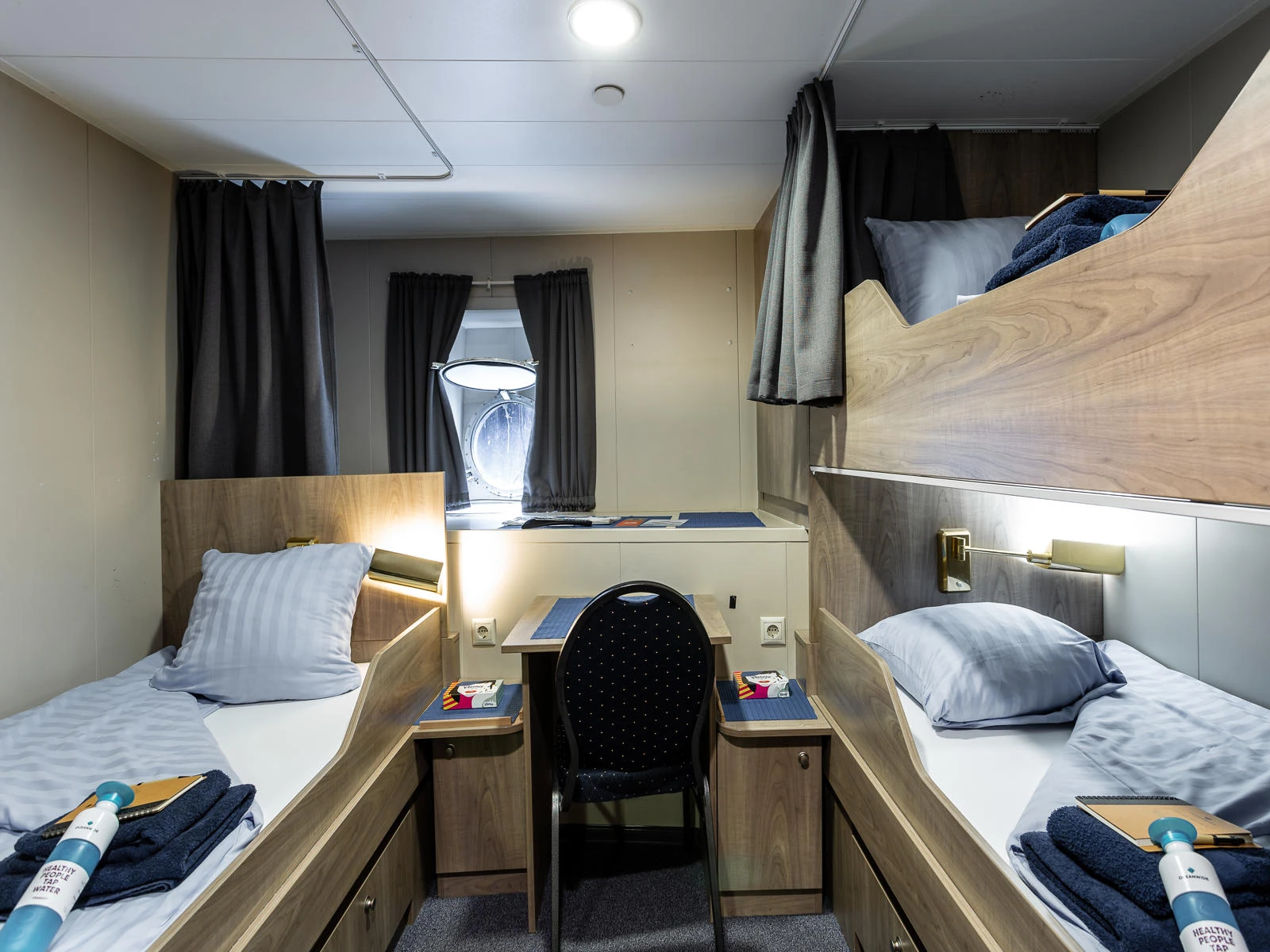
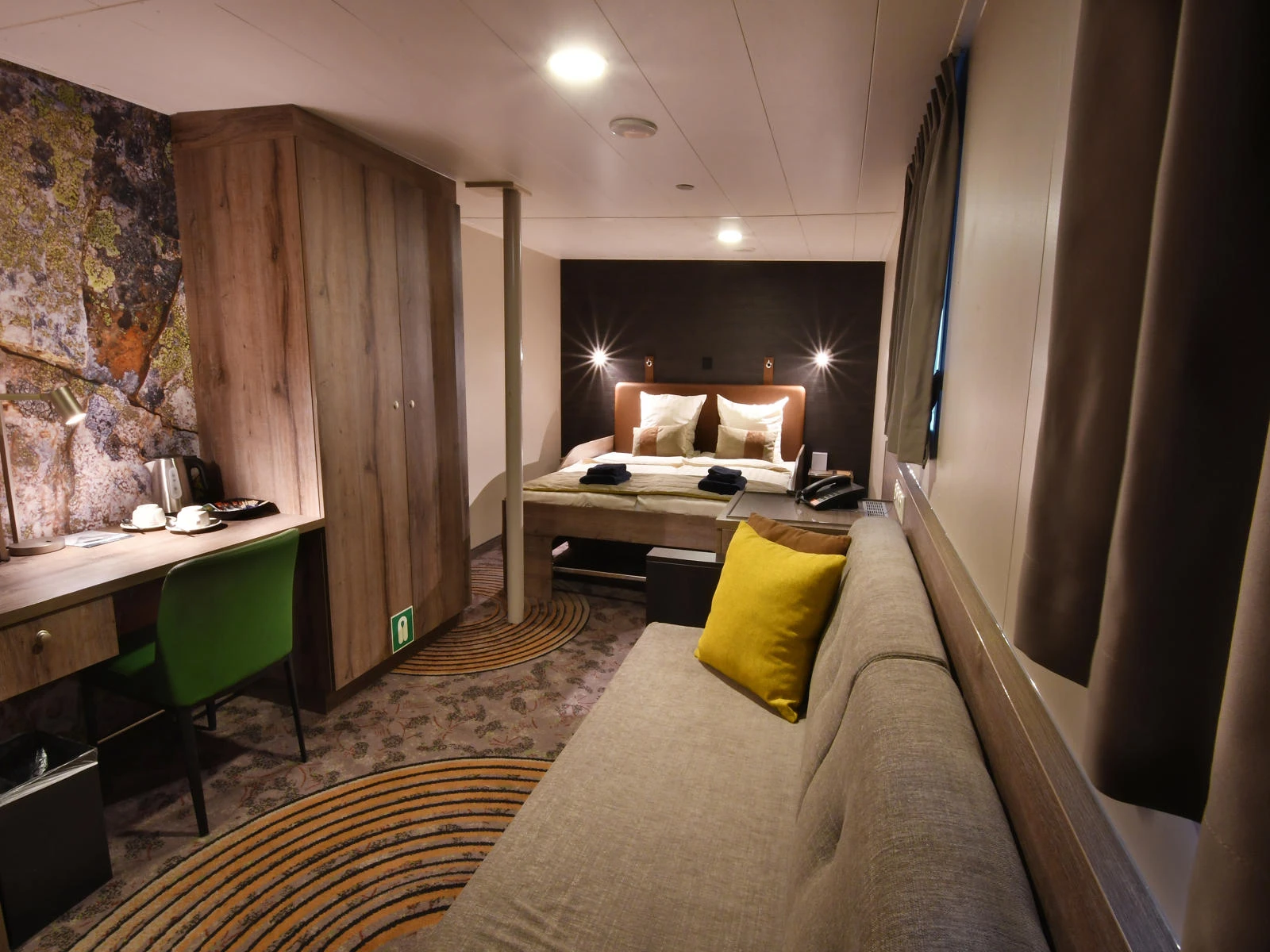
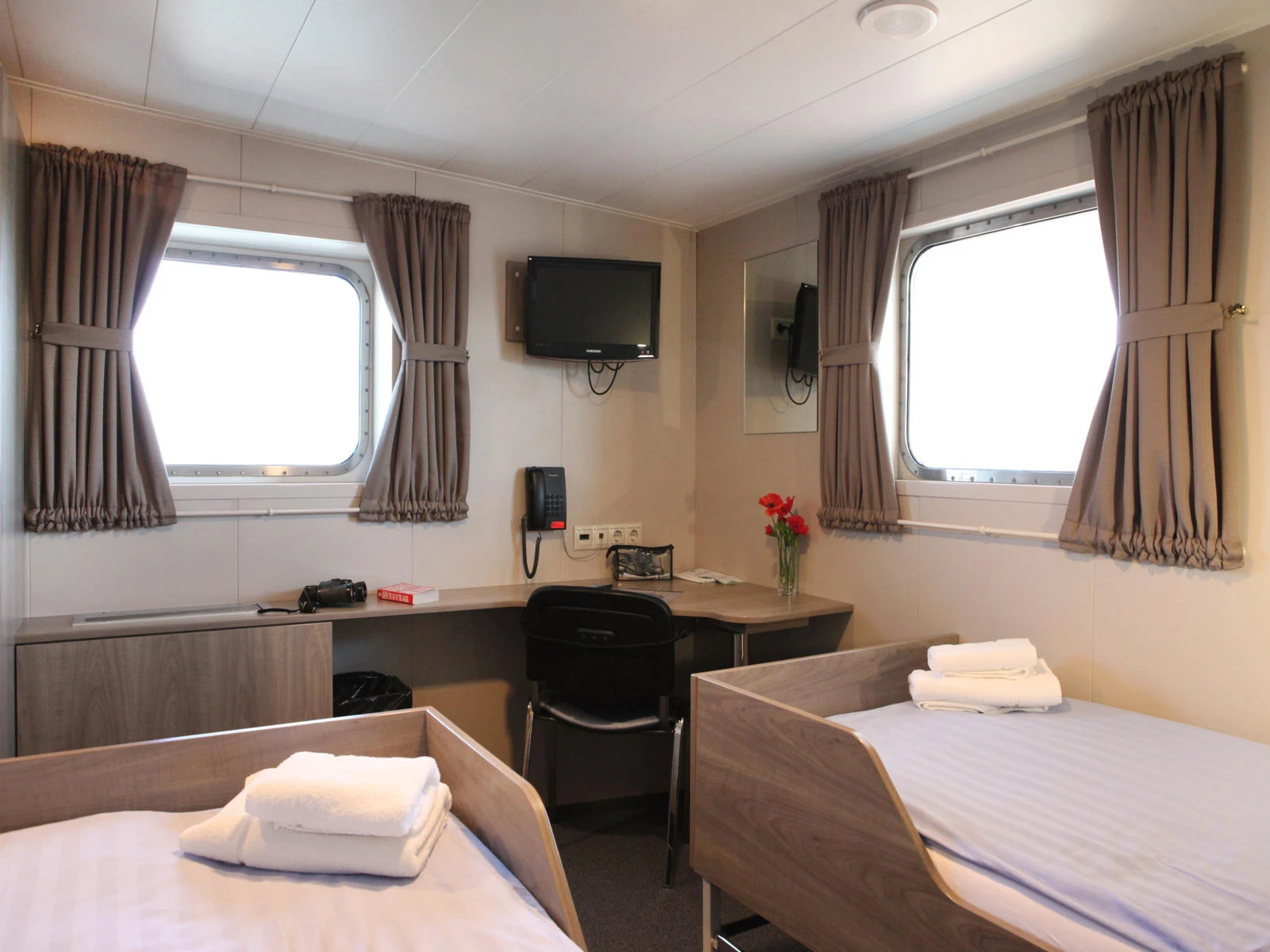
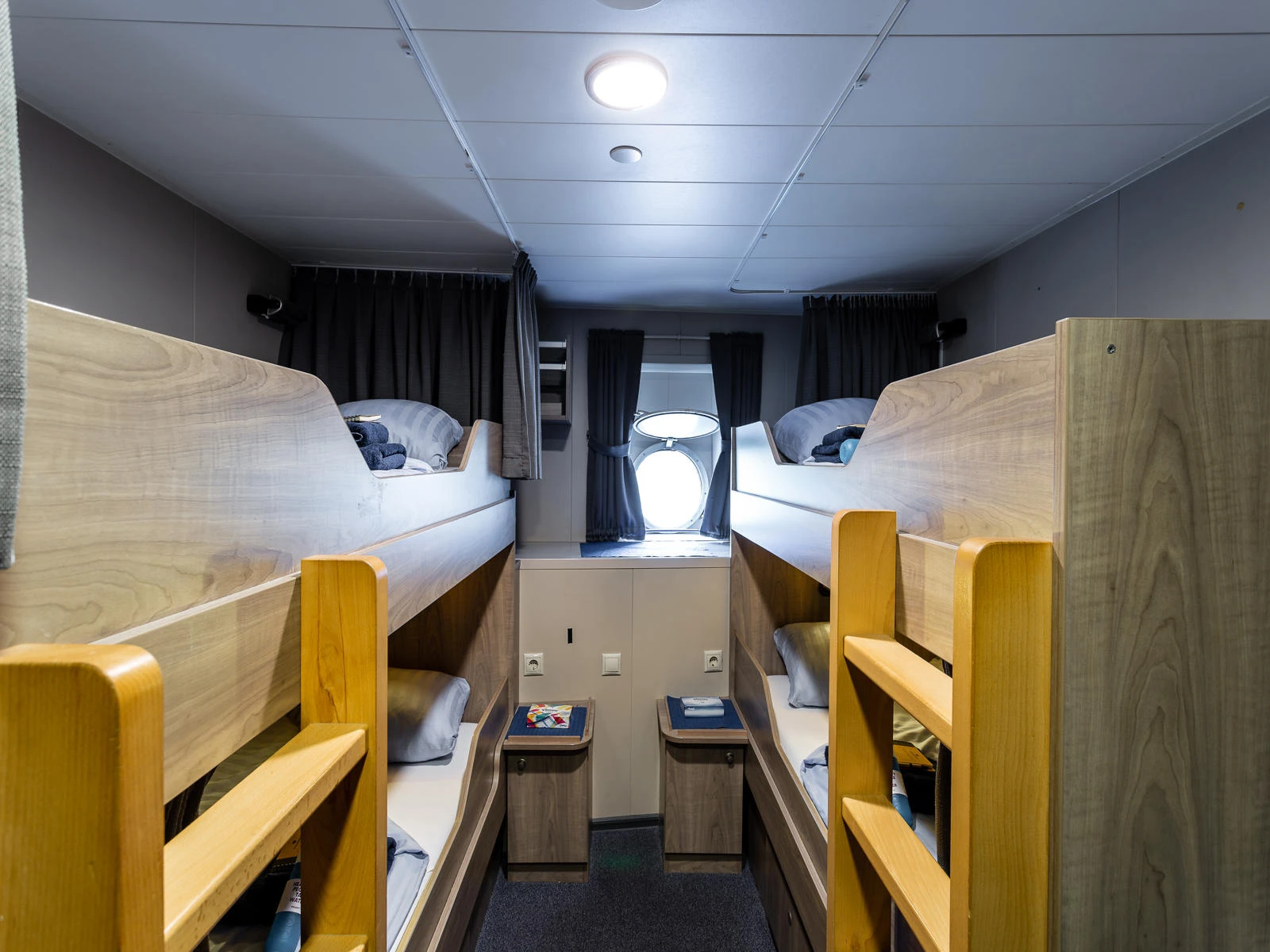
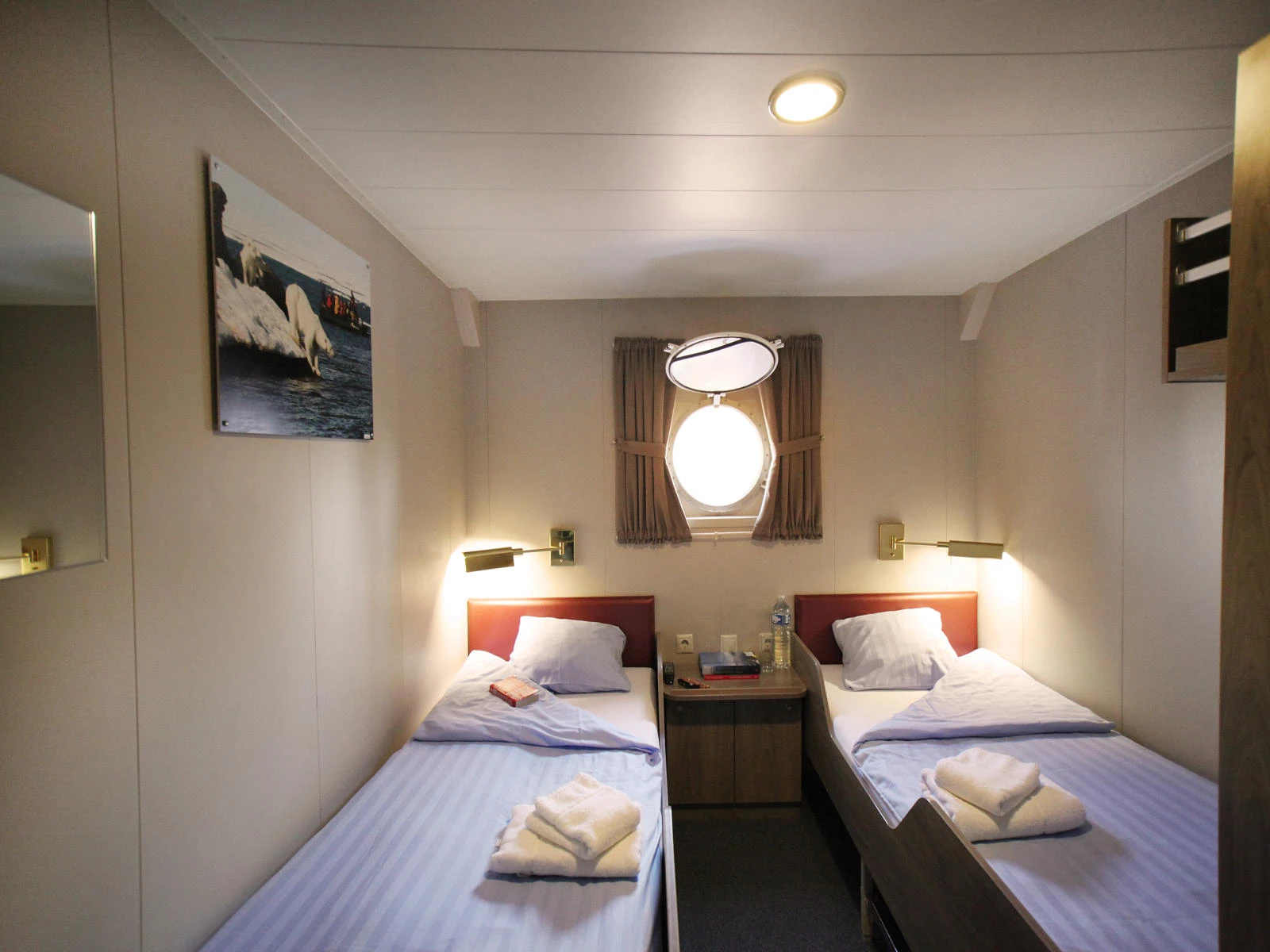
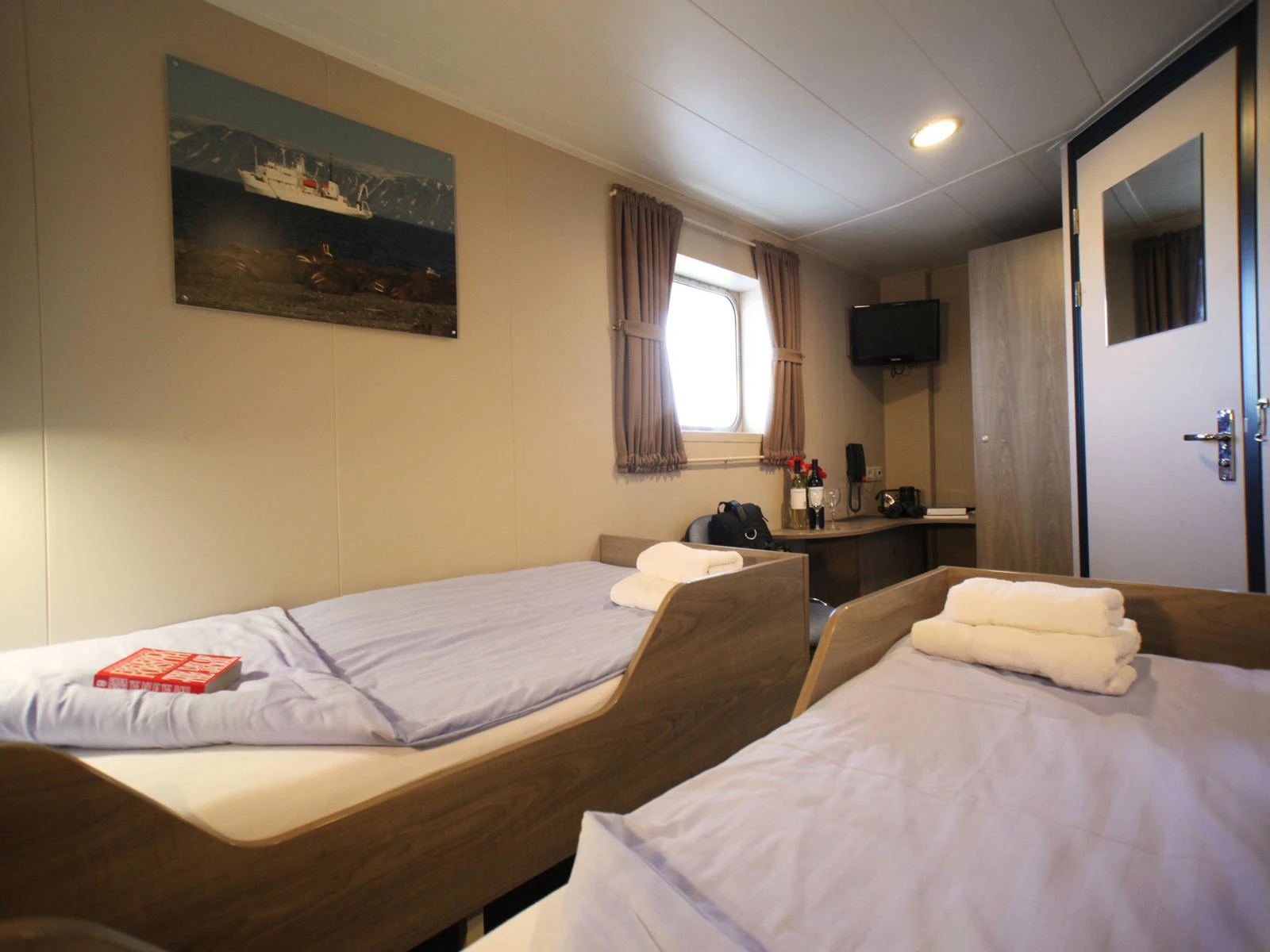
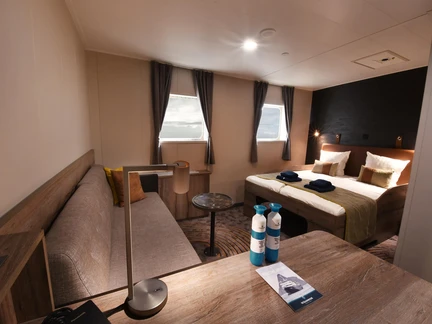
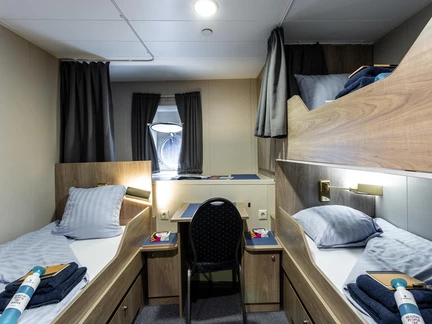
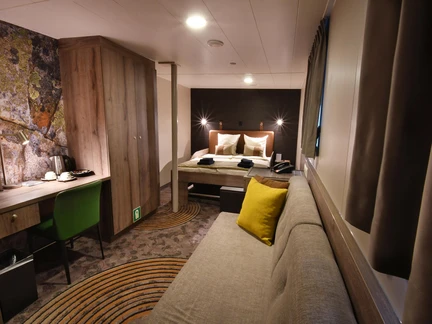
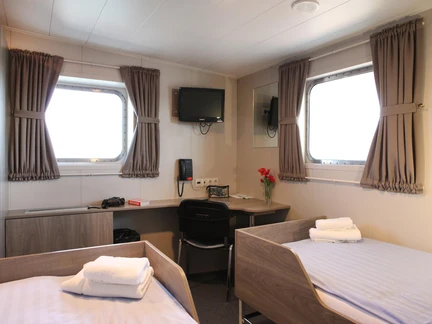
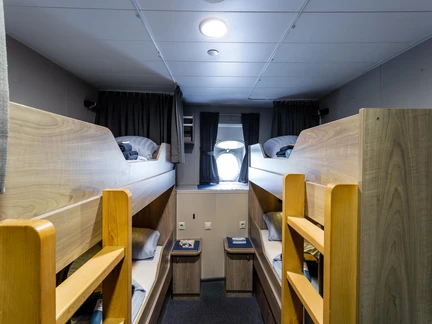
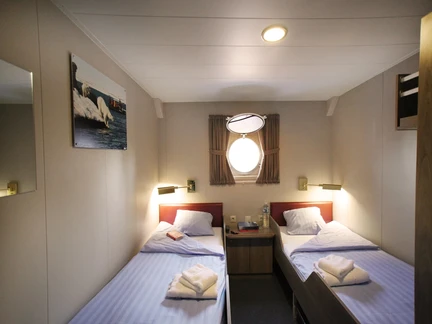
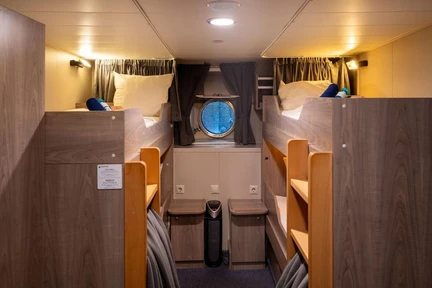
M/v “Plancius” accommodates 108 passengers with private toilets and shower in 4 quadruple porthole cabins, 9 twin porthole cabins, 25 twin cabins with windows and 2 twin deluxe cabins, all (ca. 12,5 square meters) and 10 twin superior cabins (ca. 21 square meters). All cabins offer lower berths (one queen-size bed in the superior cabins and two single beds in the twin cabins), except for the 4 quadruple cabins (for 4 persons in 2x upper and lower beds).
Plancius: a vessel with comfort and character
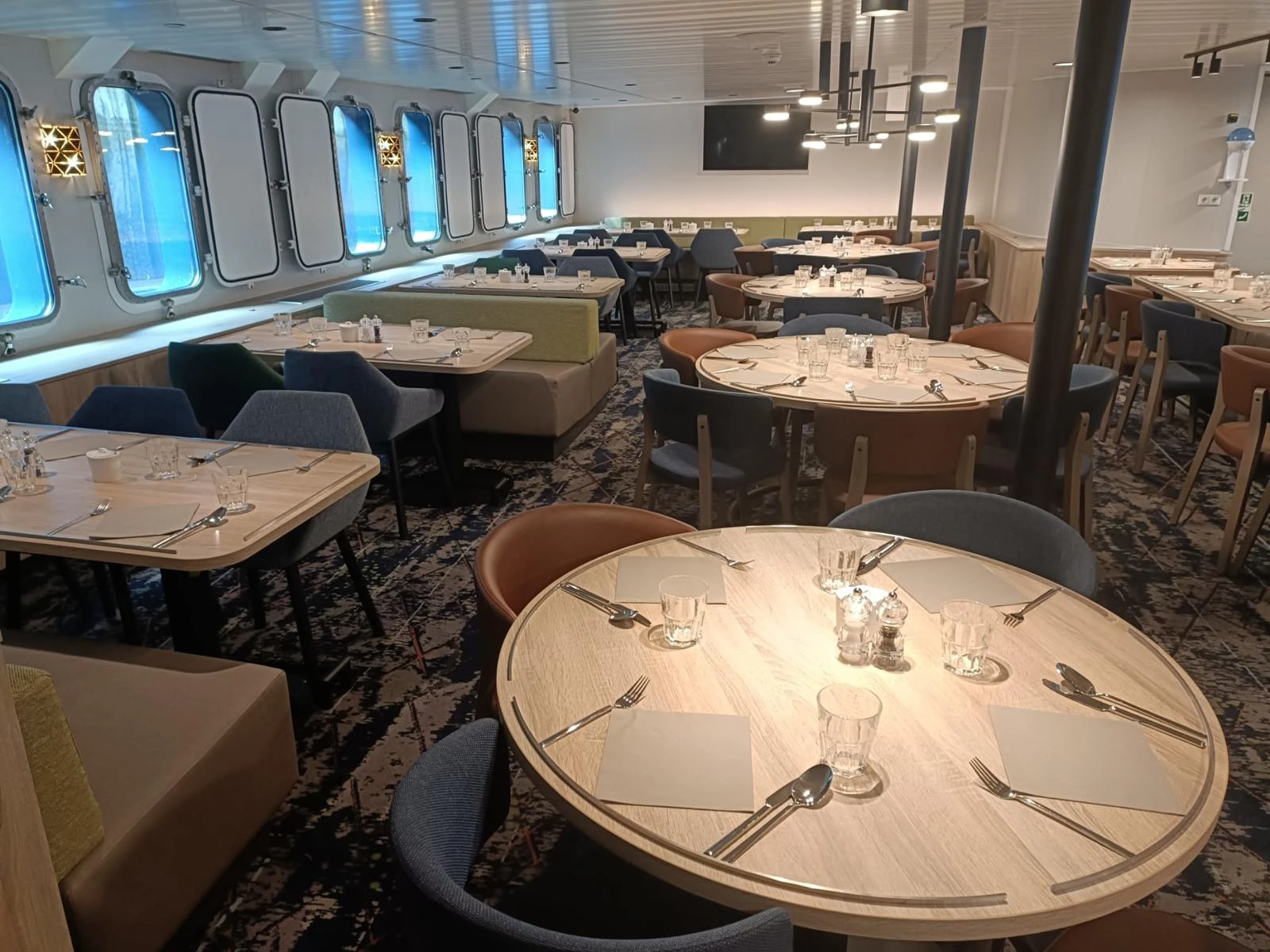
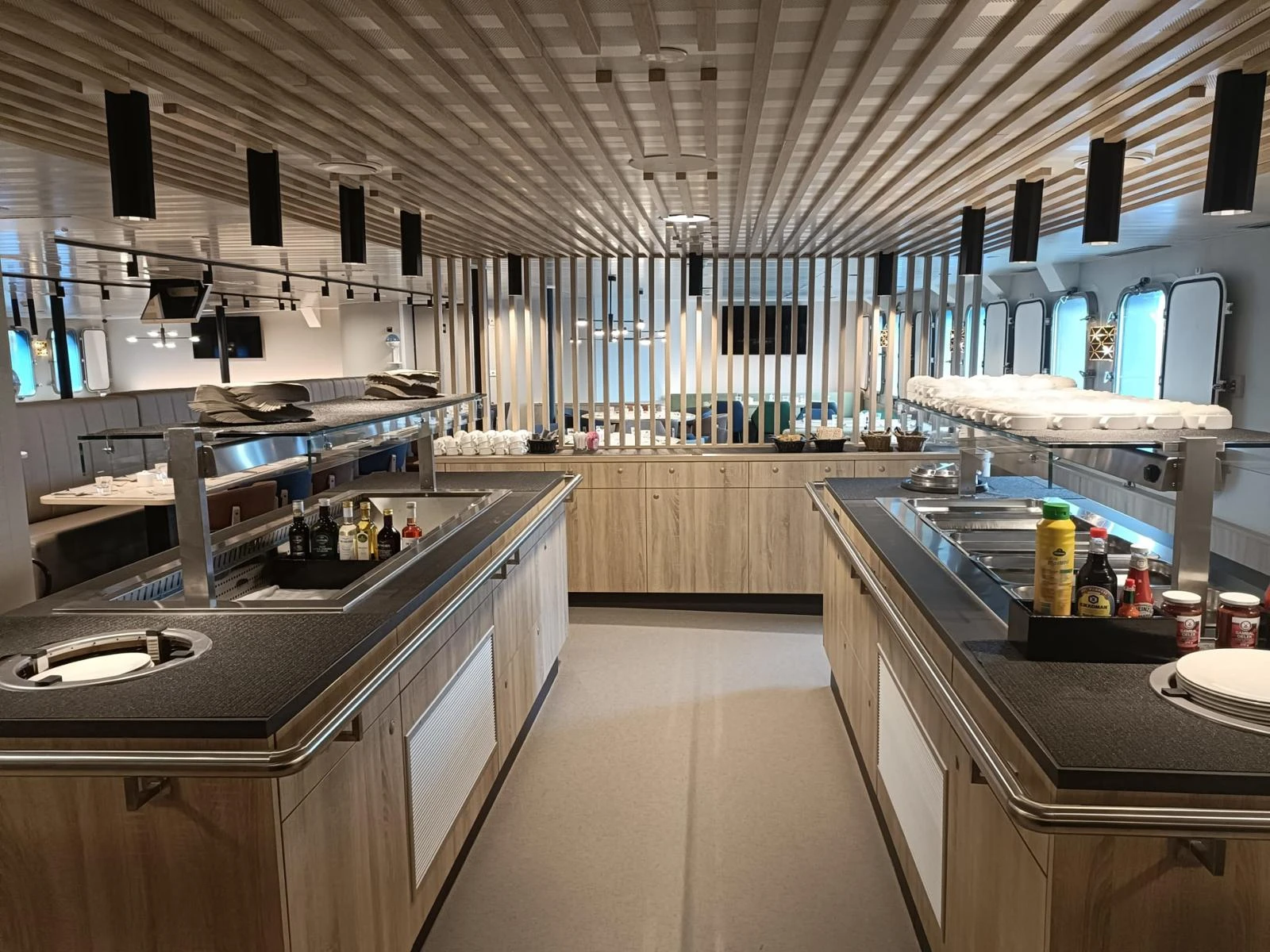
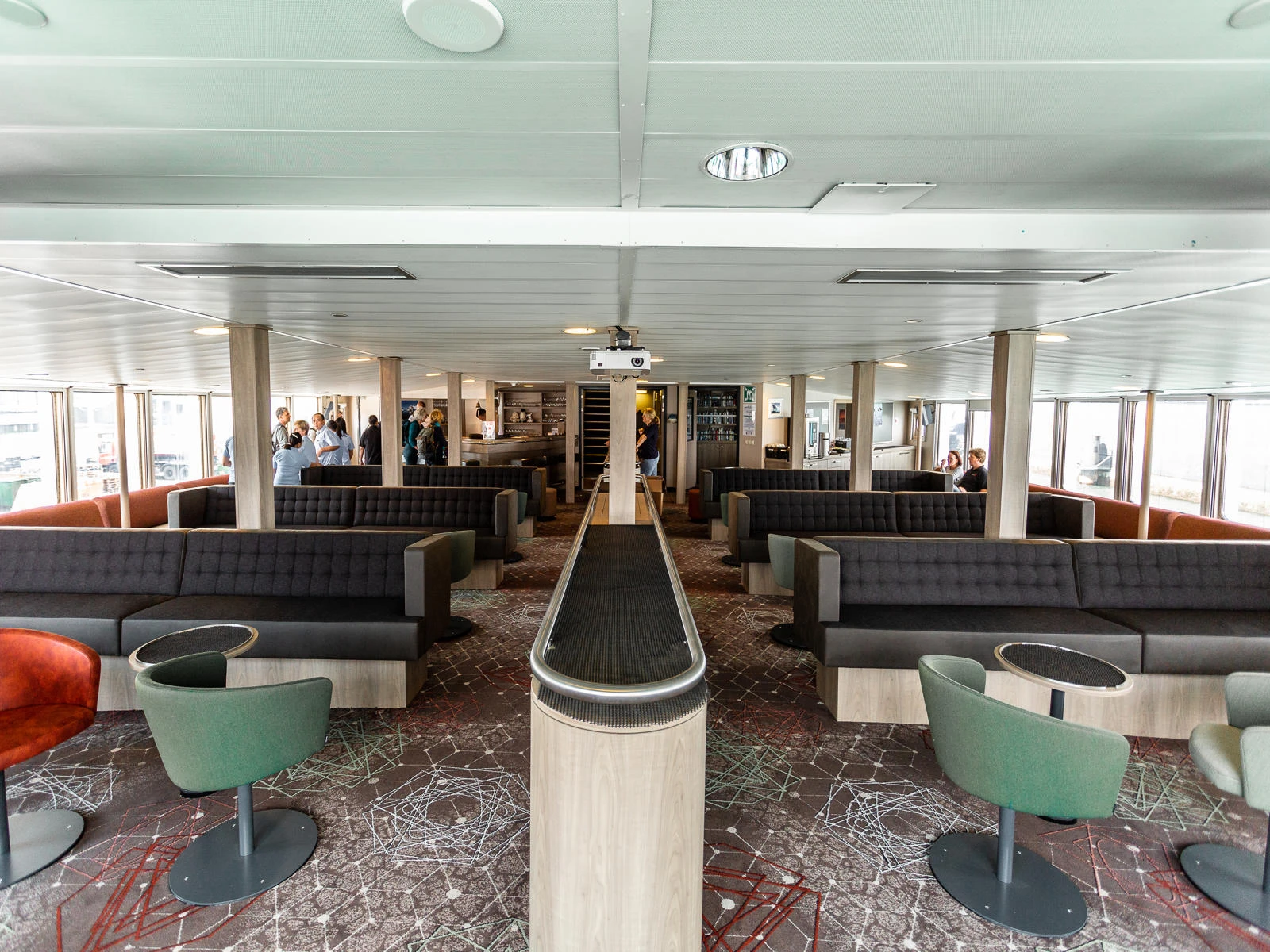
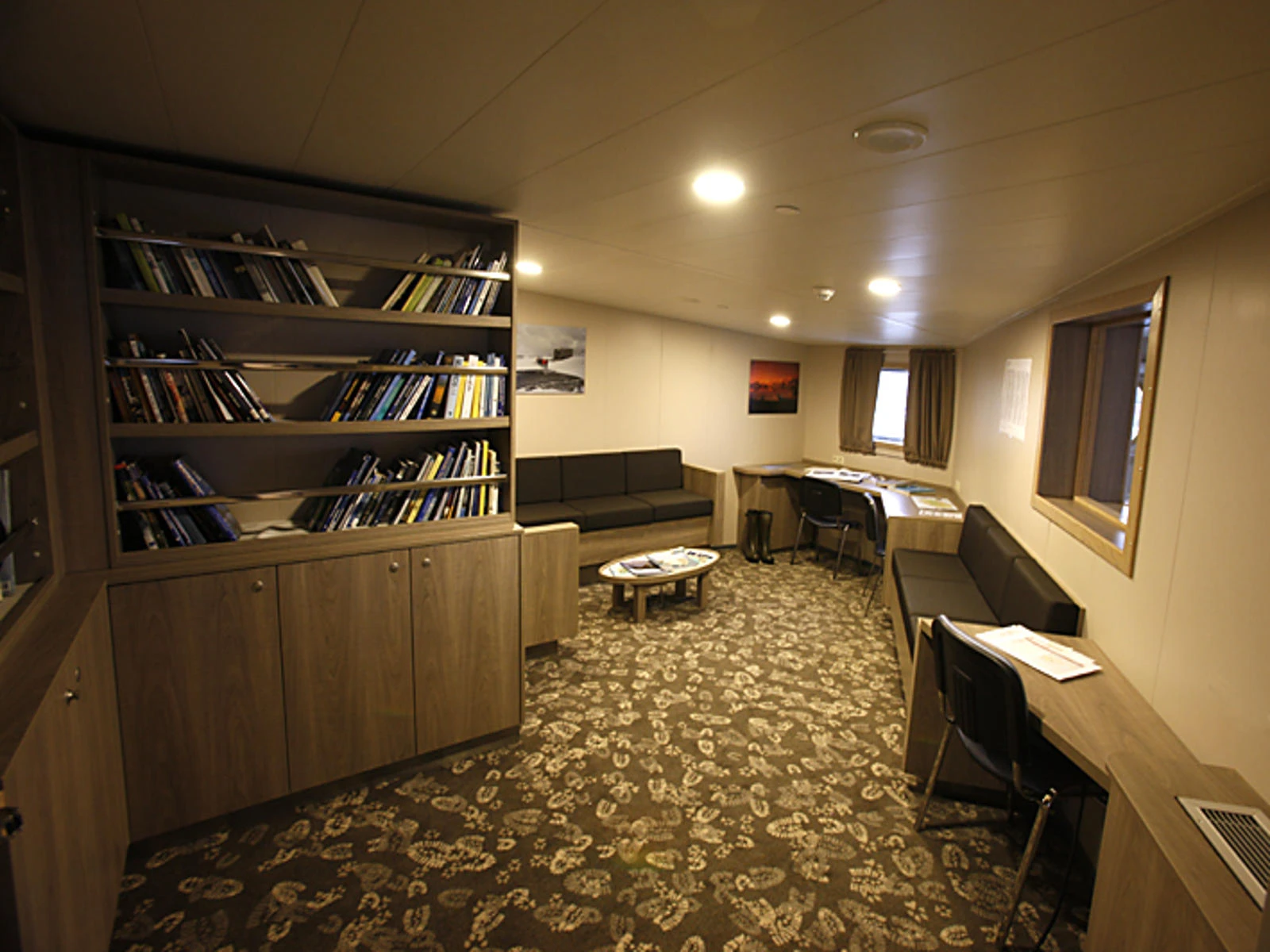
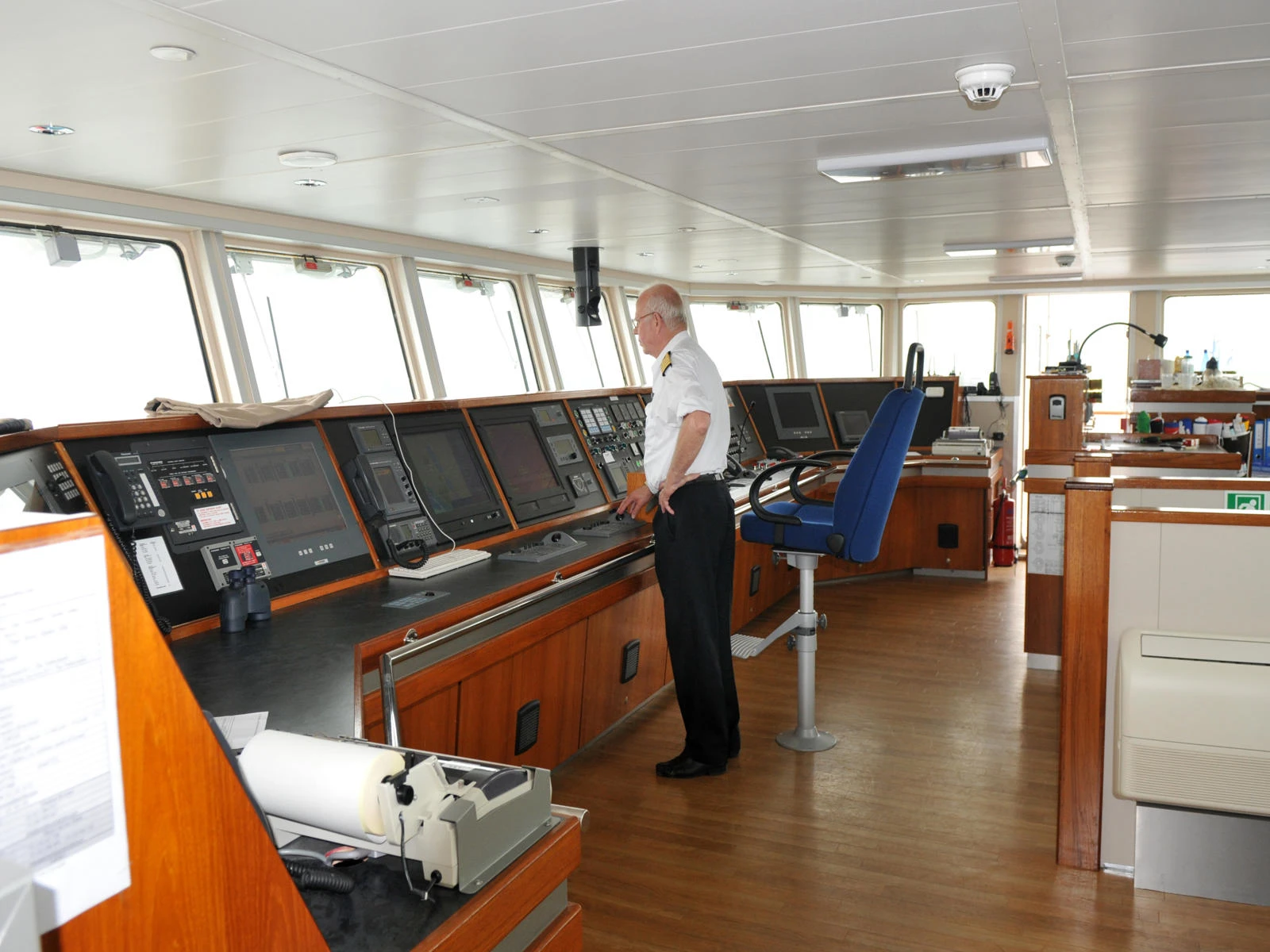
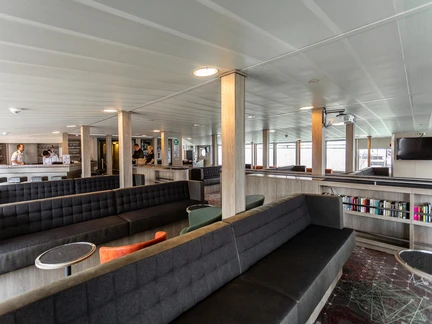
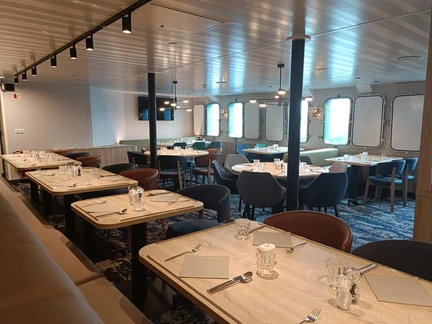
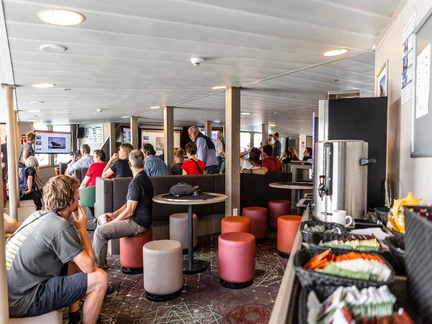
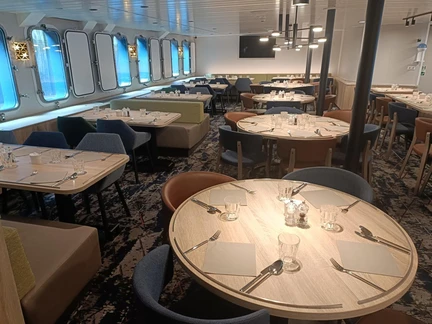
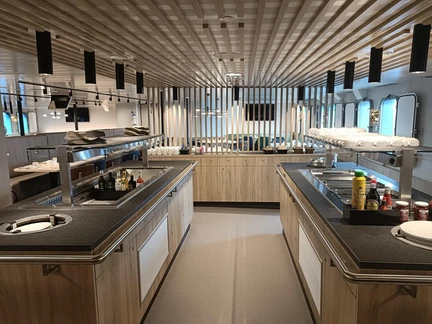
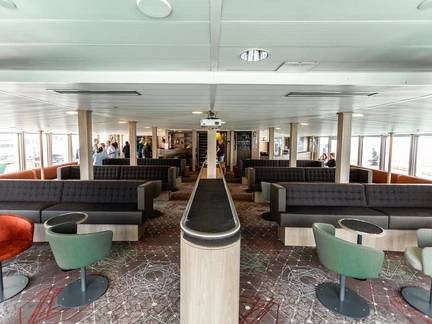
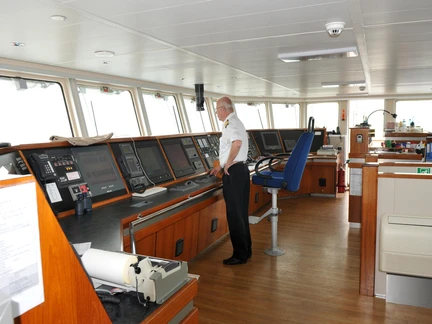
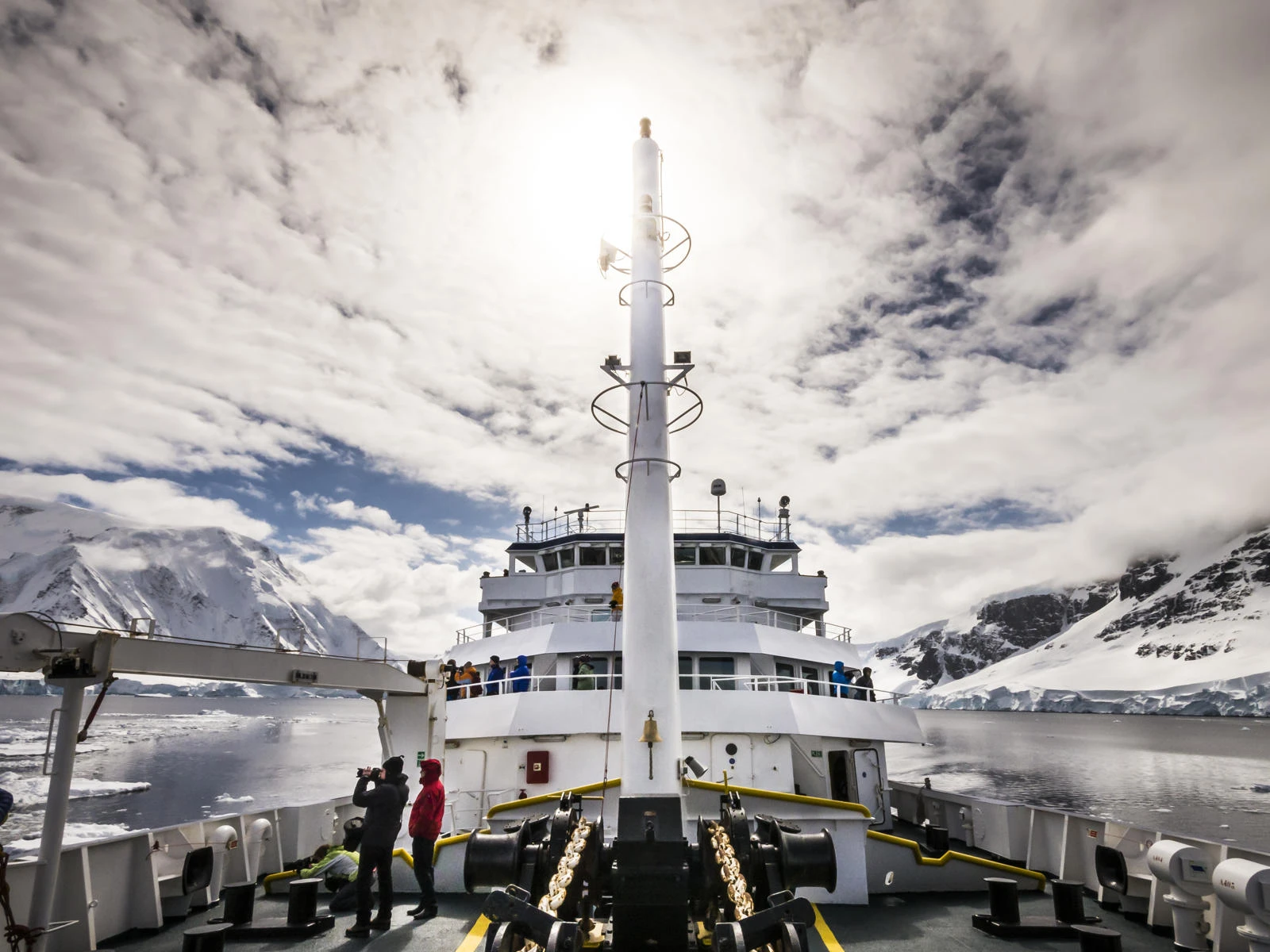
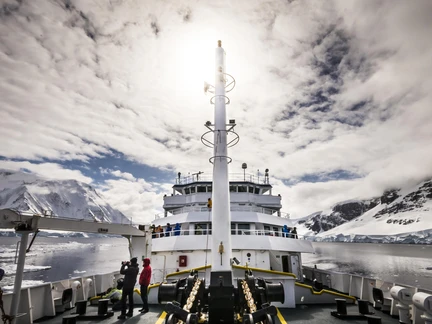
Please be aware that a small number of cabins may have a partially obstructed view due to the design requirements of the ship. The best view is always on the outer deck or the bridge. The vessel offers a restaurant/lecture room on deck 3 and a spacious observation lounge (with bar) on deck 5 with large windows, offering a full panorama view. M/v “Plancius” has large open deck spaces (with full walk-around possibilities on deck 4), giving excellent opportunities to enjoy the scenery and wildlife. She is furthermore equipped with 10 Mark V zodiacs, including 40 HP 4-stroke outboard engines and 2 gangways on the starboard side, guaranteeing a swift zodiac operation.
M/v “Plancius” is comfortable and nicely decorated, but is not a luxury vessel. Our voyages in the Arctic and Antarctic regions are primarily defined by an exploratory educational travel program, spending as much time ashore as possible. Plancius fully meets our demands to achieve this. The vessel is equipped with a diesel-electric propulsion system which reduces the noise and vibration of the vessel considerably. The 3 diesel engines generate 1.230 horsepower each, giving the vessel a speed of 10 - 12 knots. The vessel is ice-strengthened and was specially built for oceanographic voyages. M/v “Plancius” is manned by an international crew of 40 (20 nautical crew and 20 hotel crew), 8 expedition staff (1 expedition leader, 1 assistant expedition leader and 6 guides/lecturers), and 1 doctor.
Dress code
In keeping with our expedition atmosphere, dress on board is informal. Bring casual and comfortable clothing for all activities. Keep in mind that much of the spectacular scenery can be appreciated from deck, which can be slippery. Bring sturdy shoes with no-slip soles and make sure the parka is never far away in case of the call "Whales!" comes over the loudspeaker and you have to dash outside. Wear layers since it is comfortably warm aboard the ship - and often cold on deck.
Currency & payment
Refreshments from the bar and souvenirs will be charged to your cabin. The day before departure you can settle your bill with the Hotel Manager and pay by credit card (Visa or MasterCard) or cash (Euro or Dollar). We do not accept cheques of any kind. The price and standard currency on board our vessels is the Euro. Other currencies may be accepted at the discretion of the hotel manager at prevailing rates.
Electric current
The electrical supply aboard the ship is 220v, 60Hz. Electrical outlets are standard European with two thick round pins. You may need a 220v/110v converter.
Gratuities
The customary gratuity to the ship's service personnel is made as a blanket contribution at the end of the voyage which is divided among the crew. Tipping is a very personal matter and the amount you wish to give is at your discretion. As a generally accepted guideline, we suggest 8-15 Euro per person per day. It is better for the crew, if you can give them cash.
Non-smoking policy
On board our vessels we have a non-smoking policy. It is prohibited to smoke inside the ship. You can smoke in the designated smoking areas. Please respect the wishes of non-smokers.
Your physical condition
You must be in good general health and you should be able to walk several hours per day. The expedition is ship-based and physically not very demanding. Although we spend as much time as possible ashore, you are welcome to remain aboard the ship if you like. To join most excursions, you must be able to get up and down the steep gangway from the ship to the water level to board the Zodiacs. Staff will assist you in and out of the boats. This will become progressively easier with practice. Ashore it can be slippery and rocky. You are travelling in remote areas without access to sophisticated medical facilities, so you must not join this expedition if you have a life-threatening condition, or need daily medical treatment.

- In Svalbard, a medevac is usually not more than a few hours away. In East Greenland, an evacuation via a remote airfield or to the hospital in Ittoqqortoormiit could take 1-3 days. All scenarios are highly weather dependent. It is therefore obligatory to acquire a travel insurance that also includes coverage for medical repatriation costs and evacuation by helicopter, plane, or ship. After the booking process, you will be asked to provide us with details of your acquired insurance policy. If you are in poor health or in doubt, please consult your physician for a check-up. All passengers need to be healthy enough to travel to remote places with limited or no medical facilities. On our motor vessels, we sail with a qualified physician at all times. The infirmary on board our motor vessels is only suited for first-aid care, however, and on our sailing vessel we have no doctor or medical facility.
- That is hard to say. It depends on the weather and constraints of time and distance. Depending on the voyage, you may spend several days aboard the ship, followed by a series of landings, each several hours long. On some cruises, you land two or three times every day. During our time at the high latitudes, we will have almost continuous daylight, which means we may schedule excursions before breakfast, after dinner, or in the middle of the night. Often the light for photography is best at these times. We would like to show you as much as possible, but we also want to leave it up to you to skip an excursion.
- The currency used on all vessels is the Euro, but you can also pay with USD.
- No, you are not able to change currency on board.
- A cruise to Greenland offers a diverse list of options, including the Northern Lights, hiking Viking trails and the opportunity to meet the native Inuit. Greenland is home to the second largest ice sheet in the world and a major attraction. Art lovers often make purchases from Inuit gift shops. There are also several places where wildlife is plentiful such as the national park in the northern eastern section of the country. Additionally, the glaciated area of Greenland is a beautiful, remote place that has not been traveled by the majority of mankind.
- Even though Greenland is the largest island in the world, it only has a population of just under 56,000 people. This lack of population is caused by the majority of Greenland being uninhabitable. Approximately 88 percent of the people living in Greenland are Inuit, with the rest being mostly a mixture of Danes and Europeans.
- There is place for 116 passengers aboard the Plancius. Furthermore there are 45 staff & crew on board : 17 nautical crew, 19 hotel staff (6 chefs, 1 hotel manager, 1 steward-barman and 11 stewards/cabin cleaners), 7 or 8 expedition staff and 1 doctor on board.
- There are in total 50 cabins at the Plancius: 4 quadruple cabins with private toilet and shower 9 twin porthole cabins 25 twin cabins with window 2 twin deluxe cabins (ca 15 square meters) 10 superior cabins (ca 21 square meters)

You May Also Like


Spitsbergen - Northeast Greenland, Fly & Sail
12 Aug 2026 - 31 Aug 2026 20 Days / 19 Nights
Northeast Greenland Extreme
15 Aug 2026 - 28 Aug 2026 14 Days / 13 Nights

East Greenland, Scoresby Sund, Including Long Hikes
16 Aug 2026 - 25 Aug 2026 10 Days / 9 Nights
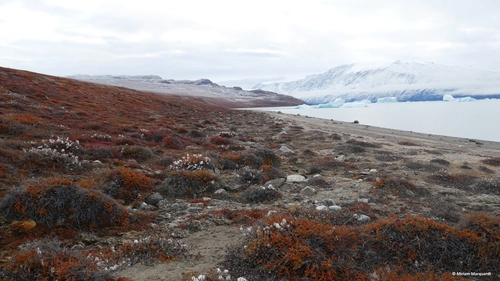
East Greenland, Scoresby Sund - Aurora Borealis, Fly & Sail
21 Sep 2026 - 01 Oct 2026 11 Days / 10 Nights
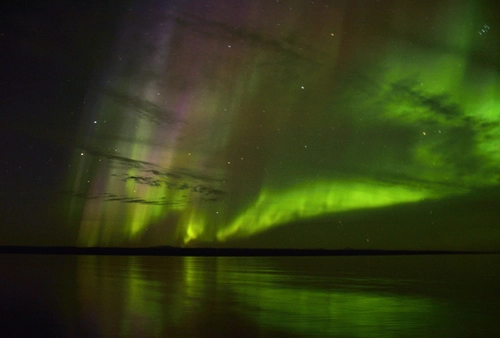
East Greenland, Scoresby Sund - Iceland , Aurora Borealis, Fly & Sail
01 Oct 2026 - 12 Oct 2026 12 Days / 11 Nights
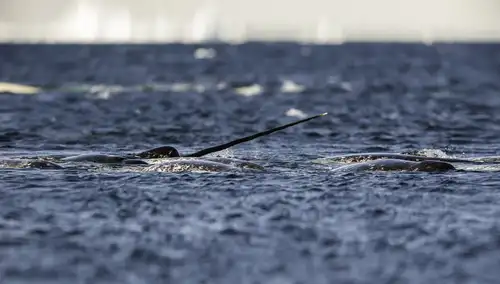
Narwhals: the Aquatic Unicorns of the Arctic
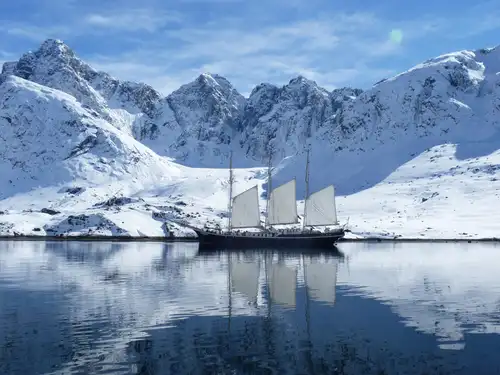
Why You Should Visit Greenland: 11 Things to See, Do, and Explore
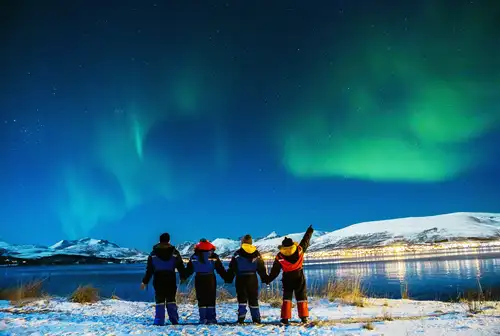
10 Tips for Photographing the Northern Lights
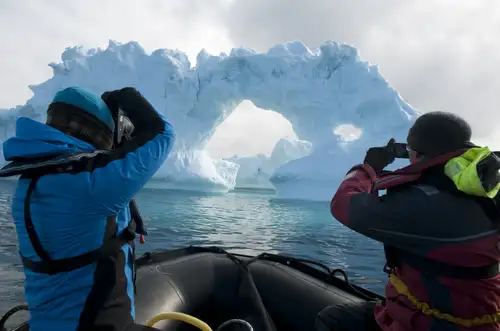
Under the Greenland Ice Sheet
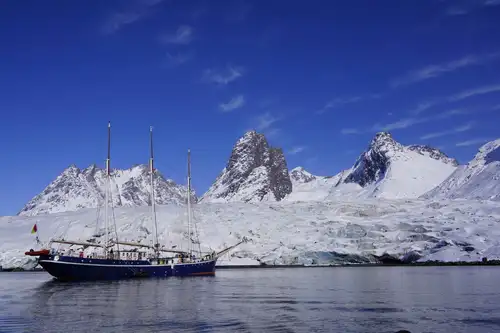
5 Misconceptions You Might Have About Greenland
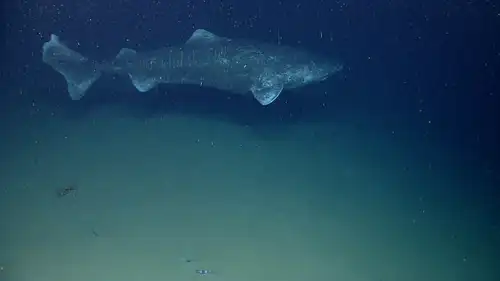
9 Facts about the Greenland Shark
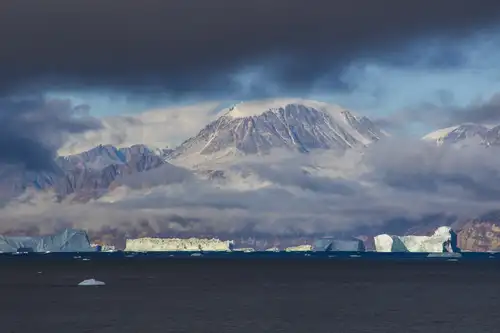
Greenland: East vs. West
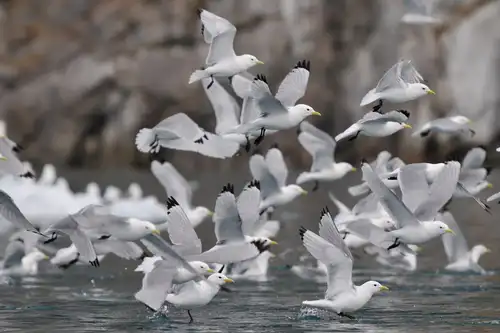
Five Birds You Might See on Your Greenland Cruise
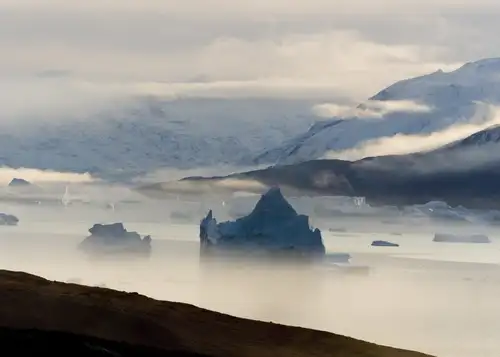
Peaks, Fjords, and Auroras: 14 East Greenland Attractions
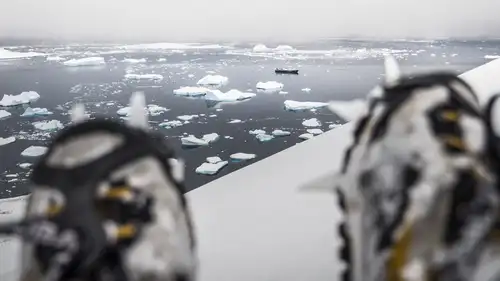
Arctic and Antarctic Basecamp Cruises – Choose Your Own Adventure
Amazing Greenland
Tracking Greenland’s Wildlife from Space
How and When Did Greenland Become Covered in Ice?

The Arctic Hare: Easter Bunny
Arctic on Foot: Hiking and Snowshoeing the Far North
The Mysteries of the Beluga Whale
8 Scientific Wonders of the Arctic
Birds of the North: 29 Arctic Birds and Seabirds
Northeast Greenland National Park