Adlie Penguins In The Ross Sea Antarctica - Nexta Expeditions
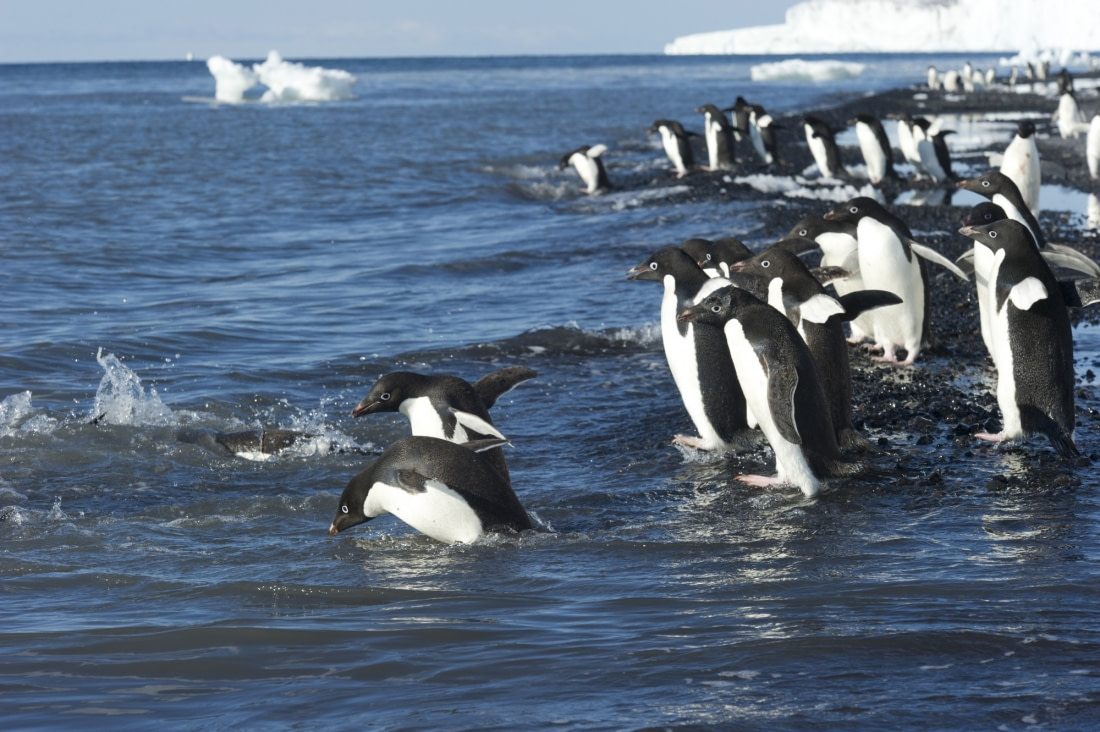
Adélie penguins in the Ross Sea - Antarctica

Adélie penguins in the Ross Sea - Antarctica

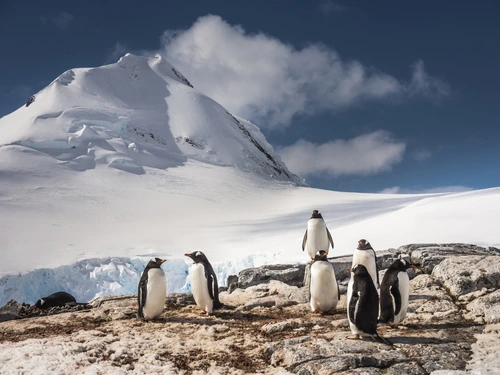
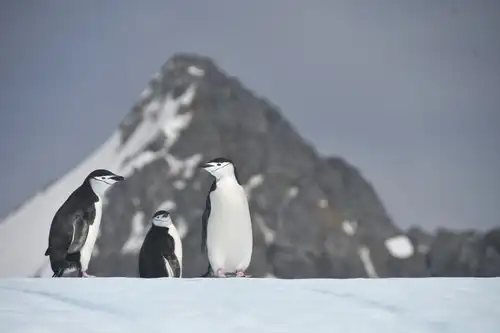
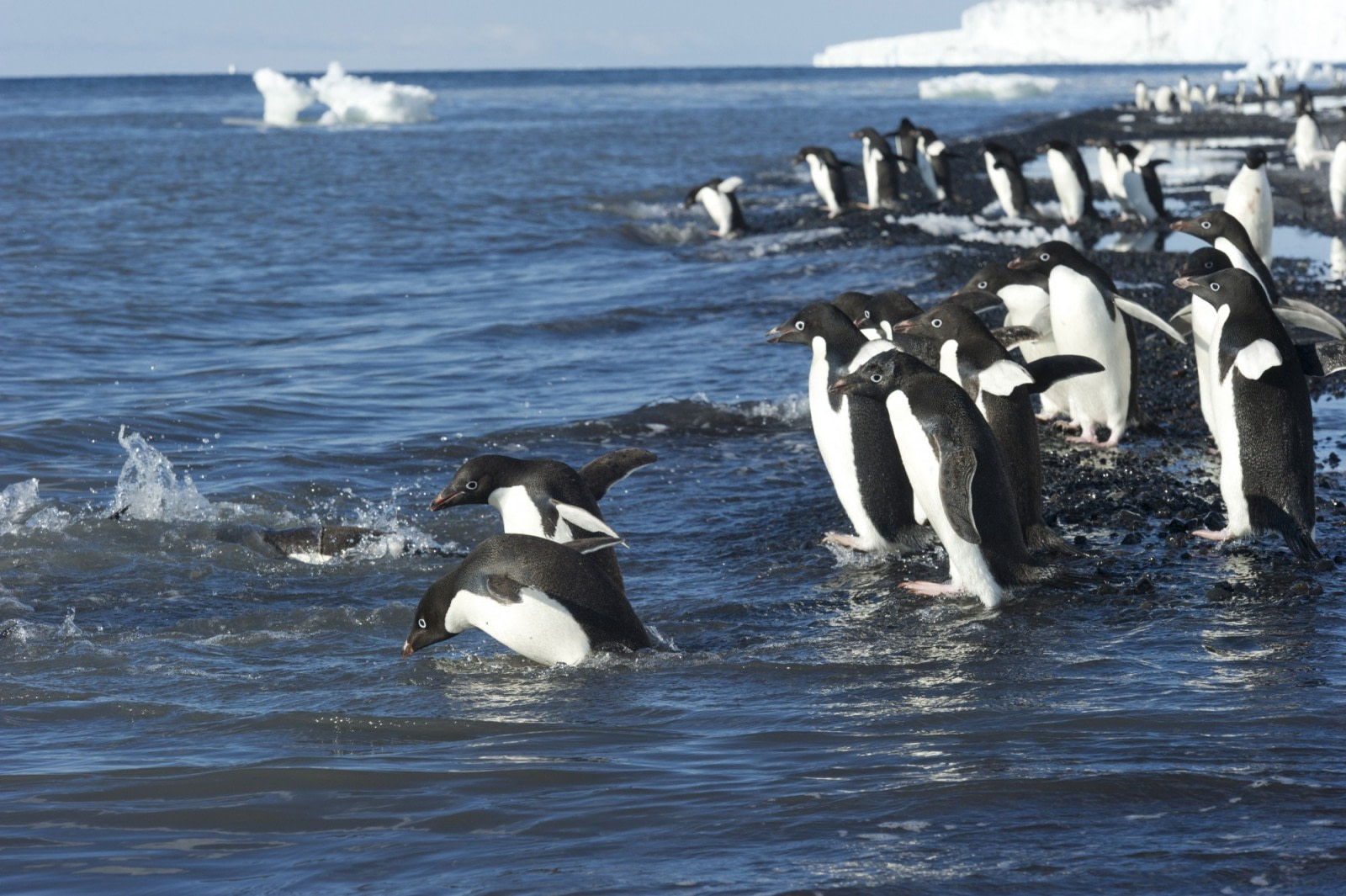
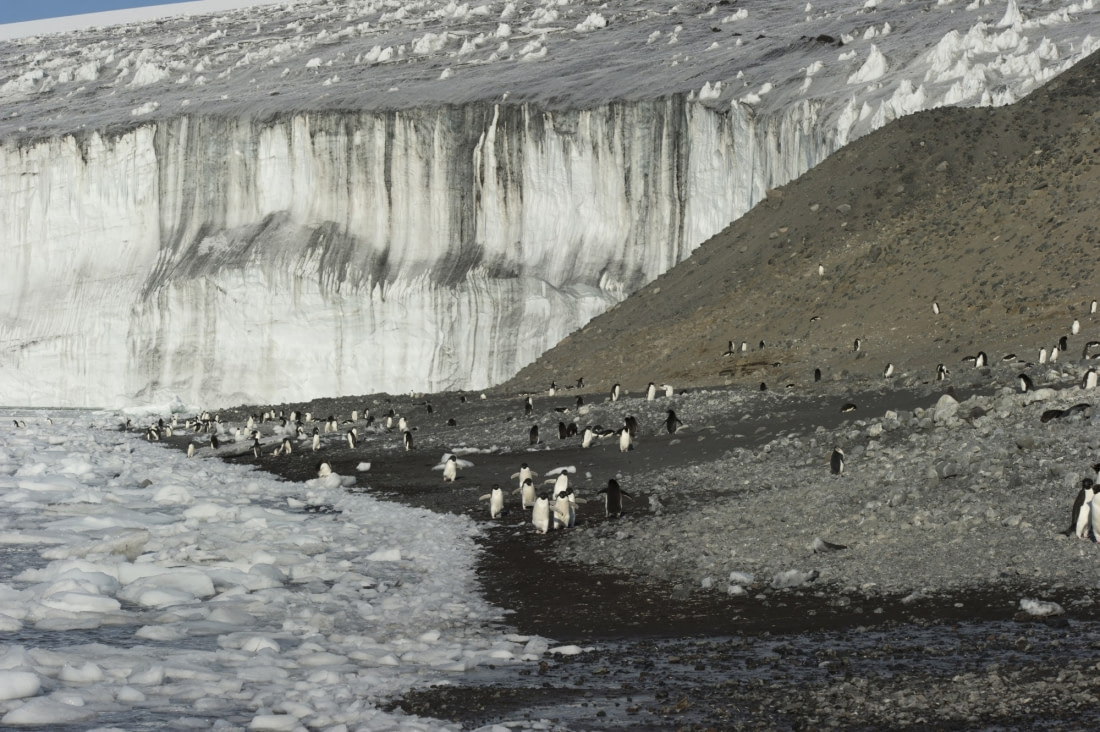
The Adélie penguin population in the Ross Sea has reached its highest numbers in 30 years, with up to a million breeding pairs during the summer. This accounts for about 38 percent of the entire Antarctic Adélie population.

Research by scientists Dr. Phil Lyver and Dr. Mandy Barron, along with Antarctic New Zealand and Bartonk Solutions, has shown that Adélie penguin colonies on Ross Island in the Ross Sea have been growing at an average rate of 6 percent annually since 2001. This is a significant recovery from the 1980s and 1990s when the population was declining by about 2 percent per year.
blog-image

The importance of monitoring Adélie populations

Adélie penguins serve as an indicator species for scientists studying changes in the marine ecosystem due to commercial fishing or climate change. They are particularly useful for monitoring because:

  • They consume krill, a crucial part of the food web. Changes in krill availability can affect not only Adélie penguins but also other predators like seals and whales, leading to fluctuations in their populations.
  • They rely on sea ice, which is expected to be impacted by climate change in terms of extent and thickness.

Additionally, Adélie penguins are easier to monitor compared to other Antarctic predators. They breed during the summer, making them accessible during 24-hour daylight, and they return to the same breeding sites on land each year, unlike whales and most seals that breed at sea or on pack ice.

How to count Adélie penguins

Scientists monitor Adélie populations by studying the reproductive and foraging activities of penguins at three colonies on Ross Island:

  • Cape Royds with an estimated 3,500 breeding pairs
  • Cape Bird with an estimated 60,000 breeding pairs
  • Cape Crozier with around 150,000 breeding pairs

Aerial counts of Adélie penguins

Since 1981, scientists have been counting Adélie penguins through aerial reconnaissance photography from helicopters or C130 Hercules aircraft. This is done in late November or early December to coincide with the incubation phase of breeding, allowing for accurate counts of breeding pairs and establishing baseline data on population trends.

Adélie penguins nest in large colonies, leading to competition for breeding space, food, and partners. These social factors, combined with physical factors like food availability, determine breeding success.

To measure social impacts, scientists fit individual penguins with metal bands on their left flippers. Each band has a unique number that can be read from a distance, allowing scientists to track individual penguins and study their survival, lifespan, breeding habits, and migration patterns.

Breeding success is also measured by sampling the condition of chicks. Chicks are weighed and measured to calculate a condition index, which helps compare chick health across different colonies and years.

Measuring Adélie foraging efforts

The study also examines parental foraging efforts by fencing off a group of 50 breeding pairs. The only way in or out of this area is over an electronic weighbridge. Each penguin has a small tag injected under the skin around the neck, acting like a barcode.

As penguins cross the weighbridge, sensors read the tag, weigh the bird, and record the direction of travel. This data helps scientists understand how long the birds spend at sea, how much food they bring back, and any differences in foraging behavior between males and females.
blog-image

In addition to tags, scientists use time depth recorders, satellite tags, and transmitters to study penguin behavior at sea. These devices are temporarily attached to the penguins' feathers and emit electronic pulses, allowing researchers to track their movements and activities.

Signals from these devices help determine specific behaviors, such as diving, resting on ice, or swimming. Location data is obtained through triangulation, providing insights into the size of foraging areas, overlap with adjacent colonies, and distance to feeding grounds.

Scientists are investigating what drives annual variations and increases in colony size. Adélie penguins thrive in areas with around 15 percent sea-ice coverage, which provides resting spots without limiting access to open water for foraging.

With rising sea temperatures, there is concern that around 75 percent of Adélie penguin colonies (70 percent of the breeding population) in Antarctica may decline or disappear by 2050. However, Ross Island colonies are located south of 70°S, potentially offering some protection from these changes.


Blog
go-leftgo-right

10 Tips for Photographing the Northern Lights - Nexta Expeditions
Blog

10 Tips for Photographing the Northern Lights

The northern lights, also known as the aurora borealis, offer some of the most breathtaking photographic opportunities in the Arctic. However, capturing this stunning phenomenon requires more than just luck. To take your best northern lights photos, it's helpful to understand some key aspects of aurora-specific photography.
First to the North Pole: Five Failed but Brave Expeditions - Nexta Expeditions
Blog

First to the North Pole: Five Failed but Brave Expeditions

Being first to reach the North Pole was seen by several nations as economically invaluable due to the open polar sea said to encircle it, but for the explorers themselves it was also a gloriously adventurous grab for immortality.
Antarctica’s Hourglass Dolphin - Nexta Expeditions
Blog

Antarctica’s Hourglass Dolphin

Though hourglass dolphins are especially rare, they’re actually not a threatened or endangered species.
Eight Ultimate Antarctica Adventures - Nexta Expeditions
Blog

Eight Ultimate Antarctica Adventures

Antarctica has adventure in its bones. Long before most travelers even reach the continent, they have to cross the Drake Passage, an oft-tumultuous waterway considered by many a hallmark of high adventure in itself. Once you do reach the Antarctic shores, the variations of landscape and wildlife are as multiform as the activities you can pursue there. While not all of these activities can or should be shoehorned into a single article, this piece will give you a survey of the top eight. Like everything in the polar regions, these activities are subject to weather conditions – and your own threshold for adventure.
Imperial Antarctica: the Snow Hill Emperor Penguins - Nexta Expeditions
Blog

Imperial Antarctica: the Snow Hill Emperor Penguins

Recently, a rare achievement was made by visiting Antarctica’s northernmost emperor penguin colony on Snow Hill Island. Typically surrounded by impassable pack ice, Snow Hill is a notoriously difficult destination in the Weddell Sea cruise itinerary, only accessible using helicopters carried especially for this purpose.
Scenes from St. Andrews Bay:  12 Pics of Penguins, Seals, and More - Nexta Expeditions
Blog

Scenes from St. Andrews Bay: 12 Pics of Penguins, Seals, and More

If you ever find yourself exploring the breathtaking sub-Antarctic island chain of South Georgia, one of the most captivating spots you'll encounter is the picturesque shoreline of St. Andrews Bay.
The Eight Albatrosses of Antarctica and the Sub-Antarctic - Nexta Expeditions
Blog

The Eight Albatrosses of Antarctica and the Sub-Antarctic

Our guests are typically wildlife enthusiasts, with a particular interest in bird life. While many bird lovers focus on the penguins we encounter, there's a smaller yet equally passionate group that favors the more airborne seabirds. Among this birdwatching subset, the albatross is a species that garners (and deserves) significant attention.
Not Eskimos: 10 Enlightening Facts About the Inuit - Nexta Expeditions
Blog

Not Eskimos: 10 Enlightening Facts About the Inuit

If you are planning to join an Arctic cruise, you might be intrigued by the Inuit culture. To help you gain a deeper understanding of these people, especially if you are considering a trip to Greenland, here are 10 fascinating facts about the Inuit that everyone should know.
Bouvet Island: The Most Remote Island in the World - Nexta Expeditions
Blog

Bouvet Island: The Most Remote Island in the World

On January 1, 1739, French Commander Jean-Baptiste Charles Bouvet de Lozier made an extraordinary discovery: a volcanic island so remote that it lies 2,600 km (1,600 miles) from the nearest inhabited land.
Life in the Polar Regions - Nexta Expeditions
Blog

Life in the Polar Regions

Polar bears in the Arctic, penguins in Antarctica.
Birds of the South: 33 Antarctic Birds and Seabirds - Nexta Expeditions
Blog

Birds of the South: 33 Antarctic Birds and Seabirds

Of the many compelling reasons people travel to Antarctica and the sub-Antarctic, bird life is among the most beloved.
Franz Josef Land Sites, Species, and Experiences - Nexta Expeditions
Blog

Franz Josef Land Sites, Species, and Experiences

The archipelago of Franz Josef Land is to Russia what Svalbard is to Norway: Both island groups offer excellent Arctic scenery, adventurous outdoor activities, and a good chance of seeing iconic species like polar bears and walruses - alongside a wide range of marine mammals and seabirds.
Five Reasons to Love St. Helena - Nexta Expeditions
Blog

Five Reasons to Love St. Helena

Being one of the most remote islands on Earth gives St. Helena a unique allure. Named after a Roman empress and the mother of Constantine the Great, this island also holds the distinction of being Napoleon’s final place of exile, making it a fascinating topic of conversation.
Science of the Ross Ice Shelf - Nexta Expeditions
Blog

Science of the Ross Ice Shelf

Antarctica’s Ross Ice Shelf is vast, spanning 487,000 sq. km – comparable to the size of France – with a thickness that varies from a few hundred meters near the sea to over 1,200 meters away from the floating edge. The edge along the Ross Sea forms a towering ice wall, rising up to 50 meters above the water, with most of the ice submerged below the waterline.
A visit to the fascinating island of Jan Mayen - Nexta Expeditions
Blog

A visit to the fascinating island of Jan Mayen

After exploring the remote island of Fair Isle, our Atlantic Odyssey voyage once more turned its attentions northwards and left the outer extremities of the UK behind. Our destination was Jan Mayen, a volcanic island situated on the mid-Atlantic ridge just north of 71° (about 550 kilometers north of Iceland and 450 kilometers east of Greenland).
Adélie Penguins: the Little People of the Antarctic - Nexta Expeditions
Blog

Adélie Penguins: the Little People of the Antarctic

Described as “an object of endless pleasure and amusement” by Apsley Cherry-Garrard, survivor of Robert Falcon Scott’s ill-fated Terra Nova expedition to the South Pole, the Adélie penguin stands with the regal and iconic emperor penguin as one of only two penguin species found on mainland Antarctica.
Shackleton’s Long-Lost Endurance Discovered in Antarctica - Nexta Expeditions
Blog

Shackleton’s Long-Lost Endurance Discovered in Antarctica

A discovery expedition launched by the Falklands Maritime Heritage Trust achieved a long-awaited mission when it located Anglo-Irish explorer Ernest Shackleton’s lost ship Endurance last Saturday (March 5).
Northeast Greenland National Park - Nexta Expeditions
Blog

Northeast Greenland National Park

Northeast Greenland National Park is the world’s largest national park and the ninth largest protected area on Earth. It should come as little surprise, then, that it’s also bigger than most countries, covering an impressive 972,000 square km (375,300 square miles).
The South Georgia Seven: Hikes, Fjords, Whales, & Penguins - Nexta Expeditions
Blog

The South Georgia Seven: Hikes, Fjords, Whales, & Penguins

Few places encapsulate such a staggeringly rich assortment of sub-Antarctic scenery, wildlife, and outing opportunities as South Georgia.
The Most Enchanting Antarctica Cruise Islands - Nexta Expeditions
Blog

The Most Enchanting Antarctica Cruise Islands

Whether it’s Greenland in the Arctic or Snow Hill Island in Antarctica, the bulk of our polar expeditions take place around, between, and upon islands.