Fierce And Feathered The Skuas Of Antarctica - Nexta Expeditions
Fierce and Feathered: the Skuas of Antarctica

Fierce and Feathered: the Skuas of Antarctica

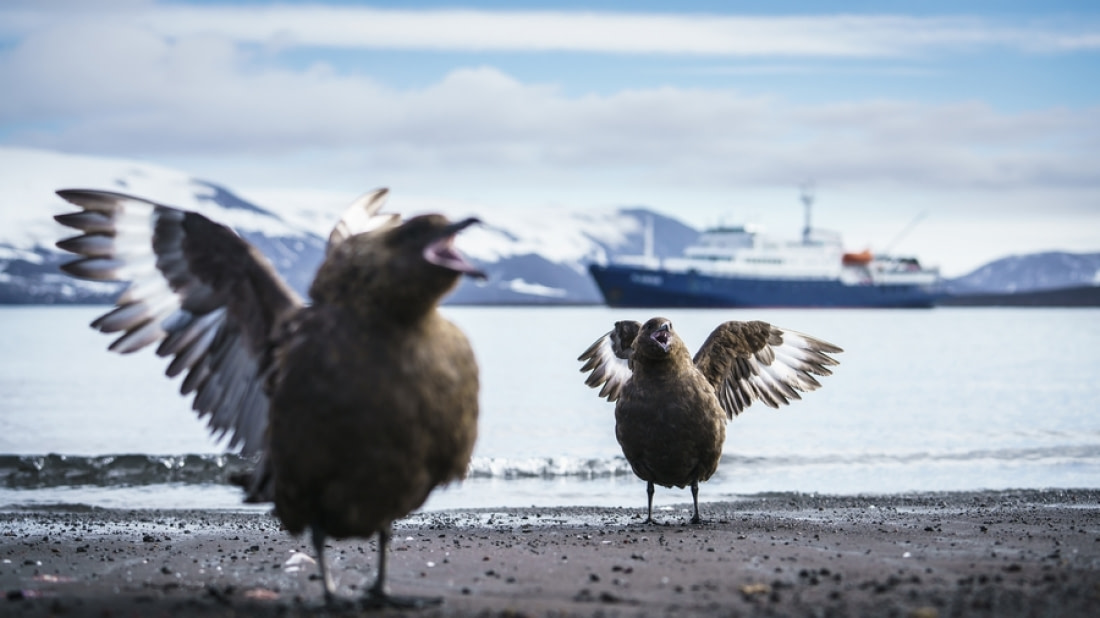
At first glance, the skuas you encounter in Antarctica may appear to be merely darker-feathered seagulls. But looks can be deceiving.

In fact, skuas are one of Antarctica's top avian predators. There are two skua species in Antarctica, the brown skua and south polar skua. Both patrol King George Island in the South Shetlands as well as the nearby Antarctic Peninsula in search of prey.

And hapless biologists.
blog-image

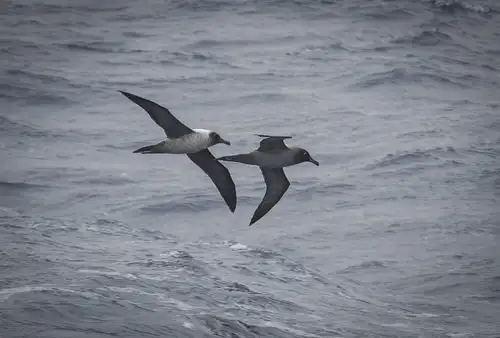
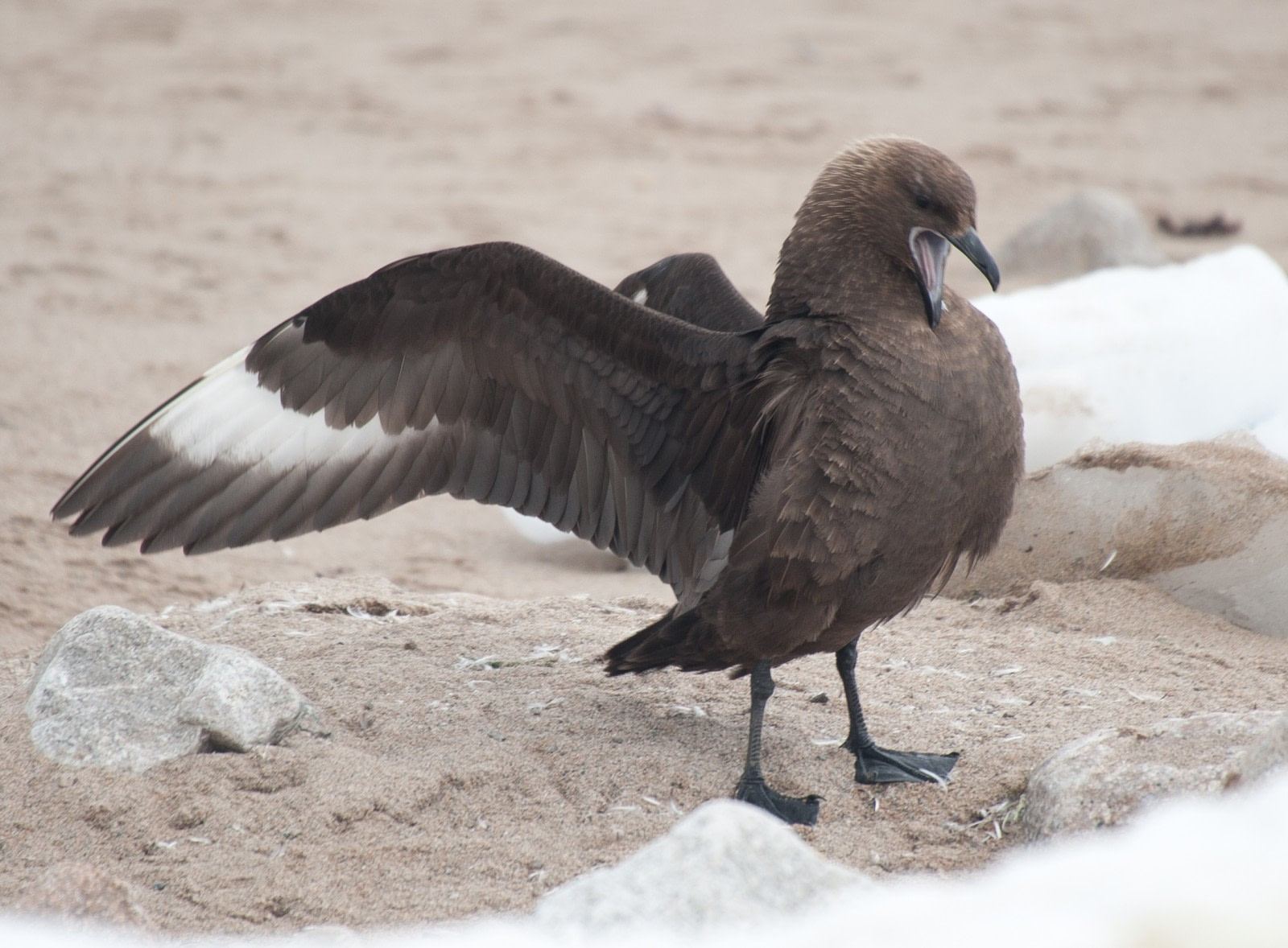
Antarctica's two skuas: brown & south polar

Brown skuas are the larger of the two species and have brown bodies, sharp falcon-like bills, and tiny claws at the end of their webbed feet.

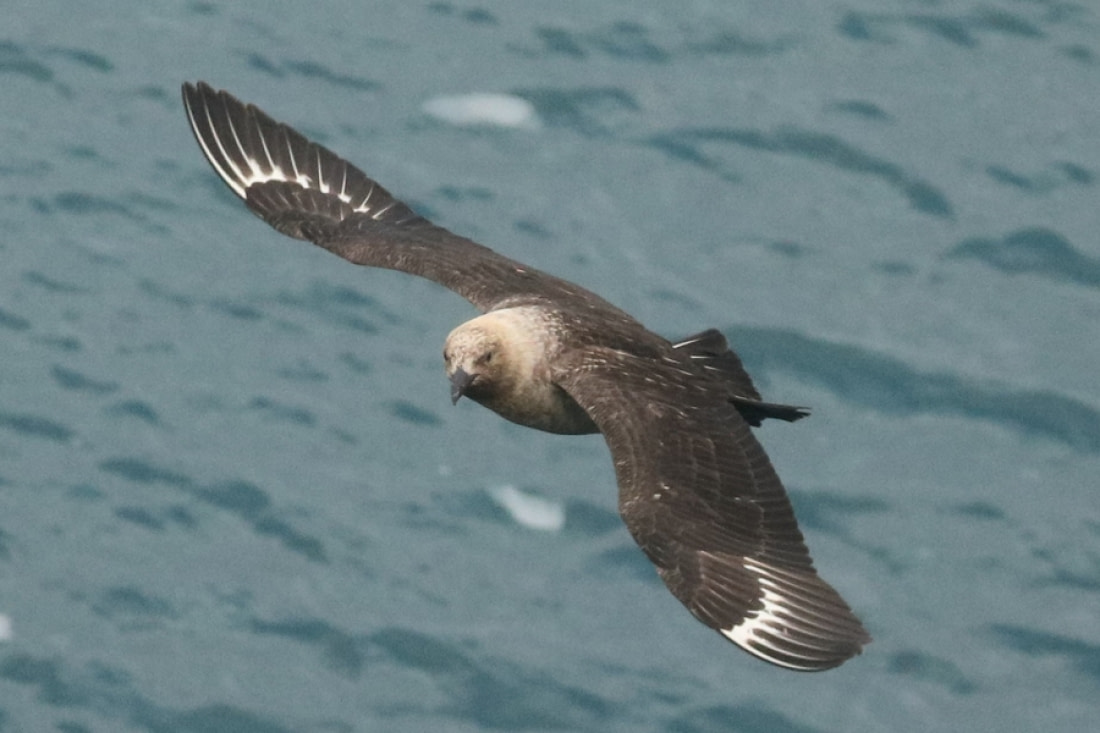
South polar skuas, the smaller of the two, have distinctive tan highlights to their feathers and tend to be more reserved than brown skuas.

Antarctica's South Shetland Islands are prime gold real estate for both skua species during the breeding season. The island chain's plentiful penguin populations, proximity to the ocean, and rocky nesting grounds make for an excellent breeding spot.

From October to March, scientists monitor skuas on a weekly basis, tracking egg laying, reading leg bands, and monitoring chicks.
blog-image

Establishing Antarctic skua territories

Brown skuas and south polar skuas share common breeding rituals.

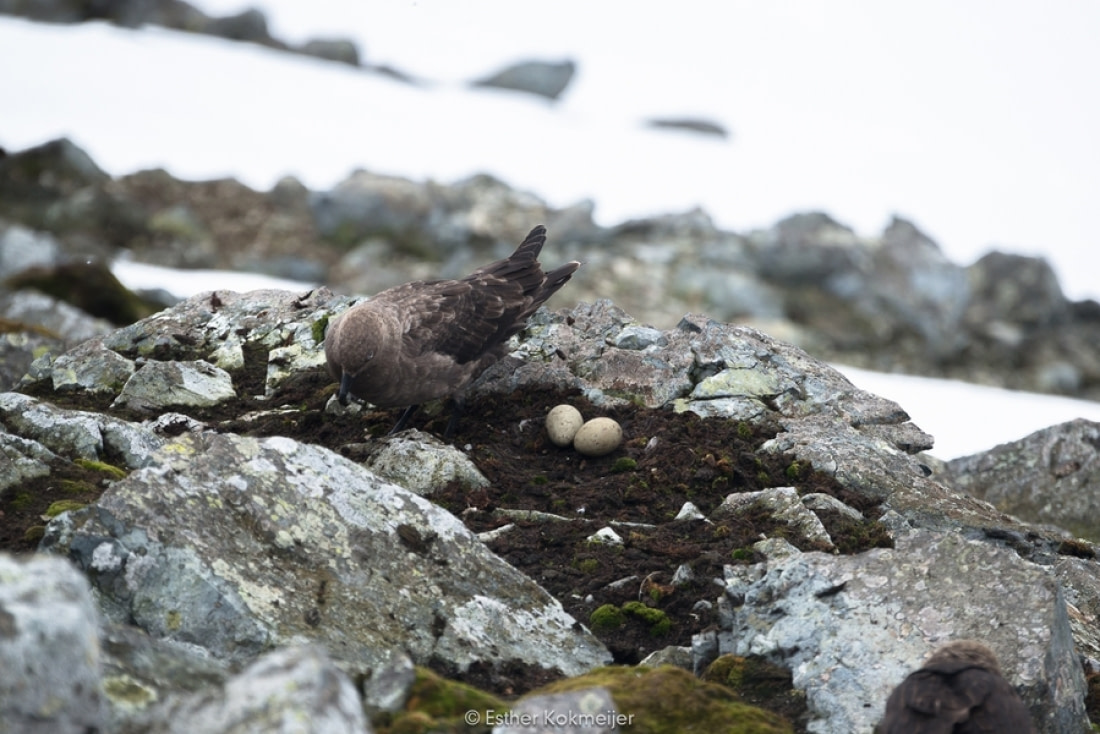
Each skua pair has its own unique Antarctic breeding territory that they occupy during the breeding season. Once a breeding pair has established its territory, the pair scrapes a small depression in the ground in which to lay eggs.

Afterward, the skuas take turns incubating the eggs. One skua is in charge of sitting on the nest, the other looks for fish or cruises penguin colonies in search of prey.

The prime concern to skua eggs is that a rogue skua may threaten them, which can result in territory shifts during the breeding season.
blog-image

Researching skua whereabouts in Antarctica

Satellite-transmitting tags have been attached to skuas to monitor how far they travel for food and how long these trips last.

This information helps scientists understand the ecology of skuas and conserve their populations in Antarctica.

The GLS tags (global location sensing) can detect when a skuas have landed in water, when they are in flight, and when they’re on land. The information that is stored on the tags can be rendered into a detailed map to show their exact movements.

But first the tags must be placed on the skuas, which means the scientists have to trap them.
blog-image

The sharp intelligence of these Antarctic birds does not make this easy. A monofilament noose is the best tool, coupled with a net for backup.

The monofilament noose is placed on the ground within skua territory and is surrounded by raw meat to attract the birds.

When a skua's legs looks like it is inside the noose, the line is vigorously pulled and the skua is trapped. The GLS tag is placed on the skua's leg, then the bird is released. Two weeks later, it’s time to download all of the information that has been accumulating.

This means the scientists now have to recapture the skua. Lucky them.

Sometimes the skuas get the better of the scientists, flying off with the transmitter. Luckily the transmitter is harmless to the bird and eventually falls off.
blog-image

A skua never forgets

As mentioned, skuas are highly intelligent and known to launch defensive measures against researchers they don't like.

Researchers who repeatedly wear the same clothing, backpack, or even sunglasses can be identified and attacked on their way to nesting sites.

These skua attacks are far from pleasant.

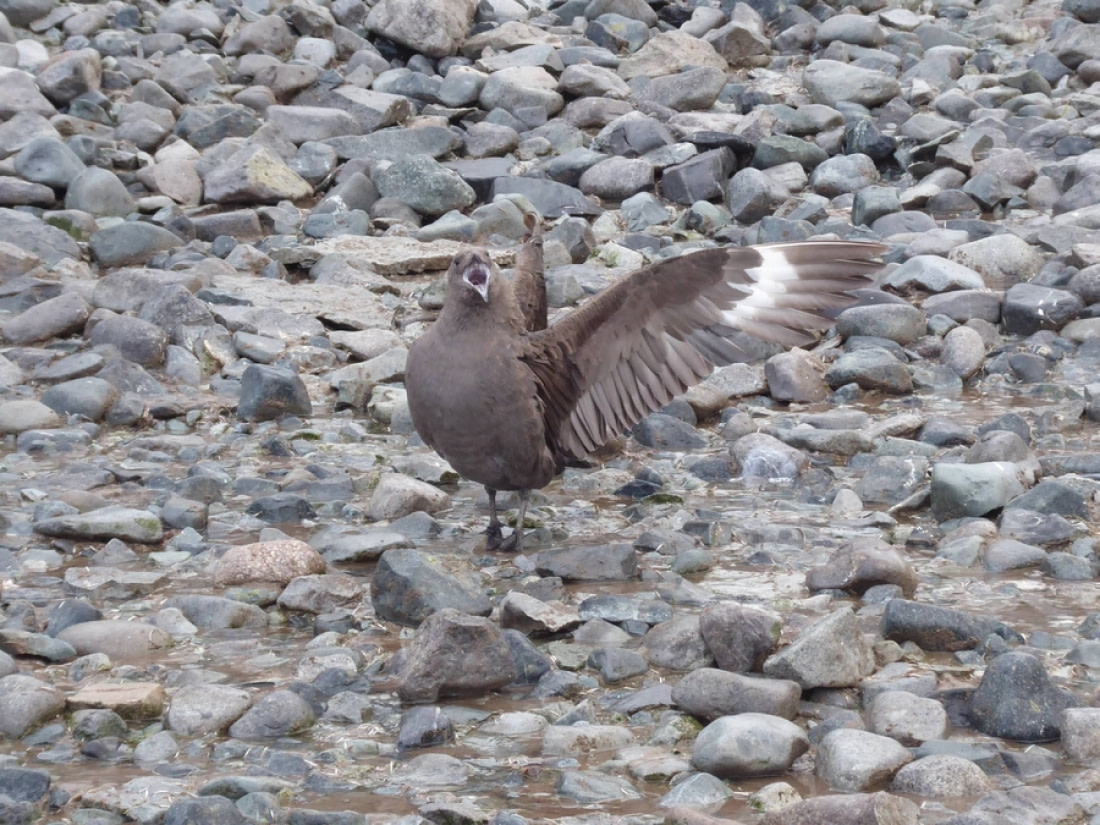
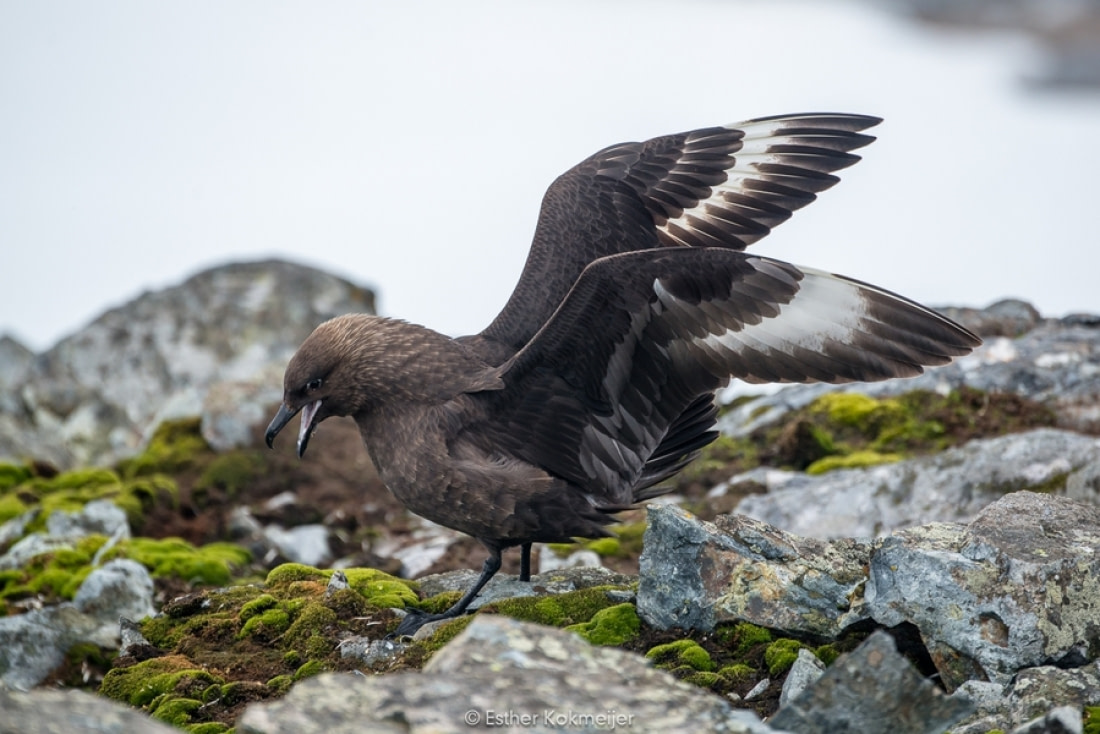
The skua parent first makes "alarm calls," loud vocalizations that alert the other parent to an intruder. Together they then gang up on the intruder, pecking at the head and face, grabbing clothing, and dive-bombing.

The dive-bombing can be the most painful, as skuas aim for the head while simultaneously screaming at the top of their lungs.

In Antarctica, vengeance knows no mercy.
blog-image

When the skua chicks arrive

While skua eggs are still incubating, scientists record their length, width, and weight. Egg size and weight can be an indication of parental health.

Scientists keep track of how long the skua egg is incubated, and based on when it was laid they can predict the hatch date within two to three days.

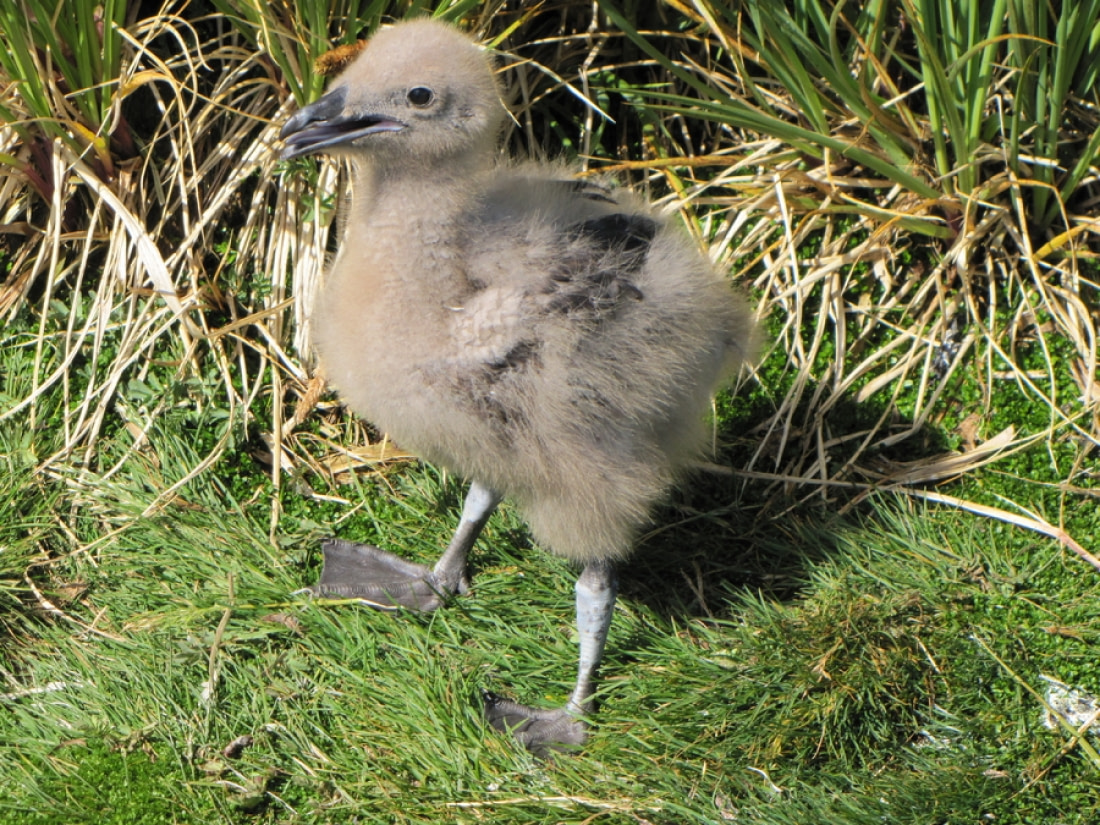
When chicks arrive, scientists place a metal band with a unique numerical code on their legs that they wear the rest of their lives. With any luck, skua chicks that are banded will return to their hatching grounds the following year and rear chicks of their own.
blog-image

Antarctica's seasonal skua problems

The Antarctic ecosystem is a finely tuned apparatus.

What keeps the apparatus going on the South Shetlands and Antarctic Peninsula is krill and sea ice. As the western Antarctic Peninsula is experiencing an increase in the melting of sea ice, krill are left with nowhere to aggregate and breed.

Adélie, gentoo and chinstrap penguins rely on krill, timing their breeding schedules with the emergence of krill.

If penguins start laying their eggs at a different time every year to better line up their own breeding with krill breeding, this may mean bad news for skuas.

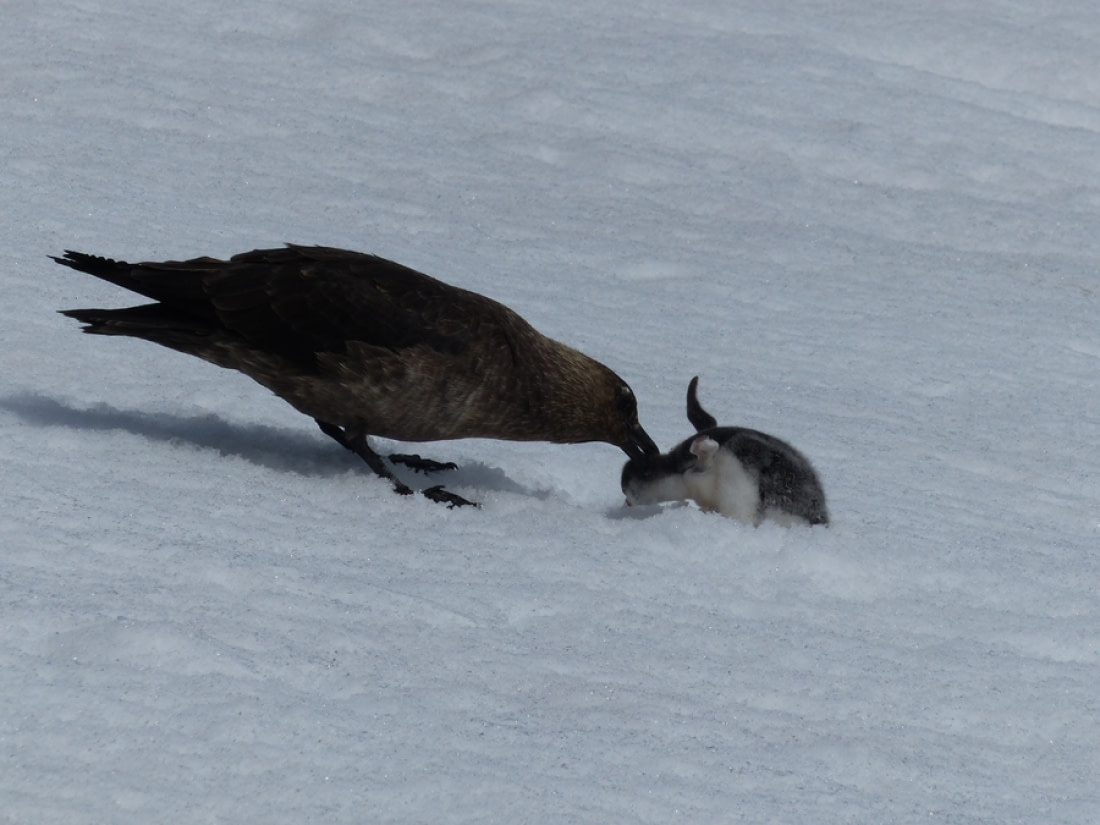
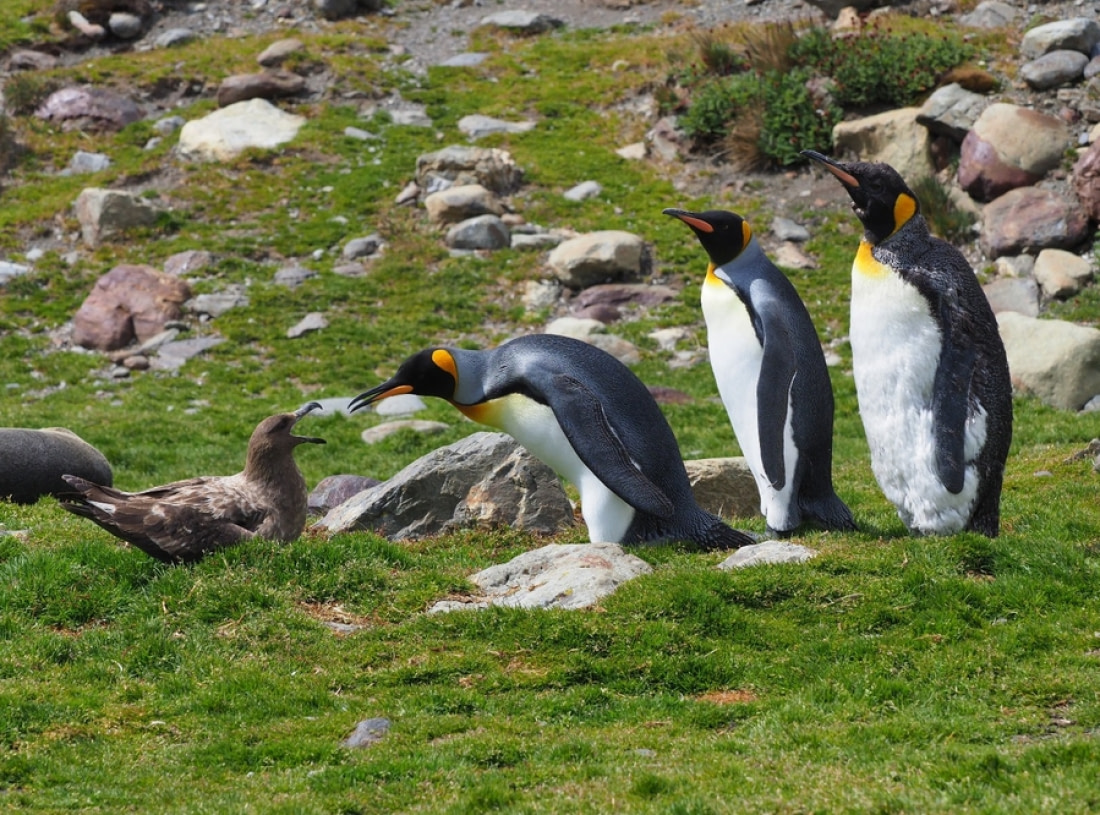
The reason for this is, skuas rely heavily on penguin eggs and chicks before laying their own eggs. If breeding cycles are out of synch, this can result in a decrease in resources for skuas.

On the South Shetland Islands, the ecological impact has resulted in an increase in how long skuas have to spend looking for food. This means more time spent away from chicks, who fall prey to other hungry skuas in the same predicament.
blog-image

Where you can see skuas in Antarctica

An Antarctica trip is always an adventure, yielding spectacular insights into the mysteries of the Southern Hemisphere.

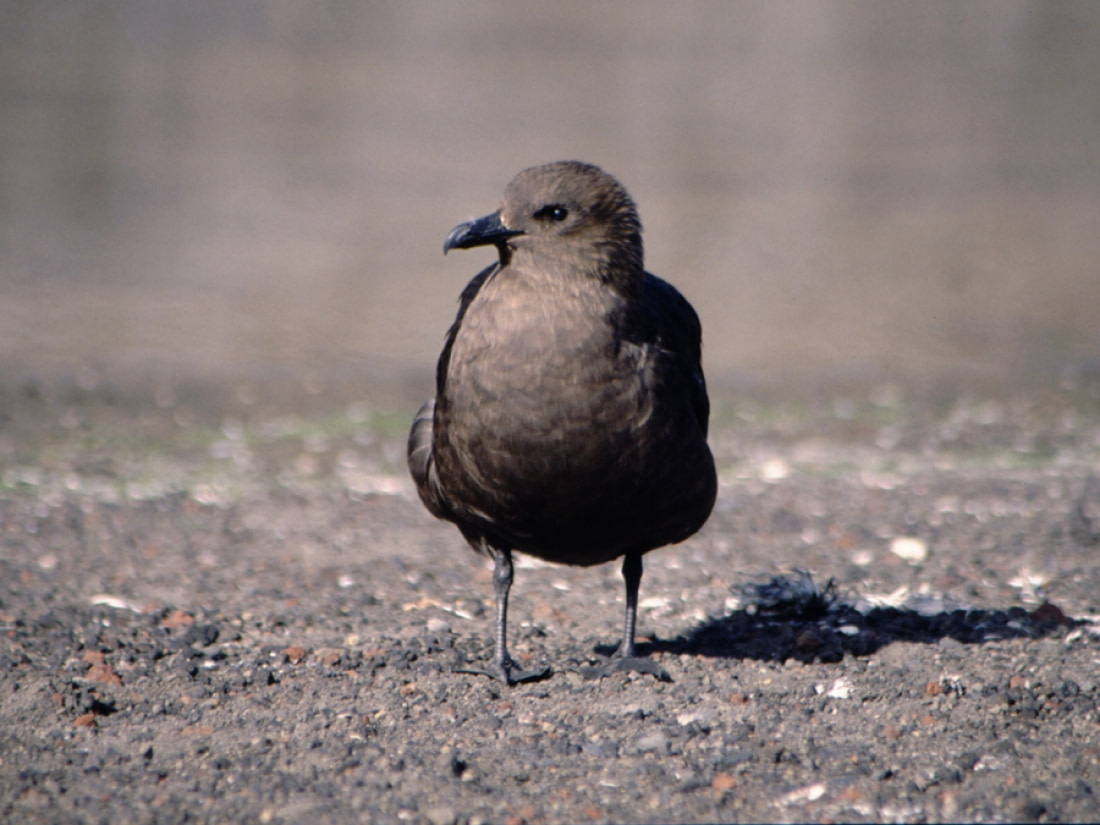
But if skuas in particular have piqued your interest, an Antarctic Peninsula cruise is a great way to encounter both species. Their distinctive behavior and general boldness set them apart from most other birds in Antarctica.

Just don't go near their nests. For your own protection.
blog-image

Blog
go-leftgo-right

10 Books and Films To Prepare for your Antarctica cruise - Nexta Expeditions
Blog

10 Books and Films To Prepare for your Antarctica cruise

The deep sea remains one of the most mysterious and least explored regions on our planet. With its vast, dark expanses and unique ecosystems, it continues to captivate scientists and adventurers alike.
Eight Ultimate Antarctica Adventures - Nexta Expeditions
Blog

Eight Ultimate Antarctica Adventures

Antarctica has adventure in its bones. Long before most travelers even reach the continent, they have to cross the Drake Passage, an oft-tumultuous waterway considered by many a hallmark of high adventure in itself. Once you do reach the Antarctic shores, the variations of landscape and wildlife are as multiform as the activities you can pursue there. While not all of these activities can or should be shoehorned into a single article, this piece will give you a survey of the top eight. Like everything in the polar regions, these activities are subject to weather conditions – and your own threshold for adventure.
Science of the Ross Ice Shelf - Nexta Expeditions
Blog

Science of the Ross Ice Shelf

Antarctica’s Ross Ice Shelf is vast, spanning 487,000 sq. km – comparable to the size of France – with a thickness that varies from a few hundred meters near the sea to over 1,200 meters away from the floating edge. The edge along the Ross Sea forms a towering ice wall, rising up to 50 meters above the water, with most of the ice submerged below the waterline.
Orcas of the Polar Seas - Nexta Expeditions
Blog

Orcas of the Polar Seas

The orca, also known as the killer whale, is the apex marine predator and possibly the most widespread vertebrate on the planet. While they are most numerous in colder regions like Antarctica, Norway, and Alaska, they also inhabit tropical and subtropical seas. Here, we’ll explore some essential orca facts you might want to know before encountering them in person, concluding with a fantastic video showcasing our top ten favorite killer whale facts.
Life in the Polar Regions - Nexta Expeditions
Blog

Life in the Polar Regions

Polar bears in the Arctic, penguins in Antarctica.
Antarctic Explorer’s Voyage - Nexta Expeditions
Blog

Antarctic Explorer’s Voyage

There’s off the beaten track, and then there’s really off the beaten track.
The first race to the South Pole in 50 years - Nexta Expeditions
Blog

The first race to the South Pole in 50 years

Before the South Pole could be reached, the question was what exactly lay at the southern ends of Earth. The concept of Terra Australis Incognita, an unknown continent, was first introduced by Aristotle, who reasoned that a southern landmass must exist to ‘balance’ the known lands in the northern hemisphere.
The Plants of Antarctica - Nexta Expeditions
Blog

The Plants of Antarctica

Surviving in Antarctica is a monumental challenge for any plant. The extreme cold, limited sunlight, scarce moisture, poor soil, and short growing season make it nearly impossible for most flora to thrive. Yet, some plants have adapted to these harsh conditions and have managed to flourish where others cannot.
Port Pastimes: 7 Fun Things to Do in Longyearbyen - Nexta Expeditions
Blog

Port Pastimes: 7 Fun Things to Do in Longyearbyen

Waiting in port for an Arctic expedition cruise to begin might seem a little like waiting for water to boil or coffee to brew or a Seinfeld reunion to materialize: Time seems to defy its own laws, life slows to a crawl, and you begin to wonder if it’s really going to be worth it.
The Wonderful Weddell Sea: Places, Pics, and Impressions - Nexta Expeditions
Blog

The Wonderful Weddell Sea: Places, Pics, and Impressions

When we talk about Antarctica, it’s easy to slip into familiar words: amazing, astounding, extraordinary, exceptional. And though most Antarctic locations more than deserve these descriptions, some deserve them more than others.
Baleen Whales – The Gentle Giants of the Ocean - Nexta Expeditions
Blog

Baleen Whales – The Gentle Giants of the Ocean

They are the largest animals on Earth, yet they thrive on some of the tiniest creatures. These giants can reach lengths of 30 meters (90 feet), but it is the microscopic zooplankton, krill, and small fish that sustain them. These are the baleen whales. Unlike toothed whales, baleen whales lack teeth. Instead, they use plates of baleen in their mouths to trap and consume their tiny prey.
Camping in Antarctica: a True Expedition Experience - Nexta Expeditions
Blog

Camping in Antarctica: a True Expedition Experience

We often think of camping as a summer activity, filled with warm nights, campfire dinners, and serene mountain lakes. However, there's a whole other world of camping to explore.
The Seasons of Antarctica: When to Visit and Why - Nexta Expeditions
Blog

The Seasons of Antarctica: When to Visit and Why

You’ve decided to book your dream trip – an adventurous Antarctica cruise that will give you a winning chance to see otherworldly environments, encounter exotic wildlife, and take part in activities that will spoil your inner explorer like nothing else.
Polar Diving: A Supreme Underwater Adventure - Nexta Expeditions
Blog

Polar Diving: A Supreme Underwater Adventure

Most scuba divers are drawn to warm waters and tropical reefs, and it's easy to see why. However, even the most thrilling experiences can become repetitive if done too often.
Inside the Svalbard Global Seed Vault - Nexta Expeditions
Blog

Inside the Svalbard Global Seed Vault

Literature, cinema, and even video games often present us with various global disaster scenarios. These typically involve devastating wars, catastrophic natural events, or widespread pandemics that leave survivors scavenging for food and supplies amidst hordes of zombies.
Earth vs. Mars: Polar Regions Compared - Nexta Expeditions
Blog

Earth vs. Mars: Polar Regions Compared

It’s well-known that Mars, like Earth, has its own polar regions, often referred to as the Martian ice caps. These regions, similar to Earth's, are situated at the north and south poles and experience much lower temperatures compared to the areas in-between.
Secrets of the Snowy Owl: Habitat, Adaptations, and Other Facts - Nexta Expeditions
Blog

Secrets of the Snowy Owl: Habitat, Adaptations, and Other Facts

The snowy owl (Bubo scandiacus), also known as the great white owl or Arctic owl, is one of the most distinctive bird species on the planet. While you won’t find them in all areas of the Arctic – they don’t exist in Svalbard due to the lack of lemmings – snowy owls are seen in the polar regions of Eurasia and North America and are a potential visitor during Greenland cruises. The binomial species name, “scandiacus,” is derived from Scandinavia, as this is where the bird was first discovered. The snowy owl is the official bird of Quebec, and they are a must-see for countless bird watchers and naturalists.
Arctic and Antarctic Basecamp Cruises – Choose Your Own Adventure - Nexta Expeditions
Blog

Arctic and Antarctic Basecamp Cruises – Choose Your Own Adventure

There’s an astonishing variety of activities to choose from when planning an Arctic trip or Antarctic cruise, which can be a bit overwhelming. How do you choose just one voyage over another when you want to experience everything? Happily, you don’t have to give up one activity for another. Basecamp cruises have you covered.
Diving in Antarctica: The Ultimate Underwater Experience - Nexta Expeditions
Blog

Diving in Antarctica: The Ultimate Underwater Experience

Ice diving offers an extraordinary experience on an Antarctica diving trip. The dive sites are teeming with a unique array of colorful marine life, including penguins and leopard seals, which are exclusive to this region.
The bowhead whale, whaling about the Arctic - Nexta Expeditions
Blog

The bowhead whale, whaling about the Arctic

The bowhead whale typically resides near pack ice, often in shallow waters. These whales are commonly found north of Europe, between Canada and Greenland, in the Hudson Bay area, the Okhotsk Sea, and the Bering, Chukchi, and Beaufort seas. In these regions, they filter food through their large baleen plates. Bowheads are known to open their large mouths and graze along the surface, in the water column, or on the sea floor.