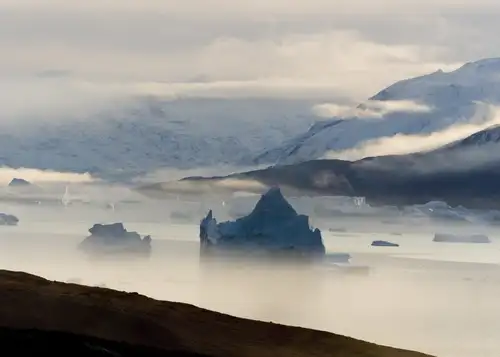


Kongsfjorden is a glacial fjord in Svalbard that hosts a diverse array of flora and fauna.
Due to its open entrance without a sill, Kongsfjorden experiences an influx of Atlantic waters, making it a sub-Arctic environment rather than a purely Arctic one.
This unique positioning places Kongsfjorden at the intersection of the Atlantic and Arctic biogeographic zones. The biodiversity and animal populations here are significantly influenced by the mix of cooler and warmer waters.

Kongsfjorden's rich photoplankton environment
Researchers have observed a distinct seasonal growth pattern in photoplankton within Kongsfjorden.
During the polar winter, photoplankton production halts, but in spring, over 60 photoplankton taxa emerge, leading to a bloom that aligns with similar blooms along the northern Norwegian coast. This suggests a strong influence of light or day length on photoplankton growth in Kongsfjorden.
Summer in Kongsfjorden is marked by a diverse range of photoplankton communities, with more than 130 taxa recorded.

Shrimp and fish, mammals and birds
The most common shrimp species in Kongsfjorden is Pandalus borealis, while the polar cod and capelin are the most prevalent fish.
Kongsfjorden also supports a variety of mammals, including seals, walruses, whales, and polar bears. Seabirds such as fulmars, marine ducks, gulls, and some shorebirds are also found here.
The bird population in Kongsfjorden fluctuates with the seasons, peaking in spring and summer due to migratory species passing through.

The variable food supply of Kongsfjorden
Food availability in Kongsfjorden changes within and between seasons, affecting the spatial and temporal distribution of top predators.
Retreating ice in spring creates a highly productive area with a significant photoplankton bloom, concentrating prey organisms in the upper water layers and attracting marine mammals and birds.
Once the fast ice melts, glacier fronts become key feeding areas for marine mammals and birds during late summer and early autumn due to the upwelling of zooplankton from freshwater discharges.

Sunbathing ringed seals
Ringed seals, the most abundant Arctic seal, are widespread throughout the circumpolar Arctic and breed in Kongsfjorden. They build lairs in the snow to protect themselves and their young.
Snow depth is crucial for lair construction, and the average depth in Kongsfjorden is only 20 cm (7.9 inches), which is relatively shallow for the Arctic.
The inner fjord area, with glacier ice frozen into the annual ice, is the prime location for ringed seals due to the accumulation of drifting snow, providing adequate depth for lairs.
In March and April, 50 to 100 seal pups are born. As spring arrives, seals rest and sunbathe on the ice surface. By June, adult and young seals spend most of their time in the water during their annual moult.
Currently, there is a high concentration of ringed seals on the remaining sea ice in Kongsfjorden. After moulting, they leave the fjord and move along the coast or northward to the pack ice. Breeding-aged seals return in early winter and maintain holes in the ice as the inner part of Kongsfjorden becomes ice-covered.

Kongsfjorden's water-loving bearded seals
Bearded seals also inhabit Kongsfjorden, preferring the drifting pack ice for breeding. Their large body size protects them from the cold, and their aquatic nature shields them from predators.
These seals are rarely found more than a meter away from the water, and their young can swim and dive within hours of birth.
Bearded seals are found at low densities, with around 25 pups born each year. Pups stay with their mothers for about three to four weeks.
Female bearded seals mate with males that attract them through singing. In June, bearded seals moult and can often be found on land fast ice in clusters.

And let's not forget the walruses
Walruses in Svalbard primarily breed in the Franz Josef Land area. They spend winter on pack ice in the southern and northeastern ranges of Svalbard and closer to Russia.
Walruses are often seen in Kongsfjorden from spring until late summer.

Whales cruising around Kongsfjorden
Beluga whales are frequently sighted in Kongsfjorden, with pods sometimes staying for days from early spring through summer.
Minke whales are also seen in the outer areas of Kongsfjorden from late spring to summer, occasionally venturing into the inner fjord.
Fin whales have been known to forage in Kongsfjorden but usually remain in coastal and offshore waters rather than inside the fjords.

Seabirds that make the fjord home
Kongsfjorden is home to nine species of seabirds, with the common eider being the largest, followed by the black-legged kittiwake.
Most birds in Kongsfjorden are migratory, leaving the fjord during winter. Their arrival in spring and departure in autumn vary among species, with the peak bird population occurring from mid-May to mid-August.
Other seabirds that breed in Kongsfjorden include the Arctic skua, long-tailed skua, greater black-backed gull, long-tailed duck, and red-throated diver.

Kongsfjorden's foragers and divers
The seabirds of Kongsfjorden can be categorized into two groups based on their foraging behavior.
The first group includes pursuit divers that catch zooplankton and small fish. The diving depth of each bird correlates with its body size. Brunnich's guillemots, the largest, dive to around 200 meters (650 feet), while little auks, the smallest, dive to about 30 meters (100 feet). Common eiders are mainly benthic feeders, diving to about 15 meters (50 feet) in shallow waters.
The second group consists of surface or near-surface feeders, such as the northern fulmar, kittiwake, glaucous gull, and Arctic tern. The first three primarily feed on zooplankton and pelagic fish from the sea surface, while the Arctic tern occasionally dives below the water for prey.
Despite its populations of seals, walruses, and whales, Kongsfjorden's seabirds make it an ideal destination for Arctic cruises.

 24 Apr - 01 May 2026
 01 May - 08 May 2026
 27 May - 05 Jun 2026
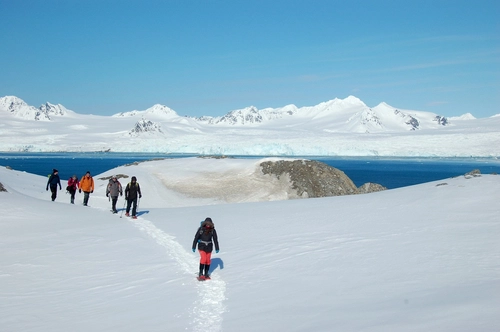 29 May - 05 Jun 2026
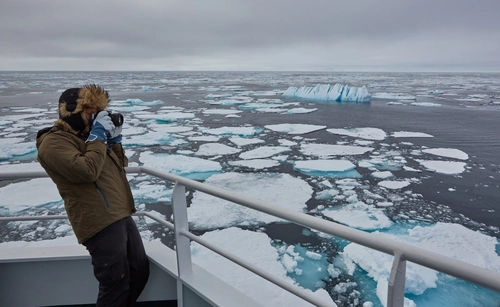 05 Jun - 12 Jun 2026
Related Trips
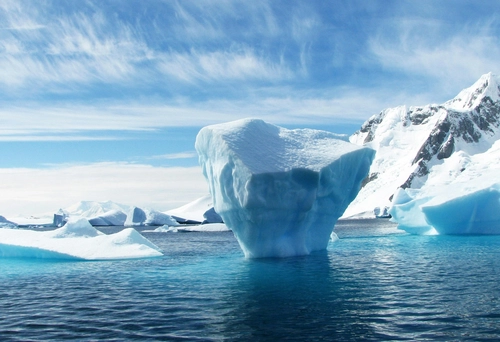
Alpine Peaks of Spitsbergen, Ski & Sail
24 Apr 2026 - 01 May 2026  8 Days / 7 Nights
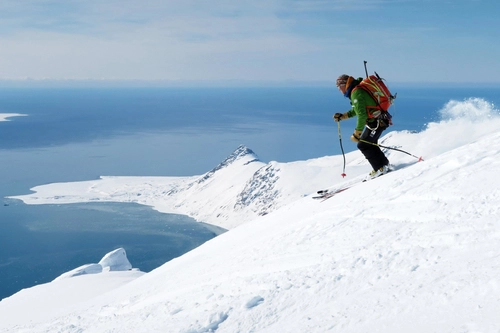
Alpine Peaks of Spitsbergen, Ski & Sail
01 May 2026 - 08 May 2026 8 Days / 7 Nights
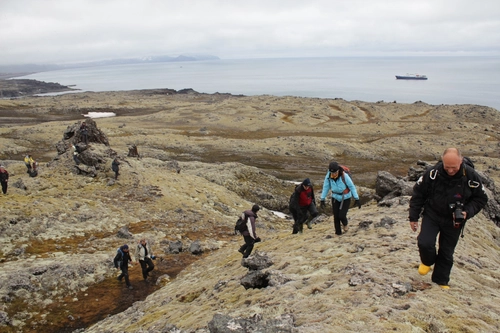
Arctic Ocean - Fair Isle, Jan Mayen, Ice Edge, Spitsbergen, Birding
27 May 2026 - 05 Jun 2026 10 Days / 9 Nights
North Spitsbergen - Arctic Spring , Hike & Sail
29 May 2026 - 05 Jun 2026 8 Days / 7 Nights
North Spitsbergen Explorer - Into the pack ice - Polar Bear Special
05 Jun 2026 - 12 Jun 2026 8 Days / 7 Nights

Arctic Ocean - Jan Mayen, Ice edge, Spitsbergen, Birding
05 Jun 2026 - 13 Jun 2026 9 Days / 8 Nights
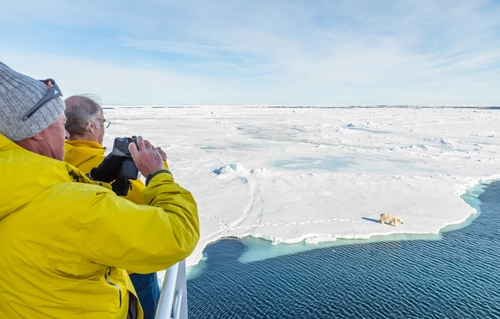
Arctic Ocean - Fair Isle, Jan Mayen, Ice edge, Spitsbergen, Birding - Summer Solstice
12 Jun 2026 - 21 Jun 2026 10 Days / 9 Nights
North Spitsbergen Explorer - Into the pack ice - Polar Bear Special
12 Jun 2026 - 19 Jun 2026 8 Days / 7 Nights
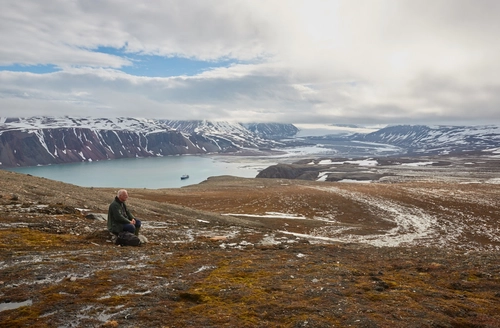
North Spitsbergen Explorer - Versatile landscapes, sea ice & wildlife
13 Jun 2026 - 20 Jun 2026 8 Days / 7 Nights
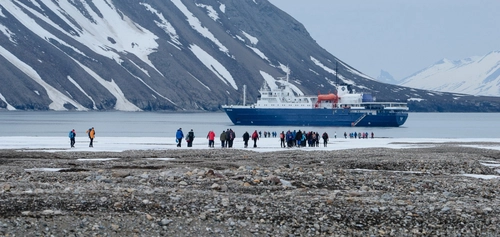
North Spitsbergen Basecamp – Summer Solstice - Free Kayaking, Hiking, Photo Workshop, Diving (supplemented)
19 Jun 2026 - 26 Jun 2026 8 Days / 7 Nights
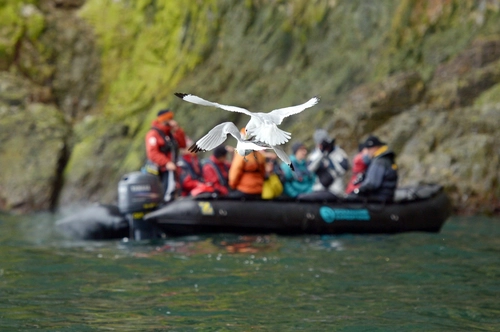
North Spitsbergen Explorer - Versatile landscapes, sea ice & wildlife - Summer Solstice
20 Jun 2026 - 27 Jun 2026 8 Days / 7 Nights
North Spitsbergen Explorer - Versatile landscapes, sea ice & wildlife - Summer Solstice
21 Jun 2026 - 28 Jun 2026 8 Days / 7 Nights

Blog


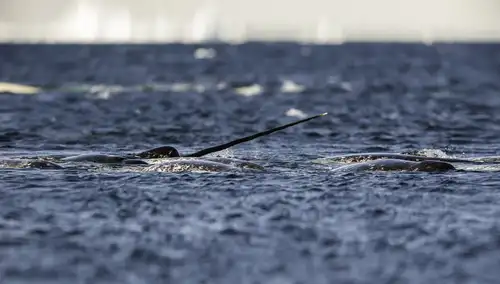
Narwhals: the Aquatic Unicorns of the Arctic
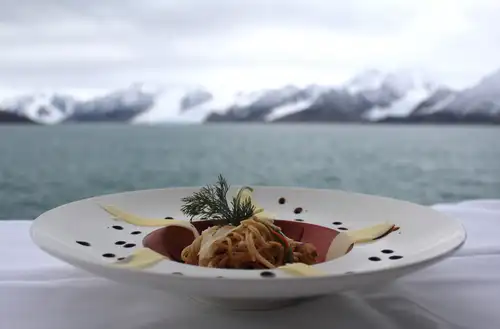
Polar Cuisine in Pictures
The Ultimate Traveler’s Guide to the Arctic and Antarctica
5 Life Lessons You'll Learn in Antarctica
The Return to Franz Josef Land
Orcas of the Polar Seas
Polar bear feast
Kayaking In Greenland
Penguins, Petrels, and Prions: Top Antarctica Bird Tour Spots
Weddell seals: The data collectors scientists of Antarctica
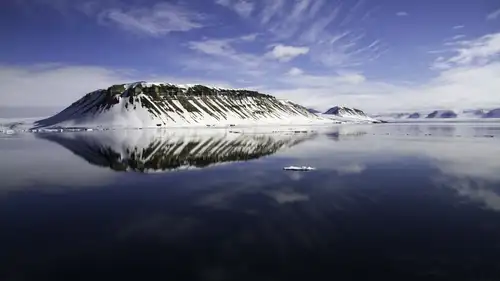
The Ice-Jewelled Geology of Spitsbergen
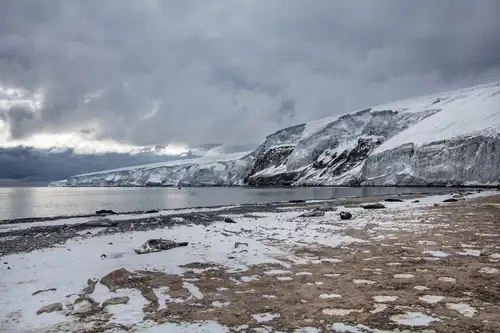
An igneous paradise: Franklin Island
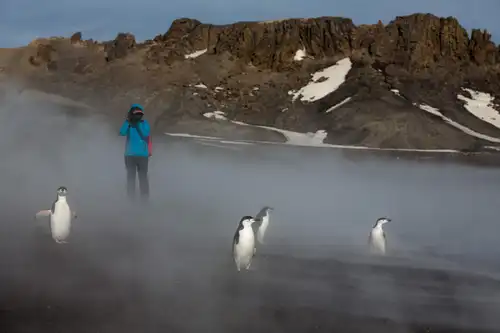
Graham Land: A landscape dominated by volcanoes
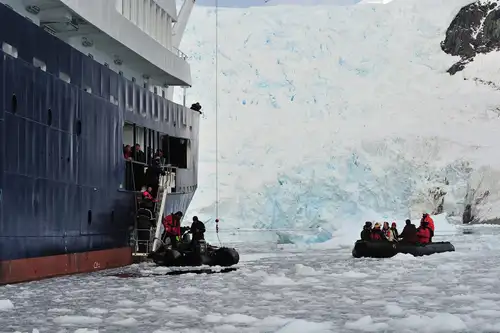
Seven Sublime Antarctic Bays
Deep Sea Dwellers: 10 Facts about The Antarctic Giant Isopod
11 Seals You May See in Antarctica or the Arctic
The Ancient Fossil Forests of Antarctica
Living the Antarctic Dream
15 Falkland Islands Bird Photos