Birding Opportunities Abound In Spitsbergen - Nexta Expeditions
Birding Opportunities Abound in Spitsbergen

Birding Opportunities Abound in Spitsbergen

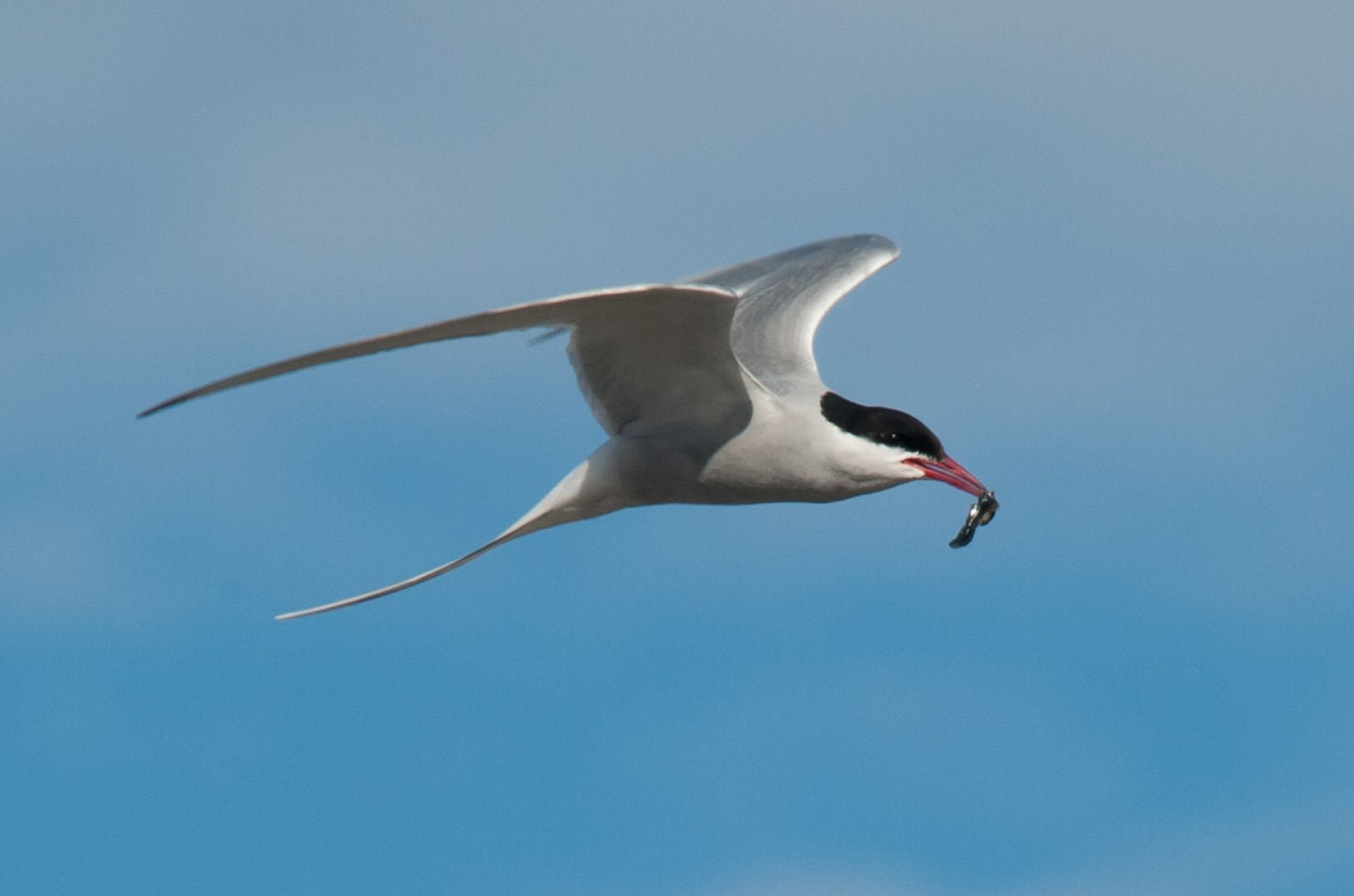
Seabirds are the most prevalent type of bird in Spitsbergen. Experts have estimated that there are 164 bird species that have been found throughout Spitsbergen at various points during recent history, but only 30 of them are known to turn to the Svalbard Islands as their primary breeding spot.

This means that you can expect to see a diverse variety of birds if you go to Spitsbergen more than once, especially if you visit during different times of the year. However, if your cruise expedition will be a once in a lifetime event, you can still observe and photograph an intriguing list of birds while in the Spitsbergen area.

You can see some of these birds in action in our birds of the Arctic video below. Though not all of the birds in this video are common around Spitsbergen or the other islands of Svalbard, most of the species featured can be spotted there.

The bird species that are spotted most frequently

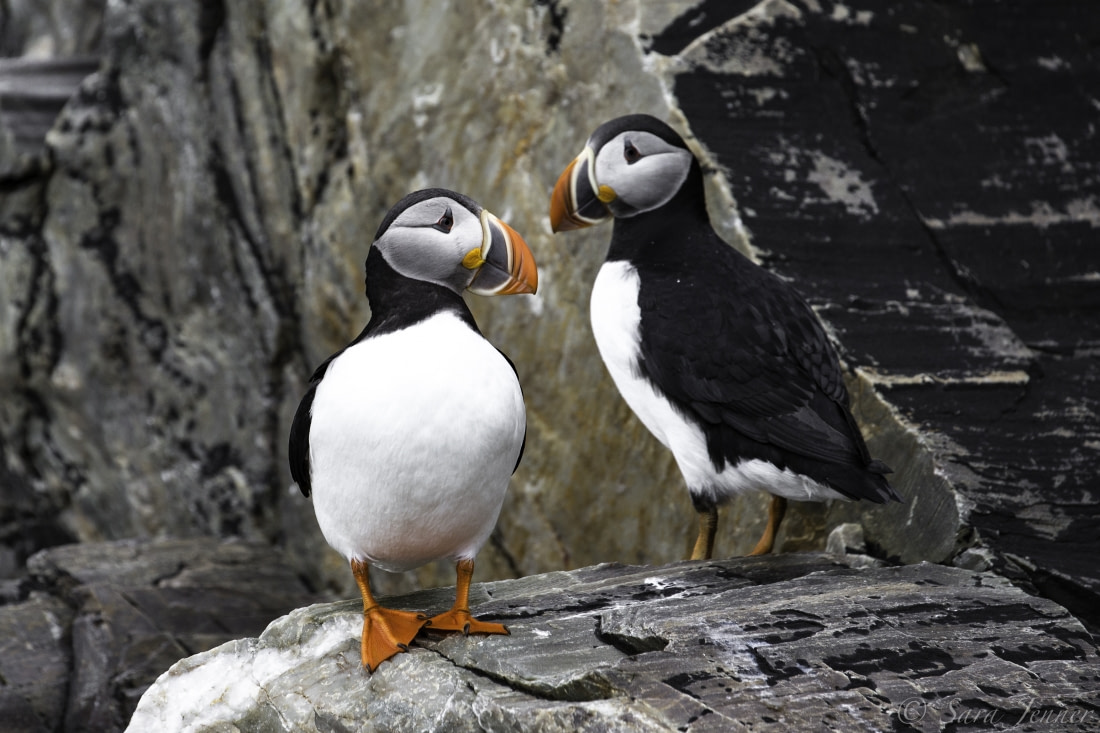
Some of the most interesting bird species that frequent Spitsbergen include the Atlantic puffin, snow bunting, pink-footed goose, purple sandpiper and ptarmigan. If you are extremely fortunate, you might also spot one of the rarer species in Spitsbergen such as the Sabine’s gull and King Eider.

In total, there are at least 23 species that are commonly spotted by birders, and most of them are not going to be found in many other areas of the world. For example, if you are visiting the Arctic from Europe or the U.S., you will be treated to an entirely different set of birds than you are used to. This makes Spitsbergen a popular destination for bird loving tourists who are adventurous enough to travel to the islands of Norway.
blog-image

The best birding spots

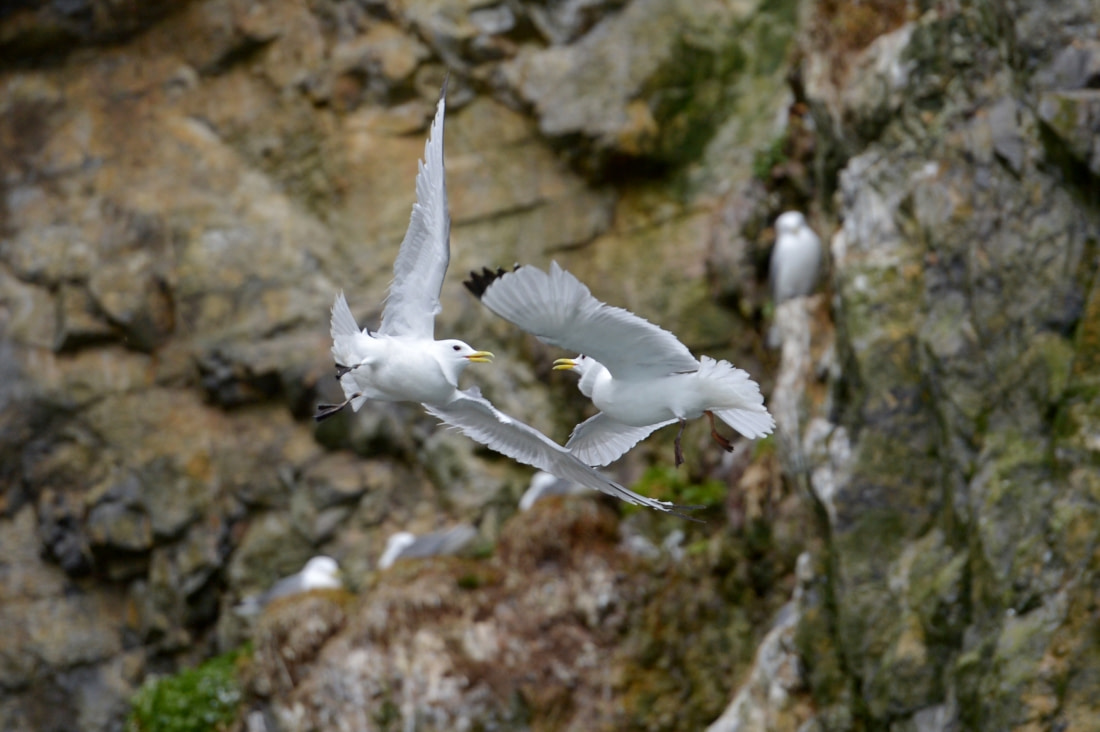
There are numerous birding opportunities throughout Spitsbergen and the rest of the Svalbard Islands, and each one will provide you with access to different bird species. Perhaps one of the most compelling spots is Diskobukta’s canyon that smells like ammonia. At this spot, you can expect to be treated to approximately 35,000 breeding pairs of kittiwakes. Such a large grouping makes it easy to learn about this species activities, and it is also a prime spot for photographs.

Alkefjellet is home to Brünnich's guillemots and glaucous gulls. Both of these species spend most of their time in or near the areas that are referred to as bird cliffs. A colony of birds named little auks can be found in Hornsund, and they present a brilliant sight as thousands of them take to the air on a regular basis. These birds are similar in size to Starlings, and they are known to be eye-catching and friendly. Some of the best other spots in this region where you can expect to see birds include pack ice, Kongsfjorden and Woodfjorden.
blog-image

Combining Bird Watching with Other Wildlife Interests

If you are an avid birder, the odds are high that you are also interested in other types of wildlife. Fortunately, Spitsbergen offers a lot of additional wildlife viewing opportunities. As an added bonus, this can often be combined with your interest in bird watching.

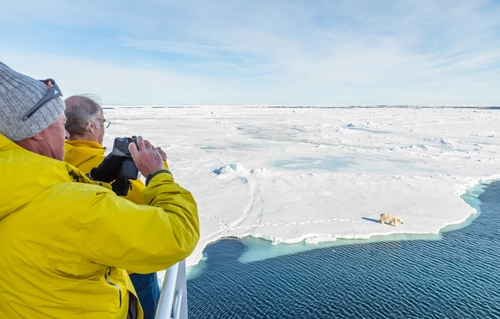
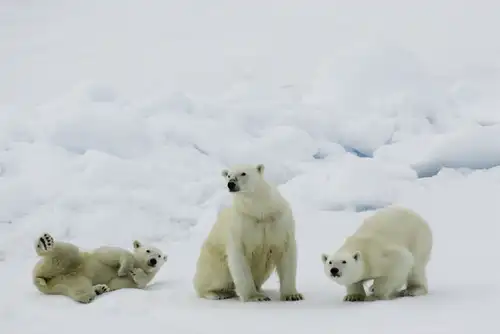
In the previously mentioned Woodfjorden, you can expect to see grey phalaropes and polar bears in the same general areas. If you prefer to see walruses, you will probably want to head to Seven Islands or Moffen Island. One of the nice things about combining a zodiac cruise to Moffen Island (we cannot actually land on Moffen as it is protected by a zone of min 300 meters) is that this will also give you the possibility of encountering the Sabine’s gull.

Midnight sun and its impact on birding

One of the most fascinating things about birding in or near Spitsbergen is the fact that the breeding season is very short yet filled with plentiful viewing options. This is due to the summer period during which the sun remains shining at all times. For a stunning 76 days between May and July, birds are given the ability to easily hunt for food 24 hours a day. This also provides tourists with the unique option to participate in their favorite activities at hours that would normally be too dark to be productive.

An Arctic cruise expedition is the perfect way to see a visually stunning mixture of birds and other types of wildlife around Norway and many other areas, including Greenland. Each trip focuses on different areas to offer a variety of prime options.
Best Deals

Related Trips

Alpine Peaks of Spitsbergen, Ski & Sail - Nexta Expeditions
The Arctic
Longyearbyen

Alpine Peaks of Spitsbergen, Ski & Sail

calendar24 Apr 2026 - 01 May 2026
clock8 Days / 7 Nights
From $ 3.950 per person
Alpine Peaks of Spitsbergen, Ski & Sail - Nexta Expeditions
The Arctic
Longyearbyen

Alpine Peaks of Spitsbergen, Ski & Sail

calendar01 May 2026 - 08 May 2026
clock8 Days / 7 Nights
From $ 3.950 per person
Arctic Ocean - Fair Isle, Jan Mayen, Ice Edge, Spitsbergen, Birding - Nexta Expeditions
The Arctic
Aberdeen

Arctic Ocean - Fair Isle, Jan Mayen, Ice Edge, Spitsbergen, Birding

calendar27 May 2026 - 05 Jun 2026
clock10 Days / 9 Nights
From $ 3.100 per person
North Spitsbergen - Arctic Spring ,  Hike & Sail - Nexta Expeditions
The Arctic
Longyearbyen

North Spitsbergen - Arctic Spring , Hike & Sail

calendar29 May 2026 - 05 Jun 2026
clock8 Days / 7 Nights
From $ 4.000 per person
North Spitsbergen Explorer - Into the pack ice - Polar Bear Special - Nexta Expeditions
The Arctic
Longyearbyen

North Spitsbergen Explorer - Into the pack ice - Polar Bear Special

calendar05 Jun 2026 - 12 Jun 2026
clock8 Days / 7 Nights
From $ 4.500 per person
Arctic Ocean - Jan Mayen, Ice edge, Spitsbergen, Birding - Nexta Expeditions
The Arctic
Akureyri

Arctic Ocean - Jan Mayen, Ice edge, Spitsbergen, Birding

calendar05 Jun 2026 - 13 Jun 2026
clock9 Days / 8 Nights
From $ 2.800 per person
Arctic Ocean - Fair Isle, Jan Mayen, Ice edge, Spitsbergen, Birding - Summer Solstice - Nexta Expeditions
The Arctic
Aberdeen

Arctic Ocean - Fair Isle, Jan Mayen, Ice edge, Spitsbergen, Birding - Summer Solstice

calendar12 Jun 2026 - 21 Jun 2026
clock10 Days / 9 Nights
From $ 3.100 per person
North Spitsbergen Explorer - Into the pack ice - Polar Bear Special - Nexta Expeditions
The Arctic
Longyearbyen

North Spitsbergen Explorer - Into the pack ice - Polar Bear Special

calendar12 Jun 2026 - 19 Jun 2026
clock8 Days / 7 Nights
From $ 4.500 per person
North Spitsbergen Explorer - Versatile landscapes, sea ice & wildlife - Nexta Expeditions
The Arctic
Longyearbyen

North Spitsbergen Explorer - Versatile landscapes, sea ice & wildlife

calendar13 Jun 2026 - 20 Jun 2026
clock8 Days / 7 Nights
From $ 4.500 per person
North Spitsbergen Basecamp – Summer Solstice - Free Kayaking, Hiking, Photo Workshop, Diving (supplemented) - Nexta Expeditions
The Arctic
Longyearbyen

North Spitsbergen Basecamp – Summer Solstice - Free Kayaking, Hiking, Photo Workshop, Diving (supplemented)

calendar19 Jun 2026 - 26 Jun 2026
clock8 Days / 7 Nights
From $ 4.500 per person
North Spitsbergen Explorer - Versatile landscapes, sea ice & wildlife - Summer Solstice - Nexta Expeditions
The Arctic
Longyearbyen

North Spitsbergen Explorer - Versatile landscapes, sea ice & wildlife - Summer Solstice

calendar20 Jun 2026 - 27 Jun 2026
clock8 Days / 7 Nights
From $ 4.500 per person
North Spitsbergen Explorer - Versatile landscapes, sea ice & wildlife - Summer Solstice - Nexta Expeditions
The Arctic
Longyearbyen

North Spitsbergen Explorer - Versatile landscapes, sea ice & wildlife - Summer Solstice

calendar21 Jun 2026 - 28 Jun 2026
clock8 Days / 7 Nights
From $ 4.500 per person

Blog
go-leftgo-right

Five Reasons You Should Cruise the Ross Sea Immediately - Nexta Expeditions
Blog

Five Reasons You Should Cruise the Ross Sea Immediately

In our search for lesser-known holiday spots that still offer fully developed amenities like spas and gift shops, we often miss out on some of the planet's truly underrated treasures.
All things ice in the Antarctic - Nexta Expeditions
Blog

All things ice in the Antarctic

The first documented sighting of an iceberg in Antarctica occurred on February 1, 1700, when Edmond Halley was on an expedition to measure the Earth's magnetic field. He noted in his diary that he encountered "great Islands of Ice, of Soe Incredible a hight and Magnitude that I scare dare to write my thoughts on it."
Explore Antarctica Without Leaving Your Couch - Nexta Expeditions
Blog

Explore Antarctica Without Leaving Your Couch

There are numerous ways to embark on an Antarctica expedition from the comfort of your home. Explore these fantastic resources to experience the White Continent without leaving your couch.
The Arctic Borderland of Kongsfjorden, Svalbard - Nexta Expeditions
Blog

The Arctic Borderland of Kongsfjorden, Svalbard

Kongsfjorden is a glacial fjord in Svalbard that hosts a diverse array of flora and fauna.
Antarctica’s Hourglass Dolphin - Nexta Expeditions
Blog

Antarctica’s Hourglass Dolphin

Though hourglass dolphins are especially rare, they’re actually not a threatened or endangered species.
Penguins, Albatrosses, Petrels: The Winged Wildlife of South Georgia - Nexta Expeditions
Blog

Penguins, Albatrosses, Petrels: The Winged Wildlife of South Georgia

South Georgia’s location south of the Antarctic Convergence gives the island a more Antarctic-like climate compared to other regions at the same latitude. The climate here is marked by cold, cloudy, wet, and windy conditions with highly variable weather.
“The polar bear will still be there” - Nexta Expeditions
Blog

“The polar bear will still be there”

For several hours, we had been navigating the pack ice in search of polar bears. Despite numerous binoculars scanning the ice, no bears were visible, and only a few tracks were found. This suggested we might be in an area with fewer bears. Later that morning, we decided to head a few miles east, suspecting a higher bear population there.
11 Seals You May See in Antarctica or the Arctic - Nexta Expeditions
Blog

11 Seals You May See in Antarctica or the Arctic

1. Weddell seals – These seals are known for their calm demeanor and spend most of their lives beneath the Antarctic ice. Although they need to come up for air, they can remain underwater for up to 45 minutes. Weddell seals can dive to depths of 610 meters (2,000 feet) in search of food. These vocal animals usually have one pup annually and can grow up to 3 meters (10 feet) and weigh 544 kg (1,200 lbs).
Ice streams and lakes under the Greenland Ice Sheet - Nexta Expeditions
Blog

Ice streams and lakes under the Greenland Ice Sheet

The Greenland ice sheet is a dynamic mass of dense, flowing, and deforming ice. Snow deposited on the central parts of the ice sheet is gradually compressed into ice that slowly moves towards the ice margin. At the ice margin, the ice is removed by melting or by breaking off into icebergs.
The polar bear: king of the Arctic food chain - Nexta Expeditions
Blog

The polar bear: king of the Arctic food chain

As apex predators, polar bears reign supreme in the Arctic food chain. Only humans pose a threat to this massive and majestic species. But one look at these magnificent creatures explains why so many people embark on Arctic trips hoping to spot a polar bear in its natural habitat.
Arctic and Antarctic Basecamp Cruises – Choose Your Own Adventure - Nexta Expeditions
Blog

Arctic and Antarctic Basecamp Cruises – Choose Your Own Adventure

There’s an astonishing variety of activities to choose from when planning an Arctic trip or Antarctic cruise, which can be a bit overwhelming. How do you choose just one voyage over another when you want to experience everything? Happily, you don’t have to give up one activity for another. Basecamp cruises have you covered.
Around Spitsbergen vs. North Spitsbergen - Nexta Expeditions
Blog

Around Spitsbergen vs. North Spitsbergen

Svalbard, particularly Spitsbergen, was the first polar expedition cruise destination. It's no surprise that there are numerous trip programs available in this region. Among the most unique are the Around Spitsbergen and North Spitsbergen cruises.
10 Traits of Post-Ice-Age Greenland - Nexta Expeditions
Blog

10 Traits of Post-Ice-Age Greenland

Grasses, sedges, and other species of heath were the first arrivals, and are still commonly found in Greenland. Scientists have been able to work out how plants colonised Greenland by examining ancient pollen samples found in deposits at the bottom of lakes: Dwarf birch came to western Greenland around 9,000 years ago, and around 4,500 years ago – roughly the same time humans were first boating onto Greenland shores – green alders were taking up residence there.
11 South Orkney Animals: Whales, Seabirds, and Penguins Aplenty - Nexta Expeditions
Blog

11 South Orkney Animals: Whales, Seabirds, and Penguins Aplenty

The South Orkney Islands are often overlooked as a destination for Antarctic travel.
The bio-richness of the Ross Sea - Nexta Expeditions
Blog

The bio-richness of the Ross Sea

The Ross Sea is one of the most stunning and untouched marine areas globally. This sea, which remains frozen for most of the year, spans 3.6 million square kilometers (1.4 million square miles) along the Antarctic coast south of New Zealand. Its waters harbor a biologically diverse ecosystem of species that have flourished, unchanged, for millennia.
15 Fantastic Photos of Antarctica - Nexta Expeditions
Blog

15 Fantastic Photos of Antarctica

It is often said that it's impossible to take a bad picture in Antarctica.
Seven Tips to Get the Most out of Your Expedition Cruise - Nexta Expeditions
Blog

Seven Tips to Get the Most out of Your Expedition Cruise

Polar cruises are easy to enjoy, but there’s an art to getting the most out of them.
Spitsbergen: Alkefjellet magic - Nexta Expeditions
Blog

Spitsbergen: Alkefjellet magic

If they knew their way home, why not follow them? Equipped with GPS and compass, we approached the cliffs by zodiac. First, we heard the noise from the colony – the distinct calls of guillemots, kittiwakes, and Glaucous gulls. Then the cliffs gradually emerged from the mist.
Five Birds You Might See on Your Greenland Cruise - Nexta Expeditions
Blog

Five Birds You Might See on Your Greenland Cruise

A Greenland expedition cruise offers birdwatchers a unique opportunity to capture stunning avian photographs. With over 230 bird species, Greenland boasts both spectacular landscapes and diverse winged wildlife.
International Polar Bear Day - Nexta Expeditions
Blog

International Polar Bear Day

It will come as no surprise to you that we're crazy about polar bears. We have multiple blogs about where to find polar bears, we offer dozens of polar bear trips, and we've even written a short story from a polar bear's point of view. (Yes, we actually did that.) So if you were to say that our love of polar bears borders on obsession, you wouldn't be far off.