

Svalbard is situated in the north-western corner of the Eurasian plate. Historically, Svalbard was part of a vast continent that included North America, Greenland, and Eurasia. At one point, both Northeast Greenland and Svalbard were submerged under the ocean before resurfacing.
This unique geological history makes Svalbard a paradise for geologists. It is one of the few places globally with such geological diversity within a relatively small area. Despite most of the archipelago being covered in glaciers, Svalbard offers easily accessible geological sections that represent much of Earth’s history, allowing scientists to study both past geological events and current geological processes.
Three Main Geological Periods in Svalbard
Scientists have identified three main geological divisions in Svalbard:
- The basement comprises the oldest materials on the island, formed during Precambrian to Silurian times (from 4.6 billion years ago to 443.8 million years ago). This includes igneous and metamorphic rocks that have been folded and altered over time.
- Unaltered sedimentary rocks formed from the Late Palaeozoic to Cenozoic times, a period during which life rapidly evolved on Earth, from arthropods and amphibians to the extinction of dinosaurs and the rise of mammals and humans.
- Unconsolidated deposits from the Quaternary period, associated with the last ice age.
The Basement of Svalbard
The basement of Svalbard consists of rocks from the earliest stages of Earth’s history. These rocks show periods of folding and metamorphism during the major mountain-building period around 400 million years ago. Due to weathering and erosion, only remnants of these rocks can be found today, mainly along the west coast and the northern part of Spitsbergen, as well as on Prins Karls Forland and Nordaustlandet.
The areas where these rocks are found are primarily alpine landscapes with jagged mountains. In the southern part of Spitsbergen, the basement consists of phyllite, quartzite, limestone, dolostone, and conglomerate, with minor traces of volcanic rocks. Tillite, which comes from deposits from glaciers that covered Svalbard around 600 million years ago, is also found. Beneath the tillites are beds of limestone containing stromatolites, small fossilized algae colonies.
In the northwestern part of Spitsbergen, the most common rocks are shale, limestone, dolostone, and tillite. Additionally, granite dated around 411 million years old is found there.

The Sedimentary Period
During the sedimentary period, erosion of the mountain chain began, leading to large quantities of sand, gravel, and mud being deposited on alluvial plains and in the sea. Later, new deposits were added, eventually resulting in limestone. Around 40 million years ago, sandstone-shale deposits were laid down.
Geologists find it interesting that these depositions indicate a period of dry, desert-like climatic conditions followed by fresh or brackish water, lagoons, and rivers. During this period, known as the Devonian period or the Age of Fishes, primitive fish swam in waterways and the sea.
The first known vertebrates were found in Svalbard. Concurrently, the first terrestrial plants evolved, with fossils of plant spores that grew in river plains and shallow lakes found in Svalbard.
Dinosaurs Roaming the Land
Later, Earth entered the Triassic and Jurassic periods, with geologists finding evidence of a temperate and rather damp climate in Svalbard. While most of Svalbard was covered by the sea, periods of uplift resulted in alternating marine and terrestrial sedimentation. During this period, often called the Age of Reptiles, swan-necked reptile species lived in the sea while dinosaurs roamed the land.
Following this geological timeline was the Cretaceous period, known for significant volcanic activity and faulting. Magma rose to the surface through fractures and bedding surfaces. On Kong Karls Land, magma forced its way to the surface and solidified as dark basalt lava.
New Mountain Ranges Form
In the Early Tertiary period, a new mountain range formed along the west coast of Spitsbergen, though much smaller than the older Caledonian mountain belt that had formed 470-400 million years ago when the North American plate (Laurentia) collided with the North European plate (Baltica). This collision resulted in continental crust on both sides being compressed and folded, with large sheets of rock thrust on top of one another. Remnants of this mountain chain are still present in Svalbard today, as well as in mainland Norway, Scotland, and East Greenland. During this period, rocks of all ages were folded, and large sheets of rocks were thrust eastwards.
Remnants of Past Mountain-Building
Today, geologists can see thrust sheets in many mountain sides in Wedel Jarlsberg Land and Oscar II Land. Geologists speculate that these movements could have been due to the Greenlandic continental plate pressing towards Svalbard as Svalbard slid past the northern part of Greenland. Concurrently, the North Atlantic and Arctic Ocean were being formed by seafloor spreading.
Just east of the new mountain range, the land subsided and formed a large north-south trending bay. In this area, sandstones and shale were deposited in what is called the Central Tertiary Basin. Deposits found in this basin include numerous plant fossils and coal deposits. At the same time, a new volcanic phase occurred in the North Atlantic region, with lava flows from this time preserved in Andrée Land, forming hard caps on some of the highest peaks in the region.
Entering the Ice Age
At the start of the Quaternary period, the climate began to cool, leading Earth into a new Ice Age. During this time, large parts of North America and Northern Europe were covered in thick ice sheets. Svalbard was also covered by a vast ice sheet. Between each warming period, lasting from 10,000 to 20,000 years, there was vegetation similar to the present type. Scientists believe that between 20 to 30 ice ages, each with warmer interglacial periods, have occurred over the last two to three million years. While there are traces of past glaciation periods in Svalbard, the most recent glaciation removed most of the earlier deposits.
Completely Covered in Ice
During the Ice Age, Svalbard was entirely covered, except for a few mountain peaks, by a vast ice sheet. The sheet was thickest near Kong Karls Land in the eastern part of Svalbard. Due to the enormous weight of the ice sheet, the land mass of Svalbard was pushed down, forming depressions where the ice was thickest. As temperatures began to rise and the ice started to melt, the land rose again. In fact, Kong Karls Land has risen around 130 meters relative to sea level since the end of the Ice Age about 10,000 years ago. An interesting discovery was made when scientists found ancient pollen suggesting that the climate during some periods after the last Ice Age was milder compared to today.
 24 Apr - 01 May 2026
 01 May - 08 May 2026
 27 May - 05 Jun 2026
 29 May - 05 Jun 2026
 05 Jun - 12 Jun 2026
Related Trips
Alpine Peaks of Spitsbergen, Ski & Sail
24 Apr 2026 - 01 May 2026  8 Days / 7 Nights
Alpine Peaks of Spitsbergen, Ski & Sail
01 May 2026 - 08 May 2026 8 Days / 7 Nights
Arctic Ocean - Fair Isle, Jan Mayen, Ice Edge, Spitsbergen, Birding
27 May 2026 - 05 Jun 2026 10 Days / 9 Nights
North Spitsbergen - Arctic Spring , Hike & Sail
29 May 2026 - 05 Jun 2026 8 Days / 7 Nights
North Spitsbergen Explorer - Into the pack ice - Polar Bear Special
05 Jun 2026 - 12 Jun 2026 8 Days / 7 Nights

Arctic Ocean - Jan Mayen, Ice edge, Spitsbergen, Birding
05 Jun 2026 - 13 Jun 2026 9 Days / 8 Nights
Arctic Ocean - Fair Isle, Jan Mayen, Ice edge, Spitsbergen, Birding - Summer Solstice
12 Jun 2026 - 21 Jun 2026 10 Days / 9 Nights
North Spitsbergen Explorer - Into the pack ice - Polar Bear Special
12 Jun 2026 - 19 Jun 2026 8 Days / 7 Nights
North Spitsbergen Explorer - Versatile landscapes, sea ice & wildlife
13 Jun 2026 - 20 Jun 2026 8 Days / 7 Nights
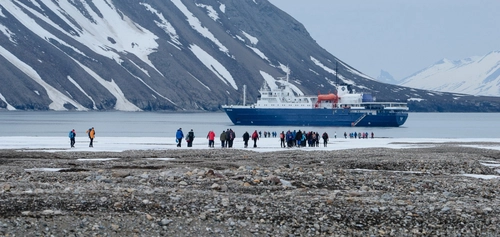
North Spitsbergen Basecamp – Summer Solstice - Free Kayaking, Hiking, Photo Workshop, Diving (supplemented)
19 Jun 2026 - 26 Jun 2026 8 Days / 7 Nights
North Spitsbergen Explorer - Versatile landscapes, sea ice & wildlife - Summer Solstice
20 Jun 2026 - 27 Jun 2026 8 Days / 7 Nights
North Spitsbergen Explorer - Versatile landscapes, sea ice & wildlife - Summer Solstice
21 Jun 2026 - 28 Jun 2026 8 Days / 7 Nights

Blog



The Arctic Hare: Easter Bunny
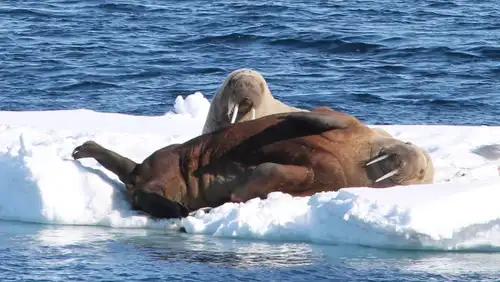
Svalbard’s 12 Most Iconic Animals

Cheapest Antarctica Cruises: How to Save on Your Journey
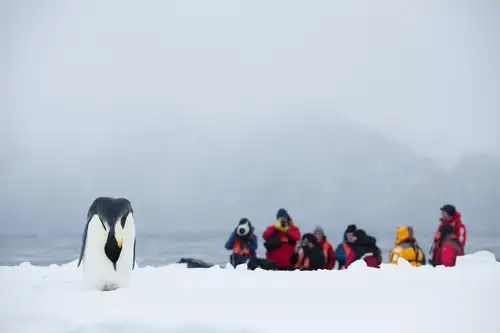
Five Reasons You Should Cruise the Ross Sea Immediately
12 Things to Do in Antarctica
All things ice in the Antarctic
Diving in Antarctica: The Ultimate Underwater Experience
Greenland: East vs. West
11 South Orkney Animals: Whales, Seabirds, and Penguins Aplenty
How and When Did Greenland Become Covered in Ice?
15 Fantastic Photos of Antarctica
Polar Bear Primer: Eight Facts About the Arctic Wanderer
Harp seals harping on in Greenland
Everything you need to know about Antarctic icebergs
Eight Antarctic Misconceptions
Antarctic Explorer’s Voyage
The bio-richness of the Ross Sea
Shackleton’s Long-Lost Endurance Discovered in Antarctica
Arctic on Foot: Hiking and Snowshoeing the Far North