Svalbards 12 Most Iconic Animals - Nexta Expeditions
Svalbard’s 12 Most Iconic Animals

Svalbard’s 12 Most Iconic Animals

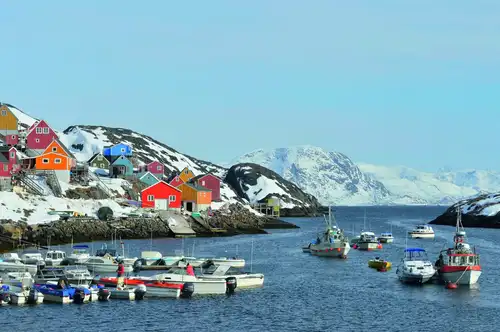
Each of our Arctic regions offers its own distinct and unforgettable features: Greenland boasts mountainous shorelines and record-setting fjords, Northern Norway is renowned for the aurora borealis and historic masted schooners, and Svalbard (especially Spitsbergen) is where you're most likely to encounter a variety of Arctic wildlife.

However, these areas are not limited to the mentioned attractions. You can experience nearly all Arctic essentials (snow-capped peaks, expansive fjords, and diverse wildlife) on almost any Arctic cruise.

Since we're dealing with nature, we need to talk in terms of probabilities. Your best chance of seeing iconic Arctic animals is in Svalbard. Below are a few species you might encounter there, included for both their popularity and the likelihood of sightings.

1. Arctic fox

One of the more common and beloved animals in Svalbard is the Arctic fox. Often seen hunting below the area's many bird cliffs, they turn white in the winter, but their warm fur keeps them protected year-round.

blog-image

2. Bearded seal

The largest seal species in the Arctic, the bearded seal is known for its long whiskers and loud voice. The song of the male bearded seal can be heard up to 20 km (12.4 miles) away.

blog-image

3. Kittiwake

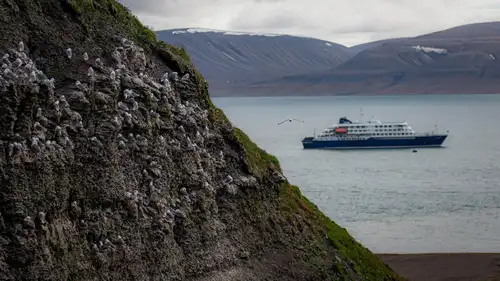
Bird cliffs are a regular feature of Svalbard and its principal island of Spitsbergen. One of the more frequently seen birds there is the kittiwake, a species of gull named for its bird call.

blog-image

4. Svalbard reindeer

Once on the brink of extinction, the Svalbard reindeer now thrives across this Arctic island chain. It can run up to 80 kph (50 mph) despite preferring a more sedentary existence, feeding on the islands' many tundra regions.

blog-image

5. Humpback whale

Known for the way it humps its back before a dive, the humpback whale is often first noticed by its spout, which can reach as high as 6 meters (20 feet) and be heard as far as 245 meters (800 feet) away.

blog-image

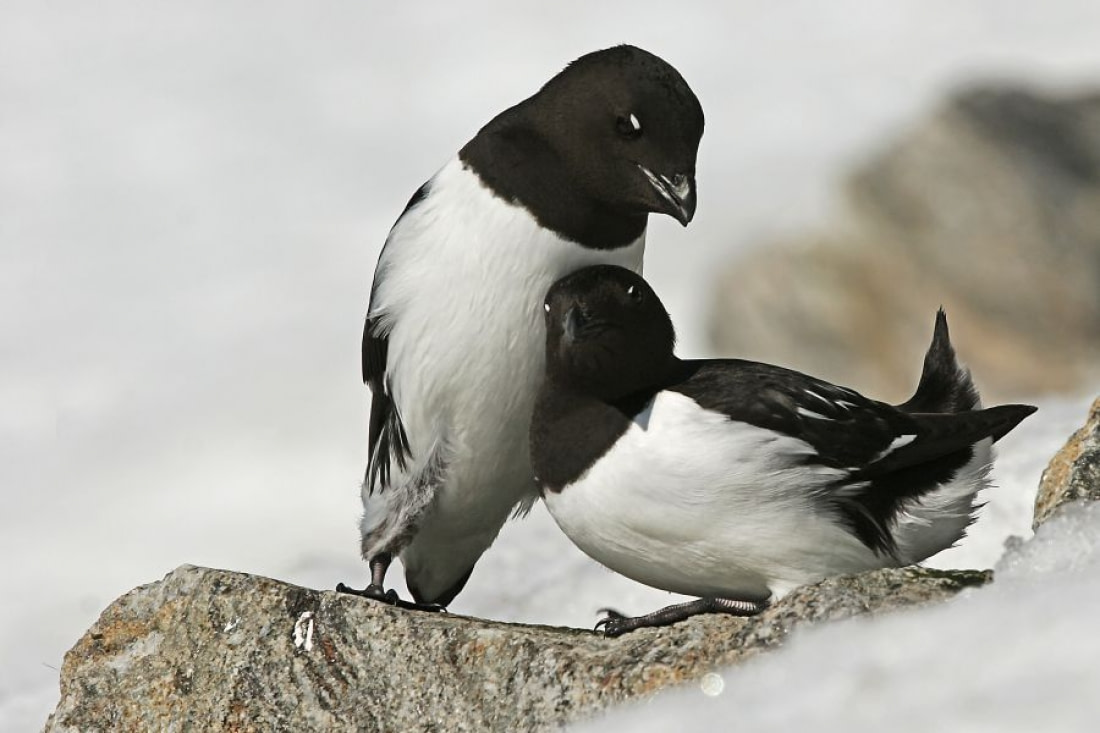
6. Little auk

Even more abundant in Svalbard than the kittiwake, the little auk forages in large flocks and creates breeding colonies that sometimes number in the millions. The little auk also grows faster than any other auk, which may partially explain its numbers.
blog-image

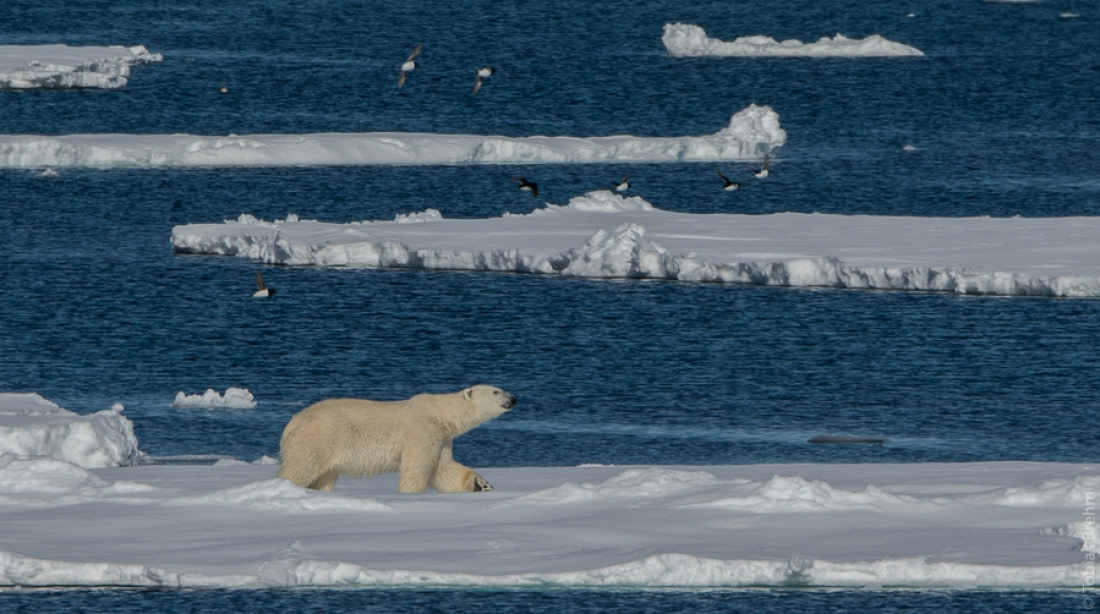
7. Polar bear

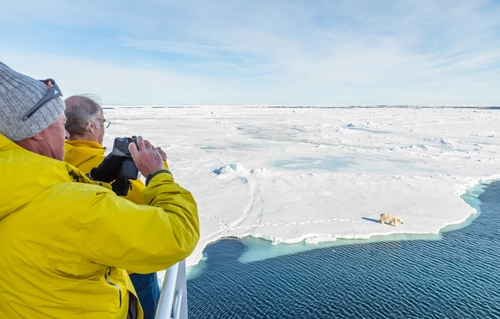
Though not technically among the more common animals in Svalbard, no list of Svalbard wildlife is complete without the polar bear. You have a better chance of seeing one in Svalbard than perhaps anywhere else in the Arctic.
blog-image

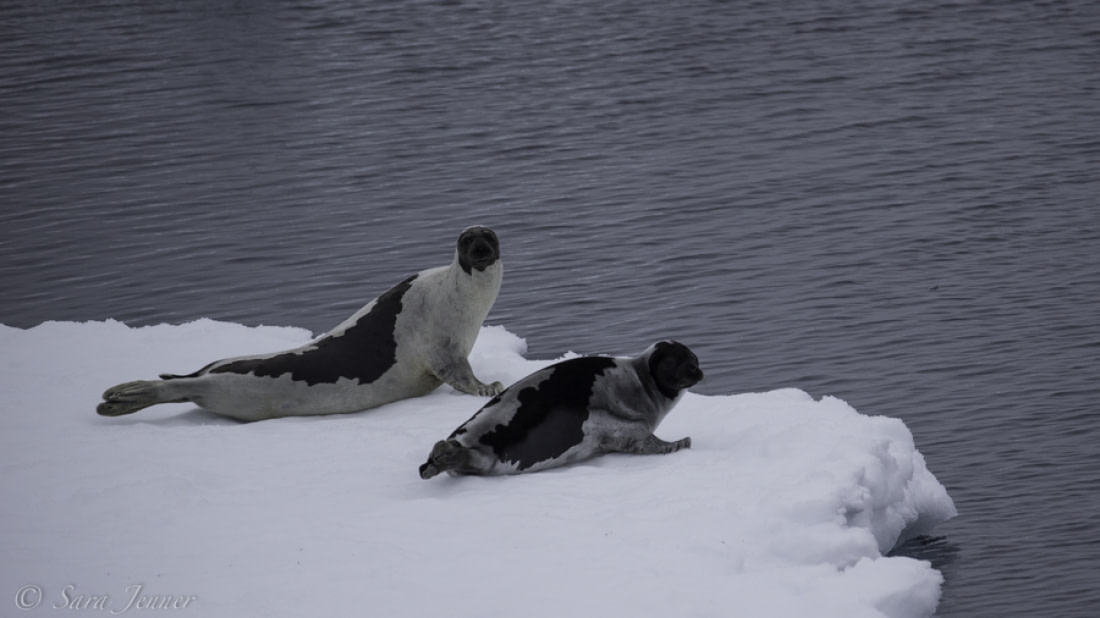
8. Harp seal

This species of seal is known for spending most of its time at sea, and its Latin name means "ice-lover from Greenland." Still, the far-ranging harp seal is a frequent Svalbard inhabitant.
blog-image

9. Black guillemot

The feathers of the black guillemot get whiter the farther north it is found. Scientists are still trying to understand why this Arctic bird is so particular about the way it holds fish in its beak.

blog-image

10. Walrus

One of the core species of the Arctic, the walrus is found in great abundance around Svalbard. You're likely to see a walrus more than most other Arctic animals, whether lounging in large coastline harems or swimming just off shore.

blog-image

11. Minke whale

Along with the humpback, the minke whale is one of the more common cetaceans around Svalbard. Though among the smaller fin whales, it is known for its loud vocalizations, which can reach 152 decibels – as loud as a plane taking off.

blog-image

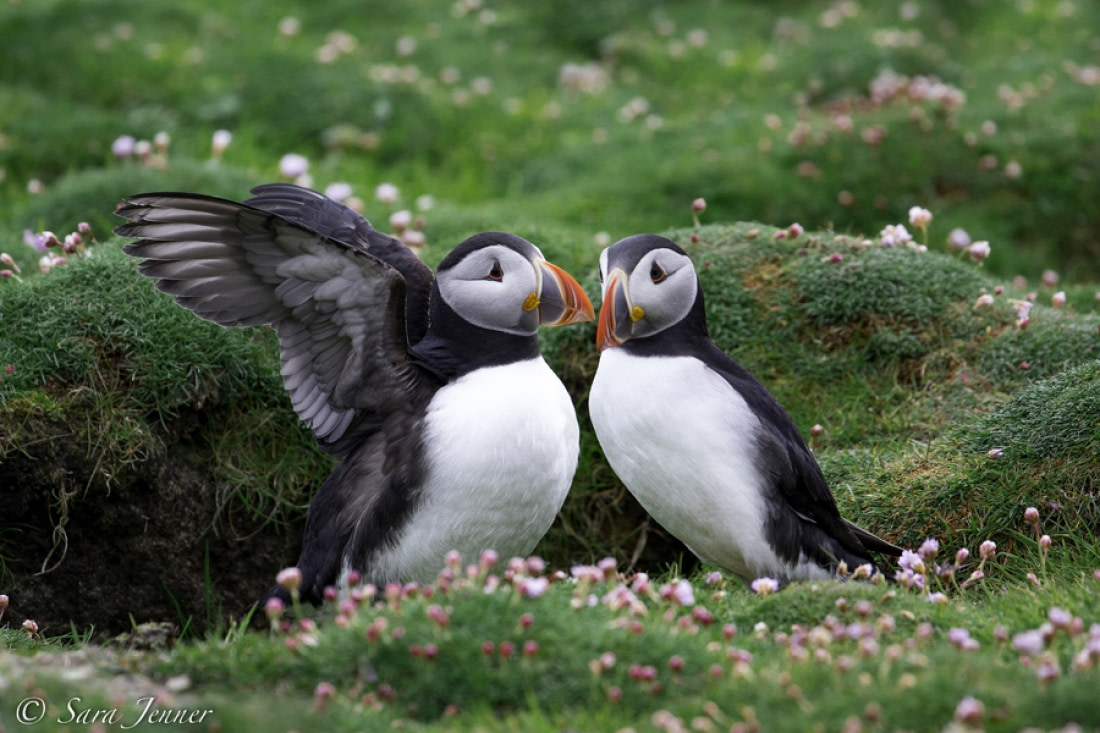
12. Puffin

The "sea clown" is probably the most recognizable bird in the Arctic, with a monk-like body coloration contrasting its carnival-esque face. It is most often seen at sea on its own, though less frequently in colonies.
blog-image

A last-minute disclaimer about Svalbard (and all other) wildlife

Though we hinted at this in the beginning, we should now state clearly that we cannot guarantee you'll see any of the Svalbard animals on this list. These species, while sometimes appearing en masse during one Svalbard trip, may be all but nonexistent on another.

All we can do on any expedition is keep our eyes open, our fingers crossed, and our expectations reasonable. At the very least, you'll see the Arctic, and that is undeniably an adventure in itself.
Best Deals

Related Trips

Alpine Peaks of Spitsbergen, Ski & Sail - Nexta Expeditions
The Arctic
Longyearbyen

Alpine Peaks of Spitsbergen, Ski & Sail

calendar24 Apr 2026 - 01 May 2026
clock8 Days / 7 Nights
From $ 3.950 per person
Alpine Peaks of Spitsbergen, Ski & Sail - Nexta Expeditions
The Arctic
Longyearbyen

Alpine Peaks of Spitsbergen, Ski & Sail

calendar01 May 2026 - 08 May 2026
clock8 Days / 7 Nights
From $ 3.950 per person
Arctic Ocean - Fair Isle, Jan Mayen, Ice Edge, Spitsbergen, Birding - Nexta Expeditions
The Arctic
Aberdeen

Arctic Ocean - Fair Isle, Jan Mayen, Ice Edge, Spitsbergen, Birding

calendar27 May 2026 - 05 Jun 2026
clock10 Days / 9 Nights
From $ 3.100 per person
North Spitsbergen - Arctic Spring ,  Hike & Sail - Nexta Expeditions
The Arctic
Longyearbyen

North Spitsbergen - Arctic Spring , Hike & Sail

calendar29 May 2026 - 05 Jun 2026
clock8 Days / 7 Nights
From $ 4.000 per person
North Spitsbergen Explorer - Into the pack ice - Polar Bear Special - Nexta Expeditions
The Arctic
Longyearbyen

North Spitsbergen Explorer - Into the pack ice - Polar Bear Special

calendar05 Jun 2026 - 12 Jun 2026
clock8 Days / 7 Nights
From $ 4.500 per person
Arctic Ocean - Jan Mayen, Ice edge, Spitsbergen, Birding - Nexta Expeditions
The Arctic
Akureyri

Arctic Ocean - Jan Mayen, Ice edge, Spitsbergen, Birding

calendar05 Jun 2026 - 13 Jun 2026
clock9 Days / 8 Nights
From $ 2.800 per person
Arctic Ocean - Fair Isle, Jan Mayen, Ice edge, Spitsbergen, Birding - Summer Solstice - Nexta Expeditions
The Arctic
Aberdeen

Arctic Ocean - Fair Isle, Jan Mayen, Ice edge, Spitsbergen, Birding - Summer Solstice

calendar12 Jun 2026 - 21 Jun 2026
clock10 Days / 9 Nights
From $ 3.100 per person
North Spitsbergen Explorer - Into the pack ice - Polar Bear Special - Nexta Expeditions
The Arctic
Longyearbyen

North Spitsbergen Explorer - Into the pack ice - Polar Bear Special

calendar12 Jun 2026 - 19 Jun 2026
clock8 Days / 7 Nights
From $ 4.500 per person
North Spitsbergen Explorer - Versatile landscapes, sea ice & wildlife - Nexta Expeditions
The Arctic
Longyearbyen

North Spitsbergen Explorer - Versatile landscapes, sea ice & wildlife

calendar13 Jun 2026 - 20 Jun 2026
clock8 Days / 7 Nights
From $ 4.500 per person
North Spitsbergen Basecamp – Summer Solstice - Free Kayaking, Hiking, Photo Workshop, Diving (supplemented) - Nexta Expeditions
The Arctic
Longyearbyen

North Spitsbergen Basecamp – Summer Solstice - Free Kayaking, Hiking, Photo Workshop, Diving (supplemented)

calendar19 Jun 2026 - 26 Jun 2026
clock8 Days / 7 Nights
From $ 4.500 per person
North Spitsbergen Explorer - Versatile landscapes, sea ice & wildlife - Summer Solstice - Nexta Expeditions
The Arctic
Longyearbyen

North Spitsbergen Explorer - Versatile landscapes, sea ice & wildlife - Summer Solstice

calendar20 Jun 2026 - 27 Jun 2026
clock8 Days / 7 Nights
From $ 4.500 per person
North Spitsbergen Explorer - Versatile landscapes, sea ice & wildlife - Summer Solstice - Nexta Expeditions
The Arctic
Longyearbyen

North Spitsbergen Explorer - Versatile landscapes, sea ice & wildlife - Summer Solstice

calendar21 Jun 2026 - 28 Jun 2026
clock8 Days / 7 Nights
From $ 4.500 per person

Blog
go-leftgo-right

Hot Ice: Breeding Practices of Five Polar Animals - Nexta Expeditions
Blog

Hot Ice: Breeding Practices of Five Polar Animals

Last Valentine's Day we gave you 14 wildlife pictures highlighting the ins, outs, ups, and downs of polar romance. This year we're moving on to something a little more advanced: the nitty-gritty details of polar wildlife breeding rituals.
Day and night in Antarctica - Nexta Expeditions
Blog

Day and night in Antarctica

At the Concordia station, a French-Italian research facility situated 3,233 meters above sea level at Dome C on the Antarctic Plateau, European Space Agency (ESA) scientists are investigating the effects of extended space missions. The station is more isolated than the International Space Station, with the nearest humans located 600 kilometers away.
The Plants of Antarctica - Nexta Expeditions
Blog

The Plants of Antarctica

Surviving in Antarctica is a monumental challenge for any plant. The extreme cold, limited sunlight, scarce moisture, poor soil, and short growing season make it nearly impossible for most flora to thrive. Yet, some plants have adapted to these harsh conditions and have managed to flourish where others cannot.
Antarctica: When to Visit, How to Plan, What to Expect - Nexta Expeditions
Blog

Antarctica: When to Visit, How to Plan, What to Expect

Antarctica is an astonishing location loved in equal measure by ice enthusiasts and continent hoppers, but it also asks a lot in return for its prestigious polar status.
Explore Antarctica Without Leaving Your Couch - Nexta Expeditions
Blog

Explore Antarctica Without Leaving Your Couch

There are numerous ways to embark on an Antarctica expedition from the comfort of your home. Explore these fantastic resources to experience the White Continent without leaving your couch.
Camping in Antarctica: a True Expedition Experience - Nexta Expeditions
Blog

Camping in Antarctica: a True Expedition Experience

We often think of camping as a summer activity, filled with warm nights, campfire dinners, and serene mountain lakes. However, there's a whole other world of camping to explore.
11 South Orkney Animals: Whales, Seabirds, and Penguins Aplenty - Nexta Expeditions
Blog

11 South Orkney Animals: Whales, Seabirds, and Penguins Aplenty

The South Orkney Islands are often overlooked as a destination for Antarctic travel.
Amazing Greenland - Nexta Expeditions
Blog

Amazing Greenland

If you ever get the chance to take a trip to Greenland, you will be amazed by its coastlines, fjords, ice-covered peaks, and great expanse of snow-covered land. You will also notice that Greenland is a rugged area with a rich diversity of life, making it a dream location for scientists as well.
What to Pack for Your Expedition Cruise to the Arctic or Antarctica - Nexta Expeditions
Blog

What to Pack for Your Expedition Cruise to the Arctic or Antarctica

It’s easy to get confused about what to pack for a polar cruise. Some items are provided and some are not, and it’s not always clear which is which. This article will make your polar pack list painstakingly clear. Promise.
Adélie penguins in the Ross Sea - Antarctica - Nexta Expeditions
Blog

Adélie penguins in the Ross Sea - Antarctica

The Adélie penguin population in the Ross Sea has reached its highest numbers in 30 years, with up to a million breeding pairs during the summer. This accounts for about 38 percent of the entire Antarctic Adélie population.
Scoresby Sund: the Greatest Greenland Adventure - Nexta Expeditions
Blog

Scoresby Sund: the Greatest Greenland Adventure

In a land of expansive mountains, colossal glaciers, and majestic shorelines, few places are as expansive, colossal, or majestic as Scoresby Sund.
A Day of Basecamp in Antarctica – Paradise Harbour - Nexta Expeditions
Blog

A Day of Basecamp in Antarctica – Paradise Harbour

After an early morning gathering of our camping group, we reached the entrance to Lemaire Channel. The snow and mist around the mountain peaks created a captivating atmosphere as we began our journey to Paradise Bay. The channel was dotted with impressive icebergs, and we even spotted a few sleeping humpback whales, providing ample photo opportunities.
“The polar bear will still be there” - Nexta Expeditions
Blog

“The polar bear will still be there”

For several hours, we had been navigating the pack ice in search of polar bears. Despite numerous binoculars scanning the ice, no bears were visible, and only a few tracks were found. This suggested we might be in an area with fewer bears. Later that morning, we decided to head a few miles east, suspecting a higher bear population there.
Living the Antarctic Dream - Nexta Expeditions
Blog

Living the Antarctic Dream

From October to March, during the Austral summer, thousands of breeding gentoo, Adèlie, and chinstrap penguins flock to the Western Antarctic Peninsula to rear their chicks and feast on krill before the harsh winter arrives. Alongside the penguins, field biologists from around the world gather to study these habits for conservation research. Observing these animals is one thing, but residing in an Antarctic field station for an entire breeding season is another. One particular field camp on King George Island, managed by American scientists, has perfected this Antarctic lifestyle and has thrived for over 30 years.
Polar bear encounter in Spitsbergen - Nexta Expeditions
Blog

Polar bear encounter in Spitsbergen

I watch the sea ice from the bridge of a ship in one of the fjords of Spitsbergen, an archipelago north of Norway. I observe a perfectly adapted animal moving on the ice, the results of hundreds of thousands of years of ecological fine-tuning. Snowshoe-sized paws distribute weight, fur handles the cold and sunlight to perfection, and an incredible sense of smell samples this monochromatic realm.
Scenes from St. Andrews Bay:  12 Pics of Penguins, Seals, and More - Nexta Expeditions
Blog

Scenes from St. Andrews Bay: 12 Pics of Penguins, Seals, and More

If you ever find yourself exploring the breathtaking sub-Antarctic island chain of South Georgia, one of the most captivating spots you'll encounter is the picturesque shoreline of St. Andrews Bay.
9 Facts about the Greenland Shark - Nexta Expeditions
Blog

9 Facts about the Greenland Shark

The Greenland shark, or Somniosus microcephalus, is one of many fish that inhabit the waters around Greenland, though this is not the only area in which the shark resides. These sharks, sometimes referred to as “gray sharks” or “gurry sharks,” can also be found in the north Atlantic Ocean near Iceland, Norway, and Canada.
How Arctic Wildlife Differs from Antarctic - Nexta Expeditions
Blog

How Arctic Wildlife Differs from Antarctic

While the north and south poles share certain characteristics, they are also remarkably distinct. Both regions are cold and dry, yet each has its own unique terrain and climate. The Antarctic is particularly harsh and inhospitable, with only two native vascular plant species, whereas the Arctic tundra supports a wider range of fauna due to its relatively warmer temperatures and greater plant diversity. Here are some of the animals you can find in the Arctic compared to the Antarctic.
The Arctic Hare: Easter Bunny - Nexta Expeditions
Blog

The Arctic Hare: Easter Bunny

Although the Arctic hare’s stern expression might make it seem like the least amused member of a serious tribunal, this polar animal is actually one of the most charming creatures on the planet – especially when Easter Sunday comes around.
Five Reasons to Love St. Helena - Nexta Expeditions
Blog

Five Reasons to Love St. Helena

Being one of the most remote islands on Earth gives St. Helena a unique allure. Named after a Roman empress and the mother of Constantine the Great, this island also holds the distinction of being Napoleon’s final place of exile, making it a fascinating topic of conversation.