

Before the South Pole could be reached, the question was what exactly lay at the southern ends of Earth. The concept of Terra Australis Incognita, an unknown continent, was first introduced by Aristotle, who reasoned that a southern landmass must exist to ‘balance’ the known lands in the northern hemisphere.
By the mid-19th century, the question of the extent and nature of an Antarctic continent still remained unanswered, until James Clark Ross’s British Royal Navy expedition of 1839-1843 launched the most successful expedition to Antarctica by pioneering an entry into the region of sea that now bears his name, opening the door to the inhospitable continent for future expeditions to come.
By the time Ross left England in 1839, he was already regarded as one of the finest polar explorers of his time. He had already located the Northern Magnetic Pole and now made it his personal quest to find its southern counterpart. When Ross’ expedition arrived at the Great Ice Barrier (which is now known as the Ross Ice Shelf), the men observed a ‘smoking pinnacle of an active volcano’. Commenting on the Great Ice Barrier, Ross noted that it was ‘an obstruction of such a character, for we might with equal chance of success try to sail through the cliffs of Dover, as to penetrate such a mass’.
Sailing southwards along the coastline of what he named Victoria Land, Ross also named the peaks of the mountain range after Lords of the Admiralty and called the active volcano Mount Erebus. Ross calculated Mount Erebus’ height to be 12,400 feet (3,780 metres), just 14 metres short of the mountain's actual height measured by modern equipment. Ross also discovered Cape Adare and McMurdo Sound. However, Ross was unable to claim the Magnetic South Pole.
At the same time as Ross’ expedition to Antarctica, French explorer Captain Dumont d’Urville’s vessel Astrolab reached Antarctica with d’Urville noting in its seas that ‘life is only represented by a few petrels, gliding soundlessly, or by whales whose loud, ominous spouting occasionally breaks its sad monotony’. However, very soon did the mood turn to joy when on 19 January 1840 the hydrographer called out ‘an appearance of land’, with one midshipman writing in his journal that he will ‘never forget the magical spectacle that then unfolded before our eyes! We are in fact sailing amidst gigantic ruins, which assume the most bizarre forms’. The following day a landing party came ashore and planted their flag and named the area Terre Adelie (Adelie Land).
The first race to the Pole in 50 years
On 18 February 1899, the Southern Cross reached Cape Adare. By then more than half a century had passed since a scientific expedition made its way to Antarctica. The expedition, led by Norwegian-Australian Carsten Borchgrevink, was determined to exceed the achievements of Ross. This part of Antarctica was familiar to Borchgrevink as four years earlier he was a seaman on the whaling ship Antarctic that reached Northern Victoria Land with Borchgrevink and six others rowing towards a narrow beach at Cape Adare. It's from Cape Adare that Borchgrevink intended to establish a base, enabling the expedition to be the first to winter over in Antarctica and discover the Magnetic South Pole. Once landed, the expedition established Cape Ridley, consisting of prefabricated huts, at Cape Adare. However, the expedition did not have much luck over the winter period with after being hit by a succession of blizzards the huts were almost destroyed by fire after a candle was left burning in a bunk.
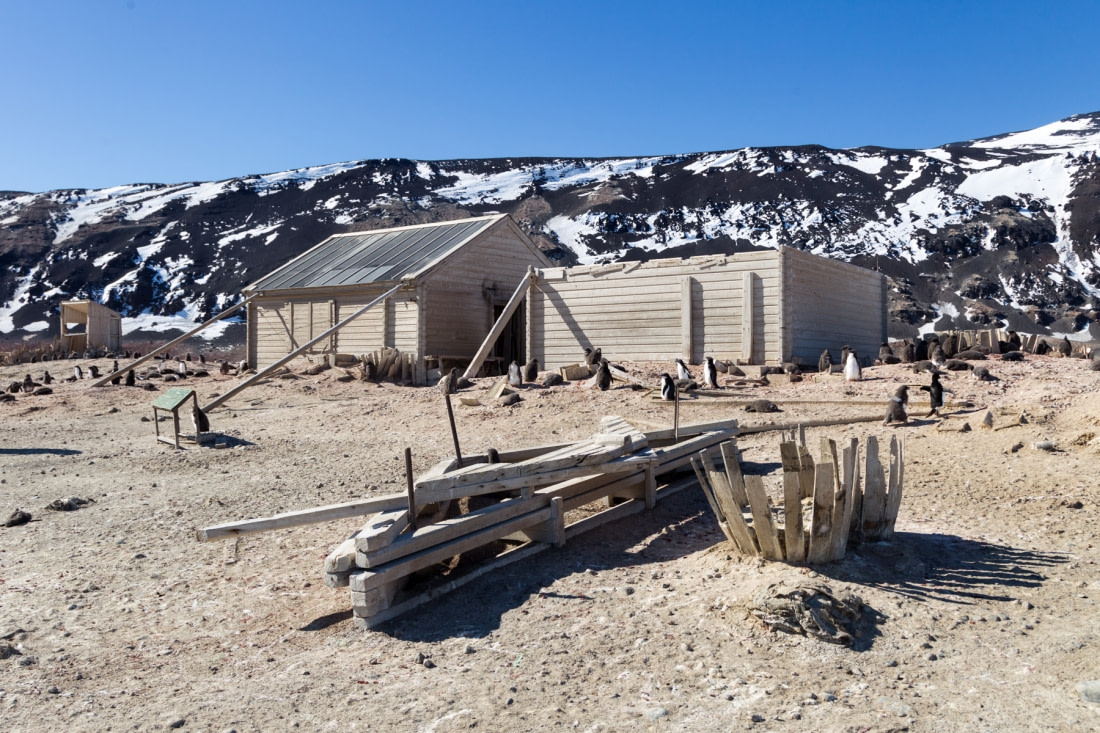
In addition, the men began longing for a glimpse of the sun over the dark winter months with Borchgrevink writing that ‘the darkness and solitude weighs heavily on one’s mind. The silence roars in the ears. It is centuries of heaped up solitude’. By mid-winter Borchgrevink wrote that:
‘Oppressive feelings is reigning within our four walls, that everyone looks half-dead. If one of us should try and start some fun to enliven the rest, he would be suspected of an attempt to break down the discipline…The safest thing to do is to keep quiet as much as possible so as to not make the discomfort greater than it is’.
Nonetheless, Borchgrevink and his men were rewarded with the sight of the aurora australis with Borchgrevink writing that:
‘The aurora attained its maximum intensity; great curtains of light would shake themselves across the sky with undulation motion…huge shafts of red and green light would shoot down towards the earth with a rapidity impossible for the eye to follow’.
With the return of the Southern Cross in January 1900, Borchgrevink and his party sailed towards the Ross Ice Shelf, landing at Possession Island before setting out across the ice shelf to reach an estimated 78° 50’S: the closest anyone had got to the South Pole up to that time. Borchgrevink then sailed home having collected a large collection of botanical specimens satisfied with his accomplishment. However, one record he believed he had set – being the first to winter over – had in fact been shared unknowingly with another expedition: the Belgian expedition of 1897-1899 under the command of Lieutenant Adrien de Gerlache, who along with his men, had been trapped with their vessel Belgica in frozen pack-ice in the Bellingshausen Sea west of the Antarctic Peninsula since the end of February 1898. Among the ship’s crew was later on to be known as one of the greatest in polar exploration: Roald Amundsen.

Scott, the right man for the job
Following Borchgrevink’s expedition, there were calls in Britain for the need for a British venture to Antarctica with Sir Clements Markham, president of the Royal Geographical Society championing the idea of a national Antarctic expedition. From 1895 to 1899 he persistently raised funds and gathered support, with his energy paying off when the Royal Navy expedition was approved. What Markham lacked was a suitable leader though, but he had in mind the ideal man to lead the expedition
‘A naval officer…and he must be young. These are essentials. Such a commander should be a good sailor with some experience of ships under sail, a navigator with a knowledge of surveying, and he should be of a scientific mind. He must have imagination and be capable of enthusiasm. His temperament must be cool, he must be calm, yet quick and decisive in action, a man of resource, tactful and sympathetic’.
The man who presented himself to Markham by chance and fitted the bill was Robert Falcon Scott, a torpedo lieutenant on the HMS Majestic’. Scott was walking down Buckingham Palace Road in London when he bumped into Markham who he met a few years ago in the West Indies while still a midshipman on the training ship HMS Rover. Scott had caught Markham’s eye during that time when Scott won a cutter race. At the time, Markham noted over dinner that Scott had ‘intelligence, information and charm of his manner. Markham appointed Scott commander of the expedition that was to sail towards Antarctica on the Royal Research Ship (RSS) Discovery; a ship designed for use in the Antarctic and was the last traditional wooden three-mastered ship to be built in Britain.


Blog


Circumnavigating Spitsbergen
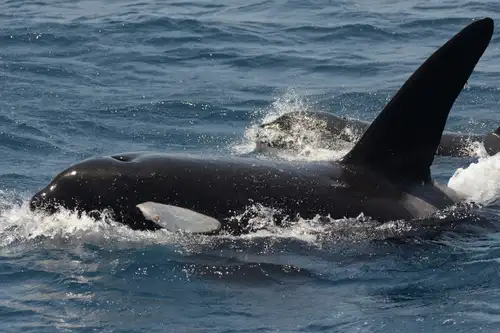
8 Whales You Might See During Your Antarctica Cruise

Traditional Lifestyles of the Inuit
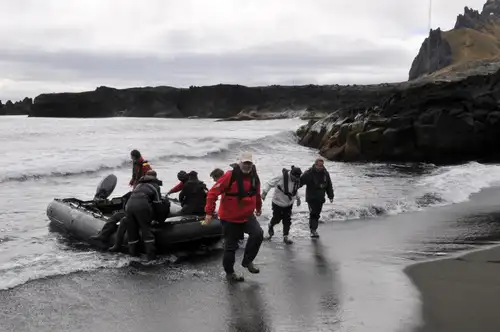
A visit to the fascinating island of Jan Mayen
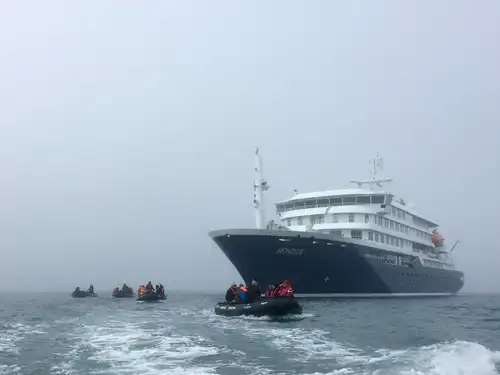
Highlights from the First Arctic Voyage of Hondius
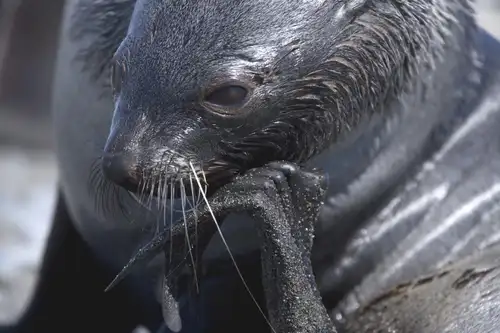
Coming Back from the Brink: The Fur Seals of Antarctica
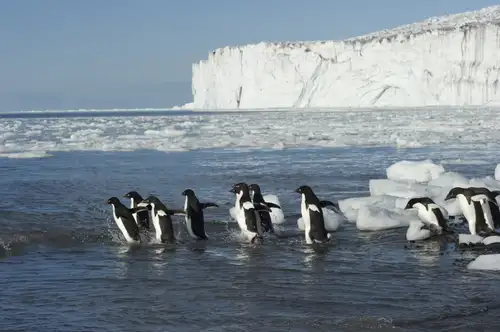
The bio-richness of the Ross Sea
Arctic vs. Antarctica: A Traveler’s Guide
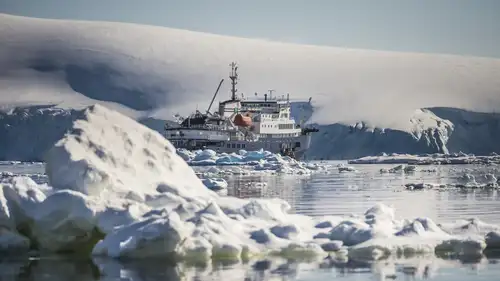
5 Life Lessons You'll Learn in Antarctica
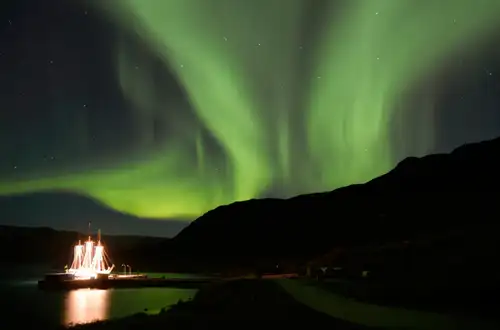
The Northern Lights dancing across the skies
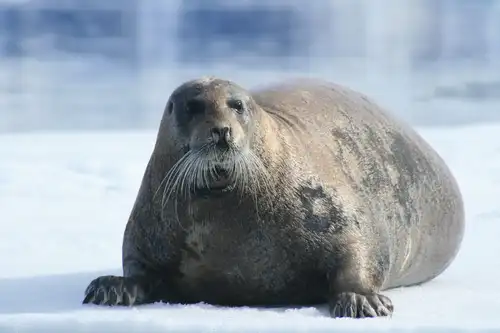
Arctic Seals
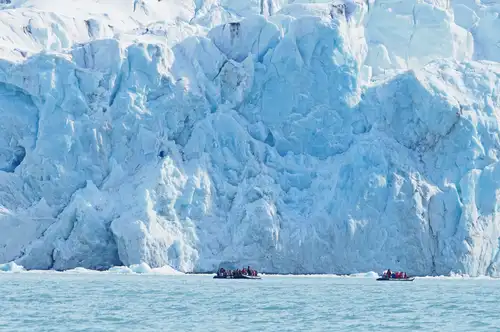
Get to Know Your Ice
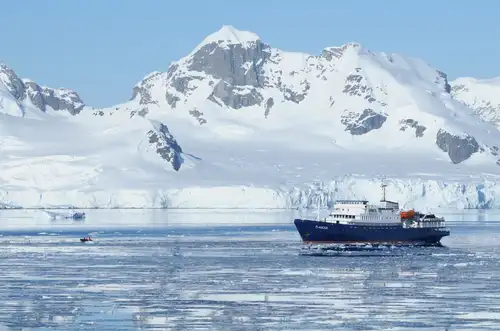
The Ultimate Traveler’s Guide to the Arctic and Antarctica
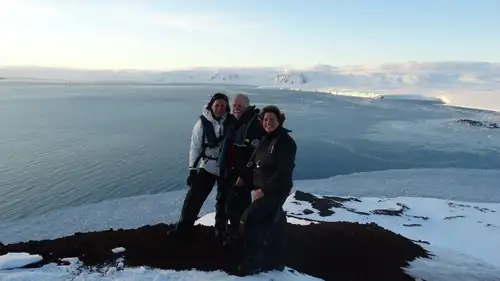
Polar Cruises: The Ultimate Icebreaker
Everything you need to know about Antarctic icebergs
Shackleton’s Long-Lost Endurance Discovered in Antarctica
Kayaking In Greenland
11 South Orkney Animals: Whales, Seabirds, and Penguins Aplenty
Explore Antarctica Without Leaving Your Couch