
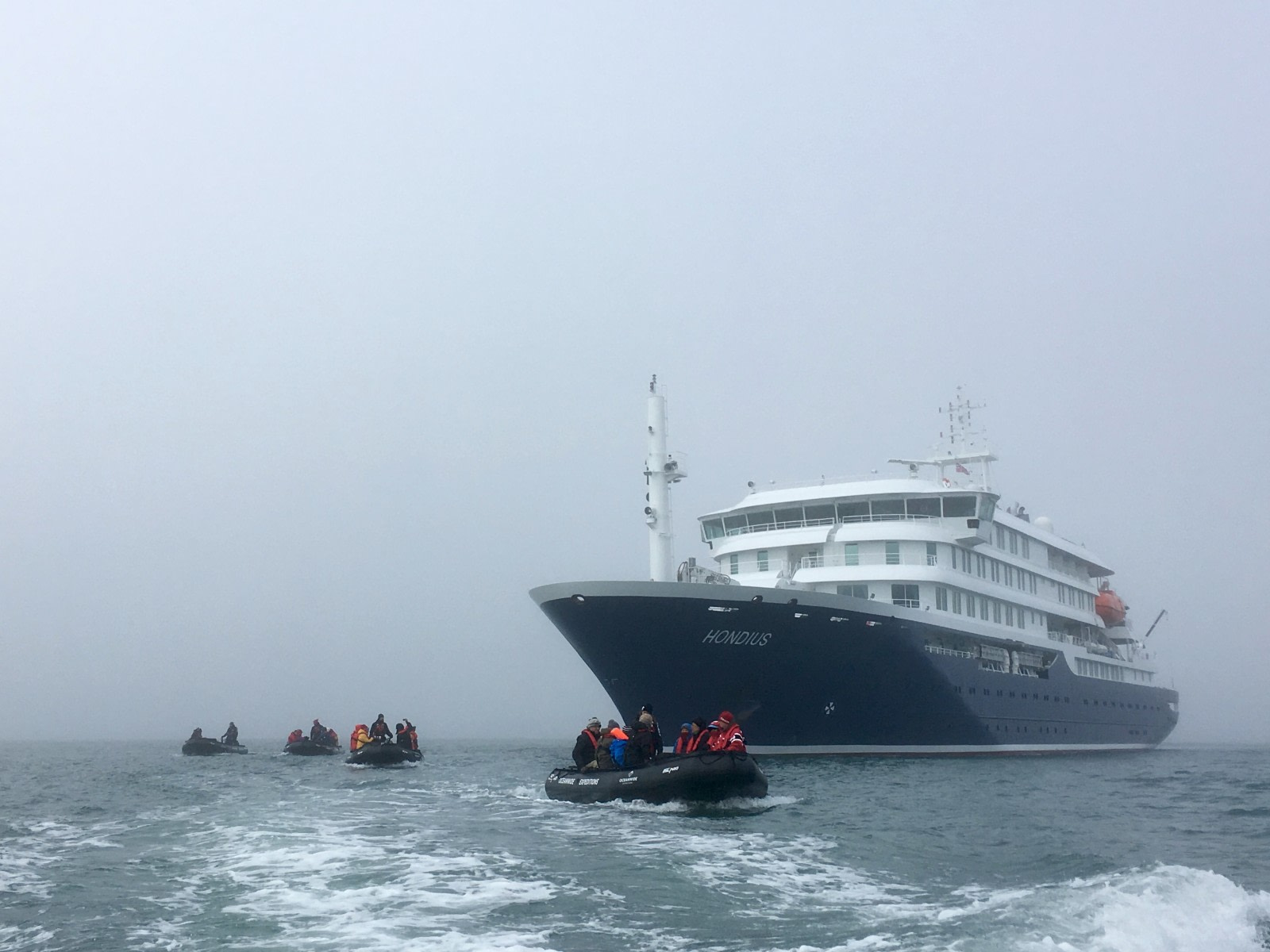
Our new ship Hondius completed its first Arctic expedition cruise on June 14, 2019. This being a new ship, the maiden voyage was not without its hiccups. But despite these, passenger response to the expedition was overwhelmingly positive.
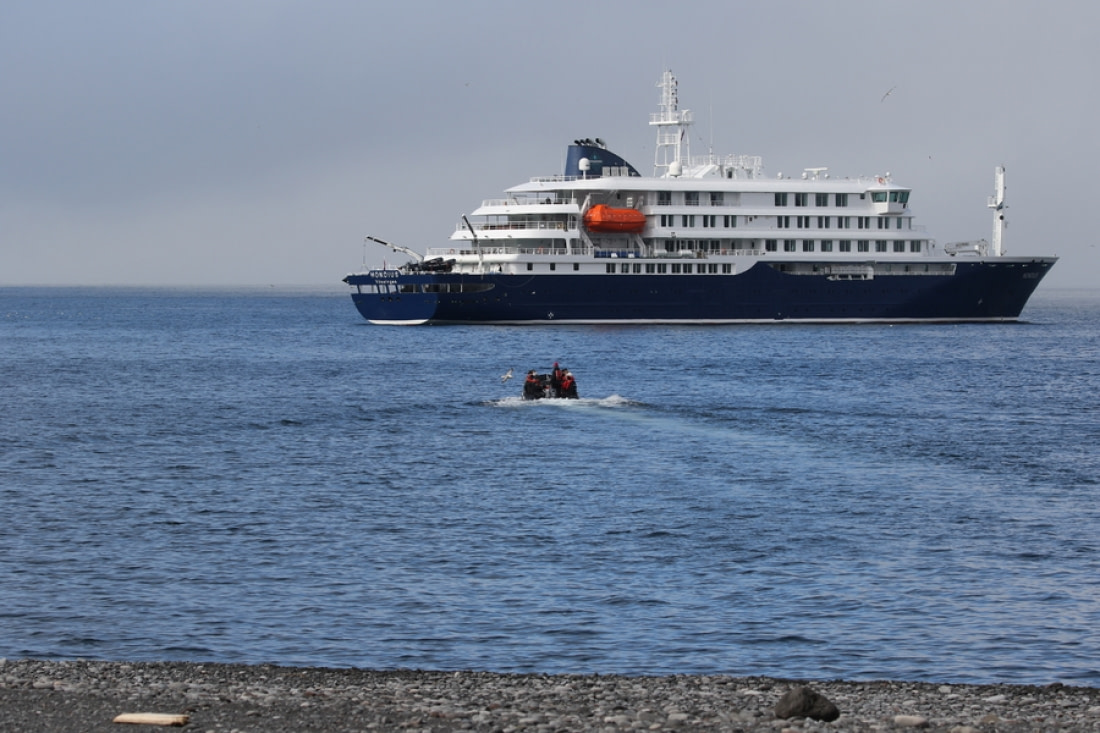
Here we recap a few highlights from that far-reaching voyage, looking forward to the many stellar Arctic adventures sure to come.
Meeting the new Polar Class 6 ship in Vlissingen
Hondius had sailed to the town of our headquarters in Vlissingen, Netherlands, not long before it was to start its first Arctic expedition cruise. Though our passengers were clearly excited when they saw the ship for the first time, we were probably more so.
It had been over two years that we’d waited to see Hondius in person, after all, and finally the moment had arrived.
Guests, guides, and office staff had in many instances traveled far to meet Hondius, taking planes, trains, and automobiles from such varied locations as Croatia, Germany, the United States, Malta, France, Switzerland, and the United Kingdom.
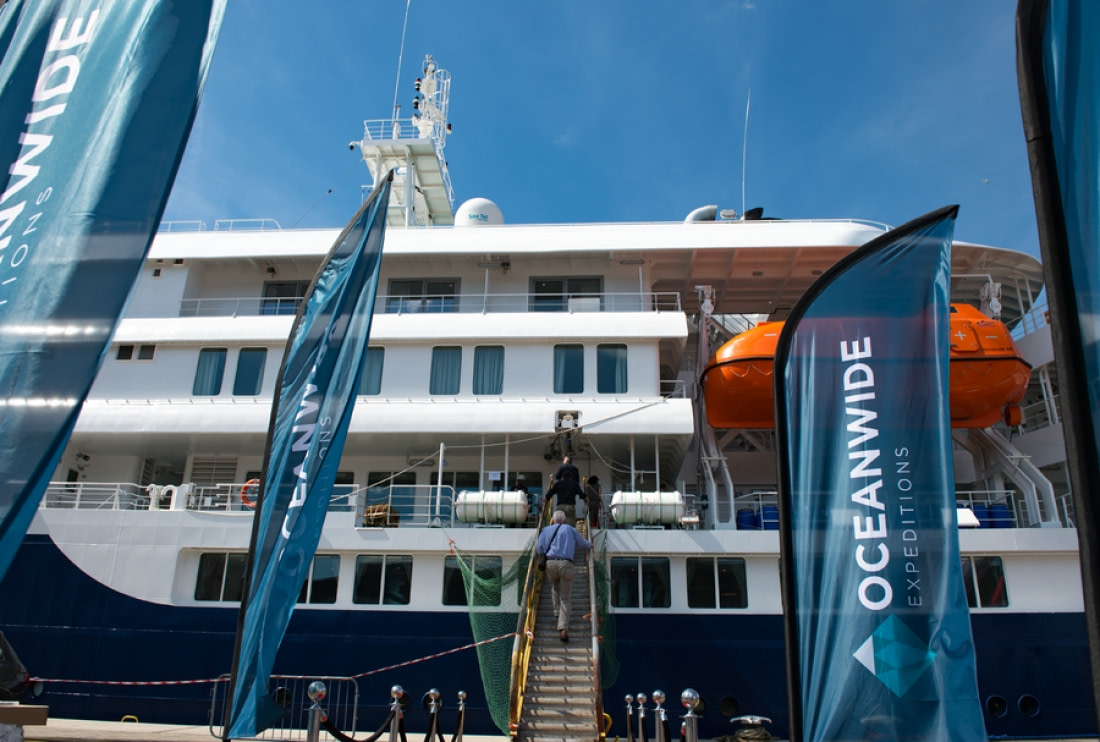
The arrival of the ship truly represented a new chapter for us, made even more momentous by the fact that we’d recently celebrated the company’s 25th birthday, launched a series of well-received anniversary contests, and moved into a new central office.
Not only that, Hondius was a milestone in the expedition cruise industry at large, being the first-registered Polar Class 6 vessel in the world.
So needless to say, we were excited for the future, the performance of the ship, and the success of the Arctic voyage on which Hondius was about to embark.
Vlissingen to Longyearbyen (and many points between)
Hondius left Vlissingen on the evening of June 3rd, sailing in the light of a fiery Holland sunset. It would make stops at Aberdeen, Fair Isle, and Jan Mayen before reaching Longyearbyen.
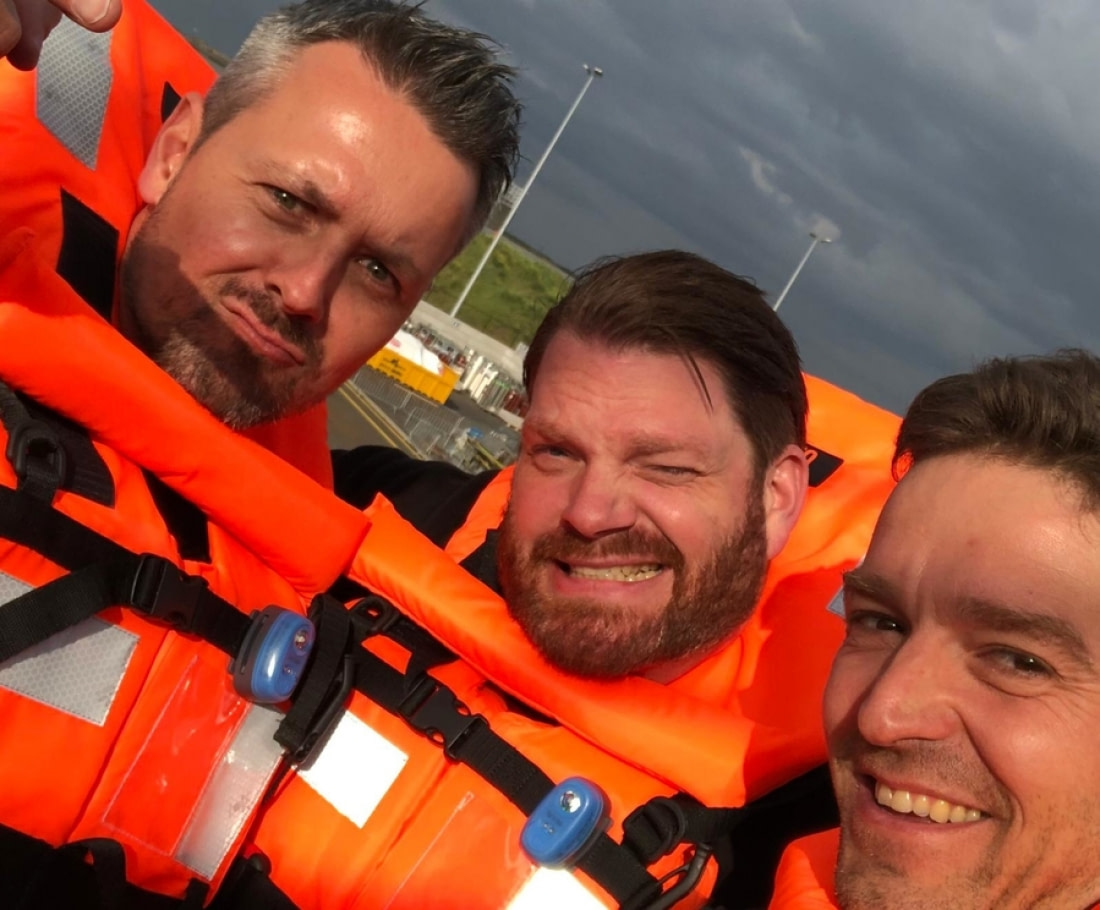
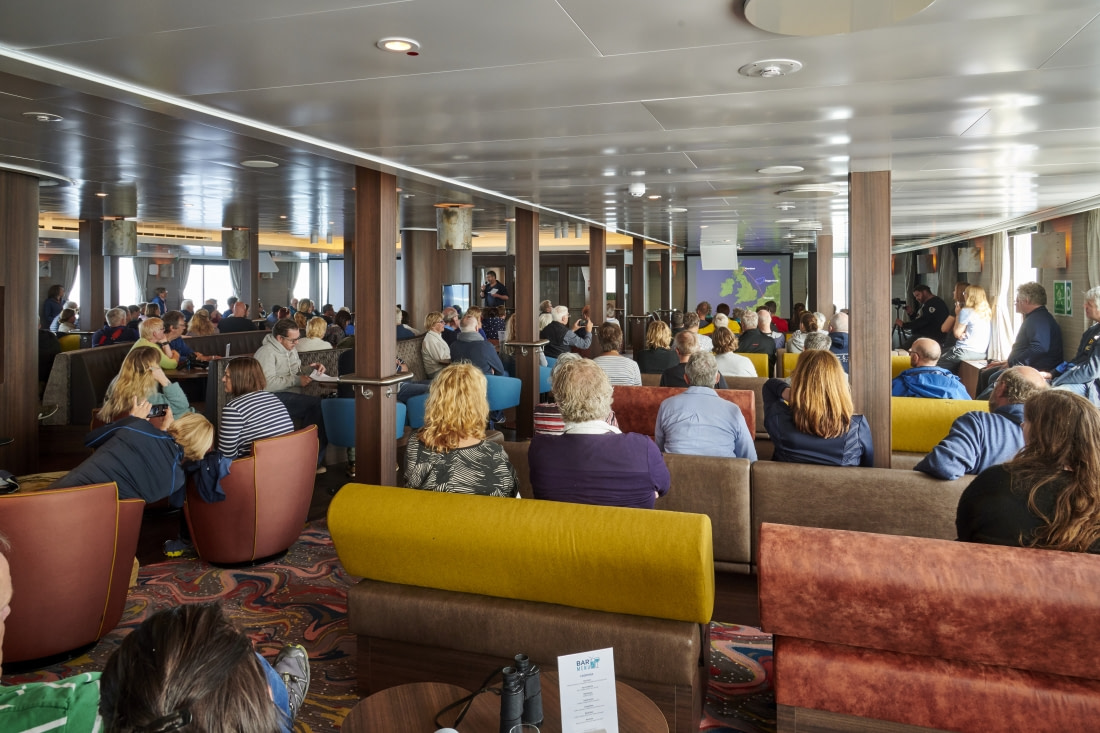
Passengers were given the standard safety briefing, along with introductions to the 14 onboard guides. Among the highlights of these early moments was the Scottish expedition guide, Bill, appearing in a kilt.
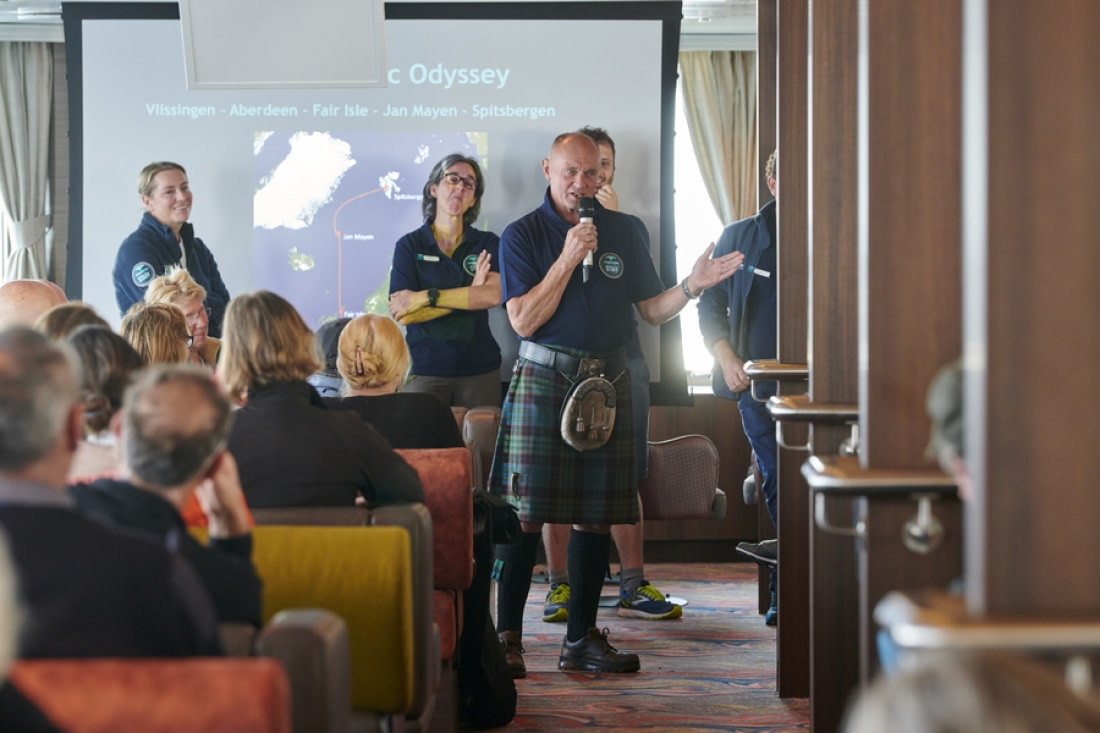
Any doubt among the passengers that they were going to have fun should’ve vanished in that moment.
Hondius reached Aberdeen the next day, June 5, after which passengers set out on different sightseeing trips: Stonehaven, a fishing village, was nearby, as well as Dunnottar Castle.
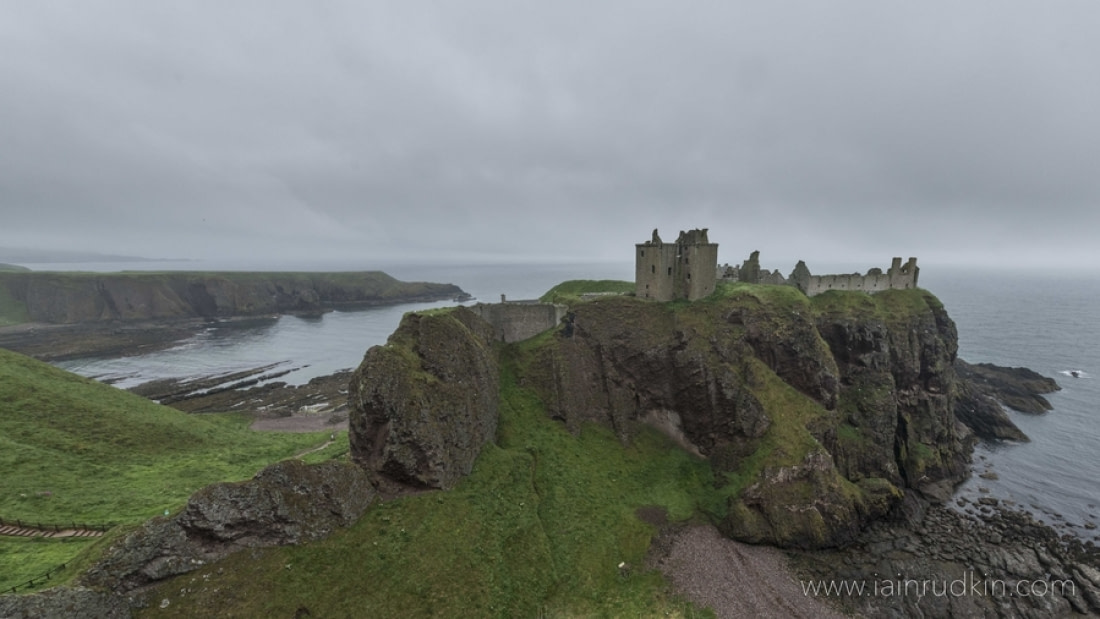
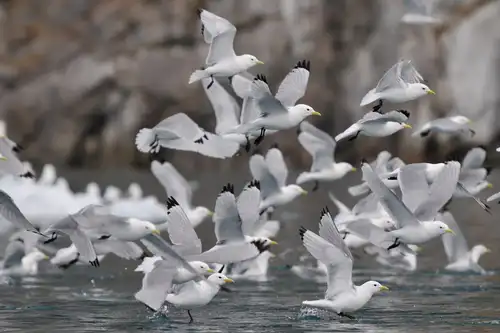
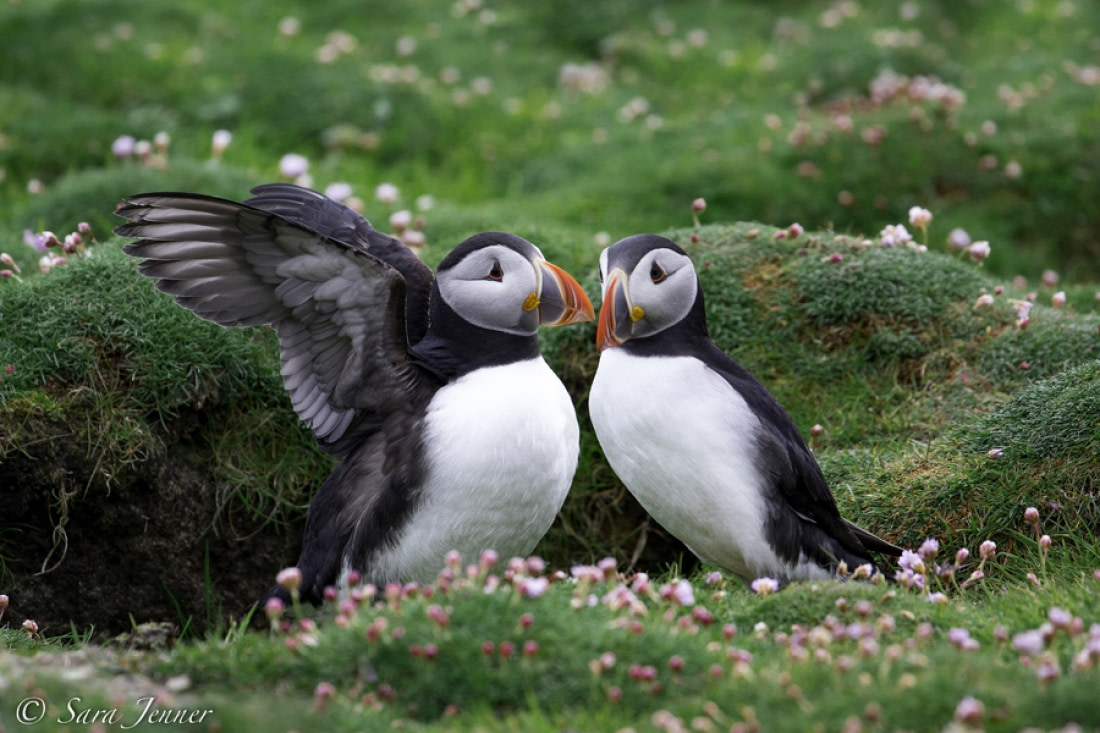
Then there was the RSPB Scotland Fowlsheugh Nature Reserve, home to the largest seabird colony on the east coast of Scotland, with more than 130,000 breeding pairs of birds, among which were kittiwakes, guillemots, razorbills, fulmars, herring gulls, and puffins.
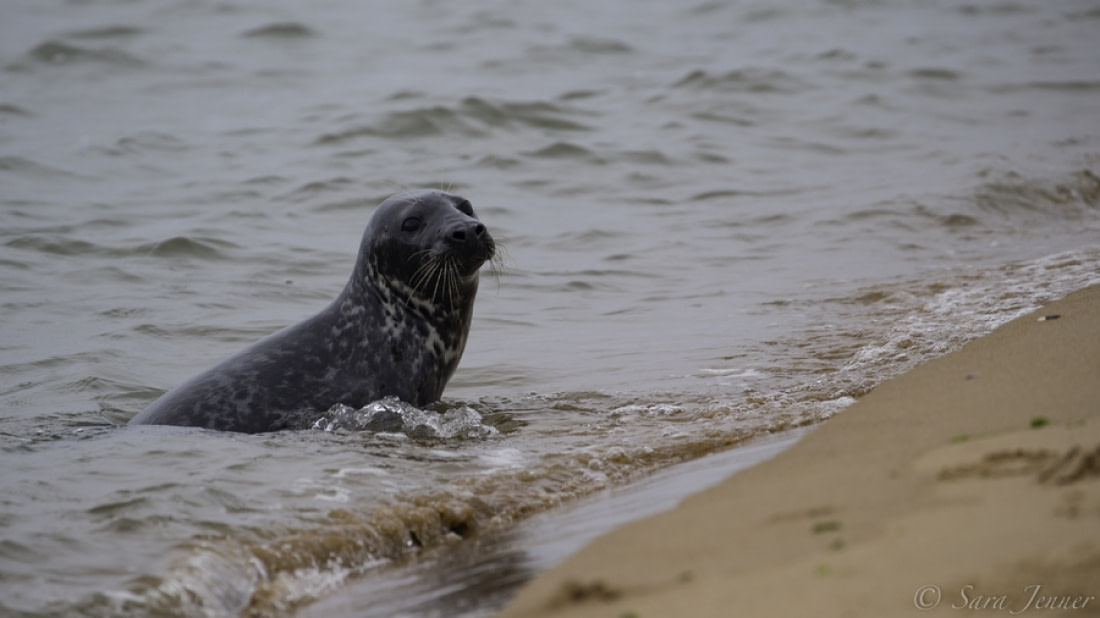
Meanwhile, other passengers went to the Forvie National Nature Reserve, also known as the Sands of Forvie for its sculpted dunes. Eider ducks nest there, and the nearby River Ythan provided abundant views of grey and common seals.
The two groups of passengers joined later that day at the fishing village of Footdee, or as the local Scots pronounce it, Fittie, welcoming more newcomers to the ship before sailing to Fair Isle overnight.
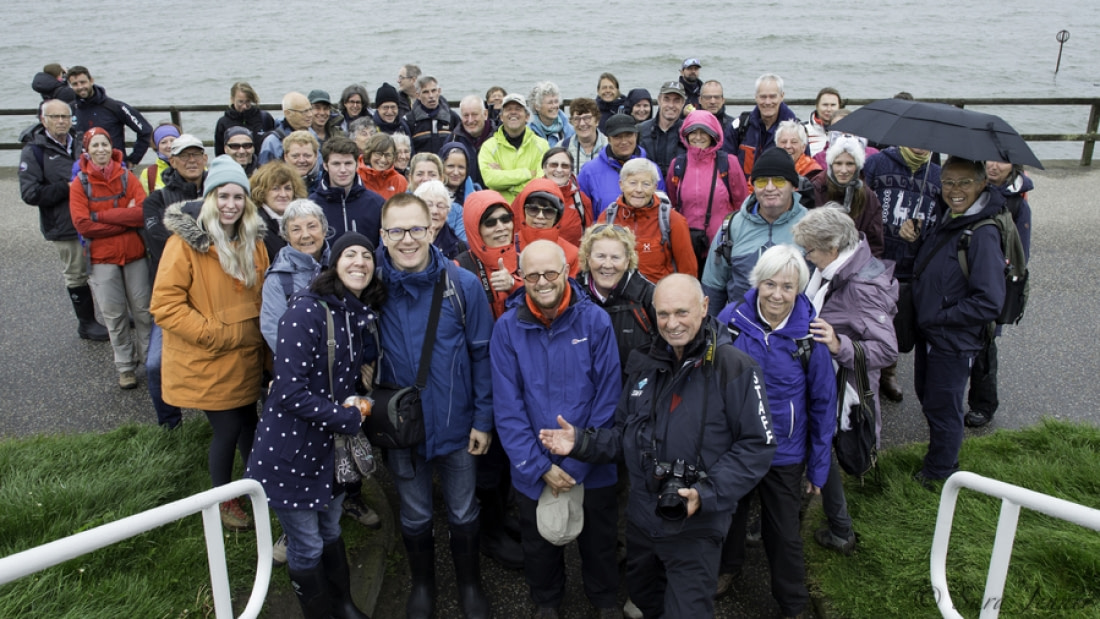
Passengers visited Fair Isle the next day via our onboard Zodiacs, welcomed by a party of islanders who introduced them to the area’s points of interest, which included an excellent selection of cakes.
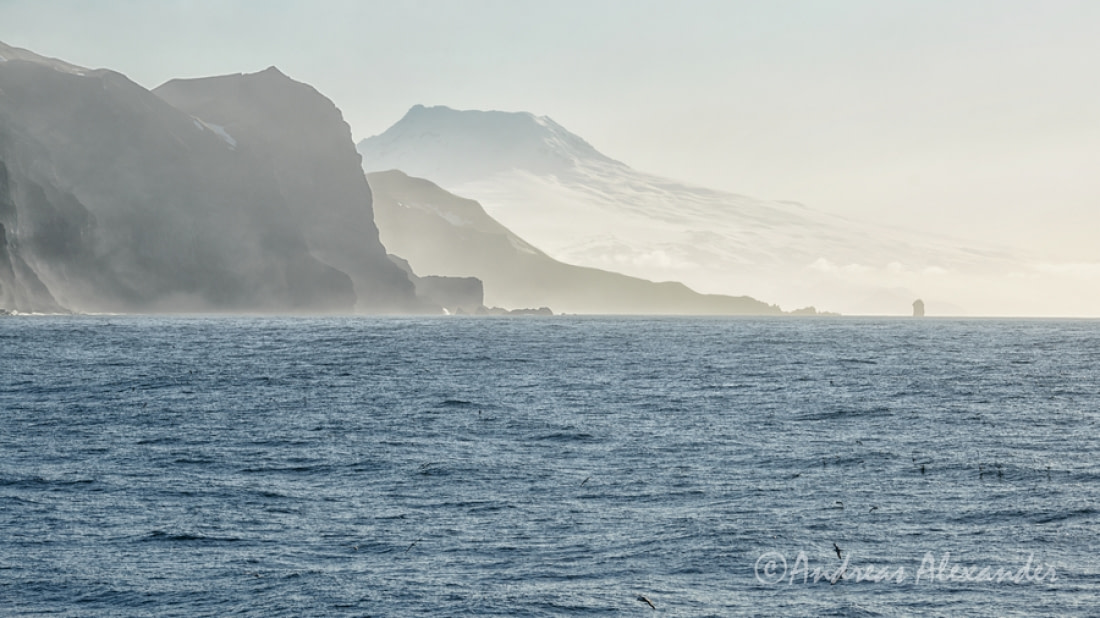
A few days later, on June 9, Hondius had crossed the Arctic Circle and arrived at Jan Mayen. As one of the guides wrote in the trip log, “The morning sun backlit skeins of low sea fog, and the view to the north was utterly dominated by the monolithic presence of Beerenburg, the volcanic sentinel guarding the Norwegian-Greenland Sea.”
A humpback whale made several appearances close to the ship, then after breakfast a blue whale spouted off the port side.
Because the swells were too large to make the planned landing at Båtvika, Hondius took passengers to the bay of Hvallrossbukta.
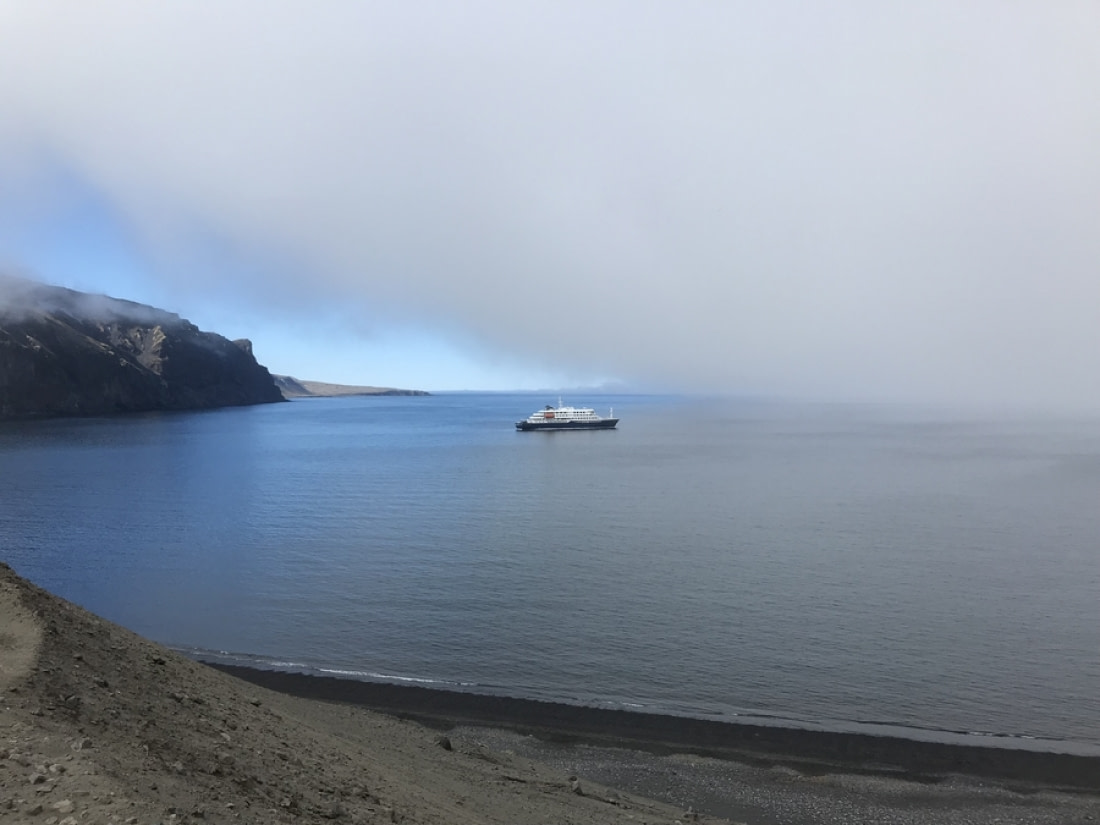
“The landing beach had an ethereal feel,” wrote a guide, “The specter of Hondius appeared sporadically in the swirling mists, and the imposing volcanic cliffs occasionally revealed themselves – though never in full.”
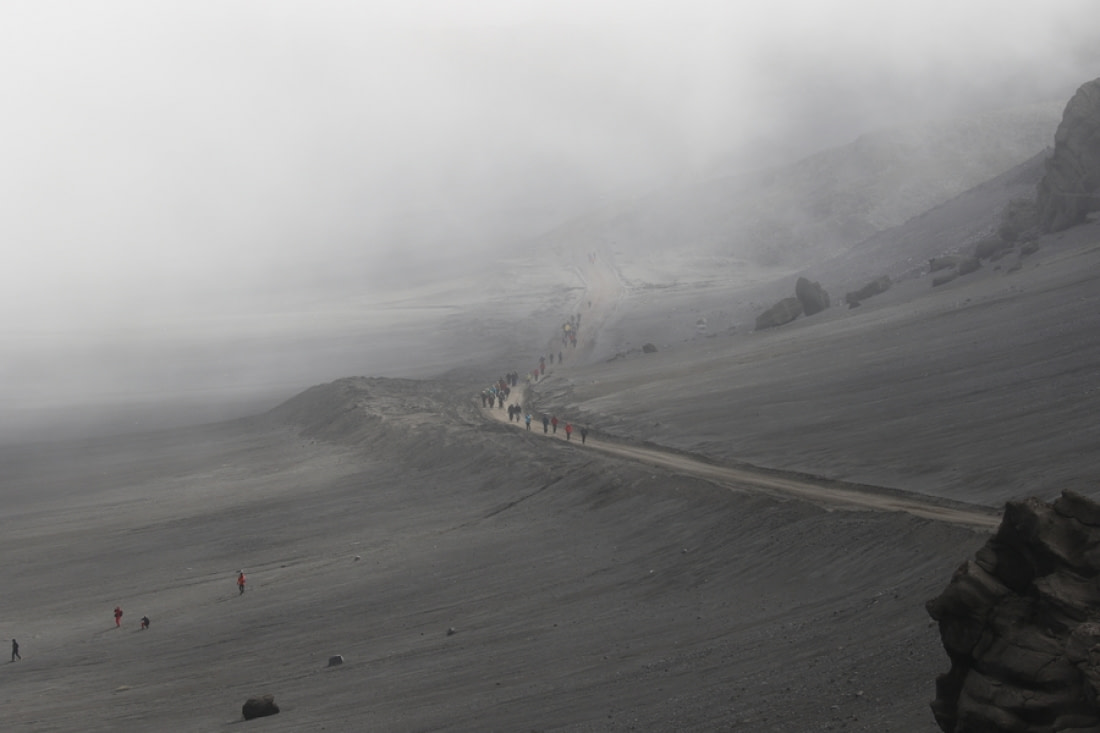
Some passengers walked the beach, while others hiked near a little auk colony among the rocks. Both groups reconvened later that day for a sailing trip along the northern shores of Jan Mayen.
There they saw the glaciers that cascade down from the summit crater of Beerenburg, the first glaciers of the trip and a fine “appetizer” for those they would see in Svalbard.
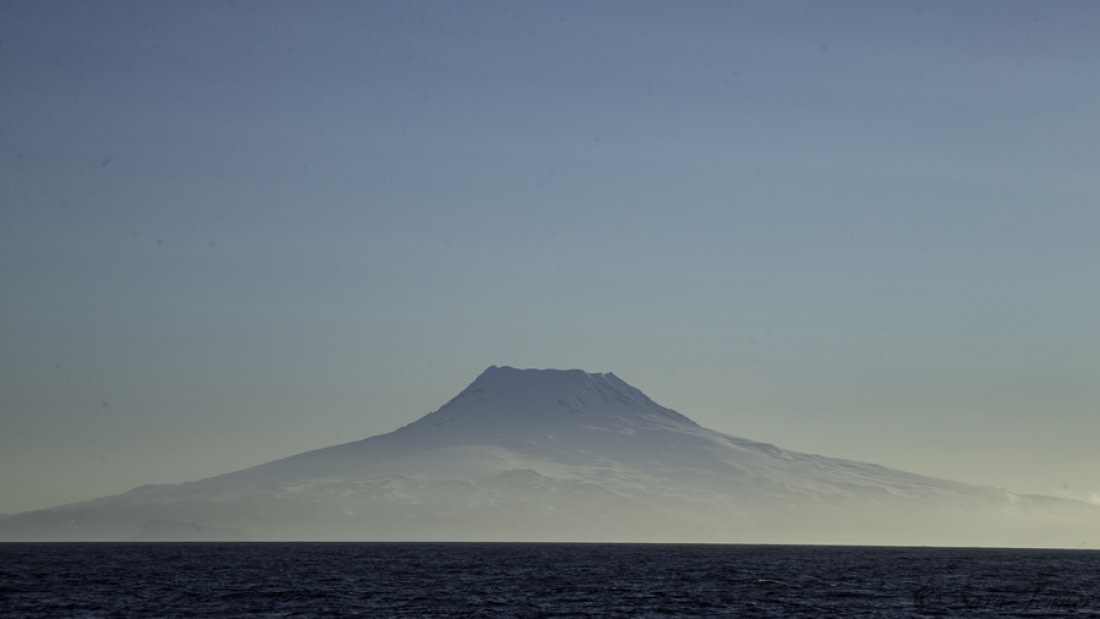
The next few days were spent sailing through the first sea ice of the voyage, witnessing a few late-night whales and lounging seals, and enjoying many engaging presentations by the guides.
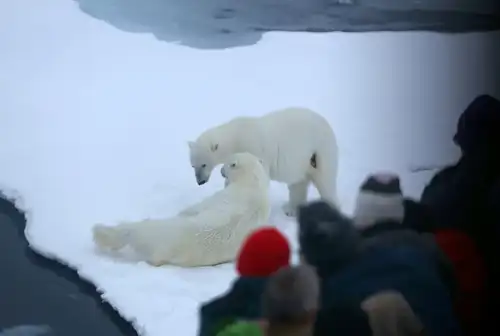
The first polar bear sighting!
“For most of us,” wrote one of our guides, “today was the highlight of the voyage. Our wildest dreams came true, and we finally met the king of the Arctic on ice.”
It was June 12, and out on the ice was a bear jumping and swimming between the floes.
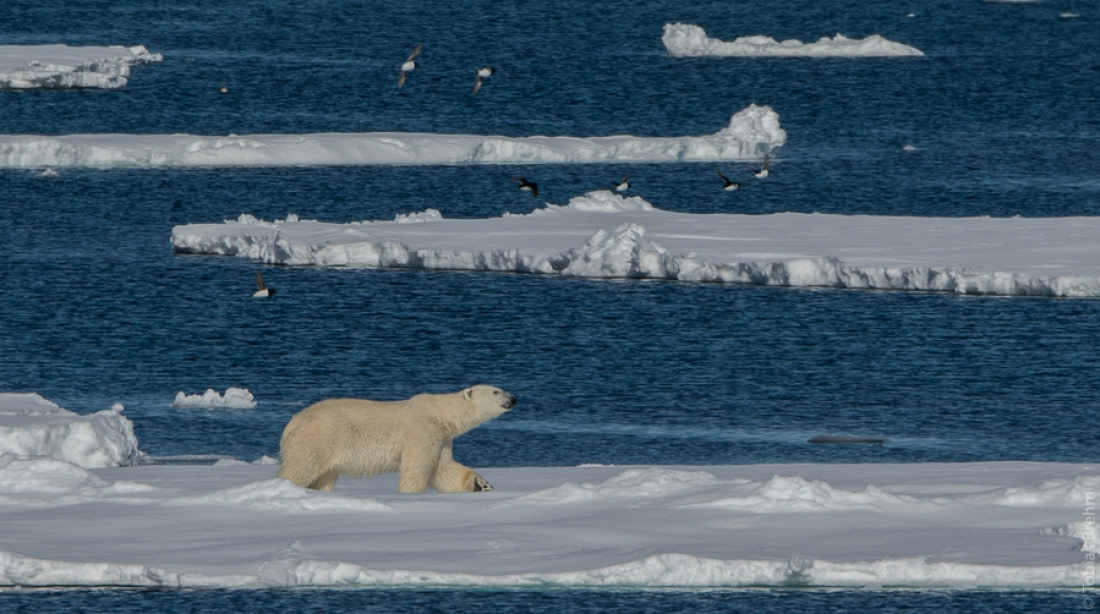
But though this was the day’s wildlife highlight, the animal appearances didn’t end there. A bowhead whale, or Greenland whale as it’s also called, made an appearance. Any guide will tell you this is a rare occurrence, but even rarer was the narwhal that surfaced after that.
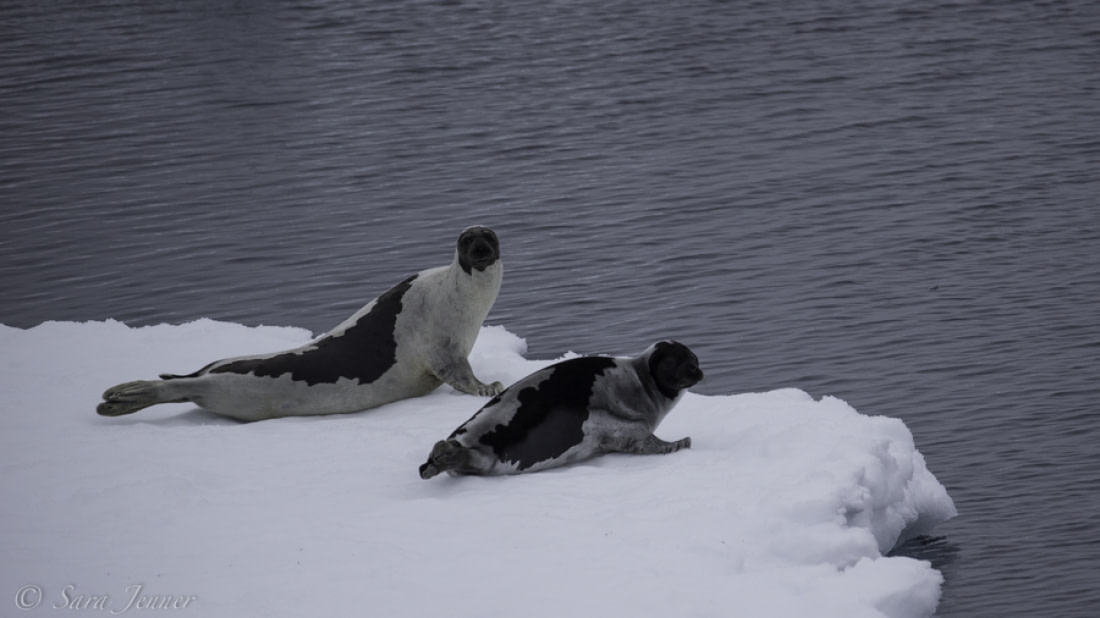
Ivory gulls, kittiwakes, harp seals, ringed seals, and one hooded seal were also spotted.
Arrival at Svalbard, Arctic wildlife haven
By June 13, Hondius had reached the landing site of Poolepynten on the eastern coast Spitsbergen, the largest island of the Svalbard archipelago.
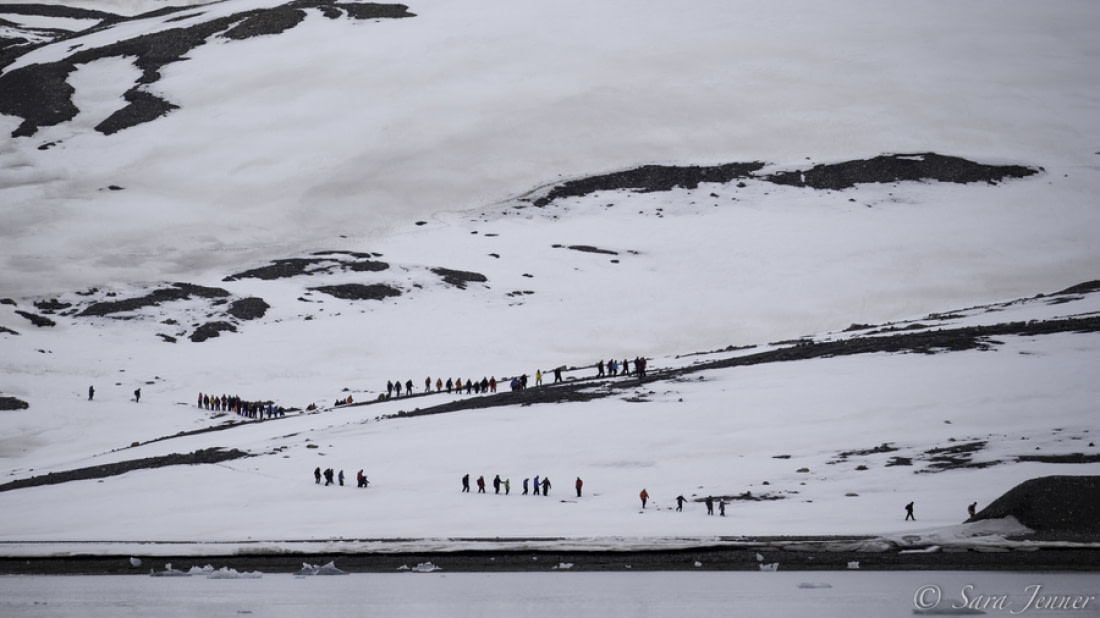
Walking groups found a rugged beach strewn with whale bones and Russian timber that had floated all the way from Siberia, and rolling inland was a vast lagoon-dotted tundra that sloped up into distant snow-covered mountains.
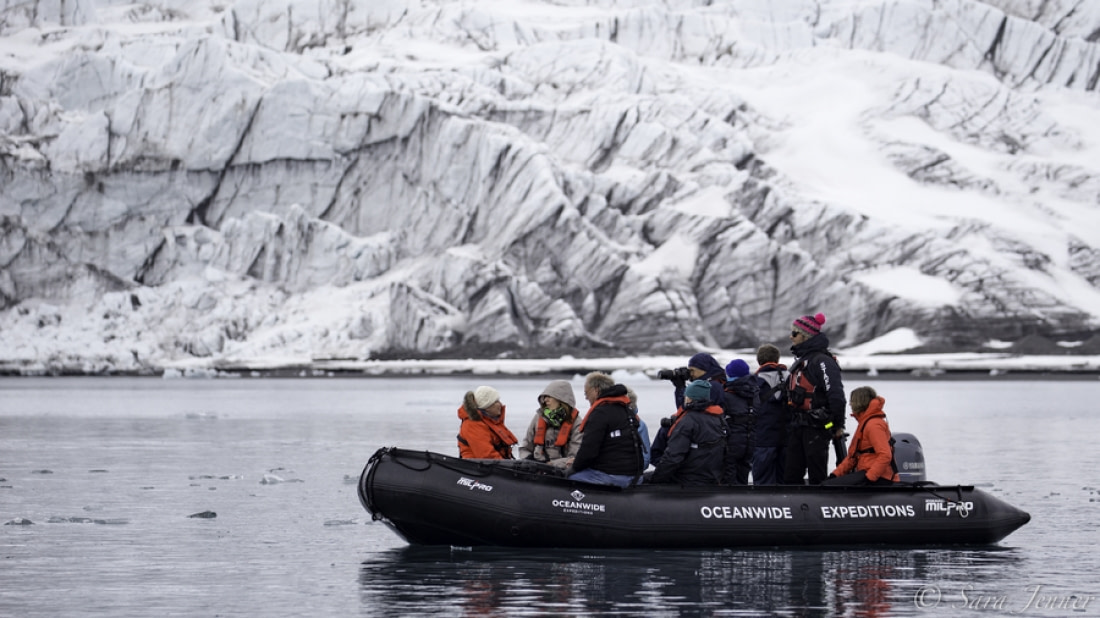
Guests later enjoyed viewing walruses, taking part in an extensive Zodiac cruise in Ymerbukta Bay, and walking near the shattered front of the nearby glacier.
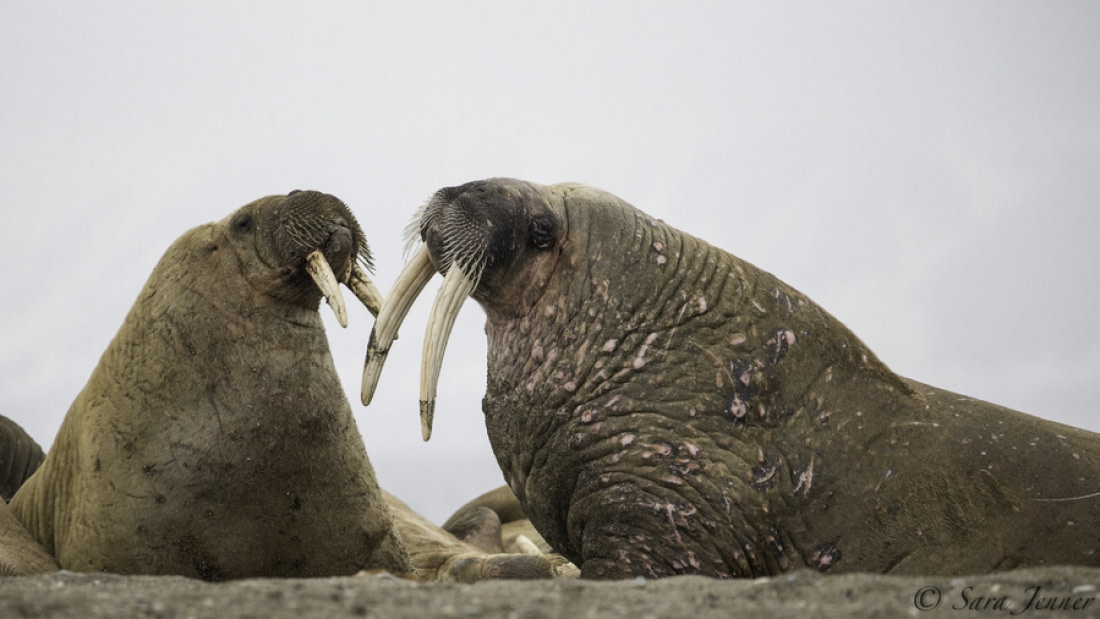
In fact, the visit to the glacier was another highlight for many of the passengers, complete with sightings of whales, seals, reindeer, and at least one Arctic fox. Everyone went to bed that night knowing they’d seen some of the best of Svalbard.
Disembarkation in Longyearbyen, Spitsbergen
But even the best voyages eventually come to an end. On June 14, Hondius docked in Longyearbyen, the capital city of Svalbard. After sailing 2,231 nautical miles, all guests were to disembark here, having made a few new friendships and more than a few memories.
“This was the journey of a lifetime,” wrote a guide. “We saw some of the most beautiful parts the Arctic has to offer.”
Was there a glitch or two on this maiden Arctic voyage? Of course there was, but this is virtually inevitable. And even so, the weather was great, the guests were happy, and all staff came together to make this epic Arctic cruise adventure possible.
We hope you’ll join us for the next one.


Blog


Antarctic Icon: 44 Facts About the Emperor Penguin
Seven Tips to Get the Most out of Your Expedition Cruise
Inside the Svalbard Global Seed Vault
8 Scientific Wonders of the Arctic
Two for the Snow: Polar Cruises for Couples
How Arctic Wildlife Differs from Antarctic
10 Tips for Photographing the Northern Lights
Puffins: Clown Birds of the Atlantic
Six Facts About the Crabeater Seals of Antarctica
12 Tips to Help Keep Birds Safe During an Antarctic Cruise
The Pack Ice and Polar Bears of North Spitsbergen
First to the North Pole: Five Failed but Brave Expeditions
A Day of Whale Watching in Antarctica
Greenlandic Inuit Beliefs
Cruising Solo: The Benefits of Single-Passenger Polar Travel
Secrets of the Snowy Owl: Habitat, Adaptations, and Other Facts
Antarctica in Pictures: Photos from 2018
Penguins, Petrels, and Prions: Top Antarctica Bird Tour Spots
Humpback Whales: the Stars of the Western Antarctic Peninsula