The Bio Richness Of The Ross Sea - Nexta Expeditions
The bio-richness of the Ross Sea

The bio-richness of the Ross Sea

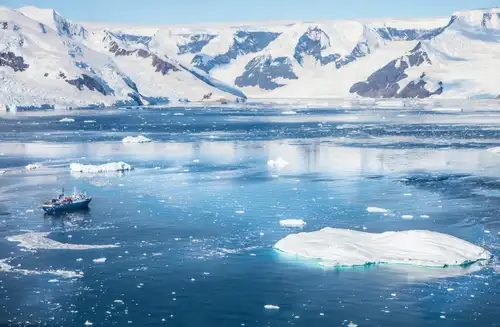
The Ross Sea is one of the most stunning and untouched marine areas globally. This sea, which remains frozen for most of the year, spans 3.6 million square kilometers (1.4 million square miles) along the Antarctic coast south of New Zealand. Its waters harbor a biologically diverse ecosystem of species that have flourished, unchanged, for millennia.

Scientific history of the Ross Sea

The first vessels to navigate the Ross Sea were the HMS Erebus and Terror, under the command of Royal Navy Captain James Clark Ross in 1842. The period from the late 19th century to the early 1920s is known as the Heroic Age of Antarctic exploration. During this era, the Antarctic continent became a focal point for geographical exploration and scientific research. Notable expedition leaders of this age include Ernest Shackleton, Roald Amundsen, Douglas Mawson, and Robert Falcon Scott. Shackleton embarked on his Antarctic journey aboard the Nimrod in 1908, while Amundsen led the first expedition to reach the South Pole.

The expeditions of the Heroic Age laid the groundwork for scientific understanding of Antarctica, resulting in the Ross Sea having one of the longest histories of scientific research in the Southern Ocean, with records spanning over 170 years. This includes 50 years of continuous records of marine hydrography, Weddell seal demographics, Adélie and Emperor penguin population changes, and variations in Antarctic toothfish populations.

blog-image

View to Mount Erebus - named after the HMS Erebus

Scientific uniqueness of the Ross Sea

The Ross Sea, including its continental shelf and slope, is ecologically and climatically unique. Notable features include:

  • Its broad continental shelf (the most extensive in Antarctica);
  • Extreme seasonality (complete darkness in winter);
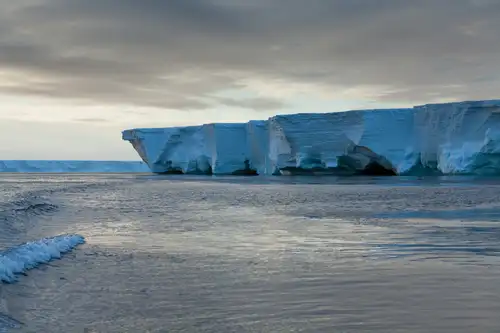
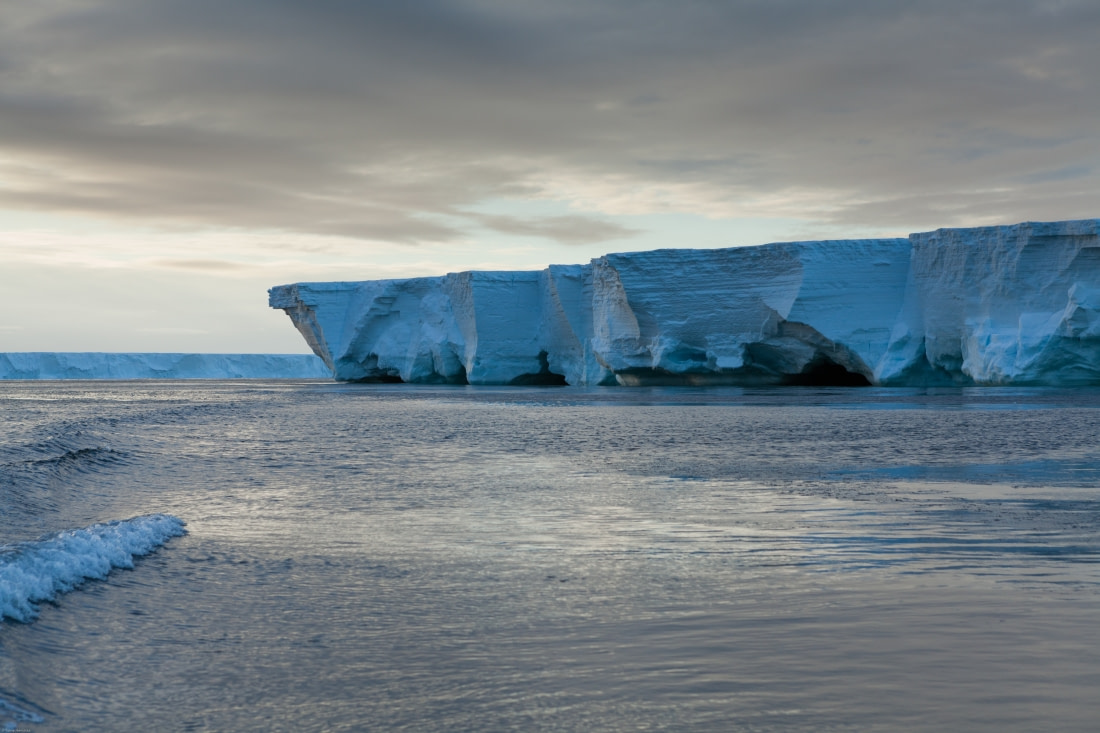
  • An extensive ice shelf (the largest in the world, covering half of the continental shelf);
  • Significant vertical and horizontal water mass exchanges (creating a dynamic environment for a rich biota supported by some of the highest productivity in the Southern Ocean).

Due to these unique ecological and climatic factors, the Ross Sea is an ideal location for studying the evolution of marine species and understanding the biological impacts of climate change.
blog-image

The Ross Ice Shelf

Bio-richness of the Ross Sea

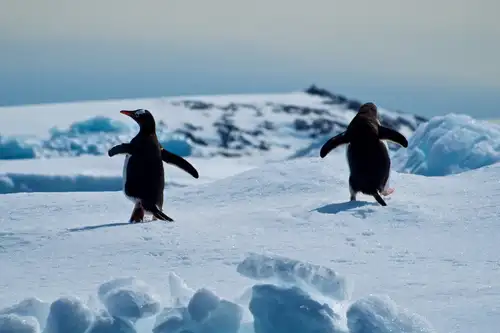
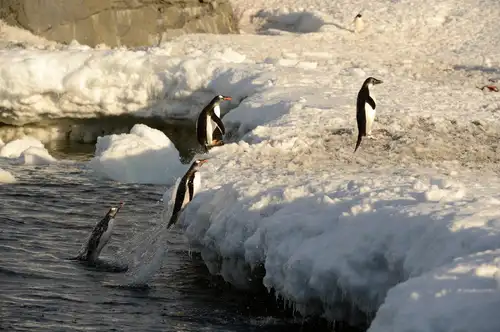
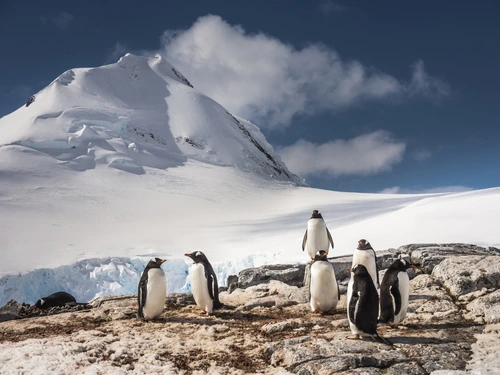
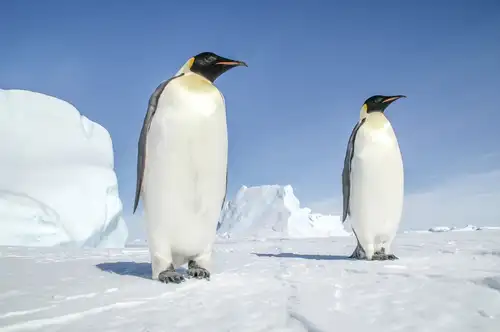
The Ross Sea, despite making up only 3.2 percent of the Southern Ocean, is home to the highest global percentages of several species, including 50 percent of killer whales, 45 percent of Weddell seals, 38 percent of Adélie penguins, and 26 percent of Emperor penguins. Additionally, the Ross Sea is an Antarctic biodiversity hotspot due to its rich benthic invertebrate fauna, thousands of species, and numerous species of ancient lineage.

One species identified as a unique evolutionary case is the Notothenioids, or icefish. Icefish are highly prevalent in the Ross Sea and, despite lacking a swim bladder, inhabit many levels of the water column. Some species of icefish have achieved neutral buoyancy through reduced mineralization of their skeleton and increased fatty deposits. Icefish also produce an antifreeze glycoprotein that allows them to survive in the cold Antarctic waters. Fish in the Ross Sea have also evolved to endure the most inhospitable locations: a National Scientific Foundation-funded expedition drilling through the Whillans Ice Stream, a glacier flowing from the West Antarctic Ice Shelf to the Ross Ice Shelf, discovered fish and other aquatic animals living in perpetual darkness and cold beneath a 740-meter-thick ice roof.

This bio-richness results from a unique food web and upwelling regions in the Ross Sea:

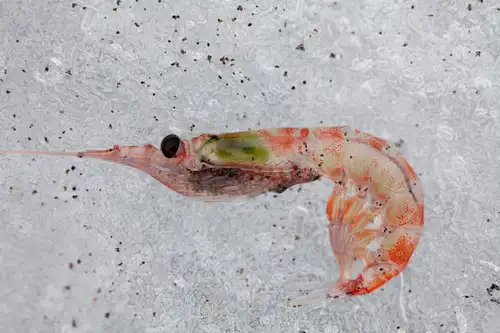
  • Unique food web: While primary producers (phytoplankton) in the lower trophic levels, including diatoms, haptophytes, dinoflagellates, and cryptophytes, are present, the smaller components of the microbial food web from tropical and subtropical regions are absent. This causes the mean size of the average primary producer to be larger, increasing the net transfer to the higher trophic levels.
  • Upwelling regions of the Ross Sea: Upwelling is an oceanographic phenomenon involving the movement of cooler, denser, nutrient-rich waters towards the sea surface, replacing the nutrient-depleted surface waters. Upwelling regions promote positive primary productivity areas (phytoplankton blooms), allowing for greater diversity in organisms. This makes the Ross Sea a site of evolutionary significance with a higher level of diversity than many other polar regions.

blog-image

Crabeater seal in Antarctic

As such, the Ross Sea needs to be treasured to ensure its biologically diverse ecosystem, which has thrived, unchanged, for thousands of years, remains unchanged forever.


Blog
go-leftgo-right

North Norway, Northern Lights, and All the Pretty Whales - Nexta Expeditions
Blog

North Norway, Northern Lights, and All the Pretty Whales

At first glance, visiting Northern Norway outside of a blazing-hot summer might seem daunting for the average traveler.
A Day on m/v Plancius - Nexta Expeditions
Blog

A Day on m/v Plancius

Stepping aboard this long-running expedition vessel, it’s easy to forget that she’s been making voyages to the polar regions since “Afternoon Delight” by Starland Vocal Band was on the Billboard Hot 100.
A Diving Dream Fulfilled - Nexta Expeditions
Blog

A Diving Dream Fulfilled

Last January, Mark Hatter achieved a dream he’d been training for over two years. Booking his berth aboard the m/v Ortelius and making the long flight to Ushuaia, Argentina, he and two of his friends sailed down the famous Drake Passage, bound for Earth’s southernmost continent. But their Antarctica trip was not just about shoreline walks and photographing penguins.
Coming Back from the Brink: The Fur Seals of Antarctica - Nexta Expeditions
Blog

Coming Back from the Brink: The Fur Seals of Antarctica

Once hunted to the brink of extinction, the Antarctic fur seal is now one of the most populous and charismatic species of seal you’re likely to encounter during your Antarctica trips. Unlike other members of its large family, the fur seal has external ears, or pinnae, a short snout, and a thick coat of dark brown fur. Male seals tend to be larger than females, with weights ranging from 91 kg (200 lbs.) to 215 kg (474 lbs.).
Six Seal Species You Might See On Your Greenland Cruise - Nexta Expeditions
Blog

Six Seal Species You Might See On Your Greenland Cruise

If you spot a grand old whiskered man lounging in solitary splendor, there's a good chance you're looking at a bearded seal. Your Greenland cruise will take you to bays where these solitary fellows (except during breeding season) hunt for fish in the relatively shallow waters near the shores.
Five Reasons to Love St. Helena - Nexta Expeditions
Blog

Five Reasons to Love St. Helena

Being one of the most remote islands on Earth gives St. Helena a unique allure. Named after a Roman empress and the mother of Constantine the Great, this island also holds the distinction of being Napoleon’s final place of exile, making it a fascinating topic of conversation.
Life in the Polar Regions - Nexta Expeditions
Blog

Life in the Polar Regions

Polar bears in the Arctic, penguins in Antarctica.
Adélie Penguins: the Little People of the Antarctic - Nexta Expeditions
Blog

Adélie Penguins: the Little People of the Antarctic

Described as “an object of endless pleasure and amusement” by Apsley Cherry-Garrard, survivor of Robert Falcon Scott’s ill-fated Terra Nova expedition to the South Pole, the Adélie penguin stands with the regal and iconic emperor penguin as one of only two penguin species found on mainland Antarctica.
Greenland: Where the Kayak Was Invented - Nexta Expeditions
Blog

Greenland: Where the Kayak Was Invented

If you've ever enjoyed kayaking, you owe a debt of gratitude to the ancient Greenlandic Inuit who originally designed them for hunting. The thrilling adventures people now have navigating some of the world's most challenging rapids wouldn't be possible without the Inuit's need for a nimble form of water transportation. While travelers still use kayaks in this region, they are typically not fishing, whaling, or sealing. Consequently, recreational kayaks have been adapted to fit their new role.
Puffins: Clown Birds of the Atlantic - Nexta Expeditions
Blog

Puffins: Clown Birds of the Atlantic

Puffins are part of a family of 22 seabird species known as auks, which are pigeon-sized birds that thrive on a diet of small fish and crustaceans.
Arctic Mythology: Inuit, Saami, and the Ancient Greeks - Nexta Expeditions
Blog

Arctic Mythology: Inuit, Saami, and the Ancient Greeks

The Arctic locations we visit aren’t merely made up of phenomenal landscapes, exotic wildlife, and more adventure than a Hardy Boys novel.
Polar Diving: A Supreme Underwater Adventure - Nexta Expeditions
Blog

Polar Diving: A Supreme Underwater Adventure

Most scuba divers are drawn to warm waters and tropical reefs, and it's easy to see why. However, even the most thrilling experiences can become repetitive if done too often.
Spitsbergen: a true polar bear trip - Nexta Expeditions
Blog

Spitsbergen: a true polar bear trip

On the third day of our Svalbard cruise, we navigated through the sea ice north of Spitsbergen. The morning greeted us with fog and fragmented ice, but conditions gradually improved. A swarm of black-legged kittiwakes trailed behind us, as our ship stirred the waters, pushing aside ice floes to reveal the tiny dark polar cod beneath.
12 photo tips to make better pictures on your Antarctica cruise - Nexta Expeditions
Blog

12 photo tips to make better pictures on your Antarctica cruise

During your trip in the Arctic or Antarctic cruise you and your camera equipment will be exposed to a variety of challenging conditions. Be careful with your equipment and protect it from the salty spray when in Zodiacs, on a beach, or on deck. Salt water and electronics is not a good mix!
Orcas (aka Killer Whales) of Antarctica and the sub-Antarctic - Nexta Expeditions
Blog

Orcas (aka Killer Whales) of Antarctica and the sub-Antarctic

Orcas are highly social and intelligent members of the dolphin family Delphinidae. They are sometimes referred to as killer whales, though this name has somewhat fallen out of fashion due to inaccurately characterizing orcas as ferocious predators.
A Day of Whale Watching in Antarctica - Nexta Expeditions
Blog

A Day of Whale Watching in Antarctica

This morning we awoke early to enjoy the first light in Wilhelmina Bay, with the snow and cloud blanketing the surrounding mountains. As dawn broke, we could see the blows of humpback whales scattered throughout the bay. Some of the whales were closer to the ship and we spotted their small dorsal fins and occasionally their white patterned tails. It was a terrific start to our first full day in Antarctica.
Polar Bear Primer: Eight Facts About the Arctic Wanderer - Nexta Expeditions
Blog

Polar Bear Primer: Eight Facts About the Arctic Wanderer

Polar bears inhabit the Arctic region across 19 subpopulations, including areas in Alaska, Canada, Greenland, Norway, and Russia. These majestic creatures prefer the edges of pack ice where currents and wind interact, creating a dynamic environment of melting and refreezing that forms ice patches and leads, which are open spaces in the sea between sea ice.
Book Recommendations for Your Polar Cruise - Nexta Expeditions
Blog

Book Recommendations for Your Polar Cruise

Though books can't replace the experience of visiting the polar regions, they make excellent companions for your journey. We reached out to our social media followers, many of whom are past or future travelers, to gather their recommendations for polar-related books. The results were impressive, and we've compiled them below in no particular order.
What to pack for your Atlantic Odyssey voyage? - Nexta Expeditions
Blog

What to pack for your Atlantic Odyssey voyage?

When packing, avoid burdening yourself with excessive clothing or gear. Opt for casual, practical attire that can be layered. Consider including the following:
Antarctica’s Hourglass Dolphin - Nexta Expeditions
Blog

Antarctica’s Hourglass Dolphin

Though hourglass dolphins are especially rare, they’re actually not a threatened or endangered species.