Secrets Of The Snowy Owl Habitat Adaptations And Other Facts - Nexta Expeditions
Secrets of the Snowy Owl: Habitat, Adaptations, and Other Facts

Secrets of the Snowy Owl: Habitat, Adaptations, and Other Facts

The snowy owl (Bubo scandiacus), also known as the great white owl or Arctic owl, is one of the most distinctive bird species on the planet. While you won’t find them in all areas of the Arctic – they don’t exist in Svalbard due to the lack of lemmings – snowy owls are seen in the polar regions of Eurasia and North America and are a potential visitor during Greenland cruises. The binomial species name, “scandiacus,” is derived from Scandinavia, as this is where the bird was first discovered. The snowy owl is the official bird of Quebec, and they are a must-see for countless bird watchers and naturalists.

Snowy owl specs: colouring, wingspan, size

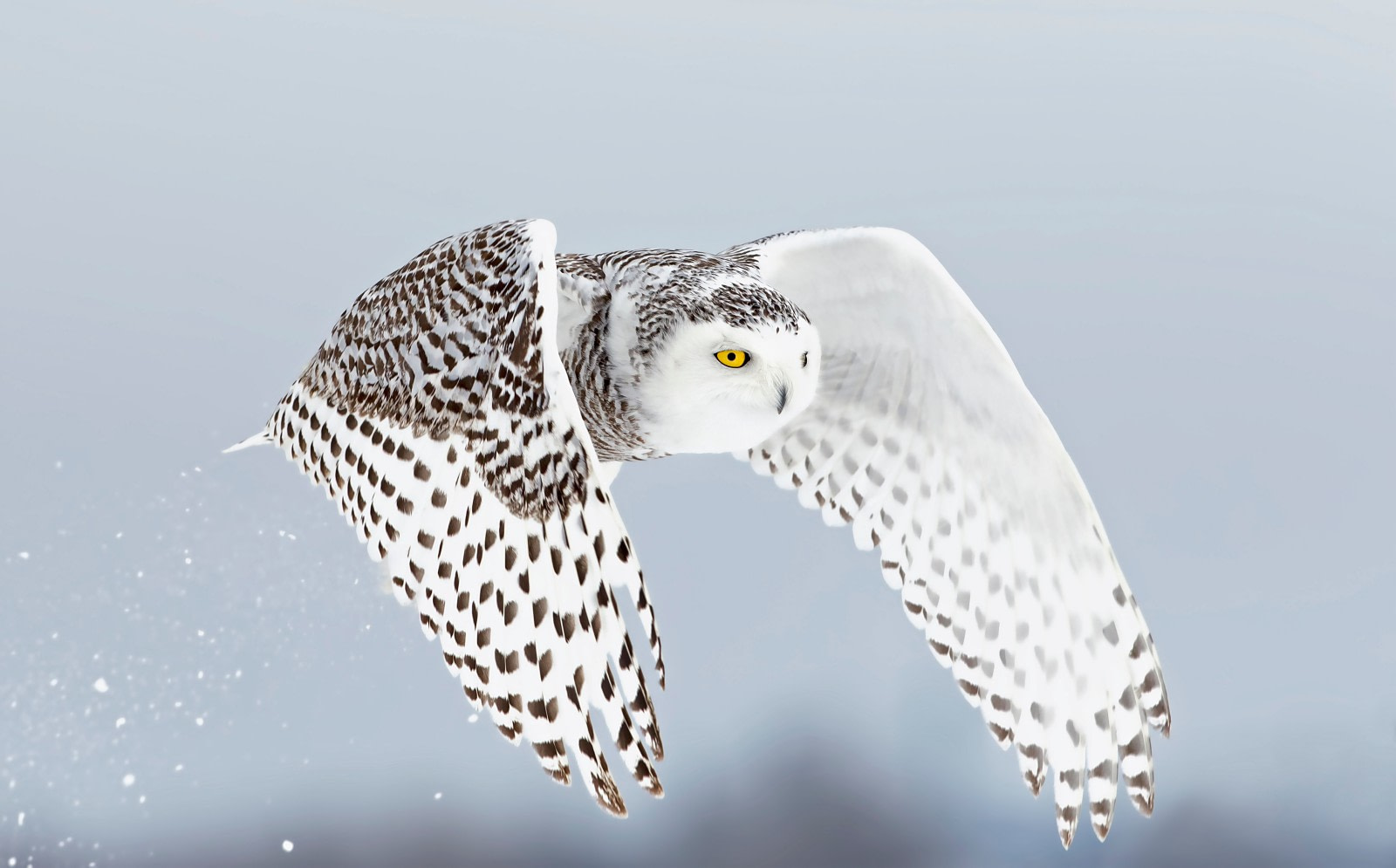
The snowy owl is noted for its beautiful white plumage and startling yellow eyes. The owlets (juvenile owls) hatch white. Their first plumage is dark grey and mottled to provide camouflage while they are still in the nest. As they get older, they start to grow their signature white plumage. Adult males are mostly white but can have some dark colouring on their wing tips. Female snowy owls have a more mottled appearance to provide camouflage for nesting on the ground, and they are also larger than males. Their beak and talons are black. Snowy owl eyes are proportionately smaller than most owl eyes are. They also cannot move their eyes, so they look around by turning their heads. Like all owls, snowy owls have a very flexible neck, which can rotate approximately 270 degrees. Their wingspan is 1.2 – 1.5 meters (4 – 5 feet), and they stand about .6 meters tall (2 feet).

The harsh tundra habitat of the snowy owl

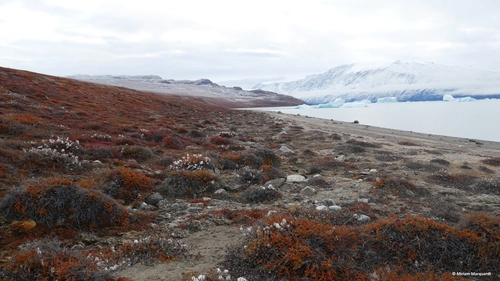
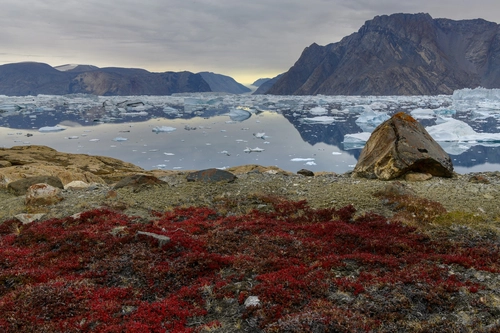
Spanning the northern regions of Canada, Alaska, Europe, and Russia, the tundra is a habitat generally found north of 71.2 degrees latitude. The environment is cold and dry, and it begins where the taiga forest regions end. Trees do not grow on the tundra, but the habitat is rich in grass, herbs, moss, lichens, and low shrubs. The ground is rocky and hard with permafrost. The snowy owl shares this severe habitat with many species, such as the Arctic fox (Vulpes lagopus), Arctic hare (Lepus arcticus), reindeer (Rangifer tarandus), and polar bear (Ursus maritimus), to name a few.

Not quite a night owl

As the snowy owl lives in a mostly treeless environment, they can often be spotted resting on the ground or on natural perches, such as mounds or rocks. In settled areas, snowy owls will be seen perching on fences and buildings. Most of us know owls to be nocturnal (active at night), but the snowy owl is actually diurnal (active during the day). More specifically, they are crepuscular, which means they are most active at dawn and at dusk.

The lone wolf of the bird world

Snowy owls are solitary except during the breeding season, when the male assists with nesting and chick rearing. Although they are nomadic, snowy owls will become extremely territorial during the nesting and breeding season. They aggressively chase away intruders or any other predators that threaten their eggs or hatchlings. Snowy owls breed in May and June, and hatchlings can be seen over July and August. Only the female sits on the eggs, and the male provides food for her while she incubates. After snowy owl chicks are hatched, the male brings food back to the nest, and the female feeds the chicks. The chicks will be cared for by their parents for the first five or six weeks, while they grow their plumage and learn to fly and hunt.

The watch-and-wait trait of snowy owl hunting

Like all predatory birds, the snowy owl is a capable hunter. The regions of the Arctic tundra are home to the prolific and proverbial rodent, the lemming (Lemmus lemmus), and a range of other small rodents, such as voles and mice. These are a staple in the snowy owl diet. Larger prey items include the ptarmigan (Lagopus, a grouse-like bird), hares (Lepus), rabbits (Lagomorpha), and various species of ducks and geese. Hunting is done with a watch-and-wait technique. Snowy owls perch on a regular lookout point and use their highly tuned hearing and vision to locate prey. Their hearing is so good that they can even hear prey moving under the snow. Snowy owl ears are asymmetrically positioned on their heads to assist with pinpointing the source of the sounds. The feathers of the snowy owl are very soft, which helps muffle the sound of their approach when hunting.

Snowy owl Arctic adaptations

The Arctic tundra is a harsh environment, but the snowy owl is well adapted to surviving and thriving in the cold habitat. They are quite round-bodied, which helps them maintain their body heat, and they have thick plumage. Most birds have bare legs, but the snowy owl has feathers covering its legs and feet to further insulate it from the cold. Its abundant coat helps make it one of the heaviest members of the owl family, with adults weighing approximately 1.8 kilos (4 pounds). As part of their survival technique in this harsh environment, snowy owls expend as little energy as necessary. Flights are short and low to the ground, and they wait for prey as opposed to flying and searching.

Bird watching for snowy owls

Unlike many of the predatory birds from warmer regions, snowy owls are nomadic. They do not keep a regular range, as their prey can be quite scarce and seasonable. During the northern hemisphere winter, they have been known to travel as far south as Scotland. Snowy owls are active during the day and prefer weather that is dry, with little wind. Such predatory birds have regular places that they perch and scan for prey, so look for snowy owls in high areas like mounds, buildings, and fences. Snowy owls do not usually perch in trees. They are more active and abundant during the northern hemisphere summer, when their prey is breeding.

Four finishing facts about the snowy owl
  • Many birds of prey swallow their prey whole. They digest the flesh, then regurgitate the bones and fur as a pellet. Scientists can use these pellets to gain information about the owl’s diet and hunting habits.
  • The snowy owl is considered vulnerable by the IUCN (the International Union of Conservation for Nature).
  • Snowy owls play an essential role in controlling the numbers of rodents in the Arctic tundra environment. One snowy owl can eat up to 1600 rodents in a year.
  • The Harry Potter movies were responsible for a sudden boom in the interest of snowy owls as pets. However, these birds are large, strong, and have a fierce bite. This resulted in many snowy owls being abandoned at animal centres around the world.
  • Best Deals

    Related Trips

    Spitsbergen - Northeast Greenland, Fly & Sail - Nexta Expeditions
    The Arctic
    Longyearbyen

    Spitsbergen - Northeast Greenland, Fly & Sail

    calendar12 Aug 2026 - 31 Aug 2026
    clock20 Days / 19 Nights
    From $ 9.500 per person
    Northeast Greenland Extreme - Nexta Expeditions
    The Arctic
    Akureyri

    Northeast Greenland Extreme

    calendar15 Aug 2026 - 28 Aug 2026
    clock14 Days / 13 Nights
    From $ 8.650 per person
    East Greenland, Scoresby Sund, Including Long Hikes - Nexta Expeditions
    The Arctic
    Akureyri

    East Greenland, Scoresby Sund, Including Long Hikes

    calendar16 Aug 2026 - 25 Aug 2026
    clock10 Days / 9 Nights
    From $ 6.000 per person
    Northeast Greenland Extreme - Nexta Expeditions
    The Arctic
    Akureyri

    Northeast Greenland Extreme

    calendar25 Aug 2026 - 07 Sep 2026
    clock14 Days / 13 Nights
    From $ 7.850 per person
    East Greenland, Scoresby Sund - Aurora Borealis, Fly & Sail - Nexta Expeditions
    The Arctic
    Constable Pynt

    East Greenland, Scoresby Sund - Aurora Borealis, Fly & Sail

    calendar21 Sep 2026 - 01 Oct 2026
    clock11 Days / 10 Nights
    From $ 6.250 per person
    East Greenland, Scoresby Sund - Iceland , Aurora Borealis, Fly & Sail - Nexta Expeditions
    The Arctic
    Constable Pynt

    East Greenland, Scoresby Sund - Iceland , Aurora Borealis, Fly & Sail

    calendar01 Oct 2026 - 12 Oct 2026
    clock12 Days / 11 Nights
    From $ 6.300 per person

    Blog
    go-leftgo-right

    Three Antarctica Cruise Deals - Nexta Expeditions
    Blog

    Three Antarctica Cruise Deals

    For many travelers, Antarctica represents the ultimate polar destination. Its vast white landscapes offer an endless array of surreal vistas, much of its unique wildlife is found nowhere else on Earth, and its complete lack of an indigenous human population provides a sense of untouched seclusion that few other places can match.
    What to Pack for Your Expedition Cruise to the Arctic or Antarctica - Nexta Expeditions
    Blog

    What to Pack for Your Expedition Cruise to the Arctic or Antarctica

    It’s easy to get confused about what to pack for a polar cruise. Some items are provided and some are not, and it’s not always clear which is which. This article will make your polar pack list painstakingly clear. Promise.
    Birds of the North: 29 Arctic Birds and Seabirds - Nexta Expeditions
    Blog

    Birds of the North: 29 Arctic Birds and Seabirds

    The Arctic is home to some of the world’s most majestic mammals, both on land and sea. However, the bird life in this region is equally remarkable, showcasing numerous exotic species that are highly prized by bird enthusiasts worldwide.
    Six Seal Species You Might See On Your Greenland Cruise - Nexta Expeditions
    Blog

    Six Seal Species You Might See On Your Greenland Cruise

    If you spot a grand old whiskered man lounging in solitary splendor, there's a good chance you're looking at a bearded seal. Your Greenland cruise will take you to bays where these solitary fellows (except during breeding season) hunt for fish in the relatively shallow waters near the shores.
    Cheapest Antarctica Cruises: How to Save on Your Journey - Nexta Expeditions
    Blog

    Cheapest Antarctica Cruises: How to Save on Your Journey

    Antarctica, the world’s most remote and pristine continent, is often seen as a destination reserved for luxury travelers. However, affordable options do exist, making this dream journey accessible to more adventurers. With careful planning and the right provider, like Nexta Expeditions, you can explore the icy wilderness without breaking the bank. This guide will show you how to save on your Antarctic cruise while still enjoying a high-quality experience.
    The polar bear: king of the Arctic food chain - Nexta Expeditions
    Blog

    The polar bear: king of the Arctic food chain

    As apex predators, polar bears reign supreme in the Arctic food chain. Only humans pose a threat to this massive and majestic species. But one look at these magnificent creatures explains why so many people embark on Arctic trips hoping to spot a polar bear in its natural habitat.
    A Look Into the International Research Stations of Antarctica - Nexta Expeditions
    Blog

    A Look Into the International Research Stations of Antarctica

    In 1902, William S. Bruce, along with a team of naturalists, explorers, and sailors, embarked on the first Scottish expedition to Antarctica’s South Pole aboard the Scotia. The Scottish National Antarctic Expedition (SNAE) aimed to establish the continent's first meteorological station and explore its largely undocumented biological, topographic, and meteorological features.
    Fierce and Feathered: the Skuas of Antarctica - Nexta Expeditions
    Blog

    Fierce and Feathered: the Skuas of Antarctica

    At first glance, the skuas you encounter in Antarctica may appear to be merely darker-feathered seagulls. But looks can be deceiving.
    Wreck Diving in Antarctica - Nexta Expeditions
    Blog

    Wreck Diving in Antarctica

    Scuba diving in Antarctica is an unparalleled adventure. Few places on Earth allow you to swim beneath icebergs and potentially encounter penguins or leopard seals. But the wonders of Antarctic diving don't end there.
    The Pack Ice and Polar Bears of North Spitsbergen - Nexta Expeditions
    Blog

    The Pack Ice and Polar Bears of North Spitsbergen

    The Arctic archipelago of Svalbard is renowned for being one of the prime locations to observe polar bears. The largest island in this region, Spitsbergen, not only offers sightings of these majestic Arctic creatures but also provides a unique opportunity to experience the phenomenon of pack ice.
    Ice streams and lakes under the Greenland Ice Sheet - Nexta Expeditions
    Blog

    Ice streams and lakes under the Greenland Ice Sheet

    The Greenland ice sheet is a dynamic mass of dense, flowing, and deforming ice. Snow deposited on the central parts of the ice sheet is gradually compressed into ice that slowly moves towards the ice margin. At the ice margin, the ice is removed by melting or by breaking off into icebergs.
    Svalbard vs. the Canadian Arctic - Nexta Expeditions
    Blog

    Svalbard vs. the Canadian Arctic

    It’s easy to assume the Arctic is uniform, a vast expanse of northern freeze shaped by snow, ice, and endless darkness.
    The disastrous expedition in the Arctic west - Nexta Expeditions
    Blog

    The disastrous expedition in the Arctic west

    In 1902, Otto Sverdrup, captain of the Fram on Nansen’s expedition, led his own Arctic expedition to the north of Canada. Over the period of the expedition, which started in 1898, Sverdrup and his 15-man crew charted over 250,000 square kilometres of the Arctic using the Fram and sledges. During the expedition Ellesmere Island’s west coast was explored and new islands discovered.
    Arctic Flowers, Trees, and Other Plant Life - Nexta Expeditions
    Blog

    Arctic Flowers, Trees, and Other Plant Life

    When many people think of the Arctic, they probably imagine a stark white wasteland devoid of anything except snow, glaciers, and the occasional far-wandering polar bear.
    First to the North Pole: Five Failed but Brave Expeditions - Nexta Expeditions
    Blog

    First to the North Pole: Five Failed but Brave Expeditions

    Being first to reach the North Pole was seen by several nations as economically invaluable due to the open polar sea said to encircle it, but for the explorers themselves it was also a gloriously adventurous grab for immortality.
    The bowhead whale, whaling about the Arctic - Nexta Expeditions
    Blog

    The bowhead whale, whaling about the Arctic

    The bowhead whale typically resides near pack ice, often in shallow waters. These whales are commonly found north of Europe, between Canada and Greenland, in the Hudson Bay area, the Okhotsk Sea, and the Bering, Chukchi, and Beaufort seas. In these regions, they filter food through their large baleen plates. Bowheads are known to open their large mouths and graze along the surface, in the water column, or on the sea floor.
    Where the Polar Bears Roam - Nexta Expeditions
    Blog

    Where the Polar Bears Roam

    Going to the Arctic without clapping eyes on a wild polar bear can be reasonably compared to visiting Africa without seeing a giraffe or a zebra or, most analogously, a lion.
    The Overlooked Treasures of Ascension Island - Nexta Expeditions
    Blog

    The Overlooked Treasures of Ascension Island

    If you know anything about Ascension Island, which is unlikely, it probably has to do with the green turtle breeding population that exists there.
    10 Books and Films To Prepare for your Antarctica cruise - Nexta Expeditions
    Blog

    10 Books and Films To Prepare for your Antarctica cruise

    The deep sea remains one of the most mysterious and least explored regions on our planet. With its vast, dark expanses and unique ecosystems, it continues to captivate scientists and adventurers alike.
    The History of Antarctica in Maps - Nexta Expeditions
    Blog

    The History of Antarctica in Maps

    Long before human eyes ever beheld Antarctica, the ancients were convinced that it existed – or at least something like it.