How And When Did Greenland Become Covered In Ice - Nexta Expeditions
How and When Did Greenland Become Covered in Ice?

How and When Did Greenland Become Covered in Ice?

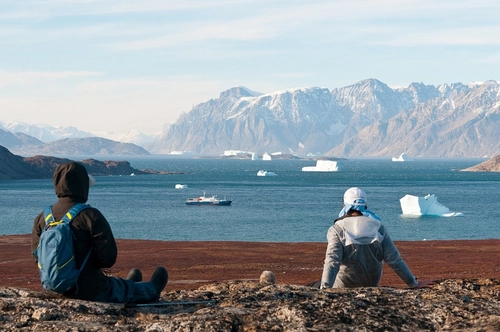
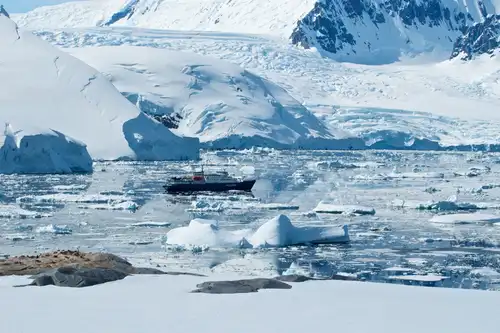
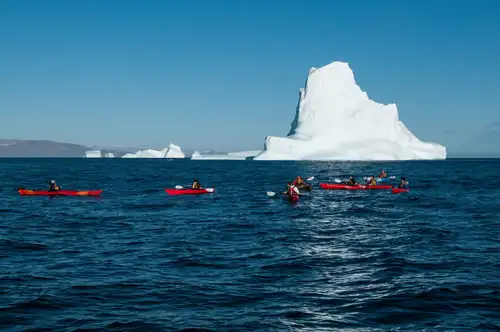
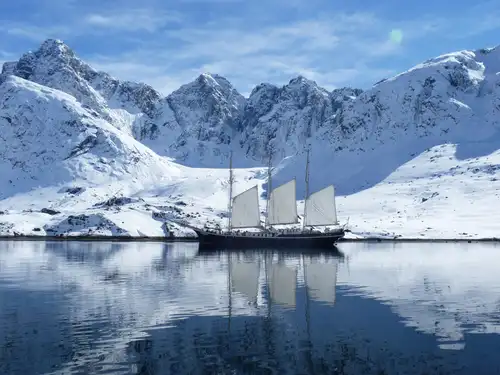
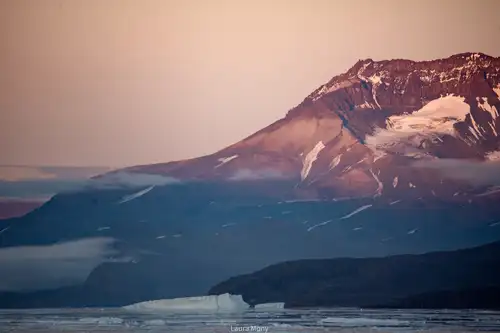
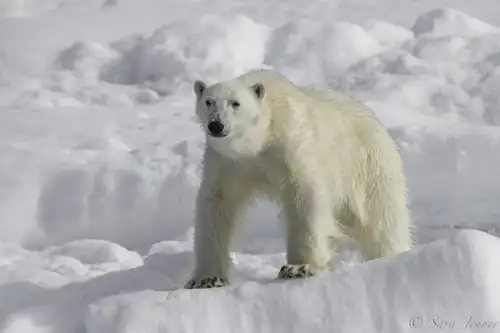
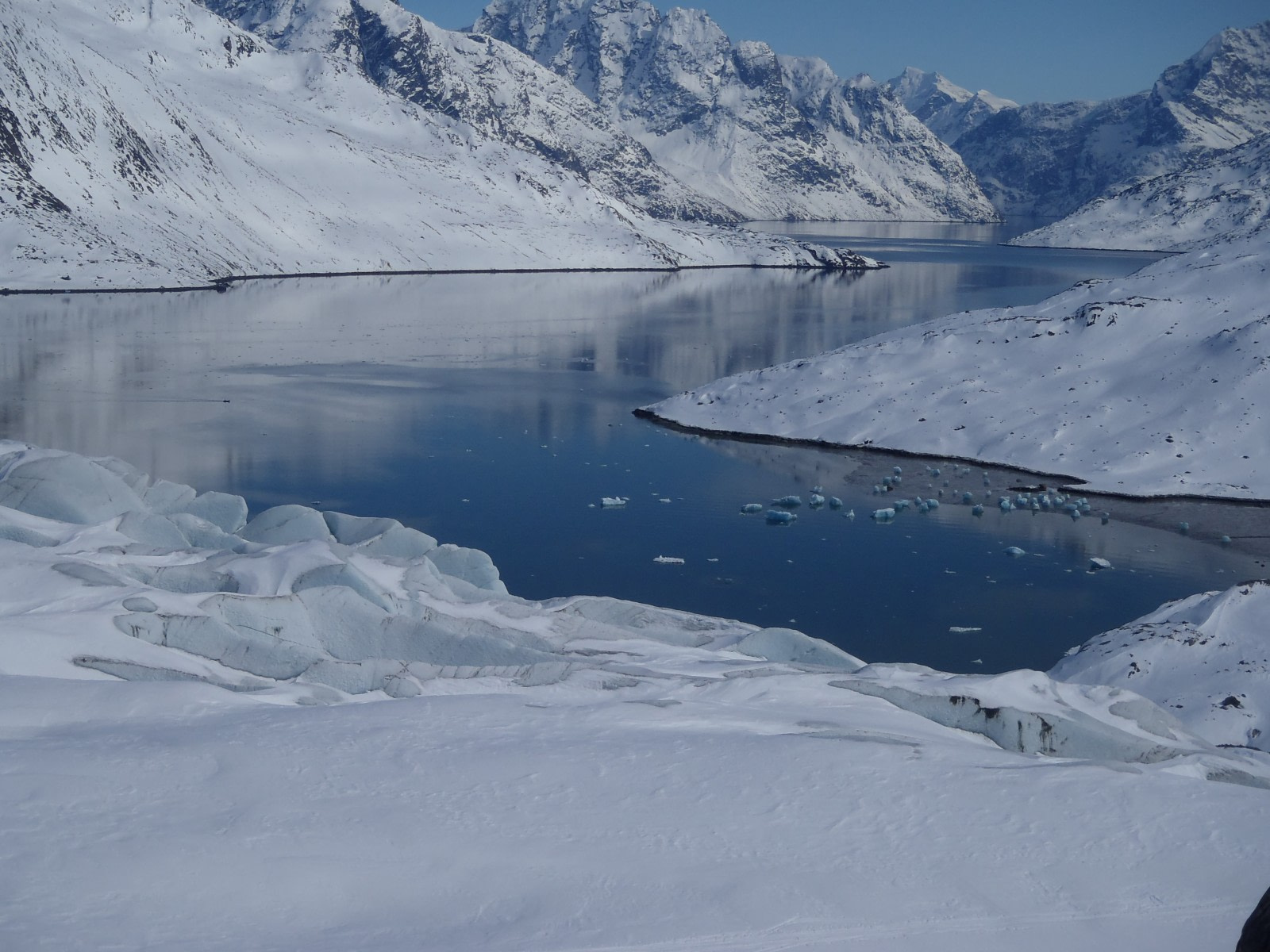
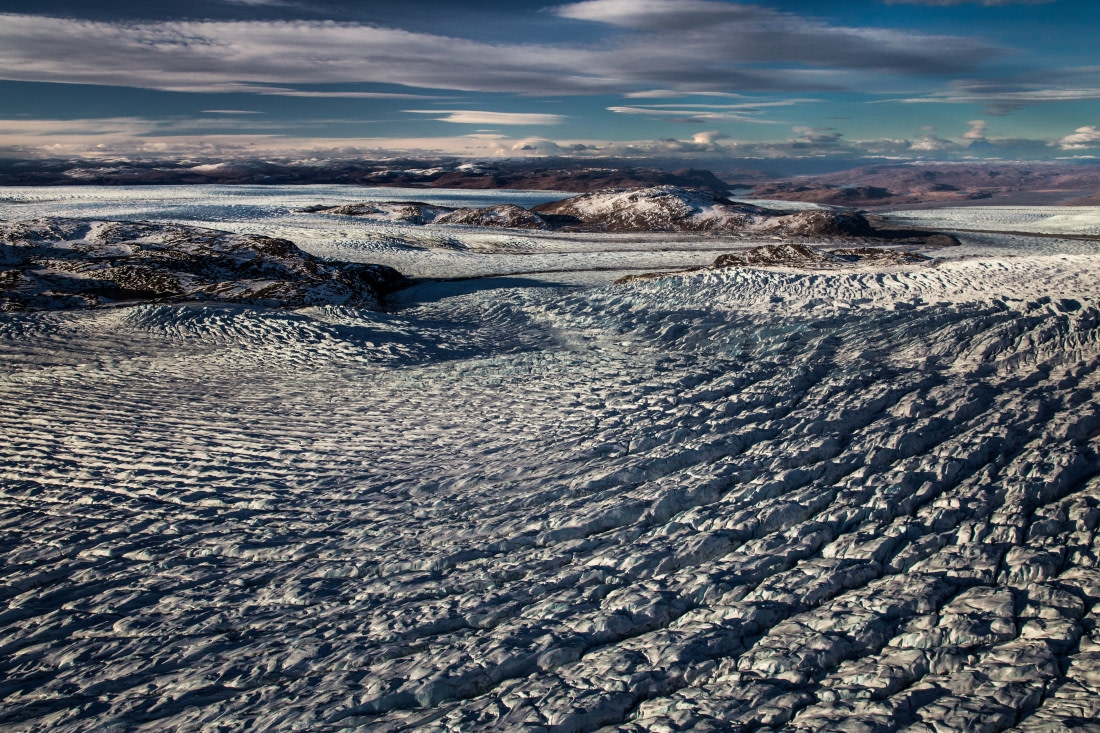
Although it may be hard to believe, there was a time when Greenland was more green than icy. Today, those who embark on a Greenland expedition are greeted with views of the Greenland ice sheet and the marine life that thrives in this region, including seals and whales. Polar bears are also prominent in the northern and eastern parts of Greenland. These animals have adapted to their environment, but a few million years ago, the massive island would not have been as welcoming to them.

When did the transition in Greenland happen?

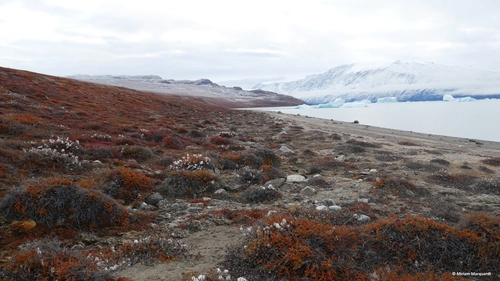
Scientists have studied Greenland for decades, and a research team finally uncovered some answers about its unique, mostly ice-covered landscape. According to recent findings, the shift from green land to a large ice-covered mass began around 3 million years ago. At that time, some areas of Greenland were likely covered in ice, but nothing as extensive or thick as the current Greenland ice sheet. Most of the island would have been ice-free.

How did the ice form?

In 2008, scientists from the University of Leeds and the University of Bristol collaborated to closely examine the Greenland ice sheet puzzle. Their research concluded that the ice formation on the island was likely caused by unusual changes in the area's atmospheric carbon dioxide. Such changes can significantly impact the climate of the affected region, so a decline in atmospheric carbon dioxide could have triggered the formation of the Greenland ice sheet.

How does this science work?

Historical atmospheric models suggest that Greenland once had high levels of carbon dioxide. During this period, Greenland was likely covered in forests and grass. However, as atmospheric carbon dioxide levels began to drop, it created a colder climate that eventually led to the formation of a thick ice layer.
blog-image

What indicators prove this theory?

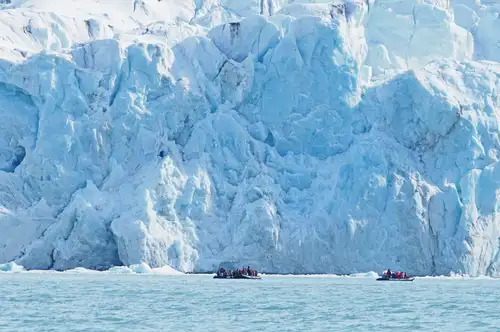
One of the key indicators supporting this theory is evidence found on the ocean floor. Researchers noted that the amount of debris and rock deposited on the ocean floor near Greenland began to increase significantly around 3 million years ago. This is crucial because icebergs are the primary transporters of such matter. Therefore, the formation of icebergs around this time helps scientists determine when the climate conditions were suitable for the ice sheet to start forming.

The deep freeze: how the Greenland ice sheet changed life

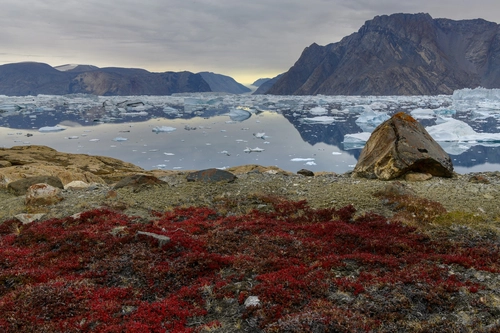
Greenland's former state made it a suitable habitat for many types of life that thrive in warmer climates. However, the deep freeze that formed the Greenland ice sheet dramatically altered the types of life that could sustain themselves on the island. It is believed that humans did not arrive in Greenland from Alaska and Canada until about 5-6000 years ago, well after the deep freeze began.

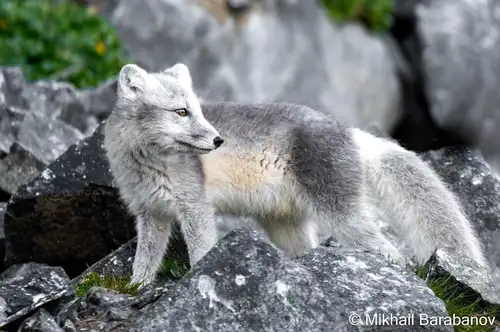
Ultimately, the Greenland ice sheet made the island inhospitable to many forms of life. The Inuit people are uniquely adapted to cold climates due to their evolutionary path, but areas like Greenland would have been challenging for other early settlers. Additionally, many common land mammals such as squirrels and raccoons would have faced similar difficulties. Other animals evolved to take their place, including musk oxen and polar bears. This highlights the importance of the earth's diverse climate range for sustaining a wide variety of life and offers Arctic expedition participants a unique experience.
Best Deals

Related Trips

Spitsbergen - Northeast Greenland, Fly & Sail - Nexta Expeditions
The Arctic
Longyearbyen

Spitsbergen - Northeast Greenland, Fly & Sail

calendar12 Aug 2026 - 31 Aug 2026
clock20 Days / 19 Nights
From $ 9.500 per person
Northeast Greenland Extreme - Nexta Expeditions
The Arctic
Akureyri

Northeast Greenland Extreme

calendar15 Aug 2026 - 28 Aug 2026
clock14 Days / 13 Nights
From $ 8.650 per person
East Greenland, Scoresby Sund, Including Long Hikes - Nexta Expeditions
The Arctic
Akureyri

East Greenland, Scoresby Sund, Including Long Hikes

calendar16 Aug 2026 - 25 Aug 2026
clock10 Days / 9 Nights
From $ 6.000 per person
Northeast Greenland Extreme - Nexta Expeditions
The Arctic
Akureyri

Northeast Greenland Extreme

calendar25 Aug 2026 - 07 Sep 2026
clock14 Days / 13 Nights
From $ 7.850 per person
East Greenland, Scoresby Sund - Aurora Borealis, Fly & Sail - Nexta Expeditions
The Arctic
Constable Pynt

East Greenland, Scoresby Sund - Aurora Borealis, Fly & Sail

calendar21 Sep 2026 - 01 Oct 2026
clock11 Days / 10 Nights
From $ 6.250 per person
East Greenland, Scoresby Sund - Iceland , Aurora Borealis, Fly & Sail - Nexta Expeditions
The Arctic
Constable Pynt

East Greenland, Scoresby Sund - Iceland , Aurora Borealis, Fly & Sail

calendar01 Oct 2026 - 12 Oct 2026
clock12 Days / 11 Nights
From $ 6.300 per person

Blog
go-leftgo-right

Narwhals: the Aquatic Unicorns of the Arctic - Nexta Expeditions
Blog

Narwhals: the Aquatic Unicorns of the Arctic

Though narwhals are among the rarest whale species encountered during our Arctic expeditions, a journey to the Arctic regions of Greenland and Svalbard always holds the potential for spotting these elusive creatures.
10 Tried-and-True Bird Photography Tips - Nexta Expeditions
Blog

10 Tried-and-True Bird Photography Tips

It’s easy to understand our fascination with birds: they’re beautiful, graceful (usually), and most of them have the power of flight.
North Norway, Northern Lights, and All the Pretty Whales - Nexta Expeditions
Blog

North Norway, Northern Lights, and All the Pretty Whales

At first glance, visiting Northern Norway outside of a blazing-hot summer might seem daunting for the average traveler.
Svalbard a Disneyland for geologists - Nexta Expeditions
Blog

Svalbard a Disneyland for geologists

Svalbard is situated in the north-western corner of the Eurasian plate. Historically, Svalbard was part of a vast continent that included North America, Greenland, and Eurasia. At one point, both Northeast Greenland and Svalbard were submerged under the ocean before resurfacing.
Polar Bear Sets Impressive New Diving Record - Nexta Expeditions
Blog

Polar Bear Sets Impressive New Diving Record

According to polar bear experts Rinie van Meurs and Dr. Ian Stirling, the new record for polar bear diving is an astounding three minutes and 10 seconds. Unless this particular polar bear has an unusually large lung capacity, we can now safely assume that these creatures have the ability to remain underwater for an extended period of time.
10 Books and Films To Prepare for your Antarctica cruise - Nexta Expeditions
Blog

10 Books and Films To Prepare for your Antarctica cruise

The deep sea remains one of the most mysterious and least explored regions on our planet. With its vast, dark expanses and unique ecosystems, it continues to captivate scientists and adventurers alike.
International Polar Bear Day - Nexta Expeditions
Blog

International Polar Bear Day

It will come as no surprise to you that we're crazy about polar bears. We have multiple blogs about where to find polar bears, we offer dozens of polar bear trips, and we've even written a short story from a polar bear's point of view. (Yes, we actually did that.) So if you were to say that our love of polar bears borders on obsession, you wouldn't be far off.
Amphibian, reptiles and herbivore mammals in the Arctic - Nexta Expeditions
Blog

Amphibian, reptiles and herbivore mammals in the Arctic

Arctic ecosystems are relatively young in geological terms, having primarily developed over the past three million years. Generally, species richness is lower in the Arctic compared to more southerly regions, aligning with scientific observations that biodiversity decreases from the Equator to the poles.
The Small Mammals of the Arctic and Antarctica - Nexta Expeditions
Blog

The Small Mammals of the Arctic and Antarctica

As Lillian Gish says in Night of the Hunter, “It’s a hard world for little things.”
Greenland: Where the Kayak Was Invented - Nexta Expeditions
Blog

Greenland: Where the Kayak Was Invented

If you've ever enjoyed kayaking, you owe a debt of gratitude to the ancient Greenlandic Inuit who originally designed them for hunting. The thrilling adventures people now have navigating some of the world's most challenging rapids wouldn't be possible without the Inuit's need for a nimble form of water transportation. While travelers still use kayaks in this region, they are typically not fishing, whaling, or sealing. Consequently, recreational kayaks have been adapted to fit their new role.
Spitsbergen: a true polar bear trip - Nexta Expeditions
Blog

Spitsbergen: a true polar bear trip

On the third day of our Svalbard cruise, we navigated through the sea ice north of Spitsbergen. The morning greeted us with fog and fragmented ice, but conditions gradually improved. A swarm of black-legged kittiwakes trailed behind us, as our ship stirred the waters, pushing aside ice floes to reveal the tiny dark polar cod beneath.
The Ice-Jewelled Geology of Spitsbergen - Nexta Expeditions
Blog

The Ice-Jewelled Geology of Spitsbergen

The Svalbard archipelago is located in the Arctic Ocean, roughly 660 km (410 miles) north of Norway's northernmost point. This region is a haven for geologists, boasting a rich geological history that spans from the Mesozoic era (65-245 million years ago) through the Cambrian era (570 million years ago) and back to the Archean era, over 3.5 billion years ago.
Why You Should Visit Greenland: 11 Things to See, Do, and Explore - Nexta Expeditions
Blog

Why You Should Visit Greenland: 11 Things to See, Do, and Explore

There's nothing quite like witnessing your first Greenland glacier, navigating into the island's largest fjord system (which also happens to be Earth's largest), or observing a humpback whale breach over the dark Greenland Sea.
16 Conversation-Starting Svalbard Facts - Nexta Expeditions
Blog

16 Conversation-Starting Svalbard Facts

It might seem odd that an icy, snowy, bear-packed cluster of islands at the edge of the world could be such a hotspot (so to speak) of outdoor tourism.
Six Must-See Svalbard Sites - Nexta Expeditions
Blog

Six Must-See Svalbard Sites

It's home to humanity's last-ditch supply of crop seeds, the world's northernmost settlement of over 1,000 people, and it is one of the best places on Earth to spot a polar bear.
The Pack Ice and Polar Bears of North Spitsbergen - Nexta Expeditions
Blog

The Pack Ice and Polar Bears of North Spitsbergen

The Arctic archipelago of Svalbard is renowned for being one of the prime locations to observe polar bears. The largest island in this region, Spitsbergen, not only offers sightings of these majestic Arctic creatures but also provides a unique opportunity to experience the phenomenon of pack ice.
Polar Diving: A Supreme Underwater Adventure - Nexta Expeditions
Blog

Polar Diving: A Supreme Underwater Adventure

Most scuba divers are drawn to warm waters and tropical reefs, and it's easy to see why. However, even the most thrilling experiences can become repetitive if done too often.
Visiting the Nearly Unknown: New Zealand’s Campbell Island - Nexta Expeditions
Blog

Visiting the Nearly Unknown: New Zealand’s Campbell Island

New Zealand is a renowned destination globally, and for good reason: It’s absolutely stunning. Almost every corner is filled with unparalleled beauty. But did you know that New Zealand includes several sub-Antarctic Islands that are almost completely unknown?
Greenland: East vs. West - Nexta Expeditions
Blog

Greenland: East vs. West

East and West Greenland offer vastly different experiences due to their unique climates, wildlife, habitation, and geology.
Not Eskimos: 10 Enlightening Facts About the Inuit - Nexta Expeditions
Blog

Not Eskimos: 10 Enlightening Facts About the Inuit

If you are planning to join an Arctic cruise, you might be intrigued by the Inuit culture. To help you gain a deeper understanding of these people, especially if you are considering a trip to Greenland, here are 10 fascinating facts about the Inuit that everyone should know.