

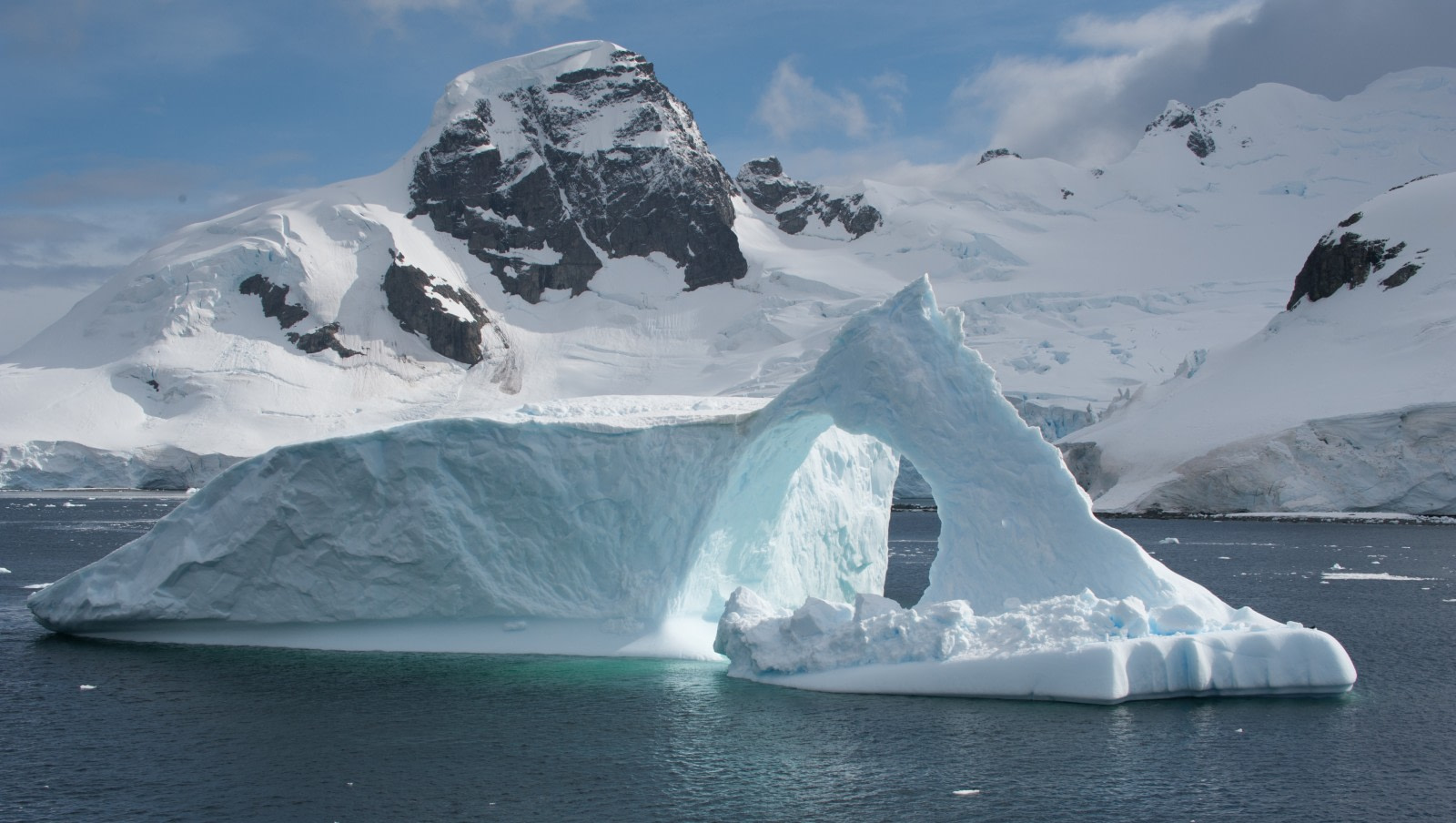
The first documented sighting of an iceberg in Antarctica occurred on February 1, 1700, when Edmond Halley was on an expedition to measure the Earth's magnetic field. He noted in his diary that he encountered "great Islands of Ice, of Soe Incredible a hight and Magnitude that I scare dare to write my thoughts on it."
Today, scientists classify Antarctic ice into two types: land ice and sea ice. Land ice originates from snow that has flowed out to sea as glacier ice and eventually breaks away from ice shelves to form icebergs. Sea ice, on the other hand, forms directly from seawater freezing over.
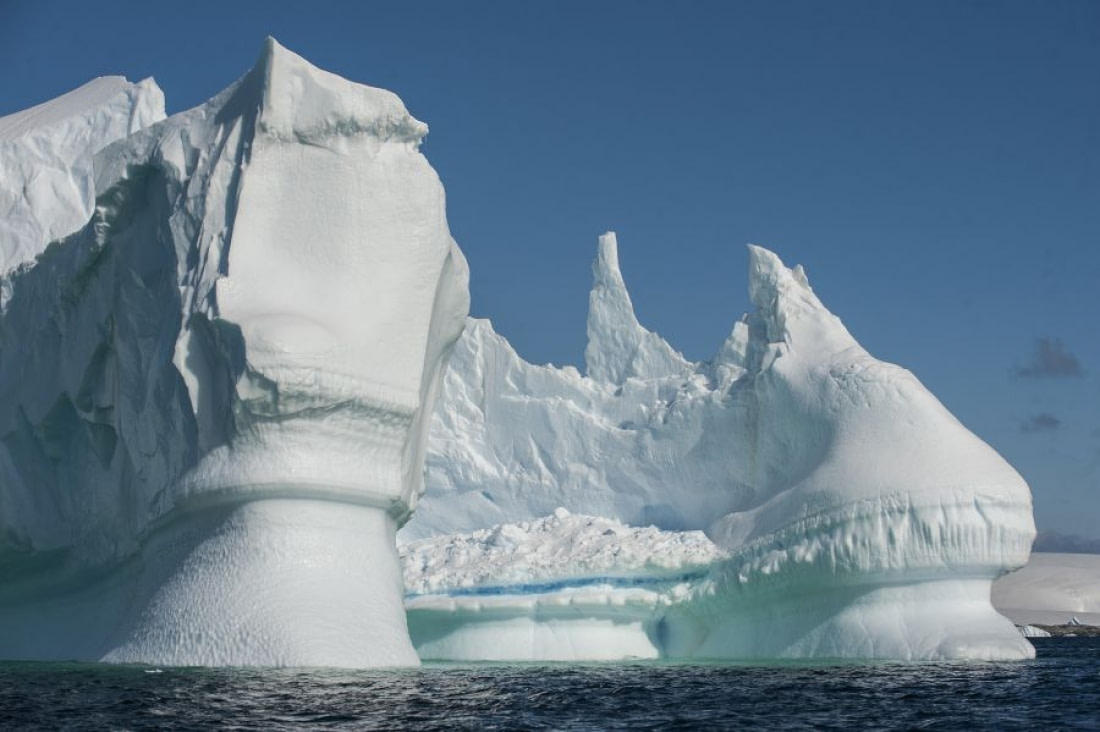
The formation of ice shelves from land ice
The ice shelves visible during an Antarctica cruise form when glaciers flow off the land and begin to float without melting or breaking up into icebergs. Ice shelves are common along Antarctica’s coastline.
The largest ice shelf is the Ross Ice Shelf, which has an area larger than Spain. The thickest is the Ronne-Filchner Ice Shelf, which is more than 3 km thick in some parts.
The only part of Antarctica without ice shelves is the northwest portion of the Antarctic Peninsula. Scientists believe this could be due to a 'climatic limit of viability,' as air temperatures in this region average a relatively warm -9°C.
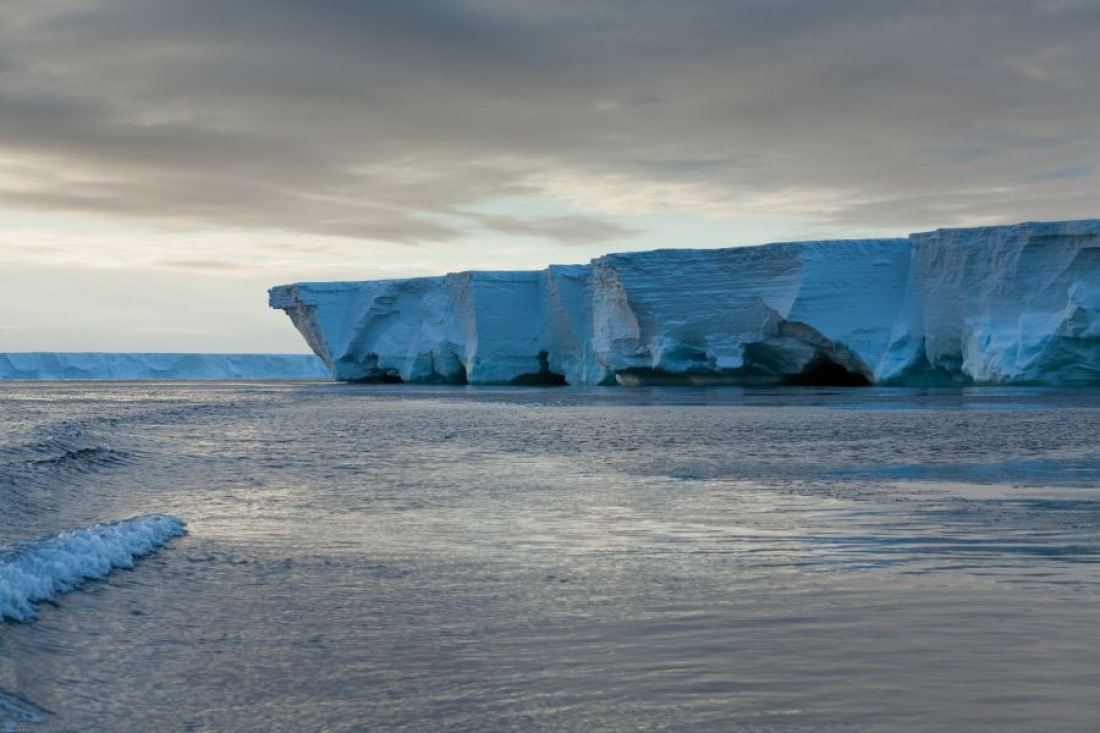
Retreating ice shelves
Over the past several decades, at least nine ice shelves on the Antarctic Peninsula have shown evidence of retreating due to warming temperatures linked to climate change. The first recorded retreat was the Wordie Ice Shelf in the early 1990s. Scientists used satellite images from as early as the 1970s to map the scale of the retreat.
In 1995, several ice shelves on the east coast of the Antarctic Peninsula retreated, most notably the Larsen A Ice Shelf, which broke off into ship-sized icebergs that floated out to the Weddell Sea. At the same time, ice in the Prince Gustav Channel broke up, opening a passage between James Ross Island and the main Antarctic Peninsula for the first time in human history. Even more dramatic was the collapse of the Larsen B Ice Shelf in 2002, where 3,200 square kilometers of ice shattered into small icebergs in just 40 days.
Ice shelves sensitive to rising temperatures
Since then, several other ice shelves along the Antarctic Peninsula have retreated, including the Wilkins Ice Shelf in 2009. Many researchers speculate that the Larsen C Ice Shelf will retreat significantly. These ice shelf collapses have provided valuable scientific insights.
By studying the retreat of ice shelves, scientists can identify the climatic limit of viability and determine how much of an ice shelf is required to ensure the stability of the glaciers that feed it. However, with rising temperatures over the next decades, Antarctic ice shelves are likely to be at risk, as they are sensitive to changes in the number of days when temperatures rise above zero degrees Celsius.
Even a minor increase in the number of warm summer days could significantly impact the survival of glaciers on the Antarctic Peninsula. Future glaciers may migrate inland and become land-terminating, with ice-free ground separating them from the sea.
An iceberg larger than a tropical island
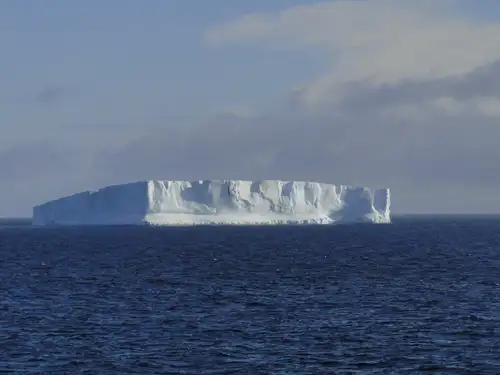
Icebergs originate from the glaciers and ice shelves surrounding Antarctica through a process called calving. The glacier front continuously moves downhill into the sea, with ice fracturing off to form small icebergs. This process can be rapid: In the Antarctic Peninsula, glaciers can flow up to 1 meter per day.
When large icebergs form—greater than 10 nautical miles across—they are given an identification letter and number by the United States National Ice Center and tracked via satellite imagery until they shrink below the monitoring limit. The letter defines the quadrant in which the iceberg originated. Icebergs forming in the Bellingshausen and Weddell Sea sector between 0° and 90°W are given the letter 'A,' while those forming in other quadrants are assigned letters anticlockwise by 'B,' 'C,' and 'D.'
To date, around 140 icebergs have been numbered. Some monitored icebergs have been larger than countries. One iceberg, B-15, which broke off the Ross Ice Shelf in March 2000, was 295 km long and 37 km wide, with an area of around 11,000 square kilometers—about the same size as Jamaica.
Icebergs out to sea
Icebergs can 'survive' for long periods at sea, up to years at a time, and cover large distances around the continent, driven by winds and currents that generally run along the Antarctic coast in an anticlockwise direction. For instance, icebergs found off the Antarctic Peninsula may have originated from the southern part of the Larsen or Ronne-Filchner ice shelves or even from other ice shelves on the opposite side of the continent, drifting right around.
The Weddell Sea, with its anticlockwise current, typically pushes large icebergs originating from the Larsen or Ronne-Filchner ice shelves into a narrow region 100 km across between the South Shetland Islands and the South Orkney Islands. Icebergs that don't get grounded here drift off into the South Atlantic, passing South America. In 1890, a ship recorded an Antarctic iceberg at the same latitude as southern Brazil!
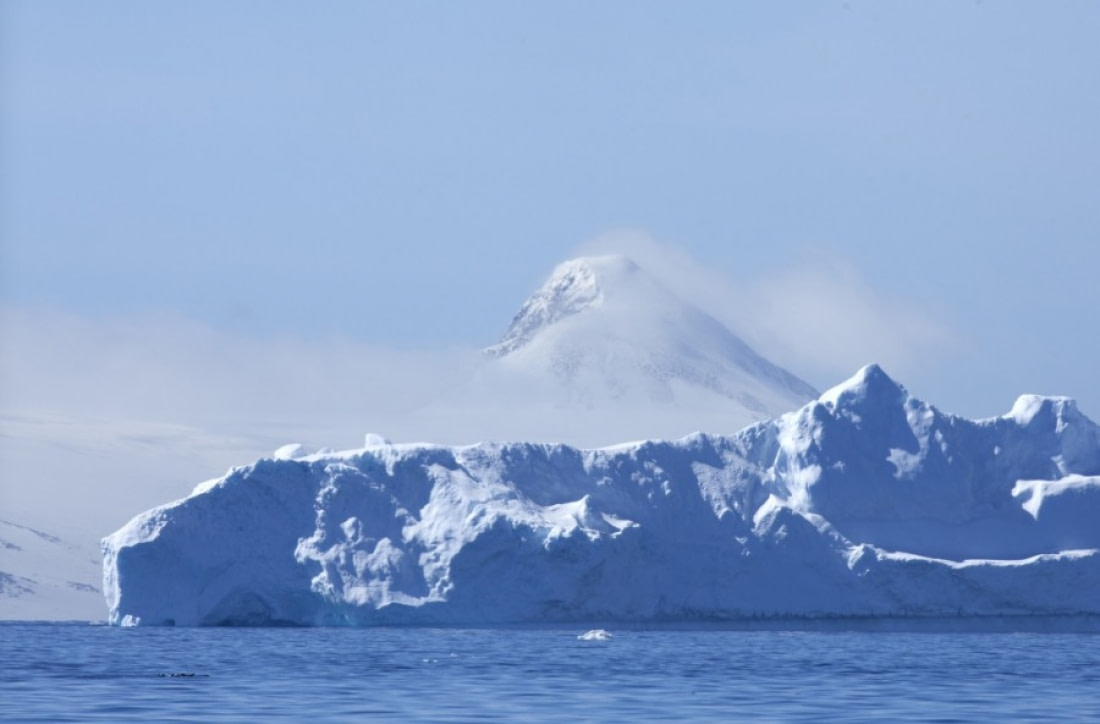
Icebergs not too much of a hazard for shipping
With today's technology, icebergs are not a hazard in international shipping lanes, as modern radars can easily detect them. However, it is extremely risky for ships to get close to icebergs, as they frequently have hidden underwater keels and can potentially turn or roll at any moment.
The main hazard is the eroded parts of icebergs breaking off into small pieces that lie just on the waterline and are hard to detect in a swell. Small fragments of icebergs measuring less than 1 meter can damage a ship, as they often get grouped together by wind and currents.
The formation of sea ice
Meanwhile, sea ice in Antarctica forms when the temperature of saltwater drops below -1.8°C. Initially, the ice appears as an oily film on the sea surface, often called grease ice. If there is little wind, this ice clumps together to form pancake ice.
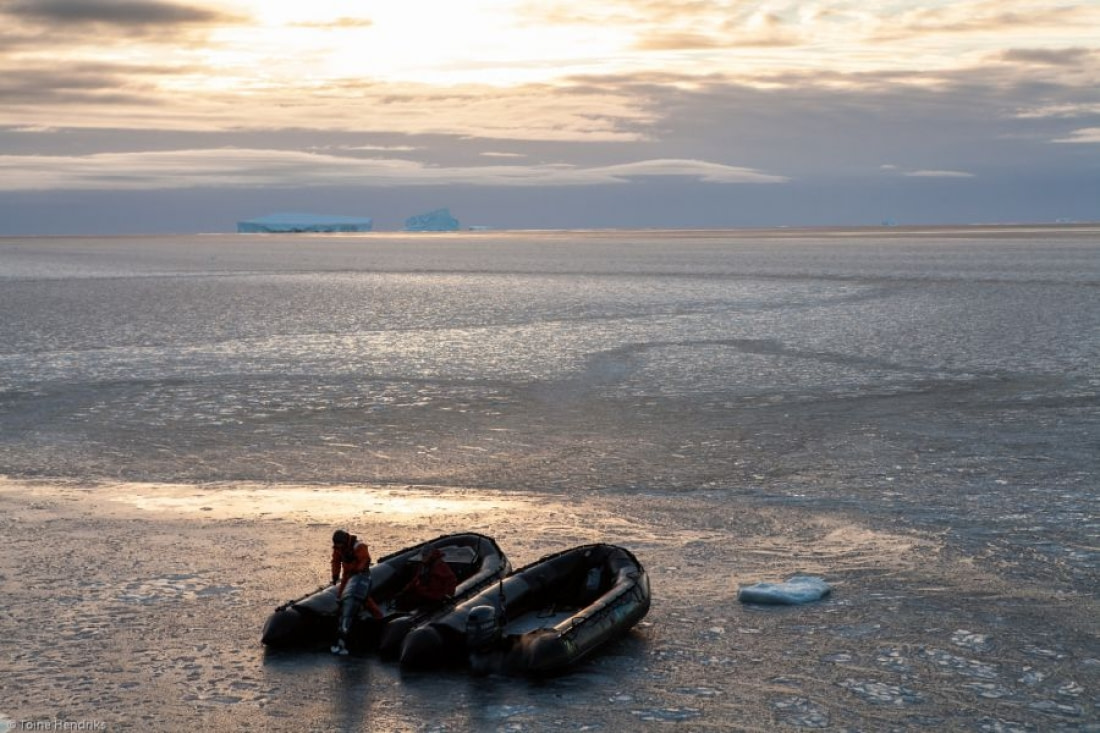
As more ice forms and individual ice floes get clumped together by the wind, pack ice starts to form. When the pack becomes tightly compressed, the individual ice floes form a continuous sheet called an ice field. As the ice thickens, the salt is excreted, and by the end of winter, sea ice can be 1-2 meters thick. During the summer, most of the sea ice melts; however, some parts survive and become even thicker over the next winter, reaching a thickness of 3-4 meters.
In the Antarctic Peninsula, the pack ice is relatively light, but its extent varies significantly year-to-year. This variation is due to changing air temperatures, with years of little pack ice having air temperatures around the same freezing temperature of seawater and vice versa during years with heavy pack ice.


Blog


5 Life Lessons You'll Learn in Antarctica
The Wonderful Weddell Sea: Places, Pics, and Impressions
Highlights from the First Arctic Voyage of Hondius
11 Seals You May See in Antarctica or the Arctic
Penguin Wisdom: Life Lessons from Our Favorite Flightless Birds
Penguins, Albatrosses, Petrels: The Winged Wildlife of South Georgia
Flowers in Antarctica
The Return to Franz Josef Land
Why You Should Visit Greenland: 11 Things to See, Do, and Explore
Weddell Sea: the Original Antarctic Adventure
The Plants of Antarctica
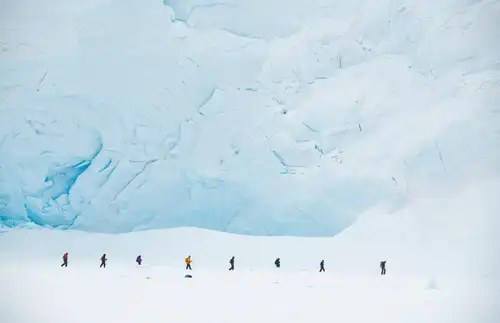
Antarctica in Pictures: Photos from 2018
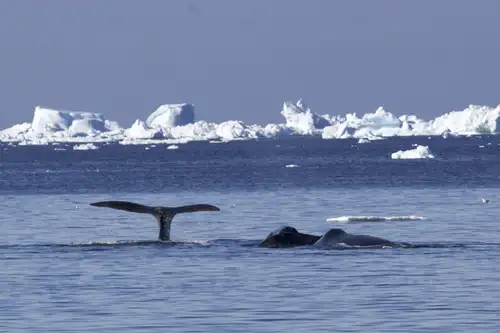
The bowhead whale, whaling about the Arctic
10 Popular Bird Watching Binoculars
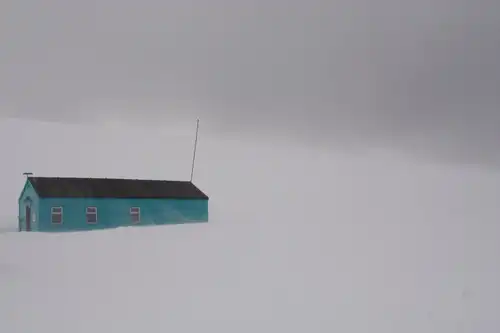
The Research Stations of Antarctica and the sub-Antarctic
17 Reasons to Cruise the Falklands
Seven Sublime Antarctic Bays
Penguins, Petrels, and Prions: Top Antarctica Bird Tour Spots
Freshwater ecosystems in the Arctic