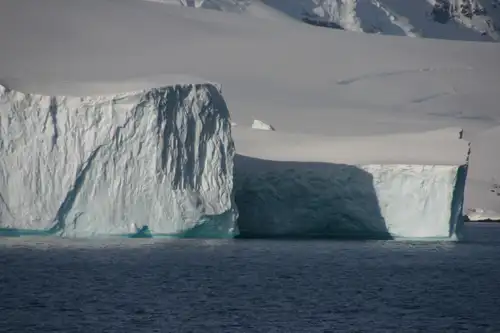


It’s well-known that Mars, like Earth, has its own polar regions, often referred to as the Martian ice caps. These regions, similar to Earth's, are situated at the north and south poles and experience much lower temperatures compared to the areas in-between.
But is that all there is to it, or are there differences between the two?
For example, are the Martian polar regions colder or warmer? Dryer or wetter? Completely devoid of life or teeming with advanced, green penguins?
Though we haven't yet launched polar cruises on the Red Planet, we managed to find a few answers by momentarily shifting our focus from Earth to outer space.
Temperature: sorta cold vs. scary cold
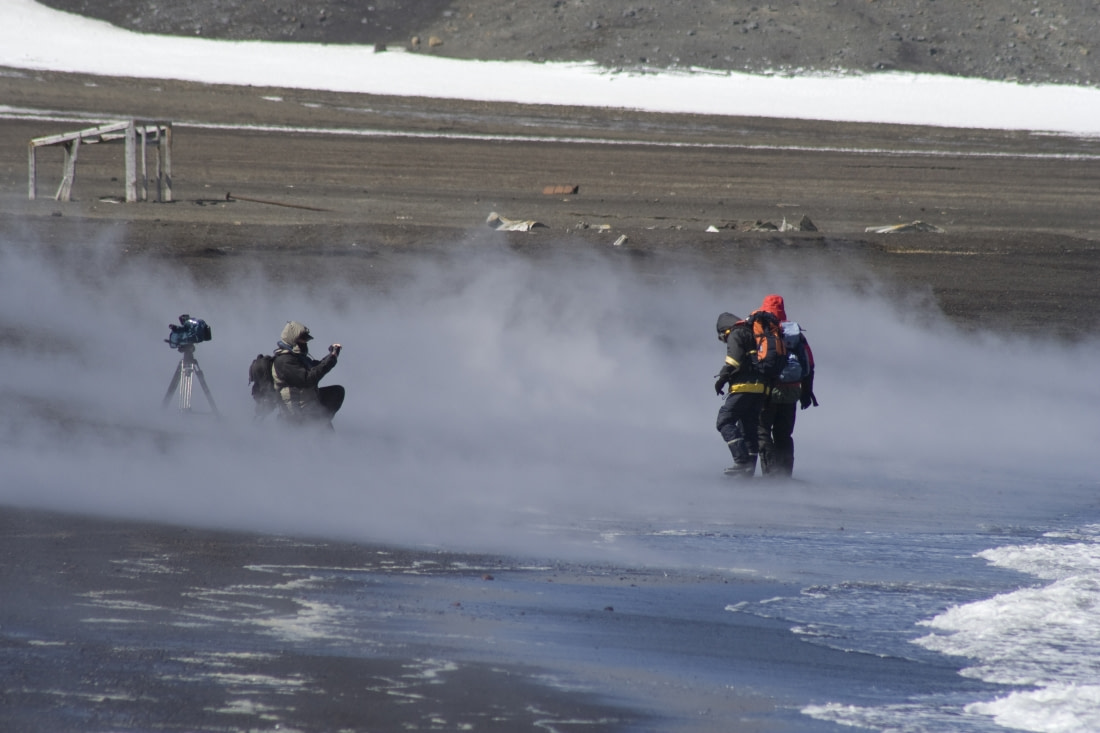
Temperatures on the Antarctic Continent can drop to about -65°C (-85°F) during the austral winter (June to September), while in the Arctic, they hover around -43°C (-45°F) during the boreal winter (December to March).
This means that as long as you’re dressed appropriately – yes to the down jacket, no to the fishnet stockings – you can not only survive but also be quite comfortable in Earth’s polar weather.
Many travelers are often surprised at how warm it is in both the Arctic and Antarctic during the summer months.
The polar regions of Mars, however, see fewer visitors. And for now, this is probably for the best.
On Mars, Antarctica’s winter temperatures would seem tropical by comparison, more suited for swimming gear than a fur-lined jacket.
This is because polar Mars can drop to a bone-chilling -150°C (-238°F).
To put that in perspective, your freezer is probably around -18°C (0°F). The lowest ground temperature ever recorded on Earth was -89.2°C (-128.6°F) at Vostok Station, Antarctica, on July 21, 1983.
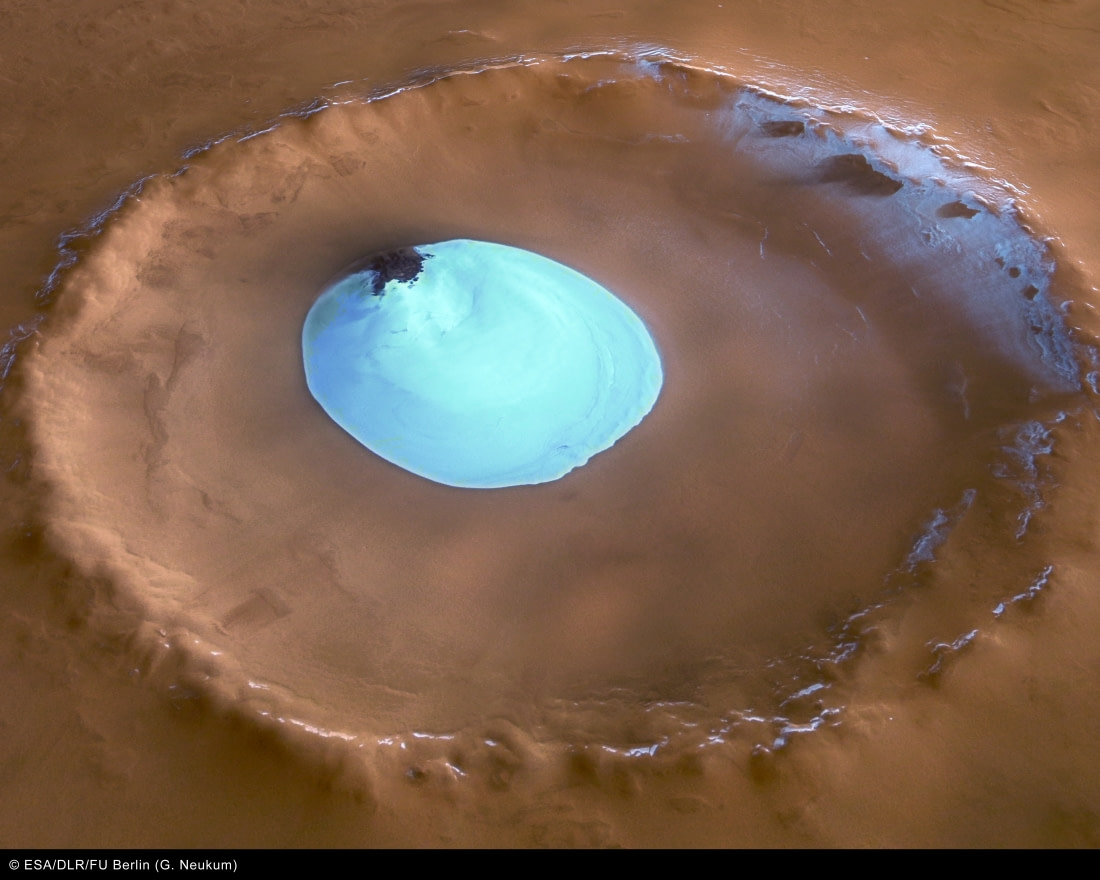
Ice composition: water only vs. mostly water
What would a polar region be without ice? Like everywhere else, probably.
Indeed, frozen water (in the form of snow, glaciers, icebergs) is the most recognizable feature of our polar landscape. And the same goes for Mars.
Mostly.
Earth’s polar ice is entirely composed of water, not counting the tiny air bubbles locked inside. And as expected, this ice usually grows in the winter and shrinks in the summer.
On Mars, the composition is a little different.
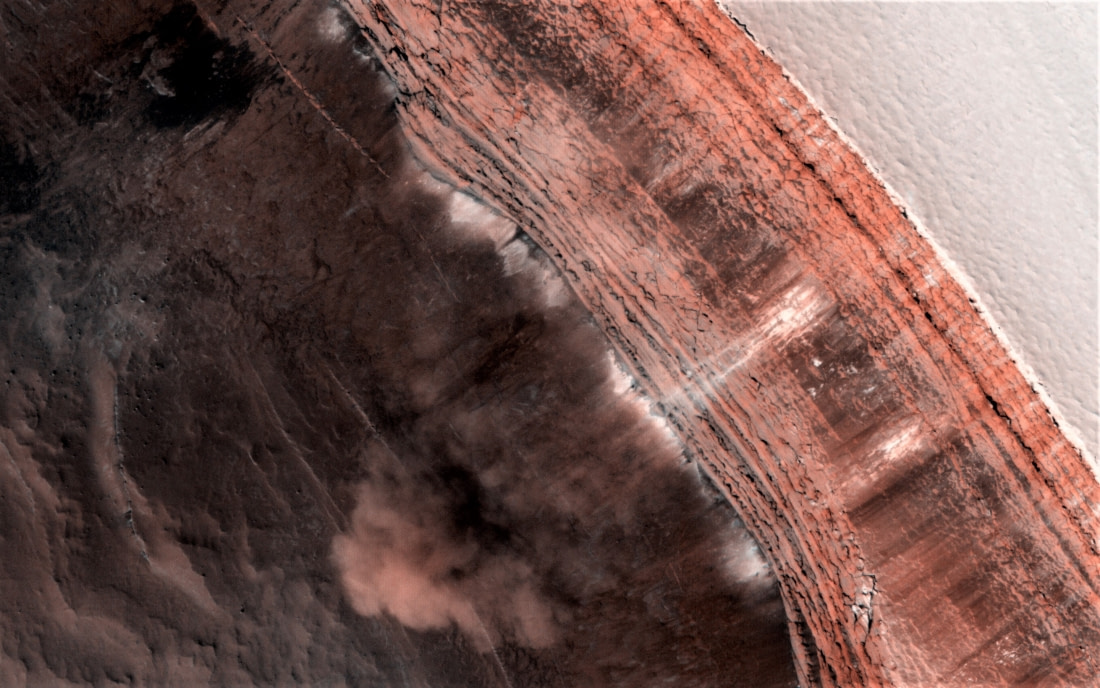
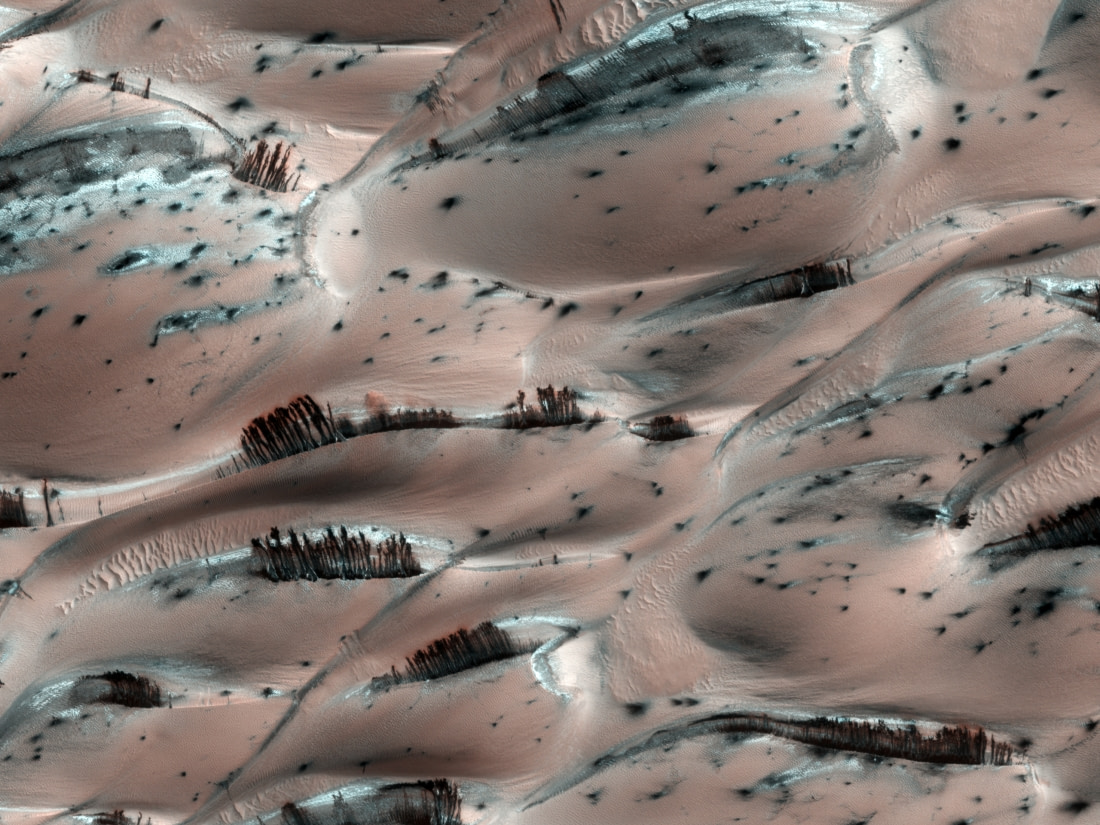
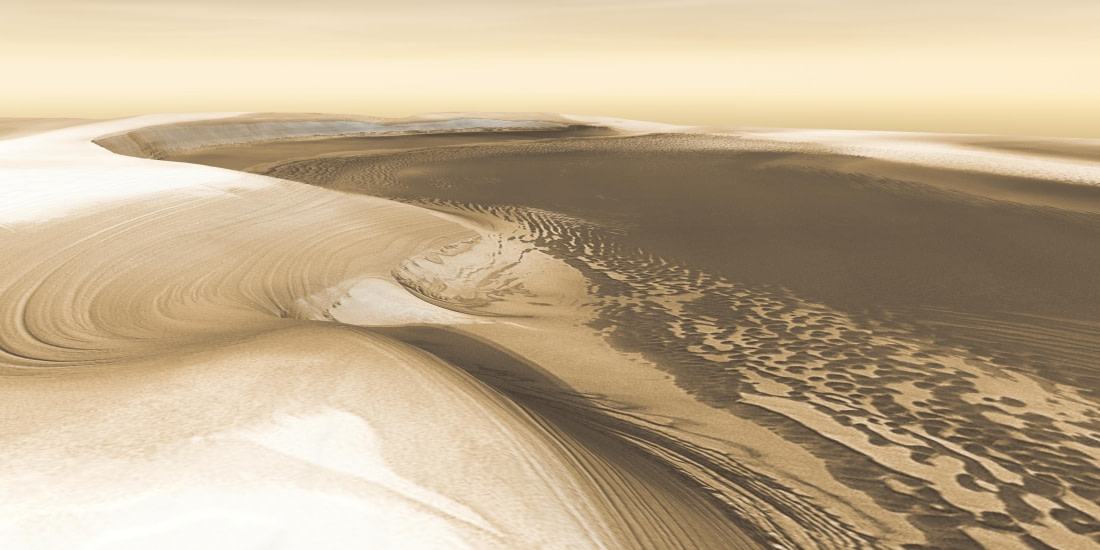
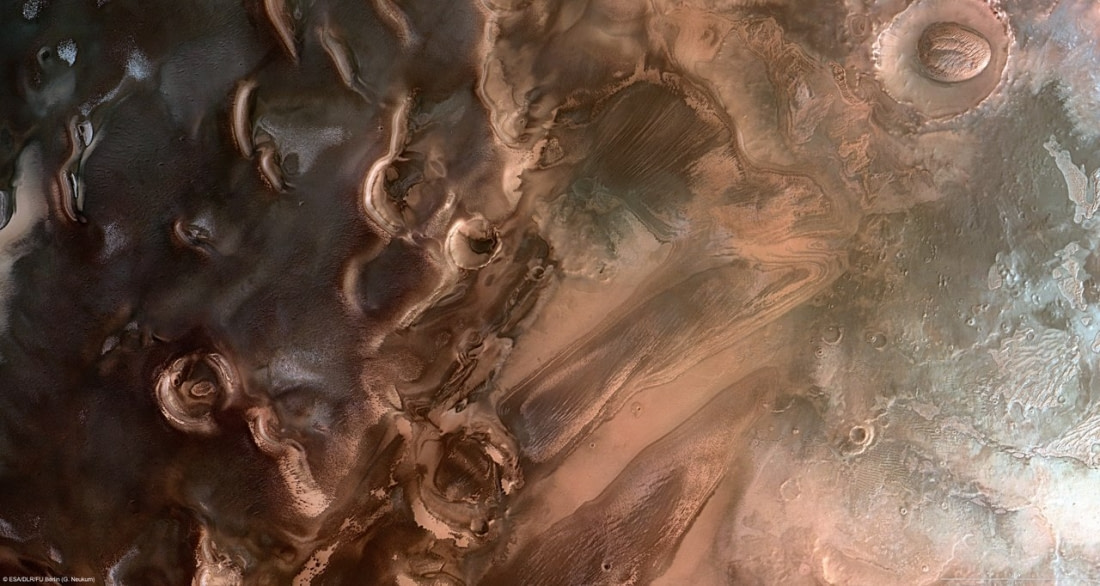
While the bulk of Mars’s polar ice is water, the rest is frozen carbon dioxide - in other words, dry ice. This dry ice forms a (relatively) thin outer layer to the water-based portion of the Martian ice caps.
But don’t go changing the venue of your Halloween party just yet: Mars’s dry ice is only about one meter (three feet) deep in the north and eight meters (26 feet) deep in the south.
If you’re repeating “only” with an air of incredulity, read on...
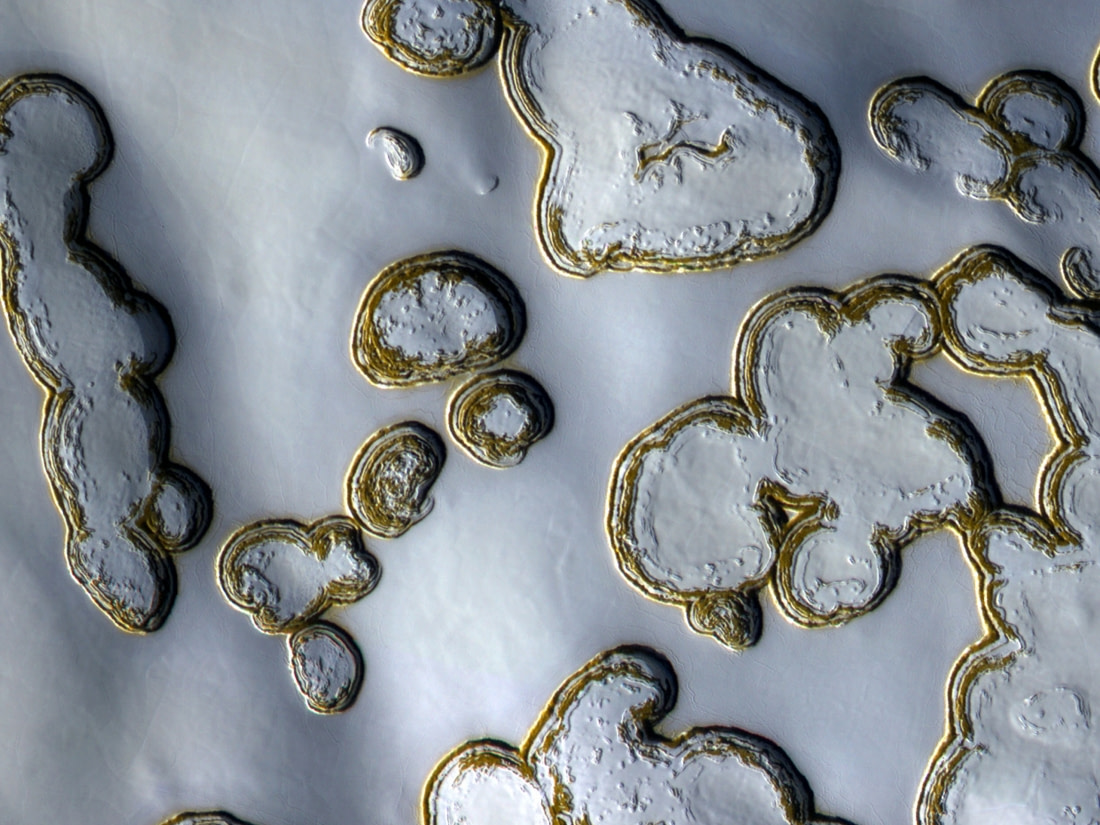
The water ice underneath Mars’s dry ice sheath is massive by contrast, two km (1.2 miles) thick in the north and a respectable three km (1.7 miles) thick in the south.
This makes Antarctica the closest equivalent to Mars in terms of ice volume, since Antarctica’s sheets are around the same thickness. Moreover, Antarctica’s Dry Valleys are so Mars-like they’ve even been used as a testing ground for future Martian outposts.
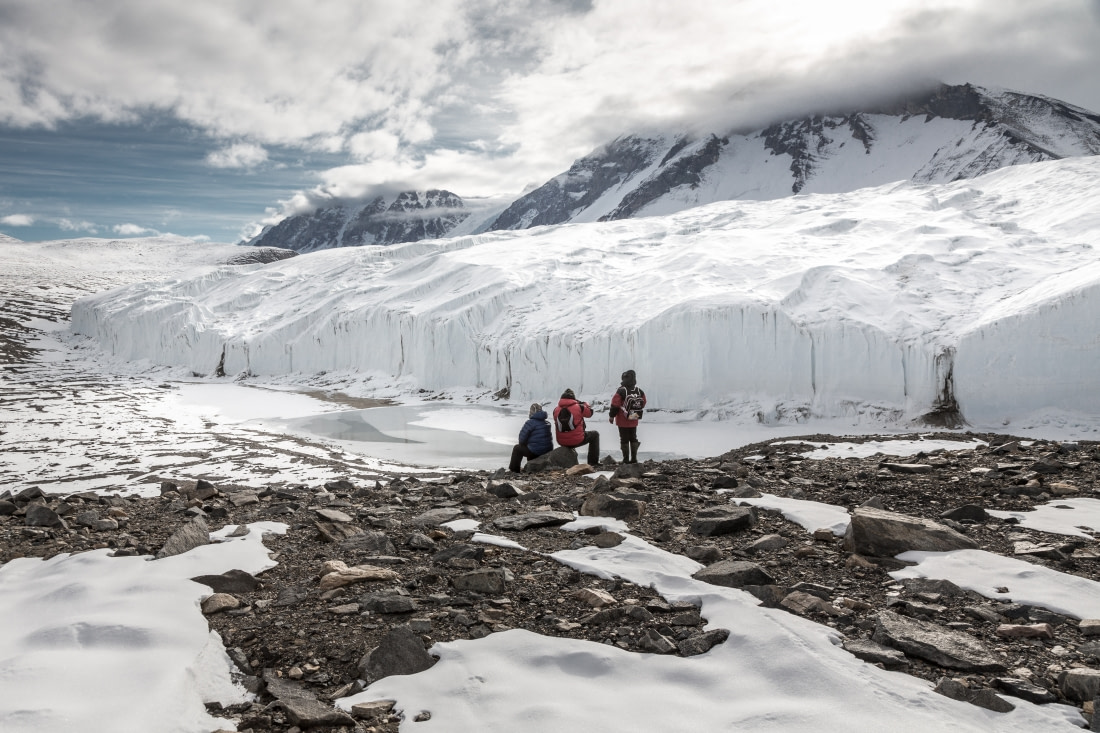
Earth’s North Pole, on the other hand, is unlike the Martian one in that it’s basically just shifting sheets of ice over a liquid ocean.
Nothing like this exists on Mars, if it ever did. Though there is indeed evidence that Mars once had liquid oceans, they have long ago turned to ice, vapor, and small brines in the soil - a clean polar desert by any reckoning.
T.E. Lawrence would’ve loved it.
Wildlife: Plentiful life vs. possible life
Earth’s polar regions are not only mild compared to Mars, they’re also filled with some of the most impressive, well-adapted, multi-faceted animals on our planet.
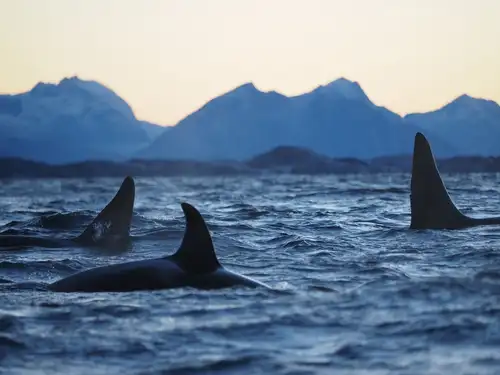
Consider only the Arctic (i.e., Northern Hemisphere): Polar bears, Arctic foxes, musk oxen, walruses, seals, reindeer, multiple species of whale, and even more species of seabird are scattered across Svalbard, Greenland, Iceland, and Northern Norway.
If that’s not ample reason for an Arctic trip, we don’t know what is.
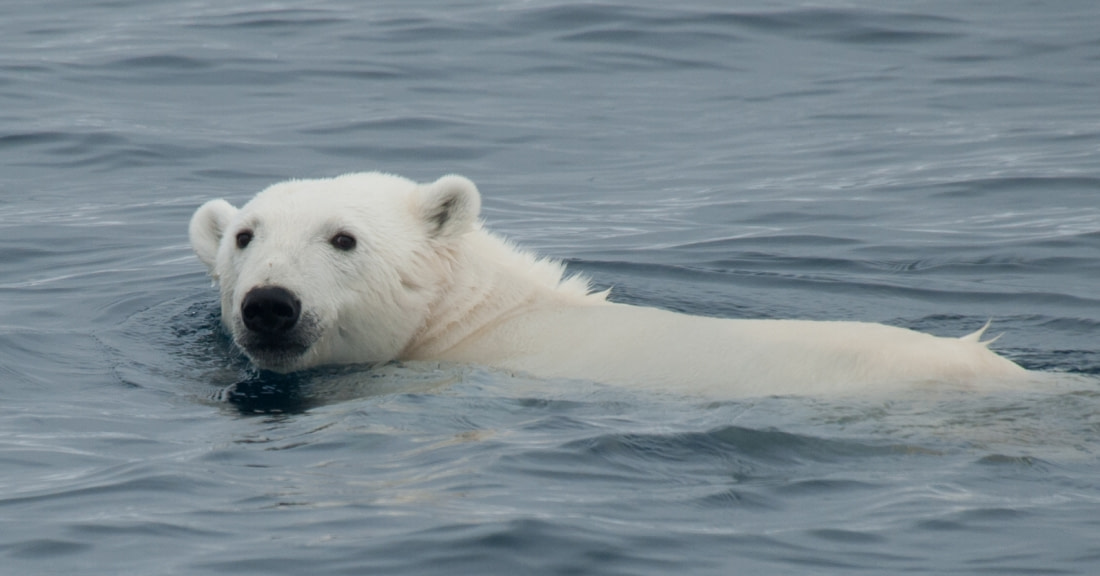
In fact, the vast northern continents within the Arctic Circle provide for wildlife diversity beyond anything seen in the Antarctic.
But does that mean the Southern Hemisphere polar regions are barren by comparison?
Not at all!
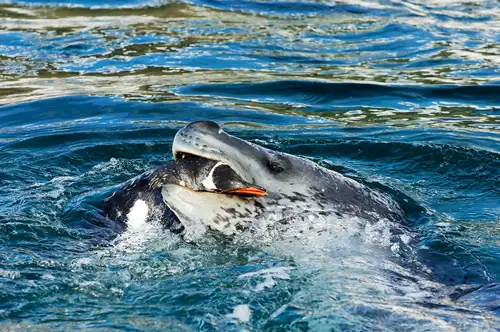
Year after year, thousands of people embark on Antarctica cruises just for the whale-watching and bird life (especially the penguins), to say nothing of the Antarctic’s immense gallery of glacial scenery.

As for Mars, the party’s either long since over or far from beginning: There is yet no concrete evidence of even the simplest life there. Even so, many scientists think there may be microbial life lurking beneath the surface of Mars’s icy polar soil.
And until Elon Musk makes it possible, that’s the only place life could survive there.
So where should you travel: Earth’s polar regions or the Martian variety?
As usual, it depends on what you’re looking for.
Is it an airless, probably lifeless, gamma-blasted wasteland in which the low-pressure, low-oxygen environment would make any human without a space suit pass out after 10 seconds, suffer irreparable brain damage by 90 seconds, and go belly-up soon after?
Or is it a milder (and much closer) polar terrain filled with beautiful wildlife and adventure opportunities, all of which you can enjoy while sailing on a state-of-the-art vessel that boasts an expert expedition staff, veteran crew, and fully stocked galley bar?
Life is full of choices.
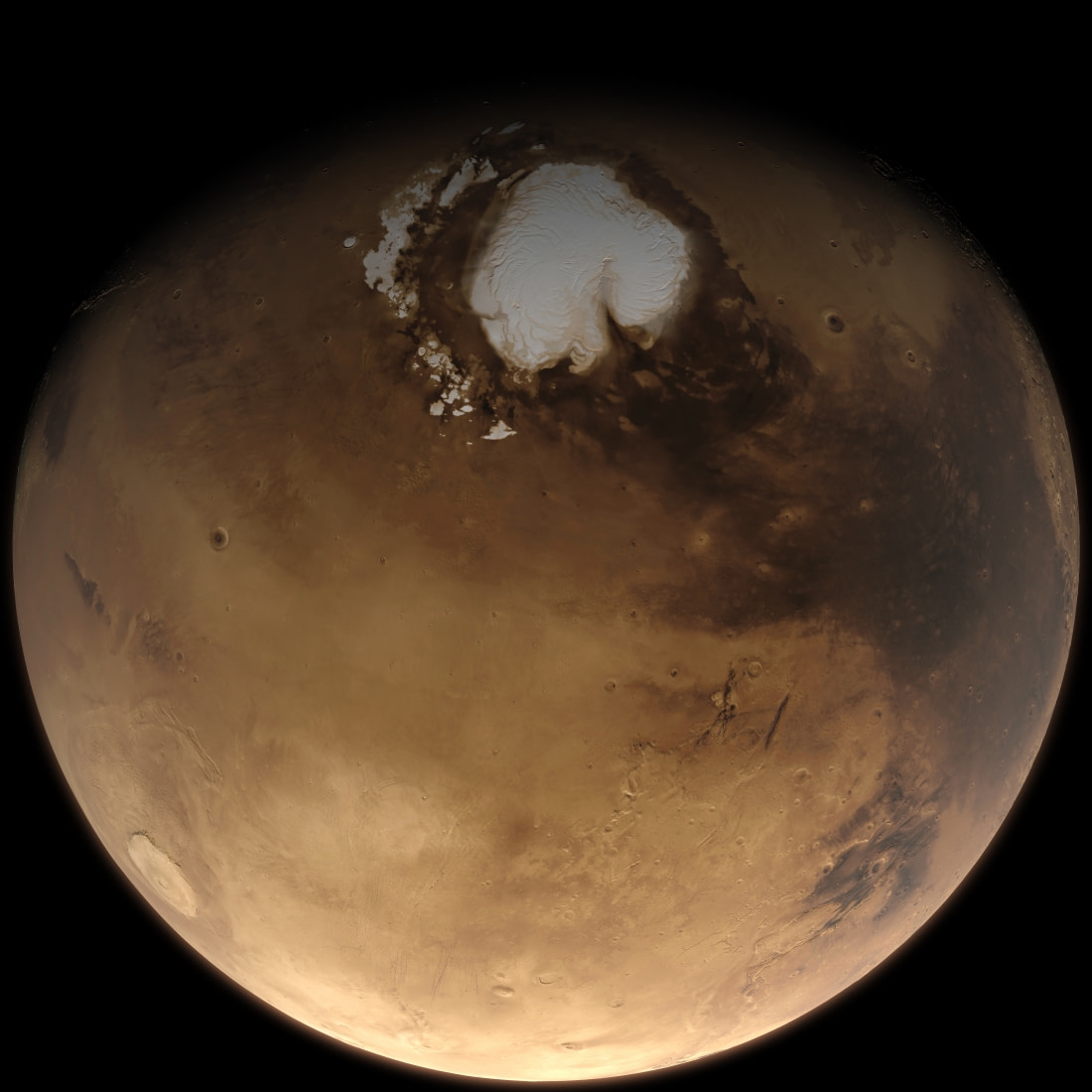
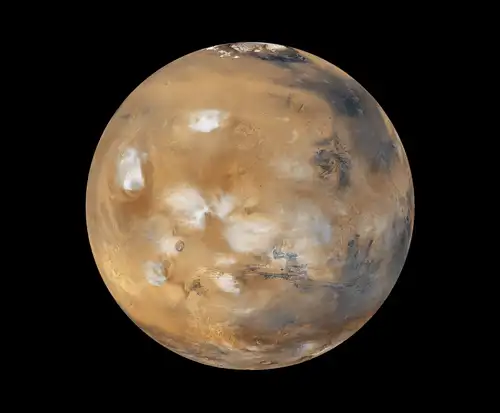
Martian northern ice cap - Image by Kevin Gill from LA, USA [CC BY-SA 2.0 (https://creativecommons.org/licenses/by-sa/2.0)], via Wikimedia Commons
Title image by NASA/JPL [Public domain], via Wikimedia Commons ~ © NASA/JPL [Public domain], via Wikimedia Commons


Blog


15 Fantastic Photos of Antarctica
Freshwater ecosystems in the Arctic
9 Facts about the Greenland Shark
Six Seal Species You Might See On Your Greenland Cruise
Life migrating through the Polar Front
The bowhead whale, whaling about the Arctic
Harp seals harping on in Greenland

Traditional Lifestyles of the Inuit
All About Ice: Glaciers and Icebergs of the Arctic and Antarctica
Seven Tips to Get the Most out of Your Expedition Cruise
Greenland: Where the Kayak Was Invented
The Eight Great Penguin Species of Antarctica
The First Buildings in Antarctica: Borchgrevink’s Historic Huts
South Georgia in Spring
Earth vs. Mars: Polar Regions Compared
Get to Know Your Ice
15 Falkland Islands Bird Photos
Orcas of the Polar Seas
The Wildlife of Antarctica’s Seas and Skies