


The bowhead whale typically resides near pack ice, often in shallow waters. These whales are commonly found north of Europe, between Canada and Greenland, in the Hudson Bay area, the Okhotsk Sea, and the Bering, Chukchi, and Beaufort seas. In these regions, they filter food through their large baleen plates. Bowheads are known to open their large mouths and graze along the surface, in the water column, or on the sea floor.
Bowheads primarily consume zooplankton, including copepods and small shrimp-like species of euphausiids, which are tiny creatures only 1-3 mm long. The bowhead’s grazing ability is impressive, with a typical whale consuming around 100 metric tonnes of crustaceans annually.

Super-long-living whales
The bowhead whale is believed to have a very long lifespan, with estimates reaching up to 200 years, making it one of the longest-living mammals on Earth. Of medical interest is that bowheads generally remain very healthy and disease-free until much more advanced ages than humans. While the secrets to their longevity and resistance to age-related diseases are unknown, scientists believe they possess aging prevention mechanisms.
To investigate further, scientists from the Integrative Genomics of Ageing Group at the University of Liverpool are analyzing the bowhead whales’ genome to identify promising candidate genes and mechanisms that may shed light on how these whales live so long and remain healthy. By identifying novel maintenance and repair mechanisms, researchers hope to apply this knowledge to improve human health and even extend human life.
Bowhead whale numbers healthy
While bowhead whale numbers are not as high as desired, their population has increased significantly, particularly in Alaska, which is home to 90 percent of the world’s bowhead whales. It is now estimated that there are about 10,000 bowheads in Alaskan waters, and their numbers are growing.
The population in these waters has been growing at a healthy rate of 3.5 percent per year. This statistic is courtesy of marine mammal biologists working with Alaska Natives in the Arctic, conducting an annual census of the whales during their spring migration past Point Barrow. To record this data, scientists use a series of hydrophones to monitor the whales underwater.
This acoustical data, combined with air and shore-based observations, indicates that the number of bowhead whales in Alaskan waters has tripled over the past 30 years. This is culturally important to Alaska Natives who harvest bowheads on a subsistence basis. To ensure sustainability, biologists assign a harvest quota intended to maintain population growth while allowing for some subsistence whaling each year.
Surveying bowheads from the sky
In Alaska, inter-agency agreements have been established between the Bureau of Ocean Energy Management (BOEM), Department of Interior, and many other agencies to provide funding for bowhead whale aerial surveys, officially known as the Bowhead Whale Aerial Survey Project. The goal is to document the distribution and relative abundance of bowhead and other whales.
The program specifically gathers data on the annual migration of bowhead whales across the Alaskan Arctic, significant inter-year differences and long-term trends in the start and duration of the migration, relative abundance, spatial and temporal distribution, and behavior of the whales and other species. It also provides real-time maps on marine mammals in the Alaskan Arctic.
In a recent report on bowhead numbers from BOEM, which came during a summer and fall survey in 2014—a year with generally light sea ice cover compared to historical sea ice cover—scientists recorded nearly 600 sightings of 1,200 bowhead whales. The survey, conducted over 440 hours and covering more than 110,000 km, also sighted over 500 gray whales as well as humpback whales.

Surveying bowheads from space
As part of monitoring bowhead whales, the Bowhead Whale Research project in Alaska has been conducting satellite tracking of Western Arctic Bowhead whales over the past several years. Working with subsistence whalers, the project involves attaching satellite transmitters to bowheads to study their movements, habitat use, and behavior throughout their range, including migration routes and timing, feeding areas, diving behavior, and time spent within the summer and spring ranges.
The study is also investigating the use of tags that record oceanographic information to identify ocean features such as fronts where whales prefer to feed. The project is additionally developing an acoustic tag that will record ambient sound and the vocal behavior of the whales to better understand the effects of human-related activities.
Drones hovering over bowhead whales
Meanwhile, drone footage of bowhead whales made international news this year as part of an intensive research study conducted by the University of British Columbia. Using drone technology, the team captured rare high-quality images and videos of Eastern Canada-West Greenland bowhead whales during their summer feeding period in Cumberland Sound, Nunavut, near the Arctic Circle.
According to PhD candidate Sarah Fortune, what we know today about bowhead whales comes from boat-based or aerial observations from small planes. However, with drone technology and the clear water in Cumberland Sound, scientists can observe their behavior underwater. This will provide critical insights into the bowhead’s feeding and social activities.
With drones providing a safe, affordable method of obtaining aerial images and videos without disturbing them in their natural habitat, the research team and local community members could observe their behavior in real-time, something that was not possible with conventional tagging methods and boat-based observations.
Discovering new behaviors
Scientists already knew these whales traveled in small groups, but they did not know that they often swam in coordinated patterns, constantly touching or rubbing one another. One interesting observation was that the whales spent their early morning feeding in deep water before resting, often in large groups, in shallow coastal water during the afternoon.
Furthermore, the research took thousands of images that will be used to determine population size (using individual markings), age structure, and body condition. This will provide scientists with essential information on the population’s status and health over time.
 12 Aug - 31 Aug 2026
 15 Aug - 28 Aug 2026
 16 Aug - 25 Aug 2026
 25 Aug - 07 Sep 2026
 21 Sep - 01 Oct 2026
Related Trips
Spitsbergen - Northeast Greenland, Fly & Sail
12 Aug 2026 - 31 Aug 2026  20 Days / 19 Nights
Northeast Greenland Extreme
15 Aug 2026 - 28 Aug 2026 14 Days / 13 Nights
East Greenland, Scoresby Sund, Including Long Hikes
16 Aug 2026 - 25 Aug 2026 10 Days / 9 Nights
Northeast Greenland Extreme
25 Aug 2026 - 07 Sep 2026 14 Days / 13 Nights
East Greenland, Scoresby Sund - Aurora Borealis, Fly & Sail
21 Sep 2026 - 01 Oct 2026 11 Days / 10 Nights
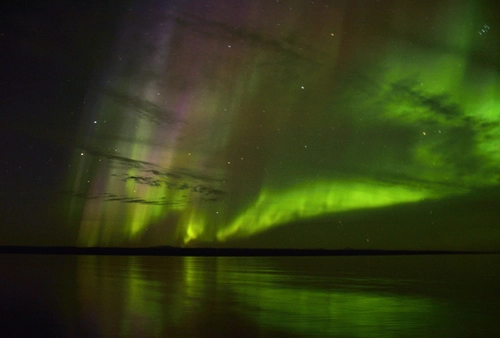
East Greenland, Scoresby Sund - Iceland , Aurora Borealis, Fly & Sail
01 Oct 2026 - 12 Oct 2026 12 Days / 11 Nights

Blog



The Impact of Small vs. Large Cruise Ships
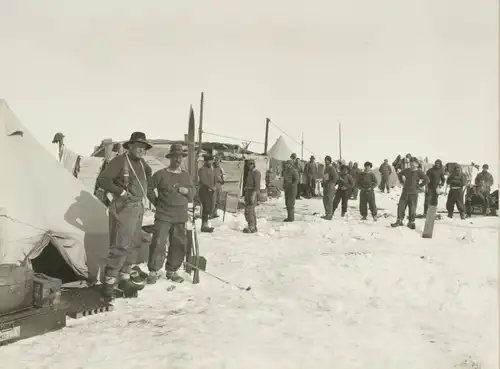
Exploration of the Polar Regions
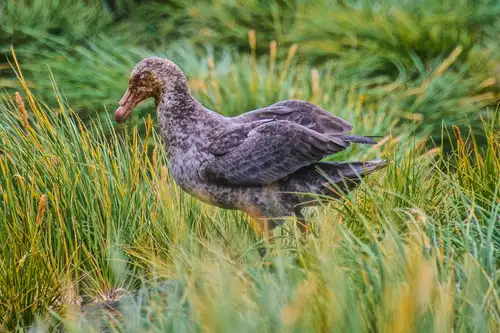
The Giant Petrels of King George Island
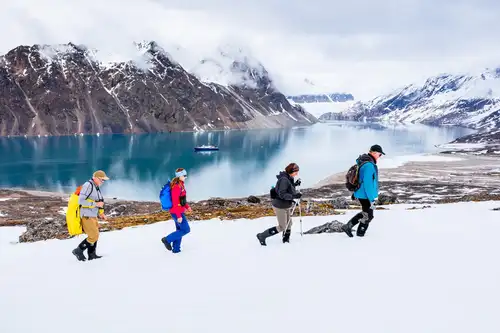
Around Spitsbergen vs. North Spitsbergen

Solargraphy & Pin Hole photography in the Arctic
Camping in Antarctica: a True Expedition Experience
The Ancient Fossil Forests of Antarctica
Port Lockroy: History, Post Office, and Resident Penguins
Going Green: Ascension Island Sea Turtles
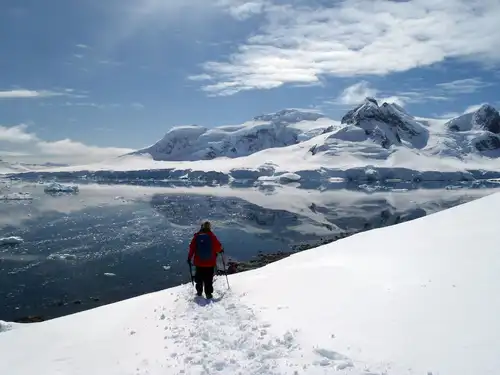
Explore Antarctica Without Leaving Your Couch

The First Overwintering Hut in Antarctica

Book Recommendations for Your Polar Cruise

Five of History’s Greatest Polar Explorers
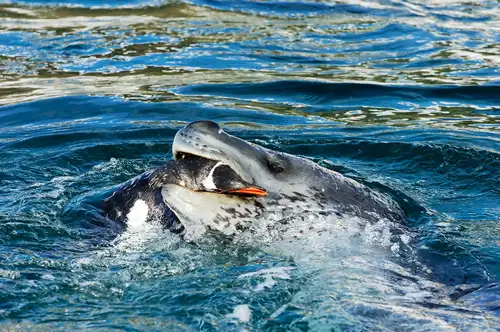
Danger Beneath the Water: 10 Facts About Leopard Seals
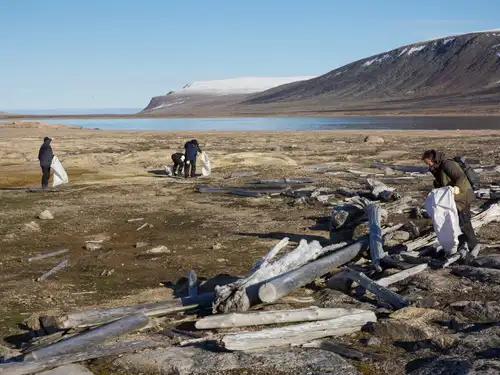
Keep It Green: Our Commitment to Sustainable Polar Travel
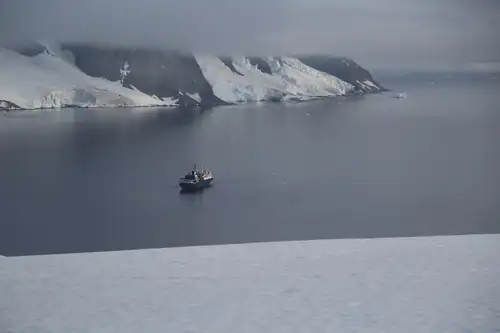
The Most Enchanting Antarctica Cruise Islands
Orcas (aka Killer Whales) of Antarctica and the sub-Antarctic
Antarctica’s Hourglass Dolphin
All About Ice: Glaciers and Icebergs of the Arctic and Antarctica