

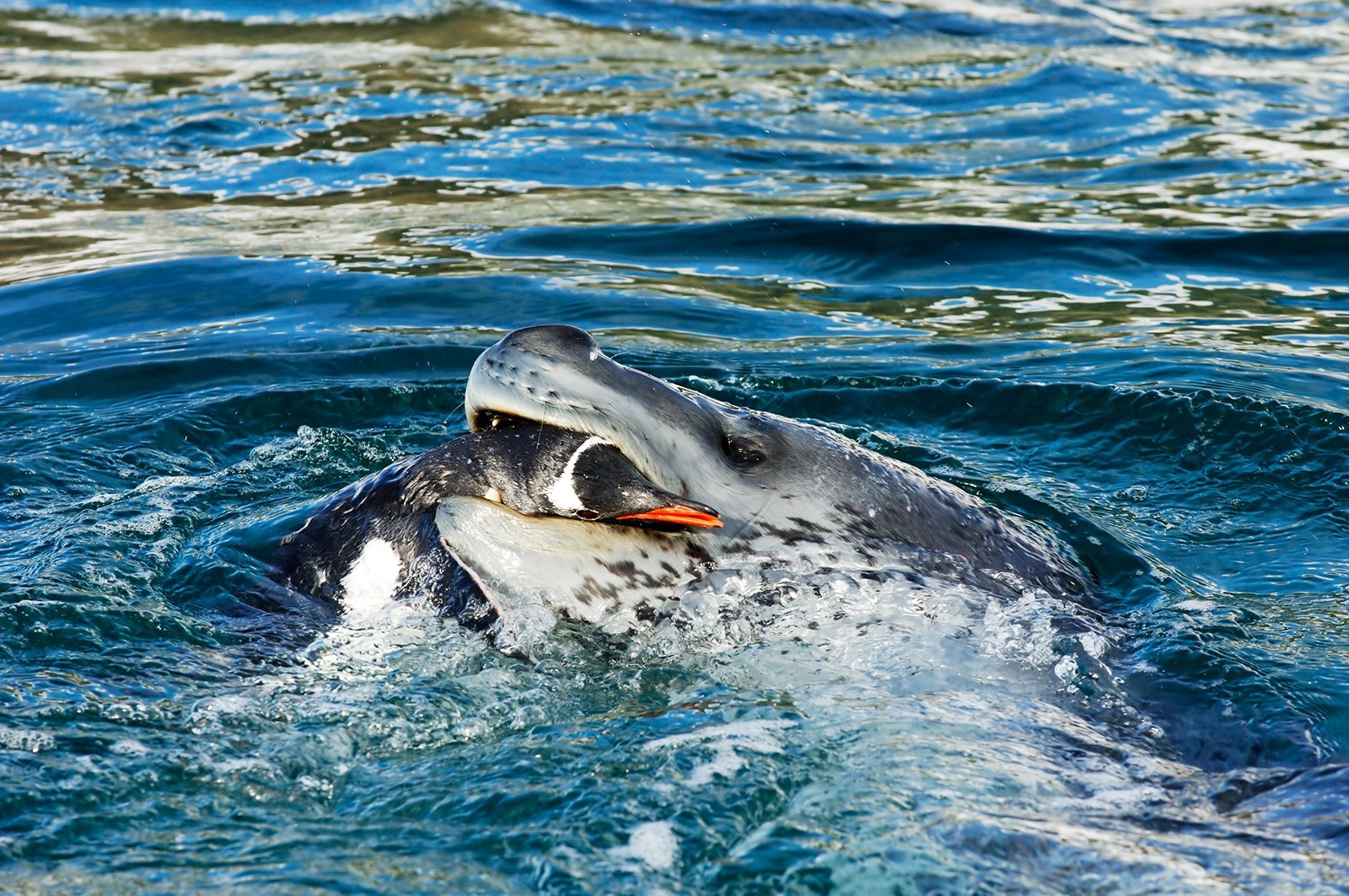
Antarctica is one of the most pristine environments on Earth, home to whales, penguins, seals, and birds, providing nature lovers with a treasure trove of wildlife memories to take back home.
Mid-level wildlife is the basis for larger life
Supporting the richness of Antarctica’s life is phytoplankton, which sinks to the seabed to support communities of benthic animals like sponges and sea cucumbers. Mid-trophic animals that feed off these communities in turn support larger fish, including the Antarctic silverfish. Eventually larger and larger species feed off this food chain, enabling species both underwater and in the air to thrive in the cold Antarctic waters. These species include skuas, petrels, leopard seals, Weddell seals, minke whales, and blue whales.
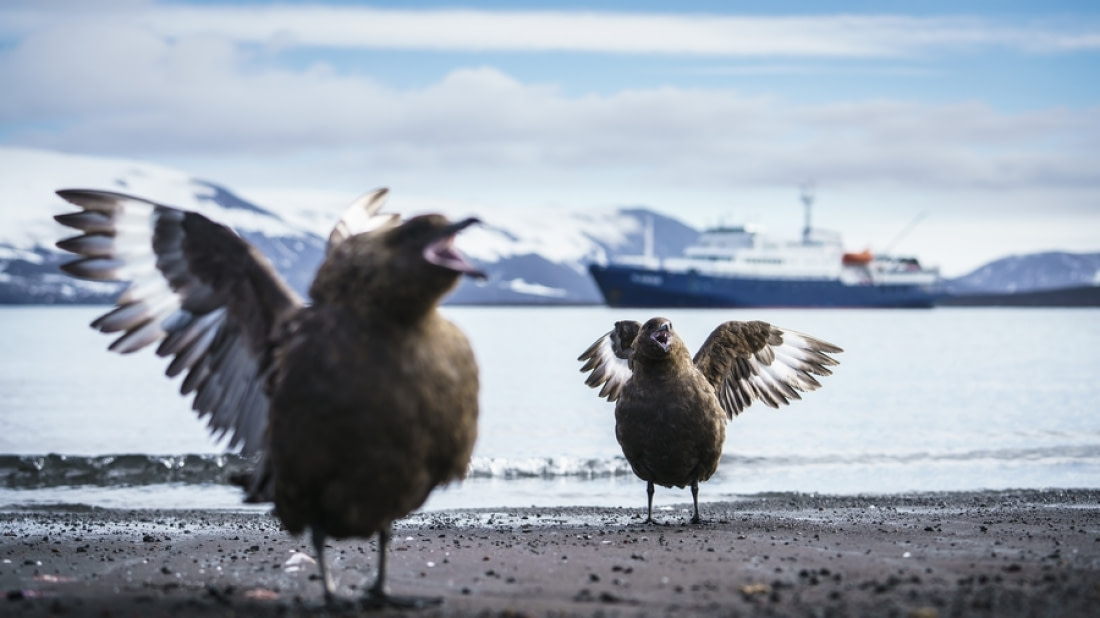
Distinctive-sounding south polar skuas
Visitors to the continent can see the south polar skua, a large bird that grows to be around 1.2 – 1.5 kg (2.6 – 3.3 pounds) and 53 cm (21 inches) long. They come in three types: pale with a soft honey colour and dark wings, dark chocolate-brown, and grey-brown with dark wings. South polar skuas are known for their distinctive call. Both parents share incubation, chick feeding, and defence duties. They arrive at their breeding sites between the end of October and mid-December, the Southern Hemisphere summer. During these warmer months, south polar skuas either feed on eggs and young Adélie penguins or rely on fish and krill. When not breeding, they prefer to live out at sea.
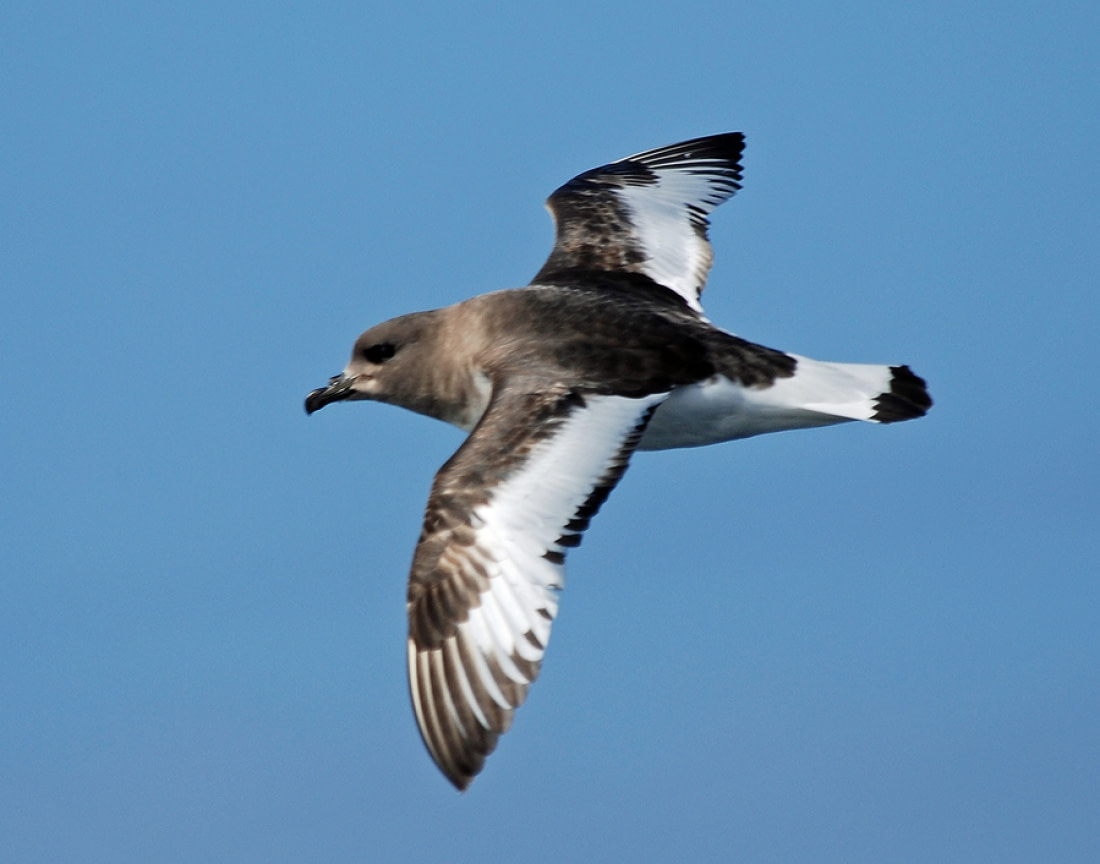
Seafaring Antarctic petrels
The Antarctic petrel is a chocolate-brown bird with white wings and a brown-tipped tail. They are found mainly at sea and around pack ice and ice floes, as well as the coastal edges of the Antarctic continent. Every October through November, Antarctic petrels nest and lay eggs (one per female bird). Usually they choose a nesting site in snow-free areas, such as crevices and on the ledges of rocky cliffs. The incubation period lasts around 45 – 48 days, and the nesting period is around the same span of time. Their nesting colonies can become large, some having as many as 200,0000 pairs with densities that are more than one nest per square metre (0.32 square feet. Antarctic petrels usually eat krill and other small crustaceans, along with small squid and fish.
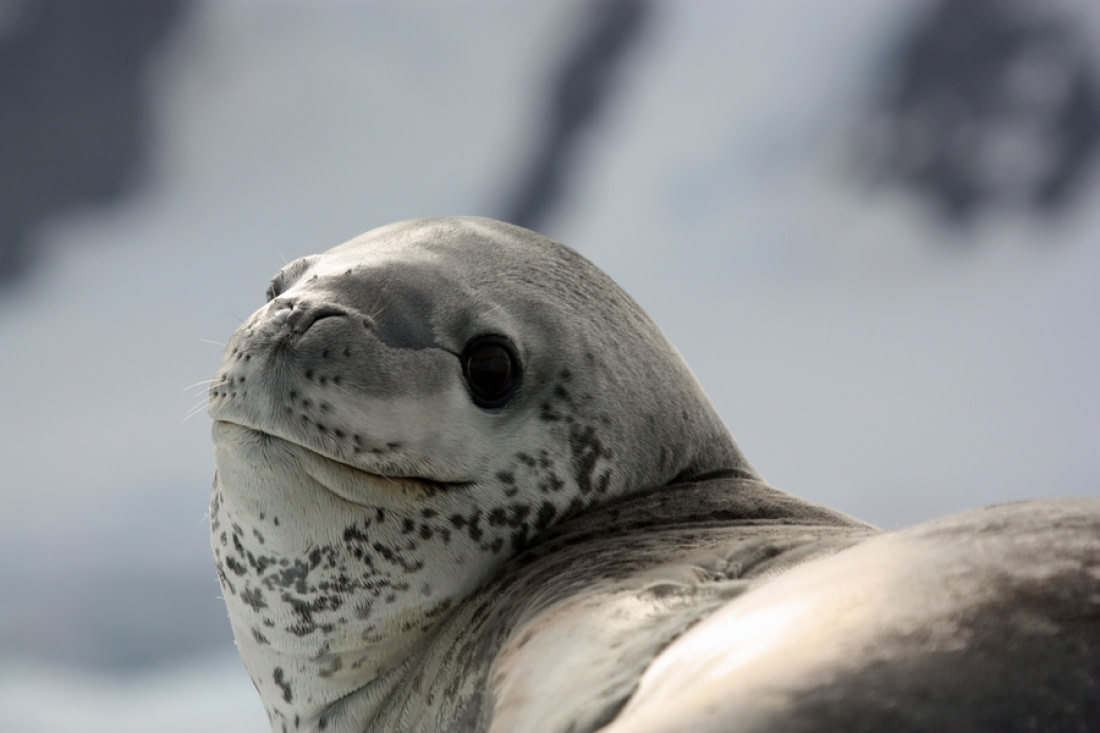
Leopard seals, never too far from dinner
Leopard seals have slender bodies with long front flippers. They also have large canine teeth and sharp molars that are not only used to feed on penguins, fish, squid, crustaceans, and other seals, but also to strain krill from the water. Leopard seals are solitary creatures that often inhabit pack ice surrounding the continent.
While little is known of their biology, scientists do know that females breed every six years or more and give birth to a single pup on the sea ice. When it comes to carnivorous hunting, leopard seals like to be close to penguin colonies so that dinner is never too far away. Some leopard seals prefer to hunt crabeater seal pups. Their usual diet, however, consists mostly of krill.
Newborn Weddell seals hauling out of the ice
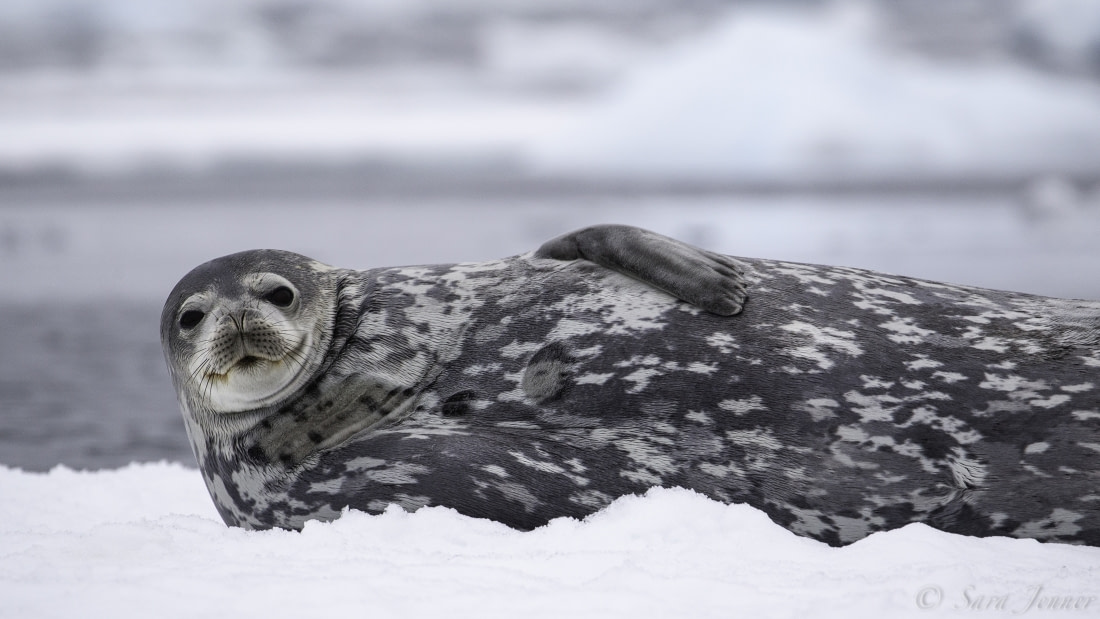
Weddell seals are large animals, with adult males and females reaching up to three metres long (9.84 feet) and weighing around 400 – 500 kg (880 – 1,100 pounds). They have small heads relative to their bodies and are usually grey and black with white stomachs. The seals are found all around Antarctica, staying near fast ice and only making short trips into the sea to feed.
On your Antarctica cruise, you will typically see Weddell seals hauling themselves out of the sea onto fast ice to rest. The females use the fast ice to give birth, using the same place each year. They give birth to one pup per year, after which mothers tend to their pups for about six weeks.
During this time, Weddell seal mothers actively teach their pups life skills: The pups learn to swim and haul themselves out of the water at just one week old. Weddell seals usually hang around their access hole, generally staying near their breeding colonies. During the winter, when their access holes freeze up, the seals use their special canine and incisor teeth to break the new ice and create holes to breathe through.
Minke whales poking through the ice
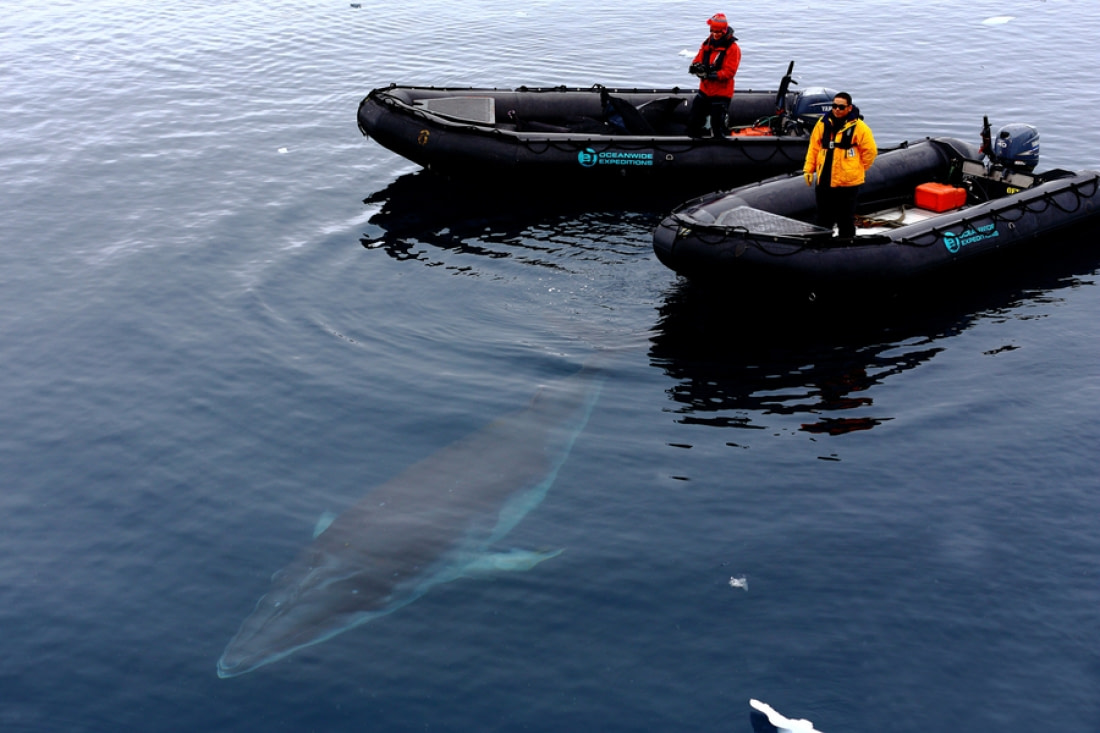
Whether on an Arctic or Antarctic whale watching trip, one of the larger marine animals you may spot are minke whales. These whales are black, dark brown, or grey, with a lighter-colored belly. Minke whales are seen in sub-polar areas too, and are largely spotted in open water. In summer, they often hang out in open pack ice; in the winter, minke whales prefer to swim around heavy pack ice. When the ice is thick, minke whales breathe by sticking their pointed heads up through narrow cracks in the ice. How they find these cracks, however, is a mystery.
Minke whales have hundreds of baleen plats growing from their upper jaws, with 50 – 70 pleats running from their throats to their flippers. These pleats stretch, letting minke whales take in large volumes of water when feeding. In Antarctica, minke whales feed almost entirely on krill. They feed in large groups that can number in the hundreds when food is abundant. Minke whales are quite fast swimmers and often breach. Below the surface, they can hold their breath for as long as 20 minutes.
Blue whales, the titans of the ocean
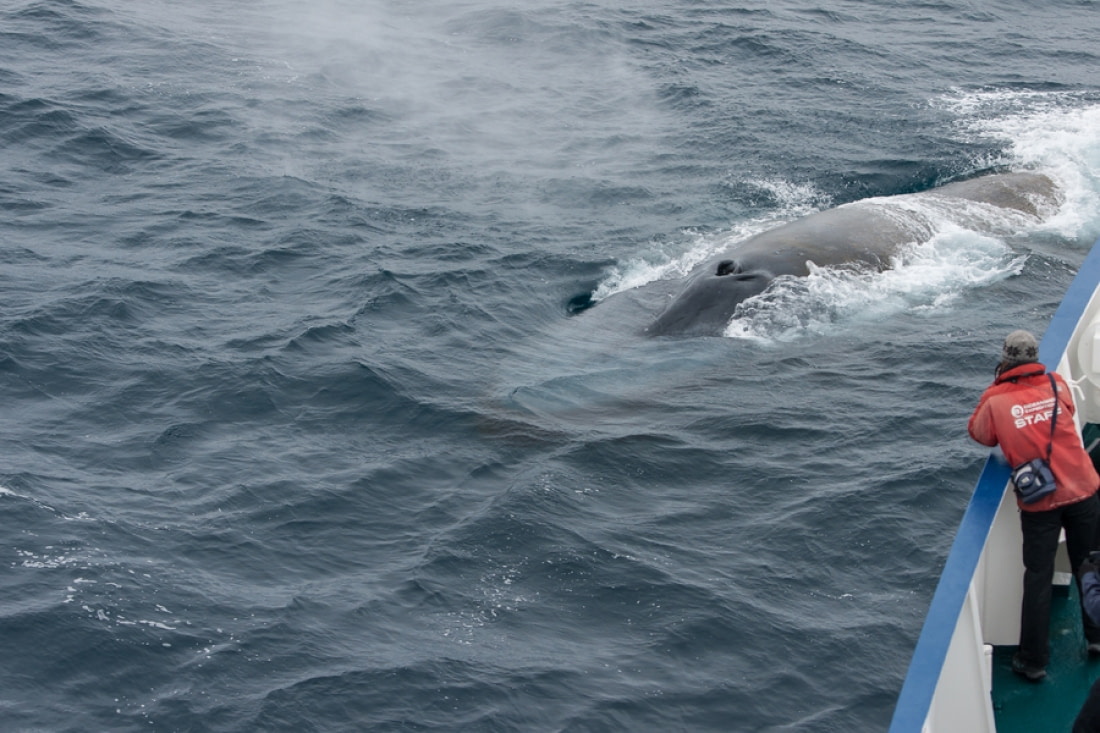
The largest species Earth has yet created grows to around 30 metres (98 feet) in length. Though blue whales have not recovered from the great whale hunts of the early 20th century, they may sometimes be spotted in Antarctica’s open waters. Blue whales are one of the world’s longest-living species: The oldest whale is thought to have lived to 110 years old, while the average blue whale lifespan is upwards of 80 years.
During the summer months, blue whales often swim near the edge of the Antarctic sea ice. These whales look blue underwater, but on the surface they are more of a mottled blue-grey. Blue whales feed nearly exclusively on Antarctic krill, and adults are able to consume around 4 tonnes (8,800 pounds) of krill per day. Blue whales can be found in small groups, but typically they swim alone or in pairs.
They often swim around 8 kph (5 mph) but can race up to 32 kph (20 mph) when necessary Underwater the whales are very loud: Their pulses, groans, and moans able to be detected by other blue whales up to 1,600 km (1,000 miles) away. Baby blue whales are born weighting up to 3 tonnes (6,600 pounds) and measuring 7.6 metres (25 feet) in length. Feeding off their mother’s milk, baby blue whales put on 90 kg (200 pounds) each day in the first year alone.


Blog


10 Books and Films To Prepare for your Antarctica cruise
Discover the Scoresby Sund Fjord System in East Greenland
The Eight Great Penguin Species of Antarctica
Penguins, Albatrosses, Petrels: The Winged Wildlife of South Georgia
Top Antarctica Cruise Experiences for 2025
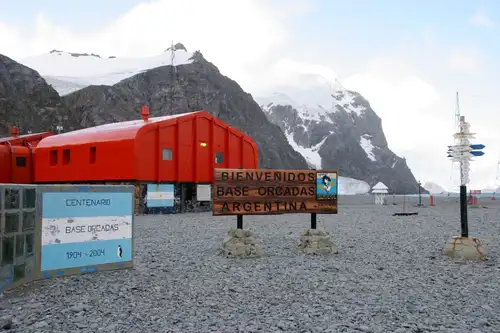
A Look Into the International Research Stations of Antarctica
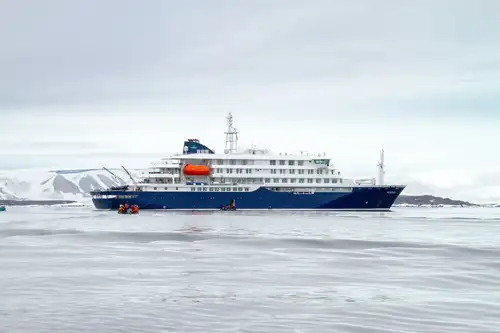
Seven Tips to Get the Most out of Your Expedition Cruise
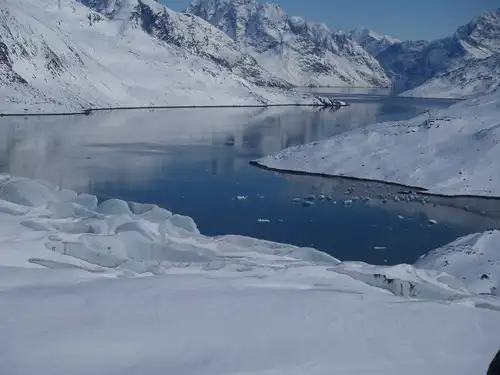
8 Scientific Wonders of the Arctic

The First Overwintering Hut in Antarctica

Polar Cuisine in Pictures
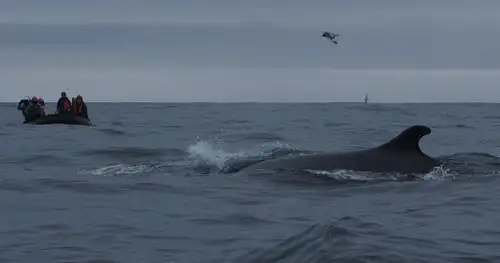
Of Treacherous Rocks & Audacious Fin Whales
Franz Josef Land Sites, Species, and Experiences
Life migrating through the Polar Front
What’s so Special about East Spitsbergen?
9 Facts about the Greenland Shark
The Ultimate Traveler’s Guide to the Arctic and Antarctica
Polar Bear Primer: Eight Facts About the Arctic Wanderer
Spitsbergen: Alkefjellet magic
Polar bear encounter in Spitsbergen