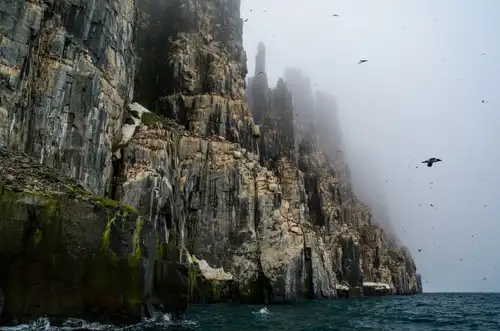


In the Antarctic region, extensive research is being conducted by national Antarctic programmes from countries like the UK, Australia, and Japan. These studies aim to understand species in the air, on the ground, and in the sea, and how these species are interconnected without variables such as human impacts and climate change.
The future of albatross numbers in Antarctica
Albatrosses cover vast distances when foraging for food. Even during breeding seasons, albatrosses can travel from sub-tropical to Antarctic waters on trips covering up to 10,000 km over the span of 10 to 20 days.
Many species of albatrosses, including the wandering and grey-headed albatrosses from the Southern Ocean south of Australia and South Georgia, migrate long distances, with some traveling right around Antarctica.
In addition to the impressive distances they travel, the wandering albatross also holds the title of being the largest of all ocean bird species, with a wingspan of 2.5-3.5 meters in flight. The wandering albatross breeds on six Sub-Antarctic Island groups and also has colonies in the Indian Ocean and on South Georgia Island in the South Atlantic Ocean.
However, with 15 of the world’s 22 albatross species threatened with extinction and seven others considered to be ‘near-threatened’ by the IUCN, the British Antarctic Survey (BAS) is monitoring three species of albatross located in South Georgia, which are declining at a rate of 2 to 4 percent per annum.

Long-term monitoring of albatrosses
This monitoring programme has been long-standing, with BAS scientists monitoring albatross populations at Bird Island, South Georgia, since the 1960s. This location is considered to be home to the largest and most studied albatross colonies in the world.
Over the decades, scientists have monitored return rates of ringed birds, providing data on breeding frequency and survival rates. GPS trackers and geolocator devices offer insights into the vast areas of ocean covered by the birds in their search for food.
This data is crucial for monitoring the health of albatross species. Albatrosses are grand birds, being the largest of all seabirds and also the longest living, with some reaching over 60 years old. Their long lifespan makes them vulnerable, as they do not breed until they are around 10 years old.
Most species breed annually; however, nine species, including the wandering albatross, lay only one egg every two years, and it takes over a year for a chick to leave the nest. As such, even a small increase in death rates of adult albatrosses can severely impact chick survival rates.
Penguin counts in Antarctica
Long-term monitoring by BAS of penguin populations, particularly in the sub-Antarctic and Antarctic Peninsula, has revealed fluctuations in species numbers. Adelie penguin numbers have dipped over the past three decades, while in contrast, the King penguin population has increased from a few hundred in the 1920s to almost half a million today.
In more southerly waters, Emperor penguin numbers have experienced a significant decline, with some colonies experiencing a decline in numbers of up to 50 percent, and one northerly colony on the Antarctic Peninsula almost disappearing.
To understand why penguin numbers are fluctuating, BAS scientists are focusing their efforts on understanding how food supply and available nesting sites impact population numbers.

The link between sea ice and penguin numbers
One finding is that BAS scientists, in collaboration with U.S. scientists, discovered that sea ice plays a major role in the decline of penguin numbers. Krill, which is the staple diet of not only penguins but also seals and whales, spend their early stage of life grazing on phytoplankton located on the underside of floating sea ice. As such, there is a correlation between Adelie population numbers and reductions in sea ice and associated food supply. Nonetheless, this relationship does not hold for all penguin species.
While rapid warming temperatures on the Western Antarctic Peninsula have seen sea-ice cover reduce by around 40 percent over the past 30 or more years, leaving ice-dependent penguin species vulnerable to further warming on the continent, other species less dependent on ice, including chinstrap penguins, can thrive with reductions in ice, increasing their number of breeding sites and food supplies. Nonetheless, this outcome is not guaranteed, as chinstrap population numbers have declined over the past few decades.
Tracking penguins
To understand more about penguins, BAS has developed satellite and tagging systems to track penguins onshore and in the sea. One BAS research station, Bird Island Research Station, has developed a gateway for the resident penguin colony to enter and exit. As tagged penguins pass through the gate, scientists can record the tag number, time, and direction of travel, enabling researchers to estimate how long the birds spend foraging in the sea.
Meanwhile, a joint BAS-Japan National Institute of Polar Research programme observed penguins underwater with miniature cameras attached to the backs of individual penguins. Additionally, the programme attached GPS trackers to penguins, enabling scientists to eventually build up an understanding of the reasons behind the success or failure of penguin colonies, as well as build up a greater understanding of the Antarctic ecosystem.

Analysing past dinners of penguins
Australian scientists have attached small GPS trackers to the feathers on the backs of Adelie penguins to determine where they are foraging. These trackers have been attached to penguins across Australia’s research stations on the continent, enabling scientists to study penguin foraging behavior in three areas simultaneously and determine how natural variability in the marine environment impacts foraging efforts, particularly the impact of variable sea ice on foraging.
Meanwhile, Australian researchers from the Australian Antarctic Division have begun studying the historical feeding habits of Adelie penguins and the impacts of ocean acidification on phytoplankton and bacteria. Scientists will survey abandoned penguin sites to excavate ancient penguin droppings to determine how their diets have changed over time and what impacts climate and fishing will have on the feeding habits of the penguins in the future.
For instance, the research aims to find whether Adelie penguin diets have changed from krill to fish-based diets, from which future population numbers can be estimated for Adelie colonies. Meanwhile, the researchers will explore the effects of ocean acidification on microbes across six 650-litre tanks, which will model different carbon dioxide concentrations in the Earth’s atmosphere.
A focus on krill
Antarctic krill is a shrimp-like crustacean that can grow to 6 cm long and is a vital food source for fish, whales, seals, penguins, and other sea birds.

Krill is also a product for feeding farmed fish and a nutrient supplement for humans. To keep an eye on krill and understand how it plays a vital role in the ocean’s ecosystem, BAS has implemented a long-term monitoring programme that estimates krill stock. An important aspect is that krill stock fluctuates naturally, and in some years, it can become scarce, with krill predator population numbers fluctuating in response.
To understand the impacts of climate change, BAS scientists are conducting research on how changes in temperature, ocean acidification, and changes in sea-ice cover impact krill stocks. An important aspect of krill research is determining the exact connection between krill and predators, as the Antarctic fur seal population at South Georgia has rapidly increased after years of over-harvesting despite fluctuating levels of krill.
 21 Dec - 08 Jan 2026
 28 Dec - 09 Jan 2026
 29 Dec - 10 Jan 2026
 08 Jan - 18 Jan 2026
 09 Jan - 19 Jan 2026
Related Trips
Falkland Islands - South Georgia - Antarctica
21 Dec 2025 - 08 Jan 2026  19 Days / 18 Nights
Antarctica - Basecamp - free camping, kayaking, snowshoe/hiking, mountaineering, photo workshop
28 Dec 2025 - 09 Jan 2026 13 Days / 12 Nights
Antarctica - Basecamp - free camping, kayaking, snowshoe/hiking, mountaineering, photo workshop
29 Dec 2025 - 10 Jan 2026 13 Days / 12 Nights
Antarctica - Discovery and learning voyage
08 Jan 2026 - 18 Jan 2026 11 Days / 10 Nights
Antarctica - Discovery and learning voyage
09 Jan 2026 - 19 Jan 2026 11 Days / 10 Nights
Antarctica - Discovery and learning voyage
18 Jan 2026 - 28 Jan 2026 11 Days / 10 Nights
Falkland Islands - South Georgia - Antarctica
19 Jan 2026 - 06 Feb 2026 19 Days / 18 Nights
Falkland Islands - South Georgia - Antarctica
28 Jan 2026 - 16 Feb 2026 20 Days / 19 Nights
Antarctica - Discovery and learning voyage
06 Feb 2026 - 16 Feb 2026 11 Days / 10 Nights
Falkland Islands - South Georgia - Elephant Island - Antarctica - Polar Circle
16 Feb 2026 - 10 Mar 2026 23 Days / 22 Nights
Antarctica – Uncharted islands of the Deep South
18 Feb 2026 - 04 Mar 2026 15 Days / 14 Nights
Deep South Basecamp experience
04 Mar 2026 - 17 Mar 2026 14 Days / 13 Nights

Blog


A Bug’s Life in Svalbard
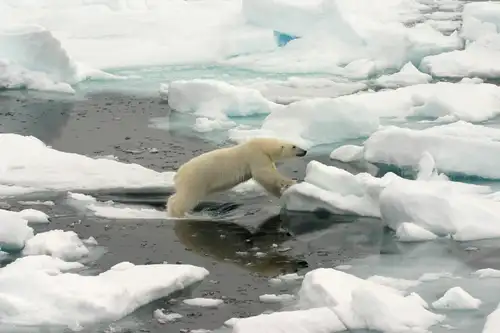
Spitsbergen: a true polar bear trip
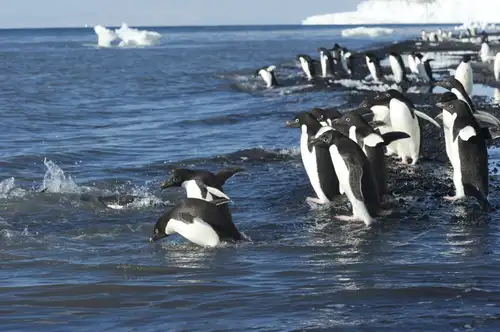
Adélie penguins in the Ross Sea - Antarctica
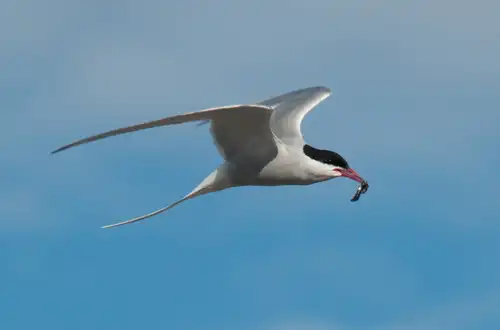
Birding Opportunities Abound in Spitsbergen

True South: A New Flag for a Global Antarctica
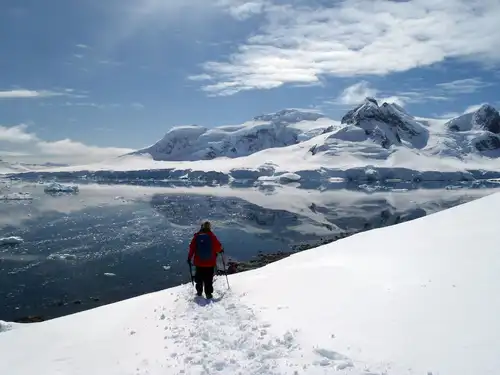
Explore Antarctica Without Leaving Your Couch
Secrets of the Snowy Owl: Habitat, Adaptations, and Other Facts
Antarctic Explorer’s Voyage
Eight Ultimate Antarctica Adventures
Svalbard a Disneyland for geologists
Arctic Seals
The Mysteries of the Beluga Whale
First to the North Pole: Five Failed but Brave Expeditions
Six Facts About the Crabeater Seals of Antarctica
Antarctica in Pictures: Photos from 2018
Five Reasons to Love St. Helena
Path of Polar Heroes: Hiking Shackleton’s Historic Route

Visa to Argentina for Antarctic Expedition Travelers (2025 Guide)
Deception Island deceptively active