Antarcticas Hourglass Dolphin - Nexta Expeditions
Antarctica’s Hourglass Dolphin

Antarctica’s Hourglass Dolphin

Though hourglass dolphins are especially rare, they’re actually not a threatened or endangered species.

This isn’t just luck, however, or some oversight of ecological research.

Rather, it’s due to certain inherent traits of hourglass dolphins. For one, their habitat is the remote, cold Antarctic and sub-Antarctic waters. Also, hourglass dolphins are not hunted commercially. And finally, these timid dolphins tend to avoid human contact.

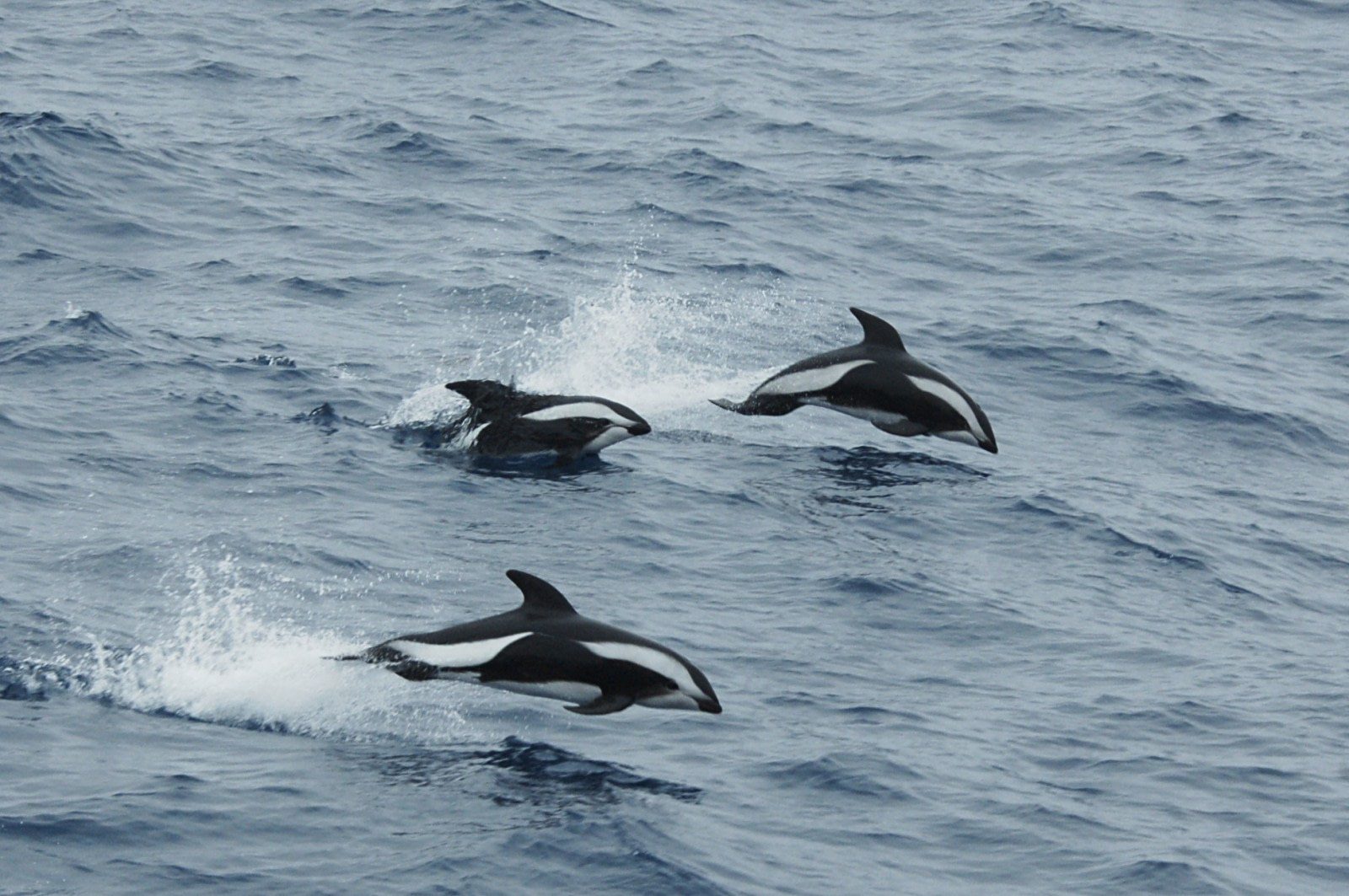
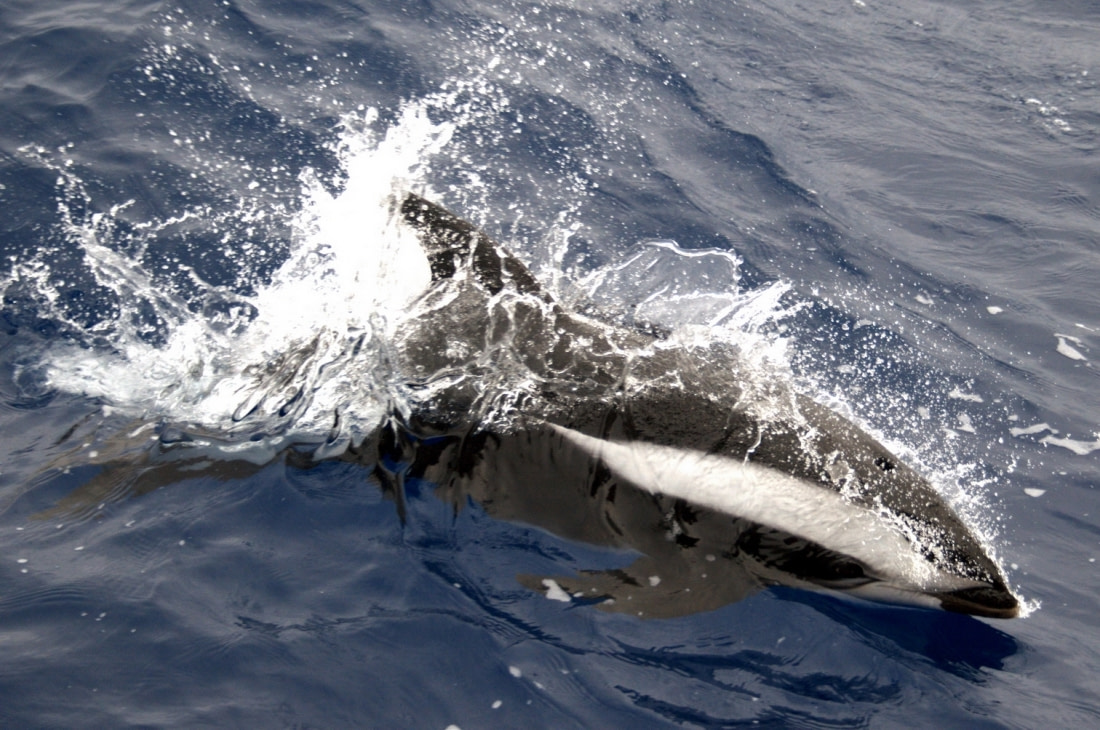
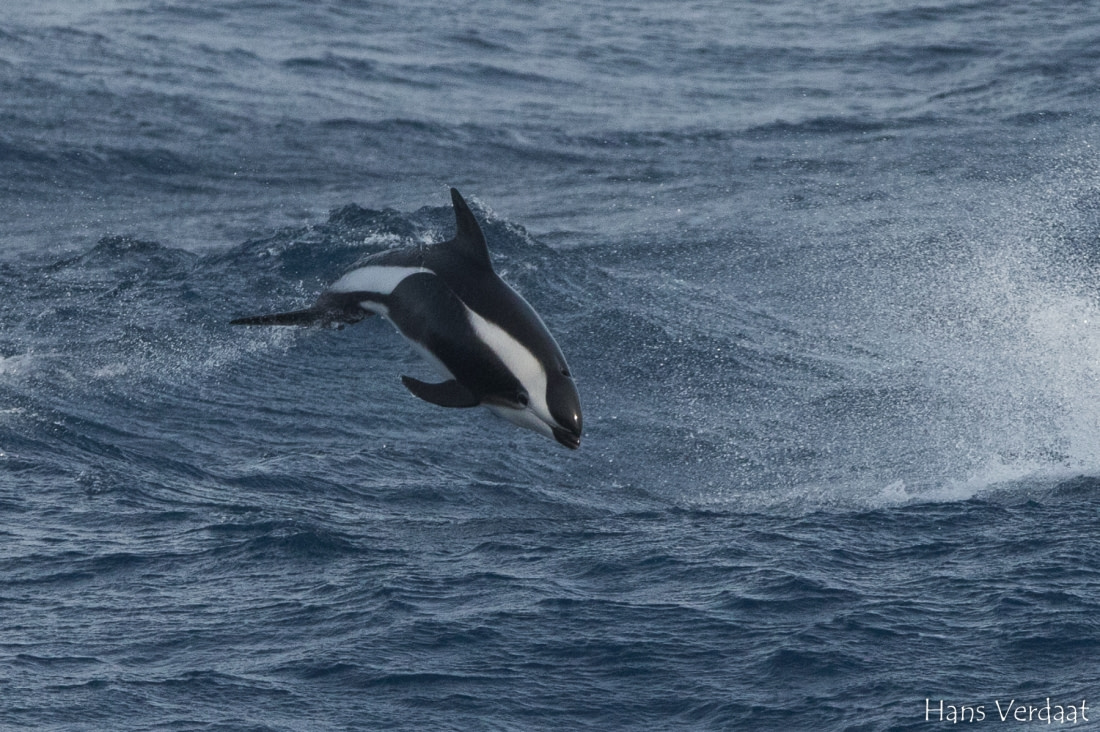
Small and stocky, with a striking black and white pattern that gives them their common name, hourglass dolphins are one of the least-studied cetaceans in the world.

Scientists still know little about their behavior and biology: As of 2010, less than eight hourglass dolphins had even been studied.
blog-image

Many names, two habitats, one hourglass dolphin

The scientific name of the hourglass dolphin is Lagenorhynchus cruciger, which means “jar-beaked” and refers to their small, jar-shaped rostrums (beak-like snouts), while cruciger, which means “cross-carrier,” references the unique cross-like color scheme on their flank.

The hourglass dolphin has also been classified as Lagenorhynchus wilsoni, for Edward Wilson, an Antarctic naturalist in the early 20th century.

Other names for hourglass dolphins are as follows: skunk dolphins, Wilson's dolphins, and southern white-sided dolphins. Hourglass dolphins are also nicknamed “sea cows” due to their distinct black and white coloring.

How to identify hourglass dolphins

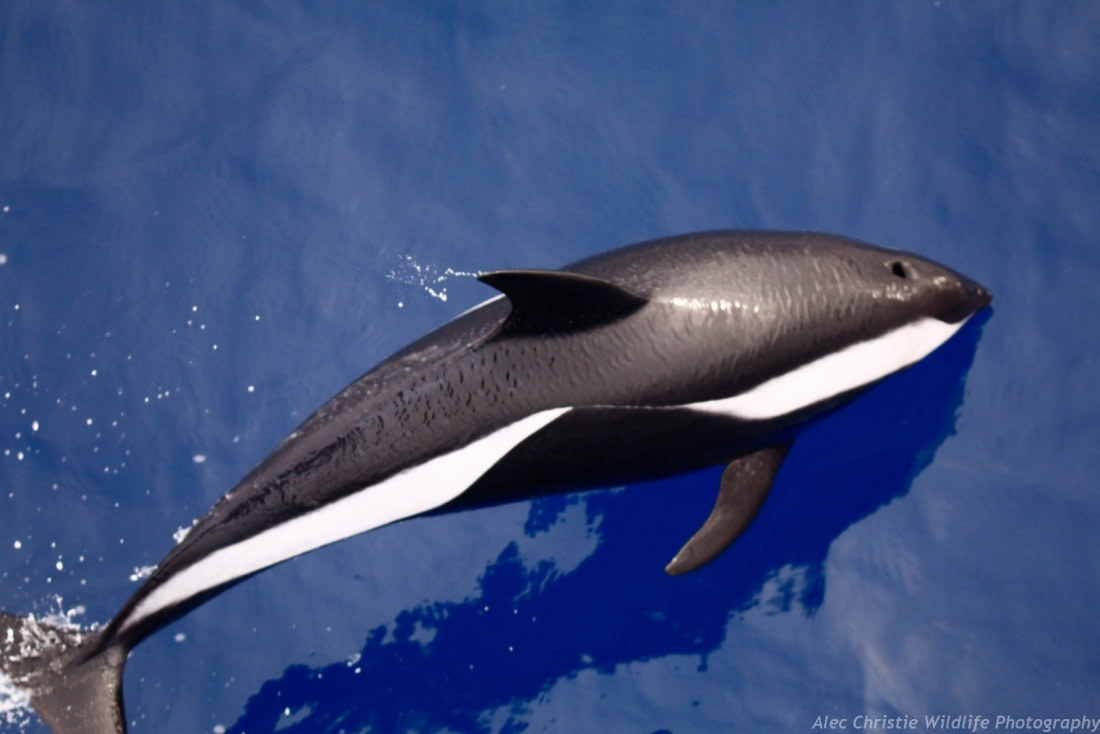
The coloring of hourglass dolphins sets them apart from other dolphins, but above the Antarctic Convergence they still might be confused with dusky and Peale's dolphins, which are also black and white.

Below the Convergence, however, hourglass dolphins are the only small cetaceans with a dorsal fin, which is tall, hooked, and has a broad base.

Some hourglass dolphins, thought to be adult males, have a marked backward bend approximately halfway up the fin. Their unique coloration and the shape of their fins make it easy to identify these hourglass dolphins.
blog-image

The southern habitat of hourglass dolphins

Hourglass dolphins are most commonly seen around the Antarctic Convergence, between South America and Macquarie Island.

Their habitat is also known to extend to the south coast of New Zealand, near the South Shetland Islands, and around Tierra del Fuego. The largest concentration of hourglass dolphin sightings, however, has been in the Drake Passage. Hourglass dolphins are usually found in southern waters during the summer and northern waters during the winter. This fluctuating habitat seems to suggest that hourglass dolphins migrate seasonally following cold-water currents.

The large social circle of hourglass dolphins

Gregarious and sociable, hourglass dolphins typically congregate into pods ranging from one to 60 individuals, with their average group size being around seven.

Not only are hourglass dolphins sociable with their own species, but they have also been seen in the company of fin whales, sei whales, southern bottlenose whales, Arnoux's beaked whales, orcas (killer whales), long-finned pilot whales, and southern right whale dolphins.

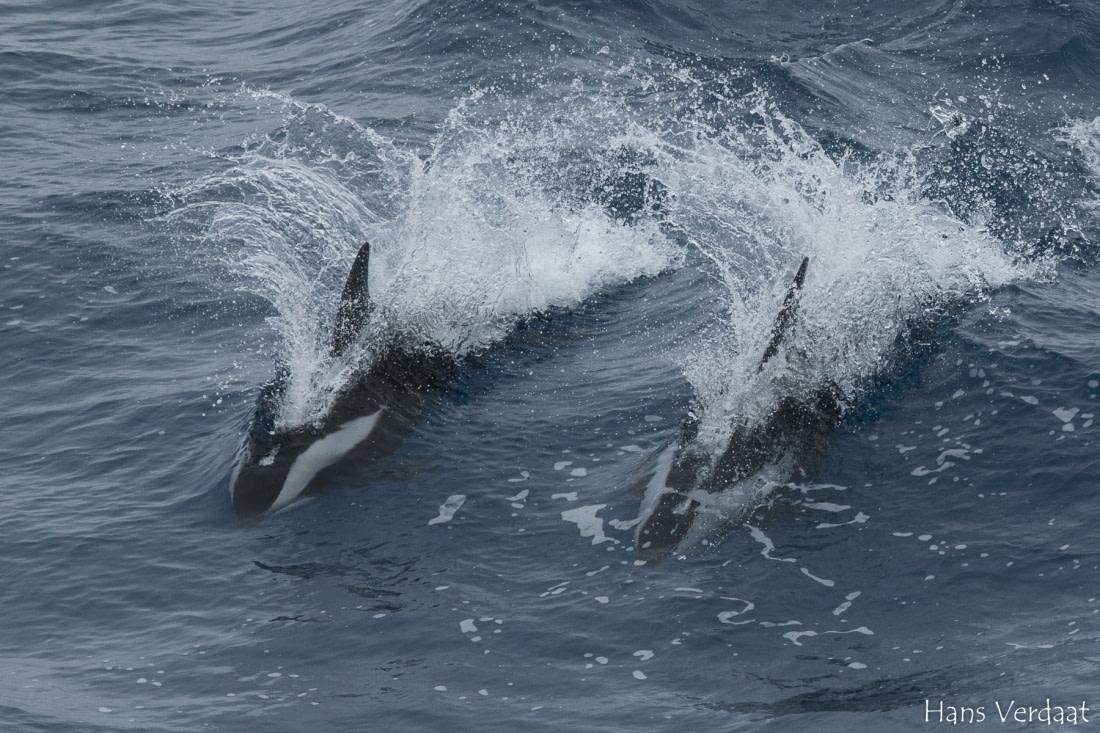
Hourglass dolphins enjoy bow-riding the waves of these much larger animals and have even been spotted altering their direction to catch the waves of boats and ships.

Swimming in long, low leaps, hourglass dolphins can look like swimming penguins from a distance. Whalers have historically looked for this behavior to identify fin whales.
blog-image

Hourglass dolphin food facts

Hourglass dolphins feed on lanternfish, squid, and crustaceans, and have been spotted feeding in groups of seabirds and plankton swarms.

They have conical teeth: 26 - 34 in their upper jaws and 27 - 35 in their lower jaws.

Hourglass dolphins use echolocation for orientation and prey location. A recent study, in fact, showed that they produce clicks that allow them to detect prey at more than twice the distance of other dolphin species.

The family life of hourglass dolphins

Little is known about the parental behavior of hourglass dolphins. In studies of their social habits, only three calves were identified out of a group of 1,634 hourglass dolphin adults.

Scientists believe this low offspring number may be explained by the possibility that hourglass dolphins breed during winter, when the weather prevents detailed studies.

However, it may also be due to the tendency of hourglass dolphins to avoid vessels.
blog-image

Threats to the hourglass dolphin population

Hourglass dolphins are not hunted commercially, have never been systematically exploited, and are almost never caught in fishing nets. Scientists believe the species is probably preyed upon by killer whales, though there is no documented evidence of this.

It is likely, then, that the hourglass dolphin population is near its original levels: 144,300 is the current estimated population. Embark on a thrilling Antarctica cruise to any of our extraordinary sites and enjoy the opportunity to view these beautiful creatures yourself!


Blog
go-leftgo-right

Greenland: East vs. West - Nexta Expeditions
Blog

Greenland: East vs. West

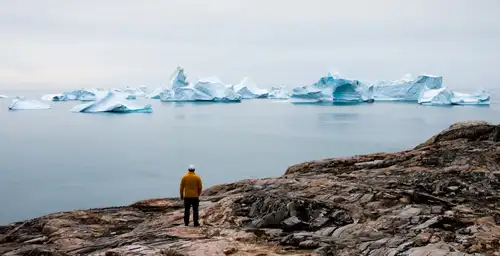
East and West Greenland offer vastly different experiences due to their unique climates, wildlife, habitation, and geology.
Five Reasons to Love St. Helena - Nexta Expeditions
Blog

Five Reasons to Love St. Helena

Being one of the most remote islands on Earth gives St. Helena a unique allure. Named after a Roman empress and the mother of Constantine the Great, this island also holds the distinction of being Napoleon’s final place of exile, making it a fascinating topic of conversation.
Six Seal Species You Might See On Your Greenland Cruise - Nexta Expeditions

Blog

Six Seal Species You Might See On Your Greenland Cruise

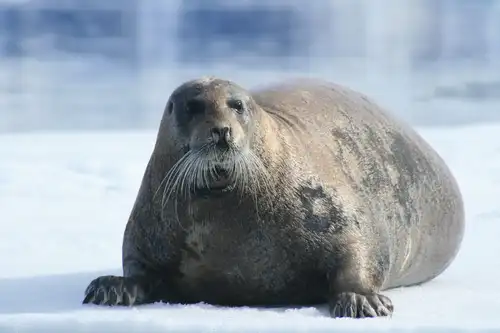
If you spot a grand old whiskered man lounging in solitary splendor, there's a good chance you're looking at a bearded seal. Your Greenland cruise will take you to bays where these solitary fellows (except during breeding season) hunt for fish in the relatively shallow waters near the shores.
The First Overwintering Hut in Antarctica - Nexta Expeditions
Blog

The First Overwintering Hut in Antarctica

In 1899, Carsten Borchgrevink and his nine crewmen became the first to spend the winter in a hut in Antarctica. (Technically, the Belgian Antarctic Expedition of 1897-1899 was the first to overwinter there, though this was done on their vessel after it was caught in ice.) Borchgrevink and his men spent the dark winter months isolated in a dirty hut, surrounded by equipment and sled dogs fighting each other outside.
Five Birds You Might See on Your Greenland Cruise - Nexta Expeditions
Blog

Five Birds You Might See on Your Greenland Cruise

A Greenland expedition cruise offers birdwatchers a unique opportunity to capture stunning avian photographs. With over 230 bird species, Greenland boasts both spectacular landscapes and diverse winged wildlife.
Polar bear feast - Nexta Expeditions
Blog

Polar bear feast

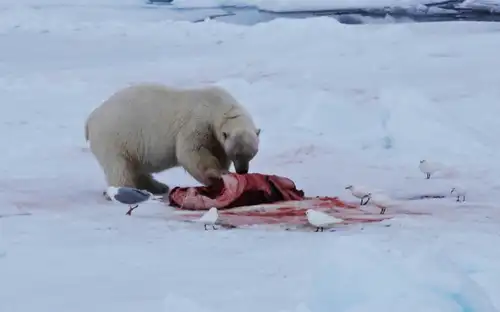
The polar bear was relishing his meal; the snow and his face were turning red from the blood. As we observed him eating, our own stomachs began to grumble. It was time for lunch.
The Ways and Wildlife of the Weddell Sea - Nexta Expeditions
Blog

The Ways and Wildlife of the Weddell Sea

The Weddell Sea is situated off the coast of Antarctica, at the southernmost part of the Atlantic Ocean. Its coordinates are 75 degrees south and 47 degrees west, encompassing the Argentine, Chilean, and British territories of Antarctica. The severe weather and extensive pack ice have historically made the Weddell Sea challenging to access, but modern icebreaker ships are now enabling explorers to venture into this remote area.
“The polar bear will still be there” - Nexta Expeditions
Blog

“The polar bear will still be there”

For several hours, we had been navigating the pack ice in search of polar bears. Despite numerous binoculars scanning the ice, no bears were visible, and only a few tracks were found. This suggested we might be in an area with fewer bears. Later that morning, we decided to head a few miles east, suspecting a higher bear population there.
Bouvet Island: The Most Remote Island in the World - Nexta Expeditions
Blog

Bouvet Island: The Most Remote Island in the World

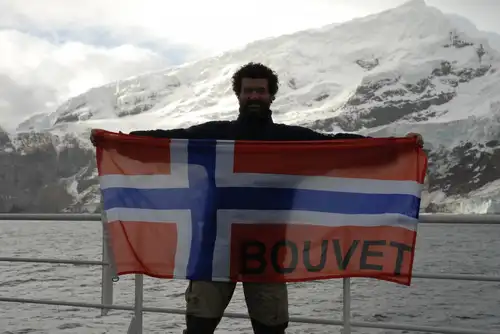
On January 1, 1739, French Commander Jean-Baptiste Charles Bouvet de Lozier made an extraordinary discovery: a volcanic island so remote that it lies 2,600 km (1,600 miles) from the nearest inhabited land.
Antarctic krill: Antarctica's Superfood - Nexta Expeditions
Blog

Antarctic krill: Antarctica's Superfood

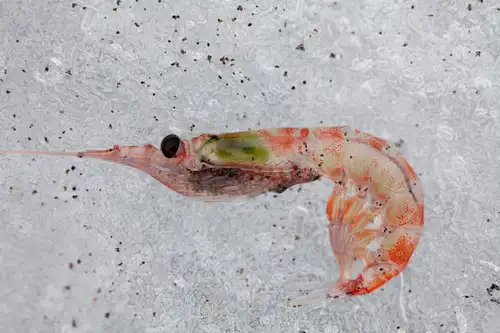
The size of a paper clip, pink, krill is a shrimp-like crustacean that does not look like much. Without them, though, the Earth's marine ecosystems would collapse completely.
Arctic Seals - Nexta Expeditions
Blog

Arctic Seals

Owing to the large landmasses that populate the Northern Hemisphere, the Arctic boasts the most diverse wildlife among the planet’s polar regions. Some of the most captivating Arctic animals are the marine mammals found just offshore.
Get to Know Your Ice - Nexta Expeditions
Blog

Get to Know Your Ice

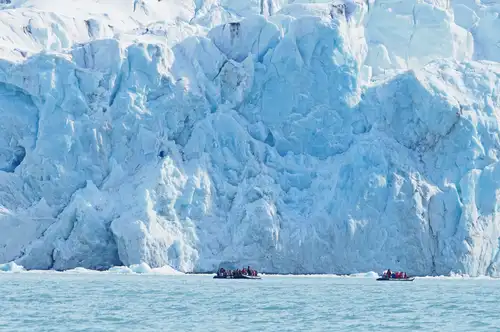
Ice plays a crucial role in everything from cooling your drink to regulating the planet's temperature. Let's explore the various forms of ice you might encounter during an Arctic or Antarctic adventure.
Svalbard’s Texas Bar - Nexta Expeditions
Blog

Svalbard’s Texas Bar

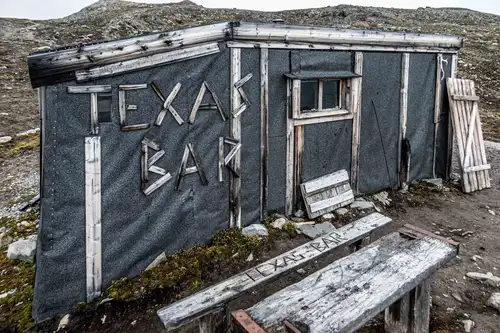
Texas Bar is one of the historic areas we visit on certain Svalbard trips, and it always proves to be a cherished landing site among both our guides and guests. This might be surprising, however, given that its name can be a bit misleading.
Tracking Greenland’s Wildlife from Space - Nexta Expeditions
Blog

Tracking Greenland’s Wildlife from Space

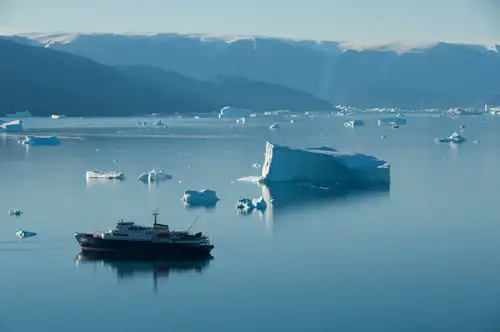
Despite Greenland’s harsh environment, life has found a way to thrive there. If you’re lucky enough to embark on a Greenland cruise, you stand the chance of encountering many species of cold-adapted mammals, birds, and fish.
10 Common Misconceptions About the Arctic - Nexta Expeditions
Blog

10 Common Misconceptions About the Arctic

The Arctic is a vast region. Truly immense.
The Ultimate Traveler’s Guide to the Arctic and Antarctica - Nexta Expeditions

Blog

The Ultimate Traveler’s Guide to the Arctic and Antarctica

Sunrises or sunsets? Coffee or tea? Polar bears or penguins?
Arctic Mythology: Inuit, Saami, and the Ancient Greeks - Nexta Expeditions
Blog

Arctic Mythology: Inuit, Saami, and the Ancient Greeks

The Arctic locations we visit aren’t merely made up of phenomenal landscapes, exotic wildlife, and more adventure than a Hardy Boys novel.
Adélie penguins in the Ross Sea - Antarctica - Nexta Expeditions
Blog

Adélie penguins in the Ross Sea - Antarctica

The Adélie penguin population in the Ross Sea has reached its highest numbers in 30 years, with up to a million breeding pairs during the summer. This accounts for about 38 percent of the entire Antarctic Adélie population.
Northeast Greenland National Park - Nexta Expeditions
Blog

Northeast Greenland National Park

Northeast Greenland National Park is the world’s largest national park and the ninth largest protected area on Earth. It should come as little surprise, then, that it’s also bigger than most countries, covering an impressive 972,000 square km (375,300 square miles).
The bio-richness of the Ross Sea - Nexta Expeditions
Blog

The bio-richness of the Ross Sea

The Ross Sea is one of the most stunning and untouched marine areas globally. This sea, which remains frozen for most of the year, spans 3.6 million square kilometers (1.4 million square miles) along the Antarctic coast south of New Zealand. Its waters harbor a biologically diverse ecosystem of species that have flourished, unchanged, for millennia.