The Evolving Shipboard Eco Traveler - Nexta Expeditions
The Evolving Shipboard Eco-traveler

The Evolving Shipboard Eco-traveler

Feeling stuck in the monotony of everyday life? Looking for a change of scenery? Look no further! Most of us spend our lives on solid ground, despite our bodies being composed of 71.5% water. You'd think we'd have a natural inclination to be in or on the water! So why not try something different? Consider an Arctic holiday adventure on the same waters that famous explorers once navigated!

Preparation

When you start researching online, you'll find a variety of boat travel options. Which one suits you best? Are you more interested in cultural or natural history, or perhaps both? Consider how much time and resources you have. Do you prefer traveling with a large group or a smaller one? If you've already explored temperate and tropical regions, it might be time to venture into the polar areas. Here, you'll find fewer large cruise ships and more expedition-style vessels, many of which are ice-strengthened or ice-breakers.

Shop around for cruises that catch your interest. Pay attention to the highlights of each location and the best times to visit. Check out cabin options and read some reviews to make informed decisions. Carefully consider the Arctic gear you'll need to stay comfortable and document your "trip of a lifetime."

Logistics

Once you've flown to your starting point, collected your luggage, perhaps taken a local tour, and spent the night at a nearby hotel, you're ready to board the ship. Your excitement builds as you anticipate the voyage ahead! In the early afternoon, you'll travel as a group to the dock (your luggage will already be in your cabin). As you walk up the gangway, you'll be greeted by hotel and expedition staff who will take your passport (it will be kept by the purser and returned upon departure) and escort you to your cabin.

Ship Safety

After confirming that your luggage has arrived in your cabin and taking in the clean, scenic space, you're free to explore the ship. While the bridge will be closed for security while in port, the rest of the ship, except for crew quarters on the lower decks, will be open for you to explore. Finding your way around is easy, though getting back to your cabin can be an adventure.

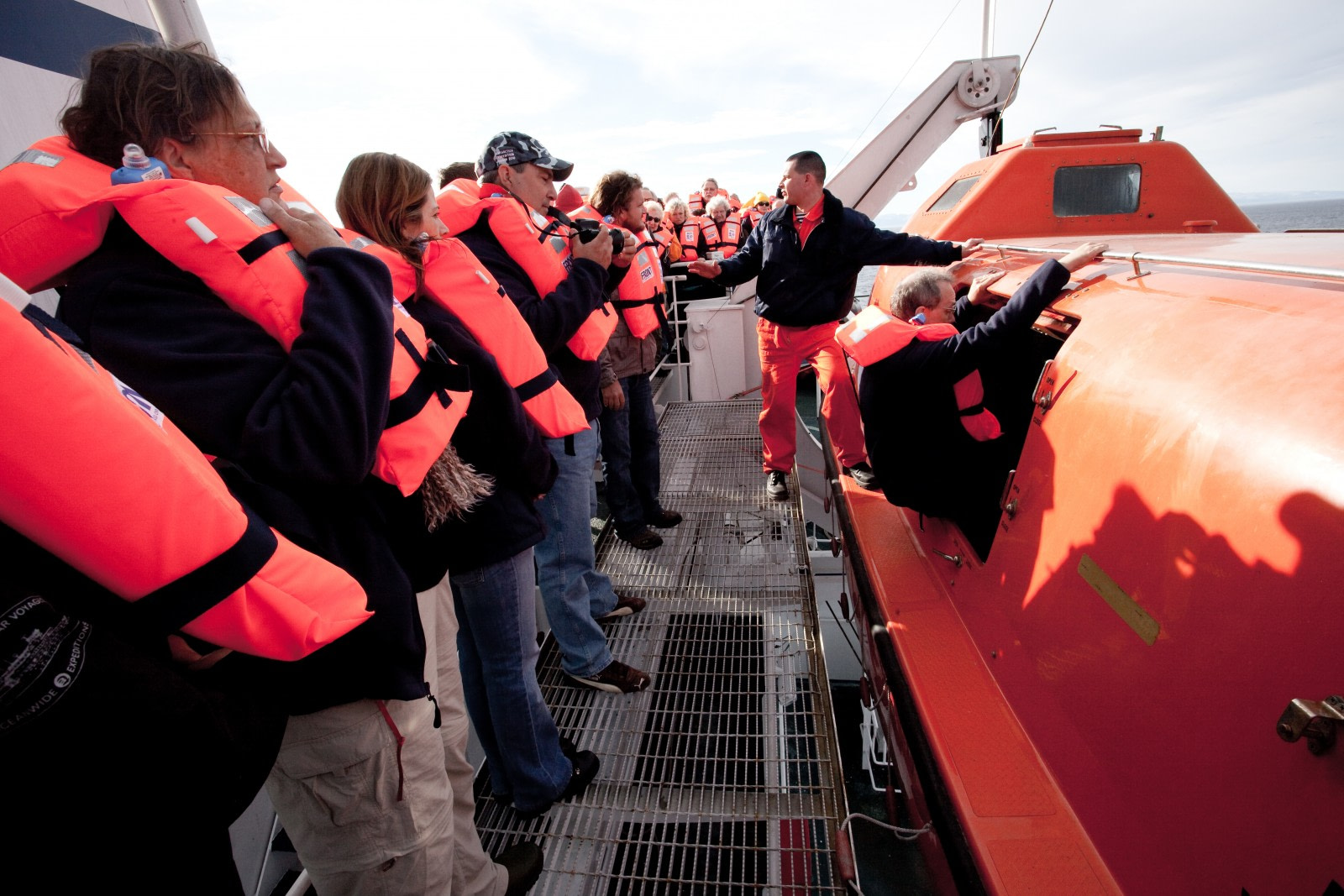
Before the ship can set sail, all guests must attend a mandatory safety briefing. This meeting covers the "Life Boat Drill," including how to don life jackets and the procedure for meeting at the Muster Station. Once this is completed, it's time to set sail and capture photos of the departure—always an exciting moment for everyone!

After a long day, it's nice to meet new people from around the world (perhaps from 16 different countries) and enjoy a delicious dinner with beautiful scenery passing by the dining room windows. It's been a long day, so you probably won't stay up too late. Tomorrow is a big day of discovery!

First Morning

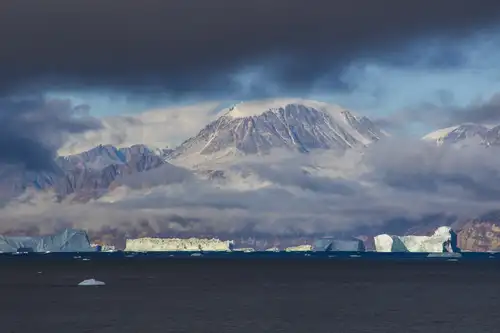
Feeling a bit jet-lagged, you make your way to the bar for your favorite morning beverage. You'll find a variety of options at the potpourri station. As you sip your drink, you take in the magnificent view of mountains and glaciers. It's even more grandiose than you imagined!

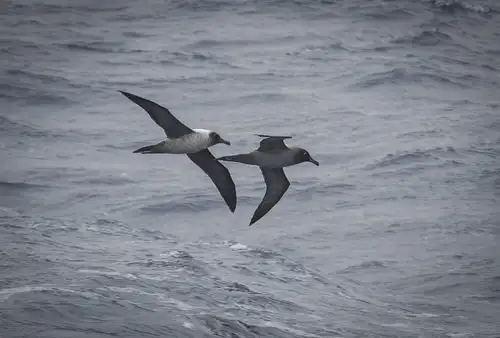
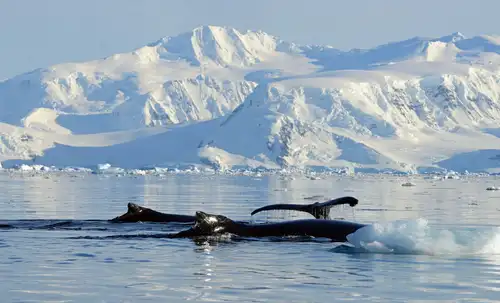
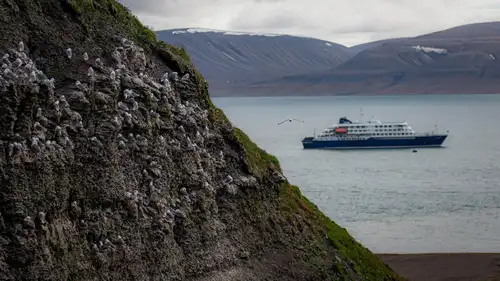
Seabirds whirl around the ship, heading to the cliffs where thousands of their kind perch on tiny ledges, calling out cacophonously. You're the only one up this early, and you can't believe your eyes when you see a scythe-shaped fin surface on a long, brown-grey back in the water nearby. You consult a chart of baleen whales and determine that the size, blow shape, and falcated dorsal fin likely indicate a minke whale. Great job on your first solo wildlife sighting!

It's time for breakfast, and on your way, you read the "Daily Adventure Program": 0900 hours - Zodiac Briefing followed by boot hand-out. 1000 hours - Wildlife Viewing Briefing. Both are mandatory. It seems like there are a lot of meetings, but these are necessary if you want to go ashore and see all the exciting things you came for. Plus, they'll be entertaining.

With people from so many different places, many of whom have never traveled this way before, there will be lots of curious questions and comments. Those who have done expedition travel before may help out or verify the itinerary with what their travel agent told them. Usually, the leader will introduce their staff, who will share some information about themselves, and you can find their bios posted as well.

Discovery

Depending on the focus of the voyage (some are charters with specific goals like polar bear viewing) or the weather, ice conditions, and ship schedule, you'll either cruise on the ship, take a zodiac cruise, or make a landing to explore the local natural and cultural history. Leaders will rotate the zodiac departures in deck or group rotations and offer different distances and rates of shore hikes to accommodate varying abilities.

Hiking groups must stay close to their rifle and flare gun-carrying staff for safety in bear country. Guidance on "closed areas," such as historic sites, fragile zones, and wildlife breeding areas, is also important. It's always fascinating to listen to passionate naturalists talk about the unique aspects of these special landscapes. Always go ashore, attend lectures, and participate in briefings to better appreciate the amazing places you'll fall in love with.

Be open to making new friends, as you never know what new perspectives and experiences might change your life! Enjoy each moment, and you too will become addicted to this special way of learning about the polar regions on Arctic cruises and Antarctic expeditions.


Blog
go-leftgo-right

The Return to Franz Josef Land - Nexta Expeditions
Blog

The Return to Franz Josef Land
As the possibility of international travel slowly returns, we are eagerly awaiting all the great locations, activities, and wildlife we might experience in the coming season. One of the things we’re most excited about is the return of our Franz Josef Land voyages.
11 Seals You May See in Antarctica or the Arctic - Nexta Expeditions
Blog

11 Seals You May See in Antarctica or the Arctic

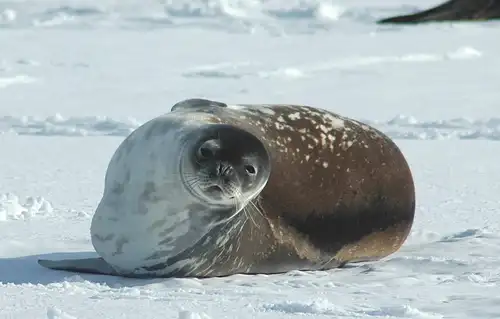
1. Weddell seals – These seals are known for their calm demeanor and spend most of their lives beneath the Antarctic ice. Although they need to come up for air, they can remain underwater for up to 45 minutes. Weddell seals can dive to depths of 610 meters (2,000 feet) in search of food. These vocal animals usually have one pup annually and can grow up to 3 meters (10 feet) and weigh 544 kg (1,200 lbs).
Weddell seals: The data collectors scientists of Antarctica - Nexta Expeditions
Blog

Weddell seals: The data collectors scientists of Antarctica

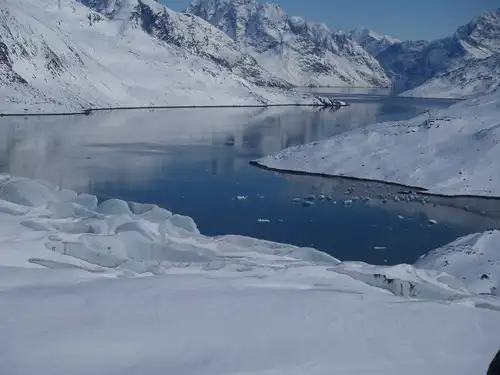
Weddell seals inhabit some of the coldest and darkest waters deep within the Ross Sea ice, making them the southernmost naturally occurring mammals on Earth. During the winter and summer months, their movements are largely governed by the presence of sea ice and the availability of suitable breathing and exit holes.
8 Scientific Wonders of the Arctic - Nexta Expeditions
Blog

8 Scientific Wonders of the Arctic

The Arctic’s frozen landscape not only contains scenic gems, it also prompts fascinating advances in research. Here are some of the eight best.
Fierce and Feathered: the Skuas of Antarctica - Nexta Expeditions
Blog

Fierce and Feathered: the Skuas of Antarctica

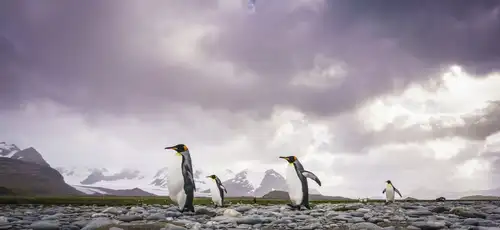
At first glance, the skuas you encounter in Antarctica may appear to be merely darker-feathered seagulls. But looks can be deceiving.
Penguins, Albatrosses, Petrels: The Winged Wildlife of South Georgia - Nexta Expeditions
Blog

Penguins, Albatrosses, Petrels: The Winged Wildlife of South Georgia

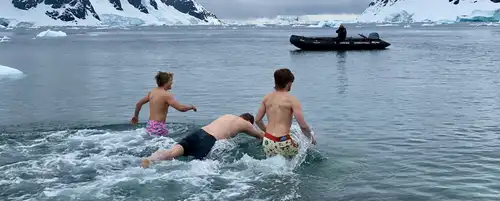
South Georgia’s location south of the Antarctic Convergence gives the island a more Antarctic-like climate compared to other regions at the same latitude. The climate here is marked by cold, cloudy, wet, and windy conditions with highly variable weather.
Taking the Polar Plunge - Nexta Expeditions
Blog

Taking the Polar Plunge

There are some human activities that for many people simply defy understanding: We juggle chainsaws, we breathe fire, we fling ourselves out of perfectly good airplanes.
International Polar Bear Day - Nexta Expeditions
Blog

International Polar Bear Day

It will come as no surprise to you that we're crazy about polar bears. We have multiple blogs about where to find polar bears, we offer dozens of polar bear trips, and we've even written a short story from a polar bear's point of view. (Yes, we actually did that.) So if you were to say that our love of polar bears borders on obsession, you wouldn't be far off.
The Ultimate Traveler’s Guide to the Arctic and Antarctica - Nexta Expeditions
Blog

The Ultimate Traveler’s Guide to the Arctic and Antarctica

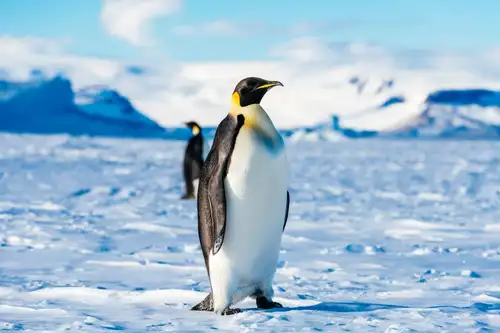
Sunrises or sunsets? Coffee or tea? Polar bears or penguins?
Penguins, Petrels, and Prions: Top Antarctica Bird Tour Spots - Nexta Expeditions
Blog

Penguins, Petrels, and Prions: Top Antarctica Bird Tour Spots

If anyone tells you Antarctica is for the birds, they’re right.
A Diving Dream Fulfilled - Nexta Expeditions
Blog

A Diving Dream Fulfilled

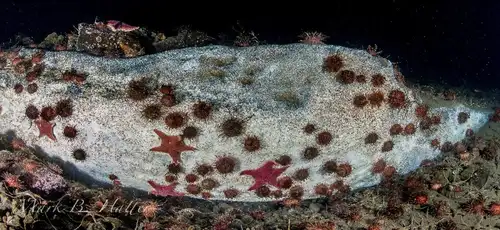
Last January, Mark Hatter achieved a dream he’d been training for over two years. Booking his berth aboard the m/v Ortelius and making the long flight to Ushuaia, Argentina, he and two of his friends sailed down the famous Drake Passage, bound for Earth’s southernmost continent. But their Antarctica trip was not just about shoreline walks and photographing penguins.
Birds of the South: 33 Antarctic Birds and Seabirds - Nexta Expeditions
Blog

Birds of the South: 33 Antarctic Birds and Seabirds

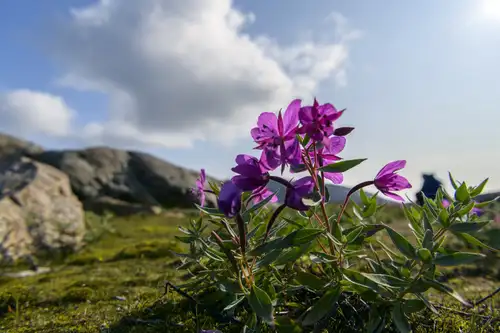
Of the many compelling reasons people travel to Antarctica and the sub-Antarctic, bird life is among the most beloved.
Arctic Flowers, Trees, and Other Plant Life - Nexta Expeditions
Blog

Arctic Flowers, Trees, and Other Plant Life

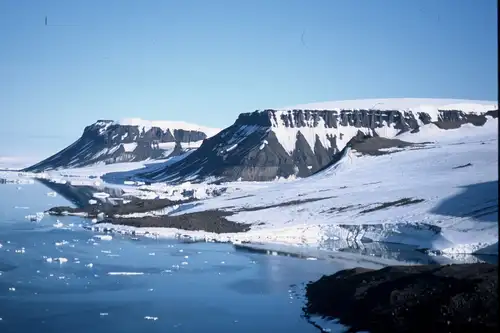
When many people think of the Arctic, they probably imagine a stark white wasteland devoid of anything except snow, glaciers, and the occasional far-wandering polar bear.
Franz Josef Land Sites, Species, and Experiences - Nexta Expeditions
Blog

Franz Josef Land Sites, Species, and Experiences

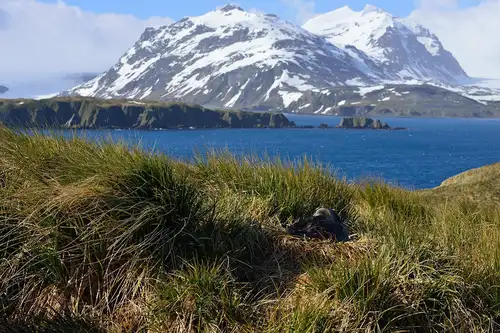
The archipelago of Franz Josef Land is to Russia what Svalbard is to Norway: Both island groups offer excellent Arctic scenery, adventurous outdoor activities, and a good chance of seeing iconic species like polar bears and walruses - alongside a wide range of marine mammals and seabirds.
Flowers in Antarctica - Nexta Expeditions
Blog

Flowers in Antarctica

The polar regions are among the most inhospitable environments for plants and animals. Life here faces numerous challenges, including low temperatures, high winds, solar radiation, and cell freezing. The Antarctic continent experiences extreme conditions, with darkness during winter and continuous light during summer. Winter temperatures can drop to -60°C or lower.
Birding Opportunities Abound in Spitsbergen - Nexta Expeditions
Blog

Birding Opportunities Abound in Spitsbergen

Seabirds are the most prevalent type of bird in Spitsbergen. Experts have estimated that there are 164 bird species that have been found throughout Spitsbergen at various points during recent history, but only 30 of them are known to turn to the Svalbard Islands as their primary breeding spot.
Circumnavigating Spitsbergen - Nexta Expeditions
Blog

Circumnavigating Spitsbergen

Many of our expedition cruises focus on specific areas of the Arctic or Antarctica, delving deep into local wildlife and other natural highlights. However, some programs aim to provide a broader survey, visiting a variety of sites to offer guests a wider perspective.
Greenland: East vs. West - Nexta Expeditions
Blog

Greenland: East vs. West

East and West Greenland offer vastly different experiences due to their unique climates, wildlife, habitation, and geology.
Amazing Greenland - Nexta Expeditions
Blog

Amazing Greenland

If you ever get the chance to take a trip to Greenland, you will be amazed by its coastlines, fjords, ice-covered peaks, and great expanse of snow-covered land. You will also notice that Greenland is a rugged area with a rich diversity of life, making it a dream location for scientists as well.
Humpback Whales: the Stars of the Western Antarctic Peninsula - Nexta Expeditions
Blog

Humpback Whales: the Stars of the Western Antarctic Peninsula

The marine ecosystem of the West Antarctic Peninsula (WAP) stretches from the Bellingshausen Sea to the northern tip of the peninsula. This region includes the Antarctic Sea Ice Zone, a highly productive area that supports large populations of marine mammals, birds, and Antarctic krill. One of the highlights of this region, which you can observe on a whale-spotting Antarctica cruise, is the humpback whale.