The Plants Of Antarctica - Nexta Expeditions
The Plants of Antarctica

The Plants of Antarctica

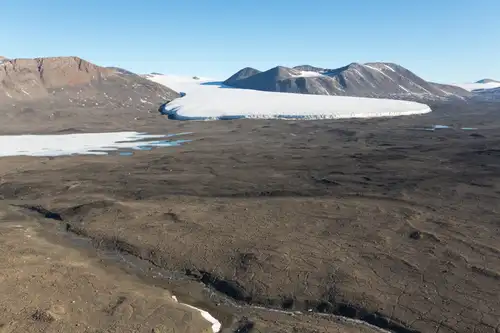
Surviving in Antarctica is a monumental challenge for any plant. The extreme cold, limited sunlight, scarce moisture, poor soil, and short growing season make it nearly impossible for most flora to thrive. Yet, some plants have adapted to these harsh conditions and have managed to flourish where others cannot.

While it may not be a vibrant garden, a closer inspection reveals a unique and fascinating world of plant life.

How did plants get to Antarctica?

About 200 million years ago, Antarctica was part of a supercontinent called Gondwana, which included Australia, Africa, India, and South America. Thousands of plant species thrived here for millions of years. As the continents began to separate around 145-66 million years ago, Antarctica drifted towards the South Pole. Many plants survived and continued to grow during this continental shift.

Eventually, the climate became too cold and dry to support most life forms. Fossilized remains of plants like the Southern Beech (Nothofagus sp.) found in the Western Antarctic Peninsula tell the story of a once lush and green land. These fossils are often found in finer-silt rocks where glaciers have recently retreated. Holding a fossil of a plant that hasn't existed for millions of years is an incredible experience!

The flowering plants of Antarctica

Despite its cold, dry, and desolate environment, life persists in Antarctica. Currently, there are only two known species of flowering plants on the continent:

  • Antarctic hair grass (Deschamsia antarctica) primarily grows in the Antarctic Peninsula in small, concentrated tufts in rocky areas. These plants are often found among penguin colonies and can withstand significant disturbances. During their short summer growing period, they endure abuse from elephant seals, high winds, and penguin manure. Their deep root system keeps them anchored and allows them to absorb water and nutrients efficiently. In winter, the hair grass loses its leaves but can survive freezing temperatures.
  • Antarctic pearlwort (Colobanthus quitensis) has a cushion-like appearance and can grow up to five centimeters in height. Unlike hair grass, pearlwort has small yellow flowers. It is commonly found in rocky coastal areas. Both plants rely on wind for pollination, as there are no flies, bees, or birds to assist. They are also self-pollinators, meaning they don't need other plants to reproduce. This adaptation likely evolved in response to the harsh climate, where plants are often widely spaced. With rising temperatures due to climate change, both species have expanded their range.

The non-flowering plants of Antarctica

Antarctic hairgrass and pearlwort are vascular plants, meaning they have complex structures to transport nutrients. Non-vascular plants like mosses, liverworts, lichens, and algae lack a root system and efficient nutrient circulation. These plants are commonly found in damp or moist areas where they can absorb water and nutrients directly.

Antarctica is home to 100 species of mosses, 25-30 species of liverworts, 250 species of lichens, and over 700 species of algae. These extremophiles thrive in rocky intertidal and moist habitats, often favoring sub-Antarctic islands where conditions are more forgiving.

Uninvited guests

In the early 20th century, South Georgia Island became a popular whaling and sealing destination. Increased human activity brought non-native plant species, which hitched rides on visitors' boots and clothing. The absence of natural predators made it easy for these plants to colonize.

Today, South Georgia hosts 26 species of vascular plants and 15 non-native species. The island's relatively mild winters and warm summers provide ideal growing conditions.

Threats to Antarctic plant life

Rising sea levels pose a significant threat to Antarctic plants, especially those in coastal regions. Most plants cannot survive in high saline environments and will die as the sea encroaches. Plants are excellent indicators of climate change due to their sensitivity to atmospheric carbon dioxide levels.

As Antarctica's climate warms, glaciers and snow packs retreat, and ice shelves melt, exposing barren soil and creating more suitable habitats for plants. While this may benefit native plants, it also invites non-native and invasive species to establish themselves.

Preventing non-native plants from entering Antarctica is challenging and requires cooperation from visitors. Tourists often need to step through a boot bleach bath to kill any plant parts or spores. It's crucial for visitors to understand the fragility of the ecosystem and the importance of minimizing disturbances.


Blog
go-leftgo-right

The Arctic’s Most Phenomenal Fjords - Nexta Expeditions
Blog

The Arctic’s Most Phenomenal Fjords

Fjords are often linked with Norway, but they are not exclusive to that region. They are a common feature of the Arctic and are major attractions in Greenland and Svalbard.
Experience King Penguins, Seals and More in South Georgia - Nexta Expeditions
Blog

Experience King Penguins, Seals and More in South Georgia

One of the most remarkable aspects of South Georgia Island is its immense population of King penguins. This island serves as a significant breeding ground, and breathtaking aerial photos have captured the sight of hundreds of thousands of King penguins gathered together. This colony is known as the largest crèche in the world, making it one of the top destinations globally for observing King penguins.
What to Pack for Your Expedition Cruise to the Arctic or Antarctica - Nexta Expeditions
Blog

What to Pack for Your Expedition Cruise to the Arctic or Antarctica

It’s easy to get confused about what to pack for a polar cruise. Some items are provided and some are not, and it’s not always clear which is which. This article will make your polar pack list painstakingly clear. Promise.
9 Facts about the Greenland Shark - Nexta Expeditions
Blog

9 Facts about the Greenland Shark

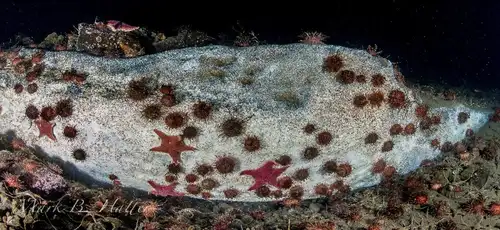
The Greenland shark, or Somniosus microcephalus, is one of many fish that inhabit the waters around Greenland, though this is not the only area in which the shark resides. These sharks, sometimes referred to as “gray sharks” or “gurry sharks,” can also be found in the north Atlantic Ocean near Iceland, Norway, and Canada.
Life in the Polar Regions - Nexta Expeditions
Blog

Life in the Polar Regions

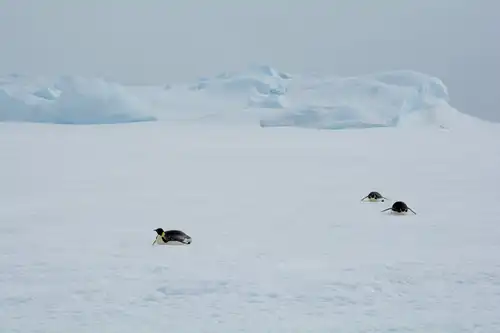
Polar bears in the Arctic, penguins in Antarctica.
International Polar Bear Day - Nexta Expeditions
Blog

International Polar Bear Day

It will come as no surprise to you that we're crazy about polar bears. We have multiple blogs about where to find polar bears, we offer dozens of polar bear trips, and we've even written a short story from a polar bear's point of view. (Yes, we actually did that.) So if you were to say that our love of polar bears borders on obsession, you wouldn't be far off.
The First Buildings in Antarctica: Borchgrevink’s Historic Huts - Nexta Expeditions
Blog

The First Buildings in Antarctica: Borchgrevink’s Historic Huts

Borchgrevink’s huts at Cape Adare hold a significant place in Antarctic history, being the first structures ever built on the continent.
Antarctica’s Hourglass Dolphin - Nexta Expeditions
Blog

Antarctica’s Hourglass Dolphin

Though hourglass dolphins are especially rare, they’re actually not a threatened or endangered species.
Three Antarctica Cruise Deals - Nexta Expeditions
Blog

Three Antarctica Cruise Deals

For many travelers, Antarctica represents the ultimate polar destination. Its vast white landscapes offer an endless array of surreal vistas, much of its unique wildlife is found nowhere else on Earth, and its complete lack of an indigenous human population provides a sense of untouched seclusion that few other places can match.
A Day on m/v Plancius - Nexta Expeditions
Blog

A Day on m/v Plancius

Stepping aboard this long-running expedition vessel, it’s easy to forget that she’s been making voyages to the polar regions since “Afternoon Delight” by Starland Vocal Band was on the Billboard Hot 100.
Northeast Greenland National Park - Nexta Expeditions
Blog

Northeast Greenland National Park

Northeast Greenland National Park is the world’s largest national park and the ninth largest protected area on Earth. It should come as little surprise, then, that it’s also bigger than most countries, covering an impressive 972,000 square km (375,300 square miles).
5 Misconceptions You Might Have About Greenland - Nexta Expeditions
Blog

5 Misconceptions You Might Have About Greenland

“The polar bear will still be there” - Nexta Expeditions
Blog

“The polar bear will still be there”

For several hours, we had been navigating the pack ice in search of polar bears. Despite numerous binoculars scanning the ice, no bears were visible, and only a few tracks were found. This suggested we might be in an area with fewer bears. Later that morning, we decided to head a few miles east, suspecting a higher bear population there.
Everything you need to know about Antarctic icebergs - Nexta Expeditions
Blog

Everything you need to know about Antarctic icebergs

The ice in Antarctica might seem static, but it is constantly moving. Pieces of ice are continuously breaking off from ice shelves, glaciers, or other icebergs. They float freely along with the Antarctic currents, with about 90 percent of their mass below the surface of the water. This fact is actually what gave rise to the nowadays popular phrase “the tip of the iceberg”. Regardless, the sighting of the first iceberg is always a moment to celebrate in any and all Antarctic expeditions. So that you may appropriately ready yourself for that joyous moment, in this article you will find everything you need to know about Antarctic icebergs.
Around Spitsbergen vs. North Spitsbergen - Nexta Expeditions
Blog

Around Spitsbergen vs. North Spitsbergen

Svalbard, particularly Spitsbergen, was the first polar expedition cruise destination. It's no surprise that there are numerous trip programs available in this region. Among the most unique are the Around Spitsbergen and North Spitsbergen cruises.
Get to Know Your Ice - Nexta Expeditions
Blog

Get to Know Your Ice

Ice plays a crucial role in everything from cooling your drink to regulating the planet's temperature. Let's explore the various forms of ice you might encounter during an Arctic or Antarctic adventure.
Light in the Land of the Midnight Sun - Nexta Expeditions
Blog

Light in the Land of the Midnight Sun

The midnight sun, also referred to as the polar day, is a fascinating natural event observed within the Arctic and Antarctic circles. During the polar summer, the sun remains above the horizon for 24 hours a day, resulting in continuous daylight without any sunrise or sunset. This phenomenon occurs due to the Earth's seasonal tilt towards the sun during the summer months in these regions.
Living the Antarctic Dream - Nexta Expeditions
Blog

Living the Antarctic Dream

From October to March, during the Austral summer, thousands of breeding gentoo, Adèlie, and chinstrap penguins flock to the Western Antarctic Peninsula to rear their chicks and feast on krill before the harsh winter arrives. Alongside the penguins, field biologists from around the world gather to study these habits for conservation research. Observing these animals is one thing, but residing in an Antarctic field station for an entire breeding season is another. One particular field camp on King George Island, managed by American scientists, has perfected this Antarctic lifestyle and has thrived for over 30 years.
The Evolving Shipboard Eco-traveler - Nexta Expeditions
Blog

The Evolving Shipboard Eco-traveler

Feeling stuck in the monotony of everyday life? Looking for a change of scenery? Look no further! Most of us spend our lives on solid ground, despite our bodies being composed of 71.5% water. You'd think we'd have a natural inclination to be in or on the water! So why not try something different? Consider an Arctic holiday adventure on the same waters that famous explorers once navigated!
Svalbard’s Texas Bar - Nexta Expeditions
Blog

Svalbard’s Texas Bar

Texas Bar is one of the historic areas we visit on certain Svalbard trips, and it always proves to be a cherished landing site among both our guides and guests. This might be surprising, however, given that its name can be a bit misleading.