

The polar regions are among the most inhospitable environments for plants and animals. Life here faces numerous challenges, including low temperatures, high winds, solar radiation, and cell freezing. The Antarctic continent experiences extreme conditions, with darkness during winter and continuous light during summer. Winter temperatures can drop to -60°C or lower.
Another challenge is that despite freezing air temperatures, sunshine can warm soil, rock surfaces, and vegetation, with temperatures on these surfaces reaching 20-30°C within minutes or hours and 40-60°C, and even 100°C over a year. Snow provides thermal insulation, helping life survive these extremes. Additionally, Antarctica faces environmental challenges such as limited access to liquid water.
Liquid water availability is restricted. While parts of the Antarctic Peninsula receive up to 3,000 mm (120 inches) of rain per year, liquid water in the rest of the continent remains frozen most of the time, making Antarctica as dry as a desert.
Long sunny days for plant life
Plant life can survive in Antarctica despite the high latitude, which results in the sun being low in the sky. The long summer days allow solar energy to accumulate, giving plants greater daily totals than at more temperate latitudes. This enhances productivity from photosynthesis. However, plants face light stress due to the high reflectance of snow and ice, which increases the radiation received on adjacent ice-free ground.
Ozone-hole damage to plants
The ozone hole presents another challenge for plants in Antarctica. The hole, which forms in spring, results in high levels of biologically damaging UV-B radiation reaching the ground. This radiation level is typically experienced during mid-summer, but organisms in Antarctica during spring are still inactive.
Exposed rocks provide a home for life
Exposed rocks in Antarctica can potentially be colonized by organisms with the right attributes. Rocks and simple soil surfaces in the Antarctic Peninsula are colonized by lichens, mosses, microorganisms, and some invertebrate animals. Seasonal snow and ice cover can provide shelter from extreme thermal and radiation conditions.
During summer, the warming of rocks and soil leads to the melting of ice in the surrounding snow, providing liquid water for life to thrive. The availability of this water can range from weeks to months. This water can also percolate through the surface of some rocks, creating habitats for life.
The Antarctic Peninsula an ideal home
The Antarctic Peninsula is particularly thriving with life due to 3 percent of its total area being ice-free, compared to 0.3 percent for the rest of the continent. Life here thrives among rock, boulder, and rubble surfaces that appear barren to most people. The soil is little more than fragmented rock debris and contains very limited amounts of nutrients and carbon.
The rock fragments are created by glacial action, water (from freeze-thaw cycles), salt weathering, heating, and wind action. Lichens also contribute to surface erosion. Under the soil is typically a layer of permafrost. While permafrost does not provide a habitat for life, the layer of wet soil that covers it – which only freezes in winter – supports biological communities.
An unstable soil environment
Life in Antarctica is further challenged by the constant impacts of rock debris, snow, or ice crystals on exposed soil. Soil movement during freeze-thaw cycles also limits vegetation's ability to take hold. Beneath the surface, where it is sufficiently stable, vegetation communities can thrive. Meanwhile, rock surfaces provide places for lichens and crevices for algae and mosses.
Zones of Antarctica
Life in Antarctica is not random. The type of life form present depends on the zone it inhabits. The continent can be divided into three regional or biogeographical divisions: The Sub-Antarctic, maritime, and continental zones. The maritime zone is strongly influenced by its proximity to the ocean, particularly during summer when the sea is largely free of ice. As a result, average temperatures range from 1-4°C during summer and -10 to -15°C during winter, which is far less extreme than the continent.
Life thriving in the maritime zone
In the maritime zone, life thrives with mosses, liverworts, and lichens being the main species of vegetation. There are over 100, 25, and 250 species respectively. Plant life here typically appears in patches separated by areas of bare ground and rock. Any newly available ground is quickly colonized, with visible clumps of vegetation appearing within years of the ice retreating. One of the most remarkable aspects of life in the maritime environment is the plant’s longevity: While individual moss clumps have short life spans, some lichens live for 300-600 years, and a few peat banks have accumulated over 5,000-6,000 years.
Flowers in Antarctica
There are only two species of flowering vegetation in Antarctica: Antarctic hair grass (Deschampsia antarctica) and the Antarctic pearlwort (Colobanthus quitensis), both found in the Antarctic Peninsula. Interestingly, in the similar environment of the Arctic, the area of Svalbard has over 100 species of flowering plants, indicating how extreme the environment is in Antarctica for life to thrive and diversify. Nonetheless, these two plants are highly successful in making Antarctica home, appearing throughout the maritime zone. Additionally, grass plants have managed to thrive, with some forming lawns of several tens of square meters on islands of the Sub-Antarctic.
Midget life
There are no land or freshwater vertebrates on the Antarctic continent, although there are large concentrations of marine vertebrates, including seals and penguins. However, soil invertebrates, including worms and mites, are present. These species are incredibly small, with mites only 1-2 mm long. Freshwater invertebrates, including crustaceans, can be found in abundant numbers in small melt pools and larger lakes. There is only one type of flying insect in the Antarctic region, the midge, which is limited to the South Shetland Islands and South Georgia.
Warm but tough conditions in hotspots
In Antarctica, life can also be found in geothermally active areas that contain fumaroles, warmed ground, and heated pools or springs. These locations provide warmth and liquid water. However, life here is also challenging due to chemical weathering, low pH, and high mineral and sulfur levels.
The ups and downs of climate change
With climate change, the Antarctic Peninsula is one of the fastest-warming places in the world, along with Arctic North America and the Tibetan Plateau. Warming temperatures will likely provide more energy for organisms, enabling them to be more active, grow, and reproduce faster. Warming will also lead to more meltwater, providing liquid water for species to survive. However, in the long term, Antarctic species may become more vulnerable to increased competition. Their biology has adapted over a long period to survive under extreme conditions, which may come at the expense of coping with biological stresses, including competition.
 21 Dec - 08 Jan 2026
 28 Dec - 09 Jan 2026
 29 Dec - 10 Jan 2026
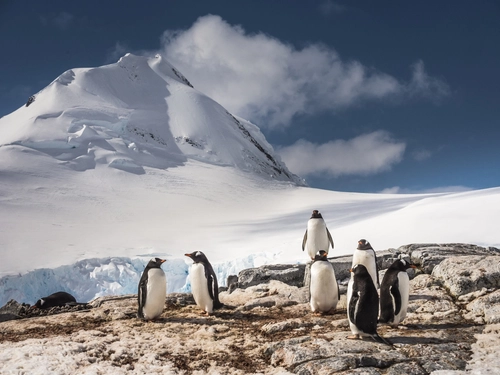 08 Jan - 18 Jan 2026
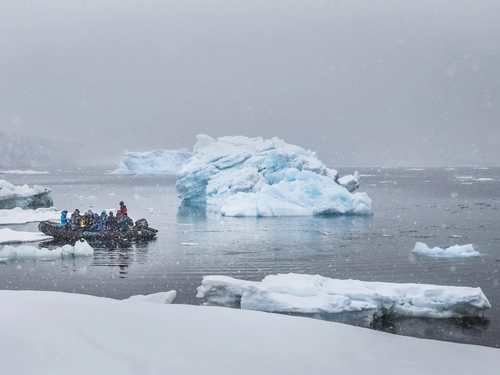 09 Jan - 19 Jan 2026
Related Trips
Falkland Islands - South Georgia - Antarctica
21 Dec 2025 - 08 Jan 2026  19 Days / 18 Nights
Antarctica - Basecamp - free camping, kayaking, snowshoe/hiking, mountaineering, photo workshop
28 Dec 2025 - 09 Jan 2026 13 Days / 12 Nights
Antarctica - Basecamp - free camping, kayaking, snowshoe/hiking, mountaineering, photo workshop
29 Dec 2025 - 10 Jan 2026 13 Days / 12 Nights
Antarctica - Discovery and learning voyage
08 Jan 2026 - 18 Jan 2026 11 Days / 10 Nights
Antarctica - Discovery and learning voyage
09 Jan 2026 - 19 Jan 2026 11 Days / 10 Nights
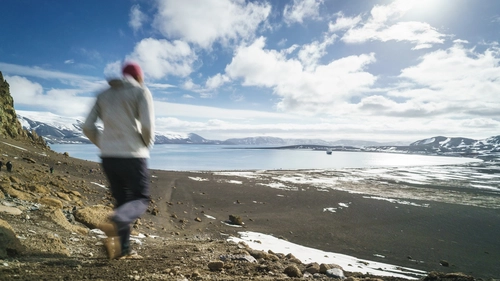
Antarctica - Discovery and learning voyage
18 Jan 2026 - 28 Jan 2026 11 Days / 10 Nights
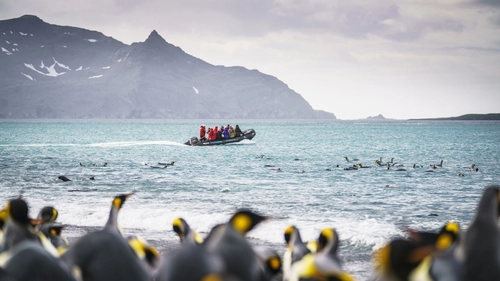
Falkland Islands - South Georgia - Antarctica
19 Jan 2026 - 06 Feb 2026 19 Days / 18 Nights
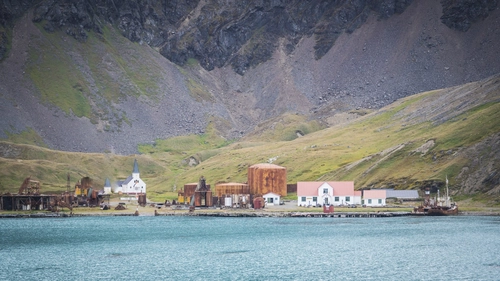
Falkland Islands - South Georgia - Antarctica
28 Jan 2026 - 16 Feb 2026 20 Days / 19 Nights
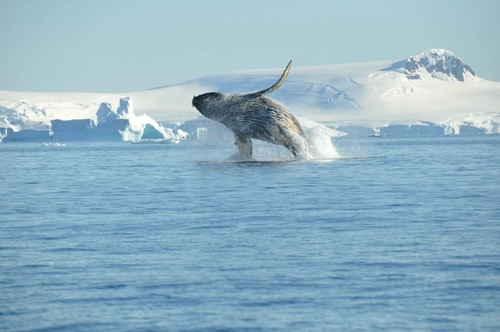
Antarctica - Discovery and learning voyage
06 Feb 2026 - 16 Feb 2026 11 Days / 10 Nights
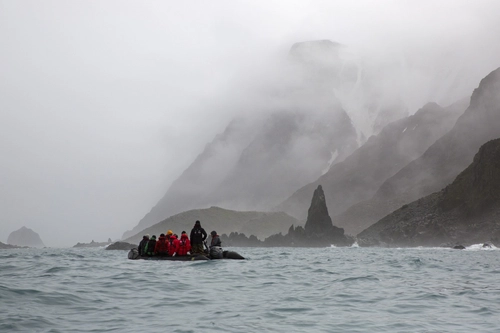
Falkland Islands - South Georgia - Elephant Island - Antarctica - Polar Circle
16 Feb 2026 - 10 Mar 2026 23 Days / 22 Nights
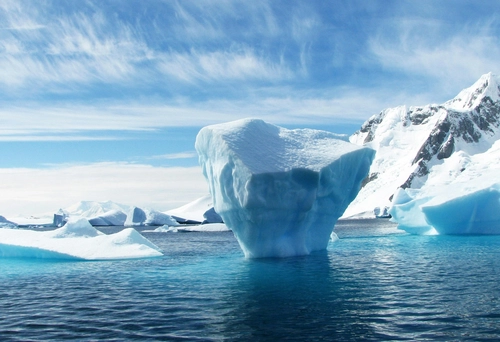
Antarctica – Uncharted islands of the Deep South
18 Feb 2026 - 04 Mar 2026 15 Days / 14 Nights
Deep South Basecamp experience
04 Mar 2026 - 17 Mar 2026 14 Days / 13 Nights

Blog


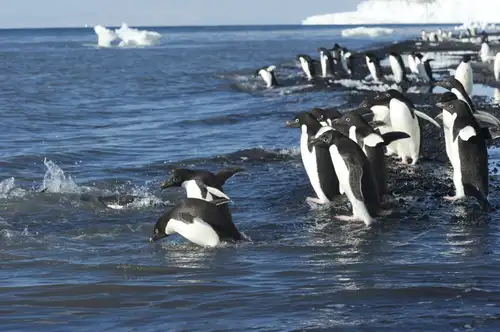
Adélie penguins in the Ross Sea - Antarctica
10 Traits of Post-Ice-Age Greenland
Greenland: East vs. West
The Giant Petrels of King George Island
What to pack for your Atlantic Odyssey voyage?
Eight Engaging Reindeer Facts
12 Tips to Help Keep Birds Safe During an Antarctic Cruise
Arctic vs. Antarctica: A Traveler’s Guide
Antarctica in Pictures: Photos from 2018
The Eight Albatrosses of Antarctica and the Sub-Antarctic
The Seven Best Things to Do in Antarctica
Arctic Seals
Top Antarctica Cruise Experiences for 2025
Seven Sublime Antarctic Bays
10 Weather-Fueled Facts about Antarctica
Seizing the Season: Spitsbergen’s Late Spring, Early Summer
The Enchanting Islands of Svalbard
Antarctica Cities (and Five Other Things That Don’t Exist There)
Keep It Green: Our Commitment to Sustainable Polar Travel