

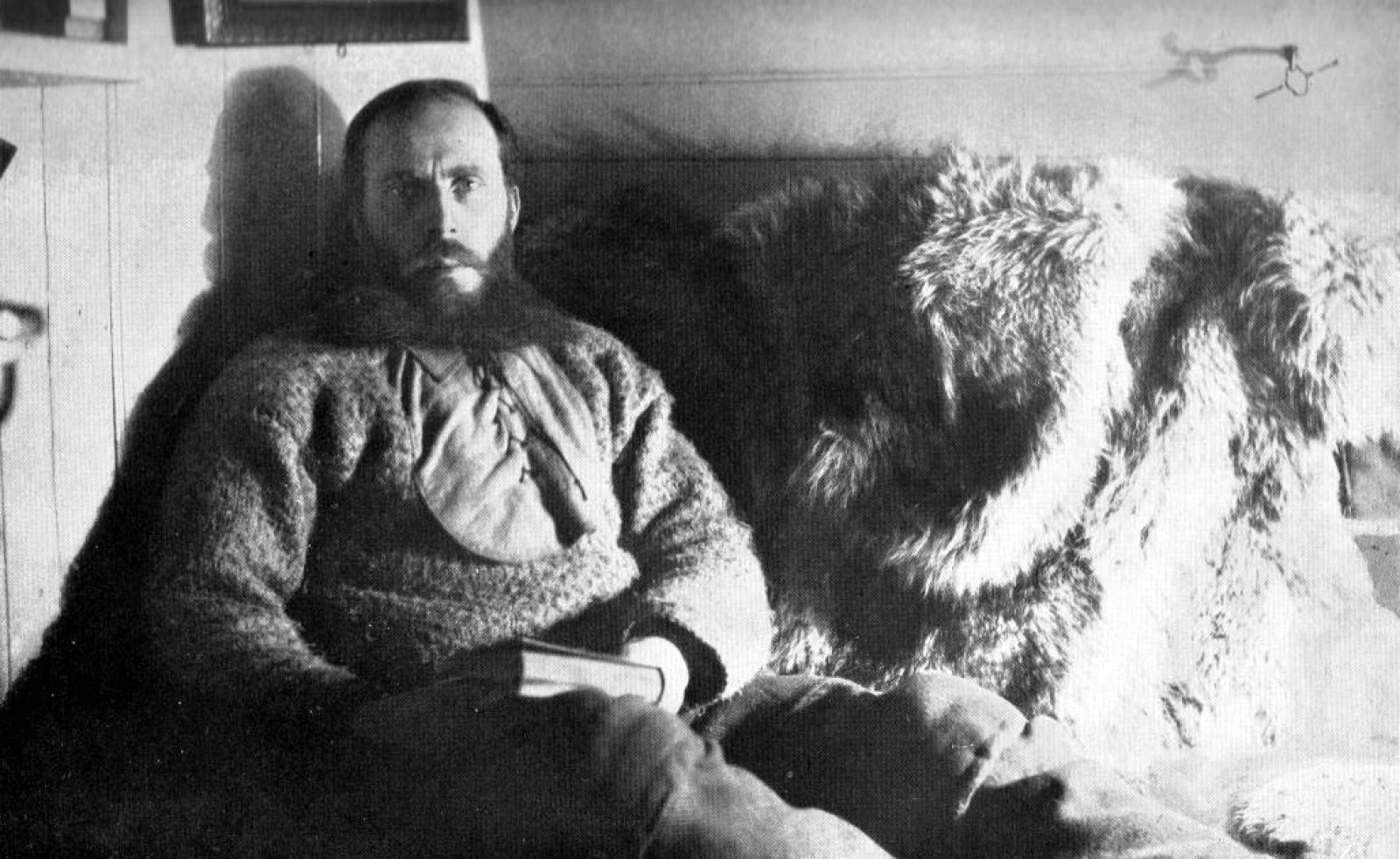
In 1902, Otto Sverdrup, captain of the Fram on Nansen’s expedition, led his own Arctic expedition to the north of Canada. Over the period of the expedition, which started in 1898, Sverdrup and his 15-man crew charted over 250,000 square kilometres of the Arctic using the Fram and sledges. During the expedition Ellesmere Island’s west coast was explored and new islands discovered.
With the new lands claimed for Norway, Canada, which had just received rights to islands in the North West Passage from Britain just over 20 years earlier, quickly compensated Sverdrup for taking his charts as a way of taking claim. At a cost of $67,000 to Canada’s government with the transaction settled on 11 November 1930. 15 days later Sverdrup passed away and so the transaction provided financial security for his wife.
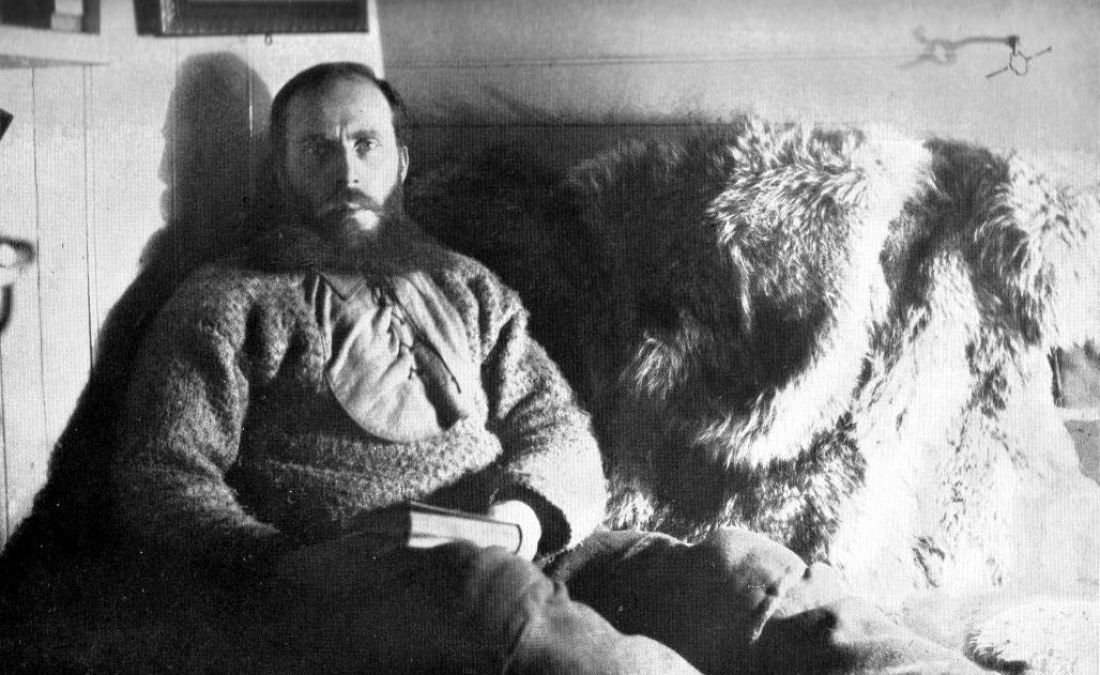
Canada exploring the Arctic
In 1904, Canada took the reigns on exploring the Arctic region when it bought the Gauss, which had previously taken Drygalski’s German expedition to Antarctica, and renamed it Arctic. The ship was placed under the command of Quebec-native Joseph-Elzear Bernier who made a series of expeditions from 1904 to 1911 to the islands of Arctic Canada as well as making an unsuccessful attempt to navigate the North-West Passage.
Following this expedition Canada underwrote the Canadian Arctic Expedition of Vilhjalmur Stefansson which set sail in 1913. Stefansson was Canadian-born to Icelandic parents who had made statements that the British failure in the Arctic was due to their mindset that the environment was a hostile, barren wasteland where man could not survive unless he took his civilisation with him. Instead, he claimed the Arctic was a friendly place, with its tundra prairie full of rich vegetation and that the Inuit rarely travelled in groups of 10 or more. Stefansson’s ‘compelling’ argument convinced the Canadian Government and the Hudson’s Bay Company to put money down for the Karluk.
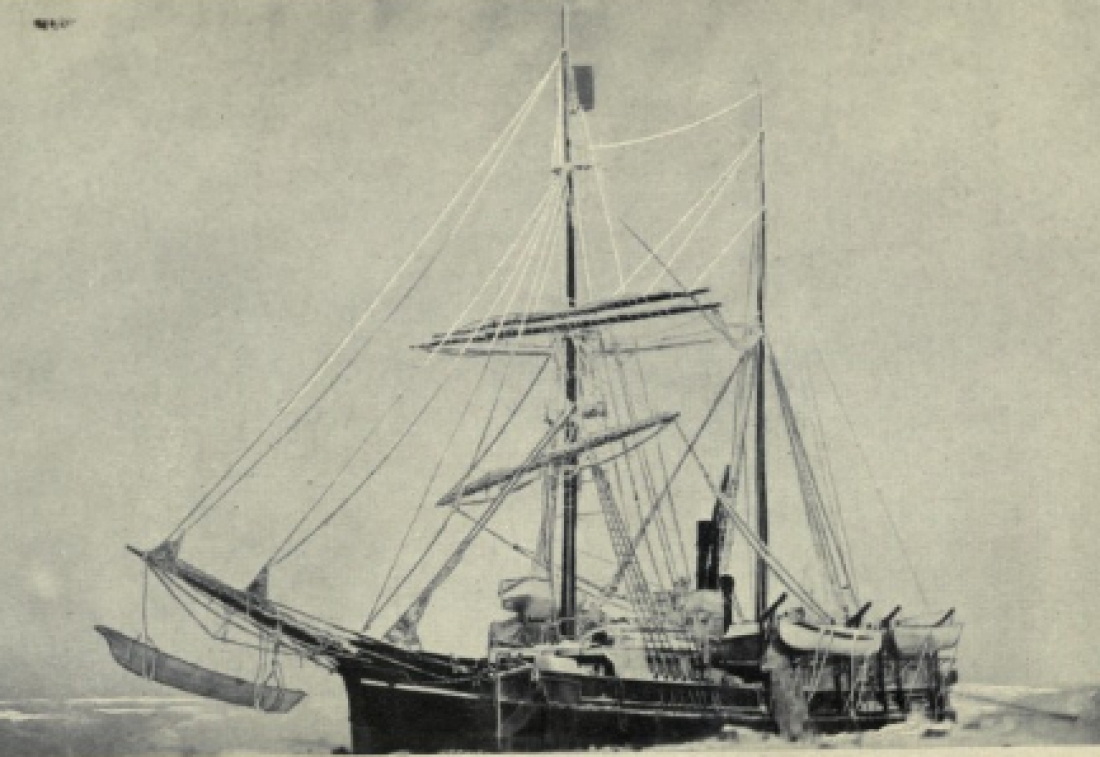
The Canadian Arctic Expedition
With news of the funding a great deal of criticism was made of Stefansson’s ‘science’ with Knud Rasmussen and Roald Amundsen joining in. However, Stefansson’s self-publicity and the plausibility of his arguments won over the government who appointed him leader of the Canadian Arctic Expedition. The aim of the expedition was to search for new land in the Beaufort Sea. At the time there were some scientists claiming that currents and ice-drift meant there was land nearby and Stefannson was hungry to make claim to this land.
Bob Bartlett joins the expedition
Steffanson employed Bob Bartlett to captain the Karluk who brought a great deal of expertise to the expedition having been captain of Peary’s North Pole ship and at the time one of the greatest ice captain in the world. However, Bartlett had reservations about the ship and lack of organisation of the expedition. Despite this he took the ship northwards towards the Bering Strait in June 1913.
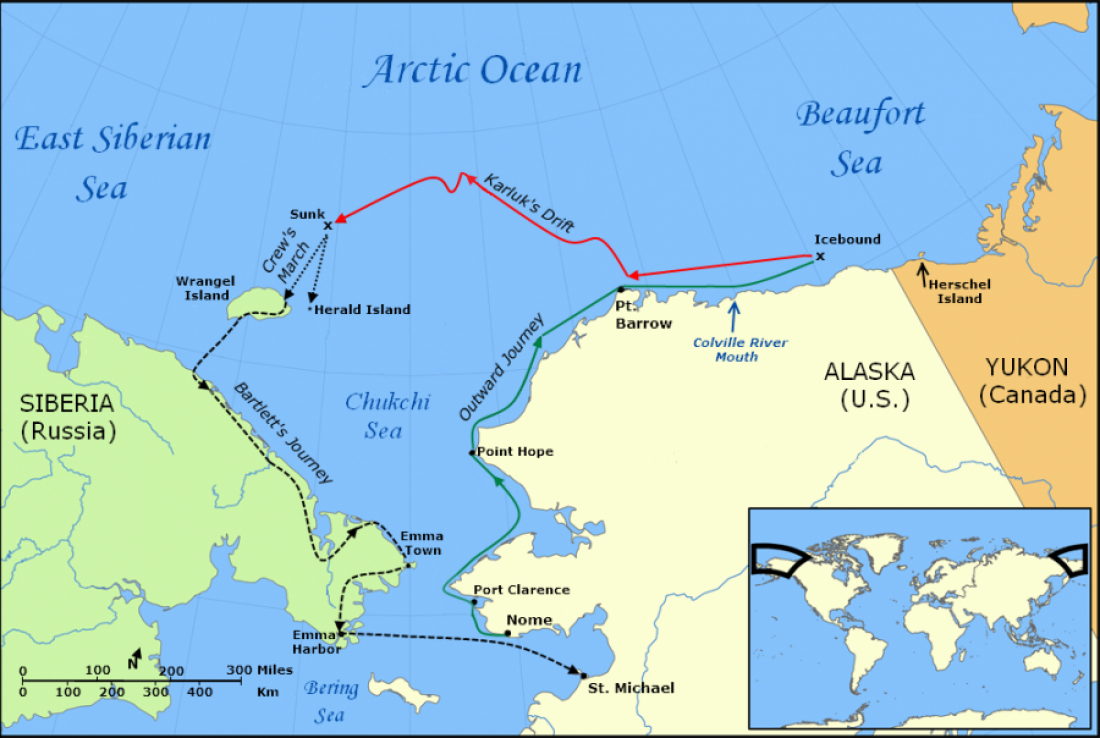
As the ship made its way northwards Stefannson told Bartlett to hug the Alaska/Yukon coastline so the expedition could go ashore and continue by sledge if required. Bartlett instead chose to follow open waters which he hoped would enable him to travel east again. On board at the time, in addition to scientists and sailors, were also Inuit hunters Stefannson had recruited in Alaska, one of which brought his wife and two children, two girls aged three and eight.
Stefannson off to hunt
In September Stefannson suddenly announced he was heading ashore to hunt caribou and would be gone for 10 days. He took his personal assistant, the expedition photographer, the anthropologist and two Inuit hunters and the expedition’s best dogs. Soon after he left the ship was battered by a violent storm.
Stefansson claimed to have seen the ship, stuck fast in its ice floe, bring tossed westwards by the wind and that open water between his team and the ship prevented him from returning to her. He then claimed to have headed west to see if the Karluk had reached shore. On seeing two ships that were passing by with scientists and supplies for another expedition Stefansson got their attention and reported to Ottawa that the Karluk may or may not sink and those on board would probably survive. Having made his report he then headed north to seek his continent!
Stefannson’s ship drifts westwards
While Stefansson was seeking new lands the karluk and its 25 passengers were drifting west to the Bering Strait then off towards Siberia. Bartlett knew the ship’s design would not hold in these severe conditions and so he organised his inexperienced team to build igloos on, and transfer supplies onto, the ice.
Bartlett was nonetheless fortunate to have the experienced Alastair Mackay, who had been the doctor on Shackleton’s Nimrod expedition and had reached the South Magnetic Pole with Mawson and David and James Murray who was also on the Nimrod at his side. Bartlett had sledges built as well for the evacuation he knew was going to happen.
On 10 January 1914 the ice pressure finally built up to the point the ship could no longer handle and the hull ruptured. Bartlett was the last to leave hoisting the ship’s flag and putting Chopin’s Funeral March on the gramophone, which still was playing when the ship sank.
Bartlett to the rescue
Bartlett organised the setting up of supply dumps southwards along a route to Wrangel Island. He also sent a six-person party to reach Herald Island which was a smaller island South-West of Wrangel. Two of the party’s members returned reporting to Bartlett that they had found open water short of the island and the four other members were now searching for a route to it.
On hearing this Mackay and Murray, along with the anthropologist and a sailor, decided to head out alone in search for a way out. Bartlett tried to persuade them not to leave but finally gave in. He gave the men the supplies and asked for a letter absolving him of any responsibility if things went wrong and wished them well. A few days later a returning supply party told Bartlett there was no sign of the men sent to Herald Island and no ability to reach it and that Mackay’s party had been spotted completely exhausted.
Bartlett’s drive towards safety
Having enough of the situation Bartlett in March harnessed all the dogs together and moved the survivors between supply dumps, which at each an igloo had been built. Bartlett then pushed for Wrangel which they finally reached after a 20-day trek. Once there Bartlett left the survivors on the island while himself along with one Inuit went on a 45-day trek to Siberia, with the two men covering some of the most dangerous ice Bartlett had even seen.
A ship was sent out from Alaska to rescue his team. However heavy ice prevented the ship from reaching Wrangel Island. By the time another ship could make it to the island in September three of the survivors had died and Mackay’s team never seen again. It was in 1924 that an American ship found a tent and the bodies of the four men.
Stefannson reappears and blames all
Stefannson was never seen again and presumed to have perished. However in 1918, five years after the world last saw him he reappeared. Living off the land he had found the last three islands of Canada’s archipelago – Borden, Brock and MacKenzie. With the disaster of the Karluk far from people’s memories Stefannson was greeted as a hero. Following which he wrote a book called The Friendly Arctic which blamed Bartlett for the disastrous expedition.


Blog


The Pack Ice and Polar Bears of North Spitsbergen
Around Spitsbergen vs. North Spitsbergen
The Return to Franz Josef Land
Narwhals: the Aquatic Unicorns of the Arctic
Why You Should Visit Greenland: 11 Things to See, Do, and Explore
Guidelines for visitors to Antarctica
Birds of the North: 29 Arctic Birds and Seabirds
Everything you need to know about Antarctic icebergs
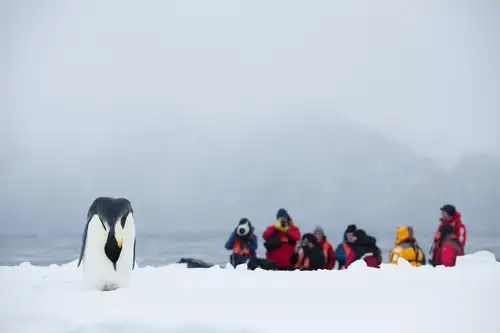
Five Reasons You Should Cruise the Ross Sea Immediately
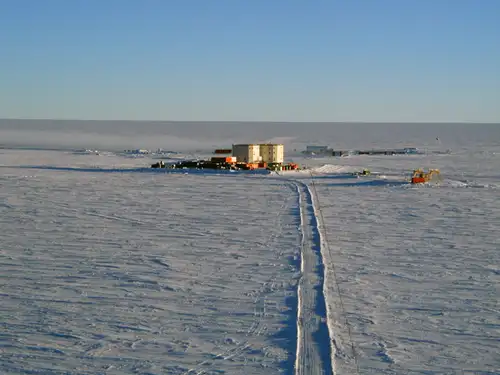
Day and night in Antarctica
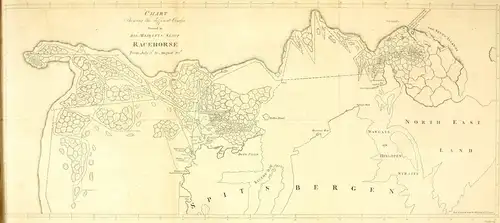
First to the North Pole: Five Failed but Brave Expeditions
Cheapest Antarctica Cruises: How to Save on Your Journey
Antarctic Icon: 44 Facts About the Emperor Penguin
Adding Antarctica to Your Seven-Continents Bucket List
All About Ice: Glaciers and Icebergs of the Arctic and Antarctica
Birding Opportunities Abound in Spitsbergen
Birds of the South: 33 Antarctic Birds and Seabirds
9 Facts about the Greenland Shark
Deception Island deceptively active