
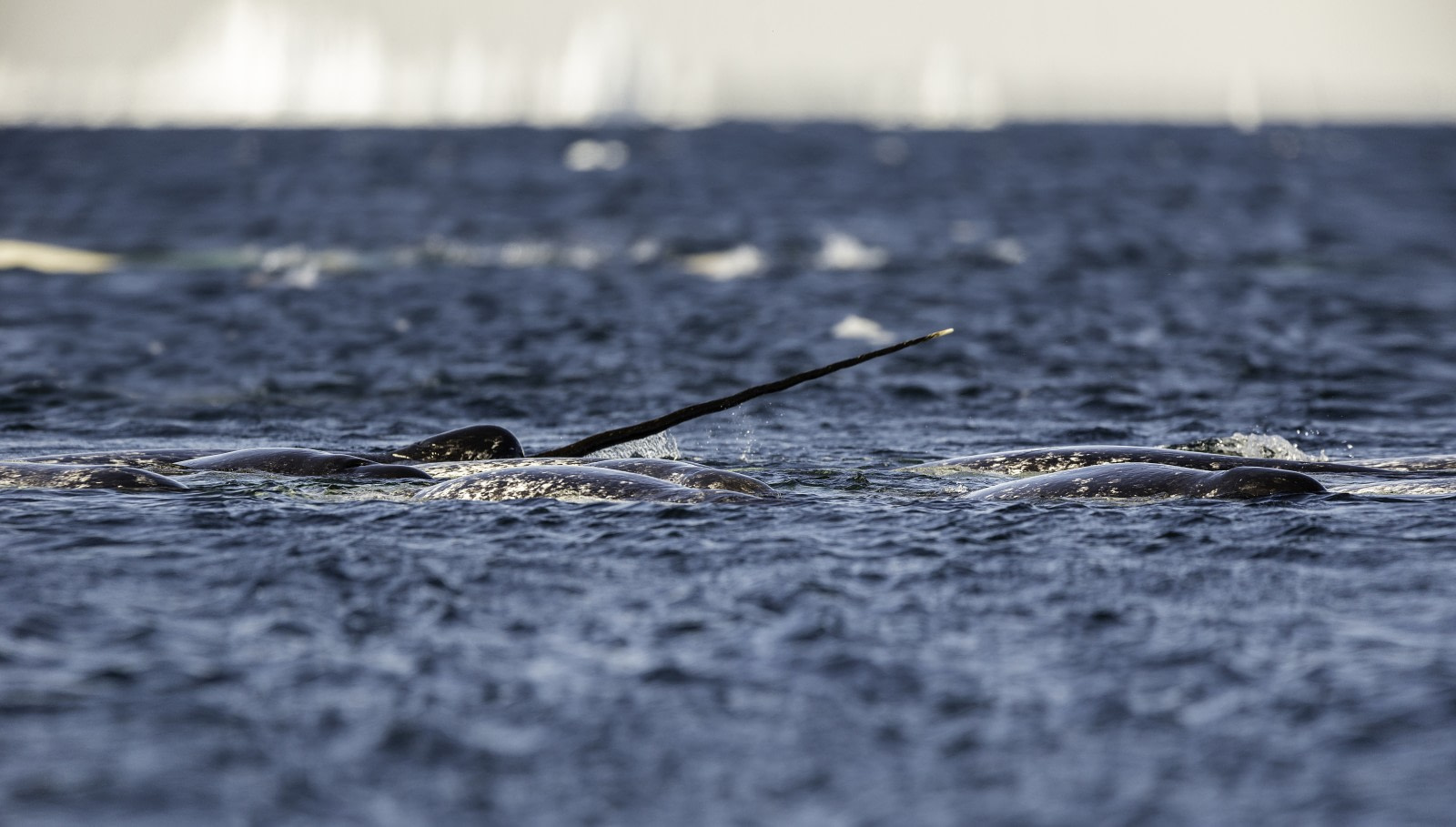
Though narwhals are among the rarest whale species encountered during our Arctic expeditions, a journey to the Arctic regions of Greenland and Svalbard always holds the potential for spotting these elusive creatures.
The term “narwhal” originates from Old Norse: nár means “corpse,” referring to the whale's mottled gray appearance, reminiscent of drowned sailors. In Inuit, the narwhal is known as qilalugaq qernertag, meaning “one that is good at curving itself toward the sky.” This name describes the narwhal's habit of curving its back downward when diving and pointing its tusk skyward when lying on its back. The scientific name, Monodon monoceros, translates to “one-tooth one-horn,” which is quite fitting for reasons we'll explore later.
Similar to their relatives, the beluga whales, narwhals are seldom seen during our cruises, making any sighting a special event. If you embark on an Arctic cruise, keep these fascinating narwhal facts in mind in case you are fortunate enough to encounter this unique marine mammal.
1. Narwhals are rare to see but easy to spot
While narwhals are rarely encountered, they are easy to identify when spotted. They have small rounded heads and short flippers with upturned tips. Males are larger than females, with the largest reaching around five meters (16 feet) in length. Their skin color changes with age, which we will explain below. Newborn narwhals, juveniles, adults, and older narwhals all have distinct colors. Narwhals live between 30 – 40 years, and their main predators are orcas (killer whales).
2. You can determine a narwhal’s age by its color
If you see a narwhal during your Arctic trip, you can make an educated guess about its age based on its skin color. Newborn narwhals are blue-gray, turning blue-black as they grow into juveniles. Adult narwhals have spotted gray skin, and older narwhals become almost completely white.
3. Suction feeding is the narwhal way
Contrary to popular belief, narwhals do not use their tusks to spear or snare food. They are suction feeders, swallowing their food whole. Their diet primarily consists of squid, rockfish, Greenland halibut, shrimp, crab, polar cod, flounder, and Arctic cod.
4. Narwhals are closely related to beluga whales
Beluga whales are the closest relatives of narwhals, and both species have adapted similarly to the harsh Arctic environment. Neither narwhals nor belugas have dorsal fins, allowing them to break through thin sea ice to breathe. In some instances, narwhals and belugas have even interbred, resulting in at least one documented beluga-narwhal hybrid.
5. Sonar is a narwhal specialty
A narwhal's tusk provides it with exceptional sonar capabilities. Narwhals produce clicking sounds (up to 1,000 per second) and use the echoes to map their surroundings. The tusk, sensitive to even the slightest stimuli, aids echolocation by allowing seawater to enter through pores at the tip. Sound waves travel through the tusk, reach nerve endings at the base, and send signals to the narwhal's brain, helping it navigate its environment.
6. Narwhals prefer pack ice
Narwhals must regularly surface to breathe, but they predominantly live below the pack ice. They are adept at utilizing the limited open water areas available during the Arctic winter. This is impressive considering that only about five percent of the Arctic pack ice has sufficient breathing holes between February and April.
7. Diving deep is no problem for narwhals
In summer, narwhals typically dive to depths between 30 and 300 meters (100 – 1,000 feet), but they usually stay between the surface and 50 meters (165 feet). During autumn, as they migrate to their wintering grounds, their dive depths and durations increase. At their wintering grounds, narwhals remain in a limited area for about six months, making small movements with the shifting pack ice.
Narwhals undertake some of the deepest dives known for marine mammals during this period, reaching depths of up to 800 meters (2,600 feet) and sometimes even 1,500 meters (4,900 feet). They dive to these depths around 18 – 25 times per day, with each deep dive lasting about 25 minutes. At these depths, the conditions are extreme, with pressures exceeding 2,200 PSI in the pitch-black water.
8. Narwhals are natives of the far north
Narwhals are a distinctly northern species, not found in Antarctica, the Falklands, South Georgia, or any other Southern Hemisphere regions. While we only encounter narwhals in eastern Greenland and around Svalbard during our summer voyages, scientists have identified winter home ranges for narwhals in Baffin Bay and various other locations worldwide.
9. Deep water adaptations aid the narwhal
Narwhals possess key adaptations that allow them to survive at remarkable depths. They have a flexible rib cage, enabling their bodies to compress significantly. When their rib cage compresses, their lungs collapse, and the air is channelled into their trachea system. Narwhals also have a high concentration of myoglobin, twice as much as some seals and eight times as much as terrestrial mammals. A typical narwhal can carry 70 liters, or 18.5 gallons, of oxygen in its lungs, blood, and muscles.
Additionally, narwhals have muscles designed for endurance swimming, requiring less oxygen than species like dolphins, which have fast-twitch muscle fibers. Their streamlined bodies allow them to glide effortlessly through the water. Furthermore, narwhals exhale before dives, limiting gas exchange in their blood and reducing the risk of decompression sickness.
10. The narwhal tusk is actually a tooth
One of the most distinctive features of the narwhal is its tusk, which is actually a large canine tooth. Some male narwhals have two tusks, while only 15 percent of females possess this tooth. The long ivory protrusion spirals counter-clockwise out of the narwhal's head, making it one of the most recognizable features of this unique marine mammal.
 12 Aug - 31 Aug 2026
 15 Aug - 28 Aug 2026
 16 Aug - 25 Aug 2026
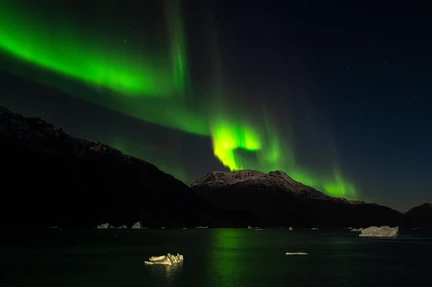 25 Aug - 07 Sep 2026
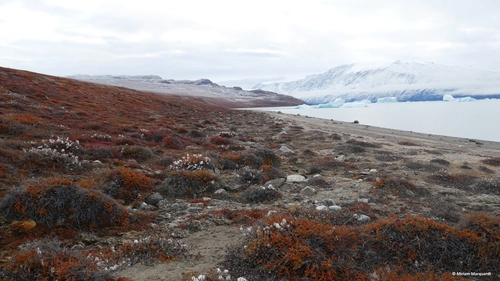 21 Sep - 01 Oct 2026
Related Trips
Spitsbergen - Northeast Greenland, Fly & Sail
12 Aug 2026 - 31 Aug 2026  20 Days / 19 Nights
Northeast Greenland Extreme
15 Aug 2026 - 28 Aug 2026 14 Days / 13 Nights
East Greenland, Scoresby Sund, Including Long Hikes
16 Aug 2026 - 25 Aug 2026 10 Days / 9 Nights
Northeast Greenland Extreme
25 Aug 2026 - 07 Sep 2026 14 Days / 13 Nights
East Greenland, Scoresby Sund - Aurora Borealis, Fly & Sail
21 Sep 2026 - 01 Oct 2026 11 Days / 10 Nights
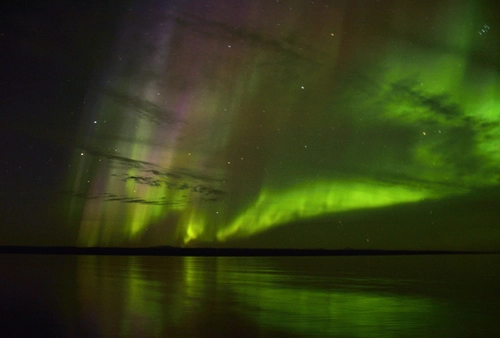
East Greenland, Scoresby Sund - Iceland , Aurora Borealis, Fly & Sail
01 Oct 2026 - 12 Oct 2026 12 Days / 11 Nights

Blog


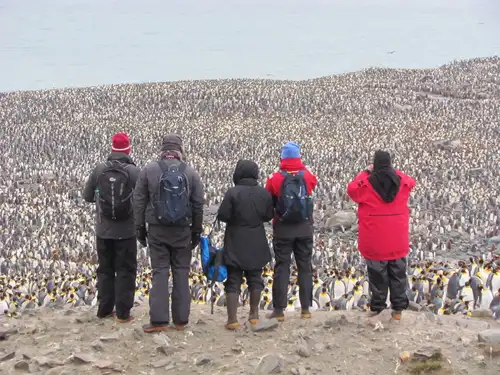
Scenes from St. Andrews Bay: 12 Pics of Penguins, Seals, and More
Get to Know Your Ice
Scoresby Sund: the Greatest Greenland Adventure

Greenlandic Inuit Beliefs
A visit to the fascinating island of Jan Mayen
10 Traits of Post-Ice-Age Greenland
First to the North Pole: Five Failed but Brave Expeditions
Bouvet Island: The Most Remote Island in the World
15 Falkland Islands Bird Photos
Seven Tips to Get the Most out of Your Expedition Cruise

The First Overwintering Hut in Antarctica
12 Things to Do in Antarctica

The World Is Changing for Greenland's Native Inuit People
Northeast Greenland National Park
Shackleton’s Long-Lost Endurance Discovered in Antarctica
The Most Enchanting Antarctica Cruise Islands
Arctic and Antarctic Basecamp Cruises – Choose Your Own Adventure

Three Antarctica Cruise Deals
Arctic Seals