Churches In Antarctica - Nexta Expeditions
Churches in Antarctica

Churches in Antarctica

'Below 40 degrees South there is no law; below 50 degrees South, there is no God', goes the old adage. When faced with a storm in the turbulent and freezing waters of the Drake Passage, one might think so.

Men sometimes seem left to their own devices in these inhospitable latitudes, and precisely for that reason it might not be so surprising to find an increasing number of places of worship during Antarctica expeditions. Religion has provided comfort and guidance in very extreme living conditions, and people still need to get married, and baptized!

Here is a list of the most interesting religious buildings in Antarctica (and in Subantarctic territory as well), and some of the events which they have witnessed.

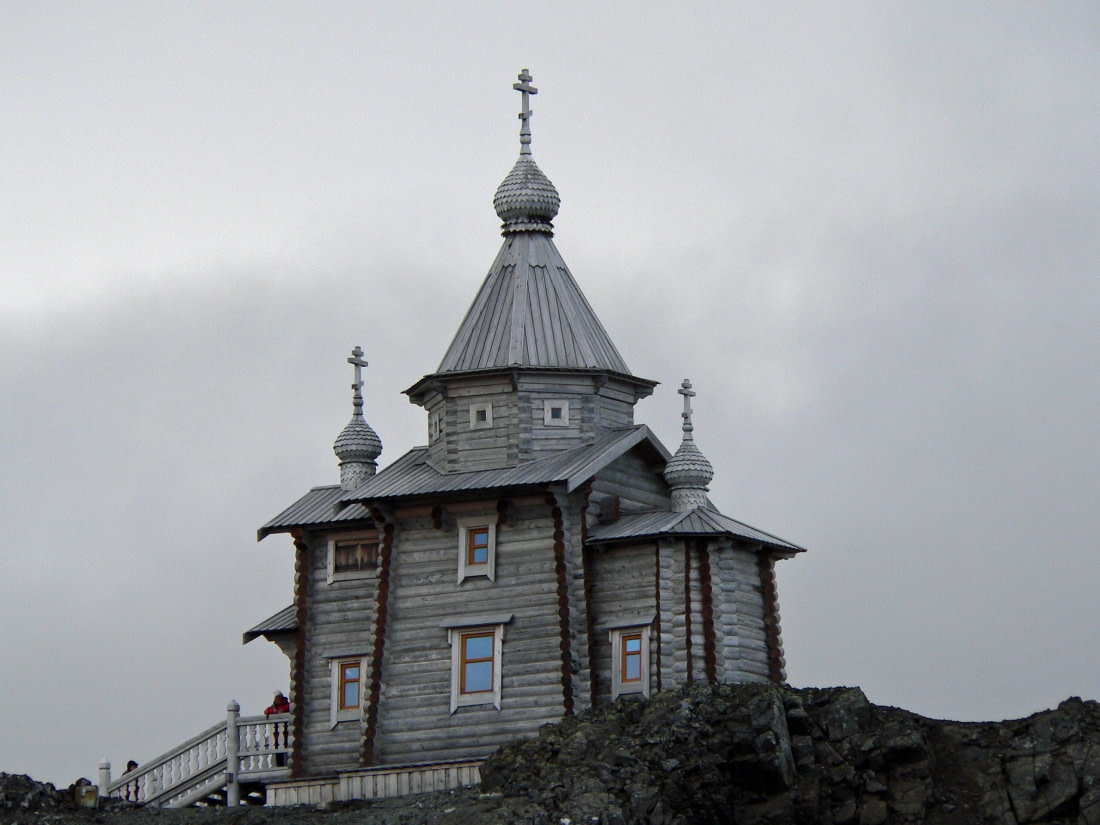
Trinity Church on King George Island

Trinity Church is the southernmost Orthodox church in the world, and it is located near Bellingshausen Station, Russia's permanent outpost in Antarctica. The church was constructed in Russia in the mid-1990s and transported by a supply vessel to its present location. It is a 15m-high wooden structure built in traditional Russian style using Siberian pine, it can accommodate up to 30 worshippers, and it is manned year-round by one or two hieromonks from the Troitse-Sergiyeva Lavra monastery. In 2007, the church performed its first wedding between Chilean and Russian researchers.
blog-image

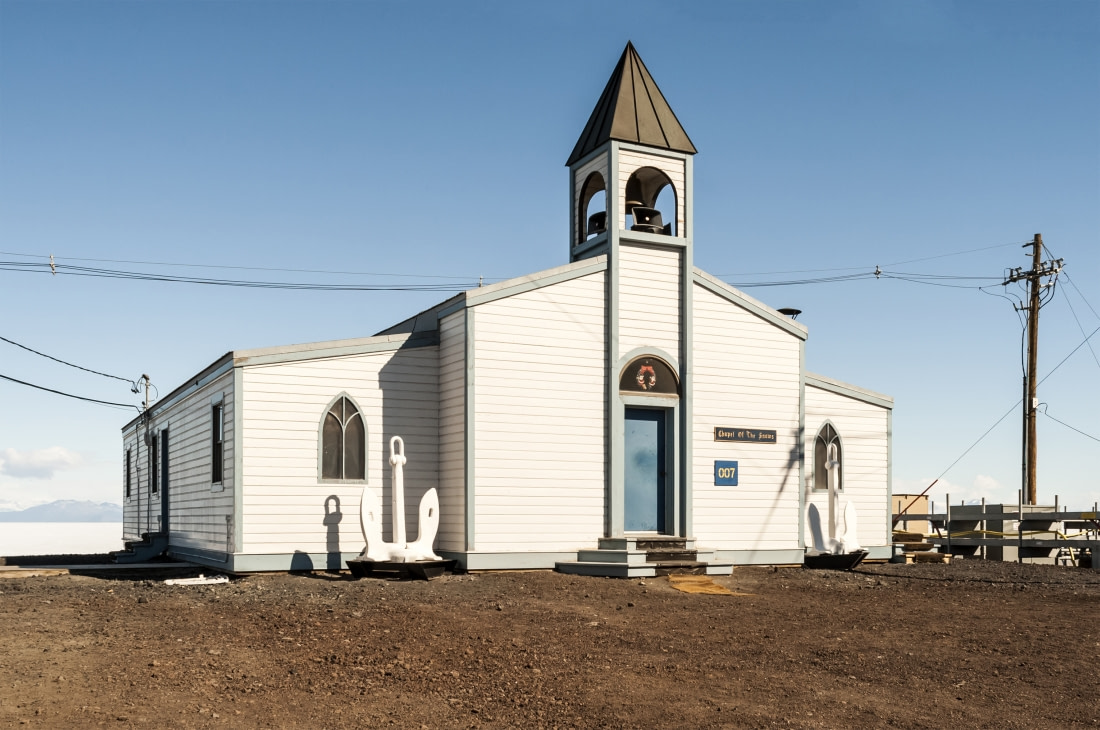
Chapel of the Snows at US McMurdo Station on Ross Island

Built in 1956 as a Christian non-denomination church, the Chapel of the Snows has since hosted services and meetings from faith groups such as Latter Day Saints, Baha'i, and Buddhism and non-religious groups such as Alcoholics Anonymous, in addition to its regular Catholic and Protestant services. The first building was destroyed by fire on August 1978, and the new chapel was dedicated in 1989. The temporary chapel used in the meantime also burnt down after it had been abandoned for several years.
blog-image

Ice Cave Catholic Chapel at Argentinian Belgrano II Base

The Southernmost place of worship of any religion in the world, these amazing chapel's walls are made of ice. It is the permanent Catholic church for the all-year-round Argentinian Belgrano II base and scientific research station, which was founded in 1955 on Coat’s Island. Very cool, don't you think?

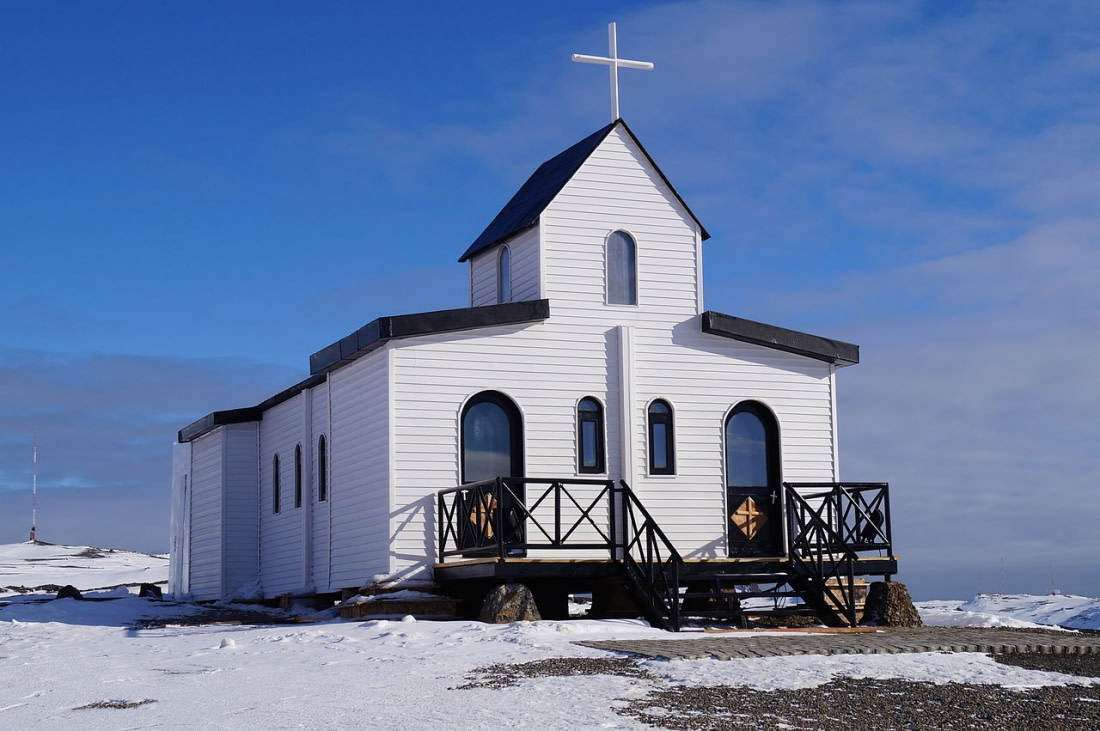
Chapel of Santa Maria Reina de la Paz at Chilean Base Pte Eduardo Frei

Located on the Chilean military base of King George’s Island, at Villa Las Estrellas, this unusual looking church is made out of metal shipping containers, and fitted with appropriate ventilation and heating systems. Built at the end of the XX century, its religious ceremonies are given by a deacon who lives on the base.
blog-image

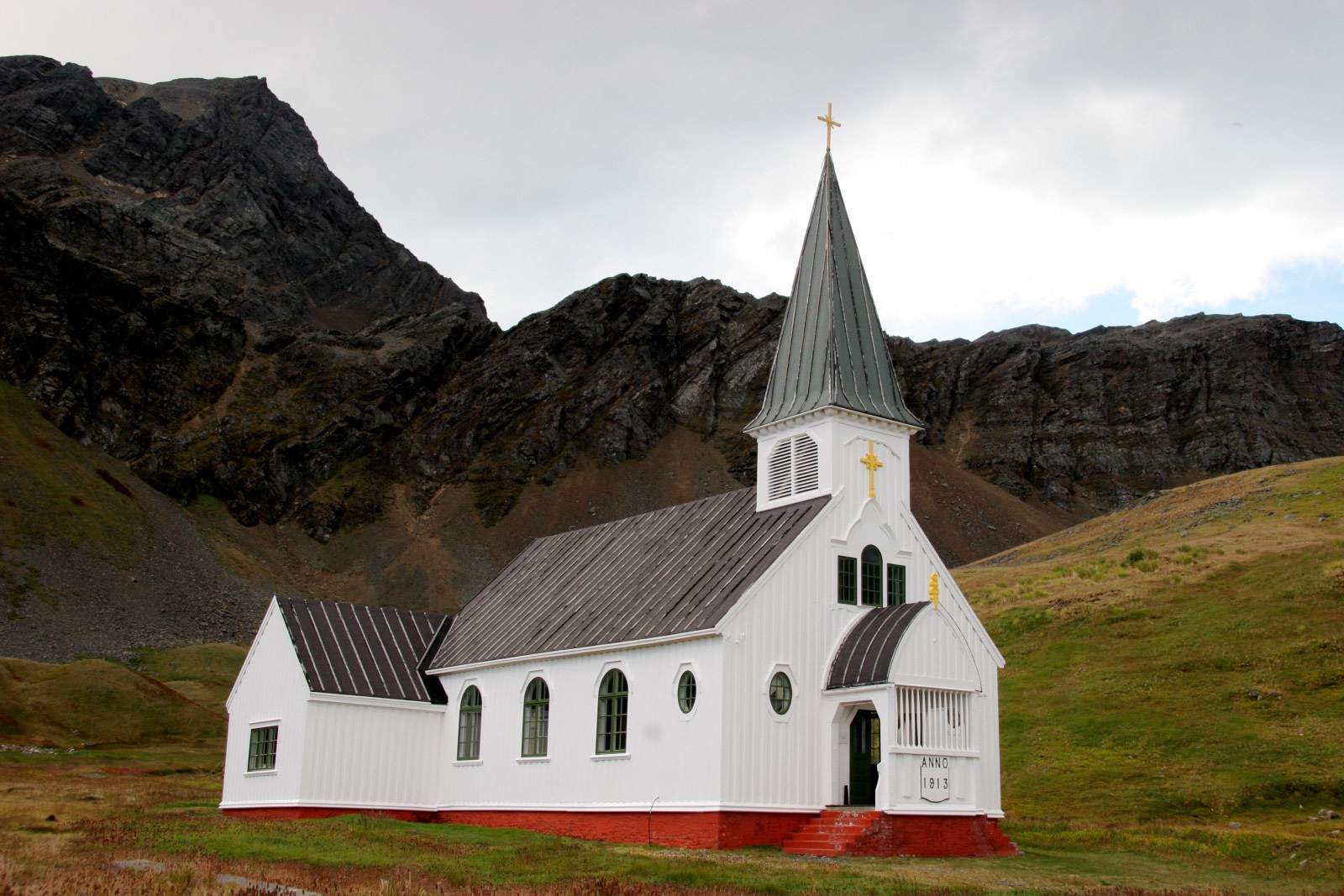
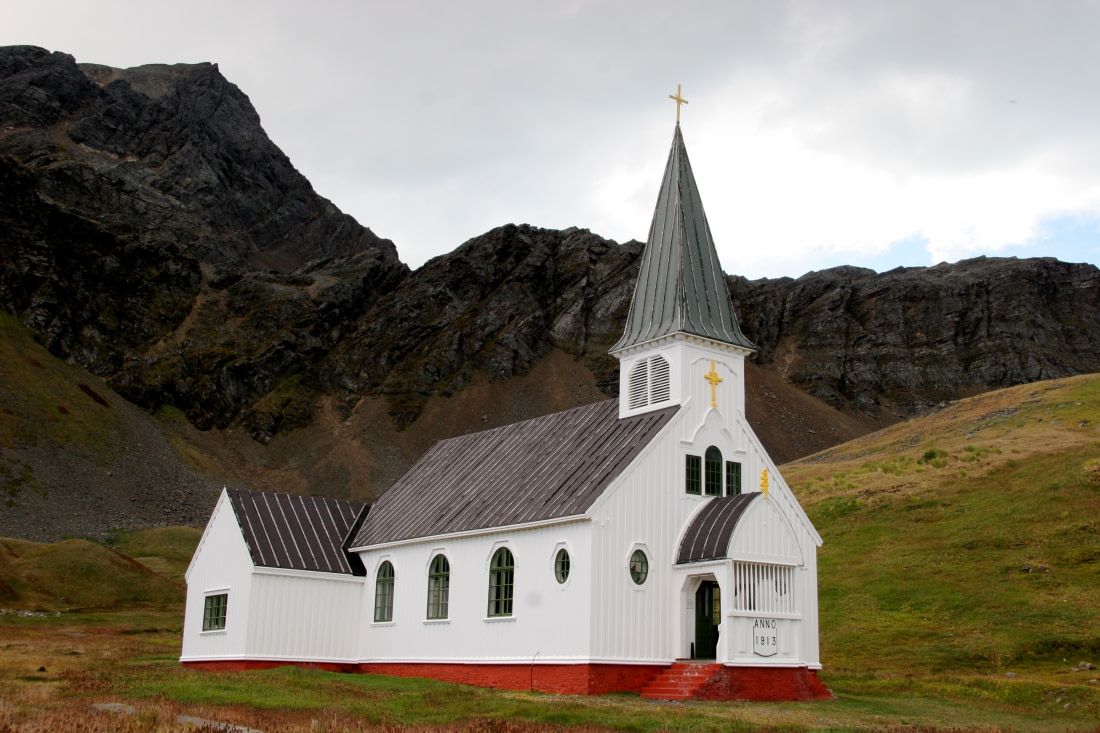
The Whaler’s Church in South Georgia

This neo-Gothic Norwegian Lutheran church was built by whalers in 1913 for the whaling station in Grytviken, South Georgia. In 1922, it held the funeral service for Sir Ernest Shackleton before his burial in the church cemetery. It serves occasional religious services, and some wedding ceremonies, particularly for descendants of the whalers buried in its cemetery.
blog-image

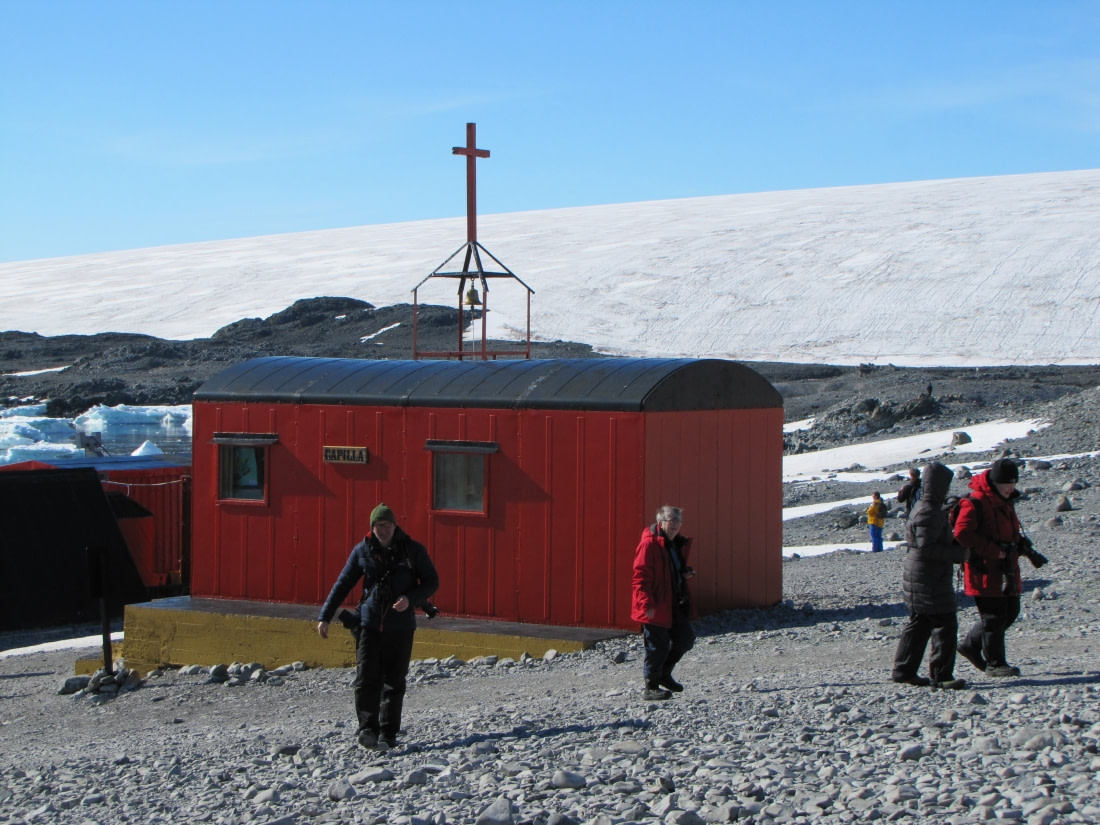
San Francisco de Asis Chapel at Argentinian Esperanza Base Station

Together with the Chilean Base Frei, Esperanza Station is the only other permanent location where civil personnel live all-year-round with their families. The San Francisco de Asis Catholic chapel was consecrated in 1976. In 1978, the first human being born in Antarctica, Emilio Marcos Palma, was baptized at the chapel, and on February 16 of that same year, the first religious wedding ceremony was performed there.

blog-image

Blog
go-leftgo-right

An igneous paradise: Franklin Island - Nexta Expeditions
Blog

An igneous paradise: Franklin Island

In the most remote reaches of the world's oceans, those daring enough to embark on the Ortelius to the Ross Sea eagerly boarded zodiacs in the southernmost part of the Pacific Ocean.
Six Must-See Svalbard Sites - Nexta Expeditions
Blog

Six Must-See Svalbard Sites

It's home to humanity's last-ditch supply of crop seeds, the world's northernmost settlement of over 1,000 people, and it is one of the best places on Earth to spot a polar bear.
Port Pastimes: 7 Fun Things to Do in Longyearbyen - Nexta Expeditions
Blog

Port Pastimes: 7 Fun Things to Do in Longyearbyen

Waiting in port for an Arctic expedition cruise to begin might seem a little like waiting for water to boil or coffee to brew or a Seinfeld reunion to materialize: Time seems to defy its own laws, life slows to a crawl, and you begin to wonder if it’s really going to be worth it.
Three Antarctica Cruise Deals - Nexta Expeditions
Blog

Three Antarctica Cruise Deals

For many travelers, Antarctica represents the ultimate polar destination. Its vast white landscapes offer an endless array of surreal vistas, much of its unique wildlife is found nowhere else on Earth, and its complete lack of an indigenous human population provides a sense of untouched seclusion that few other places can match.
The Ultimate Traveler’s Guide to the Arctic and Antarctica - Nexta Expeditions
Blog

The Ultimate Traveler’s Guide to the Arctic and Antarctica

Sunrises or sunsets? Coffee or tea? Polar bears or penguins?
Graham Land: A landscape dominated by volcanoes - Nexta Expeditions
Blog

Graham Land: A landscape dominated by volcanoes

An Antarctic cruise may explore the upper tip of the Antarctic Peninsula where one finds Graham Land, a jagged, glaciated part of Antarctica with a landscape dominated by volcanoes. Despite the volcanoes being over 200 million years old they are far from extinct with volcanic activity occurring today. Graham Land is connected to Palmer Land at the point where the Antarctic Peninsula widens from around 75 km to around 200 km south of Marguerite Bay.
Where the Polar Bears Roam - Nexta Expeditions
Blog

Where the Polar Bears Roam

Going to the Arctic without clapping eyes on a wild polar bear can be reasonably compared to visiting Africa without seeing a giraffe or a zebra or, most analogously, a lion.
A Day on m/v Plancius - Nexta Expeditions
Blog

A Day on m/v Plancius

Stepping aboard this long-running expedition vessel, it’s easy to forget that she’s been making voyages to the polar regions since “Afternoon Delight” by Starland Vocal Band was on the Billboard Hot 100.
Shackleton’s Long-Lost Endurance Discovered in Antarctica - Nexta Expeditions
Blog

Shackleton’s Long-Lost Endurance Discovered in Antarctica

A discovery expedition launched by the Falklands Maritime Heritage Trust achieved a long-awaited mission when it located Anglo-Irish explorer Ernest Shackleton’s lost ship Endurance last Saturday (March 5).
Birds of the South: 33 Antarctic Birds and Seabirds - Nexta Expeditions
Blog

Birds of the South: 33 Antarctic Birds and Seabirds

Of the many compelling reasons people travel to Antarctica and the sub-Antarctic, bird life is among the most beloved.
The Ways and Wildlife of the Weddell Sea - Nexta Expeditions
Blog

The Ways and Wildlife of the Weddell Sea

The Weddell Sea is situated off the coast of Antarctica, at the southernmost part of the Atlantic Ocean. Its coordinates are 75 degrees south and 47 degrees west, encompassing the Argentine, Chilean, and British territories of Antarctica. The severe weather and extensive pack ice have historically made the Weddell Sea challenging to access, but modern icebreaker ships are now enabling explorers to venture into this remote area.
Explore Antarctica Without Leaving Your Couch - Nexta Expeditions
Blog

Explore Antarctica Without Leaving Your Couch

There are numerous ways to embark on an Antarctica expedition from the comfort of your home. Explore these fantastic resources to experience the White Continent without leaving your couch.
12 photo tips to make better pictures on your Antarctica cruise - Nexta Expeditions
Blog

12 photo tips to make better pictures on your Antarctica cruise

During your trip in the Arctic or Antarctic cruise you and your camera equipment will be exposed to a variety of challenging conditions. Be careful with your equipment and protect it from the salty spray when in Zodiacs, on a beach, or on deck. Salt water and electronics is not a good mix!
Port Lockroy: History, Post Office, and Resident Penguins - Nexta Expeditions
Blog

Port Lockroy: History, Post Office, and Resident Penguins

Sometimes it’s easy to get caught up in the stunning coastlines, fjords, and other natural wonders of Antarctica, overlooking the man-made attractions nestled in between.
Life migrating through the Polar Front - Nexta Expeditions
Blog

Life migrating through the Polar Front

Since James Cook’s second voyage to Antarctica from 1772-1775, which provided the first descriptions of Antarctic animals, scientists have progressively uncovered the biodiversity of the Antarctic and sub-Antarctic regions. Numerous expeditions and research projects have since been undertaken to understand the unique ecosystems of this continent.
The Northern Lights dancing across the skies - Nexta Expeditions
Blog

The Northern Lights dancing across the skies

The Northern Lights typically manifest in a belt with a radius of 2,500 kilometers centered on the magnetic North Pole. This auroral zone spans northern Scandinavia, Iceland, the southern tip of Greenland, and continues over northern Canada, Alaska, and along the northern coast of Siberia.
Puffins: Clown Birds of the Atlantic - Nexta Expeditions
Blog

Puffins: Clown Birds of the Atlantic

Puffins are part of a family of 22 seabird species known as auks, which are pigeon-sized birds that thrive on a diet of small fish and crustaceans.
The Small but Social Commerson’s Dolphin - Nexta Expeditions
Blog

The Small but Social Commerson’s Dolphin

Despite being one of the lesser-known Antarctic cetaceans, Commerson's dolphins are quite social and have been given various names over the years, including Piebald dolphins, skunk dolphins, and panda dolphins. These names have been in use since their discovery in 1767 by French naturalist Philibert Commerson.
Science of the Ross Ice Shelf - Nexta Expeditions
Blog

Science of the Ross Ice Shelf

Antarctica’s Ross Ice Shelf is vast, spanning 487,000 sq. km – comparable to the size of France – with a thickness that varies from a few hundred meters near the sea to over 1,200 meters away from the floating edge. The edge along the Ross Sea forms a towering ice wall, rising up to 50 meters above the water, with most of the ice submerged below the waterline.
Weddell Sea: the Original Antarctic Adventure - Nexta Expeditions
Blog

Weddell Sea: the Original Antarctic Adventure

According to historian Thomas R. Henry, visiting the Weddell Sea requires a brave heart. In his 1950 book, "The White Continent," he described sudden “flash freezes” that occur in the region. It was one of these flash freezes that trapped Ernest Shackleton’s ship, Endurance, in January 1915, forcing his crew to endure over a year in the harsh environment before they could escape.