Of Treacherous Rocks Audacious Fin Whales - Nexta Expeditions
Of Treacherous Rocks & Audacious Fin Whales

Of Treacherous Rocks & Audacious Fin Whales

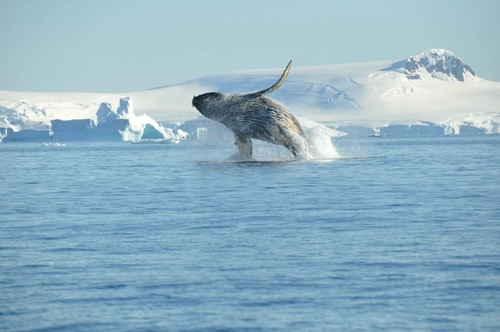
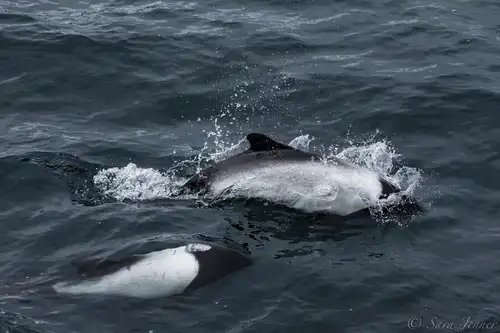
Soon large blows filled our view; small groups of fin whales sped by heading north all the while feeding on concentrations of krill & small fish. Group after group was seen, with many simply feeding in the general area and not heading anywhere in particular. Soon it became evident that we were not simply seeing a few random groups of fins, but a very large concentration spread out over a large area of sea just north and around the islands north of the South Shetlands. Dozens upon dozens of fin whales were feeding, diving around the ship and on the horizon in massive numbers; we must have seen well over fifty fin whales in the general area of Elephant Island, something many of the guides had never seen before.
blog-image

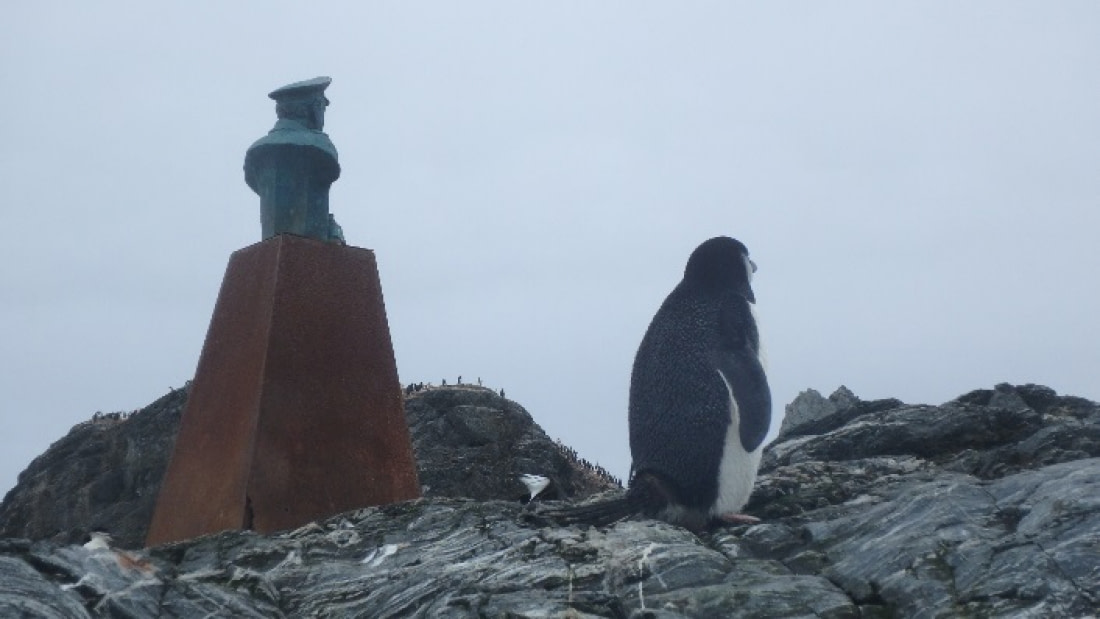
Landing at Point Wild on Elephant Island

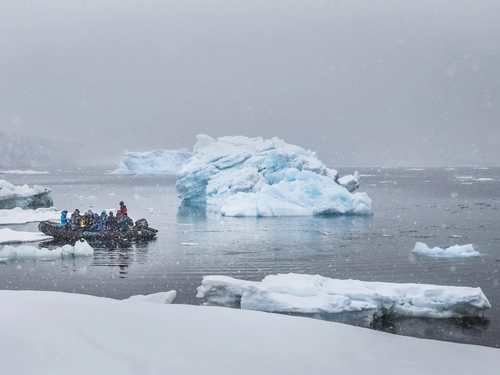
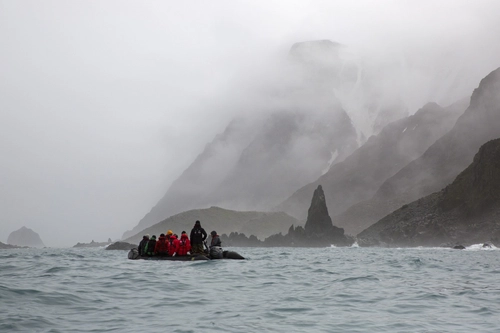
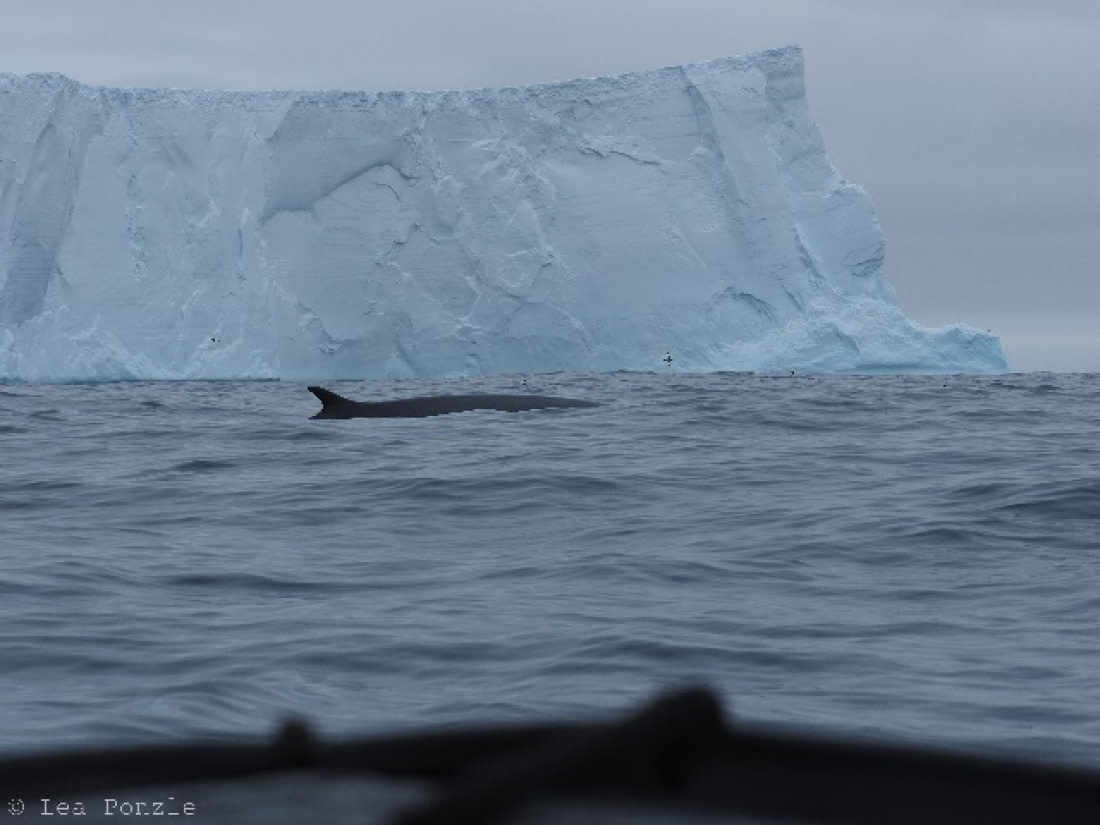
As we neared Elephant Island it soon became quite clear: the possibility of landing at Point Wild on Elephant Island, the very spot where Shackleton had landed with his men and left the majority of them stranded while he sailed towards South Georgia in search of rescue, was a very real possibility. With seas generally rather rough and the swell both at the ship and at land being usually quite strong, the chances of landing there was always slim and several years could pass before a ship could have a chance at making a landing there. With the seas as calm as they were, our chances would never be better: the decision was made in the early afternoon to send out a scout zodiac to appraise the landing site and see if it would be at all possible to land with passengers. At 3:30pm the zodiac headed out, and within several minutes the call came through: the landing site Point Wild was a green light! With guides possibly more excited than guests, as we knew the rarity of being able to land there, two groups were organized: one would head out and land on Point Wild directly, while the second group would zodiac cruise and hope for the chance of close encounters with some fin whales. As the first group scrambled around on the slippery rocks and pondered the entirety of Shackleton’s men being stranded on that small strip of land for months on end, ever wondering if rescue would even find them with only a couple small upturned boats for shelter, the second group headed out towards large tabular icebergs in search of whales to play with.
blog-image

In search of fin whales

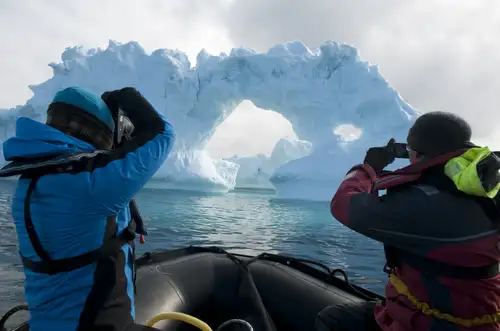
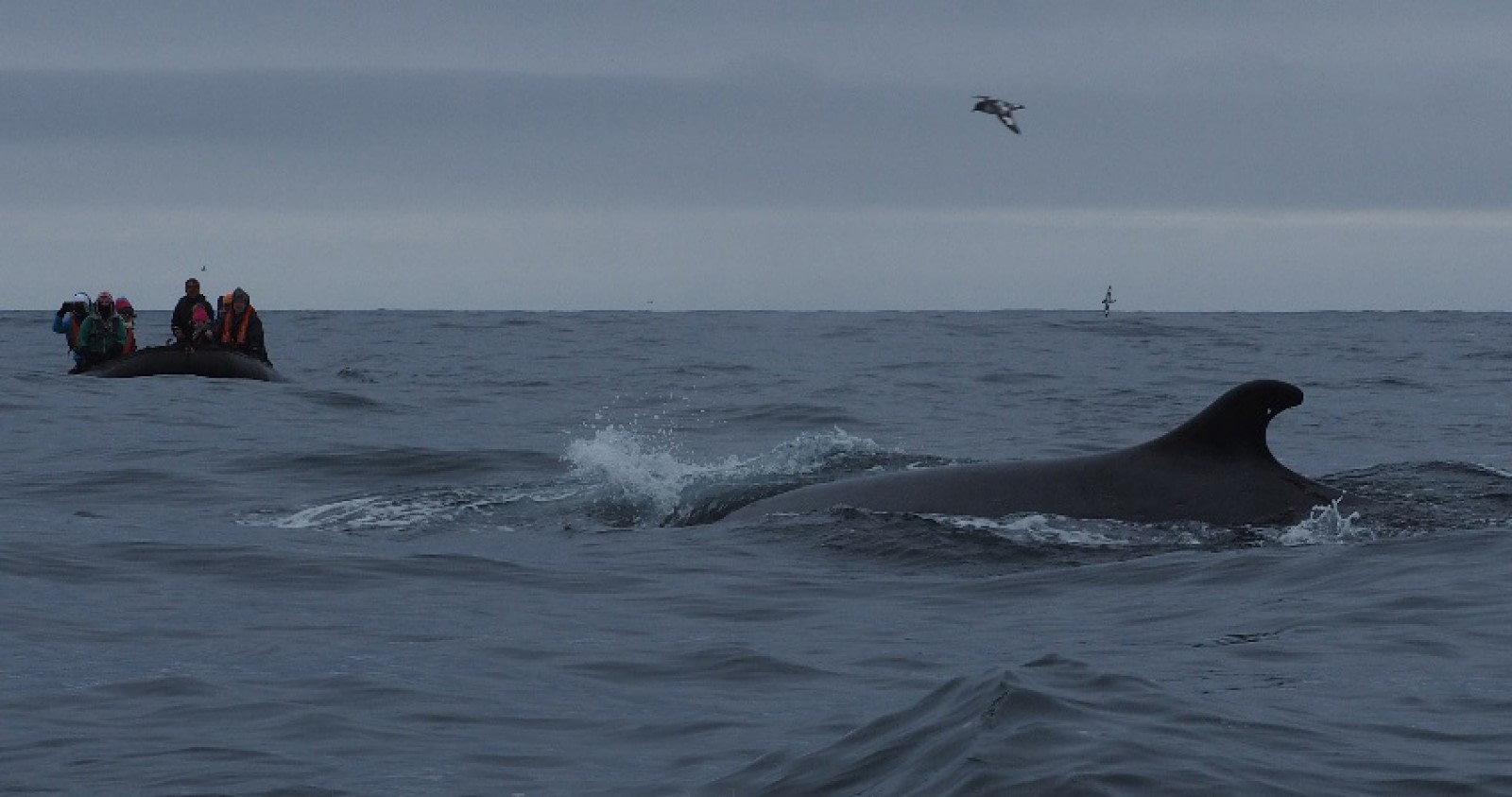
Success! Blow upon blow was seen on the horizon, sometimes up to 14 blows nearly at once as many more fed and frolicked within close proximity to the Zodiacs. Several even had the audacity to dive under a Zodiac, a wonderful if terse moment as these leviathans of the deep displayed their enormity. Ear to ear smiles were shared by guests and guides alike, as this was something many of the guides themselves had never experienced: such close encounters and gentle behaviour from fin whales in such close proximity to zodiacs, in such large numbers was something special indeed. And doubly so! To be able to land on Point Wild, such a rare occasion, was a double guilty pleasure that would most likely not be duplicated in a rather while. As the last zodiac left shore and headed back to the Plancius, the dining room full of laughter and smiles and various stories from the day, the sun making its way down towards the horizon, we could only marvel at the luck of taking part in a day such as this, a very special day indeed. A day of fin whales, ice, rocks, but not least of all, memories.
Best Deals

Related Trips

Antarctica - Basecamp - free camping, kayaking, snowshoe/hiking, mountaineering, photo workshop - Nexta Expeditions
Antarctica
Ushuaia

Antarctica - Basecamp - free camping, kayaking, snowshoe/hiking, mountaineering, photo workshop

calendar09 Dec 2025 - 21 Dec 2025
clock13 Days / 12 Nights
From $ 7.250 per person
Falkland Islands - South Georgia - Antarctica - Nexta Expeditions
Antarctica
Ushuaia

Falkland Islands - South Georgia - Antarctica

calendar11 Dec 2025 - 29 Dec 2025
clock19 Days / 18 Nights
From $ 14.500 per person
Antarctica - Basecamp - free camping, kayaking, snowshoe/hiking, mountaineering, photo workshop - Nexta Expeditions
Antarctica
Ushuaia

Antarctica - Basecamp - free camping, kayaking, snowshoe/hiking, mountaineering, photo workshop

calendar16 Dec 2025 - 28 Dec 2025
clock13 Days / 12 Nights
From $ 9.700 per person
Falkland Islands - South Georgia - Antarctica - Nexta Expeditions
Antarctica
Ushuaia

Falkland Islands - South Georgia - Antarctica

calendar21 Dec 2025 - 08 Jan 2026
clock19 Days / 18 Nights
From $ 15.600 per person
Antarctica - Basecamp - free camping, kayaking, snowshoe/hiking, mountaineering, photo workshop - Nexta Expeditions
Antarctica
Ushuaia

Antarctica - Basecamp - free camping, kayaking, snowshoe/hiking, mountaineering, photo workshop

calendar28 Dec 2025 - 09 Jan 2026
clock13 Days / 12 Nights
From $ 10.550 per person
Antarctica - Basecamp - free camping, kayaking, snowshoe/hiking, mountaineering, photo workshop - Nexta Expeditions
Antarctica
Ushuaia

Antarctica - Basecamp - free camping, kayaking, snowshoe/hiking, mountaineering, photo workshop

calendar29 Dec 2025 - 10 Jan 2026
clock13 Days / 12 Nights
From $ 11.100 per person
Antarctica - Discovery and learning voyage - Nexta Expeditions
Antarctica
Ushuaia

Antarctica - Discovery and learning voyage

calendar08 Jan 2026 - 18 Jan 2026
clock11 Days / 10 Nights
From $ 6.950 per person
Antarctica - Discovery and learning voyage - Nexta Expeditions
Antarctica
Ushuaia

Antarctica - Discovery and learning voyage

calendar09 Jan 2026 - 19 Jan 2026
clock11 Days / 10 Nights
From $ 9.250 per person
Antarctica - Discovery and learning voyage - Nexta Expeditions
Antarctica
Ushuaia

Antarctica - Discovery and learning voyage

calendar18 Jan 2026 - 28 Jan 2026
clock11 Days / 10 Nights
From $ 6.950 per person
Falkland Islands - South Georgia - Antarctica - Nexta Expeditions
Antarctica
Ushuaia

Falkland Islands - South Georgia - Antarctica

calendar19 Jan 2026 - 06 Feb 2026
clock19 Days / 18 Nights
From $ 16.600 per person
% Save up to $ 7.350
Falkland Islands - South Georgia - Antarctica - Nexta Expeditions
Antarctica
Ushuaia

Falkland Islands - South Georgia - Antarctica

calendar28 Jan 2026 - 16 Feb 2026
clock20 Days / 19 Nights
From $ 12.650 per person
Antarctica - Discovery and learning voyage - Nexta Expeditions
Antarctica
Ushuaia

Antarctica - Discovery and learning voyage

calendar06 Feb 2026 - 16 Feb 2026
clock11 Days / 10 Nights
From $ 9.250 per person

Blog
go-leftgo-right

The bio-richness of the Ross Sea - Nexta Expeditions
Blog

The bio-richness of the Ross Sea

The Ross Sea is one of the most stunning and untouched marine areas globally. This sea, which remains frozen for most of the year, spans 3.6 million square kilometers (1.4 million square miles) along the Antarctic coast south of New Zealand. Its waters harbor a biologically diverse ecosystem of species that have flourished, unchanged, for millennia.
15 Falkland Islands Bird Photos - Nexta Expeditions
Blog

15 Falkland Islands Bird Photos

The remote sub-Antarctic archipelago of the Falkland Islands is a haven for bird enthusiasts, offering a unique and abundant selection of birds, especially seabirds.
Six Must-See Svalbard Sites - Nexta Expeditions
Blog

Six Must-See Svalbard Sites

It's home to humanity's last-ditch supply of crop seeds, the world's northernmost settlement of over 1,000 people, and it is one of the best places on Earth to spot a polar bear.
Where the Polar Bears Roam - Nexta Expeditions
Blog

Where the Polar Bears Roam

Going to the Arctic without clapping eyes on a wild polar bear can be reasonably compared to visiting Africa without seeing a giraffe or a zebra or, most analogously, a lion.
The Mysteries of the Beluga Whale - Nexta Expeditions
Blog

The Mysteries of the Beluga Whale

Beluga whales, also known as white whales, sea canaries, and sometimes melonheads, are a rare but cherished sight during Arctic cruises, thanks to their striking appearance. Despite the rarity of beluga sightings, a good amount is known about these friendly-faced cetaceans.
North Norway, Northern Lights, and All the Pretty Whales - Nexta Expeditions
Blog

North Norway, Northern Lights, and All the Pretty Whales

At first glance, visiting Northern Norway outside of a blazing-hot summer might seem daunting for the average traveler.
Spitsbergen: Alkefjellet magic - Nexta Expeditions
Blog

Spitsbergen: Alkefjellet magic
If they knew their way home, why not follow them? Equipped with GPS and compass, we approached the cliffs by zodiac. First, we heard the noise from the colony – the distinct calls of guillemots, kittiwakes, and Glaucous gulls. Then the cliffs gradually emerged from the mist.
Adding Antarctica to Your Seven-Continents Bucket List - Nexta Expeditions
Blog

Adding Antarctica to Your Seven-Continents Bucket List

Many travelers aspire to visit all seven continents, a goal that fits naturally with the concept of a "bucket list," a term popularized by the 2007 movie.
Not Eskimos: 10 Enlightening Facts About the Inuit - Nexta Expeditions
Blog

Not Eskimos: 10 Enlightening Facts About the Inuit

If you are planning to join an Arctic cruise, you might be intrigued by the Inuit culture. To help you gain a deeper understanding of these people, especially if you are considering a trip to Greenland, here are 10 fascinating facts about the Inuit that everyone should know.
Six Seal Species You Might See On Your Greenland Cruise - Nexta Expeditions
Blog

Six Seal Species You Might See On Your Greenland Cruise

If you spot a grand old whiskered man lounging in solitary splendor, there's a good chance you're looking at a bearded seal. Your Greenland cruise will take you to bays where these solitary fellows (except during breeding season) hunt for fish in the relatively shallow waters near the shores.
Under the Greenland Ice Sheet - Nexta Expeditions
Blog

Under the Greenland Ice Sheet

Anyone who ventures to the right part of the globe can encounter vast amounts of ice, but a Greenland cruise offers something truly unique: ice sculptures hidden beneath the northern ice sheet. Scientists once thought these sculptures were rocky hills buried in ice, similar to the Ghost Mountains in Antarctica. However, it turns out that Mother Nature has crafted one of the most exclusive art exhibits in the world. These sculptures are not visible from the surface, but some scientists have managed to get a sneak peek using radar equipment.
Secrets of the Snowy Owl: Habitat, Adaptations, and Other Facts - Nexta Expeditions
Blog

Secrets of the Snowy Owl: Habitat, Adaptations, and Other Facts

The snowy owl (Bubo scandiacus), also known as the great white owl or Arctic owl, is one of the most distinctive bird species on the planet. While you won’t find them in all areas of the Arctic – they don’t exist in Svalbard due to the lack of lemmings – snowy owls are seen in the polar regions of Eurasia and North America and are a potential visitor during Greenland cruises. The binomial species name, “scandiacus,” is derived from Scandinavia, as this is where the bird was first discovered. The snowy owl is the official bird of Quebec, and they are a must-see for countless bird watchers and naturalists.
Weddell Sea: the Original Antarctic Adventure - Nexta Expeditions
Blog

Weddell Sea: the Original Antarctic Adventure

According to historian Thomas R. Henry, visiting the Weddell Sea requires a brave heart. In his 1950 book, "The White Continent," he described sudden “flash freezes” that occur in the region. It was one of these flash freezes that trapped Ernest Shackleton’s ship, Endurance, in January 1915, forcing his crew to endure over a year in the harsh environment before they could escape.
12 Things to Do in Antarctica - Nexta Expeditions
Blog

12 Things to Do in Antarctica

Traveling to Antarctica is unlike traveling to any other place on Earth.
Antarctica: When to Visit, How to Plan, What to Expect - Nexta Expeditions
Blog

Antarctica: When to Visit, How to Plan, What to Expect

Antarctica is an astonishing location loved in equal measure by ice enthusiasts and continent hoppers, but it also asks a lot in return for its prestigious polar status.
Orcas (aka Killer Whales) of Antarctica and the sub-Antarctic - Nexta Expeditions
Blog

Orcas (aka Killer Whales) of Antarctica and the sub-Antarctic

Orcas are highly social and intelligent members of the dolphin family Delphinidae. They are sometimes referred to as killer whales, though this name has somewhat fallen out of fashion due to inaccurately characterizing orcas as ferocious predators.
8 Scientific Wonders of the Arctic - Nexta Expeditions
Blog

8 Scientific Wonders of the Arctic

The Arctic’s frozen landscape not only contains scenic gems, it also prompts fascinating advances in research. Here are some of the eight best.
The bowhead whale, whaling about the Arctic - Nexta Expeditions
Blog

The bowhead whale, whaling about the Arctic

The bowhead whale typically resides near pack ice, often in shallow waters. These whales are commonly found north of Europe, between Canada and Greenland, in the Hudson Bay area, the Okhotsk Sea, and the Bering, Chukchi, and Beaufort seas. In these regions, they filter food through their large baleen plates. Bowheads are known to open their large mouths and graze along the surface, in the water column, or on the sea floor.
Light in the Land of the Midnight Sun - Nexta Expeditions
Blog

Light in the Land of the Midnight Sun

The midnight sun, also referred to as the polar day, is a fascinating natural event observed within the Arctic and Antarctic circles. During the polar summer, the sun remains above the horizon for 24 hours a day, resulting in continuous daylight without any sunrise or sunset. This phenomenon occurs due to the Earth's seasonal tilt towards the sun during the summer months in these regions.
Flowers in Antarctica - Nexta Expeditions
Blog

Flowers in Antarctica

The polar regions are among the most inhospitable environments for plants and animals. Life here faces numerous challenges, including low temperatures, high winds, solar radiation, and cell freezing. The Antarctic continent experiences extreme conditions, with darkness during winter and continuous light during summer. Winter temperatures can drop to -60°C or lower.