

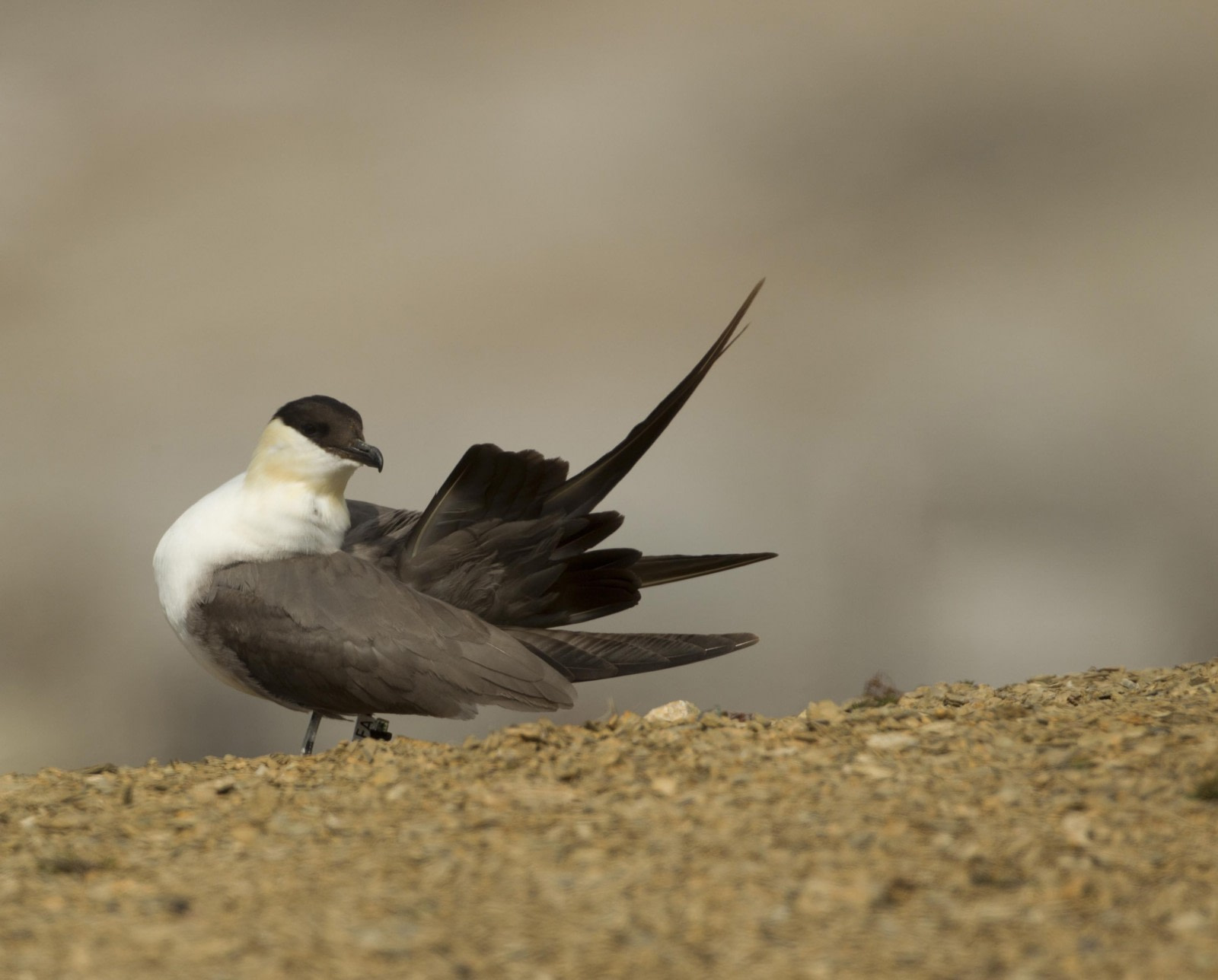
Name: Long-tailed Skua, Long-tailed Jaeger (Stercorarius longicaudus)
Length: 40 to 60 cm.
Weight: 230 to 450 grams.
Location: High Arctic regions. Winters southern Pacific and Atlantic.
Conservation status: Least Concern.
Diet: Fish, smaller birds, small mammals, carrion, fruit.
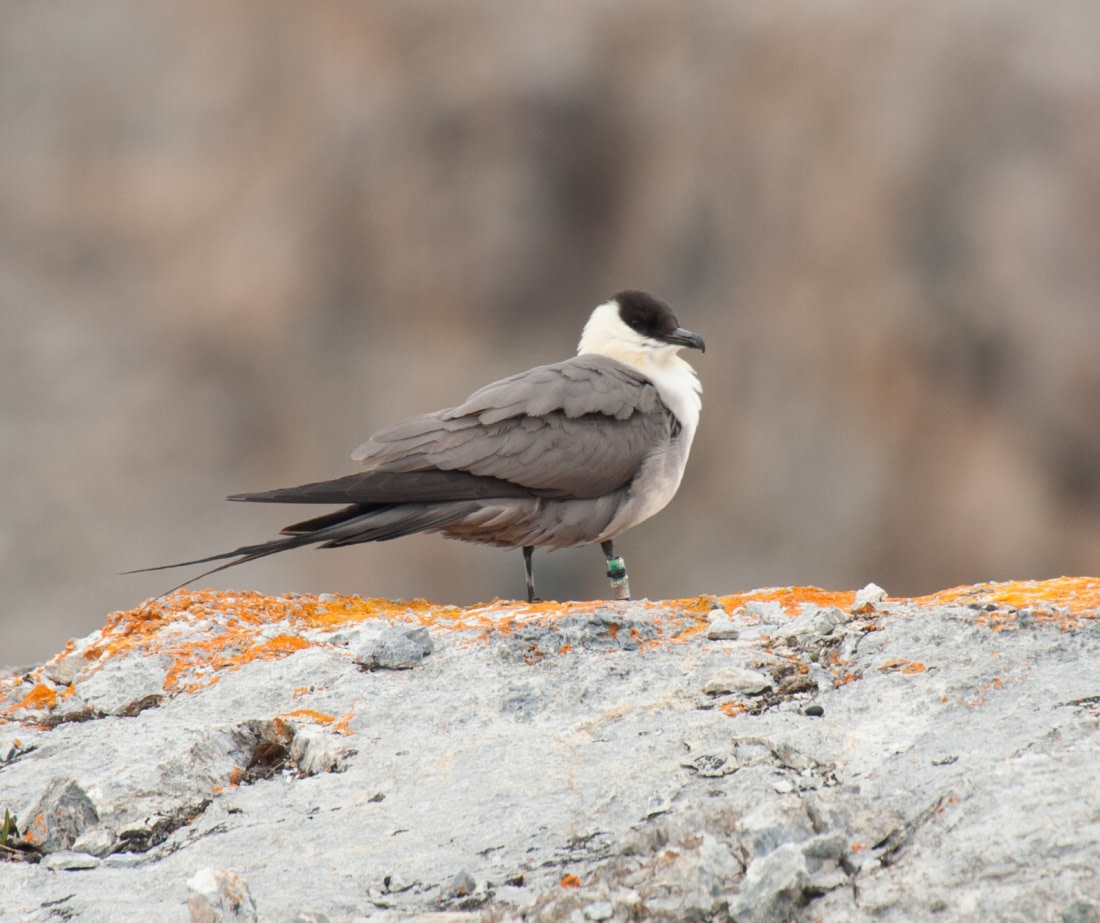
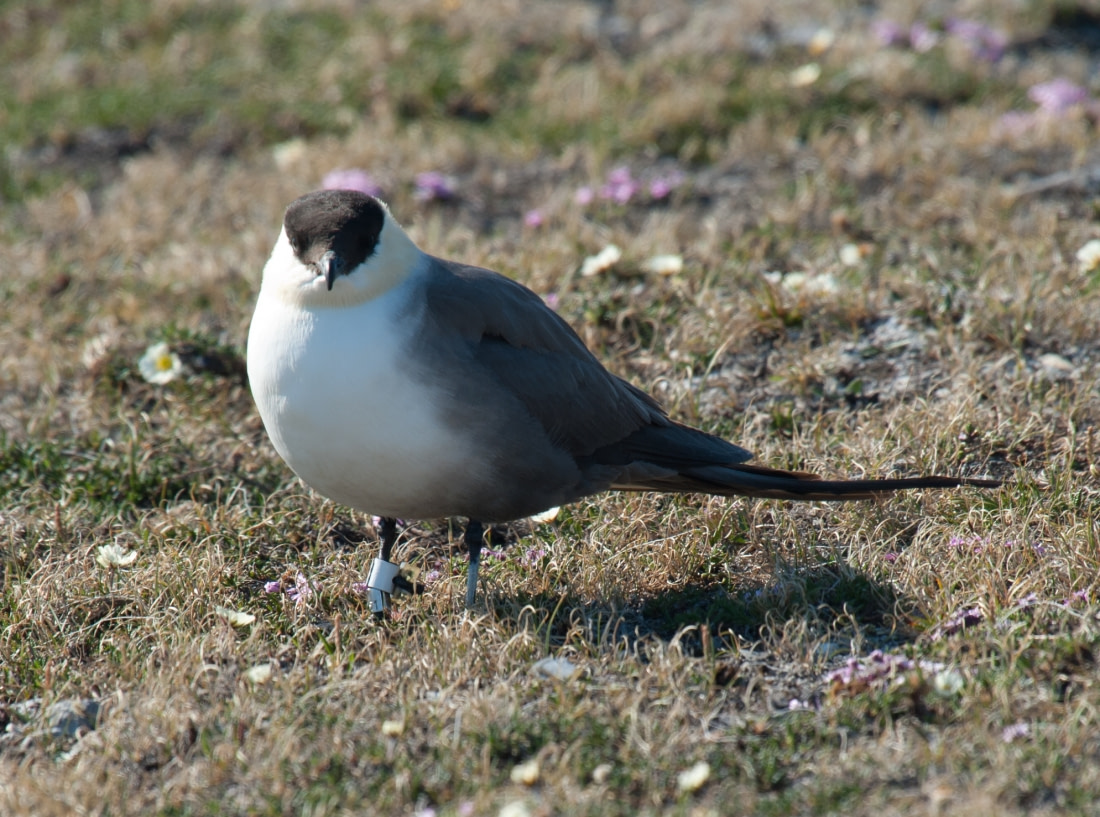
Appearance: White belly, black wings, grey back. Black cap on head, yellow cheeks and nape. Long streaming tail-feathers. Dark bills.
How do Long-tailed Skuas feed?
Long-tailed Skuas harass other birds to steal their catch. During breeding season, they hunt rodents by hovering and then swooping down to kill.
Are Long-tailed Skuas social?
Non-breeding Long-tailed Skuas sometimes form small flocks to forage together.
How fast do Long-tailed Skuas fly?
They can reach speeds of up to 50 km per hour.
What are Long-tailed Skua birthing rituals like?
They reach sexual maturity at 3 years. Breeding starts in June on dry tundra. Nests are simple scrapes in the ground. They are territorial and chase away intruders.
Egg laying depends on rodent prey availability, with up to 2 olive-brown eggs. Incubation lasts around 24 days. Chicks leave the nest about 2 days after hatching. Females rear the chicks while males hunt and defend territory. Juveniles fledge around 25 days after hatching.
How long do Long-tailed Skuas live?
They live for about 9 years.
How many Long-tailed Skuas are there today?
Population estimates range from 150,000 to 5,000,000 due to their time at sea and variable breeding success.
Do Long-tailed Skua have any natural predators?
Eggs and young are preyed upon by Arctic Foxes and various rodents.
7 Stupendous Long-tailed Skua Facts
- They are the smallest members of the Skua family.
- Up to half of their length can be their tail, which can reach up to 30 cm.
- There are 2 subspecies: 1. Stercorarius longicaudus pallescens - Greenland, North America, eastern Siberia 2. Stercorarius longicaudus longicaudus - Russia, northern Scandinavia
- Long streamers are present only on breeding adults and are lost outside the breeding season.
- They breed the furthest north of all northern-breeding Skua species.
- They are the most widely distributed of the northern-breeding species.
- They spend almost all of their lives at sea, returning to land only for breeding.

 12 Aug - 31 Aug 2026
 15 Aug - 28 Aug 2026
 16 Aug - 25 Aug 2026
 25 Aug - 07 Sep 2026
 21 Sep - 01 Oct 2026
 01 Oct - 12 Oct 2026
Related Trips


Spitsbergen - Northeast Greenland, Fly & Sail
12 Aug 2026 - 31 Aug 2026  20 Days / 19 Nights
Northeast Greenland Extreme
15 Aug 2026 - 28 Aug 2026 14 Days / 13 Nights
East Greenland, Scoresby Sund, Including Long Hikes
16 Aug 2026 - 25 Aug 2026 10 Days / 9 Nights
Northeast Greenland Extreme
25 Aug 2026 - 07 Sep 2026 14 Days / 13 Nights
East Greenland, Scoresby Sund - Aurora Borealis, Fly & Sail
21 Sep 2026 - 01 Oct 2026 11 Days / 10 Nights
East Greenland, Scoresby Sund - Iceland , Aurora Borealis, Fly & Sail
01 Oct 2026 - 12 Oct 2026 12 Days / 11 Nights


How and When Did Greenland Become Covered in Ice?

Amazing Greenland
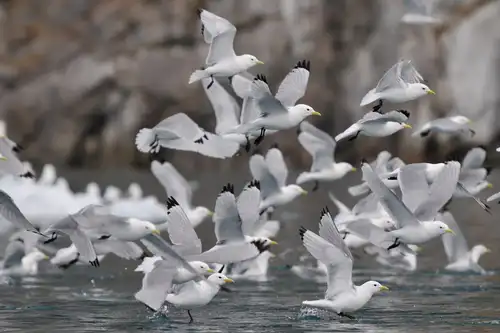
Five Birds You Might See on Your Greenland Cruise

Under the Greenland Ice Sheet
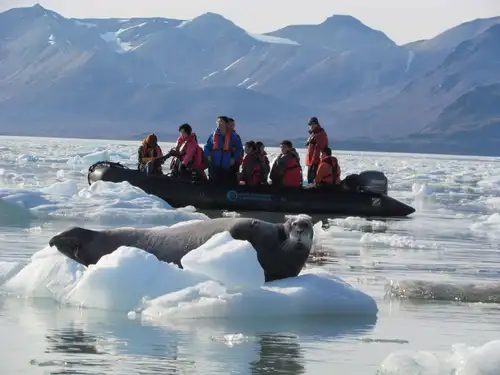
Six Seal Species You Might See On Your Greenland Cruise

Not Eskimos: 10 Enlightening Facts About the Inuit

Northeast Greenland National Park

Greenland: Where the Kayak Was Invented

The Arctic Hare: Easter Bunny

Traditional Lifestyles of the Inuit

Greenland: East vs. West

Ice streams and lakes under the Greenland Ice Sheet

Tracking Greenland’s Wildlife from Space

Scoresby Sund: the Greatest Greenland Adventure

Greenland's History: When Vikings Ruled the Ice Age

Peaks, Fjords, and Auroras: 14 East Greenland Attractions
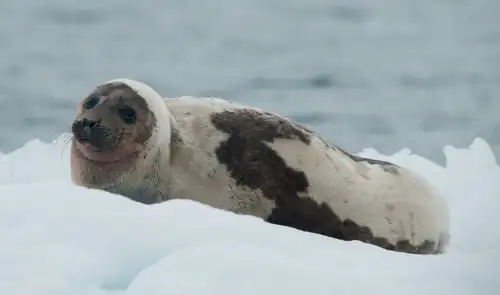
Harp seals harping on in Greenland

Discover the Scoresby Sund Fjord System in East Greenland

10 Traits of Post-Ice-Age Greenland