How And When Did Greenland Become Covered In Ice - Nexta Expeditions
How and When Did Greenland Become Covered in Ice?

How and When Did Greenland Become Covered in Ice?

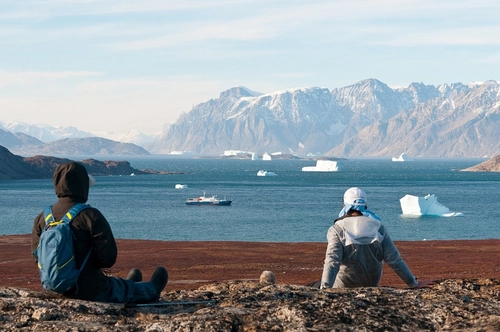
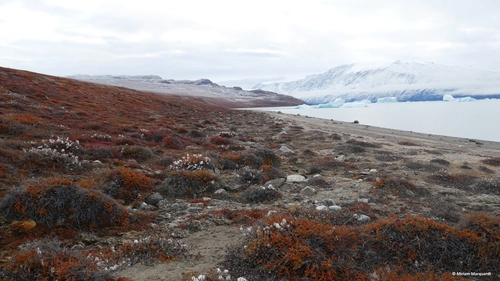
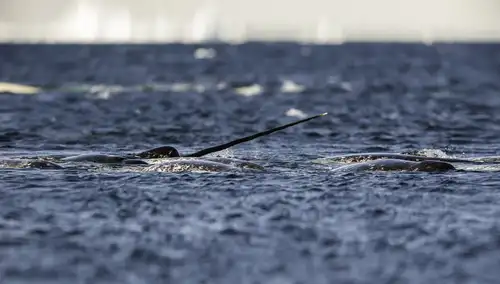
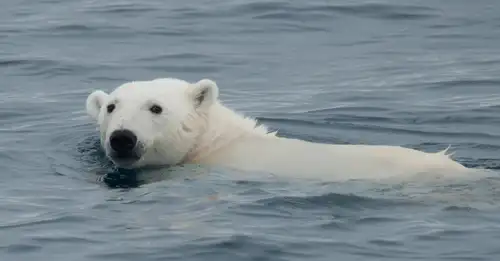
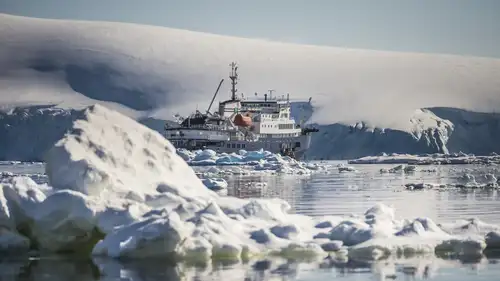
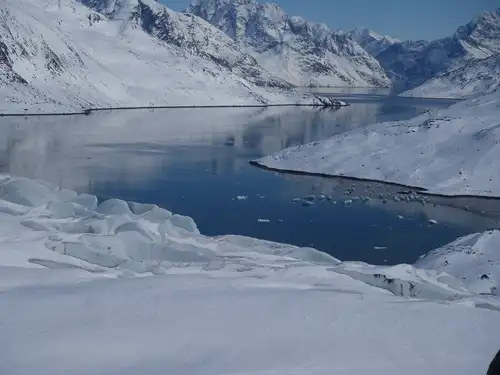
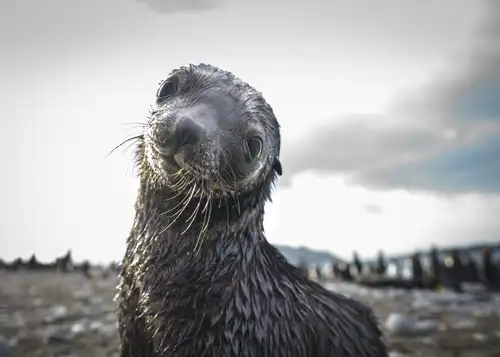
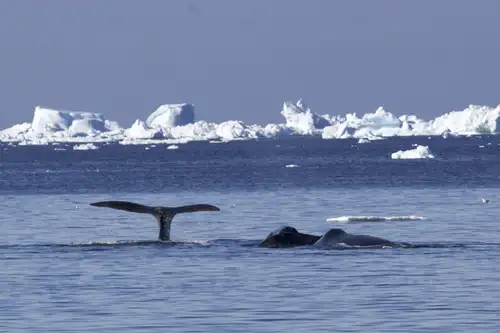
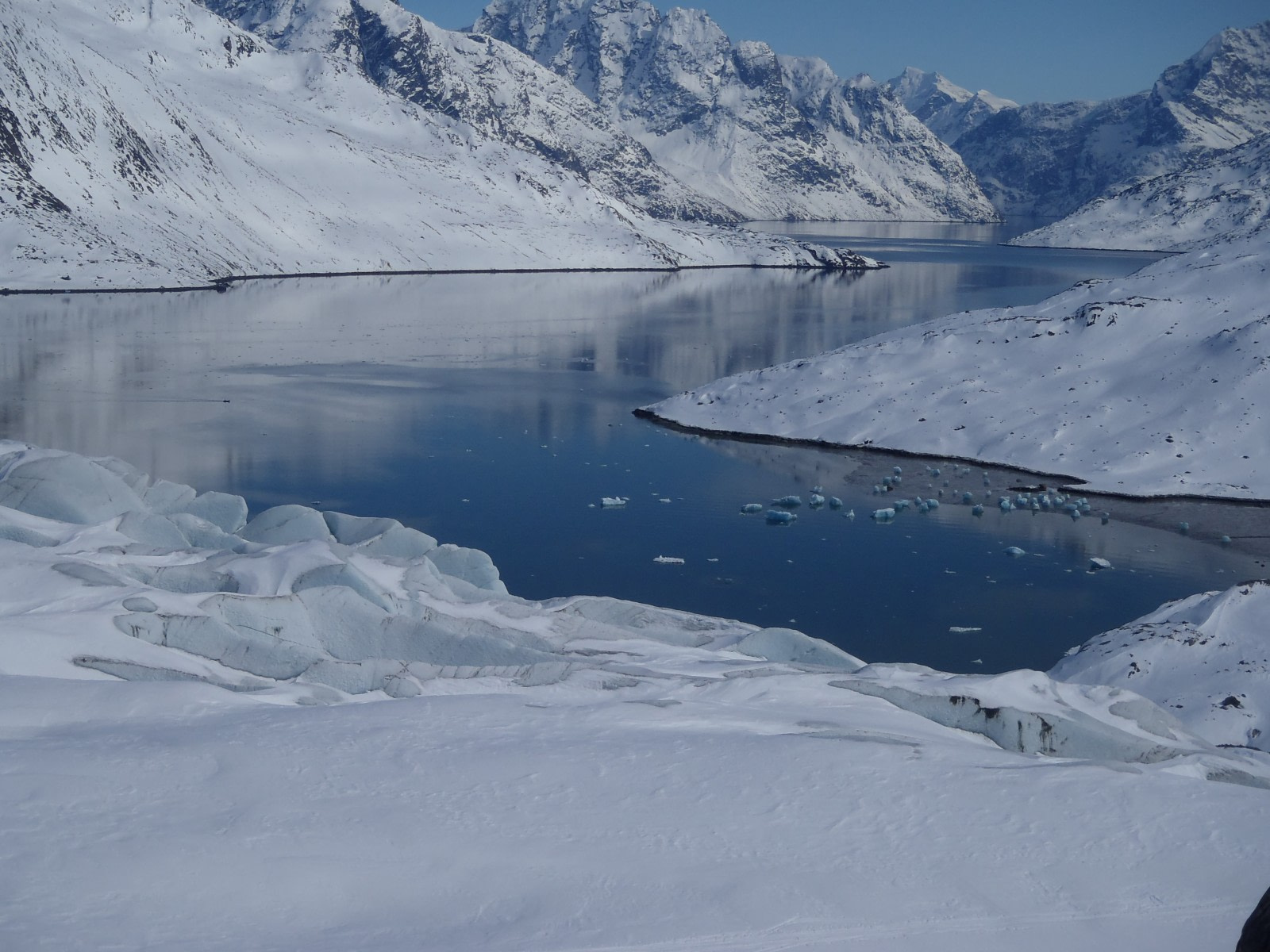
Although it may be hard to believe, there was a time when Greenland was more green than icy. Today, those who embark on a Greenland expedition are greeted with views of the Greenland ice sheet and the marine life that thrives in this region, including seals and whales. Polar bears are also prominent in the northern and eastern parts of Greenland. These animals have adapted to their environment, but a few million years ago, the massive island would not have been as welcoming to them.

When did the transition in Greenland happen?

Scientists have studied Greenland for decades, and a research team finally uncovered some answers about its unique, mostly ice-covered landscape. According to recent findings, the shift from green land to a large ice-covered mass began around 3 million years ago. At that time, some areas of Greenland were likely covered in ice, but nothing as extensive or thick as the current Greenland ice sheet. Most of the island would have been ice-free.

How did the ice form?

In 2008, scientists from the University of Leeds and the University of Bristol collaborated to closely examine the Greenland ice sheet puzzle. Their research concluded that the ice formation on the island was likely caused by unusual changes in the area's atmospheric carbon dioxide. Such changes can significantly impact the climate of the affected region, so a decline in atmospheric carbon dioxide could have triggered the formation of the Greenland ice sheet.

How does this science work?

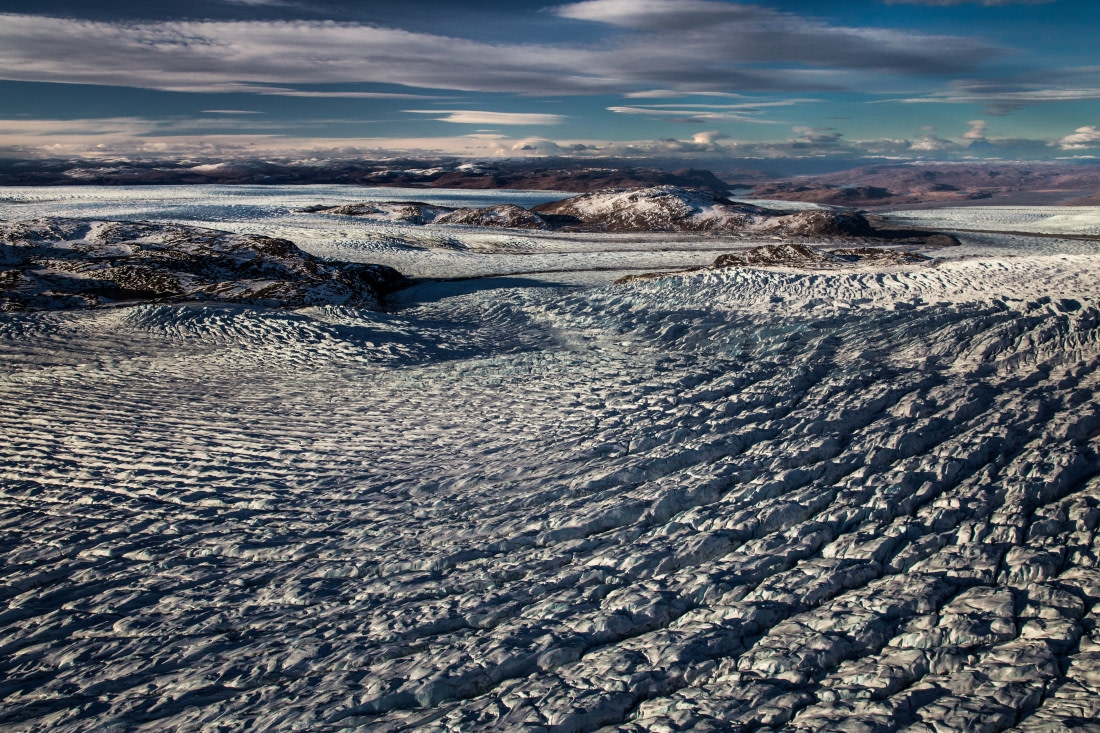
Historical atmospheric models suggest that Greenland once had high levels of carbon dioxide. During this period, Greenland was likely covered in forests and grass. However, as atmospheric carbon dioxide levels began to drop, it created a colder climate that eventually led to the formation of a thick ice layer.
blog-image

What indicators prove this theory?

One of the key indicators supporting this theory is evidence found on the ocean floor. Researchers noted that the amount of debris and rock deposited on the ocean floor near Greenland began to increase significantly around 3 million years ago. This is crucial because icebergs are the primary transporters of such matter. Therefore, the formation of icebergs around this time helps scientists determine when the climate conditions were suitable for the ice sheet to start forming.

The deep freeze: how the Greenland ice sheet changed life

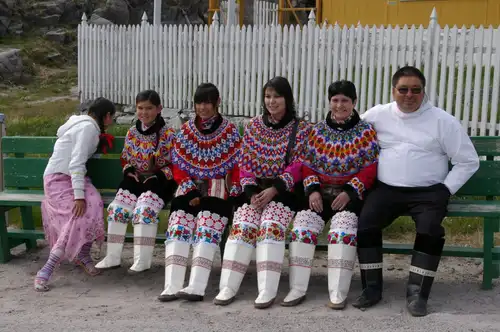
Greenland's former state made it a suitable habitat for many types of life that thrive in warmer climates. However, the deep freeze that formed the Greenland ice sheet dramatically altered the types of life that could sustain themselves on the island. It is believed that humans did not arrive in Greenland from Alaska and Canada until about 5-6000 years ago, well after the deep freeze began.

Ultimately, the Greenland ice sheet made the island inhospitable to many forms of life. The Inuit people are uniquely adapted to cold climates due to their evolutionary path, but areas like Greenland would have been challenging for other early settlers. Additionally, many common land mammals such as squirrels and raccoons would have faced similar difficulties. Other animals evolved to take their place, including musk oxen and polar bears. This highlights the importance of the earth's diverse climate range for sustaining a wide variety of life and offers Arctic expedition participants a unique experience.
Best Deals

Related Trips

Spitsbergen - Northeast Greenland, Fly & Sail - Nexta Expeditions
The Arctic
Longyearbyen

Spitsbergen - Northeast Greenland, Fly & Sail

calendar12 Aug 2026 - 31 Aug 2026
clock20 Days / 19 Nights
From $ 9.500 per person
Northeast Greenland Extreme - Nexta Expeditions
The Arctic
Akureyri

Northeast Greenland Extreme

calendar15 Aug 2026 - 28 Aug 2026
clock14 Days / 13 Nights
From $ 8.650 per person
East Greenland, Scoresby Sund, Including Long Hikes - Nexta Expeditions
The Arctic
Akureyri

East Greenland, Scoresby Sund, Including Long Hikes

calendar16 Aug 2026 - 25 Aug 2026
clock10 Days / 9 Nights
From $ 6.000 per person
Northeast Greenland Extreme - Nexta Expeditions
The Arctic
Akureyri

Northeast Greenland Extreme

calendar25 Aug 2026 - 07 Sep 2026
clock14 Days / 13 Nights
From $ 7.850 per person
East Greenland, Scoresby Sund - Aurora Borealis, Fly & Sail - Nexta Expeditions
The Arctic
Constable Pynt

East Greenland, Scoresby Sund - Aurora Borealis, Fly & Sail

calendar21 Sep 2026 - 01 Oct 2026
clock11 Days / 10 Nights
From $ 6.250 per person
East Greenland, Scoresby Sund - Iceland , Aurora Borealis, Fly & Sail - Nexta Expeditions
The Arctic
Constable Pynt

East Greenland, Scoresby Sund - Iceland , Aurora Borealis, Fly & Sail

calendar01 Oct 2026 - 12 Oct 2026
clock12 Days / 11 Nights
From $ 6.300 per person

Blog
go-leftgo-right

The Small Mammals of the Arctic and Antarctica - Nexta Expeditions
Blog

The Small Mammals of the Arctic and Antarctica

As Lillian Gish says in Night of the Hunter, “It’s a hard world for little things.”
Experience King Penguins, Seals and More in South Georgia - Nexta Expeditions
Blog

Experience King Penguins, Seals and More in South Georgia

One of the most remarkable aspects of South Georgia Island is its immense population of King penguins. This island serves as a significant breeding ground, and breathtaking aerial photos have captured the sight of hundreds of thousands of King penguins gathered together. This colony is known as the largest crèche in the world, making it one of the top destinations globally for observing King penguins.
Spitsbergen: Alkefjellet magic - Nexta Expeditions
Blog

Spitsbergen: Alkefjellet magic

If they knew their way home, why not follow them? Equipped with GPS and compass, we approached the cliffs by zodiac. First, we heard the noise from the colony – the distinct calls of guillemots, kittiwakes, and Glaucous gulls. Then the cliffs gradually emerged from the mist.
10 Tried-and-True Bird Photography Tips - Nexta Expeditions
Blog

10 Tried-and-True Bird Photography Tips

It’s easy to understand our fascination with birds: they’re beautiful, graceful (usually), and most of them have the power of flight.
The World Is Changing for Greenland's Native Inuit People - Nexta Expeditions
Blog

The World Is Changing for Greenland's Native Inuit People

You may know them as Eskimos, but the people of the Arctic are officially called the Inuit. Historically, they were hunters in the truest sense. For hundreds of years, they survived the world’s harshest conditions, living off their prey of whales, seals, polar bears, musk oxen, birds, fish, and reindeer. This has always been their way of life.
Traditional Lifestyles of the Inuit - Nexta Expeditions
Blog

Traditional Lifestyles of the Inuit

The Inuit are an indigenous Arctic people who speak the languages of the Eskaleutian family and reside in four countries surrounding the North Pole: Greenland, Canada, the United States, and Russia.
The Ice-Jewelled Geology of Spitsbergen - Nexta Expeditions
Blog

The Ice-Jewelled Geology of Spitsbergen

The Svalbard archipelago is located in the Arctic Ocean, roughly 660 km (410 miles) north of Norway's northernmost point. This region is a haven for geologists, boasting a rich geological history that spans from the Mesozoic era (65-245 million years ago) through the Cambrian era (570 million years ago) and back to the Archean era, over 3.5 billion years ago.
Not Eskimos: 10 Enlightening Facts About the Inuit - Nexta Expeditions
Blog

Not Eskimos: 10 Enlightening Facts About the Inuit

If you are planning to join an Arctic cruise, you might be intrigued by the Inuit culture. To help you gain a deeper understanding of these people, especially if you are considering a trip to Greenland, here are 10 fascinating facts about the Inuit that everyone should know.
Seven Facts About Antarctic and Sub-Antarctic Penguins - Nexta Expeditions
Blog

Seven Facts About Antarctic and Sub-Antarctic Penguins

Approximately 50 million years ago, Antarctica was detaching from the vast supercontinent of Gondwana, and penguins were emerging as a distinct species. Initially native to warmer regions, they gradually adapted to the cooling climate of Antarctica as they ventured further south.
12 Things to Do in Antarctica - Nexta Expeditions
Blog

12 Things to Do in Antarctica

Traveling to Antarctica is unlike traveling to any other place on Earth.
Polar Cruises: The Ultimate Icebreaker - Nexta Expeditions
Blog

Polar Cruises: The Ultimate Icebreaker

Travel is one of life’s great eye openers. It brings you into contact with new people and perspectives, challenges old assumptions you haven’t held to the light in years, and invites you to make unexpected discoveries about the world around you – and most of all, yourself. Added to which, you get to visit places you never knew you loved until you saw them.
The Northern Lights dancing across the skies - Nexta Expeditions
Blog

The Northern Lights dancing across the skies

The Northern Lights typically manifest in a belt with a radius of 2,500 kilometers centered on the magnetic North Pole. This auroral zone spans northern Scandinavia, Iceland, the southern tip of Greenland, and continues over northern Canada, Alaska, and along the northern coast of Siberia.
17 Reasons to Cruise the Falklands - Nexta Expeditions
Blog

17 Reasons to Cruise the Falklands

Maybe you’ve already marveled at the colossal penguin colonies of South Georgia, sailed among the plunging seals of the Antarctic Peninsula, and watched whales in the Weddell Sea lunge among titanic tabular icebergs.
Eight Antarctic Misconceptions - Nexta Expeditions
Blog

Eight Antarctic Misconceptions

Antarctica has given rise to some pretty far-fetched rumors.
What the ice reveals about Antarctica - Nexta Expeditions
Blog

What the ice reveals about Antarctica

The continent you'll explore during your Antarctica cruise is far more than just an ice-covered land with penguins, whales, and seals. Beneath the thick ice lie hidden freshwater lakes teeming with thousands of microbes, hinting at a diverse array of life. In 2013, a team of researchers obtained the first uncontaminated water sample ever retrieved directly from an Antarctic lake.
15 Fantastic Photos of Antarctica - Nexta Expeditions
Blog

15 Fantastic Photos of Antarctica

It is often said that it's impossible to take a bad picture in Antarctica.
Antarctic Explorer’s Voyage - Nexta Expeditions
Blog

Antarctic Explorer’s Voyage

There’s off the beaten track, and then there’s really off the beaten track.
Of Treacherous Rocks & Audacious Fin Whales - Nexta Expeditions
Blog

Of Treacherous Rocks & Audacious Fin Whales

Soon large blows filled our view; small groups of fin whales sped by heading north all the while feeding on concentrations of krill & small fish. Group after group was seen, with many simply feeding in the general area and not heading anywhere in particular. Soon it became evident that we were not simply seeing a few random groups of fins, but a very large concentration spread out over a large area of sea just north and around the islands north of the South Shetlands. Dozens upon dozens of fin whales were feeding, diving around the ship and on the horizon in massive numbers; we must have seen well over fifty fin whales in the general area of Elephant Island, something many of the guides had never seen before.
10 Traits of Post-Ice-Age Greenland - Nexta Expeditions
Blog

10 Traits of Post-Ice-Age Greenland

Grasses, sedges, and other species of heath were the first arrivals, and are still commonly found in Greenland. Scientists have been able to work out how plants colonised Greenland by examining ancient pollen samples found in deposits at the bottom of lakes: Dwarf birch came to western Greenland around 9,000 years ago, and around 4,500 years ago – roughly the same time humans were first boating onto Greenland shores – green alders were taking up residence there.
Freshwater ecosystems in the Arctic - Nexta Expeditions
Blog

Freshwater ecosystems in the Arctic

The Arctic, surprisingly, hosts a rich and varied array of freshwater ecosystems, including lakes, ponds, rivers, streams, deltas, and wetlands. Some of the world's largest rivers and deltas, such as the Lena, Ob, and Yenisei, are found in this region.