Under The Greenland Ice Sheet - Nexta Expeditions
Under the Greenland Ice Sheet

Under the Greenland Ice Sheet

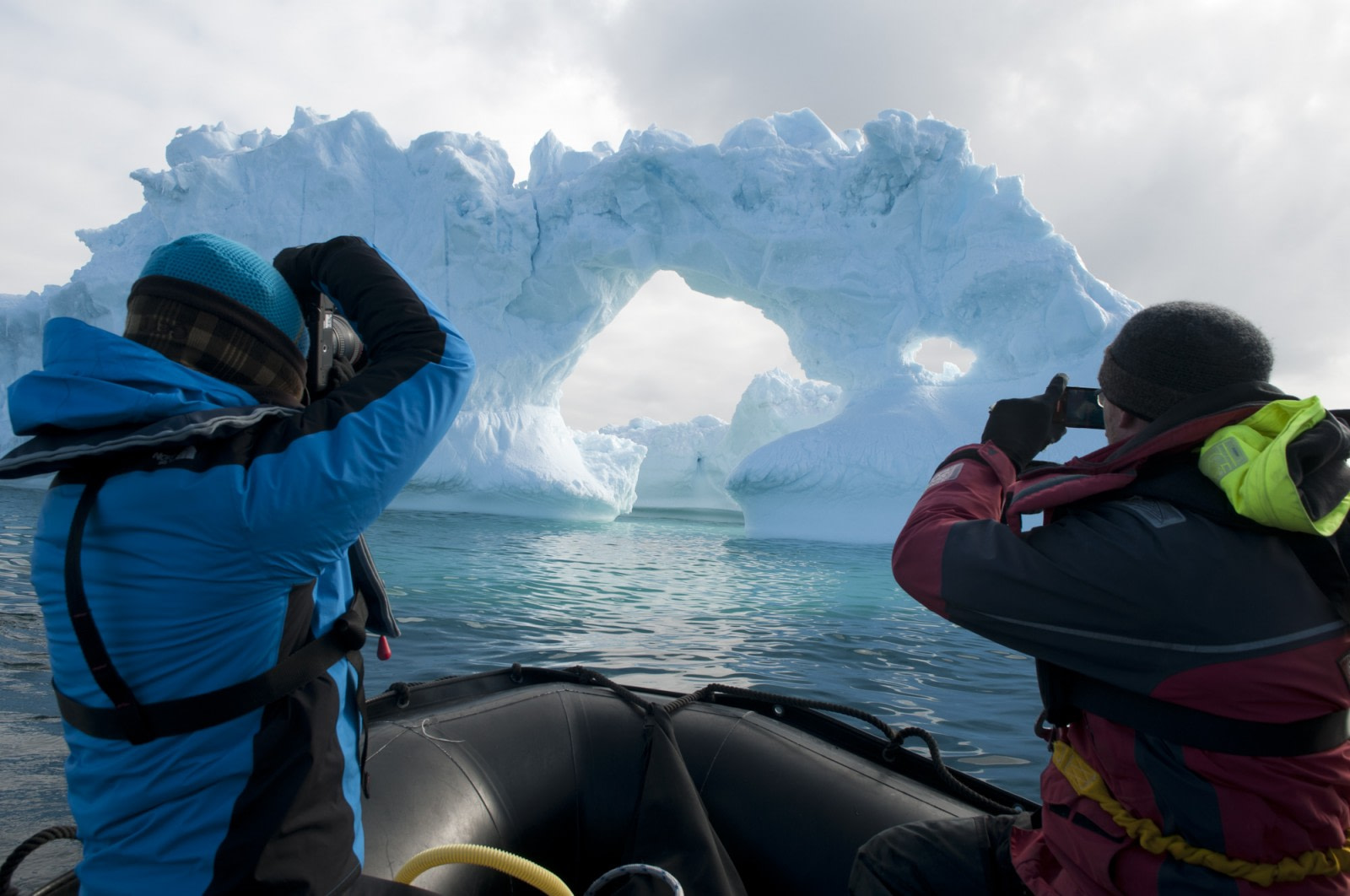
Anyone who ventures to the right part of the globe can encounter vast amounts of ice, but a Greenland cruise offers something truly unique: ice sculptures hidden beneath the northern ice sheet. Scientists once thought these sculptures were rocky hills buried in ice, similar to the Ghost Mountains in Antarctica. However, it turns out that Mother Nature has crafted one of the most exclusive art exhibits in the world. These sculptures are not visible from the surface, but some scientists have managed to get a sneak peek using radar equipment.

When were the sculptures discovered?

The first evidence of these ice sculptures, often referred to as jellyroll sculptures, was found in 2010. At that time, a piece of the Petermann Glacier, approximately the size of Manhattan, broke free and slid into the ocean. Researchers discovered at least part of one of these sculptures revealed and lying on top of one section of the glacier after that incident. Interestingly, the portion of the glacier in question was moving at a pace that doubled other nearby sheets of ice. The prevailing theory is that the exposed ice sculpture began melting once it was exposed to sunlight, and the mixture of melting and refreezing sped up the glacier.

In 2014, ice-penetrating radar equipment had advanced enough to enable a team of researchers to get their first virtual look at these hidden sculptures. Although it is now believed that the unusual ice observed in 2010 was part of a sculpture, scientists at that time still thought there were hills under the ice instead of oddly shaped formations.

How big are the sculptures?

One of the most fascinating aspects of the ice sculptures hidden in Greenland is their size—they are as tall as Manhattan’s skyscrapers. Some researchers believe they are even bigger than the two tallest buildings in Manhattan combined. These massive ice formations are most likely 3,280 feet tall, painting a fascinating picture of the space that exists in Greenland between the ground and the top of the ocean.

What do the sculptures look like?

Radar imaging shows that the ice is not formed in even layers. Instead, it has the appearance of an icy jelly roll. The ice that forms these sculptures is twisted, bent, and folded, causing its location to shift. Scientists estimate that the ice is 120,000 years old, but the sculptures are much closer to the surface than typically expected. Instead of being buried 1.5 miles beneath the top ice sheet, Mother Nature’s art show is currently resting about 0.6 miles beneath the surface.

What does this teach us?

The novelty of ice formations is fascinating, but there are also some interesting insights to be gained from this discovery. For example, it is now believed that these sculptures are created due to the melting and refreezing process. This could be indicative of global warming, and it is intriguing to consider what Greenland’s glaciers might look like in the future. Scientists are also applying this new data to projections regarding glacial melting worldwide, which could provide vital warning time to areas that will eventually be affected by melting and shifting ice.

Future explorations

It is almost certain that radar methods will continue to evolve, allowing future generations of scientists to study the ice sculptures more closely. Currently, we cannot say with certainty if the ice formations are all that is down there or if they are hiding the mountains once believed to be in their place. One of the most exciting aspects of expeditions is visiting areas that still have many secrets to reveal, and Greenland is no exception. Keep this in mind the next time you embark on an arctic adventure.
Best Deals

Related Trips

Spitsbergen - Northeast Greenland, Fly & Sail - Nexta Expeditions
The Arctic
Longyearbyen

Spitsbergen - Northeast Greenland, Fly & Sail

calendar12 Aug 2026 - 31 Aug 2026
clock20 Days / 19 Nights
From $ 9.500 per person
Northeast Greenland Extreme - Nexta Expeditions
The Arctic
Akureyri

Northeast Greenland Extreme

calendar15 Aug 2026 - 28 Aug 2026
clock14 Days / 13 Nights
From $ 8.650 per person
East Greenland, Scoresby Sund, Including Long Hikes - Nexta Expeditions
The Arctic
Akureyri

East Greenland, Scoresby Sund, Including Long Hikes

calendar16 Aug 2026 - 25 Aug 2026
clock10 Days / 9 Nights
From $ 6.000 per person
Northeast Greenland Extreme - Nexta Expeditions
The Arctic
Akureyri

Northeast Greenland Extreme

calendar25 Aug 2026 - 07 Sep 2026
clock14 Days / 13 Nights
From $ 7.850 per person
East Greenland, Scoresby Sund - Aurora Borealis, Fly & Sail - Nexta Expeditions
The Arctic
Constable Pynt

East Greenland, Scoresby Sund - Aurora Borealis, Fly & Sail

calendar21 Sep 2026 - 01 Oct 2026
clock11 Days / 10 Nights
From $ 6.250 per person
East Greenland, Scoresby Sund - Iceland , Aurora Borealis, Fly & Sail - Nexta Expeditions
The Arctic
Constable Pynt

East Greenland, Scoresby Sund - Iceland , Aurora Borealis, Fly & Sail

calendar01 Oct 2026 - 12 Oct 2026
clock12 Days / 11 Nights
From $ 6.300 per person

Blog
go-leftgo-right

Why You Should Visit Greenland: 11 Things to See, Do, and Explore - Nexta Expeditions
Blog

Why You Should Visit Greenland: 11 Things to See, Do, and Explore

There's nothing quite like witnessing your first Greenland glacier, navigating into the island's largest fjord system (which also happens to be Earth's largest), or observing a humpback whale breach over the dark Greenland Sea.
Secrets of the Snowy Owl: Habitat, Adaptations, and Other Facts - Nexta Expeditions
Blog

Secrets of the Snowy Owl: Habitat, Adaptations, and Other Facts

The snowy owl (Bubo scandiacus), also known as the great white owl or Arctic owl, is one of the most distinctive bird species on the planet. While you won’t find them in all areas of the Arctic – they don’t exist in Svalbard due to the lack of lemmings – snowy owls are seen in the polar regions of Eurasia and North America and are a potential visitor during Greenland cruises. The binomial species name, “scandiacus,” is derived from Scandinavia, as this is where the bird was first discovered. The snowy owl is the official bird of Quebec, and they are a must-see for countless bird watchers and naturalists.
10 Common Misconceptions About the Arctic - Nexta Expeditions
Blog

10 Common Misconceptions About the Arctic

The Arctic is a vast region. Truly immense.
Hondius Photography and Video Workshops - Nexta Expeditions
Blog

Hondius Photography and Video Workshops

There’s no shortage of great things to say about a Hondius expedition cruise, but among the best are the free video and photography workshops offered during some of this ship’s voyages. These informative, interactive, highly useful supplements allow you to not only capture your memories in the best way possible but also make your friends back home maddeningly jealous.
Highlights from the First Arctic Voyage of Hondius - Nexta Expeditions
Blog

Highlights from the First Arctic Voyage of Hondius

Our new ship Hondius completed its first Arctic expedition cruise on June 14, 2019. This being a new ship, the maiden voyage was not without its hiccups. But despite these, passenger response to the expedition was overwhelmingly positive.
Circumnavigating Spitsbergen - Nexta Expeditions
Blog

Circumnavigating Spitsbergen

Many of our expedition cruises focus on specific areas of the Arctic or Antarctica, delving deep into local wildlife and other natural highlights. However, some programs aim to provide a broader survey, visiting a variety of sites to offer guests a wider perspective.
The South Georgia Seven: Hikes, Fjords, Whales, & Penguins - Nexta Expeditions
Blog

The South Georgia Seven: Hikes, Fjords, Whales, & Penguins

Few places encapsulate such a staggeringly rich assortment of sub-Antarctic scenery, wildlife, and outing opportunities as South Georgia.
Path of Polar Heroes: Hiking Shackleton’s Historic Route - Nexta Expeditions
Blog

Path of Polar Heroes: Hiking Shackleton’s Historic Route

“We had seen God in his splendors, heard the text that Nature renders.” ~Ernest Shackleton
Shackleton’s Push to the South Pole - Nexta Expeditions
Blog

Shackleton’s Push to the South Pole

On the evening of February 11, 1907, Irish-born polar explorer Ernest Shackleton, already among the more famous polar explorers in the world, announced his intention to embark on a momentous Antarctic expedition.
Arctic Seals - Nexta Expeditions
Blog

Arctic Seals

Owing to the large landmasses that populate the Northern Hemisphere, the Arctic boasts the most diverse wildlife among the planet’s polar regions. Some of the most captivating Arctic animals are the marine mammals found just offshore.
Harp seals harping on in Greenland - Nexta Expeditions
Blog

Harp seals harping on in Greenland

Harp seals are a moderately sized species, typically reaching about 1.6 meters in length and weighing around 130 kilograms. Both males and females are similar in size and weight, with males being only slightly larger. They possess a thick, robust body, a small broad and flat head, short narrow flippers, and a narrow muzzle.
The Return to Franz Josef Land - Nexta Expeditions
Blog

The Return to Franz Josef Land

As the possibility of international travel slowly returns, we are eagerly awaiting all the great locations, activities, and wildlife we might experience in the coming season. One of the things we’re most excited about is the return of our Franz Josef Land voyages.
South Georgia Whaling Stations - Nexta Expeditions
Blog

South Georgia Whaling Stations

South Georgia is a paradise for animal enthusiasts. It stands out as one of the most wildlife-abundant destinations in our polar expeditions, whether in the Northern or Southern Hemisphere.
The Plants of Antarctica - Nexta Expeditions
Blog

The Plants of Antarctica

Surviving in Antarctica is a monumental challenge for any plant. The extreme cold, limited sunlight, scarce moisture, poor soil, and short growing season make it nearly impossible for most flora to thrive. Yet, some plants have adapted to these harsh conditions and have managed to flourish where others cannot.
Five Reasons You Should Cruise the Ross Sea Immediately - Nexta Expeditions
Blog

Five Reasons You Should Cruise the Ross Sea Immediately

In our search for lesser-known holiday spots that still offer fully developed amenities like spas and gift shops, we often miss out on some of the planet's truly underrated treasures.
Northeast Greenland National Park - Nexta Expeditions
Blog

Northeast Greenland National Park

Northeast Greenland National Park is the world’s largest national park and the ninth largest protected area on Earth. It should come as little surprise, then, that it’s also bigger than most countries, covering an impressive 972,000 square km (375,300 square miles).
Orcas (aka Killer Whales) of Antarctica and the sub-Antarctic - Nexta Expeditions
Blog

Orcas (aka Killer Whales) of Antarctica and the sub-Antarctic

Orcas are highly social and intelligent members of the dolphin family Delphinidae. They are sometimes referred to as killer whales, though this name has somewhat fallen out of fashion due to inaccurately characterizing orcas as ferocious predators.
The Emperor Penguin of the Drake Passage - Nexta Expeditions
Blog

The Emperor Penguin of the Drake Passage

There are certain moments in life when a series of events combine to create an experience that is both unexpected and unforgettable. These are the times when you are reminded how fortunate you are to be a part of something that few people will ever have the opportunity to experience. This trip to Antarctica was full of these moments for me.
Birding Opportunities Abound in Spitsbergen - Nexta Expeditions
Blog

Birding Opportunities Abound in Spitsbergen

Seabirds are the most prevalent type of bird in Spitsbergen. Experts have estimated that there are 164 bird species that have been found throughout Spitsbergen at various points during recent history, but only 30 of them are known to turn to the Svalbard Islands as their primary breeding spot.
Around Spitsbergen vs. North Spitsbergen - Nexta Expeditions
Blog

Around Spitsbergen vs. North Spitsbergen

Svalbard, particularly Spitsbergen, was the first polar expedition cruise destination. It's no surprise that there are numerous trip programs available in this region. Among the most unique are the Around Spitsbergen and North Spitsbergen cruises.