

If your thirst for adventure leads you to Antarctica, you may be lucky enough to cross paths with a leopard seal while you’re there. These amazing animals are wonderful to observe both in and out of the water, and they are a coveted part of the polar wildlife experience.
But while leopard seals play a unique role in the Antarctic ecosystem, they are still largely misunderstood and mysterious as a species. As we will demonstrate with these 10 leopard seal facts, however, this amazing Antarctic animal is well worth a closer look.

1. Leopard seals are the third largest seal in the world
Female leopard seals, the larger of the two sexes, can grow up to 590 kg (1,300 pounds) and 3.8 meters (10 feet) long. Their bodies are long and slender, and their heads appear to be almost too large for their serpent-like bodies. This streamline shape, combined with their unusually large fore flippers, can help propel leopard seals through the water at speeds of up to 40 kph (25 mph). In terms of polar marine life, only elephant seals and walruses are larger than leopard seals.

2. They are exceptionally solitary animals
Leopard seals do not play well with others! Generally, they hunt alone and are never seen with more than one or two other seals. Exceptions to this include the annual breeding period, which takes place shortly after the pupping season, when multiple leopard seals aggregate.
Due to their solitary and elusive demeanor, little is known about the leopard seal reproductive cycle. Scientists are still trying to figure out how leopard seals choose mates and establish territories. As with many marine mammals, these activities are likely linked to acoustics, which we will discuss below.

3. Sometimes leopard seals smile
The ends of a leopard seal’s mouth are permanently curled upward, creating the illusion of a smile or menacing grin. But however happy leopard seals may be to see you, they are potentially aggressive animals always looking for the next meal. On the rare occasion they haul out on land, leopard seals will first issue a warning growl before defending their space more violently.

4. Leopard seals sing underwater
During the breeding season, both sexes of leopard seal become extremely vocal. Their vocalizations consist of “local calls” and long-distance “broadcast calls.” Since leopard seal population densities are low due to their solitary lifestyles, finding a mate can be difficult. But because leopard seals breed in water, scientists have hypothesized that their acoustic communications play an important role in locating and selecting a mate.
In order to study leopard seals’ underwater bio-acoustics, underwater microphones (hydrophones) are placed around the pack ice where leopard seals spend most of their time in the summer. Even so, it can be difficult for scientists to determine what exactly the seals are doing when they produce these vocalizations.

5. Gestation for leopard seals lasts 11 months
Female leopard seals are the first to reach sexual maturity, and they do so between the ages of three and seven. Male leopard seals take a little longer, typically reaching maturity between ages six and seven. After breeding takes place, the implantation of the fertilized egg can be delayed by up to three months, ensuring the pup will be born in the spring or early summer when it is more likely to survive.
This process is known as delayed implantation or embryonic diapause, and it is common in seal species. The actual pregnancy period is around 240 days. Females usually have only one pup per year. Pups are born on ice floes and kept in small snow holes that the female leopard seals dig out during their pregnancy. Here the mother nurses the pup and eventually teaches it how to hunt in the water.

6. Leopard seals have few natural predators
It is not easy maintaining a long and healthy lifestyle in the wilds of Antarctica, and leopard seals are lucky to have not only a generalized diet but also few predators. Orcas (killer whales) are currently the only recognized predator of leopard seals. If they manage to evade the orcas, leopard seals can live up to 26 years in the wild. While they’re not the longest-living mammal in the world, leopard seals can live for an impressively long time given their dangerous and demanding environment.

7. They have been known to feed humans
National Geographic photographer Paul Nicklen dove into Antarctic waters in 2006 to catch a glimpse of leopard seals in their natural habitat. His experience, he later said, was one he will never forget. For several days, a sympathetic female leopard seal brought Nicklen penguins, both dead and injured, in order to feed him and teach him to feed himself. The story and the photos Nicklen took of the event are among the most famous in the recent history of the leopard seal species.

8. Leopard seals can also be dangerous
Sadly, there is a flip side to Nicklen’s encounter. It can be a dangerous endeavor to study leopard seals, and in one case, they have been known to kill humans. In 2003, a marine biologist working with the British Antarctic Survey drowned after being dragged nearly 60 meters (200 feet) underwater by a leopard seal. It is unclear whether the leopard seal intended to kill the biologist, but the event is a sobering reminder that these animals should be treated with utmost caution.

9. They have a highly diverse diet
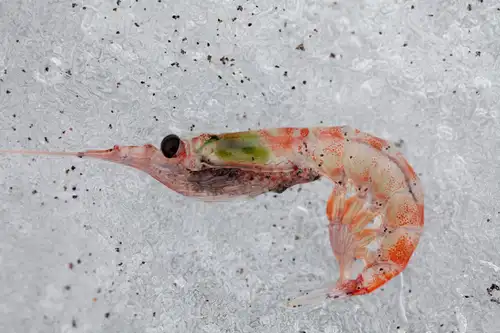
Antarctic krill comprise about 45% of the leopard seal’s diet. Leopard seal teeth are grooved in ways that allow them to filter krill out of the water. Their diets can vary, however, depending on their location and the availability of other prey. Unlike other members of the seal family, leopard seals also feed on other marine mammals. Most commonly, they may eat crabeater seals, Weddell seals, and Antarctic fur seals. Leopard seals might also hunt penguins, fish, and cephalopods.

10. Leopard seals sometimes play with their food
When a leopard seal has eaten but still wants to play, they may seek out penguins or young seals. As the penguin or seal swims to shore, the leopard seal will cut them off and chase them back into the water. They may do this over and over again until the penguin successfully makes it to shore or succumbs to exhaustion.
There doesn’t seem to be any point to this game, especially since the seals are expending great amounts of energy and may not even eat the animal, but scientists have speculated that this is distinctly for sport or for younger seals to sharpen their hunting skills.

See the leopard seal (and Antarctica) for yourself
If you’re lucky enough to take an Antarctica cruise, make sure to keep your eyes on the ice floes. When leopard seals are not searching for food or sport, they often haul out on these ice floes to rest. Their distinctive features and unmistakable grin make them easy to identify, and they are a genuine highlight on any Antarctic adventure.
If you want to learn more about the leopard seal, we recommend watching our video with leopard seal facts.
 21 Dec - 08 Jan 2026
 28 Dec - 09 Jan 2026
 29 Dec - 10 Jan 2026
 08 Jan - 18 Jan 2026
 09 Jan - 19 Jan 2026
Related Trips
Falkland Islands - South Georgia - Antarctica
21 Dec 2025 - 08 Jan 2026  19 Days / 18 Nights
Antarctica - Basecamp - free camping, kayaking, snowshoe/hiking, mountaineering, photo workshop
28 Dec 2025 - 09 Jan 2026 13 Days / 12 Nights
Antarctica - Basecamp - free camping, kayaking, snowshoe/hiking, mountaineering, photo workshop
29 Dec 2025 - 10 Jan 2026 13 Days / 12 Nights
Antarctica - Discovery and learning voyage
08 Jan 2026 - 18 Jan 2026 11 Days / 10 Nights
Antarctica - Discovery and learning voyage
09 Jan 2026 - 19 Jan 2026 11 Days / 10 Nights
Antarctica - Discovery and learning voyage
18 Jan 2026 - 28 Jan 2026 11 Days / 10 Nights
Falkland Islands - South Georgia - Antarctica
19 Jan 2026 - 06 Feb 2026 19 Days / 18 Nights
Falkland Islands - South Georgia - Antarctica
28 Jan 2026 - 16 Feb 2026 20 Days / 19 Nights
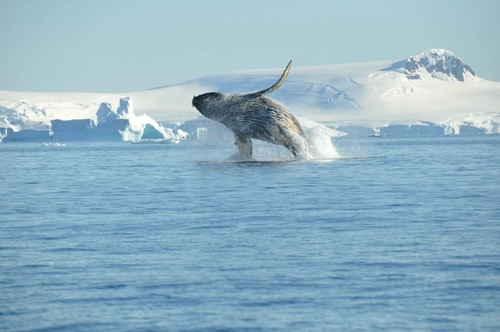
Antarctica - Discovery and learning voyage
06 Feb 2026 - 16 Feb 2026 11 Days / 10 Nights
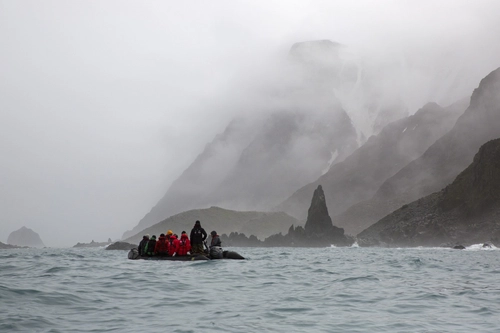
Falkland Islands - South Georgia - Elephant Island - Antarctica - Polar Circle
16 Feb 2026 - 10 Mar 2026 23 Days / 22 Nights
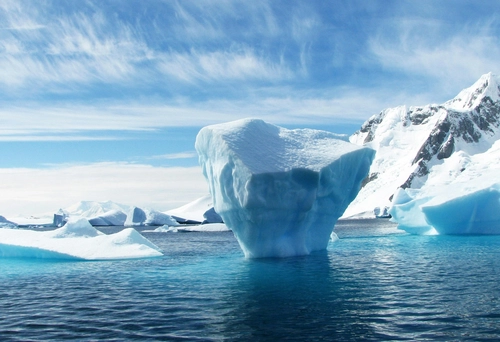
Antarctica – Uncharted islands of the Deep South
18 Feb 2026 - 04 Mar 2026 15 Days / 14 Nights
Deep South Basecamp experience
04 Mar 2026 - 17 Mar 2026 14 Days / 13 Nights

Blog


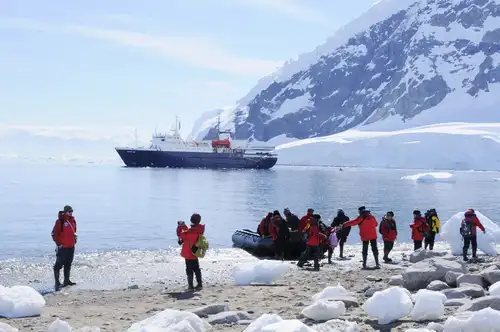
The Seven Best Things to Do in Antarctica
Visiting the Nearly Unknown: New Zealand’s Campbell Island

Visa to Argentina for Antarctic Expedition Travelers (2025 Guide)
North Norway, Northern Lights, and All the Pretty Whales
The First Buildings in Antarctica: Borchgrevink’s Historic Huts
10 Common Misconceptions About the Arctic
Polar Bears and Pack Ice: 22 Pics from North Spitsbergen
Five Reasons to Love St. Helena
Living the Antarctic Dream
Life migrating through the Polar Front
Harp seals harping on in Greenland
10 Traits of Post-Ice-Age Greenland
Polar Bear Primer: Eight Facts About the Arctic Wanderer
Svalbard’s 12 Most Iconic Animals
Polar Amore: 14 Wildlife Pics to Warm up Your Valentine’s Day

15 Fantastic Photos of Antarctica
Birding Opportunities Abound in Spitsbergen
Life in the Polar Regions

Five of History’s Greatest Polar Explorers