Birding Opportunities Abound In Spitsbergen - Nexta Expeditions
Birding Opportunities Abound in Spitsbergen

Birding Opportunities Abound in Spitsbergen

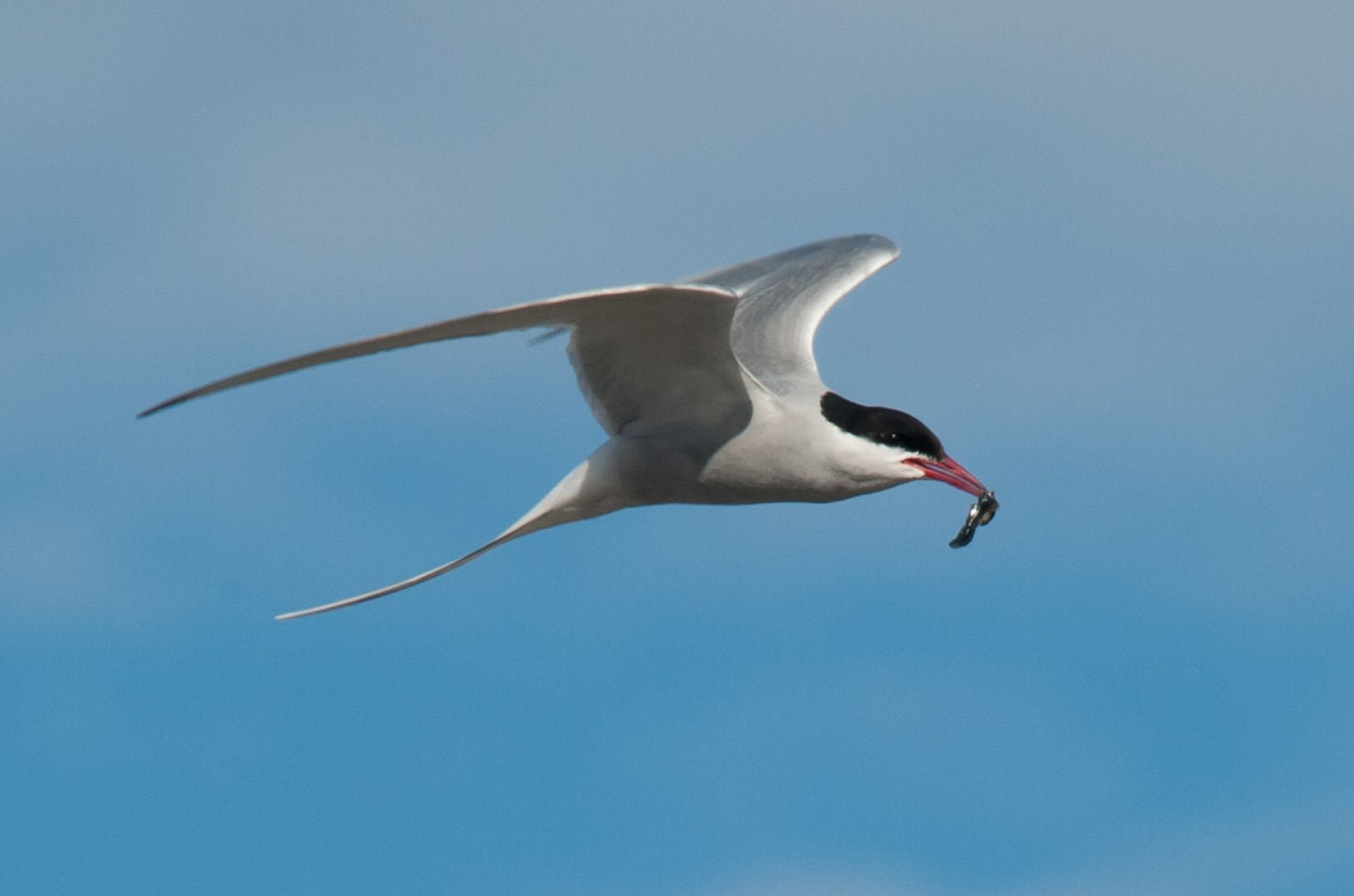
Seabirds are the most prevalent type of bird in Spitsbergen. Experts have estimated that there are 164 bird species that have been found throughout Spitsbergen at various points during recent history, but only 30 of them are known to turn to the Svalbard Islands as their primary breeding spot.

This means that you can expect to see a diverse variety of birds if you go to Spitsbergen more than once, especially if you visit during different times of the year. However, if your cruise expedition will be a once in a lifetime event, you can still observe and photograph an intriguing list of birds while in the Spitsbergen area.

You can see some of these birds in action in our birds of the Arctic video below. Though not all of the birds in this video are common around Spitsbergen or the other islands of Svalbard, most of the species featured can be spotted there.

The bird species that are spotted most frequently

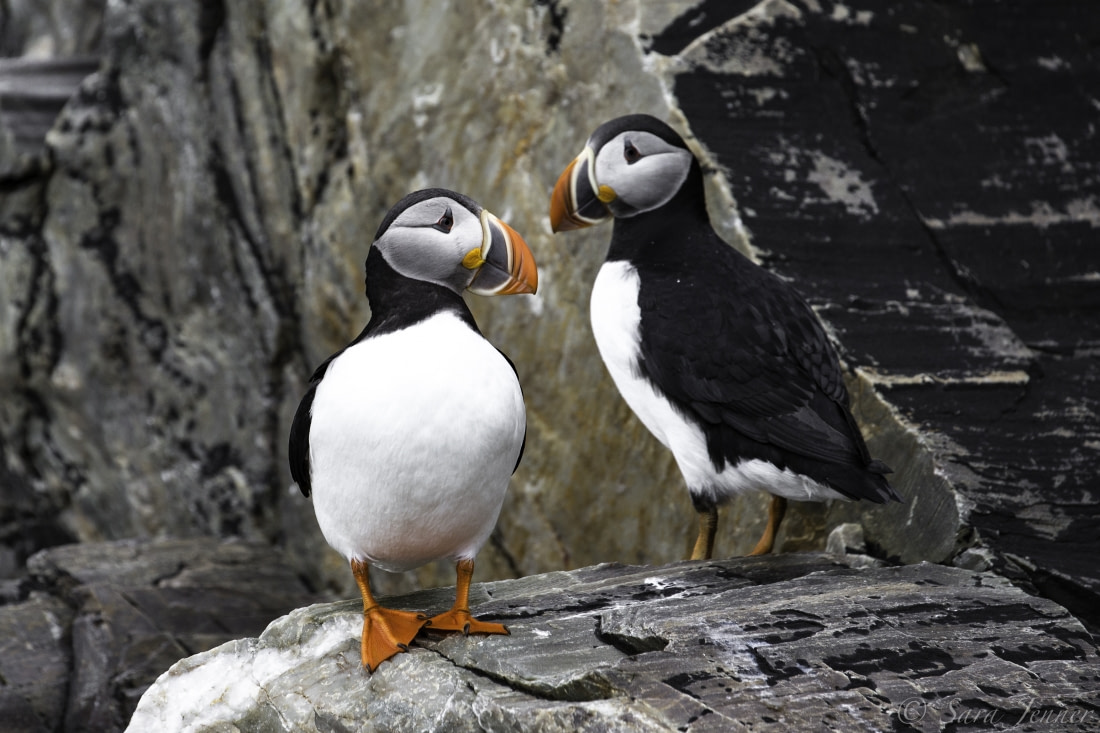
Some of the most interesting bird species that frequent Spitsbergen include the Atlantic puffin, snow bunting, pink-footed goose, purple sandpiper and ptarmigan. If you are extremely fortunate, you might also spot one of the rarer species in Spitsbergen such as the Sabine’s gull and King Eider.

In total, there are at least 23 species that are commonly spotted by birders, and most of them are not going to be found in many other areas of the world. For example, if you are visiting the Arctic from Europe or the U.S., you will be treated to an entirely different set of birds than you are used to. This makes Spitsbergen a popular destination for bird loving tourists who are adventurous enough to travel to the islands of Norway.
blog-image

The best birding spots

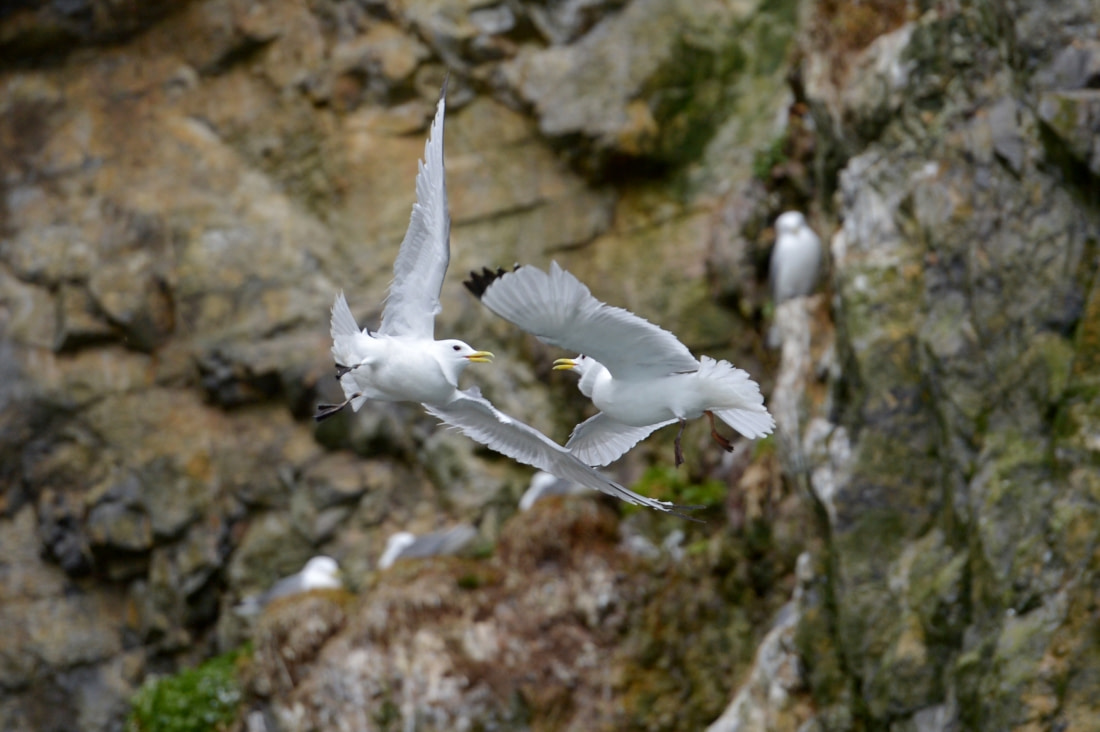
There are numerous birding opportunities throughout Spitsbergen and the rest of the Svalbard Islands, and each one will provide you with access to different bird species. Perhaps one of the most compelling spots is Diskobukta’s canyon that smells like ammonia. At this spot, you can expect to be treated to approximately 35,000 breeding pairs of kittiwakes. Such a large grouping makes it easy to learn about this species activities, and it is also a prime spot for photographs.

Alkefjellet is home to Brünnich's guillemots and glaucous gulls. Both of these species spend most of their time in or near the areas that are referred to as bird cliffs. A colony of birds named little auks can be found in Hornsund, and they present a brilliant sight as thousands of them take to the air on a regular basis. These birds are similar in size to Starlings, and they are known to be eye-catching and friendly. Some of the best other spots in this region where you can expect to see birds include pack ice, Kongsfjorden and Woodfjorden.
blog-image

Combining Bird Watching with Other Wildlife Interests

If you are an avid birder, the odds are high that you are also interested in other types of wildlife. Fortunately, Spitsbergen offers a lot of additional wildlife viewing opportunities. As an added bonus, this can often be combined with your interest in bird watching.

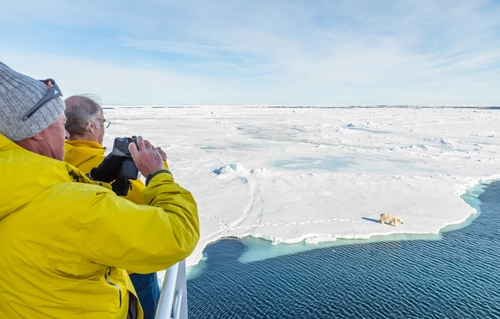
In the previously mentioned Woodfjorden, you can expect to see grey phalaropes and polar bears in the same general areas. If you prefer to see walruses, you will probably want to head to Seven Islands or Moffen Island. One of the nice things about combining a zodiac cruise to Moffen Island (we cannot actually land on Moffen as it is protected by a zone of min 300 meters) is that this will also give you the possibility of encountering the Sabine’s gull.

Midnight sun and its impact on birding

One of the most fascinating things about birding in or near Spitsbergen is the fact that the breeding season is very short yet filled with plentiful viewing options. This is due to the summer period during which the sun remains shining at all times. For a stunning 76 days between May and July, birds are given the ability to easily hunt for food 24 hours a day. This also provides tourists with the unique option to participate in their favorite activities at hours that would normally be too dark to be productive.

An Arctic cruise expedition is the perfect way to see a visually stunning mixture of birds and other types of wildlife around Norway and many other areas, including Greenland. Each trip focuses on different areas to offer a variety of prime options.
Best Deals

Related Trips

Alpine Peaks of Spitsbergen, Ski & Sail - Nexta Expeditions
The Arctic
Longyearbyen

Alpine Peaks of Spitsbergen, Ski & Sail

calendar24 Apr 2026 - 01 May 2026
clock8 Days / 7 Nights
From $ 3.950 per person
Alpine Peaks of Spitsbergen, Ski & Sail - Nexta Expeditions
The Arctic
Longyearbyen

Alpine Peaks of Spitsbergen, Ski & Sail

calendar01 May 2026 - 08 May 2026
clock8 Days / 7 Nights
From $ 3.950 per person
Arctic Ocean - Fair Isle, Jan Mayen, Ice Edge, Spitsbergen, Birding - Nexta Expeditions
The Arctic
Aberdeen

Arctic Ocean - Fair Isle, Jan Mayen, Ice Edge, Spitsbergen, Birding

calendar27 May 2026 - 05 Jun 2026
clock10 Days / 9 Nights
From $ 3.100 per person
North Spitsbergen - Arctic Spring ,  Hike & Sail - Nexta Expeditions
The Arctic
Longyearbyen

North Spitsbergen - Arctic Spring , Hike & Sail

calendar29 May 2026 - 05 Jun 2026
clock8 Days / 7 Nights
From $ 4.000 per person
North Spitsbergen Explorer - Into the pack ice - Polar Bear Special - Nexta Expeditions
The Arctic
Longyearbyen

North Spitsbergen Explorer - Into the pack ice - Polar Bear Special

calendar05 Jun 2026 - 12 Jun 2026
clock8 Days / 7 Nights
From $ 4.500 per person
Arctic Ocean - Jan Mayen, Ice edge, Spitsbergen, Birding - Nexta Expeditions
The Arctic
Akureyri

Arctic Ocean - Jan Mayen, Ice edge, Spitsbergen, Birding

calendar05 Jun 2026 - 13 Jun 2026
clock9 Days / 8 Nights
From $ 2.800 per person
Arctic Ocean - Fair Isle, Jan Mayen, Ice edge, Spitsbergen, Birding - Summer Solstice - Nexta Expeditions
The Arctic
Aberdeen

Arctic Ocean - Fair Isle, Jan Mayen, Ice edge, Spitsbergen, Birding - Summer Solstice

calendar12 Jun 2026 - 21 Jun 2026
clock10 Days / 9 Nights
From $ 3.100 per person
North Spitsbergen Explorer - Into the pack ice - Polar Bear Special - Nexta Expeditions
The Arctic
Longyearbyen

North Spitsbergen Explorer - Into the pack ice - Polar Bear Special

calendar12 Jun 2026 - 19 Jun 2026
clock8 Days / 7 Nights
From $ 4.500 per person
North Spitsbergen Explorer - Versatile landscapes, sea ice & wildlife - Nexta Expeditions
The Arctic
Longyearbyen

North Spitsbergen Explorer - Versatile landscapes, sea ice & wildlife

calendar13 Jun 2026 - 20 Jun 2026
clock8 Days / 7 Nights
From $ 4.500 per person
North Spitsbergen Basecamp – Summer Solstice - Free Kayaking, Hiking, Photo Workshop, Diving (supplemented) - Nexta Expeditions
The Arctic
Longyearbyen

North Spitsbergen Basecamp – Summer Solstice - Free Kayaking, Hiking, Photo Workshop, Diving (supplemented)

calendar19 Jun 2026 - 26 Jun 2026
clock8 Days / 7 Nights
From $ 4.500 per person
North Spitsbergen Explorer - Versatile landscapes, sea ice & wildlife - Summer Solstice - Nexta Expeditions
The Arctic
Longyearbyen

North Spitsbergen Explorer - Versatile landscapes, sea ice & wildlife - Summer Solstice

calendar20 Jun 2026 - 27 Jun 2026
clock8 Days / 7 Nights
From $ 4.500 per person
North Spitsbergen Explorer - Versatile landscapes, sea ice & wildlife - Summer Solstice - Nexta Expeditions
The Arctic
Longyearbyen

North Spitsbergen Explorer - Versatile landscapes, sea ice & wildlife - Summer Solstice

calendar21 Jun 2026 - 28 Jun 2026
clock8 Days / 7 Nights
From $ 4.500 per person

Blog
go-leftgo-right

The First Overwintering Hut in Antarctica - Nexta Expeditions

Blog

The First Overwintering Hut in Antarctica

In 1899, Carsten Borchgrevink and his nine crewmen became the first to spend the winter in a hut in Antarctica. (Technically, the Belgian Antarctic Expedition of 1897-1899 was the first to overwinter there, though this was done on their vessel after it was caught in ice.) Borchgrevink and his men spent the dark winter months isolated in a dirty hut, surrounded by equipment and sled dogs fighting each other outside.
The ozone layer in Antarctica - Nexta Expeditions
Blog

The ozone layer in Antarctica

An ozone molecule is composed of three oxygen atoms rather than the usual two. It exists in the atmosphere in trace amounts. Ozone molecules are created through the interaction of ultraviolet (UV) radiation from the sun with oxygen molecules: When an O2 molecule is split, the two free oxygen atoms bond with other O2 molecules to form O3 molecules.
What to Pack for Your Expedition Cruise to the Arctic or Antarctica - Nexta Expeditions
Blog

What to Pack for Your Expedition Cruise to the Arctic or Antarctica

It’s easy to get confused about what to pack for a polar cruise. Some items are provided and some are not, and it’s not always clear which is which. This article will make your polar pack list painstakingly clear. Promise.
The Seven Best Things to Do in Antarctica - Nexta Expeditions
Blog

The Seven Best Things to Do in Antarctica

Unless you’re a scientist, there’s no such thing as a means-to-an-end trip to Antarctica.
What’s so Special about East Spitsbergen? - Nexta Expeditions
Blog

What’s so Special about East Spitsbergen?

We’ve previously discussed our north Spitsbergen journeys and Spitsbergen circumnavigations, but the eastern parts of this incredible island have not received the attention they deserve. Despite the name, our east Spitsbergen voyages explore much more than just the eastern side of Spitsbergen.
The Eight Albatrosses of Antarctica and the Sub-Antarctic - Nexta Expeditions
Blog

The Eight Albatrosses of Antarctica and the Sub-Antarctic

Our guests are typically wildlife enthusiasts, with a particular interest in bird life. While many bird lovers focus on the penguins we encounter, there's a smaller yet equally passionate group that favors the more airborne seabirds. Among this birdwatching subset, the albatross is a species that garners (and deserves) significant attention.
10 Popular Bird Watching Binoculars - Nexta Expeditions
Blog

10 Popular Bird Watching Binoculars

Binoculars are a staple for outdoor enthusiasts, often packed with minimal thought alongside essentials like bug spray, sunblock, and waterproof matches. However, for certain groups, binoculars are indispensable, particularly for bird watchers. If you're part of this technical hobbyist community, here are 10 birding binoculars you should know about.
5 Life Lessons You'll Learn in Antarctica - Nexta Expeditions
Blog

5 Life Lessons You'll Learn in Antarctica

Embarking on a journey to the Antarctic might seem daunting. However, cruise lines strive to simplify the process as much as possible. They typically assist with travel insurance, guide you to the embarkation point, and advise on the appropriate clothing to bring.
Arctic Seals - Nexta Expeditions
Blog

Arctic Seals

Owing to the large landmasses that populate the Northern Hemisphere, the Arctic boasts the most diverse wildlife among the planet’s polar regions. Some of the most captivating Arctic animals are the marine mammals found just offshore.
12 Tips to Help Keep Birds Safe During an Antarctic Cruise - Nexta Expeditions
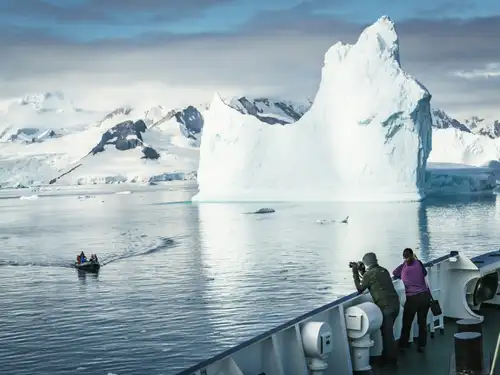
Blog

12 Tips to Help Keep Birds Safe During an Antarctic Cruise

One of the most incredible experiences on an Antarctic cruise is observing the numerous penguins in their natural environment. Naturally, passengers often worry about the potential of disturbing the penguins and other Antarctic birds, which could disrupt their breeding and nesting patterns.
The Classic Polar Cruise: Antarctic Peninsula Facts, Pics, and More - Nexta Expeditions
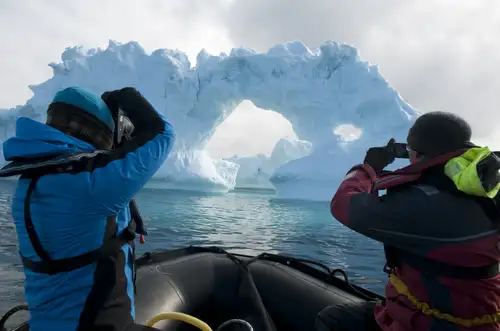
Blog

The Classic Polar Cruise: Antarctic Peninsula Facts, Pics, and More

When it comes to experiencing the vast wonders of Antarctica, the Antarctic Peninsula stands out as an unparalleled destination.
Under the Greenland Ice Sheet - Nexta Expeditions
Blog

Under the Greenland Ice Sheet

Anyone who ventures to the right part of the globe can encounter vast amounts of ice, but a Greenland cruise offers something truly unique: ice sculptures hidden beneath the northern ice sheet. Scientists once thought these sculptures were rocky hills buried in ice, similar to the Ghost Mountains in Antarctica. However, it turns out that Mother Nature has crafted one of the most exclusive art exhibits in the world. These sculptures are not visible from the surface, but some scientists have managed to get a sneak peek using radar equipment.
Going Green: Ascension Island Sea Turtles - Nexta Expeditions
Blog

Going Green: Ascension Island Sea Turtles

Gold beaches, green mountains - and greener turtles.
Two for the Snow: Polar Cruises for Couples - Nexta Expeditions
Blog

Two for the Snow: Polar Cruises for Couples

Do you know the old saying, “Cold hands, warm heart”? In our opinion, that bodes well for couples who visit the polar regions.
Polar bear feast - Nexta Expeditions
Blog

Polar bear feast

The polar bear was relishing his meal; the snow and his face were turning red from the blood. As we observed him eating, our own stomachs began to grumble. It was time for lunch.
Day and night in Antarctica - Nexta Expeditions
Blog

Day and night in Antarctica

At the Concordia station, a French-Italian research facility situated 3,233 meters above sea level at Dome C on the Antarctic Plateau, European Space Agency (ESA) scientists are investigating the effects of extended space missions. The station is more isolated than the International Space Station, with the nearest humans located 600 kilometers away.
Exploration of the Polar Regions - Nexta Expeditions
Blog

Exploration of the Polar Regions

From the Vikings via the first whale and seal hunters to Scott and Amundsen, from the maritime explorers Franklin and Nordenskiöld to present-day polar tourism, a quick tour through history reveals some of the aspects which motivated people to extend their horizons. Existential need, sheer curiosity, imperial greed, polar science, and a taste for adventure all converged in regions which pardon no mistakes.
Greenland: East vs. West - Nexta Expeditions
Blog

Greenland: East vs. West

East and West Greenland offer vastly different experiences due to their unique climates, wildlife, habitation, and geology.
The Small Mammals of the Arctic and Antarctica - Nexta Expeditions
Blog

The Small Mammals of the Arctic and Antarctica

As Lillian Gish says in Night of the Hunter, “It’s a hard world for little things.”
8 Whales You Might See During Your Antarctica Cruise - Nexta Expeditions
Blog

8 Whales You Might See During Your Antarctica Cruise

They're powerful, beautiful, and really, really big. Whales are a wonder of the natural world, and one of the best places to see them is Antarctica. In fact, whale watching is one of the most popular and rewarding activities you can enjoy on an Antarctic trip.