Five Reasons To Love St Helena - Nexta Expeditions
Five Reasons to Love St. Helena

Five Reasons to Love St. Helena

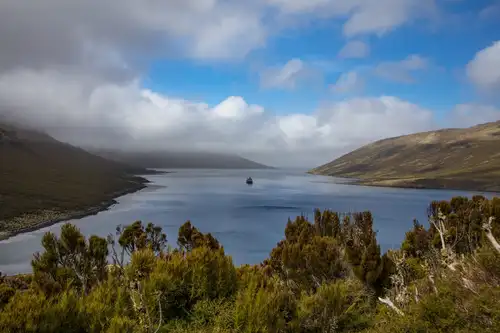
Being one of the most remote islands on Earth gives St. Helena a unique allure. Named after a Roman empress and the mother of Constantine the Great, this island also holds the distinction of being Napoleon’s final place of exile, making it a fascinating topic of conversation.

All these attributes make St. Helena a captivating destination, perfect for a dinner party anecdote.

blog-image

But St. Helena has much more to offer. This remote island in the South Atlantic is home to a rich variety of birdlife, vibrant flora, and lush hiking trails, among other attractions.

Even though St. Helena is outside our usual polar regions, here are five things we love about this enchanting island.

1. St. Helena’s birdlife (and marine mammals)

St. Helena is a haven for bird enthusiasts, designated as an Important Bird Area by BirdLife International. The island hosts breeding populations of noddies, petrels, terns, and tropic birds, along with its only remaining endemic bird, the endangered St. Helena plover, also known as the wirebird due to its slender legs.

blog-image

Red-billed tropic birds, white terns, band-rumped storm petrels, Atlantic sooty terns, brown and black noddies, and Atlantic masked boobies are among the species that breed on the island.

blog-image

While there are no endemic land mammals, the surrounding waters are frequented by seals and whales, including sub-Antarctic fur seals, southern elephant seals, minke whales, humpback whales, and southern right whales.

2. All the vibrant flora of St. Helena

Though the introduction of goats by Portuguese explorers in 1502 significantly reduced St. Helena’s endemic flora, many original species have made a comeback over the centuries.

Among these are the St. Helena redwoods, St. Helena dwarf ebonies, and black cabbage trees. These species are most commonly found in the high tree-fern thickets of the island’s central ridge areas, which can be explored during guided hikes.

blog-image

Interestingly, the St. Helena dwarf ebony is not related to other ebony trees, and the St. Helena redwood is unrelated to the redwoods of California.

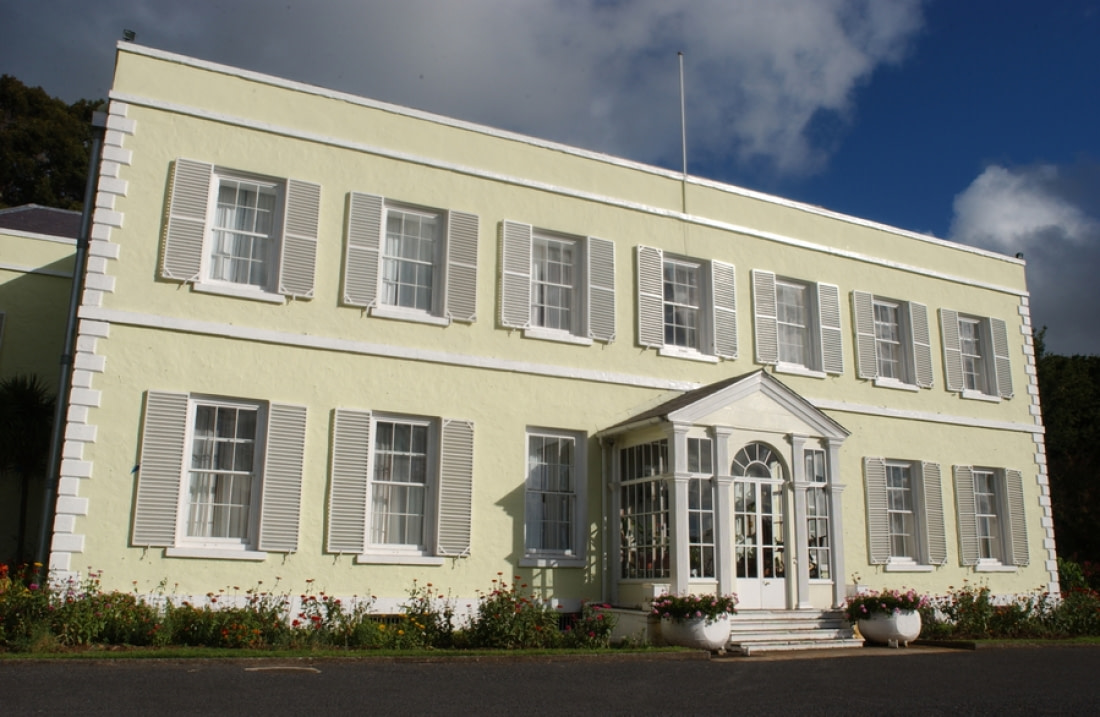
3. Jamestown and its Helena-specific charm

Jamestown, remote yet rich in history, has seen activities few places so far from mainland civilization can claim. Founded in 1659 by British East India Company colonists, the town initially served as a trade and communications outpost.

Over time, Jamestown became known for its Georgian architecture, its association with Napoleon Bonaparte, and its role as a British port crucial in rescuing slaves trafficked between Africa and the Americas.
blog-image

The town features a concentration of Georgian-style buildings, including the Southern Hemisphere’s oldest Anglican church, built in 1772,

blog-image

and a 699-step stairway known as Jacob’s Ladder, constructed in 1829.

blog-image

Jamestown also played a significant role in the British interception of slave ships, saving an estimated 25,000 African prisoners before its closure in the 1870s.

Additionally, Jamestown was the second and final place of exile for Napoleon, who resided in Longwood House from 1815 until his death in 1821.

blog-image

4. Napoleon’s St. Helena exile at Longwood House

One of history’s most ambitious military leaders, Napoleon Bonaparte, needed to be exiled twice. After escaping from his first imprisonment on the Mediterranean island of Elba, he regained control of France during the Hundred Days.

However, his power was short-lived as European allies defeated him at the Battle of Waterloo, leading to his second exile in 1815, this time to St. Helena. Napoleon lived at Longwood House until his death at the age of 51. Today, Longwood House serves as a museum.

blog-image

5. Highland-and-lowland hiking on St. Helena

Exploring one of the world’s most remote islands on foot is an unparalleled experience, especially on the lush St. Helena.

From easy backcountry strolls to more challenging treks through deep valleys, isolated bays, and scenic cliff paths, hiking on St. Helena offers a variety of experiences. Detailed descriptions of the island’s numerous hiking routes can be found in guidebooks like "Exploring St. Helena: A Walker’s Guide" by Laurence Carter and Ian Matheson.

blog-image

While not all routes from the guidebook can be covered due to the many other sites to visit, expedition guides will select the best paths available.

Whichever path you choose, you’ll be glad you explored the captivating island of St. Helena.

Blog
go-leftgo-right

Inside the Svalbard Global Seed Vault - Nexta Expeditions
Blog

Inside the Svalbard Global Seed Vault

Literature, cinema, and even video games often present us with various global disaster scenarios. These typically involve devastating wars, catastrophic natural events, or widespread pandemics that leave survivors scavenging for food and supplies amidst hordes of zombies.
A visit to the fascinating island of Jan Mayen - Nexta Expeditions
Blog

A visit to the fascinating island of Jan Mayen

After exploring the remote island of Fair Isle, our Atlantic Odyssey voyage once more turned its attentions northwards and left the outer extremities of the UK behind. Our destination was Jan Mayen, a volcanic island situated on the mid-Atlantic ridge just north of 71° (about 550 kilometers north of Iceland and 450 kilometers east of Greenland).
Antarctic Icon: 44 Facts About the Emperor Penguin - Nexta Expeditions
Blog

Antarctic Icon: 44 Facts About the Emperor Penguin

What polar bears are for the Arctic, emperor penguins are for Antarctica. These flightless aquatic birds are probably the most recognizable animals in the southern polar regions and certainly among the most popular wildlife attractions for our passengers.
Two for the Snow: Polar Cruises for Couples - Nexta Expeditions
Blog

Two for the Snow: Polar Cruises for Couples

Do you know the old saying, “Cold hands, warm heart”? In our opinion, that bodes well for couples who visit the polar regions.
Arctic Flowers, Trees, and Other Plant Life - Nexta Expeditions
Blog

Arctic Flowers, Trees, and Other Plant Life

When many people think of the Arctic, they probably imagine a stark white wasteland devoid of anything except snow, glaciers, and the occasional far-wandering polar bear.
Five Reasons to Love St. Helena - Nexta Expeditions
Blog

Five Reasons to Love St. Helena

Being one of the most remote islands on Earth gives St. Helena a unique allure. Named after a Roman empress and the mother of Constantine the Great, this island also holds the distinction of being Napoleon’s final place of exile, making it a fascinating topic of conversation.
Seizing the Season: Spitsbergen’s Late Spring, Early Summer - Nexta Expeditions
Blog

Seizing the Season: Spitsbergen’s Late Spring, Early Summer

Most Arctic expedition cruises can be categorized into two main types: those that operate during the autumn and winter, focusing on the northern lights, and those that sail during the high season (mid to late summer), concentrating on a broader range of experiences.
The Small but Social Commerson’s Dolphin - Nexta Expeditions
Blog

The Small but Social Commerson’s Dolphin

Despite being one of the lesser-known Antarctic cetaceans, Commerson's dolphins are quite social and have been given various names over the years, including Piebald dolphins, skunk dolphins, and panda dolphins. These names have been in use since their discovery in 1767 by French naturalist Philibert Commerson.
Cruising Solo: The Benefits of Single-Passenger Polar Travel - Nexta Expeditions
Blog

Cruising Solo: The Benefits of Single-Passenger Polar Travel

Traveling is often done with family, friends, or romantic partners. However, the benefits of solo travel, especially in polar regions, deserve more attention.
Not Eskimos: 10 Enlightening Facts About the Inuit - Nexta Expeditions
Blog

Not Eskimos: 10 Enlightening Facts About the Inuit

If you are planning to join an Arctic cruise, you might be intrigued by the Inuit culture. To help you gain a deeper understanding of these people, especially if you are considering a trip to Greenland, here are 10 fascinating facts about the Inuit that everyone should know.
10 Books and Films To Prepare for your Antarctica cruise - Nexta Expeditions
Blog

10 Books and Films To Prepare for your Antarctica cruise

The deep sea remains one of the most mysterious and least explored regions on our planet. With its vast, dark expanses and unique ecosystems, it continues to captivate scientists and adventurers alike.
Danger Beneath the Water: 10 Facts About Leopard Seals - Nexta Expeditions
Blog

Danger Beneath the Water: 10 Facts About Leopard Seals

If your thirst for adventure leads you to Antarctica, you may be lucky enough to cross paths with a leopard seal while you’re there. These amazing animals are wonderful to observe both in and out of the water, and they are a coveted part of the polar wildlife experience.
Exploration of the Polar Regions - Nexta Expeditions
Blog

Exploration of the Polar Regions

From the Vikings via the first whale and seal hunters to Scott and Amundsen, from the maritime explorers Franklin and Nordenskiöld to present-day polar tourism, a quick tour through history reveals some of the aspects which motivated people to extend their horizons. Existential need, sheer curiosity, imperial greed, polar science, and a taste for adventure all converged in regions which pardon no mistakes.
Seven Things to Do around Ushuaia - Nexta Expeditions
Blog

Seven Things to Do around Ushuaia

We often recommend arriving early to Ushuaia before embarking on an Antarctica cruise, and for good reason: Ushuaia, on top of being the southernmost city in the world, has in recent years developed into a decidedly charming tourist destination.
The Evolving Shipboard Eco-traveler - Nexta Expeditions
Blog

The Evolving Shipboard Eco-traveler

Feeling stuck in the monotony of everyday life? Looking for a change of scenery? Look no further! Most of us spend our lives on solid ground, despite our bodies being composed of 71.5% water. You'd think we'd have a natural inclination to be in or on the water! So why not try something different? Consider an Arctic holiday adventure on the same waters that famous explorers once navigated!
First to the North Pole: Five Failed but Brave Expeditions - Nexta Expeditions
Blog

First to the North Pole: Five Failed but Brave Expeditions

Being first to reach the North Pole was seen by several nations as economically invaluable due to the open polar sea said to encircle it, but for the explorers themselves it was also a gloriously adventurous grab for immortality.
Living the Antarctic Dream - Nexta Expeditions
Blog

Living the Antarctic Dream

From October to March, during the Austral summer, thousands of breeding gentoo, Adèlie, and chinstrap penguins flock to the Western Antarctic Peninsula to rear their chicks and feast on krill before the harsh winter arrives. Alongside the penguins, field biologists from around the world gather to study these habits for conservation research. Observing these animals is one thing, but residing in an Antarctic field station for an entire breeding season is another. One particular field camp on King George Island, managed by American scientists, has perfected this Antarctic lifestyle and has thrived for over 30 years.
The Dirty Details of Antarctica's Dry Valleys - Nexta Expeditions
Blog

The Dirty Details of Antarctica's Dry Valleys

Situated on the western coast of McMurdo Sound, the McMurdo Dry Valleys represent the largest ice-free region in Antarctica.
The Small Mammals of the Arctic and Antarctica - Nexta Expeditions
Blog

The Small Mammals of the Arctic and Antarctica

As Lillian Gish says in Night of the Hunter, “It’s a hard world for little things.”
Secrets of the Snowy Owl: Habitat, Adaptations, and Other Facts - Nexta Expeditions
Blog

Secrets of the Snowy Owl: Habitat, Adaptations, and Other Facts

The snowy owl (Bubo scandiacus), also known as the great white owl or Arctic owl, is one of the most distinctive bird species on the planet. While you won’t find them in all areas of the Arctic – they don’t exist in Svalbard due to the lack of lemmings – snowy owls are seen in the polar regions of Eurasia and North America and are a potential visitor during Greenland cruises. The binomial species name, “scandiacus,” is derived from Scandinavia, as this is where the bird was first discovered. The snowy owl is the official bird of Quebec, and they are a must-see for countless bird watchers and naturalists.