The Seven Best Things To Do In Antarctica - Nexta Expeditions
The Seven Best Things to Do in Antarctica

The Seven Best Things to Do in Antarctica

Unless you’re a scientist, there’s no such thing as a means-to-an-end trip to Antarctica.

Merely being there is reason enough to make the journey - even, we wager, for most scientists who travel to Antarctica solely for research. Still, there are numerous things you can do to maximize your Antarctic experience.

Here are seven of our time-tested selections.

blog-image

1. Cross the Antarctic gateway: the Drake Passage

Let’s start with a no-brainer.

As most Antarctica cruises require you to sail the Drake Passage (crossing from Argentina to the Antarctic Continent), this is the one part of this list that is generally unavoidable.

This is a good thing. While sailing the Drake, you’ll see a voluminous cast of seabirds not possible for those who fly to Antarctica.

You’ll also win a sense of accomplishment, having undergone the Antarctic “rite of passage.”

For those of you prone to seasickness, your Drake Passage crossing may require a few meds and an optimistic mindset. For all other, you’ll be happy to know this expansive waterway is the most traveled sea route in the history of Antarctic discovery.

So stock your pills, read your Shackleton, and do not go gentle into that blue dawn.

blog-image

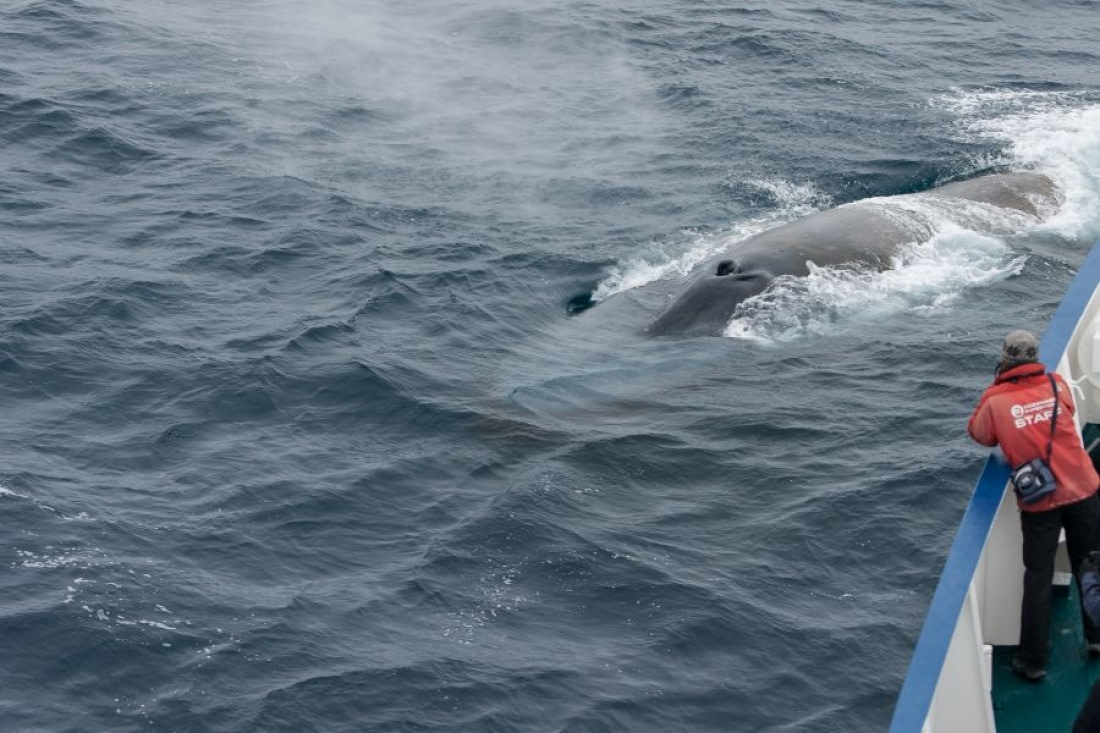
2. Watch Antarctic whales from a ship or Zodiac

Humpback, minke, blue, orca, sei, fin… The list goes on.

Boating to, from, and around Antarctica (whether in an ice-strengthened vessel or Zodiac) will give you the chance to spot several species of whale. As evidence, check out our extensive supply of whale-watching cruises.

The question now is, will you bring a decent camera and finely tuned photography skills to Antarctica to preserve the moment in pictures?

Remember, time and tide wait for no one. And neither do whales.
blog-image

3. Kayak Antarctica’s crystalline bays

If you’re craving close contact with icebergs, ice floes, and icy Antarctic seas, nothing delivers these better than kayaking – except maybe a scuba diving, but we’ll cover that later.

If you’re not quite ready for the plunge, however, try a kayak. It’s warmer.

Our veteran guides will show you around the polar seas, where you’ll get views of Antarctica only enjoyed by a few lucky travelers and the more curious marine mammals. Soak up the silence, breathe the bracing air, and glide by the power of your own arms.

4. Make pals with a few hundred penguins

More so even than whales, Antarctica is famed for its prime penguin population.

Just about everywhere you go there, penguins are usually not far away. And some places have these flightless birds in spades, supporting breeding colonies that number in the thousands.

In fact, we have Antarctica trips neatly categorized by the penguin species you’re likely to encounter: gentoos, Adélies, kings, chinstraps, you get the idea.

blog-image

5. Camp under the Southern Hemisphere stars

Remember that part about reading Shackleton? Antarctic camping lets you live like Shackleton.

Actually, Shackleton had it much worse most of the time. But hey, we’re selling expedition cruises, not torture simulations. When you camp with us, you’ll have as much comfort as a snow dugout and mummy bag can afford.

And just watch that Southern Cross twinkle in the polar sky…

blog-image

6. Soar over the Antarctic sea and snow in a helicopter

Why just walk when you can also sail, why just sail when you can also fly?

On select Antarctica voyages, such as some of our Weddell and Ross Sea cruises, you can survey the far southern icescapes from a seabird’s-eye-view.

Join one of our helicopter groups and let our pilots astound you with soaring aerial sweeps of the Antarctic wilderness. If you think it looks amazing standing along its shoreline, you won’t believe how it looks several hundred meters above it.

blog-image

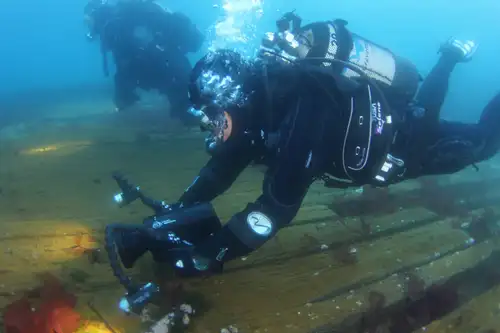
7. Take the true polar plunge: Antarctica scuba diving

Kayaking is great, camping is a blast, but there are few activities that divide the certified snow fiend from the ordinary Antarctic traveler so completely as polar scuba diving.

And not just anyone can do it, at least not without a lot of practice.

Due to their inherent difficulty, we require you to have logged at least 30 dry-suit cold-water dives before joining our dive programs. If you have this documentation, good on you! Suit up, strap in, and see a whole new world of Antarctic colors and creatures.

If not, keep diving and tell us the moment you’re ready. We have a number of thrilling Antarctica dive voyages you’ll find well worth the wait.

Our dive masters (who represent a combined 200 years of experience) will vouch.

blog-image

Blog
go-leftgo-right

Flowers in Antarctica - Nexta Expeditions
Blog

Flowers in Antarctica

The polar regions are among the most inhospitable environments for plants and animals. Life here faces numerous challenges, including low temperatures, high winds, solar radiation, and cell freezing. The Antarctic continent experiences extreme conditions, with darkness during winter and continuous light during summer. Winter temperatures can drop to -60°C or lower.
True South: A New Flag for a Global Antarctica - Nexta Expeditions
Blog

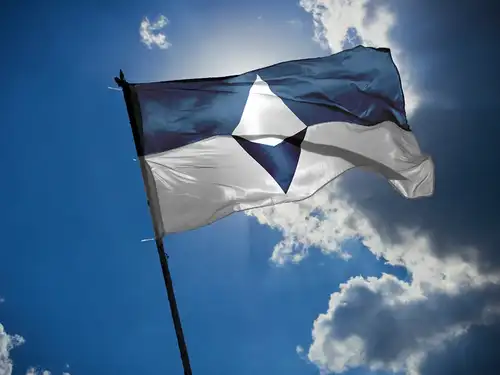
True South: A New Flag for a Global Antarctica

When Evan Townsend signed up to spend the winter of 2018 working at an Antarctic research station, he had no reason to expect he would end the season by designing a new flag for the continent. He had even less reason to expect the support it would receive.
What the ice reveals about Antarctica - Nexta Expeditions
Blog

What the ice reveals about Antarctica

The continent you'll explore during your Antarctica cruise is far more than just an ice-covered land with penguins, whales, and seals. Beneath the thick ice lie hidden freshwater lakes teeming with thousands of microbes, hinting at a diverse array of life. In 2013, a team of researchers obtained the first uncontaminated water sample ever retrieved directly from an Antarctic lake.
Birds of the South: 33 Antarctic Birds and Seabirds - Nexta Expeditions
Blog

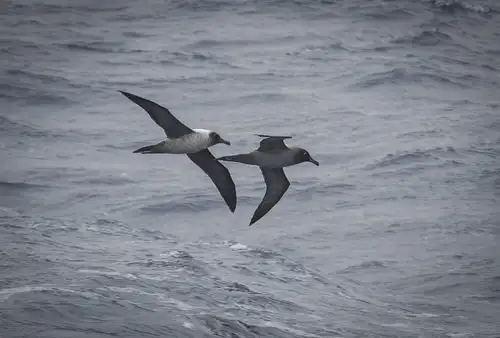
Birds of the South: 33 Antarctic Birds and Seabirds

Of the many compelling reasons people travel to Antarctica and the sub-Antarctic, bird life is among the most beloved.
The secrets of Antarctic seals revealed - Nexta Expeditions
Blog

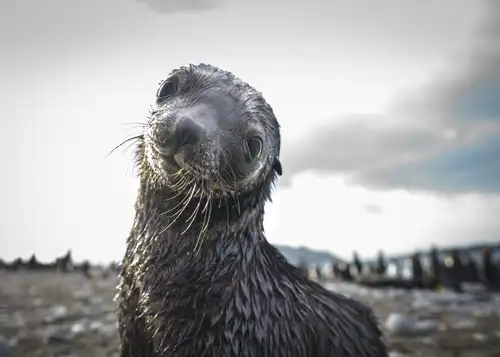
The secrets of Antarctic seals revealed

There are only six species of seals that inhabit the Antarctic: Southern elephant seals, Antarctic fur seals, crabeater seals, leopard seals, Ross seals, and Weddell seals. While we are familiar with these species, much about their lives remains a mystery.
The Wonderful Weddell Sea: Places, Pics, and Impressions - Nexta Expeditions
Blog

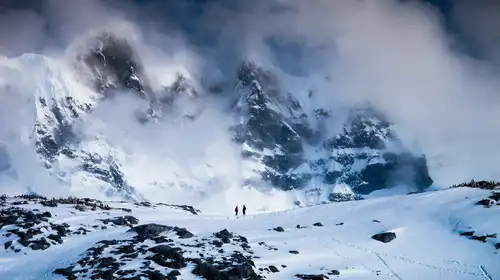
The Wonderful Weddell Sea: Places, Pics, and Impressions

When we talk about Antarctica, it’s easy to slip into familiar words: amazing, astounding, extraordinary, exceptional. And though most Antarctic locations more than deserve these descriptions, some deserve them more than others.
Eight Antarctic Misconceptions - Nexta Expeditions
Blog

Eight Antarctic Misconceptions

Antarctica has given rise to some pretty far-fetched rumors.
The Most Enchanting Antarctica Cruise Islands - Nexta Expeditions
Blog

The Most Enchanting Antarctica Cruise Islands

Whether it’s Greenland in the Arctic or Snow Hill Island in Antarctica, the bulk of our polar expeditions take place around, between, and upon islands.
Adélie penguins in the Ross Sea - Antarctica - Nexta Expeditions
Blog

Adélie penguins in the Ross Sea - Antarctica

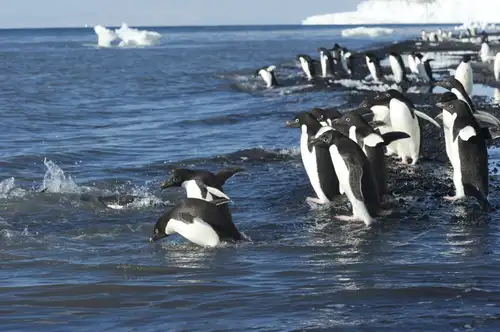
The Adélie penguin population in the Ross Sea has reached its highest numbers in 30 years, with up to a million breeding pairs during the summer. This accounts for about 38 percent of the entire Antarctic Adélie population.
Harp seals harping on in Greenland - Nexta Expeditions
Blog

Harp seals harping on in Greenland

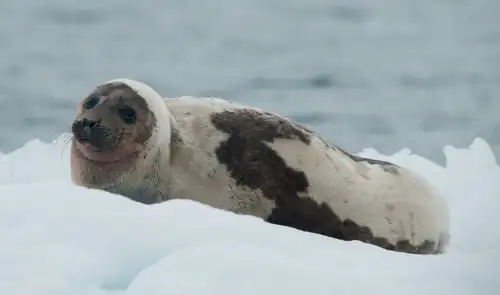
Harp seals are a moderately sized species, typically reaching about 1.6 meters in length and weighing around 130 kilograms. Both males and females are similar in size and weight, with males being only slightly larger. They possess a thick, robust body, a small broad and flat head, short narrow flippers, and a narrow muzzle.
Wreck Diving in Antarctica - Nexta Expeditions
Blog

Wreck Diving in Antarctica

Scuba diving in Antarctica is an unparalleled adventure. Few places on Earth allow you to swim beneath icebergs and potentially encounter penguins or leopard seals. But the wonders of Antarctic diving don't end there.
Arctic Mythology: Inuit, Saami, and the Ancient Greeks - Nexta Expeditions
Blog

Arctic Mythology: Inuit, Saami, and the Ancient Greeks

The Arctic locations we visit aren’t merely made up of phenomenal landscapes, exotic wildlife, and more adventure than a Hardy Boys novel.
The Small Mammals of the Arctic and Antarctica - Nexta Expeditions
Blog

The Small Mammals of the Arctic and Antarctica

As Lillian Gish says in Night of the Hunter, “It’s a hard world for little things.”
Ancient Arctic Exploration - Nexta Expeditions
Blog

Ancient Arctic Exploration

When it comes to polar exploration, the Arctic boasts a much longer history compared to Antarctica.
Exploration of the Polar Regions - Nexta Expeditions
Blog

Exploration of the Polar Regions

From the Vikings via the first whale and seal hunters to Scott and Amundsen, from the maritime explorers Franklin and Nordenskiöld to present-day polar tourism, a quick tour through history reveals some of the aspects which motivated people to extend their horizons. Existential need, sheer curiosity, imperial greed, polar science, and a taste for adventure all converged in regions which pardon no mistakes.
What to Pack for Your Expedition Cruise to the Arctic or Antarctica - Nexta Expeditions
Blog

What to Pack for Your Expedition Cruise to the Arctic or Antarctica

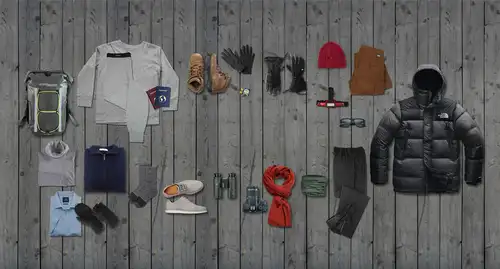
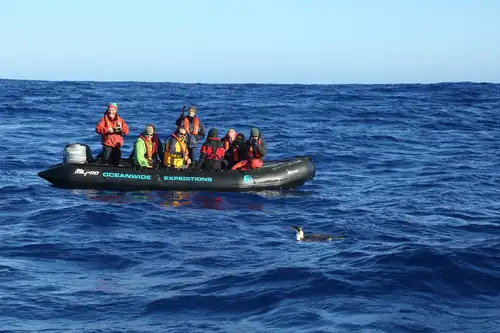
It’s easy to get confused about what to pack for a polar cruise. Some items are provided and some are not, and it’s not always clear which is which. This article will make your polar pack list painstakingly clear. Promise.
The Emperor Penguin of the Drake Passage - Nexta Expeditions
Blog

The Emperor Penguin of the Drake Passage

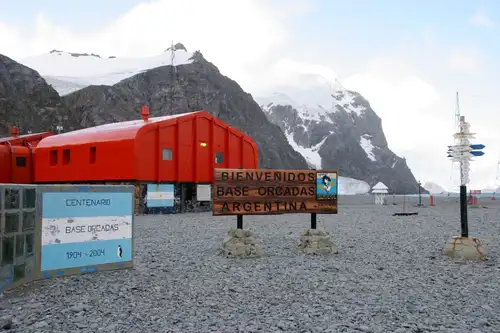
There are certain moments in life when a series of events combine to create an experience that is both unexpected and unforgettable. These are the times when you are reminded how fortunate you are to be a part of something that few people will ever have the opportunity to experience. This trip to Antarctica was full of these moments for me.
A Look Into the International Research Stations of Antarctica - Nexta Expeditions
Blog

A Look Into the International Research Stations of Antarctica

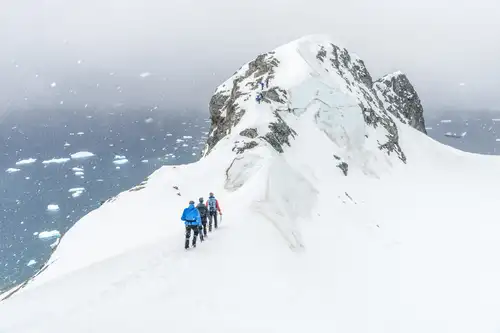
In 1902, William S. Bruce, along with a team of naturalists, explorers, and sailors, embarked on the first Scottish expedition to Antarctica’s South Pole aboard the Scotia. The Scottish National Antarctic Expedition (SNAE) aimed to establish the continent's first meteorological station and explore its largely undocumented biological, topographic, and meteorological features.
The Ins, Outs, and Ups of Polar Mountaineering & Ski Mountaineering - Nexta Expeditions
Blog

The Ins, Outs, and Ups of Polar Mountaineering & Ski Mountaineering

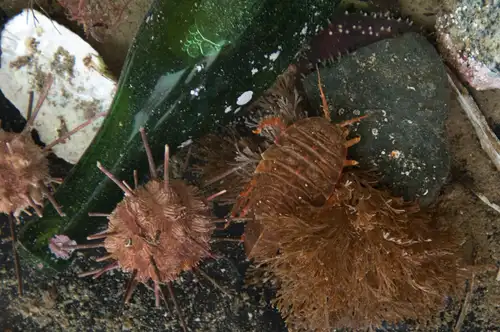
Traveling to the polar regions, whether to the Arctic or Antarctica, is an adventure almost no matter what you do.
Deep Sea Dwellers: 10 Facts about The Antarctic Giant Isopod - Nexta Expeditions
Blog

Deep Sea Dwellers: 10 Facts about The Antarctic Giant Isopod

On average, the Giant Antarctic Isopod grows to 9cm (3.5in.) in length. This may not seem very large, but factors including low light levels, freezing cold water, and a lack of oxygen prevent these isopods from growing very large. Other species of isopods, including the Giant Isopod, have been known to grow up to 40 cm (16 inches) in length!