The First Buildings In Antarctica Borchgrevinks Historic Huts - Nexta Expeditions
The First Buildings in Antarctica: Borchgrevink’s Historic Huts

The First Buildings in Antarctica: Borchgrevink’s Historic Huts

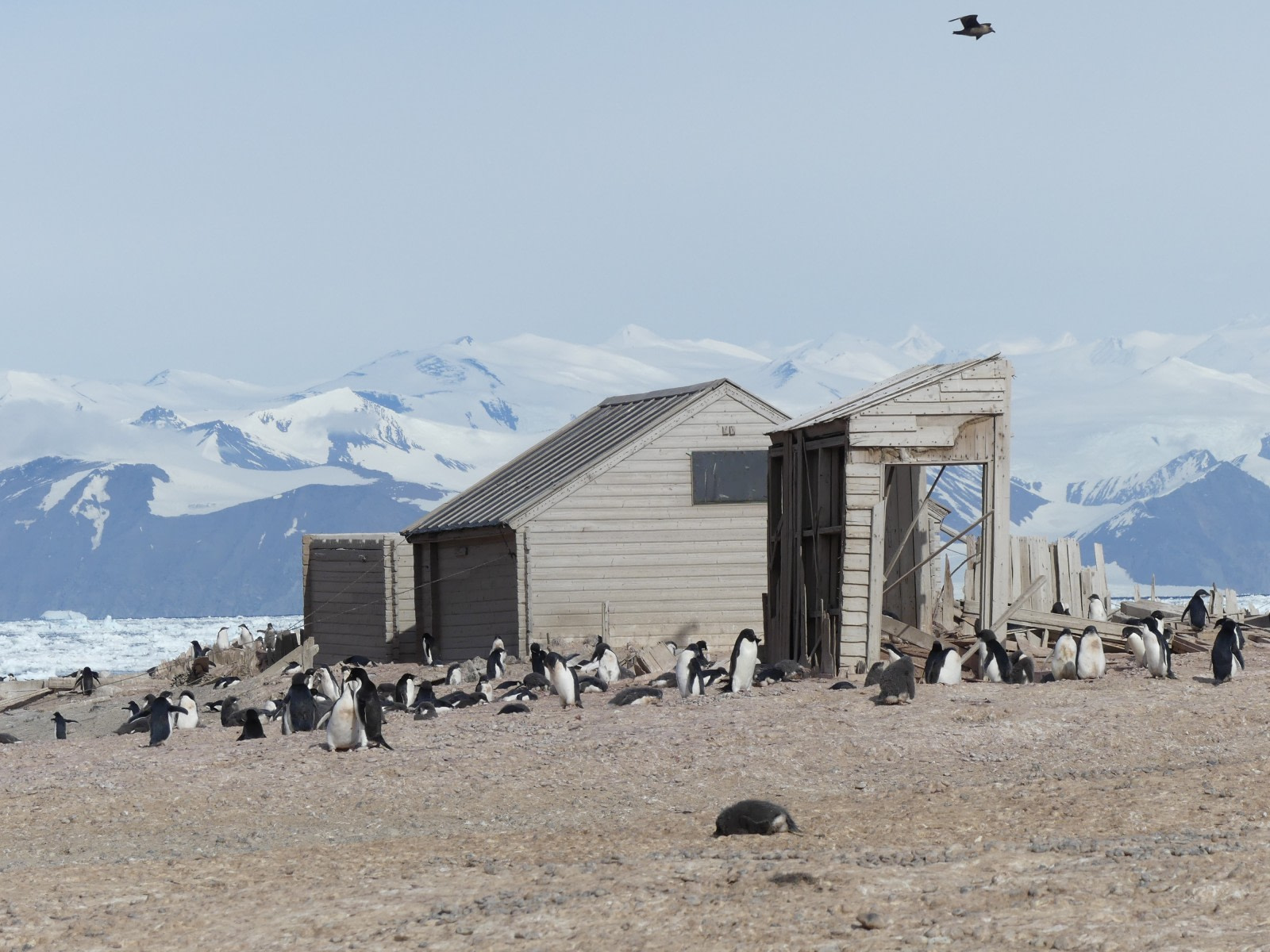
Borchgrevink’s huts at Cape Adare hold a significant place in Antarctic history, being the first structures ever built on the continent.

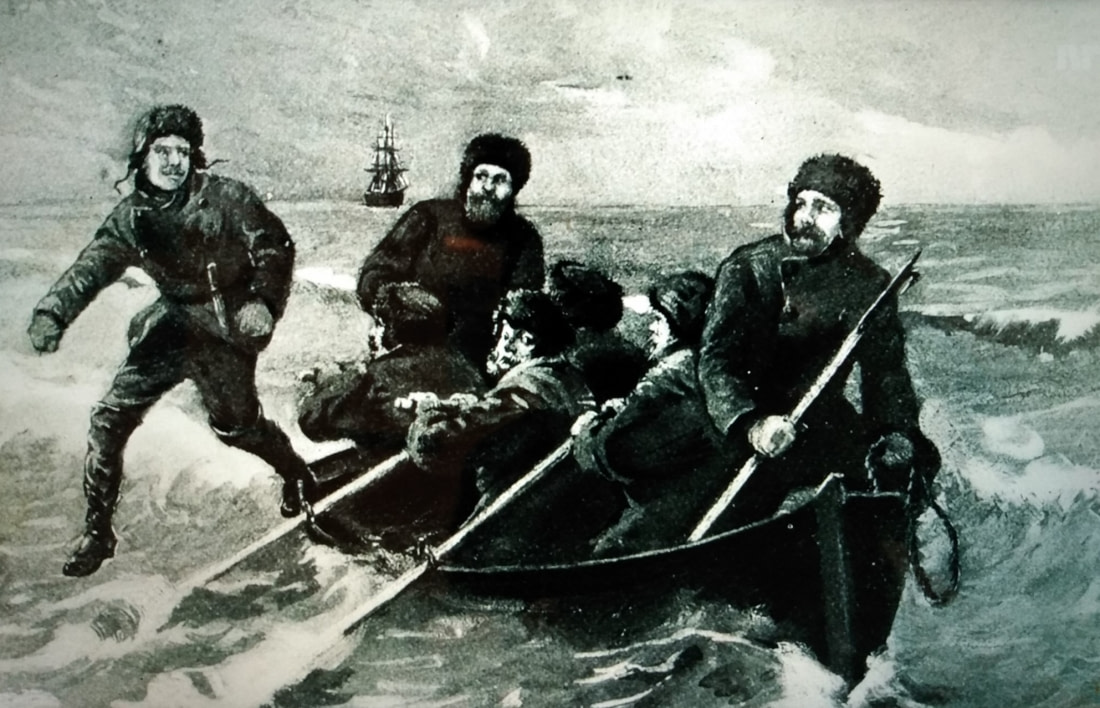
In 1899, Norwegian explorer Carsten Egeberg Borchgrevink and his team arrived at Cape Adare with the goal of becoming the first to spend a winter in Antarctica. The success of this Southern Cross Expedition, officially known as the British Antarctic Expedition of 1898-1900, served as an inspiration for renowned explorers like Shackleton, Amundson, and Scott during the Heroic Age of Antarctic Exploration.

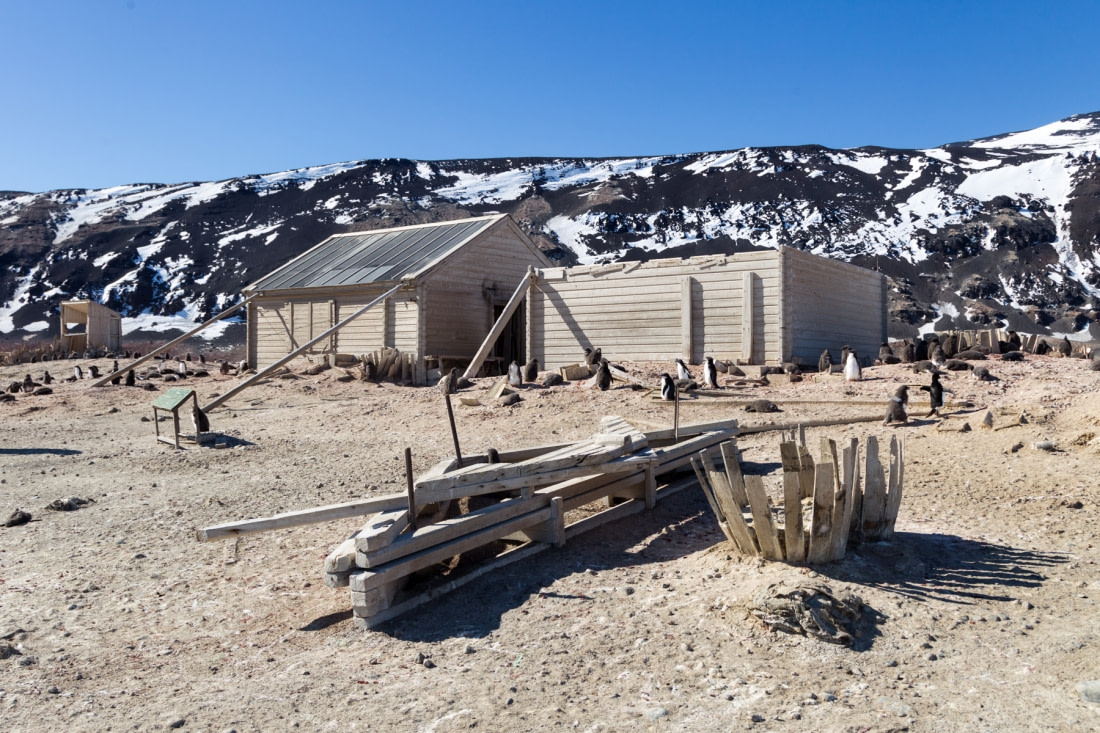
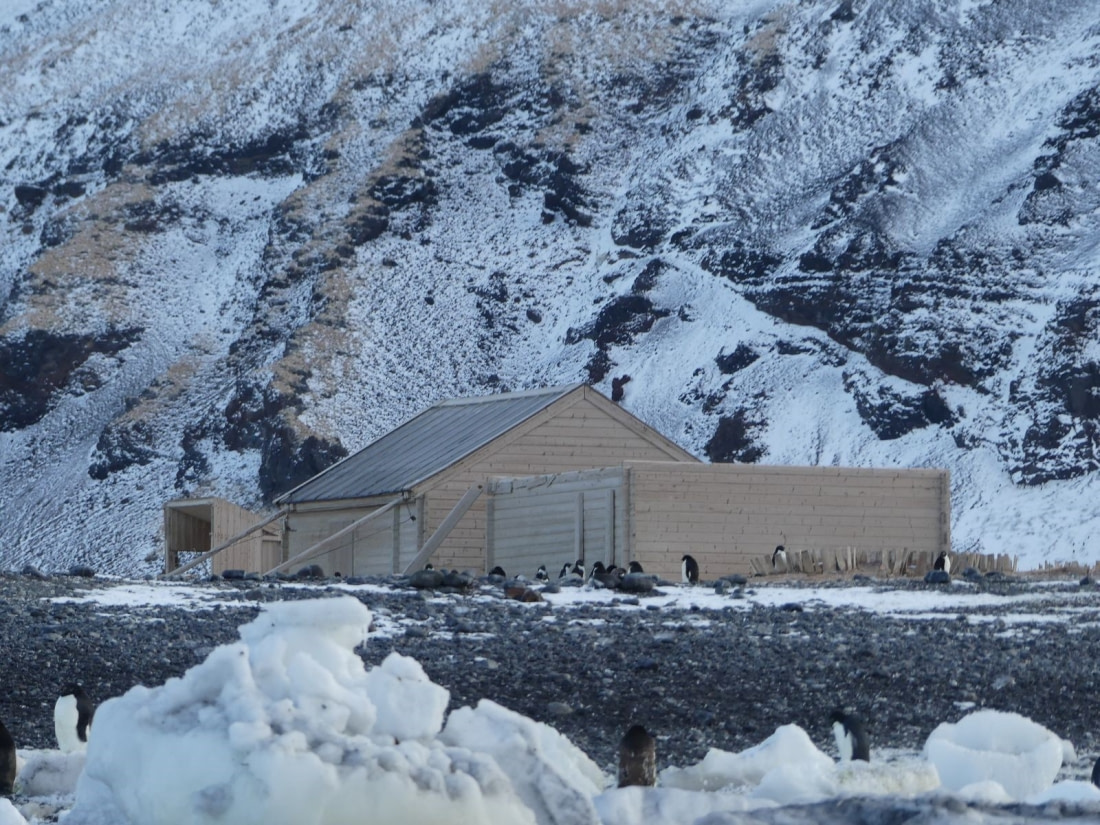
Borchgrevink and his crew constructed two huts from Norwegian spruce at Cape Adare—one for living quarters and the other for storing supplies.
blog-image

Carsten Borchgrevink and his Antarctic huts

The expedition arrived with 75 Siberian dogs, two tons of dehydrated food, various firearms, and 500 miniature Union Jacks for surveying and extending the British Empire.

The crew built their winter huts using interlocking boards secured with steel tie rods. The roofs were covered with seal skins, weighed down by coal bags and boulders. The living quarters featured a double floor and walls insulated with papier-mâché, sliding panels, and curtains for privacy. Double-glazed windows with exterior shutters helped retain warmth, and a saloon lamp from the ship provided lighting. Borchgrevink’s smaller hut stored medical supplies, provisions, and extra clothing, but eventually became his private study. This hut also had two small rooms off an entrance porch, used as a photographic darkroom and for storing instruments.

The two huts were connected by a roofline extending to the ground, with sails and seal skins providing additional storage and wind protection. Borchgrevink planned to move the huts, provisions, and party to either Coulman Island or Cape Gauss in the summer. After the winter of 1900, he intended to sledge to the South Magnetic Pole.

Work began on dismantling the hut, but it was halted, and the party left on February 2, 1900, heading south to the Ross Ice Shelf before returning to Stewart Island, New Zealand.
blog-image

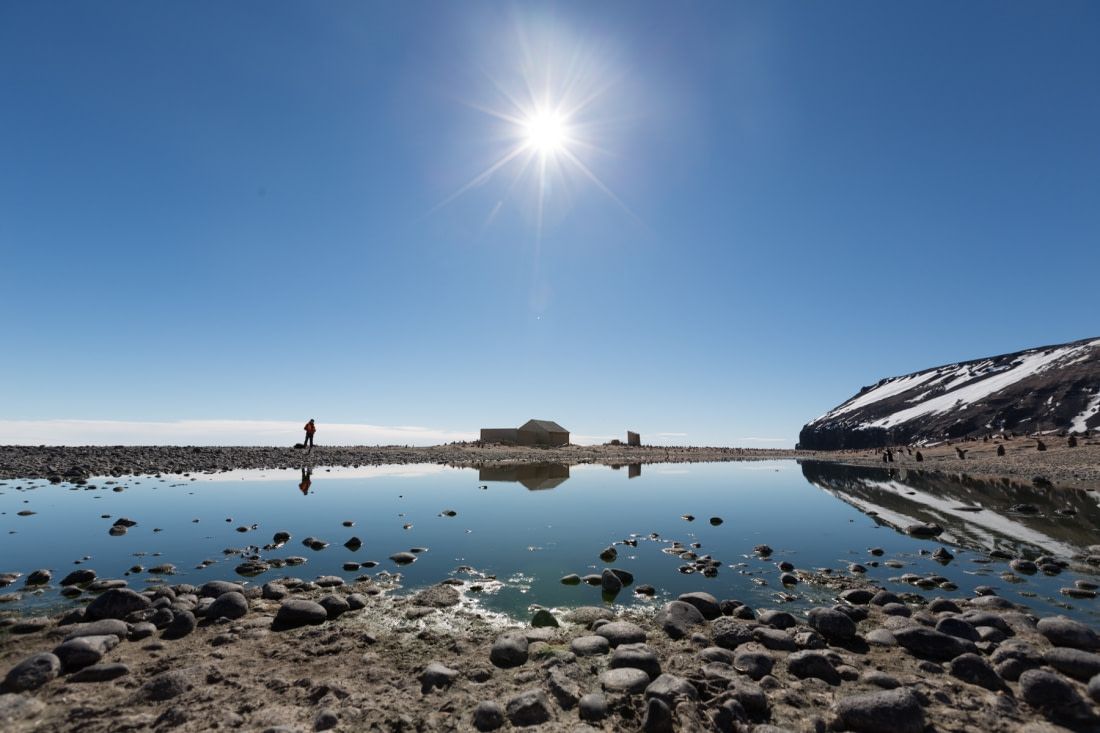
Visitors to Borchgrevink’s huts

The next visit to Cape Adare occurred on January 8, 1902, by the Discovery Expedition led by Robert Falcon Scott. Expedition member Edward Wilson described the site: “The litter around the huts was very interesting and the waste excessive…the huts looked like the centre of a rubbish heap.”

In February 1911, a party from the British Antarctic Expedition, also known as the Terra Nova Expedition, arrived. The ship’s carpenter found weathered cases around the huts and noted, “I stuck a pick into one case and found it was ball ammunition… Luckily, I did not strike the business end of a cartridge.”

Despite being filled with snow, both huts were in good condition. The smaller hut’s roof, dismantled by Borchgrevink’s crew, was covered by a canvas. The hut was partitioned for warmth, with sleeping platforms on boxes around two walls. A blubber stove, ice melter, and a latrine against the outer west wall were also installed.

The Terra Nova crew built another wintering hut near Borchgrevink’s in mid-February. Almost a year later, on January 3, 1912, they left Antarctica, leaving the huts behind.
blog-image

The Borchgrevink huts’ later arrivals

In February 1924, Norwegian whalers on the chaser Star 1 observed Borchgrevink’s huts from offshore. The next visitors arrived in February 1956 with a party from the US icebreaker Edisto, finding scattered supplies and equipment from earlier expeditions.

On January 14, 1961, Brian Reid and Colin Bailey of the New Zealand Biological Party arrived on the US icebreaker Eastwind to study Adelie penguin and skua populations. A storm destroyed their tents, forcing them to take shelter in Borchgrevink’s hut. They found a letter to Petty Officer George Abbot of the Terra Nova Expedition, cologne bottles, plum puddings, and a biscuit tin from Cape Royds. They sealed the hut before leaving.
blog-image

The restoration of Borchgrevink’s huts

In February 1973, two New Zealanders, Shaun Norman and Lawrie Cairns, camped on Ridley Beach. They repaired Borchgrevink’s hut and brought several artifacts back to the Canterbury Museum in Christchurch, New Zealand.

A Canterbury Museum Expedition conducted further repairs and a site survey in early 1982. In 1990, a joint Antarctic Heritage Trust and University of Auckland party arrived at Borchgrevink’s hut for repair work and documentation.
blog-image

Borchgrevink’s huts today

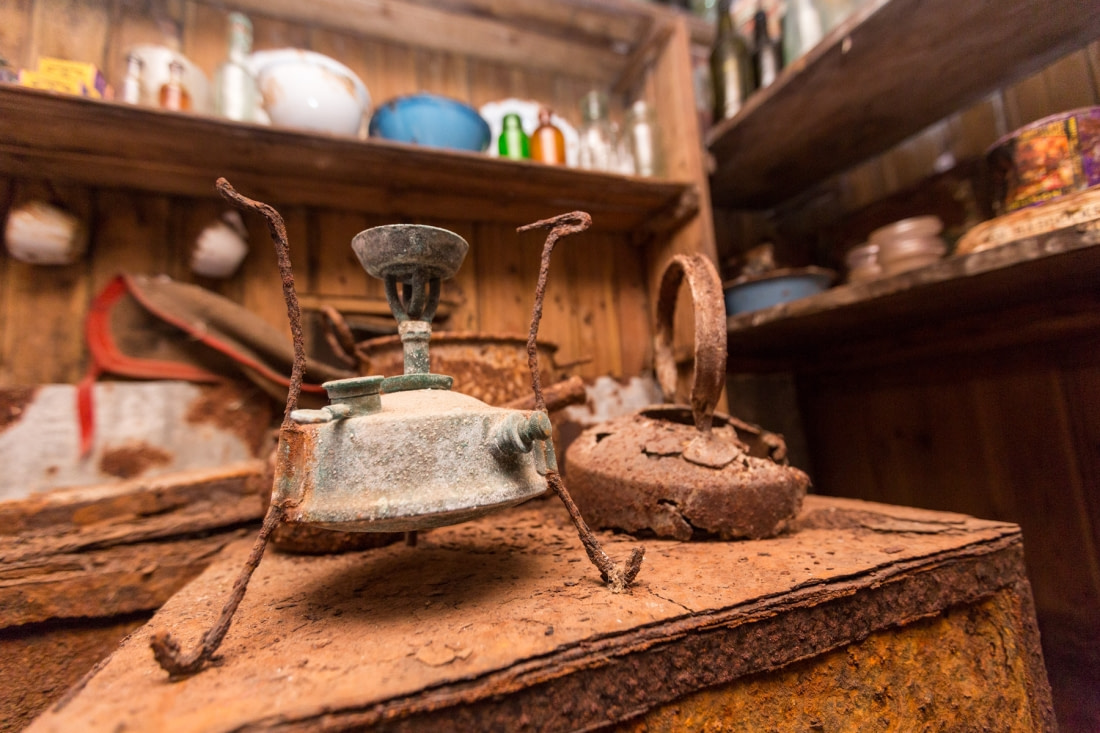
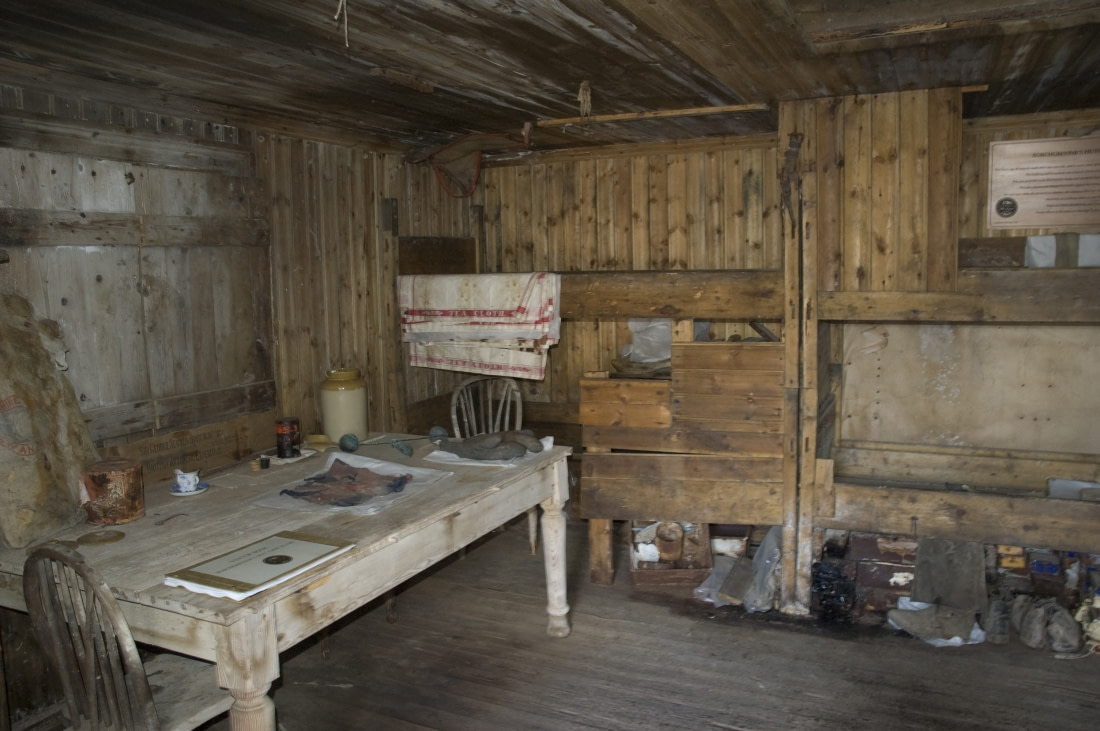
Today, Borchgrevink’s hut features a rusting stove and shelves lined with tins of lime juice nodules, dried potato, army rations, Wiltshire bacon, Lea and Perrins sauce, and hessian dog coats trimmed with red braids. The walls and bunks bear signatures and caricatures of expedition members.

A fine pencil drawing of a young Scandinavian woman adorns the ceiling above a bunk, accompanied by a Norwegian inscription: “All the bells chime far away, Tidings from the old days, All the flowers turn and look back with a sigh.”

Outside, remnants of the roof, wooden barrels, bags of coal, heavy calibre ammunition, an anchor, provision boxes, and dog tethering pegs with the remains of two dogs can be found. The hut built by the Terra Nova party has mostly collapsed, with only the porch still standing.

Carsten Borchgrevink’s small hut remains in sound condition over a century after its construction. Although the unroofed storage hut shows signs of severe weathering and a buckled floor, it remains a fascinating historical site. Both huts offer a glimpse into a bygone era of Antarctic exploration, captivating both scholars and visitors alike.

blog-image

Blog
go-leftgo-right

Two for the Snow: Polar Cruises for Couples - Nexta Expeditions
Blog

Two for the Snow: Polar Cruises for Couples

Do you know the old saying, “Cold hands, warm heart”? In our opinion, that bodes well for couples who visit the polar regions.
The Most Enchanting Antarctica Cruise Islands - Nexta Expeditions
Blog

The Most Enchanting Antarctica Cruise Islands

Whether it’s Greenland in the Arctic or Snow Hill Island in Antarctica, the bulk of our polar expeditions take place around, between, and upon islands.
Shackleton’s Long-Lost Endurance Discovered in Antarctica - Nexta Expeditions
Blog

Shackleton’s Long-Lost Endurance Discovered in Antarctica

A discovery expedition launched by the Falklands Maritime Heritage Trust achieved a long-awaited mission when it located Anglo-Irish explorer Ernest Shackleton’s lost ship Endurance last Saturday (March 5).
Why You Should Visit Greenland: 11 Things to See, Do, and Explore - Nexta Expeditions
Blog

Why You Should Visit Greenland: 11 Things to See, Do, and Explore

There's nothing quite like witnessing your first Greenland glacier, navigating into the island's largest fjord system (which also happens to be Earth's largest), or observing a humpback whale breach over the dark Greenland Sea.
Spitsbergen: a true polar bear trip - Nexta Expeditions
Blog

Spitsbergen: a true polar bear trip

On the third day of our Svalbard cruise, we navigated through the sea ice north of Spitsbergen. The morning greeted us with fog and fragmented ice, but conditions gradually improved. A swarm of black-legged kittiwakes trailed behind us, as our ship stirred the waters, pushing aside ice floes to reveal the tiny dark polar cod beneath.
Peaks, Fjords, and Auroras: 14 East Greenland Attractions - Nexta Expeditions
Blog

Peaks, Fjords, and Auroras: 14 East Greenland Attractions

There really aren’t enough superlatives for East Greenland.
5 Misconceptions You Might Have About Greenland - Nexta Expeditions
Blog

5 Misconceptions You Might Have About Greenland

The first race to the South Pole in 50 years - Nexta Expeditions
Blog

The first race to the South Pole in 50 years

Before the South Pole could be reached, the question was what exactly lay at the southern ends of Earth. The concept of Terra Australis Incognita, an unknown continent, was first introduced by Aristotle, who reasoned that a southern landmass must exist to ‘balance’ the known lands in the northern hemisphere.
Deception Island deceptively active - Nexta Expeditions
Blog

Deception Island deceptively active

In Antarctica, the South Shetland archipelago is home to Deception Island, a volcanic-rounded island that is 15 km in diameter with a shield volcano. The volcano is mainly basalt-andesite and was one of the first parts of Antarctica to be discovered, probably around 1820 by UK and USA sealers.
Franz Josef Land Sites, Species, and Experiences - Nexta Expeditions
Blog

Franz Josef Land Sites, Species, and Experiences

The archipelago of Franz Josef Land is to Russia what Svalbard is to Norway: Both island groups offer excellent Arctic scenery, adventurous outdoor activities, and a good chance of seeing iconic species like polar bears and walruses - alongside a wide range of marine mammals and seabirds.
What’s so Special about East Spitsbergen? - Nexta Expeditions
Blog

What’s so Special about East Spitsbergen?

We’ve previously discussed our north Spitsbergen journeys and Spitsbergen circumnavigations, but the eastern parts of this incredible island have not received the attention they deserve. Despite the name, our east Spitsbergen voyages explore much more than just the eastern side of Spitsbergen.
Three Antarctica Cruise Deals - Nexta Expeditions
Blog

Three Antarctica Cruise Deals

For many travelers, Antarctica represents the ultimate polar destination. Its vast white landscapes offer an endless array of surreal vistas, much of its unique wildlife is found nowhere else on Earth, and its complete lack of an indigenous human population provides a sense of untouched seclusion that few other places can match.
Fierce and Feathered: the Skuas of Antarctica - Nexta Expeditions
Blog

Fierce and Feathered: the Skuas of Antarctica

At first glance, the skuas you encounter in Antarctica may appear to be merely darker-feathered seagulls. But looks can be deceiving.
The secrets of Antarctic seals revealed - Nexta Expeditions
Blog

The secrets of Antarctic seals revealed

There are only six species of seals that inhabit the Antarctic: Southern elephant seals, Antarctic fur seals, crabeater seals, leopard seals, Ross seals, and Weddell seals. While we are familiar with these species, much about their lives remains a mystery.
How and When Did Greenland Become Covered in Ice? - Nexta Expeditions
Blog

How and When Did Greenland Become Covered in Ice?

Although it may be hard to believe, there was a time when Greenland was more green than icy. Today, those who embark on a Greenland expedition are greeted with views of the Greenland ice sheet and the marine life that thrives in this region, including seals and whales. Polar bears are also prominent in the northern and eastern parts of Greenland. These animals have adapted to their environment, but a few million years ago, the massive island would not have been as welcoming to them.
Penguin Wisdom: Life Lessons from Our Favorite Flightless Birds - Nexta Expeditions
Blog

Penguin Wisdom: Life Lessons from Our Favorite Flightless Birds

As enthusiasts of wildlife travel, we believe every creature has something valuable to impart - from the grand blue whale to the tiny cephalopod, the formidable polar bear to the elusive Arctic fox.
Northeast Greenland National Park - Nexta Expeditions
Blog

Northeast Greenland National Park

Northeast Greenland National Park is the world’s largest national park and the ninth largest protected area on Earth. It should come as little surprise, then, that it’s also bigger than most countries, covering an impressive 972,000 square km (375,300 square miles).
Science of the Ross Ice Shelf - Nexta Expeditions
Blog

Science of the Ross Ice Shelf

Antarctica’s Ross Ice Shelf is vast, spanning 487,000 sq. km – comparable to the size of France – with a thickness that varies from a few hundred meters near the sea to over 1,200 meters away from the floating edge. The edge along the Ross Sea forms a towering ice wall, rising up to 50 meters above the water, with most of the ice submerged below the waterline.
Islands of the Blessed: Things to Do Around Cape Verde - Nexta Expeditions
Blog

Islands of the Blessed: Things to Do Around Cape Verde

We visit Cape Verde and its capital city of Praia during our occasional St. Helena to Cape Verde voyages. Characterized by peaceful days at sea, these trips allow you to see some of the lesser-known gems of the Atlantic.
Of Treacherous Rocks & Audacious Fin Whales - Nexta Expeditions
Blog

Of Treacherous Rocks & Audacious Fin Whales

Soon large blows filled our view; small groups of fin whales sped by heading north all the while feeding on concentrations of krill & small fish. Group after group was seen, with many simply feeding in the general area and not heading anywhere in particular. Soon it became evident that we were not simply seeing a few random groups of fins, but a very large concentration spread out over a large area of sea just north and around the islands north of the South Shetlands. Dozens upon dozens of fin whales were feeding, diving around the ship and on the horizon in massive numbers; we must have seen well over fifty fin whales in the general area of Elephant Island, something many of the guides had never seen before.