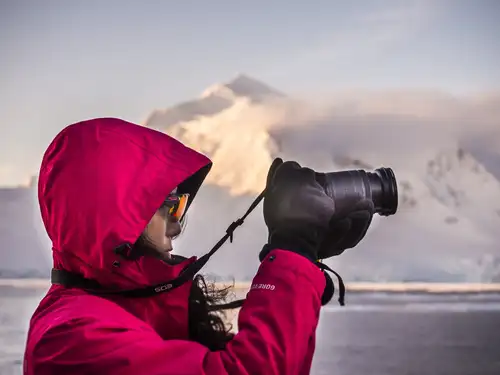


Today's visitors to the polar regions follow in the footsteps of some of the most famous explorers in history. Here is a list of five great explorers who braved the harsh lands of the Arctic and Antarctica.
James Clark Ross
Born in 1800, James entered the Royal Navy at the tender age of 11. During his early years of service, he was mentored by his uncle Sir John Ross. His first encounter with the polar regions came in 1819 when he joined his uncle on a voyage in search of the Northwest Passage. At that time, explorers were searching for a navigable channel connecting the North Atlantic with the Pacific Oceans through the Arctic regions of North America.

In just over a decade, James located the position of the north magnetic pole on Boothia Peninsula in northern Canada. In 1839, Ross took command of the Erebus while his friend Francis Crozier took command of Terror, with both ships heading south to Antarctica. Sailing south, Ross discovered what is known today as the Ross Sea, which provides the best ocean access to the South Pole.
However, reaching the Magnetic Pole was not straightforward as Ross discovered land instead of open water. He calculated that the Magnetic Pole was only 800 km away, but there was no direct sea route. Nonetheless, on January 12th, 1841, Ross and Crozier landed on an island they later named Possession and claimed it as Victoria Land in honor of the young Queen Victoria.
They then set sail to discover a giant volcano, Mt. Erebus, and its smaller neighbor, Mt. Terror. However, access to these volcanoes was blocked by a large ice sheet, which also obstructed their path to the South Pole. This ice sheet is known today as the Ross Ice Shelf.
Robert Peary
Having explored the Greenland ice cap in 1886, Robert Peary, on leave from his duties in the United States Navy, concluded that the North Pole lay beyond Greenland, not part of it as previously thought. Peary then set out to become the first person to reach the North Pole.

To prepare for his expedition north, Peary observed Inuit ways to survive in the harsh environment. Peary and his associate Matthew Henson learned all they could about dog sleds, furs, and igloos. They decided that the best platform to launch their expedition was from Canada’s Ellesmere Island, planning for late winter when the ice was firmer.
On March 1st, 1909, Peary set forth with an entourage of 23 men, 133 dogs, and 19 sleds. As they progressed north, they lightened their loads and reduced the size of the party. By April, only six men were pushing forward: Peary, Henson, and four Inuits.
However, his claim to have been the first to reach the North Pole was contested by another American, Frederick Cook. Nonetheless, Congress deemed that Peary was indeed the first to reach the Pole, securing his place in history.
Sir Ernest Shackleton
In 1901, Ernest Shackleton was chosen to join the Antarctic expedition led by British naval officer Robert Falcon Scott on the ship Discovery. The expedition spent two summers in Antarctica, with Shackleton joining Scott and one other in an attempt to reach the South Pole in 1902.

In terrible conditions, they trekked towards the South Pole, marching up to 40 kilometers a day. With food in short supply, they reached further south than anyone before but were forced to turn around. In 1907, he made another attempt at reaching the South Pole but was forced to turn back again.
In 1911, Shackleton set forth again to be the first person to reach the Pole but was beaten by Norwegian Explorer Roald Amundsen. This forced Shackleton to set his sights on crossing Antarctica via the South Pole. Fate would have it that on August 1, 1914, Shackleton set sail to Antarctica, not realizing that his dreams would again be shattered when his ship Endurance became trapped in ice, forcing his men to make their way to Elephant Island, off the southern tip of Cape Horn.
From the island, Shackleton went out for help, making his way towards South Georgia. Eventually, Shackleton made his way back to Elephant Island to rescue the remaining men. Remarkably, all 28 crew members stuck on Elephant Island for two years survived the ordeal.
Robert Falcon Scott
Scott led two major expeditions to Antarctica in 1901 and 1910. Scott was selected as the leader of the National Antarctic Expedition 1901-04, which was sponsored by the Royal Geographic Society, the British Government, and a London businessman, Llewellyn Longstaff. After a round of fundraising, the expedition had a healthy balance of £90,000, more than enough to pay for a new ship, provisions, wages, and other costs.

Scott, who had been in the navy since he was 13 years old, volunteered to command the expedition following a meeting with Sir Clements Markham, who had been familiar with Scott’s career up to that point. It was Markham who proposed the expedition be led by a brand new ship, Discovery, which had just been built in 1901. Because of the expedition’s large budget, they even had two army balloons for reconnaissance as well as a windmill to generate electricity along with a number of dogs. After stopping off in New Zealand, Scott’s expedition made it to Antarctica, reaching the continent on January 9, 1902, at Cape Adare.
In February, a balloon was released, resulting in the first-ever aerial photographs of Antarctica. Rather than wintering over in huts on the ice, Scott decided to have the Discovery frozen into the ice to become home for 47 officers and men, 30 of whom came from the Royal Navy, with the rest coming from a mix of backgrounds including the Merchant Navy, Royal Marine, along with scientists and a handful of civilians.
Despite the failed attempts to reach the Pole, the expedition was a scientific success, having made numerous comprehensive scientific observations and geographical discoveries, as well as significant observations and fieldwork in the areas of meteorology, geology, glaciology, marine biology, and cartography.
Edmund Hillary
Edmund Hillary led the New Zealand component of the Commonwealth Trans-Antarctic Expedition in 1957-58, which was under the overall command of British explorer Vivian Fuchs. The New Zealand team first set up Scott Base on the edge of the Ross Ice Shelf before driving modified Ferguson farm tractors south to drop food and fuel depots for the British crossing party.

Hillary could not hold himself back and instead of playing the support role to the crossing party, decided to launch a full-on push for the Pole. On January 4th, 1958, Hillary and his crossing party became the first to reach the South Pole overland since Robert Scott in 1912. It took them 14 days over soft snow and crevasses.
Despite the hardships faced and limited sleep, the expedition was greeted by a media party at the Pole who immediately began to question whether Hillary’s decision put the whole expedition at risk. Nonetheless, there appeared to be no animosity between Fuchs and Hillary when Fuchs finally arrived at the South Pole.
Well before this expedition to the Pole, Hillary was already a legend, having conquered Mount Everest in 1953 along with Tenzing Norgay. When asked later in life about the two expeditions and how they compared, Hillary commented that the Antarctic expedition was not harder than Everest; instead, it was different in various ways. For instance, unlike Antarctica, there was the immediate threat of avalanche or falling off the mountain or going down a crevasse, while in Antarctica, the temperatures on the whole were colder and the distances vaster.


Blog


5 Misconceptions You Might Have About Greenland
Adélie penguins in the Ross Sea - Antarctica
Spitsbergen: Alkefjellet magic
10 Popular Bird Watching Binoculars
The Best Arctic and Antarctic Trips for Families
South Georgia in Spring
11 Seals You May See in Antarctica or the Arctic
Penguins, Petrels, and Prions: Top Antarctica Bird Tour Spots
Northeast Greenland National Park
What the ice reveals about Antarctica
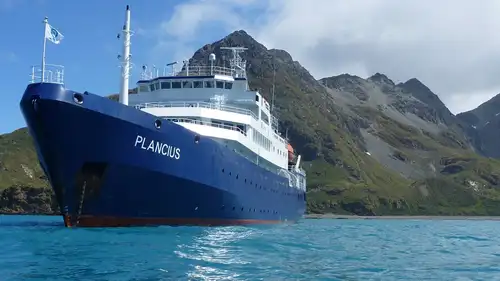
A Day on m/v Plancius
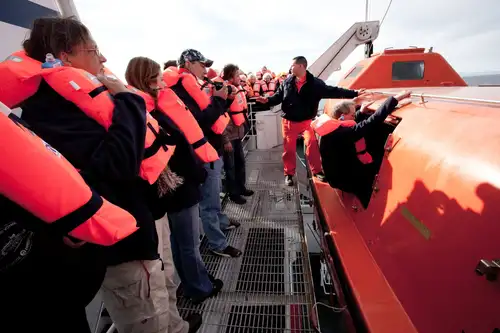
The Evolving Shipboard Eco-traveler
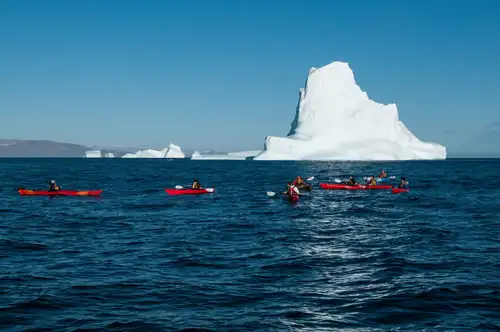
Kayaking In Greenland
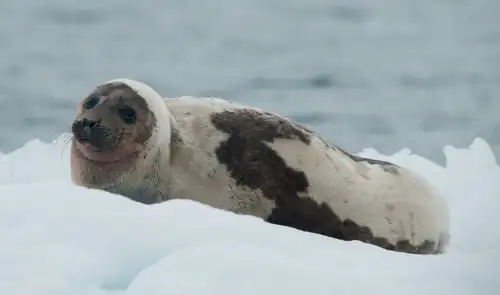
Harp seals harping on in Greenland
Flowers in Antarctica
Polar Diving: A Supreme Underwater Adventure
Solargraphy & Pin Hole photography in the Arctic
The Arctic Borderland of Kongsfjorden, Svalbard
Weddell Sea: the Original Antarctic Adventure