

The Arctic is home to some of the world’s most majestic mammals, both on land and sea. However, the bird life in this region is equally remarkable, showcasing numerous exotic species that are highly prized by bird enthusiasts worldwide.
Here are 29 Arctic birds and seabirds you might encounter during your expedition cruise. This guide provides fascinating facts about each species:
- Puffin
- Cormorant
- Arctic tern
- Common eider
- King eider
- White-tailed eagle
- Kittiwake
- Fulmar
- Snow bunting
- Northern gannet
- Sanderling
- Black guillemot
- Brünnich’s guillemot
- Little auk
- Arctic skua
- Long-tailed skua
- Ptarmigan
- Great northern diver
- Red-throated diver
- Glaucous gull
- Lesser black-backed gull
- Great black-backed gull
- Ivory gull
- Red phalarope (grey phalarope)
- Pink-footed goose
- Barnacle goose
- Brant goose
- Razorbill
- Turnstone
1. Puffin
Puffins, often called “sea clowns” for their colorful faces, are also known as “little brothers of the north” due to their black and white bodies, reminiscent of certain religious garments.

2. Cormorant
Ancient fishermen used cormorants to catch fish, tying loops around their necks to prevent them from swallowing larger fish. Thankfully, the cormorants in the Arctic are free from such practices.

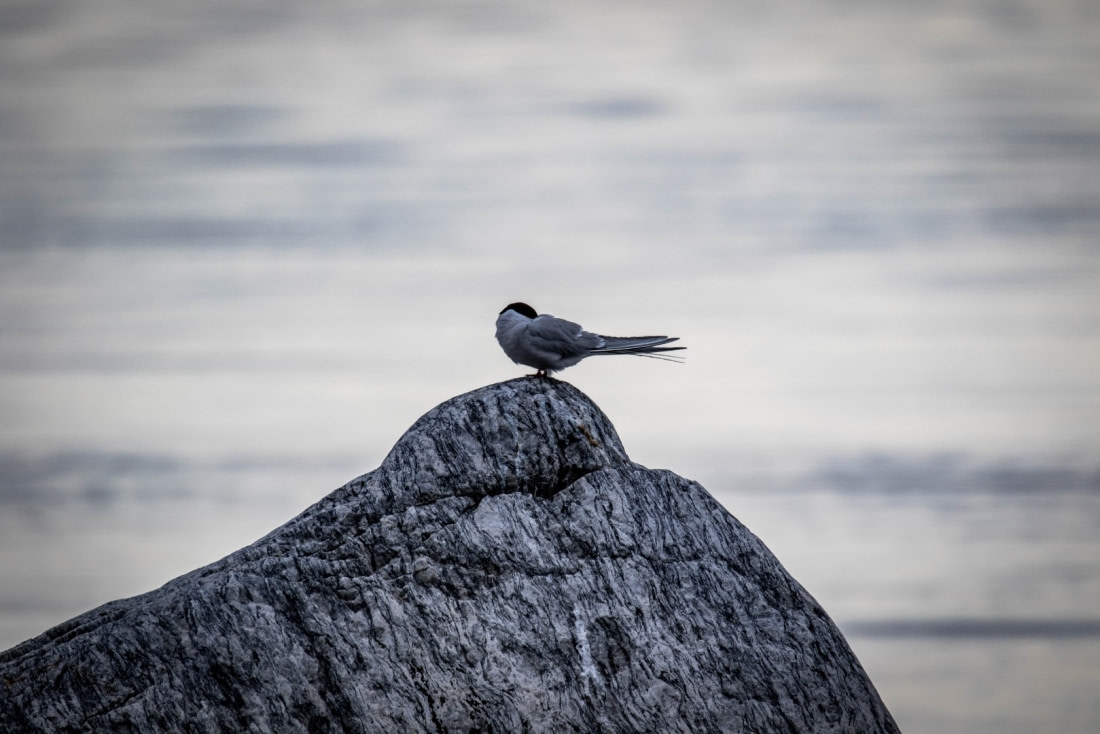
3. Arctic tern
Arctic terns are among the world’s most far-ranging fliers, traveling an estimated 2.4 million km (1.49 million miles) in their lifetimes and experiencing two summers per year due to their migratory patterns.

4. Common eider
Common eiders, also known as Cuddy ducks, are large sea ducks that can fly up to 113 kph (70 mph). They breed in the far north and migrate south during the winter.

5. King eider
King eiders are the largest sea ducks in the Northern Hemisphere. Despite their name, they often form flocks with common eiders and can gather in groups up to 100,000 strong.

6. White-tailed eagle
White-tailed eagles are the largest eagles in Europe with the widest wingspan of any eagle species. They have no natural predators and are closely related to bald eagles.

7. Kittiwake
Kittiwakes are the most abundant gull on Earth, known for their distinctive cry. They nest on cliffsides, where their chicks are generally safe from predators.

8. Fulmar
Fulmars, also known as “foul gulls” for their pungent stomach oil, use this spray as a defense mechanism. Despite their smell, they have a keen sense of smell.

9. Snow bunting
Snow buntings, nicknamed “snowflakes,” are hardy survivors, being the northernmost breeders among land-based birds. They can cross-breed with McKay’s buntings in Alaska.

10. Northern gannet
Northern gannets are efficient fliers, using small air bags under their skin for protection during high-impact dives. They are known for their gluttonous appetite.

11. Sanderling
Sanderlings are small Arctic wading birds known for their distinctive running style along beaches. They are highly migratory, traveling up to 10,000 km (6,200 miles) between breeding and wintering sites.

12. Black guillemot
Black guillemots change their plumage color based on their environment, with northern individuals being whiter. They are also particular about how they hold fish in their beaks.

13. Brünnich’s guillemot
Brünnich’s guillemots are efficient divers, reaching depths of up to 150 meters (500 feet). They are among the most numerous bird species in the Northern Hemisphere.

14. Little auk
Little auks form the largest colonies of any auk species. Their droppings provide nutrient-rich fertilizer that supports plant life in otherwise barren areas.

15. Arctic skua
Arctic skuas are known for their thievery, stealing up to 95% of their winter diet from other birds. They often rough up their victims to make them drop their food.

16. Long-tailed skua
The smallest skua species, long-tailed skuas, are aggressive hunters, often harassing other birds to drop their food. They hunt rodents during the breeding season.

17. Ptarmigan
Known by various names, ptarmigans are grouse relatives with a croaking song. They are called “thunder birds” in Japan and “hare feet” in Greek.

18. Great northern diver
Great northern divers, the oldest and most primitive birds on Earth, have solid bones that aid in diving but make flight challenging. They have been around for 20 million years.

19. Red-throated diver
Red-throated divers, also known as red-throated loons, are the smallest diver species and breed primarily in the Arctic. They are protected by international treaties due to their threatened status.

20. Glaucous gull
Glaucous gulls, the only large gull found in the far north, are scavengers known to raid other bird colonies. They are sometimes referred to by names like squabbles and screeches.

21. Lesser black-backed gull
Lesser black-backed gulls breed in Iceland and along Europe’s Atlantic coastlines. They have a diverse diet, including fish, crustaceans, insects, and small mammals.

22. Great black-backed gull
Great black-backed gulls are the largest gulls in the world, found in Iceland, northern Russia, Scandinavia, and southern Greenland. They eat nearly anything they can swallow.

23. Ivory gull
Ivory gulls have been declining in population since the 1980s, with their eggs containing high concentrations of pollutants. They are known for producing pellets from the animals they eat.

24. Red phalarope (grey phalarope)
Red phalaropes, also known as grey phalaropes in Europe, spend winters on the ocean and eat lice off whales. Females migrate south after breeding, leaving males to raise the chicks.

25. Pink-footed goose
Pink-footed geese are the most common geese in Svalbard, leaving a large carbon footprint by releasing gas while digging for food. They nest farther inland, protected from Arctic foxes.

26. Barnacle goose
Barnacle geese were once believed to come from barnacles or driftwood. This myth allowed Irish clerics to permit their meat during fasting days, but Pope Innocent III ended this practice in 1215.

27. Brant goose
Brant geese, or brent geese, are small coastal breeders found in Iceland, Svalbard, and Northern Norway. They were once thought to be related to crustaceans.

28. Razorbill
Razorbills are part of the auk family and the closest living relatives of the extinct great auk. They breed along the coastlines of Iceland and eastern Greenland, and migrate to Northern Norway in the non-breeding season.

29. Turnstone
Turnstones are migratory marvels, capable of flying over 1,000 km (600 miles) in a single day and covering 500,000 km (310,000 miles) over their lifetimes. These Arctic birds stand their ground during conflicts by lowering their tails and hunching their backs.

Birdwatching tours for Arctic bird lovers - plus a bonus bird video
Interested in seeing any of these beautiful birds in their natural habitat? Check out our exciting list of Arctic bird-watching tours that will give you that chance.
And if you’re still craving more Arctic bird images, don’t miss the bird-filled video below:
 12 Aug - 31 Aug 2026
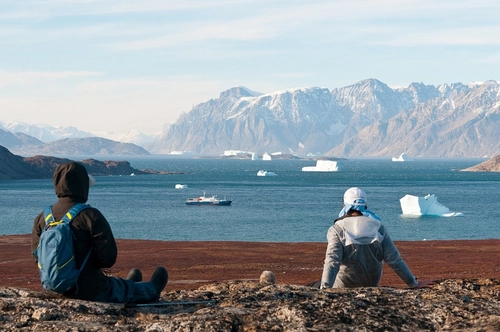 15 Aug - 28 Aug 2026
 16 Aug - 25 Aug 2026
 25 Aug - 07 Sep 2026
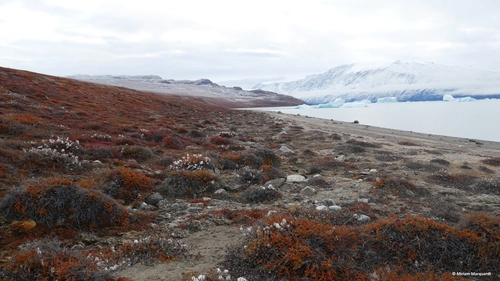 21 Sep - 01 Oct 2026
Related Trips
Spitsbergen - Northeast Greenland, Fly & Sail
12 Aug 2026 - 31 Aug 2026  20 Days / 19 Nights
Northeast Greenland Extreme
15 Aug 2026 - 28 Aug 2026 14 Days / 13 Nights
East Greenland, Scoresby Sund, Including Long Hikes
16 Aug 2026 - 25 Aug 2026 10 Days / 9 Nights
Northeast Greenland Extreme
25 Aug 2026 - 07 Sep 2026 14 Days / 13 Nights
East Greenland, Scoresby Sund - Aurora Borealis, Fly & Sail
21 Sep 2026 - 01 Oct 2026 11 Days / 10 Nights

East Greenland, Scoresby Sund - Iceland , Aurora Borealis, Fly & Sail
01 Oct 2026 - 12 Oct 2026 12 Days / 11 Nights

Blog


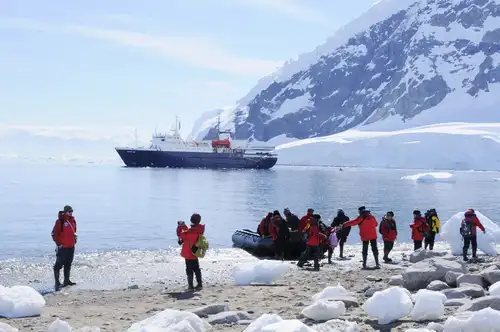
The Seven Best Things to Do in Antarctica
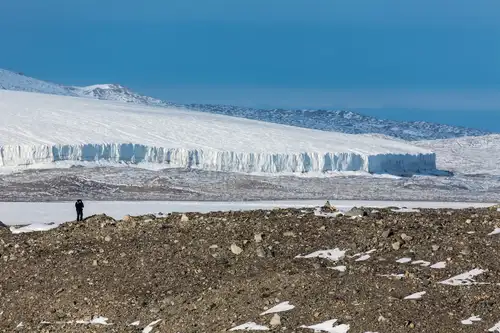
The Secret Life of Glaciers: How They Form, Move, and Melt
Polar bear feast

Highlights from the First Arctic Voyage of Hondius
Science of the Ross Ice Shelf
Polar Diving: A Supreme Underwater Adventure
The polar bear: king of the Arctic food chain
The History of Antarctica in Maps
Diving in Antarctica: The Ultimate Underwater Experience
Polar Amore: 14 Wildlife Pics to Warm up Your Valentine’s Day

10 Tried-and-True Bird Photography Tips
Wreck Diving in Antarctica
5 Life Lessons You'll Learn in Antarctica
Greenland: East vs. West
A Day of Basecamp in Antarctica – Paradise Harbour
Port Pastimes: 7 Fun Things to Do in Longyearbyen
Visiting the Nearly Unknown: New Zealand’s Campbell Island

Exploration of the Polar Regions
Adélie penguins in the Ross Sea - Antarctica