Arctic Mythology Inuit Saami And The Ancient Greeks - Nexta Expeditions
Arctic Mythology: Inuit, Saami, and the Ancient Greeks

Arctic Mythology: Inuit, Saami, and the Ancient Greeks

The Arctic locations we visit aren’t merely made up of phenomenal landscapes, exotic wildlife, and more adventure than a Hardy Boys novel.

They’re also interwoven with ancient cultures, all of which have their own particular and fascinating cosmologies. In fact, Greenland and Northern Norway are infused with folklore that reaches all the way back to (and in some cases predates) ancient Greece.

If you’re lucky enough to visit these regions, make sure to enrich your exploration of the natural world with a little dose of the mythological one.

blog-image

Inuit (Kalaallit of Greenland)

It’s not uncommon to hear references to the native Arctic Inuit, though actually this is a blanket term for numerous distinct cultures indigenous only to certain areas of that region.

(Even so, it’s a much better term than “eskimo.”)

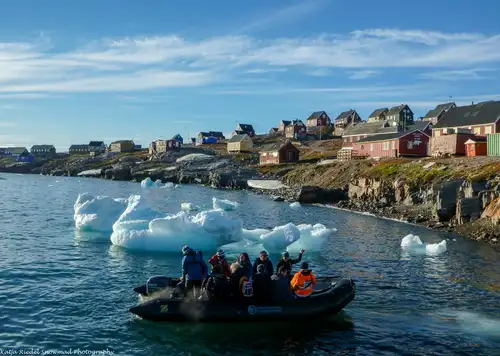
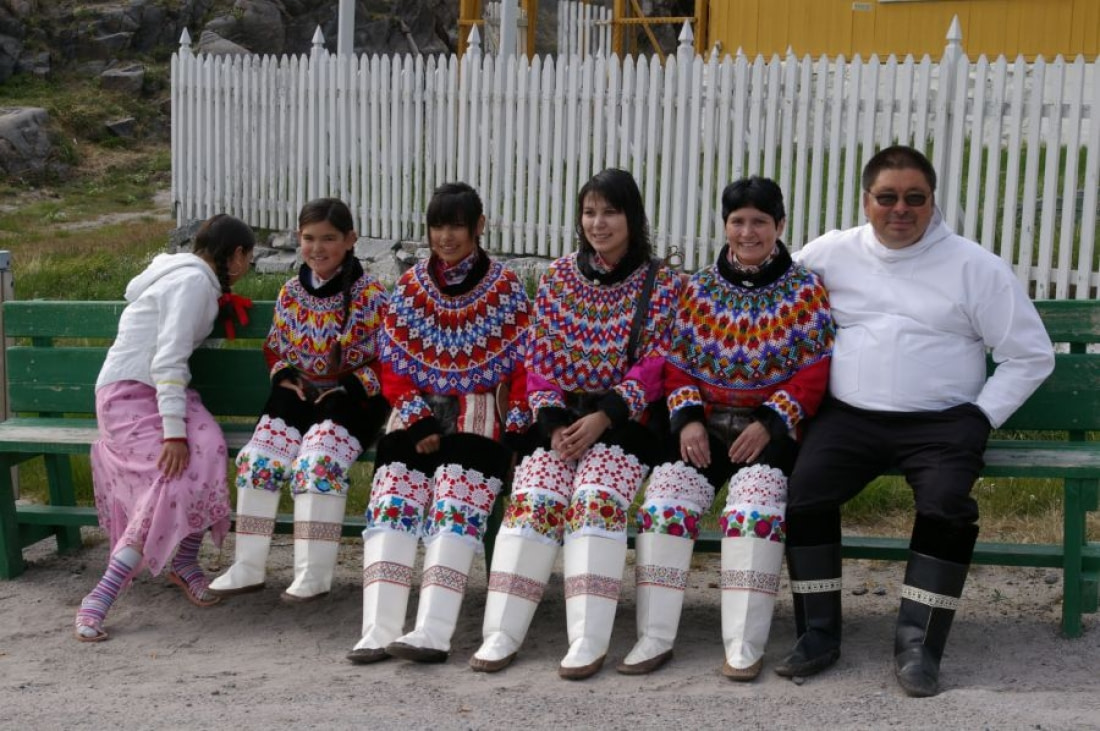
In Greenland, one of our most popular Arctic cruise areas, the predominant Inuit tribe is the Kalaallit. The Kalaallit are the largest Greenlandic Inuit group, concentrated mostly in west Greenland but also located in some of the areas we visit in northeast Greenland.

The Kalaallit mythology shares many similarities with that of other Inuit peoples, and in turn shares many similarities with the myths of other Arctic groups.
blog-image

No divine ruler controls the Kalaallit universe, there are no paternal or maternal deities, and no cosmic scale of justice punishes wrongdoing in the afterlife.

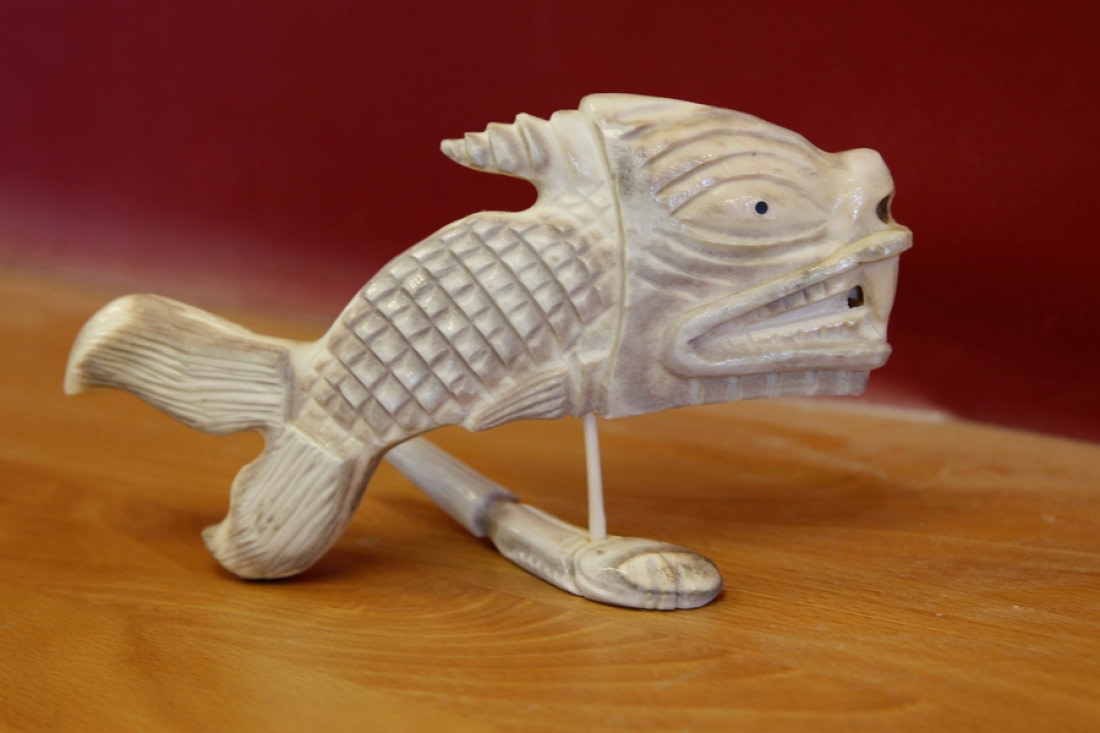
Even so, Kalaallit religion does believe that the Moon punishes the breaking of social taboos. Not only that, an avenging monster called the tupilaq can be summoned to punish people through chants and the use of bone, sinew, or other such substances.

Kalaallit shamans, known as angakkuk, summon the tupilaq in dangerous ceremonies that may lead to the monster devouring the summoner if his or her powers aren’t sufficient.

Another monster, an anngiaq, can arise out of the concealment of infanticide or miscarriage, and has the power to curse those it touches.
blog-image

But far from being uncommon, spirits are everywhere in the Kalaallit world.

The sky (or sila) is pervaded with the spirits (or anirnitt) of all living things, a common Inuit belief, and these anirnitt can seek revenge if necessary. They are only pacified by correct ritual observation and obedience to social customs.

Kalaallit deities include Akna, a mother goddess of fertility; Anguta, a god who gathers the dead to the underworld; and Amarok, a wolf god who abducts those who hunt at night.

Saami (circumpolar Scandinavia)

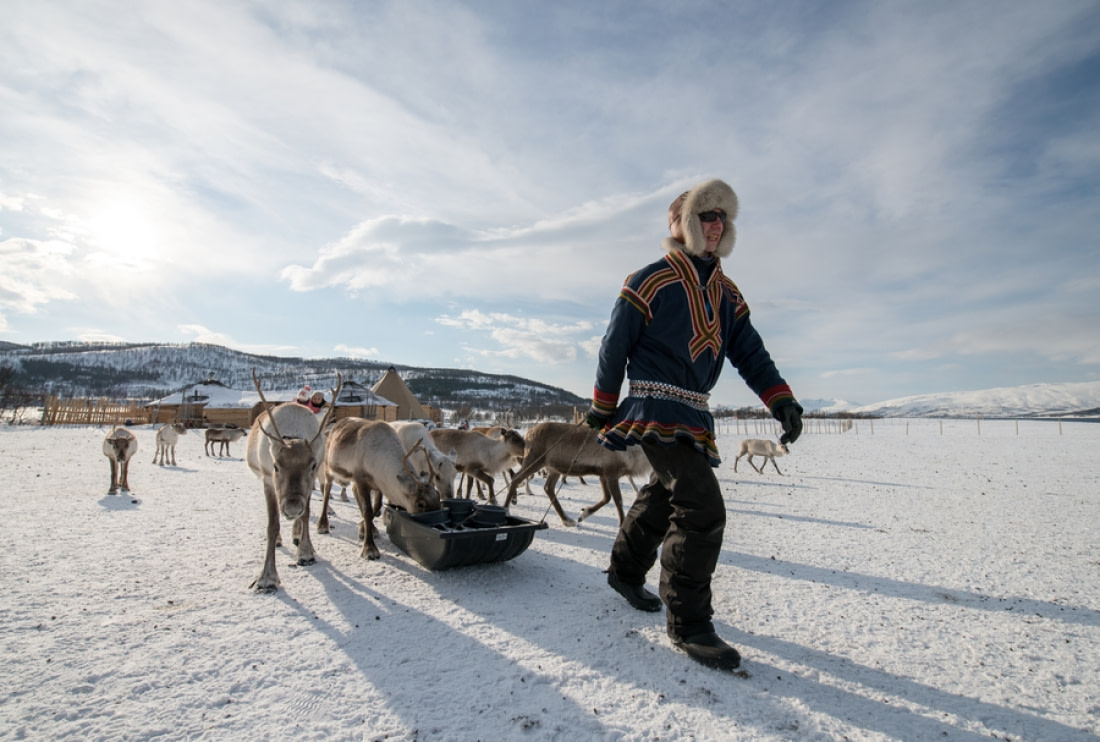
The Saami (also Sami or Sámi) are a people indigenous to northern Scandinavia and northeastern Russia, a cultural area known as Sápmi.

Like the Inuit, Saami are troubled with a derogatory second name: Laplanders or Lapps, though Lapland is actually another area interior to parts of Finland and Sweden.

In Sami religion, man and nature are one, so a healthful life requires harmony between oneself and the elements.

This facet of Saami belief is in direct contrast to many other mainstream mythologies, such as Christianity, which views the natural world as a collective resource purposefully made for human control and consumption.
blog-image

The Saami cosmology contains three tiers: a middle world, an upper world, and a netherworld.

The middle world is where we live, a place inhabited by other animals and nature spirits; the upper world is where the gods live; and the netherworld is the home of gnomes and the dead.

A Saami shaman, or noaidi, performs an essential community function by accessing the outer worlds for the benefit of the tribe. Through the exercise of certain rituals, the shaman can heal the sick, predict the future, and aid the luck of hunters and fishermen.

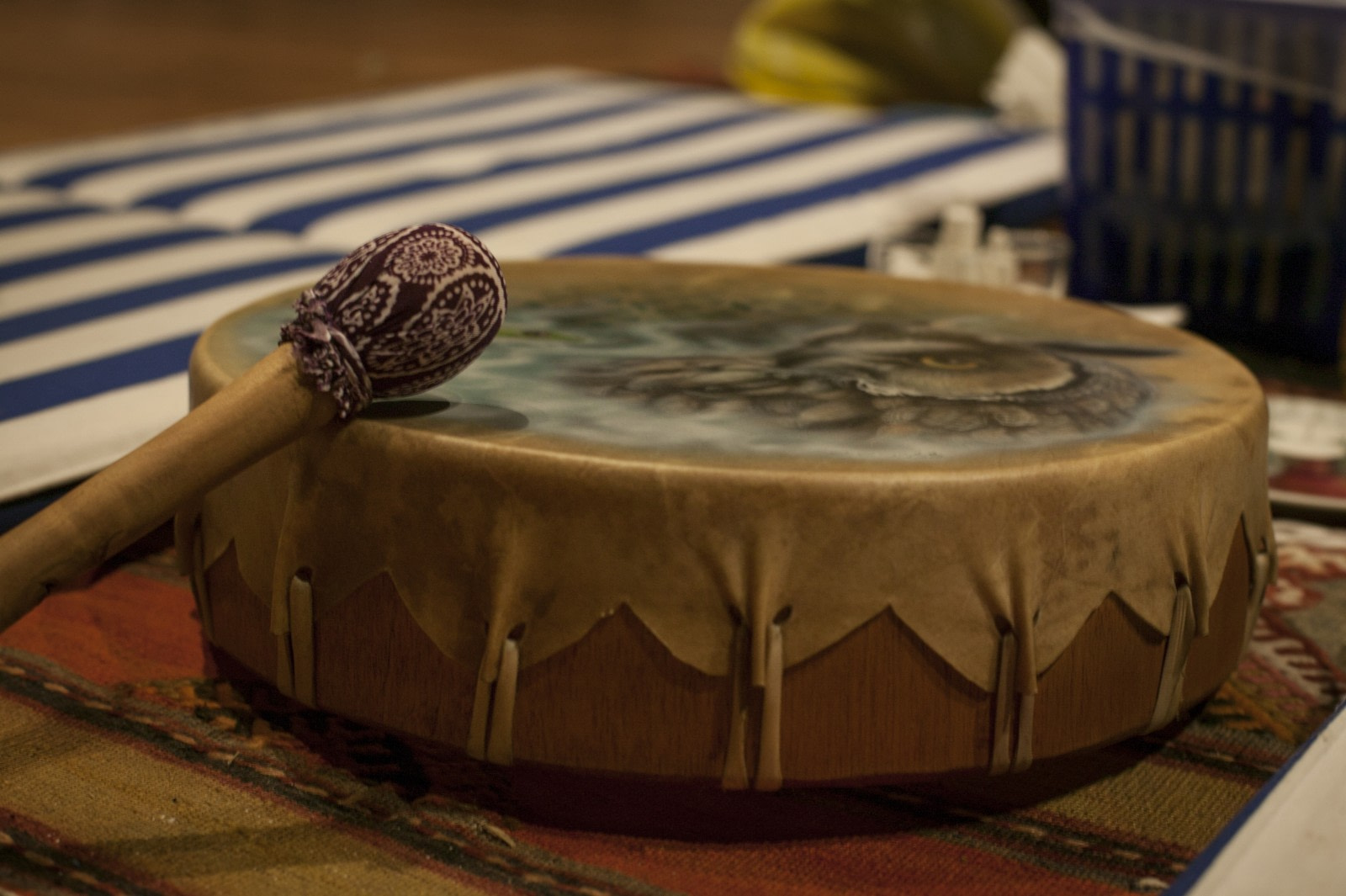
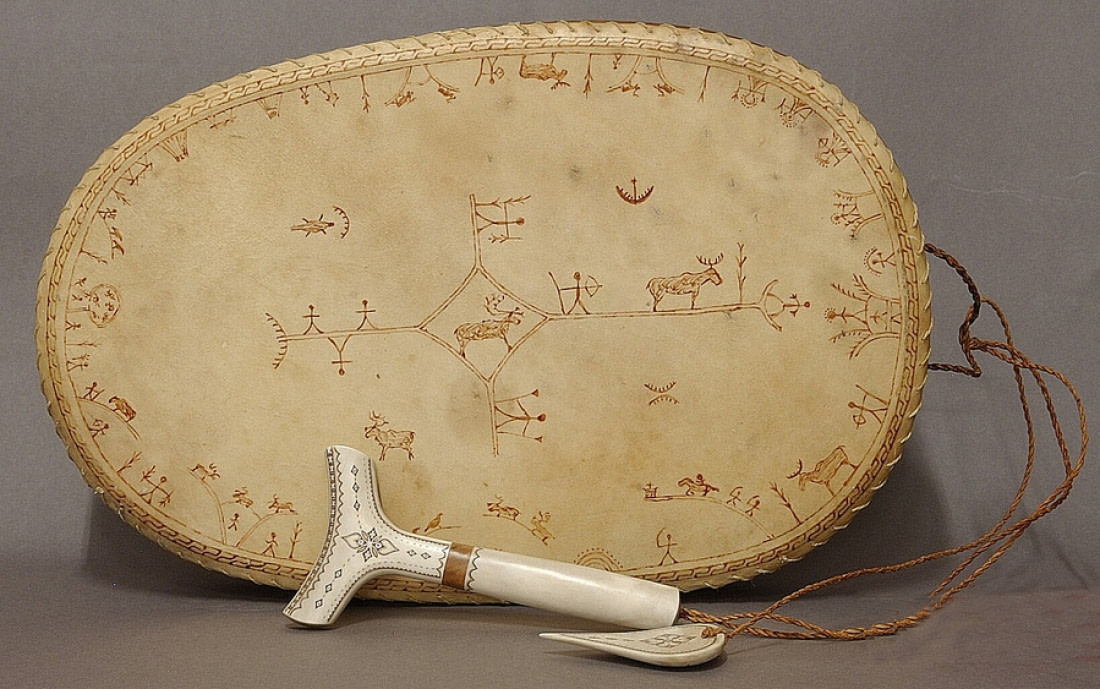
The most important part of a Saami shaman’s equipment is his drum.

Made out of reindeer skin and decorated with images, the drum allows the noaidi to enter a trance state in which he can take animal form to further help the community.
blog-image

As for Saami deities, they are numerous and understandably nature-oriented.

Ukko is the central life giver and lord of the clouds. His wife is Akka, almost always represented by his side. Biegga-almmái is god of the wind and can influence reindeer. Máttáráhkká is the goddess of life, and her three daughters symbolize feminine attributes.

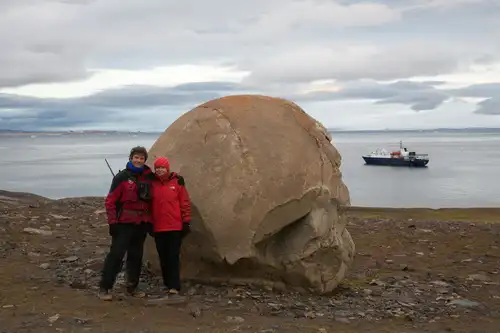
Saami often worship these and other gods at a siedi, a holy place that is typically a natural formation like a large boulder or tree stump.

If you take one of our Northern Norway voyages, you may encounter Saami people in Tromsø or the surrounding areas. Obviously, however, modern-day Saami do not necessarily follow their traditional beliefs any more than do present-day Kalaallit.

blog-image

An Arctic mythology disclaimer

Since the myths of the Arctic are too vast and varied to be examined properly here, this article is meant as only a brief and admittedly incomplete survey of belief in our areas of operation.

Obviously, countless other Arctic and near-Arctic myths abound from the distant past: The ancient Norse (i.e., Vikings) thought the northern lights were incarnations of their gods, and we’re all familiar with the Yeti (Abominable Snowman) of Nepalese folklore.

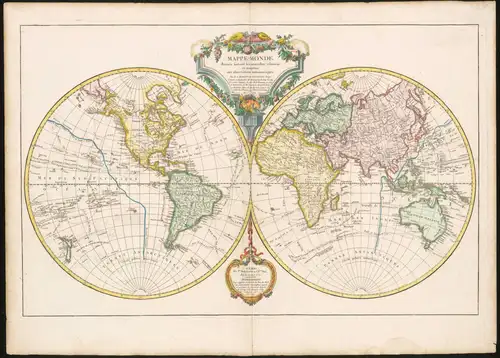
The Greeks even had their own idyllic version of the Arctic, known as Hyperborea.

Hyperborea was located at the top of the world, beyond the north wind (or borea, where the term borealis comes from), and was inhabited by giants called Hyperboreans. According to the Greeks, the Arctic was a tropical paradise.

According to us, they were half right.
blog-image

Blog
go-leftgo-right

Polar bear encounter in Spitsbergen - Nexta Expeditions
Blog

Polar bear encounter in Spitsbergen

I watch the sea ice from the bridge of a ship in one of the fjords of Spitsbergen, an archipelago north of Norway. I observe a perfectly adapted animal moving on the ice, the results of hundreds of thousands of years of ecological fine-tuning. Snowshoe-sized paws distribute weight, fur handles the cold and sunlight to perfection, and an incredible sense of smell samples this monochromatic realm.
The Small but Social Commerson’s Dolphin - Nexta Expeditions
Blog

The Small but Social Commerson’s Dolphin

Despite being one of the lesser-known Antarctic cetaceans, Commerson's dolphins are quite social and have been given various names over the years, including Piebald dolphins, skunk dolphins, and panda dolphins. These names have been in use since their discovery in 1767 by French naturalist Philibert Commerson.
Spitsbergen: Alkefjellet magic - Nexta Expeditions
Blog

Spitsbergen: Alkefjellet magic

If they knew their way home, why not follow them? Equipped with GPS and compass, we approached the cliffs by zodiac. First, we heard the noise from the colony – the distinct calls of guillemots, kittiwakes, and Glaucous gulls. Then the cliffs gradually emerged from the mist.
A visit to the fascinating island of Jan Mayen - Nexta Expeditions
Blog

A visit to the fascinating island of Jan Mayen

After exploring the remote island of Fair Isle, our Atlantic Odyssey voyage once more turned its attentions northwards and left the outer extremities of the UK behind. Our destination was Jan Mayen, a volcanic island situated on the mid-Atlantic ridge just north of 71° (about 550 kilometers north of Iceland and 450 kilometers east of Greenland).
10 Tips for Photographing the Northern Lights - Nexta Expeditions
Blog

10 Tips for Photographing the Northern Lights

The northern lights, also known as the aurora borealis, offer some of the most breathtaking photographic opportunities in the Arctic. However, capturing this stunning phenomenon requires more than just luck. To take your best northern lights photos, it's helpful to understand some key aspects of aurora-specific photography.
Top 10 Tips for Packing Your Polar Photography Equipment - Nexta Expeditions
Blog

Top 10 Tips for Packing Your Polar Photography Equipment

One of the most common questions I get asked before a cruise is, “What photography equipment should I bring?” It’s a broad question, and answers vary based on the individual. There are, however, a few key pointers that apply to almost everyone.
Antarctica in Pictures: Photos from 2018 - Nexta Expeditions
Blog

Antarctica in Pictures: Photos from 2018

Pictures can never truly capture the essence of an experience, and this is especially true for the breathtaking adventures in Antarctica.
Taking a polar expedition cruise delivers no shortage of show-stopping highlights, but one of the most exhilarating is lifting off from the ship in a helicopter and taking flight over the incomparable Antarctic wilderness. - Nexta Expeditions
Blog

Taking a polar expedition cruise delivers no shortage of show-stopping highlights, but one of the most exhilarating is lifting off from the ship in a helicopter and taking flight over the incomparable Antarctic wilderness.

Embarking on a polar expedition cruise offers a plethora of breathtaking experiences, but one of the most thrilling is taking off from the ship in a helicopter and soaring over the stunning Antarctic wilderness.
Shackleton’s Push to the South Pole - Nexta Expeditions
Blog

Shackleton’s Push to the South Pole

On the evening of February 11, 1907, Irish-born polar explorer Ernest Shackleton, already among the more famous polar explorers in the world, announced his intention to embark on a momentous Antarctic expedition.
17 Reasons to Cruise the Falklands - Nexta Expeditions
Blog

17 Reasons to Cruise the Falklands

Maybe you’ve already marveled at the colossal penguin colonies of South Georgia, sailed among the plunging seals of the Antarctic Peninsula, and watched whales in the Weddell Sea lunge among titanic tabular icebergs.
The Secret Life of Glaciers: How They Form, Move, and Melt - Nexta Expeditions
Blog

The Secret Life of Glaciers: How They Form, Move, and Melt

One of the most awe-inspiring natural wonders you can witness on an Arctic or Antarctic expedition is glaciers. These immense ice formations have been gradually moving from the mountains to the oceans for countless years, acting as both time capsules and indicators of our rapidly changing environment.
The Impact of Small vs. Large Cruise Ships - Nexta Expeditions
Blog

The Impact of Small vs. Large Cruise Ships

The generalization that larger ships impact the environment more than smaller ships seems like such a no-brainer that if someone said it to you, you’d be easily forgiven for thinking you were being tricked.
Life in a Penguin Colony - Nexta Expeditions
Blog

Life in a Penguin Colony

Captain Pieter J. Lenie Base, also known as Base Copacabana or simply Copa Base, is situated on King George Island off the western shores of the Antarctic Peninsula. This American research station has been home to scientists studying Adélie, gentoo, and chinstrap penguins for over three decades, aiming to understand how to best conserve these cherished species.
Six Must-See Svalbard Sites - Nexta Expeditions
Blog

Six Must-See Svalbard Sites

It's home to humanity's last-ditch supply of crop seeds, the world's northernmost settlement of over 1,000 people, and it is one of the best places on Earth to spot a polar bear.
The Eight Great Penguin Species of Antarctica - Nexta Expeditions
Blog

The Eight Great Penguin Species of Antarctica

There are 17 species of penguin on the planet, but the eight you’ll most likely recognize live in Antarctica, its nearby islands, and the sub-Antarctic archipelagos of South Georgia and the Falklands. These are the core species we tend to see on our expedition cruises.
Polar Cruises: The Ultimate Icebreaker - Nexta Expeditions
Blog

Polar Cruises: The Ultimate Icebreaker

Travel is one of life’s great eye openers. It brings you into contact with new people and perspectives, challenges old assumptions you haven’t held to the light in years, and invites you to make unexpected discoveries about the world around you – and most of all, yourself. Added to which, you get to visit places you never knew you loved until you saw them.
Shackleton’s Long-Lost Endurance Discovered in Antarctica - Nexta Expeditions
Blog

Shackleton’s Long-Lost Endurance Discovered in Antarctica

A discovery expedition launched by the Falklands Maritime Heritage Trust achieved a long-awaited mission when it located Anglo-Irish explorer Ernest Shackleton’s lost ship Endurance last Saturday (March 5).
South Georgia in Spring - Nexta Expeditions
Blog

South Georgia in Spring

What a fantastic time to be in South Georgia! Perhaps the best time of the year! The wildlife is abundant, and the light is simply magical for photography. Kings, Gentoos, Chinstraps, and Macaronis are all present along the shorelines. Elephant and Fur seals are also plentiful! Wandering albatrosses are welcoming their newly hatched chicks, while the non-breeders are actively engaged in their courtship rituals, practicing a ceremonial dance. Light-mantled, Sooty, and Grey-headed albatrosses are still feeding their fluffy chicks, as are the Giant petrels. We've been fortunate with the weather, finding ourselves in the right place at the right time to succeed in all our landings and zodiac cruises so far.
The Emperor Penguin of the Drake Passage - Nexta Expeditions
Blog

The Emperor Penguin of the Drake Passage

There are certain moments in life when a series of events combine to create an experience that is both unexpected and unforgettable. These are the times when you are reminded how fortunate you are to be a part of something that few people will ever have the opportunity to experience. This trip to Antarctica was full of these moments for me.
A Day on m/v Plancius - Nexta Expeditions
Blog

A Day on m/v Plancius

Stepping aboard this long-running expedition vessel, it’s easy to forget that she’s been making voyages to the polar regions since “Afternoon Delight” by Starland Vocal Band was on the Billboard Hot 100.