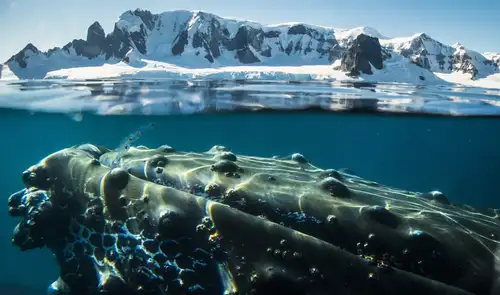
The Small Mammals Of The Arctic And Antarctica - Nexta Expeditions
The Small Mammals of the Arctic and Antarctica

The Small Mammals of the Arctic and Antarctica

As Lillian Gish says in Night of the Hunter, “It’s a hard world for little things.”

This is especially true in the Arctic and Antarctica, but that does not mean the conditions there are too brutal to support life - even its smaller varieties. There are many modest-sized mammals that call the polar regions home, from leopard seals and hourglass dolphins to Arctic foxes and hares. In this entry we shine the spotlight on some of them.

blog-image

Antarctic transplants, fossils, and small species

Antarctica has no native or permanent human population, but people have introduced many small mammals to the continent in the past. Some of the most common transplants include rats, sheep, pigs, reindeer, mice, cats, rabbits, even fish. The ecological impact of these species varied. These days no animals are brought to Antarctica.

blog-image

While there are no naturally occurring land mammals in Antarctica now, this does not mean the Great White Continent was always like this. In fact, a research team from America discovered the continent’s first land mammal fossil back in 1982. The tiny marsupial bones found on Seymour Island are believed to be approximately 40 million years old, and their discovery helped support the theory that Antarctica, South America, and Australia were once a single large land mass.

blog-image

In 1999 another research team found evidence that land mammals once existed on Seymour Island. The fossils they dug up pointed to a diverse list of marsupials that included at least five different subspecies. The team even dubbed one of these marsupials “opossum-like.” Due to these discoveries and others, there are now at least 10 land mammal species known to have inhabited Antarctica millions of years ago.

blog-image

Though land mammals in Antarctica are scarce, marine mammals are another story. Most of these are seals, such as the Antarctic fur seal, crabeater seal, Weddell seal, elephant seal, Ross seal, and aforementioned leopard seal. But there is also the rarely seen Commerson’s dolphin and hourglass dolphin. Take an Antarctic cruise and you stand a good chance of seeing a range of beautiful wildlife.

blog-image

The small (land and marine) mammals of the Arctic

Roughly 12,000 miles (19,000 km) separate Antarctica from the Arctic, where land mammals large and small are much more prevalent. One of the most common is the Arctic hare, which you can see in Greenland, but there are also Svalbard reindeer, Arctic foxes, and a variety of rodents and seals.

blog-image

Not surprisingly, these mammals have to be as tough and capable as their Antarctic counterparts to survive. Arctic foxes, for example, have the most insulating fur of any animal on the planet. Arctic hares, meanwhile, can run up to 40 mph (60 kph) when startled.

blog-image

Other small mammals of the Arctic include the red fox, Arctic ground squirrel, tundra vole, Arctic lemming, and musk rat. And while we do not see them in our areas of operation, the gray wolf and Alaskan tundra wolf should be mentioned for their beauty alone. Taking an Arctic trip to Svalbard or Greenland will expose you to some of the most exotic species in the far north.

blog-image

Join us on an Arctic or Antarctic cruise to see these amazing animals in person

Reading about these incredible polar species is great, but seeing them (and others) firsthand is a whole other level. We offer a wide variety of trips that explore the Arctic and Antarctica - some of which focus on whales and seabirds, others that go to the best places for spotting walruses and polar bears. So take a look at our current offers, and let’s go exploring!


blog-image

Blog
go-leftgo-right

The Seasons of Antarctica: When to Visit and Why - Nexta Expeditions
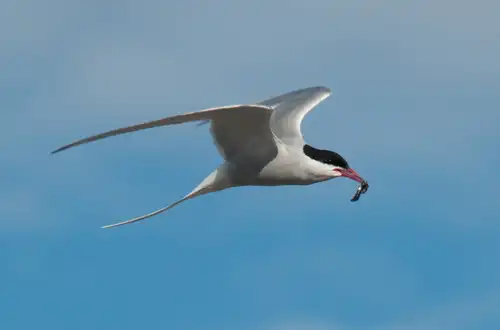
Blog

The Seasons of Antarctica: When to Visit and Why

You’ve decided to book your dream trip – an adventurous Antarctica cruise that will give you a winning chance to see otherworldly environments, encounter exotic wildlife, and take part in activities that will spoil your inner explorer like nothing else.
Birding Opportunities Abound in Spitsbergen - Nexta Expeditions
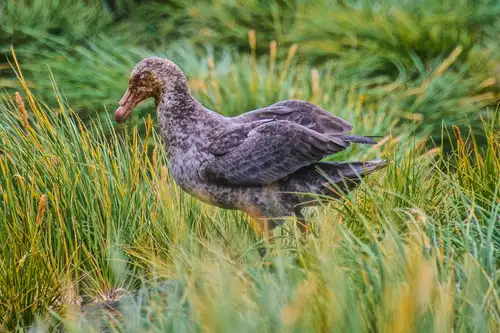
Blog

Birding Opportunities Abound in Spitsbergen

Seabirds are the most prevalent type of bird in Spitsbergen. Experts have estimated that there are 164 bird species that have been found throughout Spitsbergen at various points during recent history, but only 30 of them are known to turn to the Svalbard Islands as their primary breeding spot.
The Giant Petrels of King George Island - Nexta Expeditions
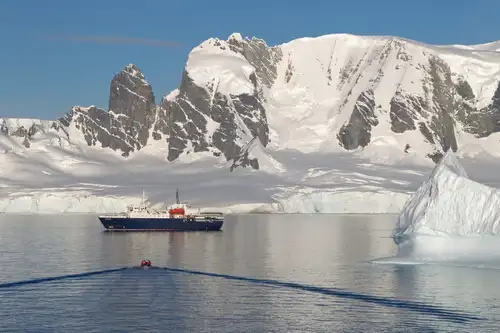
Blog

The Giant Petrels of King George Island

Antarctica is undeniably one of the world’s premier birding destinations.
The Best Arctic and Antarctic Trips for Families - Nexta Expeditions
Blog

The Best Arctic and Antarctic Trips for Families

Polar expedition cruises are often enjoyed by couples and an increasing number of solo travelers, but they can also be a fantastic adventure for families. If you have the budget to bring the whole family along, there are various polar trips that will make everyone equally excited about the ice.
What to Expect When Crossing the Drake Passage - Nexta Expeditions
Blog

What to Expect When Crossing the Drake Passage

Positioned between the southern tail of South America and the Antarctic Peninsula's north-sweeping arm is a lively little waterway known as the Drake Passage.
What’s so Special about East Spitsbergen? - Nexta Expeditions
Blog

What’s so Special about East Spitsbergen?

We’ve previously discussed our north Spitsbergen journeys and Spitsbergen circumnavigations, but the eastern parts of this incredible island have not received the attention they deserve. Despite the name, our east Spitsbergen voyages explore much more than just the eastern side of Spitsbergen.
Three Antarctica Cruise Deals - Nexta Expeditions
Blog

Three Antarctica Cruise Deals

For many travelers, Antarctica represents the ultimate polar destination. Its vast white landscapes offer an endless array of surreal vistas, much of its unique wildlife is found nowhere else on Earth, and its complete lack of an indigenous human population provides a sense of untouched seclusion that few other places can match.
The Arctic Hare: Easter Bunny - Nexta Expeditions
Blog

The Arctic Hare: Easter Bunny

Although the Arctic hare’s stern expression might make it seem like the least amused member of a serious tribunal, this polar animal is actually one of the most charming creatures on the planet – especially when Easter Sunday comes around.
Tracking Greenland’s Wildlife from Space - Nexta Expeditions
Blog

Tracking Greenland’s Wildlife from Space

Despite Greenland’s harsh environment, life has found a way to thrive there. If you’re lucky enough to embark on a Greenland cruise, you stand the chance of encountering many species of cold-adapted mammals, birds, and fish.
International Polar Bear Day - Nexta Expeditions
Blog

International Polar Bear Day

It will come as no surprise to you that we're crazy about polar bears. We have multiple blogs about where to find polar bears, we offer dozens of polar bear trips, and we've even written a short story from a polar bear's point of view. (Yes, we actually did that.) So if you were to say that our love of polar bears borders on obsession, you wouldn't be far off.
Light in the Land of the Midnight Sun - Nexta Expeditions
Blog

Light in the Land of the Midnight Sun

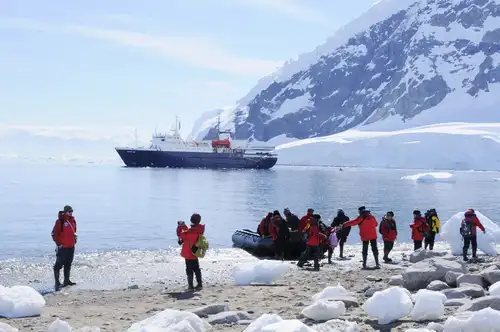
The midnight sun, also referred to as the polar day, is a fascinating natural event observed within the Arctic and Antarctic circles. During the polar summer, the sun remains above the horizon for 24 hours a day, resulting in continuous daylight without any sunrise or sunset. This phenomenon occurs due to the Earth's seasonal tilt towards the sun during the summer months in these regions.
The Seven Best Things to Do in Antarctica - Nexta Expeditions
Blog

The Seven Best Things to Do in Antarctica

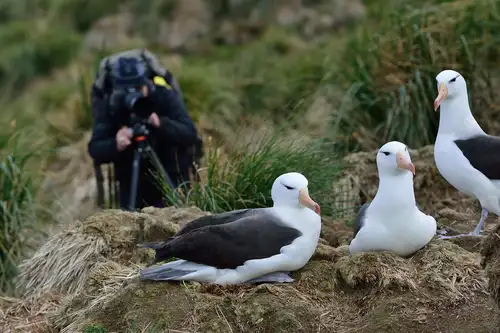
Unless you’re a scientist, there’s no such thing as a means-to-an-end trip to Antarctica.
15 Falkland Islands Bird Photos - Nexta Expeditions
Blog

15 Falkland Islands Bird Photos

The remote sub-Antarctic archipelago of the Falkland Islands is a haven for bird enthusiasts, offering a unique and abundant selection of birds, especially seabirds.
The Ice-Jewelled Geology of Spitsbergen - Nexta Expeditions
Blog

The Ice-Jewelled Geology of Spitsbergen

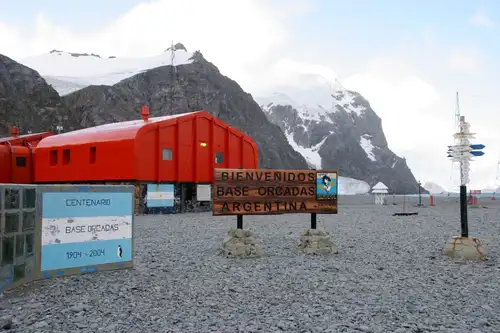
The Svalbard archipelago is located in the Arctic Ocean, roughly 660 km (410 miles) north of Norway's northernmost point. This region is a haven for geologists, boasting a rich geological history that spans from the Mesozoic era (65-245 million years ago) through the Cambrian era (570 million years ago) and back to the Archean era, over 3.5 billion years ago.
A Look Into the International Research Stations of Antarctica - Nexta Expeditions
Blog

A Look Into the International Research Stations of Antarctica

In 1902, William S. Bruce, along with a team of naturalists, explorers, and sailors, embarked on the first Scottish expedition to Antarctica’s South Pole aboard the Scotia. The Scottish National Antarctic Expedition (SNAE) aimed to establish the continent's first meteorological station and explore its largely undocumented biological, topographic, and meteorological features.
Day and night in Antarctica - Nexta Expeditions
Blog

Day and night in Antarctica

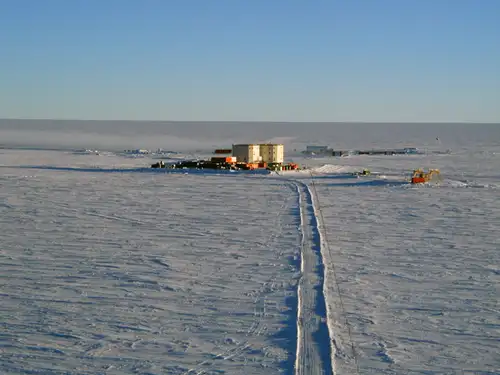
At the Concordia station, a French-Italian research facility situated 3,233 meters above sea level at Dome C on the Antarctic Plateau, European Space Agency (ESA) scientists are investigating the effects of extended space missions. The station is more isolated than the International Space Station, with the nearest humans located 600 kilometers away.
Baleen Whales – The Gentle Giants of the Ocean - Nexta Expeditions
Blog

Baleen Whales – The Gentle Giants of the Ocean

They are the largest animals on Earth, yet they thrive on some of the tiniest creatures. These giants can reach lengths of 30 meters (90 feet), but it is the microscopic zooplankton, krill, and small fish that sustain them. These are the baleen whales. Unlike toothed whales, baleen whales lack teeth. Instead, they use plates of baleen in their mouths to trap and consume their tiny prey.
Seven Tips to Get the Most out of Your Expedition Cruise - Nexta Expeditions
Blog

Seven Tips to Get the Most out of Your Expedition Cruise

Polar cruises are easy to enjoy, but there’s an art to getting the most out of them.
Hot Ice: Breeding Practices of Five Polar Animals - Nexta Expeditions
Blog

Hot Ice: Breeding Practices of Five Polar Animals

Last Valentine's Day we gave you 14 wildlife pictures highlighting the ins, outs, ups, and downs of polar romance. This year we're moving on to something a little more advanced: the nitty-gritty details of polar wildlife breeding rituals.
An igneous paradise: Franklin Island - Nexta Expeditions
Blog

An igneous paradise: Franklin Island

In the most remote reaches of the world's oceans, those daring enough to embark on the Ortelius to the Ross Sea eagerly boarded zodiacs in the southernmost part of the Pacific Ocean.