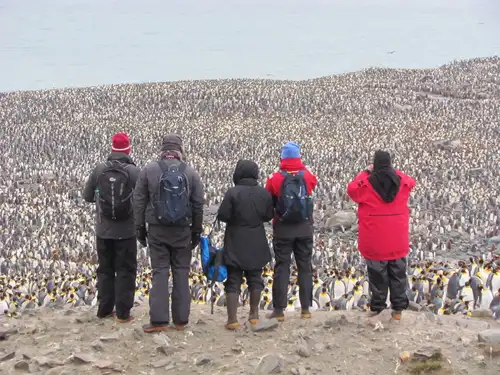
What To Expect When Crossing The Drake Passage - Nexta Expeditions
What to Expect When Crossing the Drake Passage

What to Expect When Crossing the Drake Passage

Positioned between the southern tail of South America and the Antarctic Peninsula's north-sweeping arm is a lively little waterway known as the Drake Passage.

The Drake is considered by many polar travelers to be the gateway to the Antarctic, while others view it as the necessary rite of passage everyone must experience before enjoying the boundless natural wonders of Antarctica.

In our opinion, it can easily be both - and a lot more.

blog-image

Drake Passage water collisions

In the Drake Passage, layers of cold seawater from the south and relatively warm seawater from the north collide to form powerful eddies.

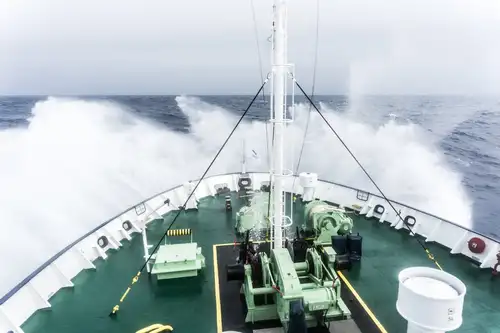
These eddies, when combined with the strong winds and sometimes violent storms common to this area, can make the Drake Passage richly earn its reputation as one of Earth's roughest waterways. But don't let this intimidate you.

After all, you'll still have Antarctica to look forward to. And your crossing may be quite calm.

blog-image

The colossal currents of the Drake Passage

Through the Drake Passage flows the west-to-east Antarctic Circumpolar Current (ACC), encircling Antarctica. The ACC stretches over 20,000 km (12,400 miles), forming the world’s largest ocean current.

The average water flow of the ACC is estimated to be around 135 million cubic metres (4.77 billion cubic feet) per second, about 600 times the volume of the Amazon.

Makes your last water bill seem kind of insignificant, right?

blog-image

Drake Passage weather and waves

It takes the average cruise ship about 48 hours to sail from one end of the Drake Passage to the other. This depends on the exact embarkation and destination point, of course, but the conditions of the Drake are also highly relevant.

Passengers heading across the Drake Passage can expect temperatures ranging from about 5°C (41°F) in the north to -3°C (26°F) in the south.

Whether you get a storm during your Drake crossing is a bit of a gamble, as there is no real storm-less season. Some days the water will be surprisingly calm, others will present your Antarctica cruise with sizable swells.

blog-image

Winds and low pressure fronts flying circles around Antarctica can coalesce into a wild ride on the Drake.

If you’re prone to seasickness, it's a good idea to see your doctor before you sail the Drake Passage. And even if you're the type who laughs at roller-coasters, there's a good chance the Drake's weather is going to test that cast-iron stomach of yours.

But even if the Drake Passage is not agreeing with you, there are ways to ward off seasickness. In the brief but informative video below, our veteran ship doctor Ninette van Es provides her most reliable seasickness remedies. May they ease your passage across the Drake so that all you have to think about is all the great scenery and wildlife on the other side!

The birds, whales, and other wildlife of the Drake Passage

All this talk of surging currents, buffeting winds, and powerful sea swells might make the Drake sound a touch undesirable.

But keep in mind, your crossing may be tranquil as a Tibetan monastery.

blog-image

Also, it's not just Antarctica that makes the trip worthwhile. The wealth of Drake Passage wildlife will give you no shortage of animals to gaze at.

The Drake is densely populated with plankton, which allows for healthy populations of dolphins, whales, and seabirds.

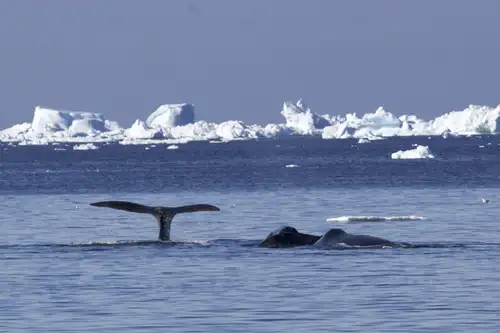
Dolphins aren't terribly common on the Drake Passage, but there's always the possibility you'll see a few hourglass dolphins bounding over the water. Whales are slightly more common, with humpback, orca (killer whale), minke, and fin being the most likely to appear.

blog-image

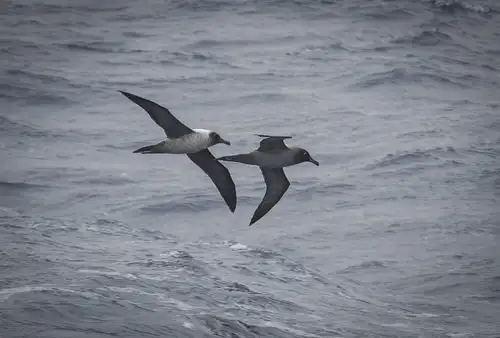
As for seabirds, they are wildly abundant on the Drake. You'll likely spot many kinds of albatross (wandering, black-browed, southern royal), petrel (Antarctic, giant southern petrel), shags, skuas, and gulls.

Because of this, the Drake Passage is a good place to bring a quality camera and strong pair of binoculars. If nothing else, you'll certainly use them when you reach Antarctica.


blog-image

Blog
go-leftgo-right

Eight Engaging Reindeer Facts - Nexta Expeditions
Blog

Eight Engaging Reindeer Facts
When we think about reindeer, we might also think of Saami herders or the holidays or teams of these beloved Arctic animals pulling a bell-covered sleigh across the nighttime sky. Only the first of these options, however, is something you're likely to encounter on an Arctic expedition cruise - and that's only in Northern Norway.
Coming Back from the Brink: The Fur Seals of Antarctica - Nexta Expeditions
Blog

Coming Back from the Brink: The Fur Seals of Antarctica

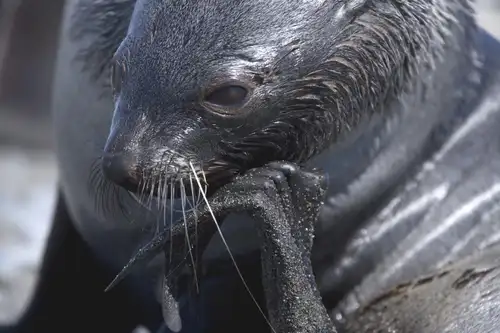
Once hunted to the brink of extinction, the Antarctic fur seal is now one of the most populous and charismatic species of seal you’re likely to encounter during your Antarctica trips. Unlike other members of its large family, the fur seal has external ears, or pinnae, a short snout, and a thick coat of dark brown fur. Male seals tend to be larger than females, with weights ranging from 91 kg (200 lbs.) to 215 kg (474 lbs.).
Arctic Seals - Nexta Expeditions
Blog

Arctic Seals

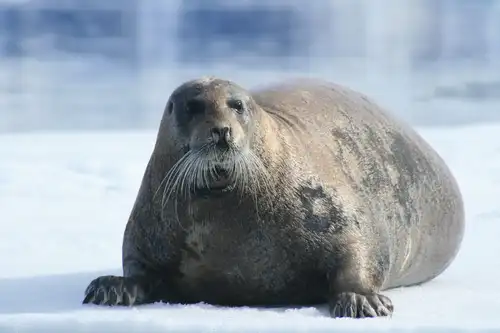
Owing to the large landmasses that populate the Northern Hemisphere, the Arctic boasts the most diverse wildlife among the planet’s polar regions. Some of the most captivating Arctic animals are the marine mammals found just offshore.
The bowhead whale, whaling about the Arctic - Nexta Expeditions
Blog

The bowhead whale, whaling about the Arctic

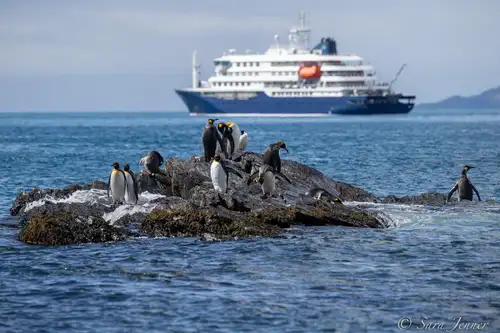
The bowhead whale typically resides near pack ice, often in shallow waters. These whales are commonly found north of Europe, between Canada and Greenland, in the Hudson Bay area, the Okhotsk Sea, and the Bering, Chukchi, and Beaufort seas. In these regions, they filter food through their large baleen plates. Bowheads are known to open their large mouths and graze along the surface, in the water column, or on the sea floor.
Weddell Sea, Shackleton’s Endurance, and New Swabia - Nexta Expeditions
Blog

Weddell Sea, Shackleton’s Endurance, and New Swabia

Our Antarctica 2023-24 cruise program is packed with incredible expeditions, including a new itinerary that explores key locations such as South Georgia, the Weddell Sea, and the more easterly region of New Swabia (Neuschwabenland).
11 Seals You May See in Antarctica or the Arctic - Nexta Expeditions
Blog

11 Seals You May See in Antarctica or the Arctic

1. Weddell seals – These seals are known for their calm demeanor and spend most of their lives beneath the Antarctic ice. Although they need to come up for air, they can remain underwater for up to 45 minutes. Weddell seals can dive to depths of 610 meters (2,000 feet) in search of food. These vocal animals usually have one pup annually and can grow up to 3 meters (10 feet) and weigh 544 kg (1,200 lbs).
Top Antarctica Cruise Experiences for 2025 - Nexta Expeditions
Blog

Top Antarctica Cruise Experiences for 2025

Antarctica, the world’s southernmost continent, captivates adventurous travelers with its breathtaking landscapes and rich biodiversity. Cruises to this icy destination offer unparalleled access to pristine wilderness, unique wildlife, and transformative experiences. In 2025, the allure of Antarctica promises to be even greater, with cutting-edge expeditions and eco-conscious travel options reshaping the journey south.
The Ins, Outs, and Ups of Polar Mountaineering & Ski Mountaineering - Nexta Expeditions
Blog

The Ins, Outs, and Ups of Polar Mountaineering & Ski Mountaineering

Traveling to the polar regions, whether to the Arctic or Antarctica, is an adventure almost no matter what you do.
Graham Land: A landscape dominated by volcanoes - Nexta Expeditions
Blog

Graham Land: A landscape dominated by volcanoes

An Antarctic cruise may explore the upper tip of the Antarctic Peninsula where one finds Graham Land, a jagged, glaciated part of Antarctica with a landscape dominated by volcanoes. Despite the volcanoes being over 200 million years old they are far from extinct with volcanic activity occurring today. Graham Land is connected to Palmer Land at the point where the Antarctic Peninsula widens from around 75 km to around 200 km south of Marguerite Bay.
Spitsbergen: Alkefjellet magic - Nexta Expeditions
Blog

Spitsbergen: Alkefjellet magic

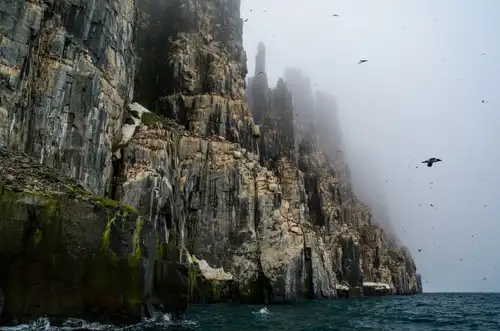
If they knew their way home, why not follow them? Equipped with GPS and compass, we approached the cliffs by zodiac. First, we heard the noise from the colony – the distinct calls of guillemots, kittiwakes, and Glaucous gulls. Then the cliffs gradually emerged from the mist.
What to Expect When Crossing the Drake Passage - Nexta Expeditions
Blog

What to Expect When Crossing the Drake Passage

Positioned between the southern tail of South America and the Antarctic Peninsula's north-sweeping arm is a lively little waterway known as the Drake Passage.
Birds of the South: 33 Antarctic Birds and Seabirds - Nexta Expeditions
Blog

Birds of the South: 33 Antarctic Birds and Seabirds

Of the many compelling reasons people travel to Antarctica and the sub-Antarctic, bird life is among the most beloved.
The Best Arctic and Antarctic Trips for Families - Nexta Expeditions

Blog

The Best Arctic and Antarctic Trips for Families

Polar expedition cruises are often enjoyed by couples and an increasing number of solo travelers, but they can also be a fantastic adventure for families. If you have the budget to bring the whole family along, there are various polar trips that will make everyone equally excited about the ice.
True South: A New Flag for a Global Antarctica - Nexta Expeditions
Blog

True South: A New Flag for a Global Antarctica

When Evan Townsend signed up to spend the winter of 2018 working at an Antarctic research station, he had no reason to expect he would end the season by designing a new flag for the continent. He had even less reason to expect the support it would receive.
The Ways and Wildlife of the Weddell Sea - Nexta Expeditions
Blog

The Ways and Wildlife of the Weddell Sea

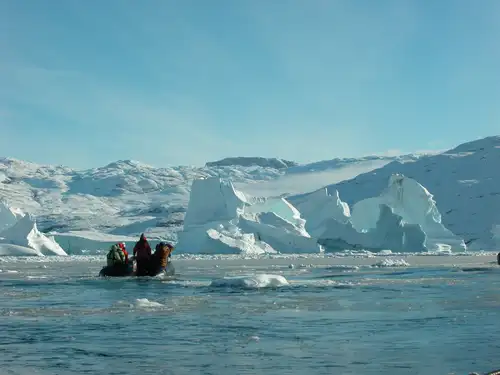
The Weddell Sea is situated off the coast of Antarctica, at the southernmost part of the Atlantic Ocean. Its coordinates are 75 degrees south and 47 degrees west, encompassing the Argentine, Chilean, and British territories of Antarctica. The severe weather and extensive pack ice have historically made the Weddell Sea challenging to access, but modern icebreaker ships are now enabling explorers to venture into this remote area.
Discover the Scoresby Sund Fjord System in East Greenland - Nexta Expeditions
Blog

Discover the Scoresby Sund Fjord System in East Greenland

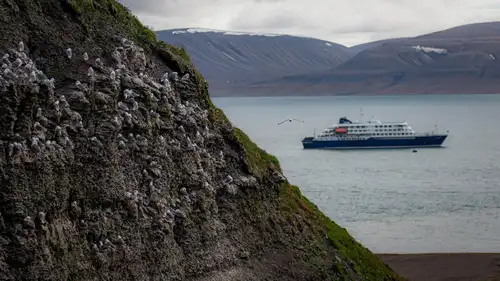
Are you considering a trip to Greenland? One destination you absolutely must visit is the world's largest fjord with stunning landscapes: Scoresby Sund.
Circumnavigating Spitsbergen - Nexta Expeditions
Blog

Circumnavigating Spitsbergen

Many of our expedition cruises focus on specific areas of the Arctic or Antarctica, delving deep into local wildlife and other natural highlights. However, some programs aim to provide a broader survey, visiting a variety of sites to offer guests a wider perspective.
11 South Orkney Animals: Whales, Seabirds, and Penguins Aplenty - Nexta Expeditions
Blog

11 South Orkney Animals: Whales, Seabirds, and Penguins Aplenty

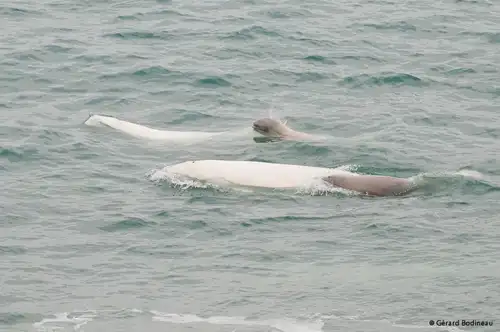
The South Orkney Islands are often overlooked as a destination for Antarctic travel.
The Mysteries of the Beluga Whale - Nexta Expeditions
Blog

The Mysteries of the Beluga Whale

Beluga whales, also known as white whales, sea canaries, and sometimes melonheads, are a rare but cherished sight during Arctic cruises, thanks to their striking appearance. Despite the rarity of beluga sightings, a good amount is known about these friendly-faced cetaceans.
Scenes from St. Andrews Bay:  12 Pics of Penguins, Seals, and More - Nexta Expeditions
Blog

Scenes from St. Andrews Bay: 12 Pics of Penguins, Seals, and More

If you ever find yourself exploring the breathtaking sub-Antarctic island chain of South Georgia, one of the most captivating spots you'll encounter is the picturesque shoreline of St. Andrews Bay.