

Beluga whales, also known as white whales, sea canaries, and sometimes melonheads, are a rare but cherished sight during Arctic cruises, thanks to their striking appearance. Despite the rarity of beluga sightings, a good amount is known about these friendly-faced cetaceans.
Here are a few quick facts to start with:
The beluga whale habitat spans the high latitudes of the Northern Hemisphere, from the west coast of Greenland to Svalbard. Male adult belugas can weigh up to 1,600 kg (3,500 pounds) and females around 1,430 kg (3,150 pounds). Adult beluga whales can reach lengths of up to six meters (19 feet), though the average length is four meters (13 feet).
The average lifespan of belugas is 35 - 50 years, though some studies suggest they may live up to 60 - 70 years. Beluga whales can remain underwater for up to 25 minutes, and research has shown dive depths of almost 900 meters (2,950 feet).
But the beluga whale facts do not stop there...

Beluga whale diet, predators, and population size
Various species of fish make up the primary prey of beluga whales: salmon, herring, and Arctic cod are among the favorites, but beluga whales also feed on mollusks, such as squid and octopus. They enjoy crustaceans, too, including shrimp and crab.
In return, belugas are hunted by polar bears and orcas (killer whales) throughout the Arctic region. The total beluga whale population is estimated to be around 150,000 and represents a much hoped-for wildlife sighting during Greenland trips specifically.

Physical characteristics, breeding habits, and sociability of beluga whales
Beluga whales are born dark gray or brownish-gray and gradually turn white as they mature. Instead of having a dorsal fin, belugas have a tough dorsal ridge, and unlike other cetaceans, they can move their heads up and down and side to side, because the cervical vertebrae of beluga whales are not fused. This helps them catch prey in muddy or even ice-covered areas.
Extremely insulated for polar conditions, belugas have a thick layer of blubber accounting for as much as 40 percent of their body mass. Beluga whales shed their outer layer of skin, molting each summer. They typically mate in the spring, with gestation lasting around 14 - 15 months. Beluga whale calves are usually born between March and September.
Belugas are known to be very social animals, often migrating, hunting, and interacting in groups. Their vast repertoire of sounds, including whistles, squeals, moos, chirps, and clicks, is the origin of their “sea canary” name.

Beluga whale Arctic habitat
The beluga whales you might spot during the summer on a Svalbard voyage will typically be found in shallow coastal waters around one to three meters deep (3.3 - 9.8 feet), though they appear in deeper offshore waters too.
During the summer months, belugas even migrate up estuary rivers and can be found hundreds of kilometers/miles upstream from the sea. Along the coastline, beluga whales typically occupy the waters of the continental shelf, slope, and deep ocean basins in conditions of open water, loose ice, and heavy pack ice. Overall, belugas prefer to be in shallow or coastal areas with light or highly moveable ice cover during the winter.

Tracking beluga whale populations
Satellite data has shown that beluga whales have a seasonal migration pattern, heading to fjords and estuaries during the summer month before migrating over the winter period to separate grounds.
A study conducted by the University of Washington, USA, analyzed and organized tracking data for 30 belugas recorded over the past 15 years, which gave scientists a benchmark of the distribution and foraging patterns for two beluga populations. These two populations of beluga whales spent their winters in the Bering Sea, after which, when the sea ice melted, the belugas traveled north and spread out across the Beaufort and Chukchi seas.
The data gathered from this study suggests that belugas prefer these areas due to the abundance of Arctic cod, as dive data showed beluga whales reaching depths between 200 and 305 meters (650 and 1,000 feet) where Arctic cod are commonly found. The Washington study also found that beluga whales also reached the ocean bed in search of prey, and that their preferred depth depended on the topography of the sea floor.

According to the scientists who conducted this study, the data they gathered will enable a baseline to be established for normal foraging patterns among the two beluga populations, enabling researchers to monitor the effects of rising sea temperatures on vulnerable marine mammals.
The results of the beluga whale study cannot only be used to understand ecological relationships for Arctic top predators, but also to inform the management of beluga whales, which are an important subsistence resource for northern communities. One question for future research is whether belugas will delay their autumn return to the Bering Sea as the Arctic stays unfrozen later into the year.

Impacts of melting sea ice on beluga whales
Beluga whales have adapted well to life under the Arctic sea ice, with many populations migrating from warmer waters to overwinter in areas with sea ice. However, in January 2016, Arctic sea ice extent was around 7.1 percent below the recorded average, a year after the Arctic Ocean recorded its lowest maximum ice extent.
This ice recession will impact beluga populations in the Arctic in many ways. For instance, in a 28-year-long study conducted on beluga whales along western Greenland, scientists found that belugas migrated farther out from shore to chase after the receding ice sheet. This increased ranging may lead to additional predation by orcas (killer whales).

The orca (killer whale) and Iñupiat impact on beluga populations
Researchers have found that receding sea ice has caused Alaskan killer whales to expand their range, and they are hunting more beluga whales than ordinary. In 2013, a group of researchers traveled to Kotzebue Sound in Alaska to study belugas using underwater microphones and audio analysis. But instead of belugas, they found orcas: Over 70 days, they found beluga whales only three times, while killer whales were recorded nearly every day.
It has been speculated that, due to the compromised population of beluga whales, an orca attack on even two or three belugas could be enough to prevent a given population from ever fully recovering. The presence of killer whales may also change the behavior of belugas: Audio recordings suggest belugas have become less conversational so as not to attract orca attention.
But killer whales are far from the only animal impacting beluga whale populations. Alaskan Iñupiat hunters traditionally hunt beluga whales in the spring, distributing meat and fat among community members. For these communities, subsistence hunting is an ineradicable part of their history and culture.

The mysteries of the beluga whale remain
Scientists are still unsure about many variables that could potentially impact beluga whale populations. During the summer months, beluga whales in estuaries enjoy the mixture of freshwater and coarse substrates that facilitate their molting, but researchers are as yet unsure why belugas move back to deeper ice-covered waters. Is it more to avoid killer whales, or is it to feed on Arctic cod?
Beluga whales continue to provide scientists much to study. For lucky Arctic travelers, they provide much to marvel at.

 12 Aug - 31 Aug 2026
 15 Aug - 28 Aug 2026
 16 Aug - 25 Aug 2026
 25 Aug - 07 Sep 2026
 21 Sep - 01 Oct 2026
Related Trips
Spitsbergen - Northeast Greenland, Fly & Sail
12 Aug 2026 - 31 Aug 2026  20 Days / 19 Nights
Northeast Greenland Extreme
15 Aug 2026 - 28 Aug 2026 14 Days / 13 Nights
East Greenland, Scoresby Sund, Including Long Hikes
16 Aug 2026 - 25 Aug 2026 10 Days / 9 Nights
Northeast Greenland Extreme
25 Aug 2026 - 07 Sep 2026 14 Days / 13 Nights
East Greenland, Scoresby Sund - Aurora Borealis, Fly & Sail
21 Sep 2026 - 01 Oct 2026 11 Days / 10 Nights
East Greenland, Scoresby Sund - Iceland , Aurora Borealis, Fly & Sail
01 Oct 2026 - 12 Oct 2026 12 Days / 11 Nights

Blog


The Evolving Shipboard Eco-traveler
Port Lockroy: History, Post Office, and Resident Penguins
Humpback Whales: the Stars of the Western Antarctic Peninsula
The Plants of Antarctica
The Eight Albatrosses of Antarctica and the Sub-Antarctic
Antarctica Cities (and Five Other Things That Don’t Exist There)

The World Is Changing for Greenland's Native Inuit People
The Seasons of Antarctica: When to Visit and Why
Polar Diving: A Supreme Underwater Adventure
The Dirty Details of Antarctica's Dry Valleys
Arctic and Antarctic Basecamp Cruises – Choose Your Own Adventure
Six Seal Species You Might See On Your Greenland Cruise
Polar bear feast
The Classic Polar Cruise: Antarctic Peninsula Facts, Pics, and More
Svalbard’s Texas Bar
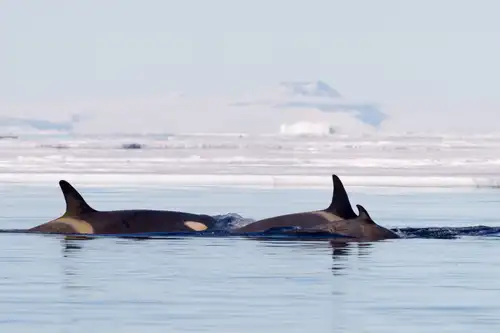
Antarctica’s first Marine Protected Area
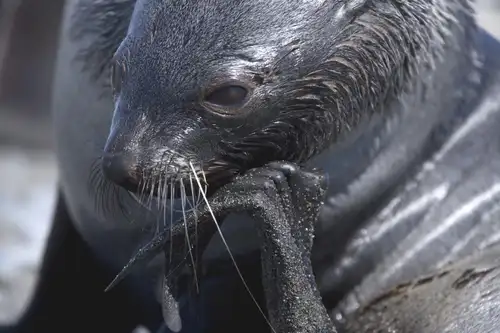
Coming Back from the Brink: The Fur Seals of Antarctica
Three Antarctica Cruise Deals
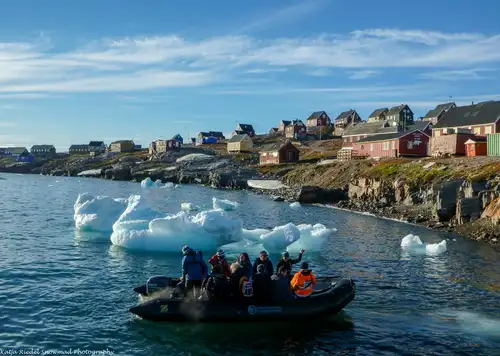
Scoresby Sund: the Greatest Greenland Adventure